

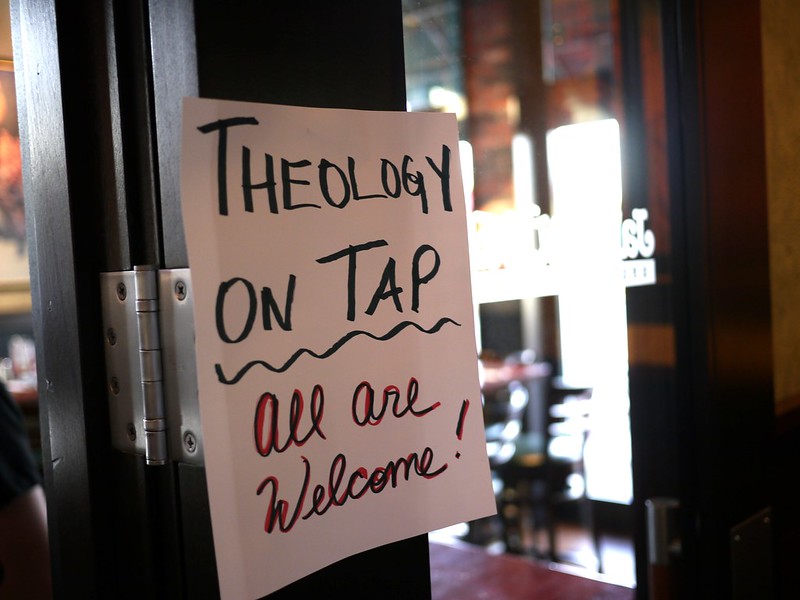
Can you have faith without theology? Can you have a personal relationship with Christ without knowledge of God’s Word? Do evangelicals, however non-denominational they want to be, need some sort of theological framework?
A new study of the beliefs of evangelicals shows an alarming level of theological illiteracy.
Ligonier Ministries, founded by the late Reformed theologian R. C. Sproul, has partnered with the Southern Baptist research organization Lifeway to study the State of Theology among American evangelicals.
Keep in mind that this study is of evangelical Christians, which Lifeway defines as people who strongly agree with the following statements:
- The Bible is the highest authority for what I believe.
- It is very important for me personally to encourage non-Christians to trust Jesus Christ as their Savior.
- Jesus Christ’s death on the cross is the only sacrifice that could remove the penalty of my sin.
- Only those who trust in Jesus Christ alone as their Savior receive God’s free gift of eternal salvation.
Nevertheless, here is what the State of Theology study found. . . .
64% of evangelicals believe that “Everyone is born innocent in the eyes of God.”
53% affirm that “Everyone sins a little, but most people are good by nature.”
53% believe that the Holy Spirit is a force but is not a personal being.
47% believe that “God accepts the worship of all religions, including Christianity, Judaism, and Islam.”
There is, however, some good news:
100% agree that “the Bible is the highest authority for what I believe.”
98% believe that “There is one true God in three persons: God the Father, God the Son, and God the Holy Spirit.”
Then again, believing in the Bible is part of the definition of “evangelical” and is a criterion for participating in this survey. Clearly, though it’s good to believe in the Bible in general, it’s also important to believe in the specific things the Bible teaches, such as our sinful condition and that we can only approach God through Jesus Christ.
Believing in the Trinity is also important, and it’s good that evangelicals hold to this teaching about the nature of God. But over half of them hold to a heretical view of the Holy Spirit! This error was addressed in the Council of Constantinople in 381 A.D., which expanded the Nicene Creed to more fully account for the divinity of the Holy Spirit. (I wonder what percentage of evangelicals confess the Nicene Creed.)
The study also had some mixed news:
61% of respondents agree that “Every Christian has an obligation to join a local church.”
Good for the 61%! But that means that 39% do not think that Christians have an obligation to be part of a local church.
Also, the study had some news that, arguably, shows some theological confusion on the part of the researchers:
94% believe that “God loves all people the same way.” This belief the study presents as “a major understanding among evangelicals.”
I’m not sure what is meant by this question or how the respondents took it. It’s pretty clearly, though, an incursion of the Calvinist contention that Christ’s atonement extends only for the elect. Indeed, the report says nearly as much: “While there is a genuine sense in which God loves all people whom He has created, Scripture also clearly shows that He extends a special love to His elect.”
If you don’t believe you are a sinner, how can you turn to Jesus to forgive your sin? If you don’t believe the people around you are sinners, how can you share the Gospel with them? If you believe that other religions can lead their followers to God, why should you point them to Jesus, who said, “no one comes to the Father except through me” (John 14:6)? If you think the Holy Spirit is just a force, not a person, how can he be “the Lord and giver of life”?















 Ad-Free & Subscriber Log-In