“The earth produces the crops on its own. First a leaf blade pushes through, then the heads of wheat are formed, and finally the grain ripens.” (Mark 4:28, NLT)
Today, we join John Newton as he builds on his letter aboutthe beginnings of grace, moving to what he believes is the next stage of growth. As I updated the language of this pastoral letter, I couldn’t help asking myself, are many of our modern Christians stuck in the first phase, like “newborn babies craving milk”? Have I myself learnt to fully rest in Jesus or am I tossed about between fear and faith?
Dear Friend,
The way the Lord works in the hearts of His people cannot be easily mapped out, but the fact remains that He does. There is clear evidence in the Bible for this. When we try to explain it, we can speak only in general terms, and cannot capture the huge variety of believers’ experience.
In the last letter I looked atGrace in the Blade,the experience of a young convert. Now I will consider the next stage of growth, when, according to the parable, “the heads of wheat are formed.”
Resting in Christ
This stage begins when the believer’s soul, after many changes between hope and fear, caused by thedifferent frames of heartit passes through, is finally brought to rest in Jesus. This happens through grasping spiritually that Jesus is able to be our wisdom, righteousness, sanctification, and redemption. He is more than enough for all who trust in Him. By the kind of faith which puts our trust in Him we can truly say, “He is mine, and I am His.”
Help When Life Hurts
This article is part of a growing collection, drawing from Adrian Warnock’s medical and psychological expertise, lived experience, and Christian faith.
Click the type of pain you or a loved one are experiencing right now
This confidence, or assurance, can grow gradually by degrees as long as we are in this world. It is born from a simple view of the grace and glory of our Saviour Jesus Christ. It does not rest on our frames of heart or feelings, but enables us to answer every objection which comes from unbelief or Satan. We can echo the Apostle Paul:
“What shall we say about such wonderful things as these? If God is for us, who can ever be against us?Since he did not spare even his own Son but gave him up for us all, won’t he also give us everything else?Who dares accuse us whom God has chosen for his own? No one—for God himself has given us right standing with himself.Who then will condemn us? No one—for Christ Jesus died for us and was raised to life for us, and he is sitting in the place of honor at God’s right hand, pleading for us.
Can anything ever separate us from Christ’s love? Does it mean he no longer loves us if we have trouble or calamity, or are persecuted, or hungry, or destitute, or in danger, or threatened with death?(As the Scriptures say, “For your sake we are killed every day; we are being slaughtered like sheep.”)No, despite all these things, overwhelming victory is ours through Christ, who loved us.
And I am convinced that nothing can ever separate us from God’s love. Neither death nor life, neither angels nor demons, neither our fears for today nor our worries about tomorrow—not even the powers of hell can separate us from God’s love.No power in the sky above or in the earth below—indeed, nothing in all creation will ever be able to separate us from the love of God that is revealed in Christ Jesus our Lord” (Romans 8:31-38, NLT).
This assurance is, in my view, not part of the essence of saving faith. A Christian who experiences this is no more a true believer than one who has yet to receive it. It is rather the establishing of a more mature faith. Now that faith is stronger, it also has more to grapple with. The beginning of faith is characterized by desire, and this more mature stage by conflict.
The Wilderness Journey
Like Israel, even the youngest Christian has been brought out of Egypt by great power,
“with a mighty hand and an outstretched arm, with great deeds of terror, with signs and wonders” (Deuteronomy 26:8, NLT).
They have been pursued and frightened by many enemies and have thought themselves lost again and again.
But at last, they see those enemies destroyed and sing the song of Moses and of the Lamb beside the Red Sea. This is the position of a Christian at the stage we are looking at in this letter. Perhaps, like Israel, we imagine our troubles are over and expect to rejoice continually until we enter the promised land. Alas, our difficulties are only just beginning! A wilderness lies in front of us, though we do not yet see it. The Lord is about to match His dealings with us to humble and test us. This is to reveal what is in our hearts, to do us good in the end, and to ensure that all the glory rebounds to God’s own free grace.
The Lord hates and recoils from sin, and teaches the people He loves to hate it too. It might seem desirable, since everything is easy to Him, that when we are freed from sin’s guilt and rule we should also at once be completely freed from the corruption of indwelling sin, and transformed to be like Jesus. But God, in His wisdom, has determined otherwise.
Having considered God’s hatred of sin, and His love for His people, we may safely conclude that He only allows sin to remain in us so that He can overrule it, displaying His grace and wisdom more gloriously, and making His salvation more precious to our souls.
However, God still commands us to watch and strive against sin. The new nature He has given us stirs a desire to put our sinful nature to death and for our hearts to grow in holiness. That journey is the subject of this letter.
The knowledge that we are accepted by God and eternally secure in Christ should have the same effect now as it will in heaven. In proportion to how much evidence and clarity we have received, it should produce continual love, joy, peace, gratitude, and praise, if nothing else counteracts it. But we are not all spirit. A fallen nature still clings to us, and we continue to have the seeds of every sinful corruption in our hearts. We also live in a world full of snares and opportunities that are designed to draw those tendencies out. We are also surrounded by unseen spiritual enemies whose power and subtlety we can only learn through long and painful experience.
At this stage of the journey, the Christian understands, in general terms, the nature of our spiritual warfare. They know that they have the right to depend on Jesus for righteousness and strength. They are willing to endure hardship as a good soldier of Jesus Christ. They believe that, although they may be strongly attacked and may even fall, the Lord will pick them up.
“I have called you back from the ends of the earth, saying, ‘You are my servant.’ For I have chosen you and will not throw you away. Don’t be afraid, for I am with you. Don’t be discouraged, for I am your God. I will strengthen you and help you. I will hold you up with my victorious right hand” (Isaiah 41:10).
Lessons in Self-Awareness
Any Christian who has put down some roots knows that their own heart is,
“the most deceitful of all things, and desperately wicked. Who really knows how bad it is?” (Jeremiah 17:9, NLT).
But they do not, and cannot, at first understand the full meaning of that description. When we find out new and mortifying proofs of our sinful natures, it is for the Lord’s glory, and in the end will make His grace and love still more precious. The extent of our brokenness is so great that we would not believe the things we are capable of even if they were predicted to us. This is similar to Peter, who said:
“Even if everyone else deserts you, I never will” (Mark 14:29, NLT).
The abominations of the heart do not appear in their full strength and effects at this stage of Christian life. The Christian has tasted that the Lord is gracious, and has rejoiced in His salvation. The exceeding sinfulness of sin is not manifested when it breaks through the restraints of threats and commands, but rather when it is able even to act against light and love.
It was the same with King Hezekiah. He had served the Lord faithfully for many years, yet he came to know both God and himself far more deeply during the time of his illness. The Lord had miraculously delivered him from Sennacherib’s army. Now he also healed him when he was near death and extended the length of his life in answer to prayer.
From the song of thanksgiving he wrote after his recovery we see how moved he was by the mercy he had received. But there was still some pride hidden in his heart that only being left to himself could reveal. So, for God’s glory, the Lord allowed it. Scripture notes this was the only time Hezekiah was left to himself, and the only time his actions are condemned (see Isaiah 38-39).
At this stage of Christian growth, believers often come to their most vivid and painful awareness of the corruption that still lives within. It is not necessary to commit obvious outward sin to learn what lies hidden in our hearts, although I believe many have fallen in this way. This can happen even when their hearts had previously been truly set against sin, due to a sense of redeeming love, just as much as those who have been preserved from such outward falls.
The Lord chooses some of His people to serve as examples and warnings to others, as He pleases. Those who are spared public disgrace, and whose worst deviations are known only to God and themselves, have great reason to give thanks. I certainly do. The Lord, in His mercy, has kept me from making any significant blots on my claim to faith since I have been counted as one of His people. But I have nothing to boast about. It was not due to my wisdom or spirituality, even though I have not been allowed to neglect His appointed means of grace.
I hope to walk humbly for the rest of my days, remembering my many faults that should keep me low before God. I ought to be just as ashamed as if I had been allowed to sin greatly in a public scandal. But, for many years now, I do not think I have doubted my acceptance in the Beloved Lord Jesus, for even a quarter of an hour.
But, oh! How many instances of stupidity, ingratitude, impatience, and rebellion has my conscience rebuked me for! As the Bible says,
“Each heart knows its own bitterness, and no one else can fully share its joy” (Proverbs 14:10, NLT).
In the same way, other Christians have often shared with me their complaints of similar struggles, even those who appear the most gracious and spiritual.
The Christian at the stage may not face such conflicts immediately or every day. God arranges specific times and circumstances which test us. There are certain seasons when specific temptations are matched to our frames of heart, moods, and situations. At times the Lord is pleased to withdraw His felt presence, and permit Satan to tempt us, so that we may see how vile we are in ourselves.
We are all prone to spiritual pride, self-reliance, vain confidence, unhealthy attachments to people or things, and a train of evils. The Lord often exposes one sin by allowing another to surface. At times God shows us how much he can do for us. At other times He shows us how little we can do for ourselves, and that we cannot stand without Him.
“I am the vine; you are the branches. Those who remain in me, and I in them, will produce much fruit. For apart from me you can do nothing” (John 15:5, NLT).
The Christian in this stage of growth is trained in their developing knowledge of themselves and the Lord through a variety of such lessons. Over the years we are overruled and encouraged by the influence of the Holy Spirit. We learn to become less trusting of our own hearts. We begin to suspect a trap in every step we take.
The dark and tearful hours we have brought upon ourselves in the past make us doubly treasure the light of God’s face. We learn to dread anything that might grieve the Holy Spirit and cause Him to withdraw.
“Do not bring sorrow to God’s Holy Spirit by the way you live. Remember, he has identified you as his own, guaranteeing that you will be saved on the day of redemption” (Ephesians 4:30, NLT).
Every time we receive forgiveness it deepens our admiration for the rich, everlasting mercy of Christ’s covenant, and increases our sense of obligation to Him. Much has been forgiven us, and so we love much, and we also learn how to forgive and show compassion to others. As Jesus said about the woman who washed His feet with her tears,
“I tell you, her sins — and they are many — have been forgiven, so she has shown me much love. But a person who is forgiven little shows only little love” (Luke 7:47, NLT).
Over time we should learn not to call evil good or good evil, but our experiences must also teach us tenderness and patience with others. We need to become meek towards those who have been caught in a fault, and imitate towards others the way the Lord Jesus has restored us.
“Dear brothers and sisters, if another believer is overcome by some sin, you who are godly should gently and humbly help that person back onto the right path. And be careful not to fall into the same temptation yourself.Share each other’s burdens, and in this way obey the law of Christ.If you think you are too important to help someone, you are only fooling yourself. You are not that important” (Galatians 6:1-3, NLT).
In short, the believer matures beyond this stage when the settled posture of their heart reflects these words from the prophet Ezekiel:
“I will establish My covenant with you, and you shall know that I am theLord,so that you may remember and be ashamed, and not open your mouth again because of your disgrace, when I have forgiven you for all that you have done” (Ezekiel 16:63, NASB).
A truly mature believer will never again open their mouth to boast, complain, or judge others. This next phase of spiritual growth will be the theme of my next letter.
Yours in Christ,
John Newton
Adapted into modern English by Adrian Warnock from Newton, J (1824) The works of the John Newton. London: Hamilton, Adams & Co., pp. 203–210.
READ MORE
COMING IN 2026: PREVIEW CONTENT NOW ON ADRIAN’S PATHEOS BLOG
253 years after he released the world’s greatest hymn, Amazing Grace
This hymn has been recorded more often than any other song of any genre. In the same thirty-six hours which changed the world forever, his close friend William Cowper also wrote God Moves in a Mysterious Way, but then had a crushing mental breakdown from which he never fully recovered. Such powerful grace of God, but marked by terrible suffering. The echoes still reverberate today.
About Adrian Warnock
“Adrian is a first-rate communicator”—Albert Mohler Jr
About John Newton
”I look forward to meeting John Newton” — R. T. Kendall
”One of my heroes”—Tim Keller
“He says it all perfectly”— Martyn Lloyd-Jones
”The memory of his own gracious change of heart and life gave him tenderness in dealing with sinners, and it gave him hope for their restoration” — C. H. Spurgeon
”Why am I interested in this man? Because one of my great desires is to see Christians be as strong and durable as redwood trees, and as tender and fragrant as a field of clover. Oh, how rare are the Christians who speak with a tender heart and have a theological backbone of steel.” — John Piper
”If William Cowper could speak, he’d thank God for not only John Newton, but any friend who prays for and walks beside those with mental illness.” — Joni Eareckson Tada
More coming soon: subscribe by email or follow on social media
→ The 36 hours that changed the word
and much more…
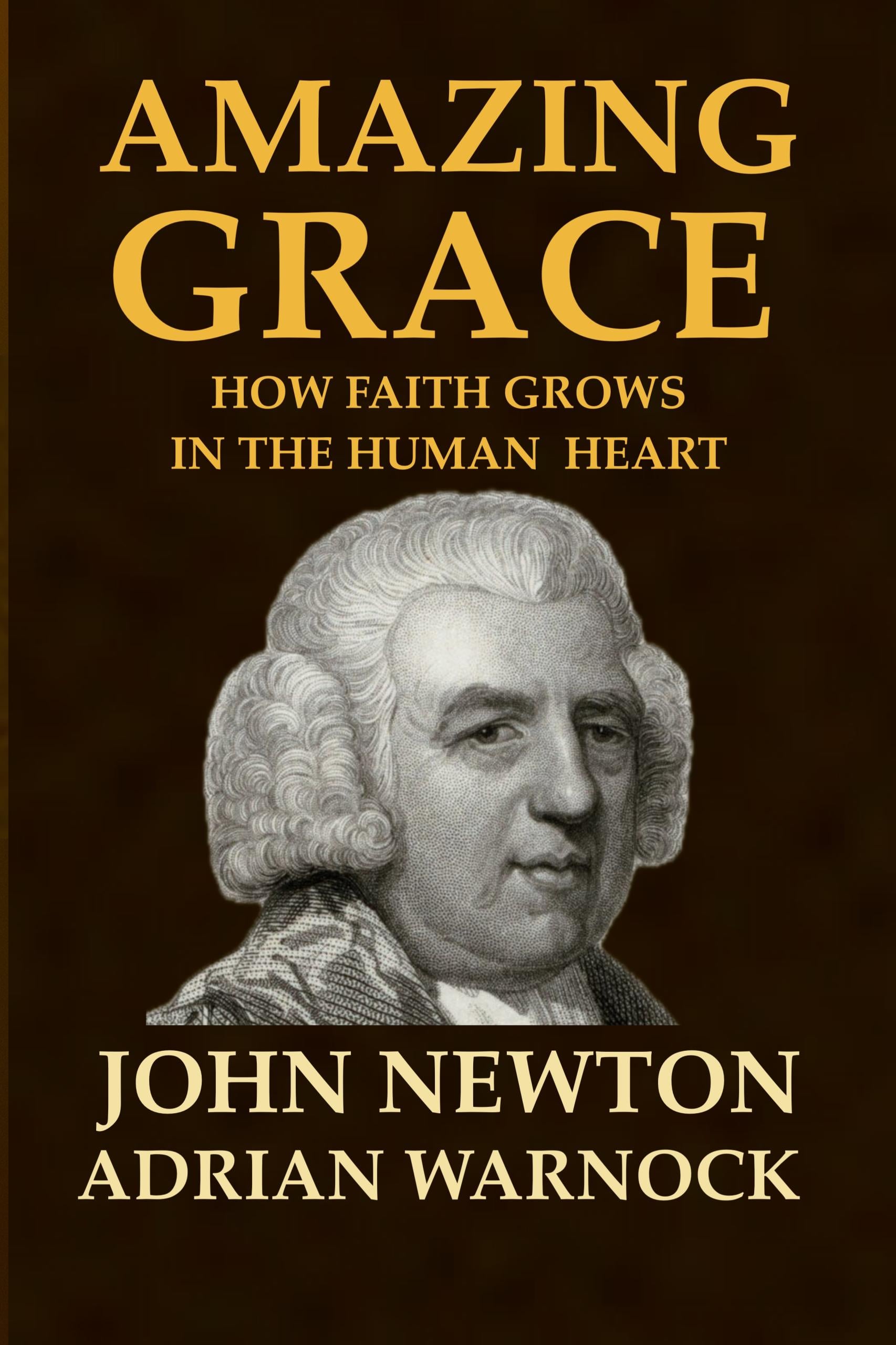
Adrian Warnock presents a modern English edition of the 18th century classic writings of John Newton (1725-1807), author of Amazing Grace, the world’s greatest hymn and the most recorded song of any genre.
Think of this book as John Newton’s own explanation of his hymn Amazing Grace. His updated autobiography and devotional writings contained in this book form the perfect commentary on his lyrics, demonstrating what really is so amazing about grace.
Modern self-help is no help at all in an existential crisis. These pages contain the secret to genuine personal growth and spiritual transformation. They are simple and yet profoundly deep.
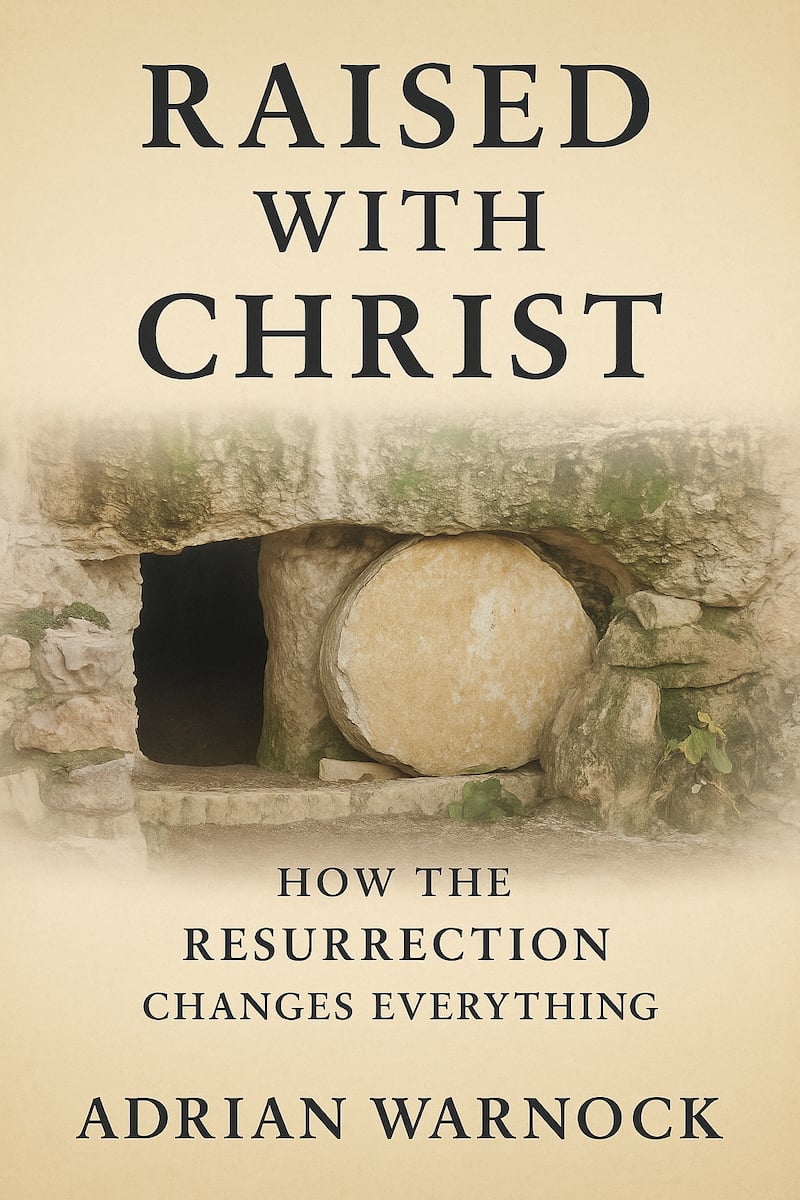
Amazing Grace appears 300 years after John Newton was born, and 253 years after he released his most famous hymn. The result is a seamless blend of Newton’s timeless wisdom with the clarity of thought and plain English that have marked Adrian Warnock’s Patheos blog for more than twenty years, and shapes his other books Raised with Christ, Hope Reborn, and The Traitor Within. Some chapters in this book are modern commentary written by Adrian.
John Newton, the former slave trader turned pastor, wrote letters that still speak to the deepest struggles of our spiritual journeys. In these pastoral devotions, Newton traces how divine grace takes root, grows, and matures in the human heart through three phases: conviction, conflict, and mature contemplation of God’s glory.
The letters in this book are chosen from the thousands preserved from Newton’s vast correspondence, a treasury mined for pastoral wisdom for more than two centuries. A skillful soul physician, Newton describes how grace changes every aspect of a Christian’s life over a lifetime of faith.
Amazing Grace also contains an updated autobiography of this great pastor, with a living interpretation of how significant his extraordinary life still is today. This material and his thoughts on entering Christian Ministry are not included in standard editions of his Works.
Newton becomes for us a vivid example of how God’s grace changes people gradually over time.We meet the rebellious and violent youth, the slave trader who oppressed thousands of innocents, was made a slave himself, and who was found by God’s grace during a storm that nearly sank his ship. This unruly man was pursued, rescued, and transformed by grace.
We learn how over time Newton became a pastor known for his compassion and kindness, most notably demonstrated by his deeply committed care towards the poet William Cowper during his mental illness. Read about how Newton was also a pastor of a whole nation, working for the abolition of the slave trade, and mentoring William Wilberforce for decades.
Newton bridged the gap between the warring denominational movements of his time, a friend of both George Whitefield and John Wesley. He turned his fervor not into the pamphlet flame wars or revival preaching, but into the tenderhearted soul care of the distressed and depressed as they struggled to find greater spiritual freedom and transformation. These pages invite readers not only to understand Newton’s insights, but to experience the living reality of grace in their own lives.
If this book makes you want to read more John Newton, and you do not mind the old English, buy the Logos Bible Software Edition of his Works or a paper version.
The Traitor Within: Understanding and Healing Our Deceitful Hearts
“The human heart is the most deceitful of all things, and desperately wicked. Who really knows how bad it is?” (Jeremiah 17:9, NLT).
And yet our culture tells us to “follow your heart”. No wonder it too is now desperately sick and beyond cure. This book will explore the cultural phenomenon The Traitors as a modern parable as it unmasks the human heart.
Adrian blends his medical insights gained from his work as a doctor and psychiatrist with pastoral wisdom gathered from twenty-five years serving as part of a church leadership team. He witnessed a period of church growth from less than twenty members to thousands.
In recent years Adrian has also experienced chronic illness following his diagnosis with blood cancer, and this book reflects his passion to help others face all kinds of suffering with hope and compassion.
More coming in 2026: subscribe or follow on social media
→ Healing Your Body: Practical Tools
→ Follow Your Heart? Not When Your Mind Is Lying to You
→ Healing Your Mind: Taking Every Thought Captive
→ How Lies Create Our Desperately Sick Society
→ Healing Our Broken Society: Work, Friends, and Family
→ Our Deceitful Spirits: Without Hope and without God
→ Healing Your Spirit – Meaning and Religion
→ Forgiven in a Moment. Renewed Over a Lifetime. Glorified for Eternity.
Help When Life Hurts
This article is part of a growing collection, drawing from Adrian Warnock’s medical and psychological expertise, lived experience, and Christian faith.
Click the type of pain you or a loved one are experiencing right now
The resurrection of Jesus changes everything. Just not all at once. Healing takes time. Compassion and patience carry us over a lifetime of change.
These are the themes I explore in my books and in the articles I have written for Patheos since 2003.
My writing draws on my scientific training as a doctor and psychiatrist, my work in the UK's National Health Service and the pharmaceutical industry, alongside more than twenty-five years as a member of a growing church where I served on the leadership team offering pastoral care.
My perspective has also been shaped by chronic illness since 2017, when I developed life-threatening pneumonia that caused lasting damage to my body, triggered several further conditions, and uncovered a diagnosis of blood cancer. This was successfully treated, although doctors expect it to return in the future. Out of these experiences I founded Blood Cancer Uncensored, an online patient-led support community.
I am the author of the Transformed by Jesus: Spiritual Renewal series of books, which ask:























 Ad-Free & Subscriber Log-In