


Are you lying awake at 3am worrying that you are the greatest sinner who has ever lived? Are you wracked with guilt and shame? Are you afraid that if anybody knew what you were really like they would hate you?
Do you believe that you could never be forgiven? Are you worried that you are going to hell? Do you fear you might have committed the unforgivable sin?
You are not alone.
Many people struggle with thoughts like this.
If you worry that maybe you are the worst sinner in the world, that is itself a sign you are not abandoned by God. People who think they are sinners are ready for Jesus to save them. People who think they have never sinned, assume they do not need saving.
I hope this article will help you realize that in the absolute sense, of course you are not the worst sinner in the world.
But even if you really were, then the Gospel is still expansive enough to offer forgiveness to anyone.
Condemnation is general and very shame based and leads us to think we are worse than everyone else. It is about attacking our identity and sense of self worth.
Conviction is specific and is guilt based. It is about identifying specific sins that we have committed, and regretting them.
Condemnation leads to depression. Conviction leads to repentance and forgiveness.
I am the worst sinner I know
Christians over thousands of years have believed that everyone should view themselves as the worst sinner that they know, because they know themselves better than they know anyone else.
But many people today do not like to admit that they have sinned at all. Our society divides the world into the victims of oppression, and the oppressors. The victims can do no wrong, and the oppressors can do no right according to the modern mind.
If we use the word “sin” at all we tend to use it only of the worst sort of people who are the very cruelest to others.
We forget that even if we are not outwardly sinful, the root of every kind of sin is found in our own deceitful hearts.
Only each of us truly knows our own hearts and those temptations that we secretly cherish even if we never act on them, the things we say and do in secret, and the broken nature of our hidden desires. The only person who knows our deceitful heart as well as us is God himself. He understands us all too well.
This quote from Archdeacon Hare, which I have slightly adapted into modern English explains the point well:
“In every man’s heart there is this triple root of sin; no one who knows his own heart will dispute it.
- The root of selfishness, from which springs self-indulgence, self-will, self-esteem, and the whole brood of vanity and pride.
- The root of worldly-mindedness, which leads to ambition, covetousness, the love of money, and the desire of advancement leading to honor and power.
- The root of fleshly-mindedness, from which, if it is not cut down often and kept diligently from shooting up again, all the lusts of the flesh will sprout rapidly, and overrun and smother the soul.” https://biblehub.com/sermons/auth/hare/the_root_of_sin_in_the_heart.htm
This should lead to a gracious reaction from the most apparently upright person towards everyone else no matter what huge mistakes they may have made:
The humble Christian will either be silent about the sins of others or speak of them with grief, pity, and a “There, but for the grace of God, go I.”
Storms, S. (2005) Convergence: Spiritual Journeys of a Charismatic Calvinist. Kansas City, MO: Enjoying God Ministries, p. 200.
In this sense, then, perhaps we really should think of ourselves as the very worst of all sinners. We know our own sin much better than we can ever know anyone else’s.
Even very sinful people can be forgiven.
Perhaps there is a worse sinner than you somewhere in the world. But only God will truly know that, and he definitely doesn’t want you to look down on other people and think that you are superior to them.
All too often today some people who call themselves Christians do just that, despising those who live a different lifestyle to us, or even just have different political views to us. That is nothing less than self-righteousness and makes a mockery of God himself who inspired Paul to write,
“For everyone has sinned; we all fall short of God’s glorious standard” (Romans 3:23, NLT)
The Pharisees, on the other hand, often prayed like one described in Jesus’ parable:
“I thank you, God, that I am not like other people” (Luke 18:11, NLT).
The Pharisees were the example of very religious people, many of whom over the generations have despised those they label as “Sinners”. They failed to see that all the effort to look good to other people and perform good deeds so others could see them, restraining the outward acts of sin, did absolutely nothing to change them on the inside.
The Apostle Paul, before his conversion, was a persecutor of Christians, capturing them and having them put to death. He once hated Jesus. Despite his great learning he had been a self-righteous Pharisee. He looked down on those who couldn’t match up to his exacting standards.
If Jesus had met him (and its very possible that he did) then his condemnation of people like Paul would have applied to him for sure:
“Woe to you, teachers of the law and Pharisees, you hypocrites! You are like whitewashed tombs, which look beautiful on the outside but on the inside are full of the bones of the dead and everything unclean”(Matthew 23:27, NIV).
Hypocrite. What a thing to call a religious person.
Maybe, like Paul when he was a Pharisee you have a great outward veneer. People at your church think you are very holy. You know how to plaster on a fake Christian smile. You just hope and pray nobody ever finds out what you are really like.
Do you wrestle with sin in a similar way to St Paul? Have you studied God’s rules and tried to follow them? Did it lead to your situation getting worse not better?
“I found that the very commandment that was intended to bring life actually brought death. For sin, seizing the opportunity afforded by the commandment, deceived me, and through the commandment put me to death . . .
We know that the law is spiritual; but I am unspiritual, sold as a slave to sin. I do not understand what I do. For what I want to do I do not do, but what I hate I do . . .
For in my inner being I delight in God’s law; but I see another law at work in me, waging war against the law of my mind and making me a prisoner of the law of sin at work within me. What a wretched man I am! Who will rescue me from this body that is subject to death? Thanks be to God, who delivers me through Jesus Christ our Lord!” (Romans 7:10-25, NIV)
But the “sinner” had a very different approach, and when he was in the temple:
“dared not even lift his eyes to heaven as he prayed. Instead, he beat his chest in sorrow, saying, ‘O God, be merciful to me, for I am a sinner'” (Luke 18:13, NLT).
Jesus honored the second of these people:
“Those who exalt themselves will be humbled, and those who humble themselves will be exalted” (Luke 18:14, NLT).
I have explained this more in The Pharisee And The Prostitute.
You may be surprised at that Jesus accepts those who know they have sinned and rejects self-righteous religious people.
The Apostle Paul was convinced that he was the world’s worst sinner.
“This is a trustworthy saying, and everyone should accept it: “Christ Jesus came into the world to save sinners”—and I am the worst of them all” (1 Timothy 1:15, NLT).
Given the Apostle Paul’s background and experience, is it any wonder that most churches today would never hire him?
Have you felt excluded? Disqualified? Do you think that nobody in the Church would want you to serve in any way? Perhaps you are divorced, or maybe you are chronically sick and you think it is God’s punishment, or perhaps you feel like you are different from everyone else. That is not true.
You really are in the best company.
John Newton, like the Apostle Paul before him was also very happy to describe himself as the worst of all sinners. Many of us would not want to argue with either of them, as before their conversion they were both clearly very evil. After all, Paul was a persecutor of Christians, and Newton was a slave trader. Both of their actions directly resulted in the deaths of others. Both of them despised the image of Jesus in humankind. Surely they really were the worst sinners alive at the time?
One criticism of Protestants by Catholics has been that we have ten thousand popes and everyone believes they can make their own doctrine. Newton lived closer to the religious wars than us, so could have been forgiven for being against the papacy. And yet Newton says “I have read of many wicked popes, but the worst pope I ever met with is pope self.”
Several other Christian writers explain why they feel each of us should claim the title “worst sinner I know” for ourselves:
Jay Adams
“The believer is to find as many ways of living in harmony with the unbeliever as the Bible permits (v. 16). He is to be willing to associate with those who have little as well as those who have much. He is never to think of himself as “above” them. After all, he is no better than the worst sinner he knows. He is a sinner who, but for the grace of God, could have been an even worse sinner” (Adams, J.E. (2020) Christian Living in the World. Cordova, TN: Institute for Nouthetic Studies, p. 66.).
John MacArthur
“If we’re talking from the level of first-hand information, who is the worst sinner you have ever met? Who is it? Come on, be honest. You. I’m talking first-hand information. Who’s got the most corrupt mind you know of? If you’re honest you’re going to say me because you don’t know what’s in somebody else’s heart.” (MacArthur, J.F., Jr. (2014) John MacArthur Sermon Archive. Panorama City, CA: Grace to You).
CH Spurgeon
“In the providence of God, I was never allowed to plunge into gross open sin, yet the Lord made me to feel myself to be the worst sinner who ever lived. I had such a vivid realization of my own guilt that I thought there never was another individual who had broken God’s law as I had; and when he pardoned me, I felt that there was no one who owed more to him than I did”
( Spurgeon, C.H. (1900) “A Marvellous Change,” in The Metropolitan Tabernacle Pulpit Sermons. London: Passmore & Alabaster, p. 69).
Sin is a terrible predicament to be stuck in, and by nature we all are trapped in it. It is not the path to happiness and peace.
As miserable as sin
“Ignorance of God is the root of every sin, and is the source of every misery”
Newton, J. and Rouse, M. (2006) 365 Days with Newton. Leominster, UK: Day One Publications, p. 308.
In contrast, there is another way to live, although it is not one we can find by our own effort.
The happiness of holiness
Holiness is the Bible’s word for the absence of sin and the presence of being set aside for God, living for his glory and the good of others. This is the route to true peace, hope, and joy. This Spurgeon quote, which I have updated to modern English, explains this well:
“Holiness is the royal road to happiness. The death of sin is the life of joy. At the root of every sin there is the bitterness of sorrow. Sin is the root of bitterness. When God shall tear up every one of these roots of bitterness, it will be a blessed thing for us, but He will do this. The quick-tempered brother shall no longer be liable to bursts of anger. The sluggish-minded shall no longer be tempted to laziness. The man of haughty pride shall bow as humbly as the angel who covers himself with his wings. There shall be in us every tendency to good and no inclination to evil.”
Spurgeon, C.H. (2009) Able to the Uttermost: Twenty Gospel Sermons. Bellingham, WA: Logos Bible Software, p. 95.
As is so often the case, Tim Keller explains all this the best:
“It’s only by the grace of God that you’re as good as you are. It’s the environment. It’s the things around you. It’s the influences God has given you. When Paul says, “I am the worst of sinners,” that is absolutely realistic. Paul said, “Because I have finally understood what the Bible says about sin and what the Bible says about grace, intellectually, I realize what sin really is. It’s a desire to have everything in the universe revolve around me, desire to be my own sovereign.”
Because of that he says, “I know I am intellectually as bad as the worst sinner, and existentially, I feel worse because I know the deceits of my own heart personally.” So when you put together the intellectual understanding that the biblical theology gives you and the existential experience that acquaintance with your own heart brings you, any Christian can say this. Any Christian should say this. Paul says, “I am the worst,” but then he says, “Because I’m the worst, I’m the best.” . . .
You see, because the gospel on the one hand says, “You’re the worst! You are the worst. You’re no different. Whether you’re a Mafia hit man or whether on the other hand you’re a paragon of virtue, a pillar of the community, you’re essentially the same. You’ve been living your life trying to get away from God, and you are equally in need of grace. You’re irredeemable without it” . . .
On the one hand, because he was so bad, he’s such an encouragement to anybody in this room to become a Christian, no matter who you are. You have to remember something. Paul, because he was a persecutor, he put people to death. He put Christians to death. He put Stephen to death. He arrested Christians, and he killed them . . .
How did Paul deal with his conscience? The answer is … Just read the rest of the New Testament. He says, “… there is now no condemnation for those who are in Christ Jesus …” Paul is saying, “If I could deal with my conscience, if I could come to Christ, if I could be turned around and turned into something great, with all the things I’ve done … What have you done that’s so bad?” . . .
If you think you understand the gospel because you are such a horrible person, and you see how wicked you are, and you see how you’re the worst of sinners, and as a result you’re shy, as a result you’re always kind of depressed, as a result you never put yourself forward, as a result you never point to yourself, as a result you never open your mouth and tell other people what’s right or wrong with them, as a result you’re kind of a timid type, as a result you’re kind of anxious, you don’t understand the gospel . . .
Jesus Christ became the worst so you could become the best. In 2 Corinthians 5:21, Paul writes, “God made him sin, who knew no sin, that we might become the righteousness of God in him.” Now you think of that. It says, “God made him [Jesus Christ] sin, who knew no sin …” It didn’t say, “God made Jesus Christ sinful.” It said, “God made him sin” . . .
Luther said. The gospel is that you’re more wicked than you ever dared believe, and you’re more loved than you ever dared hope, at the same time, because it’s in Christ, because Christ climbed the tree for you, because Christ became the worst. Now in him, you’re the best. God sees you holy and without blame . . .
You will always treat even the worst unbelievers as equals. Do you hear me? Equals. If you speak to people the gospel and they can tell you see them as equals, they will listen. . . They’re not that different than you.” Keller, T.J. (2013) The Timothy Keller Sermon Archive. New York City: Redeemer Presbyterian Church.
I hope that we have seen that in a sense, perhaps we should think of ourselves as the very worst of sinners. But in reality we are no different to anybody else. We are not worse than others and so condemned with no hope of being saved. But we are not better than others, and so should not look down on them.
The Christian life should be one of gradual transformation by grace, becoming more and more like Jesus. We must learn to be patient with ourselves and with others, and understand that change usually comes very slowly. God sets us free from sin gradually over our lives, but He forgives us all at once. As a powerful modern worship song puts it:
“Wonderful grace that gives me the time to change
Washes away the stains that once covered me”John Pantry, https://essentialchristiansongs.com/song/wonderful-grace
John Newton understood this very well. By the end of his long life he had been slowly transformed from being an evil slave trader into being a compassionate pastor who spearheaded the fight to ban the slave trade. Close to death he said words that all true Christians ought to be able to echo:
“My memory is nearly gone but I remember two things: That I am a great sinner and that Christ is a great Savior” (cited in Aitken, J, 2007).
Two or three years before his death, Newton was already quite infirm. During a private meeting, someone read the verse, “By the grace of God, I am what I am” (1 Corinthians 15:10, ESV).
Newton would usually give a brief explanation after a verse was read. On this occasion he paused for a few moments and then said some of the most famous things he ever did, almost as though he was speaking to himself:
“I am not what I ought to be! Ah! how imperfect and deficient!
I am not what I wish to be! I ‘abhor what is evil,’ and I would ‘cleave to what is good!’
I am not I hope to be! Soon, soon, I shall put off mortality all sin and imperfection!
Yet, though I am not what I ought to be, nor what I wish to be, nor what I hope to be, I can truly say, I am not what I once was: a slave to sin and Satan; and I can heartily join with the Apostle, and acknowledge; By the grace of God, I am what I am!
Cited in The Christian Spectator. (1821). United States: Howe & Spalding, page page 186 https://www.google.co.uk/books/edition/The_Christian_Spectator/mv4oAAAAYAAJ
Read More
COMING IN 2026: PREVIEW CONTENT NOW ON ADRIAN’S PATHEOS BLOG
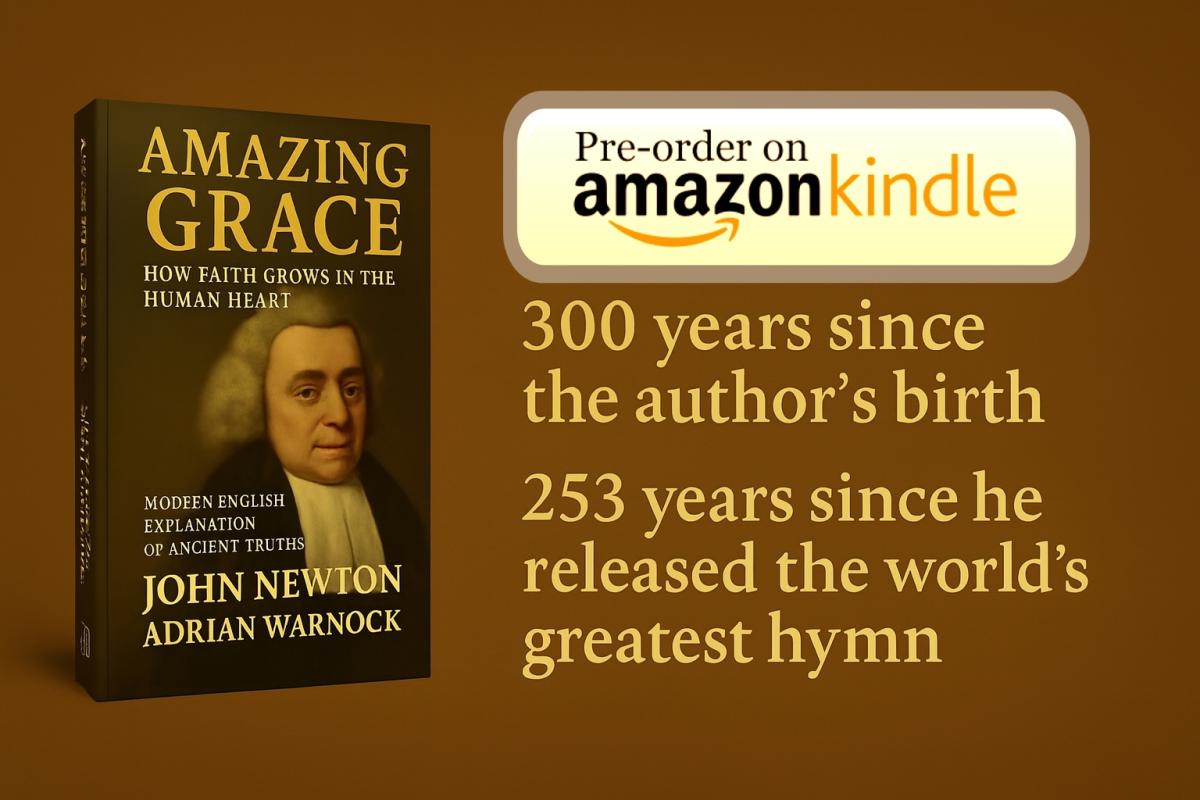
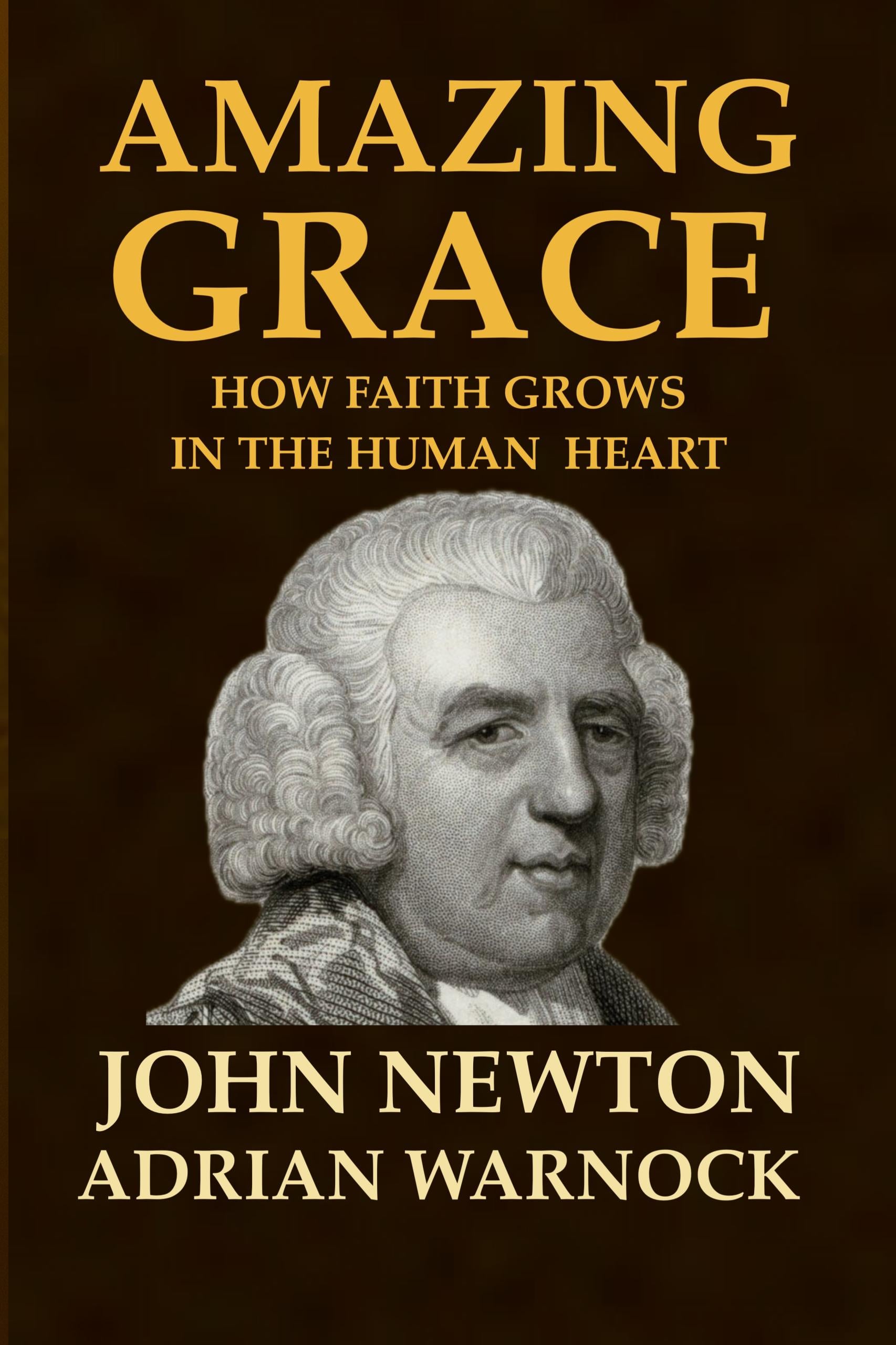
Amazing Grace: How Faith Grows in the Human Heart
Modern English Explanation of Ancient Truths.
By John Newton and Adrian Warnock
Pre-order here
Classic writings updated and a new biography.
300 years after the author’s birth
253 years after he released the world’s greatest hymn, Amazing Grace
This hymn has been recorded more often than any other song of any genre. In the same thirty-six hours which changed the world forever, his close friend William Cowper also wrote God Moves in a Mysterious Way, but then had a crushing mental breakdown from which he never fully recovered. Such powerful grace of God, but marked by terrible suffering. The echoes still reverberate today.
About Adrian Warnock
“Adrian is a first-rate communicator”—Albert Mohler Jr
About John Newton
”I look forward to meeting John Newton” — R. T. Kendall
”One of my heroes”—Tim Keller
“He says it all perfectly”— Martyn Lloyd-Jones
”The memory of his own gracious change of heart and life gave him tenderness in dealing with sinners, and it gave him hope for their restoration” — C. H. Spurgeon
”Why am I interested in this man? Because one of my great desires is to see Christians be as strong and durable as redwood trees, and as tender and fragrant as a field of clover. Oh, how rare are the Christians who speak with a tender heart and have a theological backbone of steel.” — John Piper
”If William Cowper could speak, he’d thank God for not only John Newton, but any friend who prays for and walks beside those with mental illness.” — Joni Eareckson Tada
Preview the content here:
→ I once was blind but now I see
→ Grace Within: The Inner Evidence of Faith
→ How Grace enters the Human Heart
→ Growing in Grace: When Shoots Take Root
→ A modern parable: The Traitors: Spellbound by Lies
More coming soon: subscribe by email or follow on social media
→ The 36 hours that changed the word
and much more…
Adrian Warnock presents a modern English edition of the 18th century classic writings of John Newton (1725-1807), author of Amazing Grace, the world’s greatest hymn and the most recorded song of any genre.
Think of this book as John Newton’s own explanation of his hymn Amazing Grace. His updated autobiography and devotional writings contained in this book form the perfect commentary on his lyrics, demonstrating what really is so amazing about grace.
Modern self-help is no help at all in an existential crisis. These pages contain the secret to genuine personal growth and spiritual transformation. They are simple and yet profoundly deep.
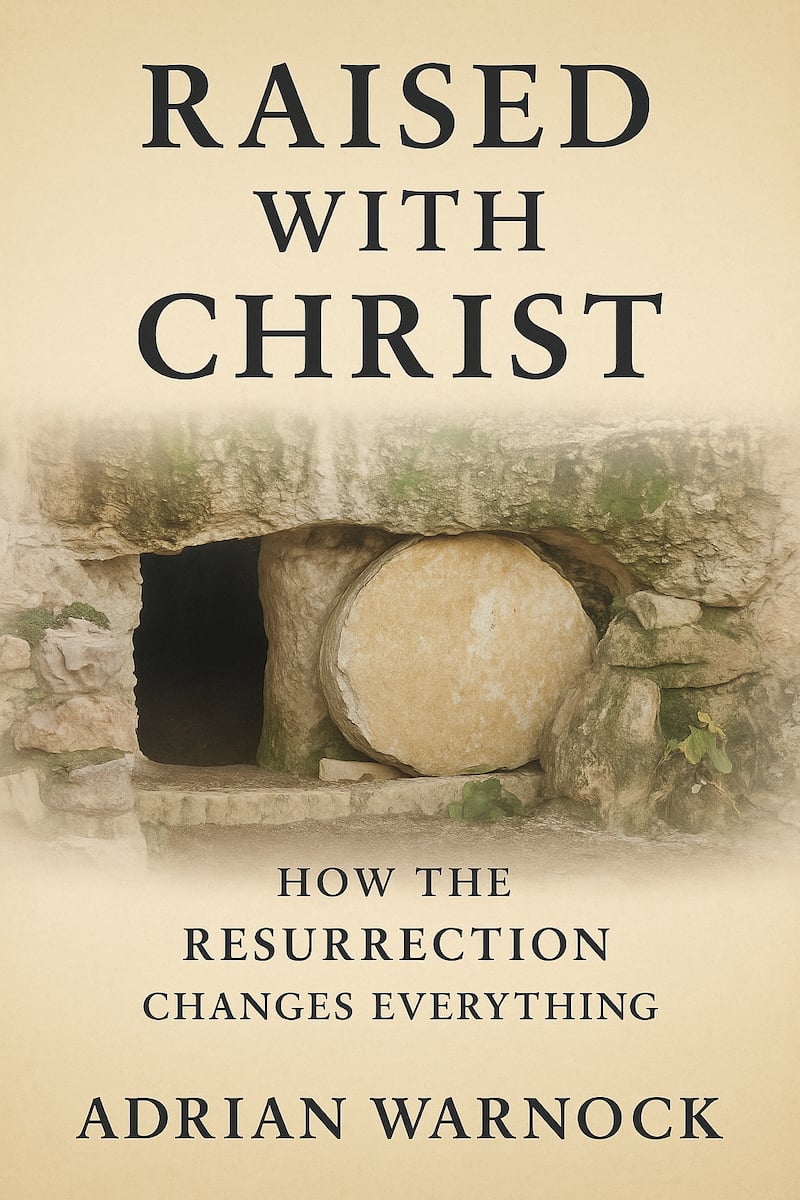
Amazing Grace appears 300 years after John Newton was born, and 253 years after he released his most famous hymn. The result is a seamless blend of Newton’s timeless wisdom with the clarity of thought and plain English that have marked Adrian Warnock’s Patheos blog for more than twenty years, and shapes his other books Raised with Christ, Hope Reborn, and The Traitor Within. Some chapters in this book are modern commentary written by Adrian.
John Newton, the former slave trader turned pastor, wrote letters that still speak to the deepest struggles of our spiritual journeys. In these pastoral devotions, Newton traces how divine grace takes root, grows, and matures in the human heart through three phases: conviction, conflict, and mature contemplation of God’s glory.
The letters in this book are chosen from the thousands preserved from Newton’s vast correspondence, a treasury mined for pastoral wisdom for more than two centuries. A skillful soul physician, Newton describes how grace changes every aspect of a Christian’s life over a lifetime of faith.
Amazing Grace also contains an updated autobiography of this great pastor, with a living interpretation of how significant his extraordinary life still is today. This material and his thoughts on entering Christian Ministry are not included in standard editions of his Works.
Newton becomes for us a vivid example of how God’s grace changes people gradually over time.We meet the rebellious and violent youth, the slave trader who oppressed thousands of innocents, was made a slave himself, and who was found by God’s grace during a storm that nearly sank his ship. This unruly man was pursued, rescued, and transformed by grace.
We learn how over time Newton became a pastor known for his compassion and kindness, most notably demonstrated by his deeply committed care towards the poet William Cowper during his mental illness. Read about how Newton was also a pastor of a whole nation, working for the abolition of the slave trade, and mentoring William Wilberforce for decades.
Newton bridged the gap between the warring denominational movements of his time, a friend of both George Whitefield and John Wesley. He turned his fervor not into the pamphlet flame wars or revival preaching, but into the tenderhearted soul care of the distressed and depressed as they struggled to find greater spiritual freedom and transformation. These pages invite readers not only to understand Newton’s insights, but to experience the living reality of grace in their own lives.
If this book makes you want to read more John Newton, and you do not mind the old English, buy the Logos Bible Software Edition of his Works or a paper version.


The Traitor Within: Understanding and Healing Our Deceitful Hearts
By Adrian Warnock with a chapter by John Newton
Pre-order here
“The human heart is the most deceitful of all things, and desperately wicked. Who really knows how bad it is?” (Jeremiah 17:9, NLT).
And yet our culture tells us to “follow your heart”. No wonder it too is now desperately sick and beyond cure. This book will explore the cultural phenomenon The Traitors as a modern parable as it unmasks the human heart.
Adrian blends his medical insights gained from his work as a doctor and psychiatrist with pastoral wisdom gathered from twenty-five years serving as part of a church leadership team. He witnessed a period of church growth from less than twenty members to thousands.
In recent years Adrian has also experienced chronic illness following his diagnosis with blood cancer, and this book reflects his passion to help others face all kinds of suffering with hope and compassion.
Preview the content here:
→ TV’s The Traitors: Spellbound by Lies
→ How Suffering Revealed What Was in My Heart
→ When Your Body Lies to You: False Messages and Appetites
→ Help when Life Hurts: dealing with specific challenges
More coming in 2026: subscribe or follow on social media
→ Healing Your Body: Practical Tools
→ Follow Your Heart? Not When Your Mind Is Lying to You
→ Healing Your Mind: Taking Every Thought Captive
→ How Lies Create Our Desperately Sick Society
→ Healing Our Broken Society: Work, Friends, and Family
→ Our Deceitful Spirits: Without Hope and without God
→ Healing Your Spirit – Meaning and Religion
→ Forgiven in a Moment. Renewed Over a Lifetime. Glorified for Eternity.
Help with Life Hurts
The Pharisee And The Prostitute

















 Ad-Free & Subscriber Log-In