

Of all the passages of the Gospels, I find Christ’s words in Luke 14 to be among the most challenging: “If anyone comes to me and does not hate father and mother, wife and children, brothers and sisters—yes, even their own life—such a person cannot be my disciple.” (Luke 14:26, NIV). Now, I have ways of interpreting this passage which do not offend our sensibilities too much, but I still struggle with them because Christ means to offend and provoke here. In other words, I am afraid that my cultural and religious assumptions about discipleship might push me to allegorize or relativize this statement (and others like it), when I should be taking it as a straightforward imperative.
One of the joys and perils of turning to our historical brothers and sisters in Christ for spiritual wisdom, is being faced with their unique understanding of discipleship which sometimes clashes with our own. One such person that challenges me on this exact topic is Paula of Rome, an early mother of the church.
Background: Early Life and Ascetic Turn
All we know of Paula is derived from Jerome’s writings, especially his Epitaph on Paula, and one brief mention in Palladius of Galatia’s Historia Lausiaca 41.2. Fortunately, we can reconstruct quite a bit about her life from these writings though.
Paula was born into a wealthy and politically powerful Roman family, the clan of Furius Camillus, in 347 AD. As a result, she was was well educated, able to read Latin and Greek from her childhood. While she was a Christian, she was married to a non-Christian in the early 360s and had five children with him before his death sometimes between 379 and 381. After this, she committed herself to celibacy and generosity, apparently giving extravagantly to the poor. She gave so much away that her family was concerned with her children’s inheritance: “She robbed her own children, and to relatives who harshly rebuked her for doing this she would reply that she was leaving them a greater inheritance in the form of the mercy of Christ” (Jerome, Epitaph on Paula 5.2).
Friendship with Jerome: The Making of Scandalous Sainthood
Jerome arrived in Rome in 382, where he met Paula for the first time, though they became fast friends. As Jerome was a man of low status and Paula was a wealthy widow, rumors circulated about their relationship—that he trying to seduce her or flatter his way into her bank account. Jerome writes of this:
[To Paula] I often discoursed on the Scriptures to the best of my ability: study brought about familiarity, familiarity friendship, friendship confidence. Let them say if they have ever noticed in my conduct anything unbefitting a Christian. Have I taken anyone’s money? … Nothing is laid to my charge except my sex (Jerome, Letter 45.2).
Of course, Jerome did take her money, but as a patron commissioned to write certain works. The first work commissioned by Paula was Letter 22, to honor her daughter’s consecration to the virginial life, and was followed by a more general piece praising virginity.
Their friendship was further cause for scandal in 385, after the tragic death of Paula’s daughter, Blaesilla. The 20-year-old adopted Jerome’s ascetic program with disastrous consequences, after the intense fasting proscribed to her led to a fever and her untimely death (Jerome, Letter 38). As a result of Jerome’s negligence, he was ordered to leave the diocese in Rome. So, he moved to the Holy Land—and Paula followed him.
Piety and Pilgrimage in the Birthplace of Christ
Paula, along with one of her other daughters, Eustochium, reached the Holy Land in 385 or 386, where she remained for the rest of her life. Jerome’s account highlights three activities of Paula during these two decades: pilgrimage, leading a monastery, and translation.
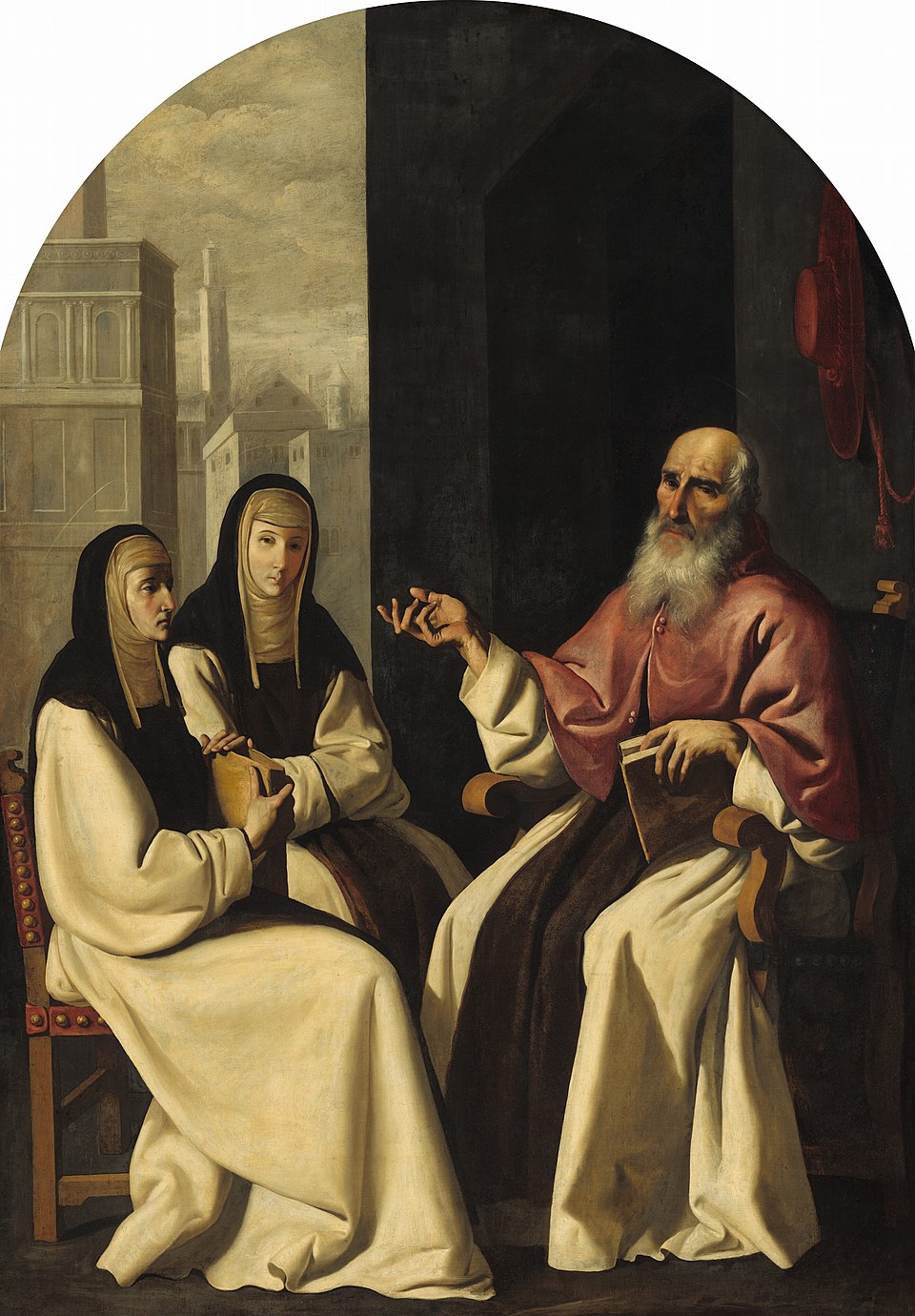
As a pilgrim, Paula visited places throughout the Holy Land and Egypt, entering into the footsteps of biblical characters with other famous women from the period (for a post about one such pilgrim, Egeria, see my post here). While she was moved by many of the places in the Levant, her time in Bethlehem was particularly moving. Jerome records her spiritual experience in the cave where Christ was born: “I, a wretched sinner, have been considered worthy both to kiss the crib in which the baby Lord cried and to pray in the cave in which the virgin in labor gave birth to the infant God. This is my place of respite because it is the native land of my Lord. I will dwell here because the Savior chose it” (Jerome, Epitaph on Paula 10.7). In the sole surviving work from her own hand, she writes similarly of the power of this place:
“Truly, if we come to the little lodging of Christ and Mary … with what words, what speech can we describe the cave of the saviour to you? and that enclosure in which the infant cried, it is to be honored more by silence than weak speech … Behold in this small hole of earth the creator of the heavens was born. Here he was wrapped in cloth, here he was seen by shepherds, here he was revealed by the star, here adored by the magi” (Paula, Letter to Marcella).
She was so moved by her time in Bethlehem that she founded a monastery there.
As co-founder and co-leader of a double monastery with Jerome (one for monks, one for nuns), Paula oversaw much of the religious life of its female members. Therein, she emphasized generous hospitality to pilgrims, while keeping little for herself. She rejected all her previous luxuries by adopting a strict fasting program and lived in harsh conditions. She even she slept on pieces of “goat hair cloth spread over the hard ground” (Jerome, Epitaph on Paula 15.3)!
Finally, Paula is famous for her command of biblical languages, reading Greek and learning Hebrew from Jerome. This sets her out as one of the few people in early Christianity that could read nearly the entire Bible in the original languages—most early Christian writers read the Greek translation of the Old Testament instead. She encouraged Jerome in his tutelage and even funded his most important project: the translation of the Bible into Latin, what is now known as the Vulgate. Her influence on this project was so profound that he dedicated his translation of 1st and 2nd Kings, Isaiah, Daniel, Esther, and the Minor Prophets to her, along with 9 of his own biblical commentaries (Cain, “Jerome’s Epitaphium Paulae” fn. 158).
Paula died in January of 404 as a saint, at least according to her followers, the local bishops, and Jerome.
Disregarding Motherhood to become a Mother of the Church
There are many things that could be highlighted about Paula’s life, but I would like to meditate on how discipleship forms her actions as a parent in light of Luke 14, discussed above.
Jerome records the story of Paula sailing from Rome to go the Holy Land, where she would reside for the rest of her life:
She went down to the Port, accompanied by her brother, blood relatives, in-laws, and (what is of greater importance than these) her children. The sails were set and the ship was launched into the deep by the guidance of the rowers. On the shore little Toxotius (her son) stretched out his hands in a gesture of pleading, and Rufina, already of marriageable age, implored her mother silently with tears to stay until her nuptials. Yet she directed her dry eyes heavenward, overcoming her devotion to her children with her devotion to God. She disregarded the mother in herself and as a result showed that she was fit to be a maidservant of Christ (Jerome, Epitaph on Paula 1.3)
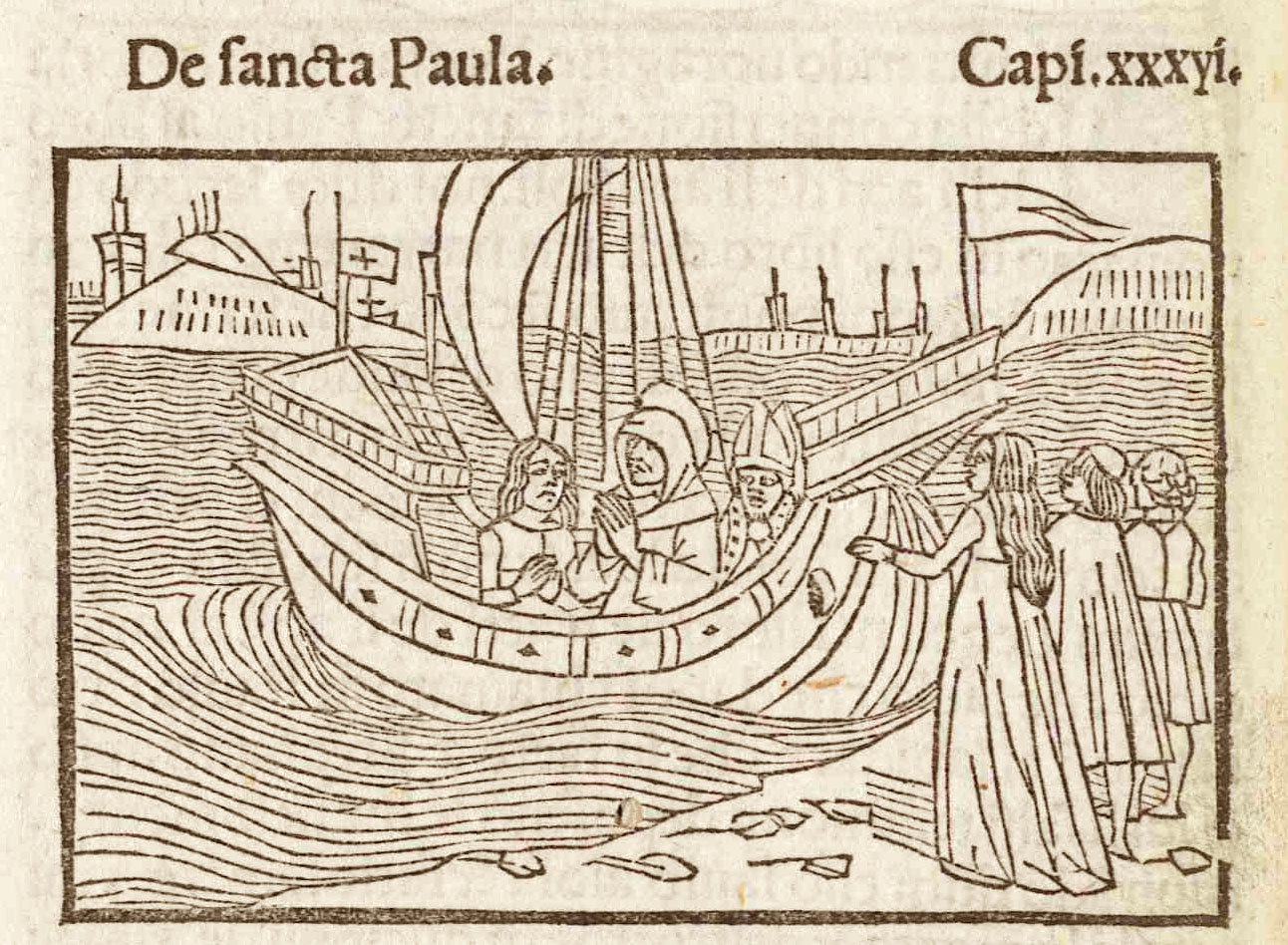
Despite her children’s tears and pleading, she leaves them behind. And not only this, but she also spends their entire inheritance on acts of generosity, forcing her own children into debt. I must admit, as the father of two young children, this story was devastating, and her use of money is frustrating—how could someone who loves God essentially abandon her children and condemn them to poverty? Well, Jerome claims it is on account of her love of God.
What does it mean to love God? For most of us, it is to continue in our daily lives with a distinctly Christian emphasis. So, our parenting, work, use of finances is not completely unique from our neighbors, but (hopefully) shows God’s grace in our love, ethics, and generosity. For Paula though, following Christ entails a completely different type of life which subverts all societal expectations, even the expectations of her fellow Christians.
Paula’s form of discipleship is not simply about parenting or working in a Christian ‘way’, but about allowing your life to take a radically different shape, even to the extent that you appear foolish to the world. Indeed, as Beth Allison Barr recounts of the story above, “Paula seemed to believe she was practicing biblical womanhood, drawing strength from Jesus’s statement that “whoever loves son or daughter more than me is not worthy of me” (Allison Barr, The Making of Biblical Womanhood, 70). While we might not follow Paula in her ascetic program (or her parenting style!), we should be thoughtfully challenged by her—have we allowed cultural assumptions about discipleship and parenthood to distort Christ’s callings? Paula might argue this is the case, exhorting us towards radical devotion to God in all things, including motherhood. Perhaps, that is why she is considered a spiritual mother to the church.
Further Resources:
Primary Sources: There is only one letter from Paula’s own hand. Most of the information about her life is found in Jerome’s Epitaph for her, but a number of his letters to her also reveal information about her. Each of the links below contains a critical edition and translation.
- Paula to Marcella. “A Letter From Paula, the Elder. In Medieval Women’s Latin Letters. Edited by Joan Ferrante. Columbia University Libraries, 2014.
- Letters from Jerome to Paula: “Epistolae.” In Medieval Women’s Latin Letters. Edited by Joan Ferrante. Columbia University Libraries, 2014.
- Andrew Cain, Jerome’s Epitaph on Paula: A Commentary on the Epitaphium Sanctae Paulae, (Oxford: Oxford University Press, 2013).
Secondary Sources: Paula has been the subject of a handful of biographies, though none in English, unfortunately. Andrew Cain has done the most work on Jerome and Paula in the last 15 years.
- François Lagrange, Histoire de Sainte Paule (Paris: Librairie Poussielgue Frères, 1868).
- Raymond Génier, Sainte Paule (Paris: Librairie Victor Lecoffre, 1917).
- Giuseppe del Ton, Paola Romana (Milan: Vita e Pensiero, 1950).
- Christa Krumeich, Paula von Rom: Christliche Mittlerin zwischen Okzident und Orient (Bonn: Habelt, 2002).
- Andrew Cain, “Jerome’s Epitaphium Paulae: Hagiography, Pilgrimage, and the Cult of Saint Paula,” Journal of Early Christian Studies 18; 1 (2010): 105-139.









 Ad-Free & Subscriber Log-In