

I’ve been interested in a sort of apparent paradox over the last few months. You can see the thread in all of the posts dedicated to pentecostal/charismatic Christianity and technological adoption. How is it that a movement so interested in reliving the past was so enmeshed in newer forms of technology and media production? How did that “old-time religion” produce modern media moguls and folks living on the bleeding edge of technological adoption?
So far, I’ve focused a lot of effort on the Western context. Why? On one level, this focus is really about ease. Online digital repositories make early Pentecostal periodicals easy to access, and these monthly posts have hard deadlines, so I can keyword search my way to interesting insights relatively quickly. On another level, this makes sense because most technologies tend to flow in a unidirectional way in the early 20th century: West to the rest. The West gets railways, then the world gets railways. The West gets planes, then the world gets planes. The USA gets cars… you get the picture.
The problem I’ve been having, though, is that the early Pentecostalism that I am so intent on understanding goes beyond just “the West.” Indeed, the leading historical paradigm tends to explicitly focus on how it is a global phenomenon from the beginning. What then of my question? Does it still apply? At this juncture, I think it is clear that at least some Western Pentecostals had a faith that was deeply entangled in the advances of media production and technological innovation. But what about the Pentecostals everywhere else?
Well, I don’t have a great answer at this juncture. Instead, I just have some interesting anecdotes from my recent research on Chinese pentecostal groups, specifically the Hong Kong Pentecostal Mission and the True Jesus Church. I’ve been slowly working through their periodicals, looking at how newer technologies show up.
I’ve called this a “Field Report” because I don’t really have conclusions at this point. Just notes. So, I’ll follow an unusual format. I’ll list out a few of my little finds, then I’ll wrap up with some thoughts. As this is very much a work in progress, I would really appreciate any thoughts that you, dear reader, might offer. So please offer them up in the comments.
Finds from the “Field”
- Pentecostal Truths (Wuxunjie zhenlibao), Hong Kong Pentecostal Mission, November 1908.
A young African aboriginal whose older brother had been baptised by the Holy Spirit came from his village to Johannesburg to be baptised by the Holy Spirit. He walked for 1320 miles to take a train, and the train journey was about 1650 miles. As he got to the service, he said, “Jesus said to me that I had to come here and to ask you to pray for me, so that I can receive the baptism of the Holy Spirit.”
Note: Translated by the editor into Chinese from an unknown source. - Pentecostal Truths (Wuxunjie zhenlibao), Hong Kong Pentecostal Mission, April 1909.
Wang Dong, “I was given a copy of ‘Pentecostal Truths’ at the railway station. After reading it carefully several times, I was much encouraged and felt that the paper could lead me to draw closer to our Heavenly Father, trust in Jesus, and receive the enlightenment of the Holy Spirit.”
Note: Reported from Gospel Hall outside West Gate, Gaoyi County, Zhaozhou, Zhili - Pentecostal Truths (Wuxunjie zhenlibao), Hong Kong Pentecostal Mission, March-April 1910.
The minister stretched his arms to lay hands on him and prayed in the name of the Lord. Suddenly, God’s power came through his body like electricity. All the swollen parts on his sole disappeared. A big noise came from his shortened leg and sinew. His right leg was extended to the length of his left leg. Just in a short while, he was healed.
Note: This is a report on the healing of a black man in South Africa. It is either a Chinese translation or a summary from an unnamed source. - Pentecostal Truths (Wuxunjie zhenlibao), Hong Kong Pentecostal Mission, April 1912.
Last September, the pastor’s wife went to Zhengdingfu to meet a missionary. On the same day, a missionary from Sweden arrived at Zhengdingfu to preach. In the evening, he saw a vision of two Chinese people and felt that God called him to go to Pingdingzhou, so they took a train to Pingding on the following day. This missionary had the gifts of speaking in tongues and preaching… The pastor’s wife prayed hard day and night to receive the power of the Holy Spirit and the gift of healing. Although I believed in God, I did not pray so earnestly. But thank God for his mercy and grace. On 10 July, I suddenly had a fever. I thought that it was Father’s punishment so that I would confess my sin and repent. Many brothers asked me to take medicine, but I said that if this was the Father’s punishment, I did not dare to take it, as I wanted to ask the Lord to heal me… The pastor’s wife came and prayed for me, so we knelt and prayed. As she finished, I could not help crying a lot. I felt that all my sins were forgiven and power came upon me… My disease was healed, and my body felt so light.
Note: Report from Cheng Xiu Qi, Pingdingzhou Gospel Church, Shanxi - Holy Spirit Bulletin (Shengling bao), True Jesus Church, July 1925.
Hankou has long been a central hub of China and also a prosperous district. For this reason, our assembly has been established here for over two years. The number of brethren has been gradually increasing, and on every Sabbath the seating is crowded. Moreover, since the area outside the railway is rather remote, we have now, by the Lord’s permission, additionally rented a building in the alley next to the main entrance of the Charitable Society… Since books, newspapers, and printed materials are a means of saving people, I personally offer a donation of three silver dollars.
Note: From Yu Zifang of the Hankou Assembly - Holy Spirit Bulletin (Shengling bao), True Jesus Church, January 1929.
The next morning, Elder Zhang was to return to Shandong. I rose to see him off at the train station. I said, “Are you leaving today?” Before finishing, I burst into tears. He said, “Brother, your love is not from man, but from the Lord Jesus. Shall we pray?” I said yes, and we knelt. Elder Zhang laid hands on me, and suddenly the Holy Spirit moved, and I spoke in tongues. I rejoiced greatly. I stayed a few more days, then returned home, passing by Yuanshi County and visiting several local churches.
Note: From Chen Timen, Hunan - Holy Spirit Bulletin (Shengling bao), True Jesus Church, April 1933.
Five years ago, my husband, Huang Hui, went out one day to collect accounts. After finishing, he took the train back to Gendeng Port. Because he was so sleepy, he had not yet woken upon arrival at the station. In his dream, he seemed to hear someone calling, saying, “Get off the train!” And as if someone pulled him down. Yet, unbeknownst to him, the train had already traveled about a Chinese mile (roughly 500 meters). In the hurry of the moment, he somehow leapt from the moving train, landing on the roadside, still asleep. At that time, over ten local men came to catch him. Seeing him unconscious, they thought he was dead. Upon inspecting him, however, they found no injuries whatsoever. They shook him awake, and he was surprised to find that over one hundred yuan, hidden in his pocket, was intact. He then walked home and recounted the event. - Holy Spirit Bulletin (Shengling bao), True Jesus Church, August 1933.
Ms. Kong Wang and her daughter took a train from Luohe to Luoyang on a certain Sabbath. Unexpectedly, she fell from the train. Her daughter thought she was dead and cried loudly. Her mother woke and said, “I was asleep. Why do you cry?” She then boarded the train again and continued to Luoyang safely. - Holy Spirit Bulletin (Shengling bao), True Jesus Church, September 1925.
Our Nanchang church, since moving to the Xiaojintai area, has made various arrangements and installed electric lighting. Not until the 29th was everything fully completed. Every evening at 7:30, we open the doors to preach, and at 9:30, the meeting disperses. - Holy Spirit Bulletin (Shengling bao), True Jesus Church, May 1928.
Among [the baptized] was the family of a former female evangelist of the Japanese Christian Church. Originally, they had not yet decided to receive baptism this time. Later, however, through God’s urging, her eldest son contracted pneumonia and was coughing up blood all day. Medical treatment proved ineffective. Pastors from the Japanese Christian Church also frequently came to their home to offer earnest prayers, yet no improvement was seen. Then the son said, “This kind of Christianity has no Holy Spirit; it is all false. That is why their prayers have no effect.” So he told his mother, “You should invite the True Jesus Church, which has the Holy Spirit…
Note: The report ends with the son being through the prayers of the True Jesus Church members
Reflections
I see hints of a few themes that might be at work here.
First, the modern innovations that appear in these stories are never really discussed. They are props—sometimes essential props—to the narrative. There is no fascination with modern spectacle; the emphasis is on function. The missionary arrives on a train, the telephone establishes contact with the church, and electric lights allow meetings to go later into the evening.
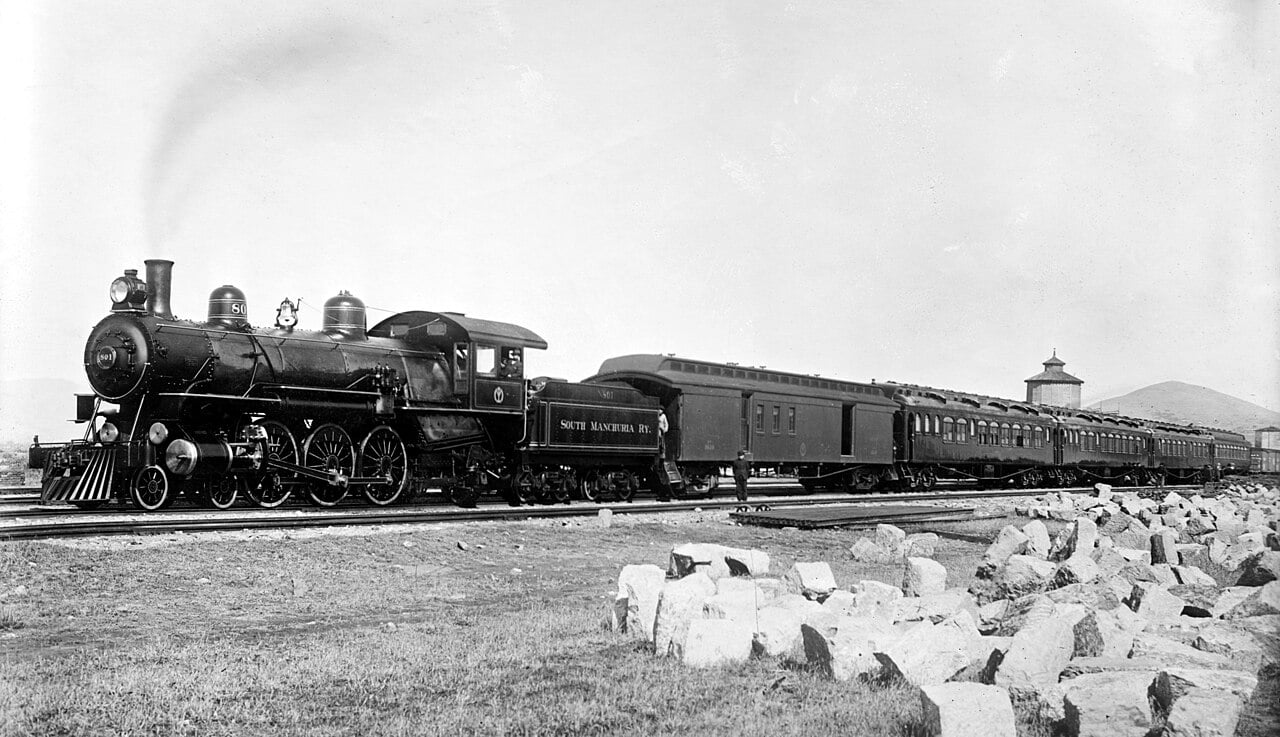
Second, I’m struck by the framing of some narratives, especially those that take place in and around trains. People are handed a pentecostal paper, receive the Holy Spirit, and locate their church in reference to train stations. Trains themselves are also a stage. I included one story of a man sleep waling off a train, but there were a surprising number of other accounts of people falling off trains and surviving. I have an inkling that I might need to map the growth of Pentecostalism alongside the spread of rail in China. They are essentially spreading at the same time. Maybe we have a religion of the rails?
Third, a few modern technologies show up that are clearly suspect, namely medicine and movies. This seems to be a clear inheritance from Western holiness-style missionaries who were themselves suspicious of such modern inventions. Still, it makes me wonder how Chinese Christians themselves were articulating this distinction. What makes telephones and printing presses fine, but movies obscene? We know that distinction will not hold for long in the West, but what about the rest of the world?
I’ll leave my ruminations here. For now, I’ll keep digging out gems like these and trying to triangulate the relationship between modernity and the global pentecostal movement. Please let me know any thoughts you might have down below!














 Ad-Free & Subscriber Log-In