2019-02-07T02:14:59-04:00

It’s Lunar New Year this week, and across the country, Chinese Americans are ushering in the Year of the Pig with feasts and family gatherings. In recognition of the holiday and the large population of Asian Americans who observe it, public schools in New York City held no classes on Tuesday, an effort to accommodate Chinese and other Asian American children in the same way that they accommodate Christian children celebrating Christmas, Jewish children celebrating Rosh Hashanah, and Muslim children... Read more
2019-02-06T08:05:42-04:00

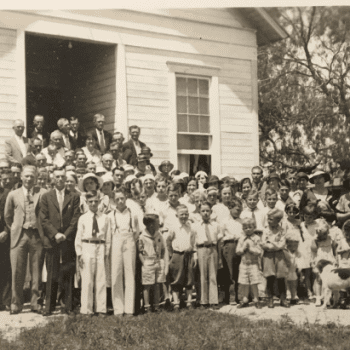
In July 1934, the deacons met at First Baptist Church Elm Mott, a Southern Baptist church near Waco, Texas. They voted unanimously to invite Mrs. Lewis Ball of Houston to come as their revival preacher. As the church minutes record (and as I have written about before): the deacons recommended that “the church ask Mrs. Lewis Ball of Houston to assist us one week during our coming revival, she being a great inspiration and an outstanding Soul winner.” Mrs. Lewis... Read more

2019-02-04T18:55:31-04:00

Chris shares five books on black history that he's hoping to read this month. Read more

2019-02-04T10:49:02-04:00

Last time, I discussed the dilemma of how we commemorate early leaders who bought or held slaves, specifically thinking of American Puritans like Jonathan Edwards or John Myles. I suggested that we need to pay very close attention to historical context in judging such acts. Understanding all assuredly does not pardon all, but it does raise some significant caveats. Primarily, we need to recall that prior to quite modern times – the mid-eighteenth century, say, mainly after 1770 – campaigns... Read more

2019-01-29T18:18:16-04:00

Recently, John Turner contributed an important post concerning John Myles, one of the founders of the American Baptist tradition, and in the process, he noted that Myles owned several slaves. Myles was certainly not alone in that. By any measure, Jonathan Edwards was one of the greatest figures in early American history, a brilliant religious leader, and a daunting polymath. We also know that in 1731 he traveled to Newport, Rhode Island, in order to buy a slave, a “Negro... Read more

2019-01-30T15:37:10-04:00

In an era in which politicians like Bernie Sanders talk about making college “free,” Bryan Caplan — an economist across campus from me at George Mason University — suggests making it more expensive. From his vantage point, college is overhyped and too affordable, leading students to purchase educational experiences that will teach them few skills and will expose them to ideas in which they have no interest. Caplan makes a strong Case against Education. The title is a bit of... Read more

2019-01-30T22:43:46-04:00

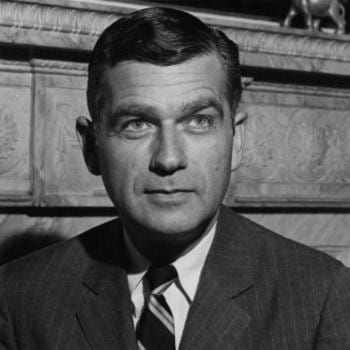
On February 1, 1973, Senator Mark Hatfield (R) of Oregon delivered a stinging address at the National Prayer Breakfast. With President Richard Nixon on his right, Billy Graham on his left, and Henry Kissinger and 3,000 other dignitaries in front of him in the audience, Hatfield’s speech went like this: My brothers and sisters: As we gather at this prayer breakfast let us beware of the real danger of misplaced allegiance, if not outright idolatry, to the extent we fail... Read more

2019-01-29T10:13:47-04:00

Why evangelical readers should follow a new Patheos blog from a pastor-scholar with ample experience at the intersection of evangelicalism and Anabaptism. Read more

2019-01-27T16:22:04-04:00

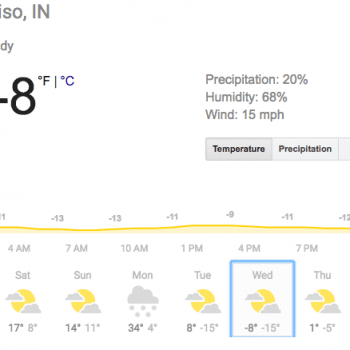
But we expect it to be—don’t we? What is the big deal about winter if we are expecting it to be cold anyway? That question opens historical puzzles. As scholars of the American colonies have recognized for decades, settlers from Europe and the investors who sent them supposed the climate of what became the United States would be different from what it turned out to be. Cold winters become an historical question not only as we wonder why one was... Read more

2019-01-28T08:09:18-04:00

Last year’s terror attack in Pittsburgh highlighted the often-ignored US tradition of violent anti-Semitism. Not only is this tradition very strong, but it has peculiarly American dimensions in fringe religions, and the occult or esoteric. It was through this strand that the US domesticated many European anti-Semitic themes, including that of so-called Jewish ritual murder. In the 1930s, one of the country’s best known anti-Semitic groups was the Silver Shirts, the Silver Legion of America, which was founded by William... Read more

Follow Us!


TAKE THE
Religious Wisdom Quiz

In 2 Peter, what does Peter say he will soon put aside?

Select your answer to see how you score.


Browse Our Archives