2017-02-05T20:52:18-04:00

Today’s guest post comes to us from Scott Culpepper, Associate Professor of History at Dordt College in Sioux Center, Iowa. Culpepper teaches courses on the early modern Atlantic World and Religion in American Culture. He holds a Ph.D. from Baylor University and is the author of Francis Johnson and the English Separatist Influence (Mercer, 2011).  I am pausing to reflect on the fickle fate of kings as I prepare to unleash the French Revolution in my undergraduate civilization class.  January... Read more

2017-01-16T19:36:00-04:00

A new book helps us understand how Europeans on both sides of World War II turned to faith to make meaning of unfathomable violence and suffering Read more

2017-02-05T20:52:46-04:00

It is hard to find today a major city that does not have an “interfaith” or “interreligious” council or a university that does not sponsor some sort of “dialogue” among world religions. But when and where did “interreligious dialogue” begin? Most scholars would point to Chicago in 1893 when the first “Parliament of the World’s Religions” met in conjunction with the World’s Columbian Exposition of the same year. But most things in history have antecedents. If we peer back into... Read more

2017-01-07T08:53:14-04:00

Recently, I write about some of the megatrends that have shaped American religion over the past few decades. Let me also add some trends that would likely have been forecast and expected in earlier decades, but which have not in fact occurred. It is interesting why expectations have been wide of the mark. I would highlight two critical non-stories in particular. Growing Religious Diversification – Within Strict Limits In terms of what has not happened, it is striking that Christianity... Read more

2017-02-05T20:53:05-04:00

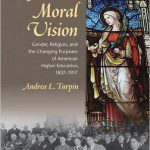
If you clicked on this link because you’re desperately seeking a new moral vision, this might not be exactly what you’re looking for. But perhaps you can find here a new vantage point from which to pursue this quest… In her new book A New Moral Vision: Gender, Religion, and the Changing Purposes of American Higher Education, 1837-1917 (Cornell, 2016), historian Andrea Turpin of Baylor University investigates the moral messages our institutions of higher education have been transmitting. Are we... Read more

2017-01-11T07:22:28-04:00

It was sunny and warm today in Texas without a snow cloud in sight. I wore short sleeves and left all my coats and scarves at home. And, most importantly, I didn’t have to worry about slipping on a sludgy sidewalk. For me, a native Texan, the almost 80-degree weather was a relief after spending 4 days in snowy Denver at the 2017 joint conference of the American Historical Association and American Society of Church History. Regardless of the weather... Read more

2017-01-09T16:38:08-04:00

Two of the most famous British veterans of World War I were C.S. Lewis and J.R.R. Tolkien, who wrote their greatest works in the shadow of the Great War. Read more

2017-01-08T19:24:13-04:00

I have long valued Rick Perlstein as an excellent scholar of recent American history, chiefly working on the 1960s and 1970s. Based on his recent writings, I also see that he must be a superlative teacher. Please bear those comments in mind when I express some disagreement with him on the theme of counter-factual history, and how history might have developed in ways other than it did. This particularly applies to matters of race and slavery. Perlstein has a fine... Read more

2017-01-06T08:54:12-04:00

I am presently preparing some courses that I will teach at Baylor on “Late Modern” US history, defined as the era since 1975 or so. As I have asked before in a different context, what are the broad themes that we would expect in that era? What are the most significant changes that have occurred in the US since, say, the mid-1970s? What, so to speak, are the megatrends? (Putting aside such symbolic incidentals as men’s hair length, smoking, and... Read more

2017-01-06T14:41:50-04:00

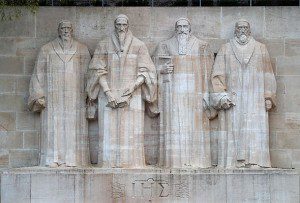
Jane Dawson begins and ends her biography of John Knox with touching, familial scenes. The first is the 1557 baptism of Knox’s son Nathaniel in Geneva. Dawson writes that “Knox was standing beneath the pulpit proudly cradling his newborn son in his arms.” Knox stood next to his ministerial friend William Whittingham. A second friend, Christopher Goodman, baptized the baby. Knox, Whittingham, and Goodman had all helped write the service of baptism used that Sunday, part of a Forme of... Read more

Follow Us!


TAKE THE
Religious Wisdom Quiz

What did Solomon ask God for when he became king?

Select your answer to see how you score.


Browse Our Archives