2016-07-03T08:14:24-04:00

I have just read an admirably concise essay that is one of the smartest and most interesting contributions to American religious history that I have read in a long time. In April, Jon Butler gave his Presidential Address to the Organization of American Historians, which has now been published as “God, Gotham, and Modernity,” in the Journal of American History (June 2016) 103 (1): 19-33: subscription is required. To oversimplify the argument, Butler complains that scholars (past and present) tend... Read more

2016-06-30T09:15:41-04:00

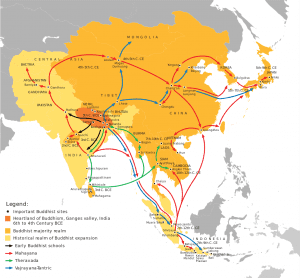
Last time, I stated a problem. In the early centuries of the Christian era, Buddhism was an immensely successful and thriving faith, which had its main homeland in India. Between the tenth and thirteenth centuries, though, Indian Buddhism was progressively weakened, to the point of virtual destruction. So totally was it swept away that not until the end of the eighteenth century did British observers of Burma/Myanmar and Sri Lanka hypothesize that there had once been an actual religion called... Read more

2016-06-30T17:40:21-04:00

Last week I attended the biennial Christian Feminism Today conference, an organization better known among historians by its previous name, the EEWC (Evangelical and Ecumenical Women’s Conference), or perhaps even by its original name, the EWC (Evangelical Women’s Caucus). The EWC was formed in 1973 out of the movement of progressive evangelicals that came together in the early 1970s as Evangelicals for Social Action, and was instrumental in sparking the rise of evangelical feminism. Books like Letha Scanzoni and Nancy... Read more

2016-06-29T10:00:39-04:00

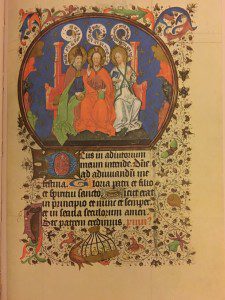
Very recently, on June 16, Christianity Today published the article Gender and the Trinity: From Proxy to Civil War. Author Caleb Lindgren writes that the current debate over the nature of the Trinity is especially significant because it involves like-minded theologians dividing over a core Christian belief: the nature of the Trinity. Is Jesus, the second person of the Trinity, eternally subordinate to God the Father, and–if so–does that divide the Triune God into three separate persons? Lindgren writes, “the opposing... Read more

2016-06-26T20:52:21-04:00

What it means to be a Pietist today — and why that ethos might help revive Christianity. Read more

2016-06-28T17:58:58-04:00

Although it’s a world religion, in a sense it is multiply cut off from its roots. While its key early figures used one language, its scriptures are translations of those early words. And although it was once very strong in the land of its birth, it subsequently became much more numerous in lands far afield, while it virtually died in that first homeland. Later believers might be surprised how much was transformed as the original faith moved from its oldest... Read more

2016-06-24T07:36:31-04:00

Back in February, I posted about the tight alliance that bound (Protestant) Elizabethan England with Muslim Morocco, and what that suggested about the limitations of religious or confessional politics in that era. A very good book on that theme is Jerry Brotton, This Orient Isle: Elizabethan England and the Islamic World (London: Allen Lane, 2016), and he has recently publishing some related columns and articles. One passage in particular grabbed my attention. In the sixteenth century, Protestants and Muslims alike had... Read more

2016-06-22T21:55:11-04:00

Review sites protect us from the hotel that serves rubbery scrambled eggs as its “free hot breakfast,” from the physician who hacks off the wrong limb, and from the college professor who expects students to read assigned texts. We live in an internet culture saturated with review sites. Yelp, tripadvisor, angie’s list, amazon. But for the things that really matter, we’re mostly on our own. There is churchrater.com, which promises to help visitors “find a church that fits,” but it doesn’t seem... Read more

2016-07-08T21:09:09-04:00

This guest post comes from Steve Offutt, a professor of development studies at Asbury Theological Seminary. He is author of New Centers of Global Evangelicalism in Latin America and Africa (Cambridge University Press 2015) and editor of an important new book, Advocating for Justice (Baker 2016), that challenges older evangelical approaches to development work. *** When evangelicals think about how to alleviate poverty, they rely on two books: When Helping Hurts (2009), by Steve Corbett and Brian Fikkert, and Walking with... Read more

2016-06-21T08:03:28-04:00

Like mosques today, school prayer once caused Baptists to debate religious freedom Read more

Follow Us!


TAKE THE
Religious Wisdom Quiz

Who saw a vision of a ladder reaching heaven?

Select your answer to see how you score.


Browse Our Archives