2016-05-09T15:12:50-04:00

I recently read Yuval Levin’s engaging The Great Debate: Edmund Burke, Thomas Paine, and the Birth of Right and Left. This book is a great example of how good writers can bring high-level intellectual history to a general audience. Levin shows how Paine defended revolutions (both American and French) that he saw as aligning with natural rights, while Burke preferred incremental reforms that respected tradition and protected mediating institutions like families, churches, and towns. Burke warned that attempts to transform... Read more

2016-05-08T15:59:16-04:00

Commencement-address season is upon us, bringing glad tidings about the power of grads—especially young women–to change the world. We live in a time of great global advocacy for girls’ education, purported to be a game-changer on many grounds. The education of young women is praised for lowering birthrates, for improving health, for advancing peace (girls’ education being the bugbear of underdevelopment and extremism), for helping economies. This enthusiasm is hardly unprecedented. The history of American schooling counts many champions of... Read more

2016-05-05T16:25:57-04:00

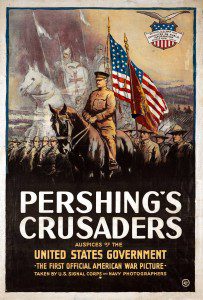
Whatever happened to America’s crusades? Once upon a time, crusades were an integral part of American rhetoric, indicating a noble or righteous struggle inspired by higher motives. All sorts of political causes were “crusades”, not to mention the overtly military ones. You actually could write an excellent history of American religion and reform through the lens and language of crusade. The Temperance movement had its crusades, women crusaded for the vote, and the Purity Crusade was a key force in... Read more

2016-04-29T11:01:25-04:00

Several years ago, my co-blogger Philip Jenkins penned a thoughtful post on Protestant iconoclasm, its centrality to the Reformation, and its resemblance to Muslim iconoclasm. The “stripping of the altars,” to borrow Eamon Duffy’s phrase, was — per Jenkins — “one of the greatest catastrophes that ever befell Europe.” No argument here. Still, in Deborah Shuger’s anthology of Religion in Early Stuart England, I recently came across a discussion of religious imagery in John Dod’s 1603 A Plain and Familiar... Read more

2021-04-27T17:32:26-04:00

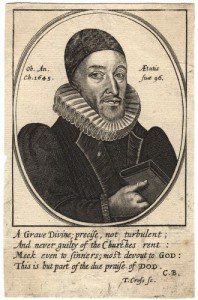
If you are ever in the neighborhood on Lower Thames Street, I urge you to stop and take a peek inside the church of St. Magnus the Martyr. On the east wall, near the altar, stands a 19th-century dedicatory plaque marking the remains of Miles Coverdale. A former rector at St. Magnus, Coverdale is best known for his English Bible translation printed in 1535. As the inscription reads: “TO THE MEMORY OF MILES COVERDALE: WHO, CONVINCED THAT THE PURE WORD OF... Read more

2016-05-03T10:38:34-04:00

One of the most surprising revelations to me during my research for my new book American Colonial History was just how much Africans dominated transatlantic immigration from the sixteenth to the nineteenth centuries. Sure, I knew that millions of Africans were forcibly transported to the Americas during that period. But the actual numbers, especially in comparison to that of European immigration, are stunning. The latest statistics on the transatlantic slave trade tell us that about eleven million Africans disembarked in... Read more

2016-05-01T15:30:47-04:00

We hear a lot these days about the growth of the “Nones,” people who refuse to declare an affiliation with any particular religious tradition. Never, though, confuse that caution about affiliation with a rejection of a religious or spiritual world-view. That point is underlined by a recent study by Jeff Levin on “Prevalence and Religious Predictors of Healing Prayer Use in the USA,” in the Journal of Religion and Health, a piece that has been gaining a lot of media... Read more

2016-04-26T19:47:31-04:00

I recently blogged about The Myth of the Mythical Jesus. Among other things, I argued against those who saw Jesus as a repurposed myth – that is, he was borrowed from some earlier Middle Eastern archetype, perhaps a “dying and rising god” figure. And oh my, do these ideas go back a long way. As early as 1827 (yes, 1827) French scholar Jean-Baptiste Pérès published a wonderful satire of some of the claims about Jesus circulating even then. He particularly went... Read more

2016-04-28T00:09:33-04:00

Sunday was a dangerous time. When people left their homes and went to church, it provided an opportunity for trouble makers to commit crimes and to foment rebellion. That was the thinking of the Carolina assembly in August of 1739, when it passed what was called the Security Act. The bill required all white men to carry firearms to church on Sunday, a time when slaves typically had time off. Runaways, epidemics, and tension with Spain had colonists worried about... Read more

2016-04-27T14:21:30-04:00

Ted Cruz marshals a rhetoric of Christian America in his campaign for president. Christians should “take back” or “reclaim” America, he says, from secularist liberals who have led the nation from its Christian origins. This vocabulary echoes that of his discredited adviser David Barton. His own father Rafael Cruz preaches a dominionist theology and suggests that his son’s campaign is a fulfillment of biblical prophecy. Glenn Beck declares that Cruz has been “anointed by God.” These days it is political... Read more

Follow Us!


TAKE THE
Religious Wisdom Quiz

Which principle does the "Golden Rule" teach?

Select your answer to see how you score.


Browse Our Archives