2020-01-06T22:00:03-05:00

In his helpful discussion of the Son of Man material in Mark, Green is quite right to stress the background being found in Dan. 7, and that Jesus is making some remarkable claims about himself as a transcendent figure who’s reign will be everlasting, and who will judge the earth, including judging those who end up judging him in the Jewish trial before Caiaphas (see Mark 14). “The Son of Man sayings hold together the central realities of Mark’s Christology.”... Read more
2020-01-06T16:59:53-05:00

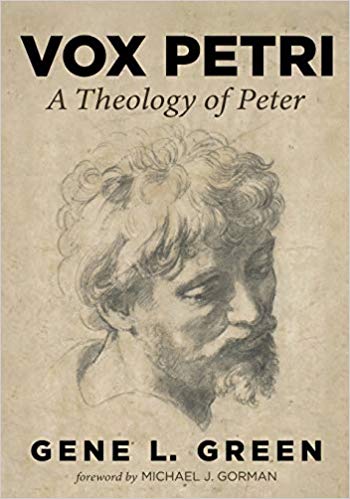
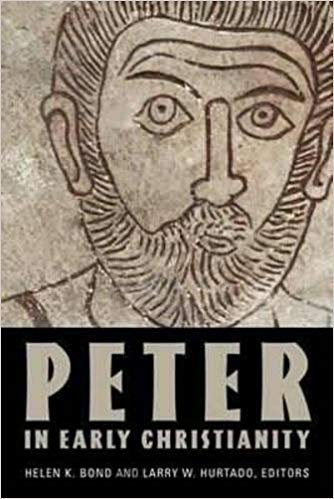
Gene Green has produced perhaps the most important book on Petrine theology in almost a hundred years. It is entitled Vox Petri. A Theology of Peter (Cascade 2019, 512 pages) and it is full of good and challenging insights. We will be doing a dialogue with Gene presently on this blog, but here we begin to consider a review the book itself. One negative fact to report. This book was not properly proof-read, even though I am told two people... Read more

2020-01-06T09:20:53-05:00

Our last post on this book on Peter will deal with the lengthy and helpful essay of Peter Lampe on the indications in Rome of veneration of Peter and his burial place. Lampe is of course the one who wrote the best book on the development of the Church in Rome from the first century and beyond the apostolic era, focusing on archaeology and the social historical materials. From Paul to Valentinus: Christians in Rome in the First Two Centuries,... Read more

2020-01-06T08:31:40-05:00

Paul Parvis broaches a subject which one first blush seems to have no basis in history, namely when was Peter the bishop of Antioch, and secondly, when did he found the church there? The short answer would be he wasn’t and he didn’t, however some of the church fathers seem to think otherwise. The evidence is found, partially in Jerome’s translation of Origen’s sixth Homily on Luke, which seems to say that Ignatius of Antioch was the second bishop in... Read more

2020-01-14T21:43:57-05:00

There are some movies that every Christian, or for that matter every moral person should see. This is definitely one of them. It tells the true story of Johnny Dee aka Walter Macmillian, who was wrongly accused and convicted of killing a young white girl in Monroeville Alabama. There is some serious irony in this as Monroeville is the town of Harper Lee who wrote To Kill a Mockingbird, about a trial of a black man wrongly accused of a... Read more

2020-01-05T22:02:13-05:00

Paul Hartog’s essay concerns itself with the reception of Peter, particularly, it would appear in basically Pauline contexts. Using the image of the matroishka doll he concludes “both 1 Clement [addressed to the Pauline converts in Corinth and showing a knowledge of 1 Corinthians] and especially Polycarp’s Philippians see to ‘nest’ their reception of Peter within their overt receptions of Paul. However 1 Clement explicitly mentions the figure of Peter, while Philippians manifests an anonymous use of Petrine traditions [i.e.... Read more

2020-01-05T19:21:28-05:00

Matthew Novenson’s article on ‘Why there are some Petrine Epistles Rather than None’ is interesting but can be dealt with briefly. He rightly notes that pseudepigrapha were harder to convincingly pull off than say pseudonymous Apocalypses. His arguments for why 1 Peter is likely not to be by Peter himself are weak. As he points out, 2 Peter reflects a knowledge of such a letter at least as early as the end of the first century, and then there is... Read more

2020-01-05T17:18:31-05:00

Sean Adams (pp. 130-45) tackles the issue of Peter’s literacy, which of course is raised by both Papias (when it comes to Greek) and perhaps in Acts as well, but more on that in a minute. In regard to his own agenda, Adams states at the outset “the perception of Peter as a literate figure helped shape the constructed portraits of Peter in subsequent literature” (p. 130), by which he means post NT literature presumably. Adams begins his discussion with... Read more

2020-01-05T16:15:33-05:00

Much has been made of how the first disciples of Jesus appear more like the DUH-sciples especially in Mark. In particular, Peter at times comes across this way, for instance when Jesus at Caesarea Philippi starts explaining that he is going to die. The burden of John Markley’s article is to demonstrate that one needs to understand the nature of apocalyptic ways of discussing things to understand what’s going on. The point is that one would not understand such mysteries... Read more

2020-01-05T15:03:51-05:00

Timothy Barnes’ essay treats us to a novel approach to the martyrdom of Peter. He argues he was likely burned alive wrapped in animal skins. The basis for this argument is in part a certain kind of interpretation of John 21.18-19 which is assumed to be a saying reflecting ex post facto knowledge of how Peter actually died, rather than simply being a prophecy. This may or may not be true, but Barnes does not argue his case on this,... Read more

Follow Us!


TAKE THE
Religious Wisdom Quiz

What Christian tradition requires confession to a priest for forgiveness of sins?

Select your answer to see how you score.


Browse Our Archives