

John 10:1-10 is the Gospel text for the 4th Sunday of Easter in Year A. This sermon for Good Shepherd Sunday explores Jesus’s teaching about abundance as an act of resistance to oppression.
I preached this sermon for a gathering of pastors in the Bridge for Early Career Preachers program in April 2026.
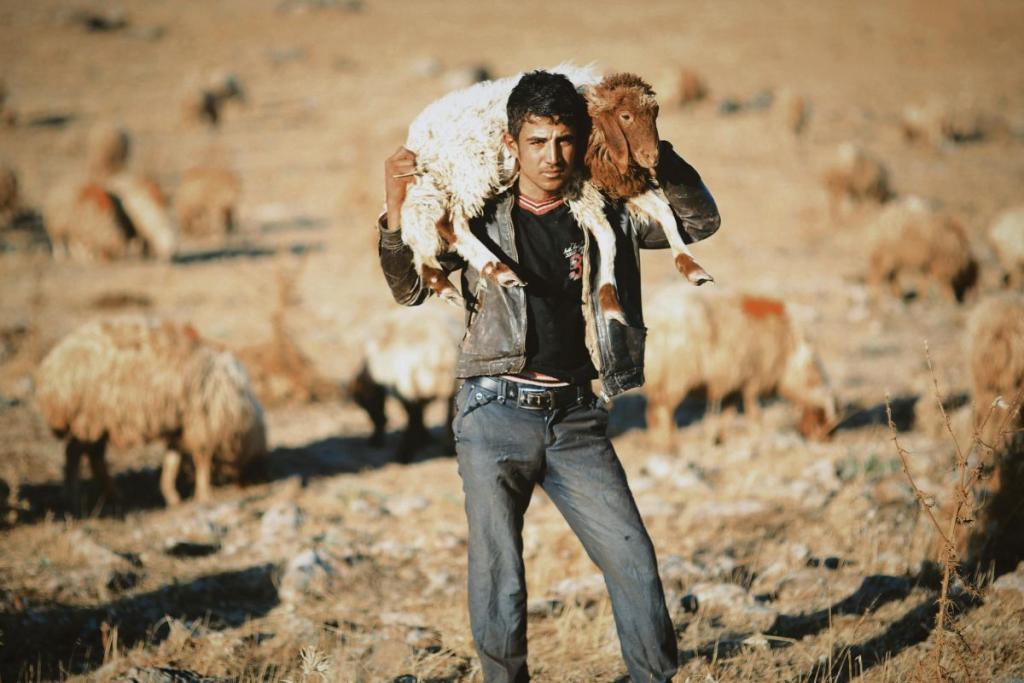
It was a tough time to be the sheep.
The shepherds they had trusted to protect and guide them with God’s commands of justice and righteousness turned out to be thieves and bandits. They cared only about preserving their own power. They exploited and abused the sheep. And no one seemed to be doing anything about it!
There was a whole system of corruption among the shepherds that enabled them to cover for each other. They got away with violating God’s covenant without any apparent consequences.
Not only that, but their leaders sold them out! Powerful entities got their claws into the shepherds and convinced them to betray the sheep in order to amass untold amounts of wealth and power.
The sheep wondered, where was God in all this?
Didn’t God see what was happening. Did God not care? Wouldn’t God do something, anything to help them?
No one seemed to have the courage to tell the truth about what was happening and to stand up for what was right. The sheep were afraid. Frankly, the shepherds were afraid, too.
An ancient dilemma . . .
This was the situation in Jerusalem when Jesus was preaching and teaching in the temple and surrounding towns. The people lived under the oppression of Rome’s military occupation. Their land and goods were taxed so severely that many of them lost everything and lived as peasants on their ancestral lands. But it was the corruption of their religious leaders that kept them in a demoralized state of collective depression.
Maybe you can relate to that feeling of collective depression.
… with modern contours
It is demoralizing to see some clergy in our own time side with the powers of fascism and preach hatred to their flocks while reaping enormous wealth. It is infuriating to see political and military leaders weaponize biblical imagery to justify war. And the fact that you don’t know if I’m talking about Russia or Israel or the United States should tell you just how pervasive this problem is.
They care only about preserving their own obscene wealth and power. They exploit and abuse the common people. And no one seems to be doing anything about it!
There is a whole system of corruption among our leaders that enables them to cover for each other. (Exhibit A: Epstein files.) They get away with crimes against humanity and the planet without any apparent consequences.
The wolves
Not only that, but our leaders have sold us out! Powerful oligarchal tech-bros got their claws into the shepherds and convinced them to betray the sheep.
The sheep are wondering, where was God in all this?
Doesn’t God see what is happening? Does God not care? Won’t God do something, anything to help us?
No one with any power to change things seems to have the courage to tell the truth about what is happening and to stand up for what is right. The sheep are afraid. Frankly, the shepherds are afraid, too.
The Good Shepherd in John 10:1-10
And yet into this depressed, demoralized desert came One who preached about abundance.
“I came that they may have life and have it abundantly.”

He organized communities to feed themselves instead of relying on corporate agriculture that gave them junk food and charged them a week’s pay.
He provided free healthcare to people who came up and just swiped their hand across the hem of his robe, bypassing the insurance industry that denied them coverage.
And he gave people a free education that didn’t require student loans or a wealthy tax base to get it.
And, by God, did this tick off the powerful!
Jesus agitated the system because static systems lie about who they serve. His disruptions revealed that God’s power was a networked intelligence that moved across stormy seas and herds of pigs to liberate with the leverage of love.
Remember that this teaching comes right on the heels of Jesus healing the man born with blindness (John Ch. 9). “The sheep follow him because they know his voice.” The man who could not see heard a voice say, “His blindness is not a result of sin. His disability does not make him less of a person. In fact, his blindness is going to reveal the power of God. And it’s also going to show just how petty, heartless, and cruel the religious gatekeepers are.”
Notice how Jesus’s uppitiness usurps the ugliness masked as propriety. That uppitiness inspired others to find their own voice, exercise their own power and agency. In John 9, neither the blind man nor his parents allowed themselves to be coerced into playing a game they couldn’t win. They stated the facts about Jesus’s healing and were not polite about it.
Because Jesus showed them that politeness is not going to help you survive.
Politeness only preserves the powerful.
Jesus is not polite with the thieves and bandits! Jesus is not polite with the wolves! Because he knows that moving the system toward justice and righteousness means that we must exert pressure. This is how we discern just who is the good shepherd and who is the thief. It’s how we sus out who is a heartless gatekeeper and who opens the way to flourishing, while also swinging the gate shut to protect the vulnerable.
In John’s Gospel, Jesus is no cuddly teddy bear. Jesus ain’t your boyfriend.
Jesus is a provocateur with a purpose.
He deliberately doubles down on direct speech to the directors of diabolical deviance.
He draws on the images of sheepherding that they see all around them. In doing so, he’s referencing the ancient Hebrew prophets – Jeremiah and Ezekiel – who called out the theocrats of their time abusing their power.
Those prophets had scathing words for the leaders who used their positions and their religious garb to cloak their evil actions.
Jeremiah called out: “Woe to the shepherds who destroy and scatter the sheep of my pasture, says the Lord” (Jeremiah 23:1-4).
Ezekiel cried: “Woe to you shepherds of Israel who only take care of yourselves! Should not shepherds take care of the flock? 3 You eat the curds, clothe yourselves with the wool and slaughter the choice animals, but you do not take care of the flock. 4 You have not strengthened the weak or healed the sick or bound up the injured. You have not brought back the strays or searched for the lost. You have ruled them harshly and brutally. 5 So they were scattered because there was no shepherd, and when they were scattered they became food for all the wild animals. 6 My sheep wandered over all the mountains and on every high hill. They were scattered over the whole earth, and no one searched or looked for them.” (Ezekiel 34:1-6.)
The trustworthy shepherd
Jesus evokes this prophetic imagery when he points out that the people are following him, not the religious leaders, because he is a shepherd they trust.
Yet the leaders apparently don’t get it because he has to try again with a different image. “I am the gate. I open the way to freedom, safety, peace, and a healthy ecosystem that can support everyone.”
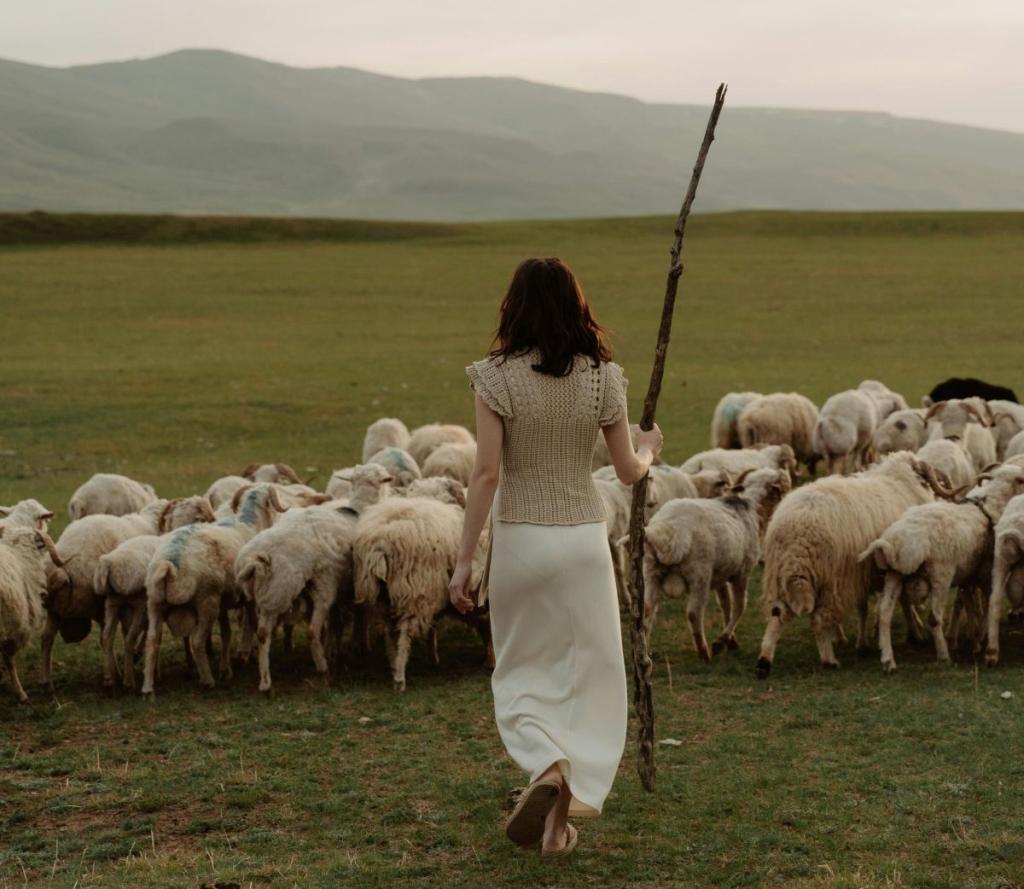
I know people sometimes wonder why Jesus mixes metaphors here. But he is intentionally stress-testing the language and images of his time to find out what words can bear the weight of his divine mandate.
Throwing sand in the gears
Jesus recognizes that you cannot build the Beloved Community without disrupting and throwing sand in the well-oiled gears of imperial power. He does this throughout the Gospel of John to demonstrate how power responds under the strain of prophetic observation and accountability.
Well, we saw on Good Friday how it responds. It will use any means necessary to shame, silence, wound, beat, smackdown, cancel, and kill the love and grace that brought this world into existence in the first place.
But on Easter morning, we saw how that grace and love responds in turn. Jesus’s risen body is “documentation with a pulse.” (And I thank Afro-futurist Shayla Lawson for that phrase.)
The documentation of a future that was not just wished for, but proclaimed.
Not just hoped for, but activated.
Not just imagined, but birthed.
Write yourselves into the documentation!
So I want to encourage you, my fellow shepherds, to write yourselves into that documentation.
When they come for your sheep, swing the gate closed!
When they dress up their bombs with biblical language, declare God’s judgement upon them!
And when they pollute your pastures with plastics, proclaim the protection of our Creator God!
You don’t need to be polite. I mean – I know you need to keep your job. But when you discern that the time is right to push, don’t hesitate.
If they come for you
And if they come for you, stand firm knowing that there are fellow shepherds standing alongside you who join you in refusing to cooperate with the idolatrous self-mythology of empire.
Live into this abundance as an act of resistance.
Organize this abundance as an act of communal resilience.
And rest in this abundance trusting that God has prepared a table before you in the presence of our enemies. Our cups runneth over! Goodness and mercy are following us, pursuing us, like a shepherd who will not let us go.
Follow his voice. Do the Shepherd’s work. And rejoice in the abundance of our God. Amen!
Read also:
Reclaiming 1 Peter 2:19-25 From Abuse: Sermon for Resistance
Beware of Wolves in Shepherds’ Clothing: Jeremiah 23:1-4
Thanks to: Shayla Lawson, “Karma is a Bitch: Angel with Footnotes,” April 9, 2026. https://open.substack.com/pub/shaylalawson/p/karma-is-a-bitch?utm_campaign=post-expanded-share&utm_medium=web

The Rev. Dr. Leah D. Schade is a seminary professor, ordained minister, and co-founder of the Clergy Emergency League. Her opinions are her own.
Leah is the author of Preaching and Social Issues: Tools and Tactics for Empowering Your Prophetic Voice (Rowman & Littlefield, 2024), Preaching in the Purple Zone: Ministry in the Red-Blue Divide (Rowman & Littlefield, 2019) and Creation-Crisis Preaching: Ecology, Theology, and the Pulpit (Chalice Press, 2015). She is the co-editor of Rooted and Rising: Voices of Courage in a Time of Climate Crisis (Rowman & Littlefield, 2019). Her book, Introduction to Preaching: Scripture, Theology, and Sermon Preparation, was co-authored with Jerry L. Sumney and Emily Askew (Rowman & Littlefield, 2023).














 Ad-Free & Subscriber Log-In