

More pointedly, can preachers talk about climate change without using the term “climate change”? This article explores how preachers can navigate the fear of political pushback versus the need for clear communication about climate change.
For Earth Day – can preachers talk about climate change?
As Earth Day approaches and in the weeks that follow, many preachers will be working on sermons connecting environmental issues to faith and the Bible.
They’ll be reading texts through a “green lens” to unearth biblical tenets that support an ethic of Earth care. They’ll draw on theological premises to support their claims that caring for God’s Creation is integral to their tradition’s faith practices.
And they’ll look for hymns, prayers, and rituals of baptism and communion to make liturgical holding spaces for these sermons. Centering God’s Creation in worship shows that Earth itself worships God and deserves our care.
But can preachers talk about climate change in their sermons?
Or should they find alternatives to avoid the political pushback they may receive for using this term?
I’m a seminary professor who teaches preaching and worship. I also research the ways in which clergy and congregations navigate the tricky terrain of sermons about environmental issues.
Several years ago, my team and I surveyed hundreds of parishioners in mainline Protestant congregations in the Midwest. We gave them a list of terms like “abortion,” “guns,” and “racism,” and asked which ones were “too political” to hear in a sermon. But we hid a little experiment within the list. We included the terms “climate change,” “environment,” and “God’s Creation” to get a read on how controversial these terms were. While climate change and environment ranked as highly political, God’s Creation faced no pushback.
This raises important questions for preachers and homileticians.
Can preachers talk about climate change without mentioning that exact issue? Or must they use indirect language to side-step controversy?
More broadly, what do preachers risk by using exact terminology about any social issues in sermons? And what might they lose by circumventing contentious vocabulary?
My team and I also surveyed thousands of U.S. clergy over the past eight years. Our research indicates that more preachers are now addressing climate and environmental issues. In 2025, nearly 8 in 10 said they did so in the previous year, more than double the number from 2017.
Preachers talk about climate change, depending on their context
In congregations open to direct messages about environmental topics, preachers talk about climate change without inhibitions. As one wrote, “My worship services are always framed inclusively for all Creation. We avoid speciesism while affirming science. I emphasize caring for the environment, have addressed climate change and environmental issues repeatedly, and talked about intersectional issues with the environment such as militarism, capitalism, racism, sexism, wealth inequity, fascism, etc.”
However, we found that some report receiving angry emails, direct confrontation, loss of worship attendance, and even threats when they talk about controversial social issues, including climate change.
Evading controversy through euphemisms and indirect language
Given the pushback, some preachers soften the impact of addressing environmental issues by using expressions such as “stewarding the Earth.” Consider these responses:
- “I describe Creation as God’s gift to us and that we have a responsibility to care for that gift, but I don’t take a political side in that discussion. I let them figure out how to work that out for themselves.”
- “I am in oil country, so I dance carefully here. We talk about stewardship of God’s Creation all the time, though.”
- “I preach generalized care for Creation without mentioning climate change.”
In other words, some preachers use euphemisms, coded language, and evasive tactics to avoid mentioning climate change.
But massaging the message creates unintended consequences.
The problem with using euphemisms for the climate crisis
A recent study by a team of researchers revealed something that challenges the idea that preachers should not use the term “climate change” in their sermons. Kaurov, Oreskes, et al, studied just over 700,000 video transcripts of worship services from Roman Catholic churches from 2020-2024. Their goal was to identify climate change communication wherever it might appear, including sermons, hymns, prayers, and community announcements.
For denominational comparison, they also analyzed transcripts from Southern Baptist Convention, Presbyterian Church (USA), United Church of Christ, and Association of Related Churches worship services, for a total of 1.1 million worship videos.
This unprecedented analysis revealed that preachers mention climate change far less than EcoPreachers like me would hope.
“Climate change, as a topic, is virtually absent from discourse in the U.S. Catholic Masses,” they write. “This is despite Pope Francis’s strong emphasis on environmental stewardship in his two encyclicals Laudato Si’ (2015) and Laudate Deum (2023).”
Clergy are not mentioning climate change
Researchers found that less than 5% of the worship videos contained at least a single mention of “climate change” or a related keyword, such as global warming or greenhouse effect.
- Roman Catholic Church: Mentioned in only 0.40% of analyzed videos.
- PCUSA: Mentioned in 2.16%.
- UCC: Mentioned in 4.63%.
The study deliberately excluded broader or more ambiguous terms such as “environment,” “nature,” or “future generations,” as these often refer to social or theological concepts unrelated to the climate. They also chose not to track terms like “sustainability,” “environmental stewardship,” or “ecological conversion,” noting that while they are relevant, they address environmental concerns beyond the specific scope of climate change.
So, even though nearly 80% of mainline Protestant preachers in our 2025 survey indicated they addressed environmental or climate issues in their sermons, if they did not actually use the term “climate change,” it would not have shown up in the Kaurov study.
Rethinking my advice to preachers
This being the case, I’m rethinking the advice I give to preachers who hesitate to use the term “climate change” because it’s too controversial. While euphemisms like “stewarding the Earth” avoid conflict, they make the message virtually invisible in broader discourse and may cause listeners to miss the point entirely.
So, can preachers can talk about climate change directly in ways that invite conversation rather than causing crossed arms and plugged ears?
My colleagues and I wrestle with this question in our grant project, Compelling Preaching for a Climate-Changed World, a joint venture with Lexington Theological Seminary, The BTS Center, and Creation Justice Ministries.
We’ve worked with hundreds of preachers in our EcoPreacher Cohort over the past three years to help them discern pathways to address climate and environmental issues. We want them to feel confident that their sermons help people experience a connection between their faith and the world that sustains them, while inspiring faith in action.
One of our lines of inquiry is exploring how climate emotions can bridge the gap between faith and the environmental crisis.
Climate emotions
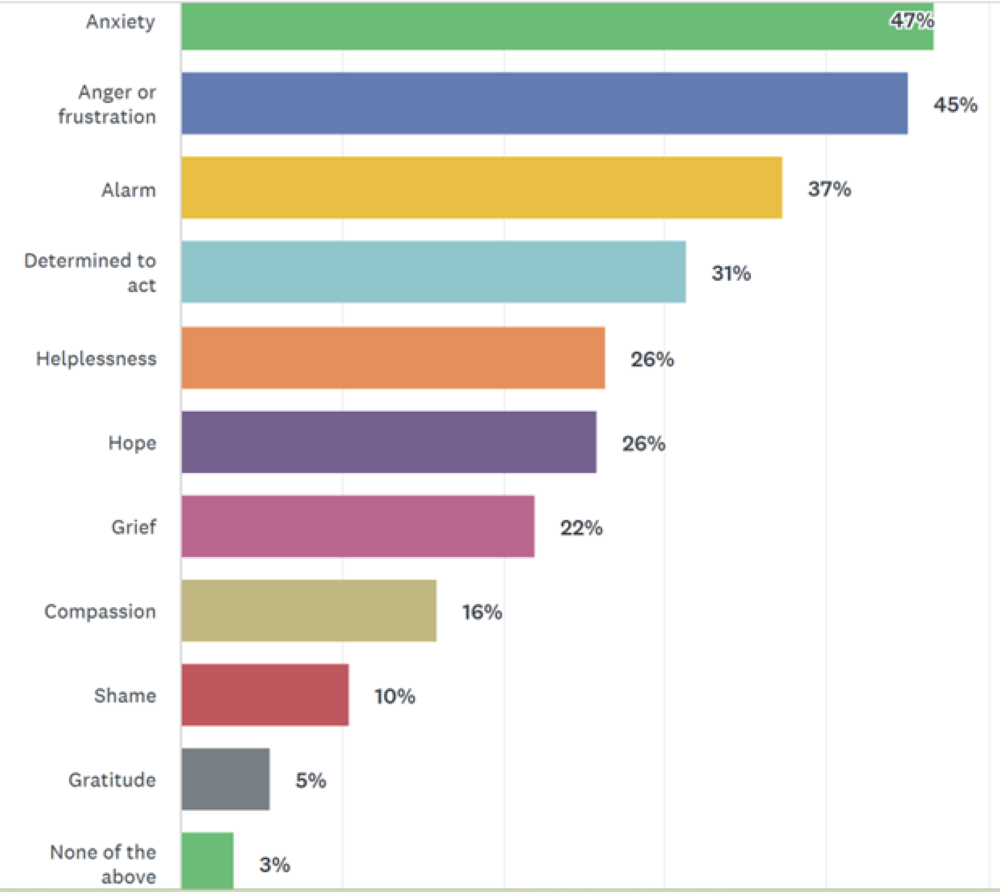
In 2025, we surveyed 186 congregation members in our EcoPreachers’ congregations. We found that congregants are already feeling anxiety (47%) and anger/frustration (45%) about the climate crisis. Also, more than a third feel alarmed (37%) while 31% are determined to act.
Turning anxiety into action
How could preachers use this information about climate emotions to talk about climate change directly in their sermons?
Here’s the thing about preaching and climate change. The preacher’s role is not to be a political commentator, but to serve as a pastoral guide for these existing emotions. Instead of debating science, preachers can help their congregations process the very real feelings by naming them honestly and without judgement.
Before or during the sermon, the preacher could ask people to write down what emotions they feel when they hear the term “climate change.” Some may name the feelings in the list above. Others may indicate they feel nothing at all, especially if they don’t believe climate change is happening or isn’t caused by humans.
Regardless of what people express, however, the preacher can remind them that any feelings they have are neither right nor wrong. Emotions are a gift from God, and we can use them to explore and go deeper with our faith guiding us as we process strong feelings about what’s happening in the world.
Addressing eco-anxiety and eco-grief
Inviting people to share their emotions about climate change can also open the door to address the elephant in the room – eco-anxiety and eco-grief.
Whether someone think it’s because of climate change or merely the normal cycles of the Earth, the fact remains: we have lost so much. And we’re on the trajectory to lose so much more. For many, it’s overwhelming to consider island nations disappearing from sea rise, icebergs diminishing, species going extinct, and extreme heat and catastrophic weather claiming countless lives.
And yet, if preachers say nothing about this loss, they’re giving the implicit signal that this is not something the church cares about or can even talk about. This also tells young people, many of whom are panicked about the future of the world they will be responsible for, that the church does not share their alarm about what is happening.
Making space for climate emotions
So, a preacher can ask:
- What would it look like to make space for the wide range of climate emotions and frame them biblically, theologically, and emotionally?
- For those who are feeling eco-anxiety and eco-grief, what are ways that we can respond as a congregation?
- Can this be a church where we take up the lament of those who are grieving losses due to climate change and channel that into spiritual and communal faith practices?

Responding to eco-trauma
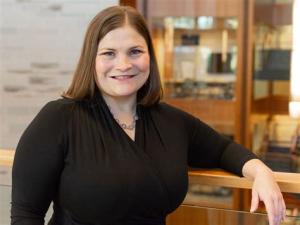
In her course “Preaching Death and Eschatology with the Earth,” my homiletics colleague, Kimberly Wagner, leads students in a “humble experiment” at the Farminary, a fully functioning farm at Princeton Theological Seminary. The class involves engaging in farm work, holding conversations, and practicing outdoor preaching. Her goal for the class is for students to witness the Earth’s death and winterization as a way to experience “a taste of eschatological promise.”
Yet, she discovered that the most challenging week for students was when they discussed eco-trauma and eco-anxiety. But rather than shut down in response to these feelings, they leaned into them. They found that giving language to these emotions provided a significant sense of relief and validation for experiences they had long suppressed.
Suggestions for preaching about climate change and climate trauma
Based on her research and classroom experiences, Wagner wrote a paper for the Academy of Homiletics workgroup on Preaching, Environment, and Climate Crisis in 2024. She offered several suggestions for preaching about climate trauma. These are helpful when preachers talk about climate change.
- Name the Experience: Use biblical language (exile, famine) to validate how climate distress feels in the body.
- Embrace the “Both/And”: Address the “moral injury” of being both a perpetrator and a victim of ecological degradation. Use biblical characters like Peter or King David as models of being both “saints and sinners.”
- Intertwine Lament and Confession: Use passages such as Psalm 143 or Lamentations 3 to remove the separation from these rituals. Draw on these ancient words to give voice for crying out to God while simultaneously confessing our role in the harm.
- The Pulpit as a Healing Space: Position the preacher as a “trusted guide” who helps the community resist shame or repression of emotions. Help the community understand how climate trauma shapes their faithful response.
“Eco-trauma and eco-anxiety are on the rise in our society, communities, and churches,” Wagner writes. “This is a reality that preachers and homileticians can no longer ignore, particularly as eco-trauma can limit the capacity for people to richly and faithfully respond to the climate crisis.”
So: can preachers talk about climate change?
How can they not?
Read also:
Ministering through Climate Grief: An Earth Day Reflection
Preaching about Climate Change? Scientists Can Help!
How to Preach a Sermon about Climate Change and Your Congregation
Love Your Neighbor, Including Our Earth-kin: Lev. 19, Matt. 22
Beyond Earth Day: 10 Ideas for Environmental Advocacy and Activism in Your Church
Sources:
Alexander A. Kaurov, Naomi Oreskes, et al, “Unspoken Crisis: The Absence of Climate Change Communication in U.S. Catholic Churches,” Climatic Change, 2025, 178:164, https://doi.org/10.1007/s10584-025-04001-7.
Leah D. Schade, “You Can’t Say THAT in a Sermon: Social Issues, Preaching, and Dialogue During a Time of Societal Upheaval,” Homiletic, Vol. 46, No. 1 (2021), https://vurj.vanderbilt.edu/index.php/homiletic/article/view/5142)
Kimberly Wagner, “Proclamation Under Pressure: Faithful Preaching Amid Climate Trauma, Ecotrauma, and Ecoanxiety,” unpublished paper, presented at the Academy of Homiletics, 2024.

The Rev. Dr. Leah D. Schade is a seminary professor, ordained minister, and grant director of Compelling Preaching in a Climate-Changed World, a partnership of Lexington Theological Seminary, Creation Justice Ministries, and The BTS Center. Her opinions are her own.
Leah is the author of Preaching and Social Issues: Tools and Tactics for Empowering Your Prophetic Voice (Rowman & Littlefield, 2024), Preaching in the Purple Zone: Ministry in the Red-Blue Divide (Rowman & Littlefield, 2019) and Creation-Crisis Preaching: Ecology, Theology, and the Pulpit (Chalice Press, 2015). She is the co-editor of Rooted and Rising: Voices of Courage in a Time of Climate Crisis (Rowman & Littlefield, 2019). Her book, Introduction to Preaching: Scripture, Theology, and Sermon Preparation, was co-authored with Jerry L. Sumney and Emily Askew (Rowman & Littlefield, 2023).














 Ad-Free & Subscriber Log-In