

Preaching about immigration, Christian Nationalism, and democracy were among the top priorities for mainline ministers in 2024-25. This article explores the implications of preaching about these issues and suggests biblical texts and sermon strategies, with particular attention to Matthew 2:13–23, the Slaughter of the Innocents, amid the recent 60 Minutes CECOT scandal – where these issues coalesce.
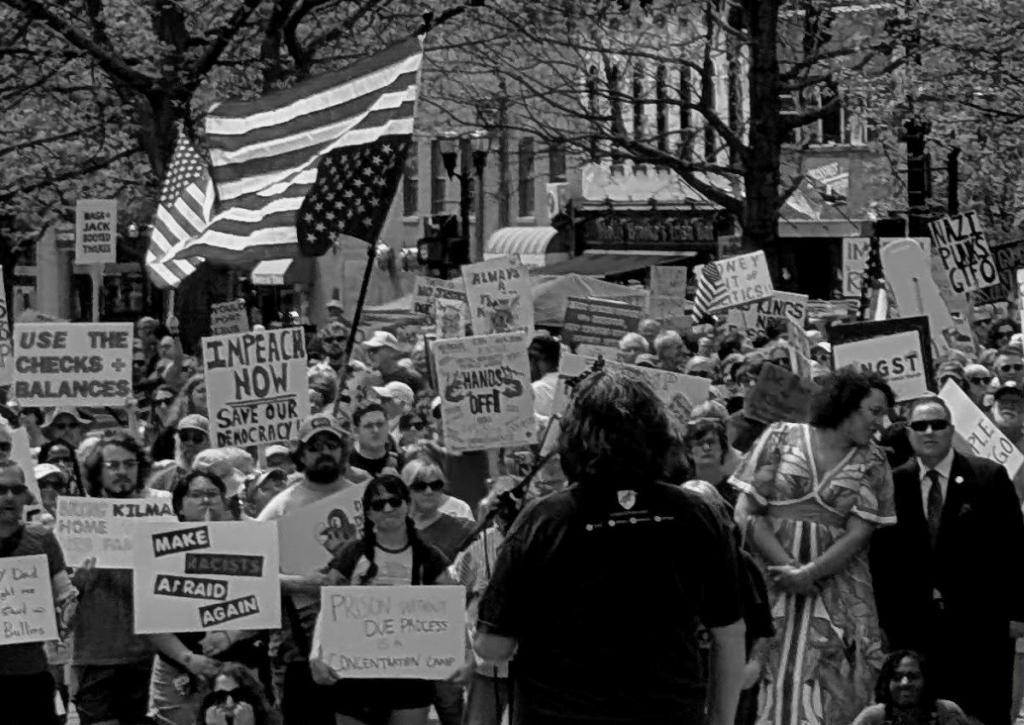
Our national survey examined ministry, preaching and social issues, revealing the importance of addressing critical contemporary topics for clergy. This is part three in a series on the top ten social issues in mainline Protestant sermons for 2024-25.
[Read part one here: Top 10 Social Issues in Mainline Protestant Sermons, 2024-25.]
[Read part two here: Preaching about Racism, Economics, and Environment.]
By Leah D. Schade, with Amanda Wilson Harper and Wayne Thompson
Ministry, Preaching, and Social Issues: 8 Years of Research
During the first 100 days of the second Trump administration, my team and I conducted a survey of U.S. mainline Protestant clergy about their attitudes and experiences with ministry, preaching, and social issues. This was the fourth survey wave of a research project that my colleagues, Amanda Wilson Harper (Tarleton State University) and Wayne Thompson (Concordia University), and I began in 2017.
In the last eight years, we’ve collected more than 7,000 survey responses from clergy in all fifty states. We recruited respondents through surveys sent through denominational channels, email lists, and social media platforms. The majority of the respondents, all anonymous, came from ELCA Lutheran, United Methodist, Presbyterian-USA, Disciples of Christ, Episcopal, and United Church of Christ.
We asked the respondents in each survey wave to indicate which contemporary issues they addressed in a sermon in the previous twelve months, choosing from a list of 20-30 topics. The 1,017 respondents in 2025 chose from 22 topics ranging from abortion to racism to technology and AI. Control variables incorporated into the analysis included gender, racial identity, political identity, and levels of congregational support, all assessed as factors in preaching about contested issues.*
To be clear, we did not examine the sermons of the respondents. Our focus was on clergy attitudes and opinions about preaching and social issues. The data has allowed us to track trends in topics that clergy have intentionally addressed and avoided in their sermons since the first Trump administration.
[What social issues will preachers likely avoid in 2026? Read: Taboo Topics Mainline Preachers Will Likely Avoid in 2026.]
Demographics of Respondents
The 2025 sample included gender representation that leaned toward females (60%), with 81% heterosexual, 91% white identity, and 88% primarily English speaking. Age distribution ranged from early twenties to over age 70 (median age 53) and included those serving in ministry from less than a year to 30+ years (median 18 years). Respondents served congregations with worship attendance from less than 25 to over 1,000, from rural/small town settings to suburban and urban.
Politically, 91% identified as progressive or moderate-lean progressive, 4% moderate, and 5% moderate-lean conservative or conservative.
Preaching about Immigration, Christian Nationalism, and Democracy Were Top Priorities
In 2025, nearly six in ten preachers (58%) indicated that they addressed social issues more than ten times a year in their preaching, teaching, or other venues of ministry. Preaching about immigration, democracy, and Christian nationalism were among the top ten.
[See: Survey Shows More Mainline Clergy Addressing Social Issues.]

- Sixty-four percent reported preaching about issues around democracy and political divisions, two points up from 62% in 2021.
- Sixty-two percent indicated they addressed immigration, up 18 points from 44% in 2021.
- New in our 2025 survey was the topic of Christian nationalism. Nearly six in ten preachers (57%) indicated that they had spoken about Christian nationalism in a sermon in the previous year.
For this article, we’ll examine these topics together because of the many ways in which they intersect. Democracy, immigration, and Christian nationalism were clustered in ways that indicated a strong likelihood that preaching about one correlated with at least one other and sometimes all three. For example, nearly half (47%) of those who preached about democracy also preached about immigration. Forty-three percent addressing democracy also preached about Christian nationalism. One third of all respondents preached on all three issues in 2024-25.
Interconnected Issues
Defending democracy, resisting Christian nationalism, and supporting immigrants are interconnected efforts. They share common goals of preserving inclusive, pluralistic governance that protects human dignity and minority rights against religious-political coercion and oppression.
When preachers address these issues, they draw on a long tradition of biblical texts based on principles of hospitality toward the outsider, the divine mandate to care for the vulnerable, and an emphasis on human dignity and equality before God. These principles highlight the importance of justice, accountability, and citizen responsibility – all of which are dually compatible with the Christian vocation and democratic governance.
Here’s what we learned about the ways in which political divides, demographics, and local contexts factored into the complexities of addressing these issues.
Preaching about Democracy
Since the attempted coup of Jan. 6, 2021, democracy has been under assault in the U.S. The current administration’s repeated attempts to delegitimize the judiciary, undermine democratic norms, and concentrate power in the executive branch are eroding democratic structures. Undercutting checks and balances, demonizing the media, and openly defying court orders have all contributed to a backsliding away from democracy and toward authoritarianism.
Clergy and churches have a great deal at stake in the preservation of democracy. The First Amendment protects freedom of speech, assembly, and religion. However, the current administration has undermined these pillars by limiting protest and assembly rights, targeting churches for immigration roundups, and spreading lies about denominations misappropriating government funds.
The head of Interfaith Alliance, The Rev. Paul Brandeis Raushenbush, accused the administration of infringing on religious freedom in multiple ways. “From allowing immigration raids in churches, to targeting faith-based charities, to suppressing religious diversity, the Trump Administration’s aggressive government overreach is infringing on religious freedom in a way we haven’t seen for generations,” Raushenbush said.
In our 2021 and 2025 surveys, more than 60% indicated that they had spoken about democracy issues in their sermons. In 2025, 72% said they encouraged their congregation to vote in an upcoming election and 62% encouraged them to vote according to their Christian values. However, this strong support for advocating for democracy decreased sharply for preachers who voted for Trump (39%), and those who were politically conservative (47%).
Preaching and Christian Nationalism
The rise of Christian nationalism correlates with the erosion of democracy. Christian nationalism fuses rightwing Christian fundamentalism with governance, undermines pluralism and civil rights, insists on theocracy instead of the rule of law, and justifies violence actions against minority groups. According to social science scholar Andrew Whitehead, Project 2025 – the blueprint for shaping the government according to a distortion of biblical principles – has suffused Christian nationalism across the entire federal government.
Our survey showed that while conservative and Trump voting preachers rarely addressed Christian nationalism in their sermons (18% and 11% respectively), six in ten progressive preachers preached about the topic in 2024-25. However, the percentage decreased for those who indicated having little support from congregational leaders (45%), served more conservative congregations (43%), or were associate/assistant/youth ministers (41%).
With unprecedented repression of protests, deployment of the National Guard and federal forces to quell demonstrations, and threats to use justice department action against opponents, it is possible that preachers may face the dilemma of speaking out and risking censure or remaining silent and reneging on their ordination vows.
Our data showed that preachers who receive support from clergy networks and/or denominational leadership felt more supported in preaching about democracy and Christian nationalism. Thus, we recommend that ministers connect with colleagues, and that denominational leaders increase their support of pastors to engage these issues.
Preaching and Immigration
In 2021, the Biden Administration began reversing some of the policies of the previous Trump administration such as separating families and forcing migrants to remain in Mexico. In 2021, only four in ten (44%) mainline preachers in our survey indicated they had addressed immigration. That number jumped to six in ten (62%) in 2025. Preachers were likely responding to Trump’s sweeping changes in immigration policy.
Following the Project 2025 blueprint to overhaul immigration, he expanded border enforcement along the U.S.-Mexico border, cut legal immigration pathways, and issued a surge of executive actions to increase detentions and deportations. The administration expanded ICE enforcement with a massive funding boost for immigration enforcement through a bill passed in Congress. This funding enabled increased deployment of additional agents to sustain high enforcement, expanded detention capacity and daily detainee levels, and implemented large-scale deportations.
Clergy on the frontlines
Clergy are often on the front lines of immigration issues by ministering to families separated by ICE sweeps, organizing care for immigrant communities fearful of being targeted by ICE officials, and protesting ICE facilities through protests and direct actions. Ministers have actively resisted ICE actions by organizing weekly prayer vigils, blocking vans at processing facilities, and preaching sermons with a faith-based critique of deportation policies.
However, conservative clergy were much less likely to address immigration (26%) than their progressive colleagues (64%). Trump voters were less likely (14%) than Harris voters (63%). Those in conservative-leaning congregations were less likely (47%) than those serving more progressive parishioners (72%). Those serving rural congregations were less likely (54%) than those in suburban (68%) and urban churches (74%). Also, those with little or no support from congregational leaders were less likely (46%) than those with moderate or significant support (68%).
[See: Should I Stay or Go? Post-Election Clergy Soul-Searching.]
As the Trump administration continues to double down on its immigration policies that result in kidnapping, refusing due process, rendition, and torture of immigrants, public opinion has soured. Preachers may feel more emboldened to speak to these issues in their sermons as communities watch local children zip tied in raids, see crops rotting in fields for lack of laborers, and hear stories of innocent people arrested, detained, and sent to foreign prisons.
Preaching Against Government Repression and State-Sanctioned Torture
The recent story about CBS repressing the 60 Minutes’ news report about CECOT may add urgency to preaching about immigration, Christian nationalism, and democracy. On Sunday, Dec. 21st, the editor-in-chief of CBS News, Bari Weiss, cancelled a segment about the Trump administration’s renditions of migrants to the CECOT prison in El Salvador. The story focused on the torture the prisoners endured and debunked the claim that they were “terrorists.” But Weiss pulled it because of a de facto veto from the Trump administration which refused to be interviewed for the segment.
The reporter for the story, Sharyn Alfonsi, wrote in an email to her colleagues: “Our story was screened five times and cleared by both CBS attorneys and Standards and Practices. It is factually correct. In my view, pulling it now—after every rigorous internal check has been met is not an editorial decision, it is a political one.” However, because the segment had already been distributed in Canada, copies of it appeared in the U.S. and have now gone viral. [Watch it here.]
In one scandal, the suppression of the free press, the influence of Christian nationalism, and the torture of immigrants coalesce.
Slaughter of the Innocents
The 60 Minutes CECOT incident comes at a time when many churches are preparing for the First Sunday of Christmas which, this year, confronts us with the Slaughter of the Innocents in Matt. 2:13-23. As I wrote in this 2019 piece, the parallels between Trump and Herod are eerily and frighteningly similar. Just as Herod ordered the mass murder of young children to secure his fragile ego and prevent threats to his power, Trump’s policies have targeted immigrants and children for the same reasons.
This year, Trump’s cutting of foreign aid is estimated to have resulted in the deaths of 200,000 children. His refusal to act on gun violence has led to this epidemic being the leading cause of death for U.S. children. And estimates show that 70% of immigrants arrested, detained, or rendered have no criminal record. In other words, they are innocents.
Biblical Entry Points
For preachers wanting to address the intersections of immigration, Christian nationalism, and democracy, there are several other Scripture passages to support such a sermon.
- Proverbs 31:8-9, “Speak out for those who cannot speak… defend the rights of the poor and needy,” grounds advocacy for immigrants and public accountability for the government as faithful practice.
- Leviticus 19:33–34, “You shall love the foreigner as yourself, for you were foreigners in the land of Egypt,” could be the basis of a sermon asserting that hospitality to immigrants is not optional; it is covenantal obedience.
- Jesus’s parable about the sheep and the goats in Matthew Ch. 25:31-46 includes this verse: “I was a stranger and you welcomed me” (v. 35). Thus, hospitality to the vulnerable is the criterion of faithfulness.
- Luke 4:18–19 shows Jesus announcing good news to the poor, release to captives, and freedom for the oppressed. A sermon based on this text would frame salvation as social, political, and spiritual transformation.
In any of these sermon approaches, the preacher would want to emphasize the importance of defending the common good, resisting the fusion of religion and political power, and welcoming immigrants.
Connect the Dots in Preaching about Immigration, Democracy, and Christian Nationalism
Preaching about immigration, democracy, and Christian nationalism should help listeners identify consistently overlapping themes across Scripture. For one, God resists the fusion of divine authority with political domination. For another, faithful communities are called to protect the vulnerable and defend a shared civic life. Finally, the biblical tenet of welcoming immigrants – rather than kidnapping them and sending them to foreign concentration camps to be tortured – should not be something that Christians debate.
Instead, preachers and congregations must proclaim a biblical vision in which idolatrous nationalism is resisted, communal responsibility is embraced, and the stranger is defended. These are not separate moral concerns; rather, they are interwoven strands of one integrated faith commitment.
*Note: The 2025 study was approved in a human ethics review by the Concordia University Wisconsin-Ann Arbor Institutional Review Board, #IRB-FY25-136. The 2017, 2021, and 2023 studies followed protocols for the study of human subjects.
Up next:
Part Four: Preaching About LGBTQIA+, Mental Health, and Substance Abuse.
Part Five: Taboo Topics Mainline Preachers Will Likely Avoid in 2026.
Read also:
Clergy Stress & Resilience in a Divided America: 2025 Survey
Immigration Ministry: 8 Things Churches Should Do in 2025
Shoes in the Vineyard: Immigration and Jesus’s Parable
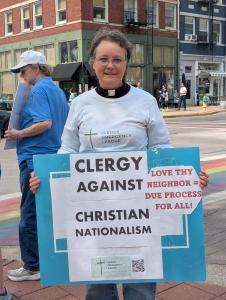
The Rev. Dr. Leah D. Schade is a seminary professor and ordained minister. Her opinions are her own. Leah is the author of Preaching and Social Issues: Tools and Tactics for Empowering Your Prophetic Voice (Rowman & Littlefield, 2024), Preaching in the Purple Zone: Ministry in the Red-Blue Divide (Rowman & Littlefield, 2019) and Creation-Crisis Preaching: Ecology, Theology, and the Pulpit (Chalice Press, 2015). She is the co-editor of Rooted and Rising: Voices of Courage in a Time of Climate Crisis (Rowman & Littlefield, 2019). Her book, Introduction to Preaching: Scripture, Theology, and Sermon Preparation, was co-authored with Jerry L. Sumney and Emily Askew (Rowman & Littlefield, 2023).












 Ad-Free & Subscriber Log-In