

Last Thursday evening, just past 9pm, I hurried across the central green of Keble College with a dear friend from my doctoral program at UCLA. She had just delivered a wonderful lecture at Oxford University’s Latin American Centre on Church Walk a few blocks away and we decided to commemorate the occasion by attending Keble’s Compline by candlelight. Reaching the chapel, I pushed open the thick, wooden doors, stepping into a darkness illuminated only by blue, white, and red candles arranged in waves on the floor emanating from the altar. The polyphonic chants of the final prayer of the Liturgy of the Hours enveloped us as we slipped into a pew near the back. The sounds carried both of our souls to Heaven, and we wept from sheer joy.
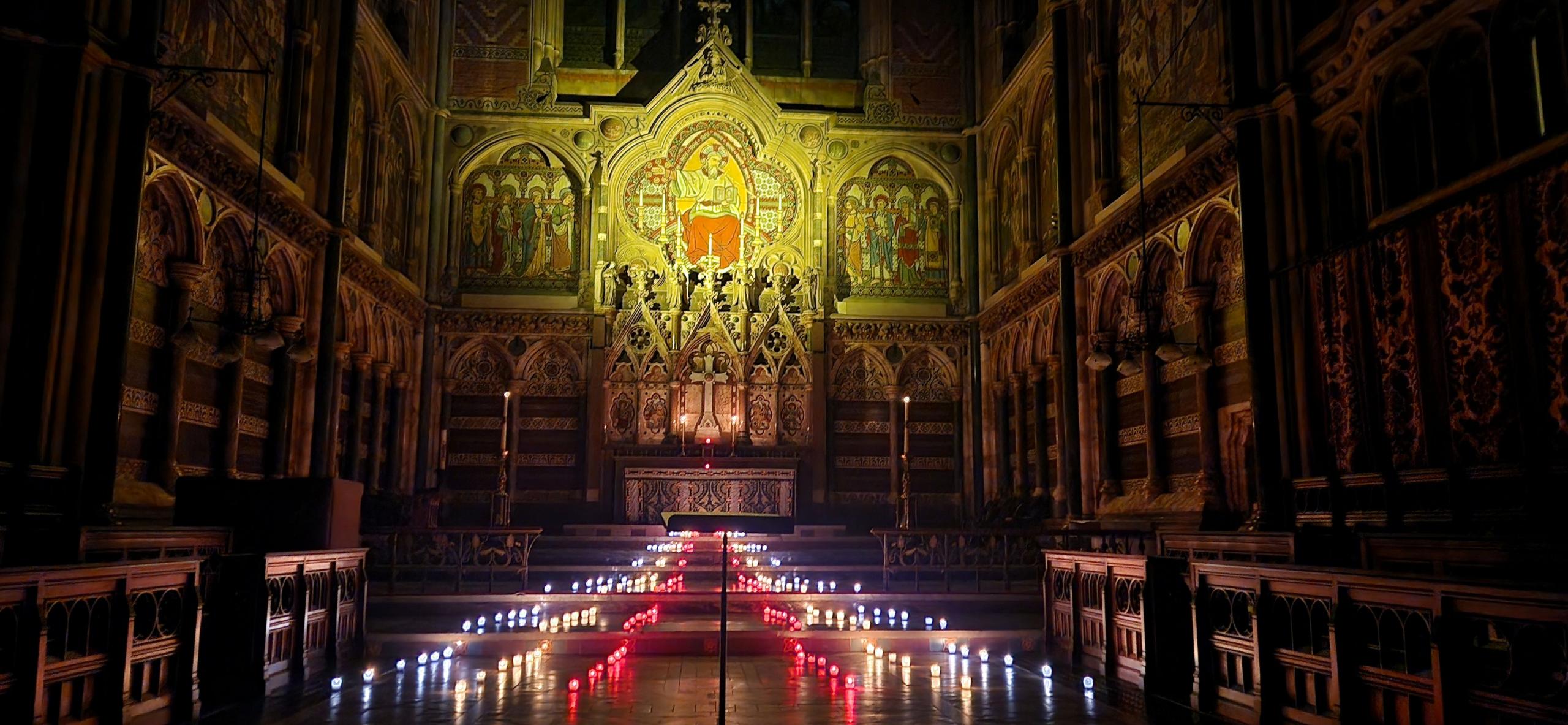
Compline by candlelight at Keble College Chapel, Oxford University, November 6, 2025. Photo by author.
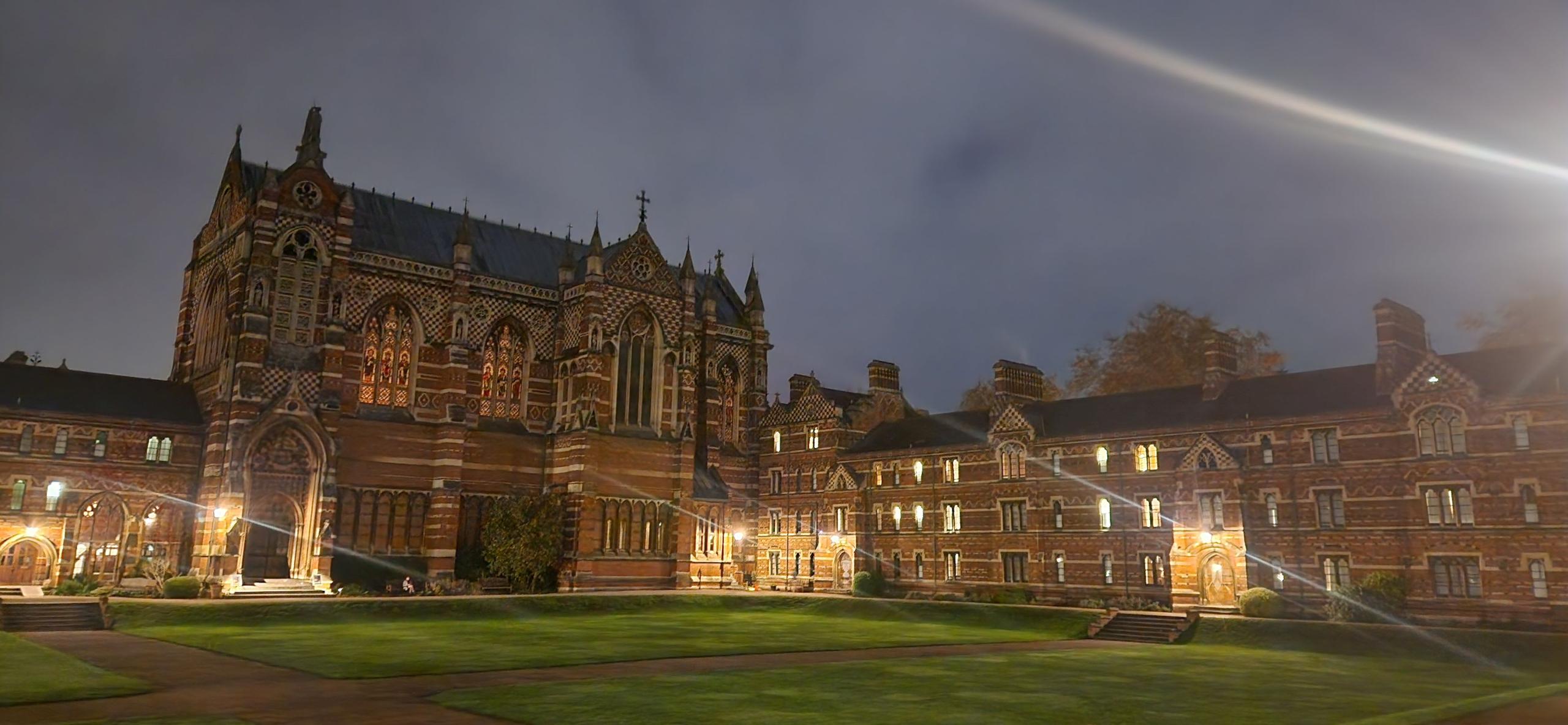
Keble College by moonlight, November 6, 2025. Photo by author.
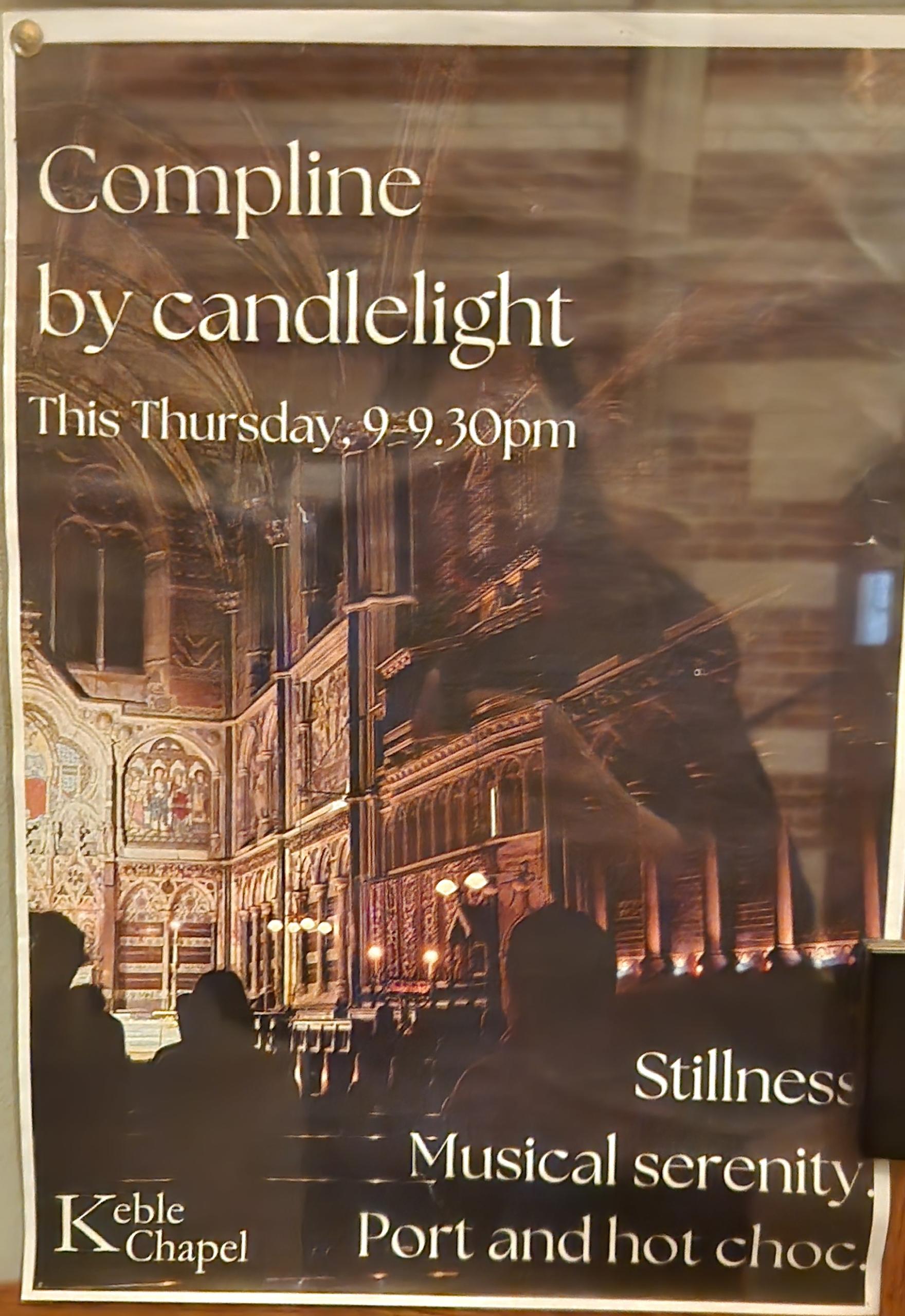
Flier announcing Keble Chapel’s Compline by candelight followed by port and hot chocolate in the Keble pub. Photo by author.
* * * * *
I spent my junior year abroad at Oxford University. As a student enrolled in the St. Ignatius Institute, a Great Books Program at the University of San Francisco, studying at Oxford served as a natural extensive of my classical education. During the 1998-1999 academic year, I lived and studied at St. Michael’s Hall, situated over the Ironmonger Shop on Shoe Lane. Home to the Centre for Medieval and Renaissance Studies (CMRS) where I attended both lecture courses and one-on-one tutorials with Oxford professors, I was also affiliated with Keble College, where I spent long hours in the library and ate at Hall.
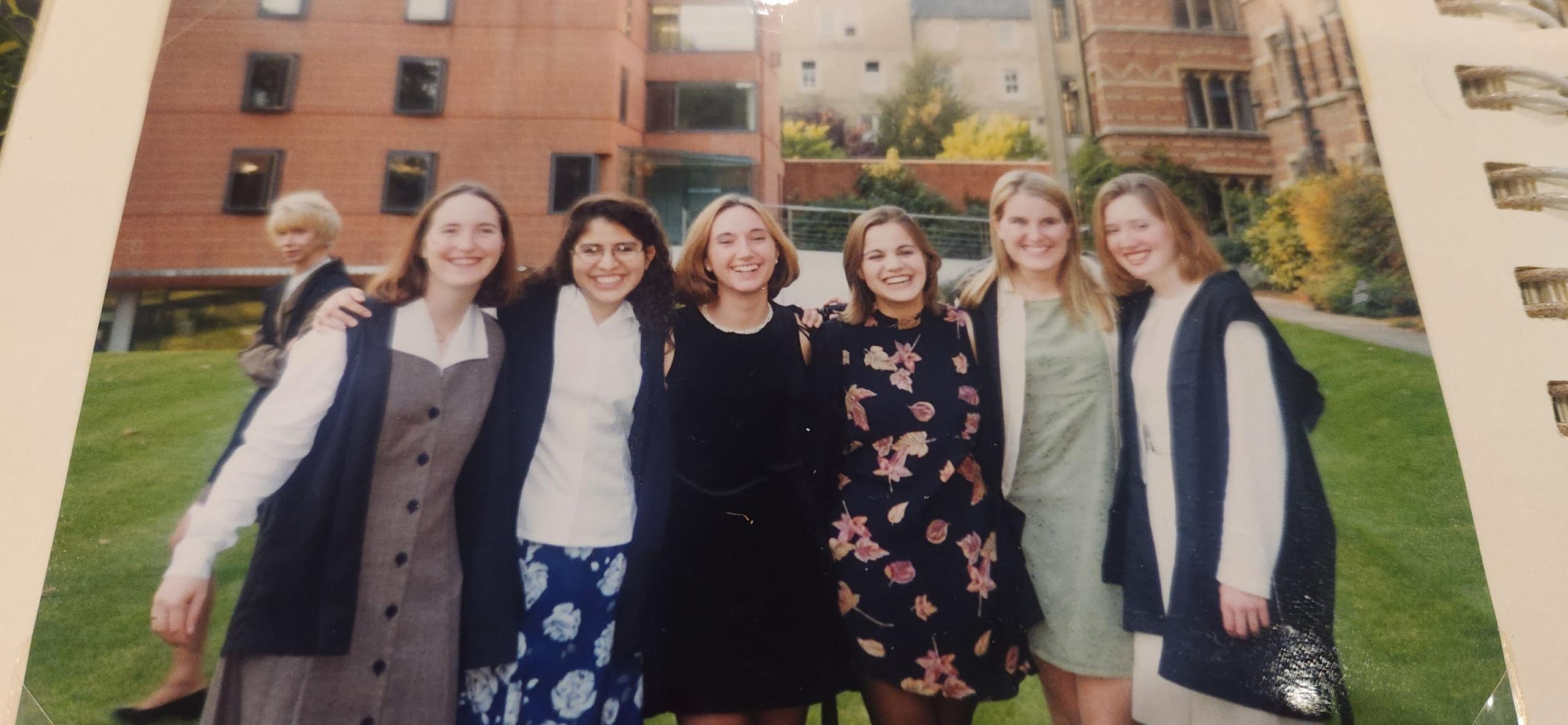 Keble College Formal Dinner, 20 September 1998. Author is second from the left; all students are wearing the gown required to enter Hall. Photo from author’s scrapbook.
CMRS drew a variety of students from across the United States, many from the Coalition of Christian Colleges and Universities (CCCU). My roommate at St. Michael’s Hall was a senior at Azusa Pacific University, where years later I would land my first academic position. Though I turned 21 within days of arriving in Oxford, I led a sheltered life, primarily fostering friendships with fellow Catholics in the St. Ignatius Institute. At CMRS, I shared a kitchen, dining room, junior common room, and computer lab with classmates of different faiths or some without any faith, interacting closely with atheists for the first time. Because the Protestant CCCU students had signed a pledge not to consume alcohol and I did not drink, I gravitated to their circle, attending their Bible studies and planning excursions to Wales and one-day outings to London on the Oxford Tube. During our gatherings, I debated the Eucharist, sacramental theology, and justification with my new friends.
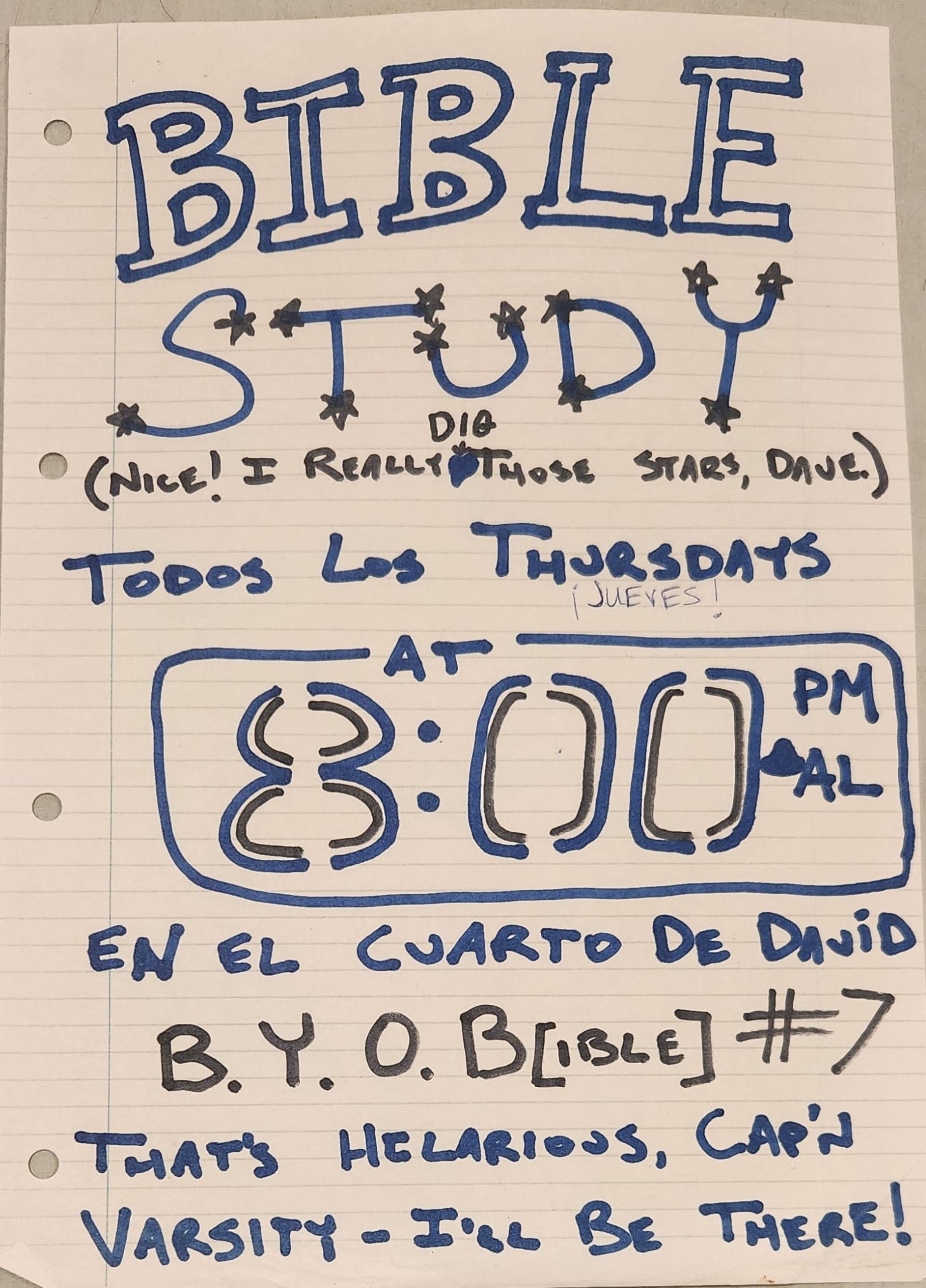
Hand drawn flier from 1998 posted by a CMRS student from Wheaton College announcing a Thursday night Bible Study in his room in St. Michael’s Hall. Photo by author.
Even so, because I attended Latin Mass at home – and High Latin Mass at the Oratory on St. Giles Street while in Oxford – all I could see in England was how Anglicanism resembled Catholicism, but was not Catholic. Never having attended a Protestant service, the beautiful, formerly Catholic churches in England were, to me, empty shells because they lacked the True Presence of their pre-Reformation past. My 20-something self felt sad upon entering an Anglican church because Jesus wasn’t there in the same way he was in the tabernacle of a Catholic church. I saw only difference.
Fast forward 27 years. Returning to England as a historian specializing in sixteenth-century Mexico who is currently teaching Renaissance and Reformation for the first time (as I wrote about in a previous post), my visit to England landed differently.
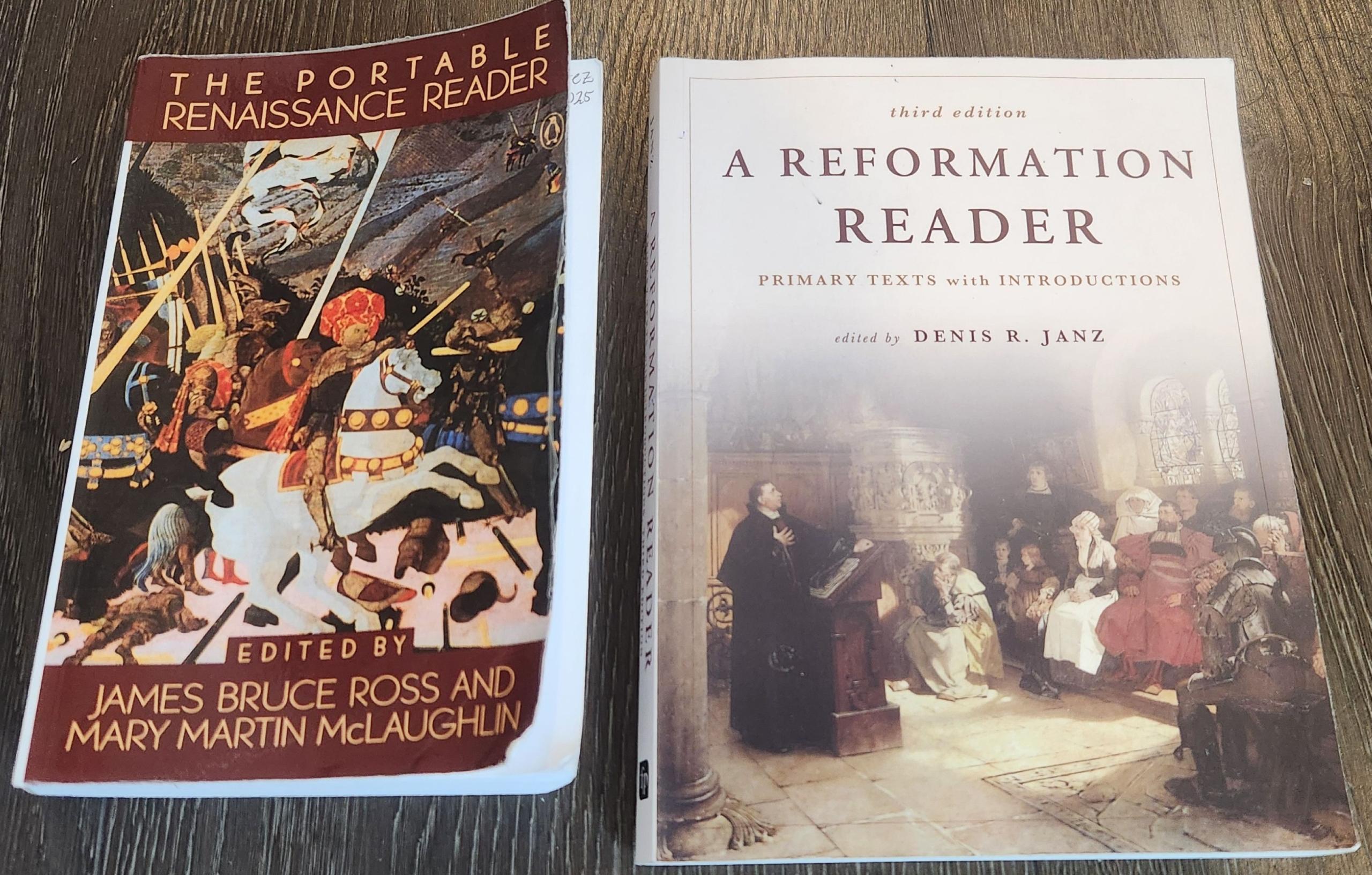
Our primary textbooks this semester: The Portable Renaissance Reader and A Reformation Reader: Primary Texts with Introductions. Photo by author.
At this point, students and I have spent twelve weeks closely reading and analyzing over 180 primary documents or selections of primary documents related to this period. Opening with medieval theology on the existence of God and the Black Death, then moving to consider the Papacy and Empire, the Renaissance man, the rebirth of art, music, and culture, Christian leadership, the education (or lack thereof) of women, European responses to the New World, and justification, we arrived to Luther, responses to Luther, debates about free will, Münster and the Peasant’s Revolt, Zwingli, and the Anabaptists. Together we have traced the rise of social, political, and religious unrest in western Europe and have admitted that the readings challenged many of our assumptions about the Reformation period.

A Catholic martyrs’ plaque on Holywell Street, Oxford:
“Near this spot, GEORGE NICHOLS, RICHARD YAXLEY, THOMAS BELSON, HUMPHREY PRITCHARD were executed for their Catholic Faith. 5 July 1589.” Photo by author.
Last week while I was in Oxford, the students and I met online to discuss Calvin and his program of godly living in Geneva, meaning that this week – right after my return from England – we reached the English Reformation, reading Henry VIII, Thomas Cranmer, Queen Mary, and Elizabeth I.
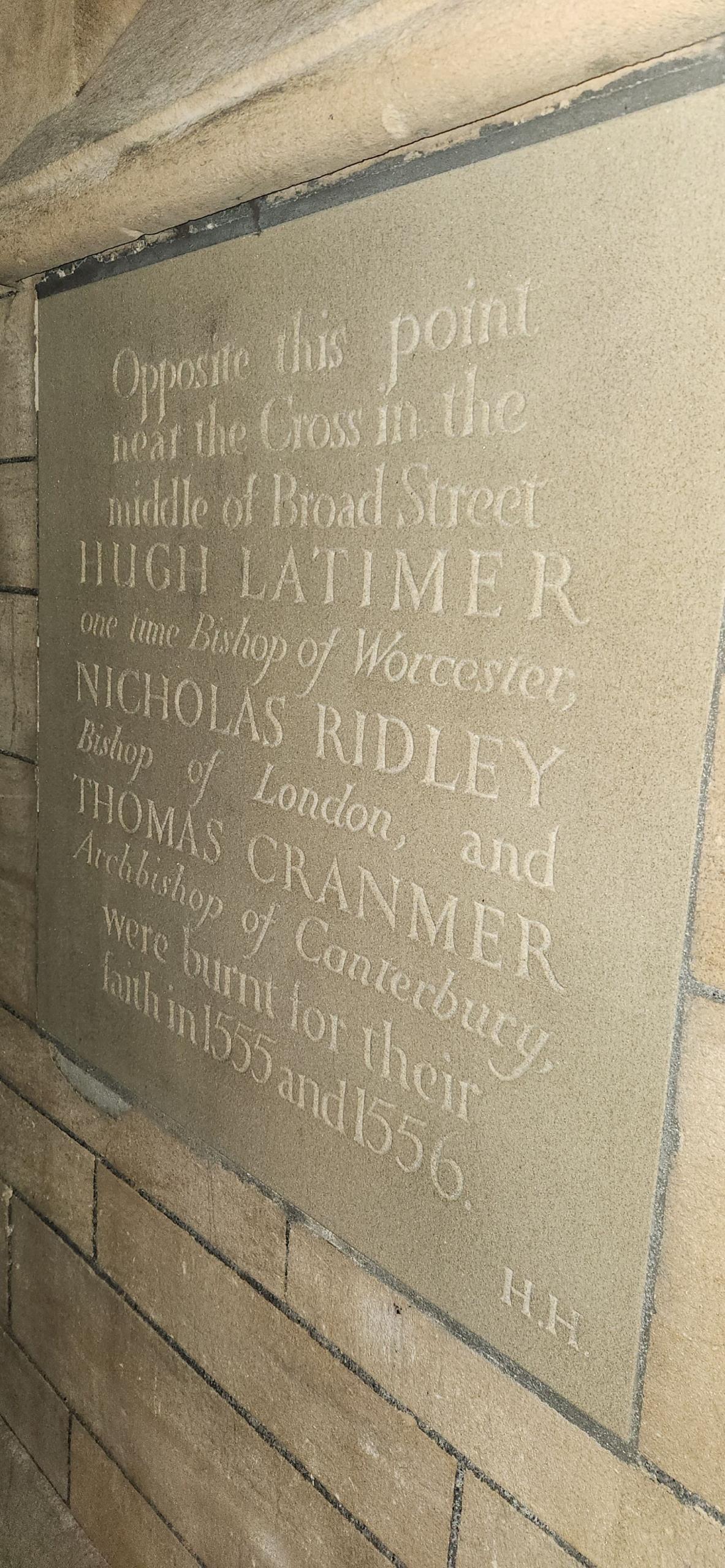
Commemorating the Protestant martyrs: “Opposite this point near the Cross in the middle of Broad Street HUGH LATIMER, one time bishop of Worcester, NICHOLAS RIDLEY, bishop of London, and THOMAS CRANMER, Archbishop of Canterbury, were burnt for their faith in 1555 and 1556.” Photo by author.
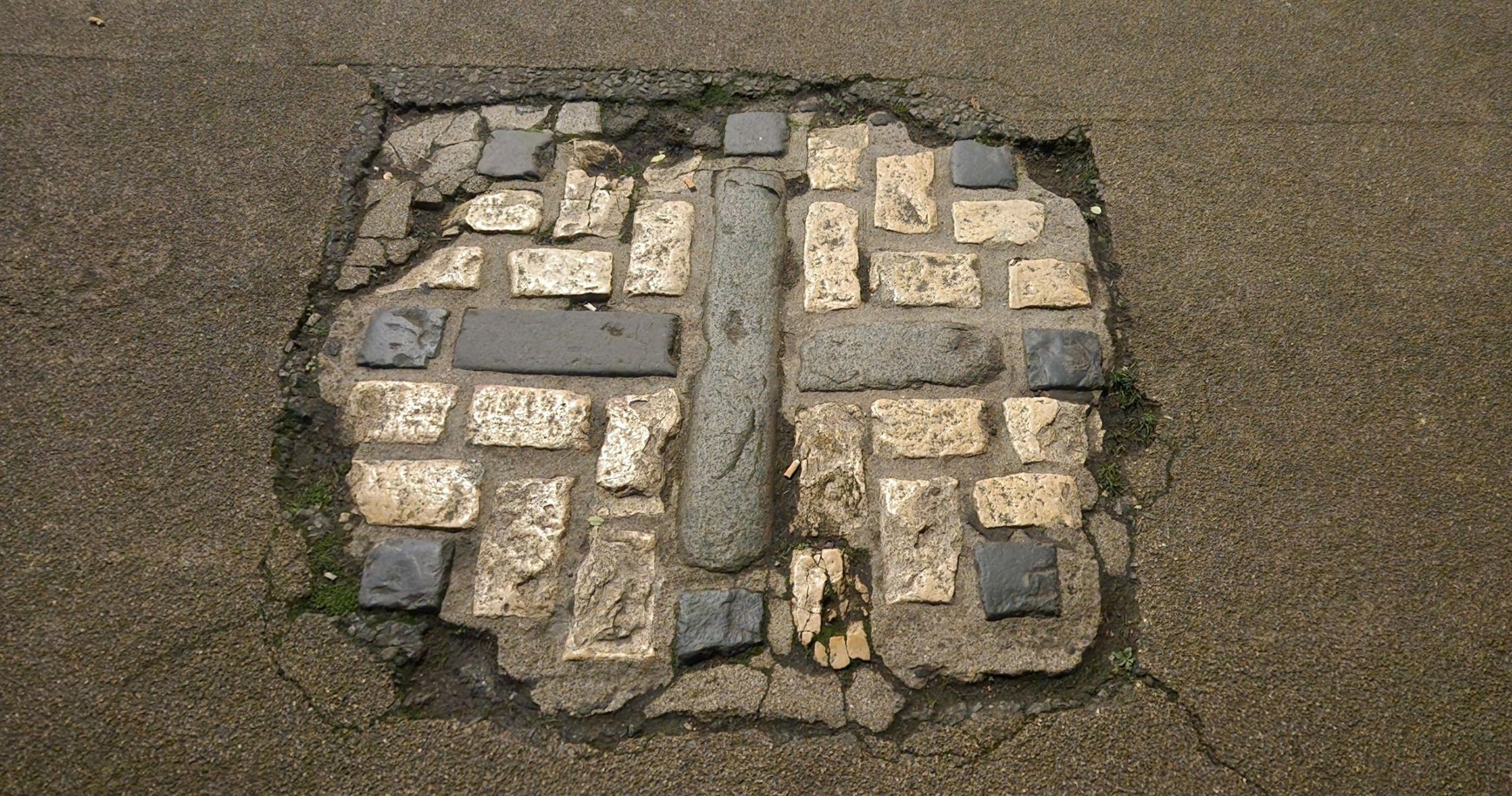 Cross in the cobblestones on Broad Street. Photo by author.
Students expressed surprise that in Henry VIII’s 1539 Act of Six Articles, he was arguing for the retention of Catholic theological positions under pain of severe punishment. One student observed that Henry appeared to want England to remain Catholic, but with local, royal oversight. Our textbook pointed out that the resulting theological developments in the 1540s and 1550s after Henry’s death trended Protestant, while retaining elements of England’s Catholic past, suggesting that the result was somewhere between Rome and Geneva. In the introductory material for this chapter, Denis R. Janz, the editor of our Reformation Reader, highlighted the ongoing debates among historians regarding the transition from Roman Catholicism to Protestantism in England. Questions remain as to whether the late medieval English perceived the Roman Church as oppressive and unresponsive to their needs or as vibrant and fulfilling. Was the Reformation enthusiastically welcomed by the majority or imposed upon an indifferent people by its political leaders? Was the Church of England an institutional middle way or were its leaders committed to a Reformed perspective?
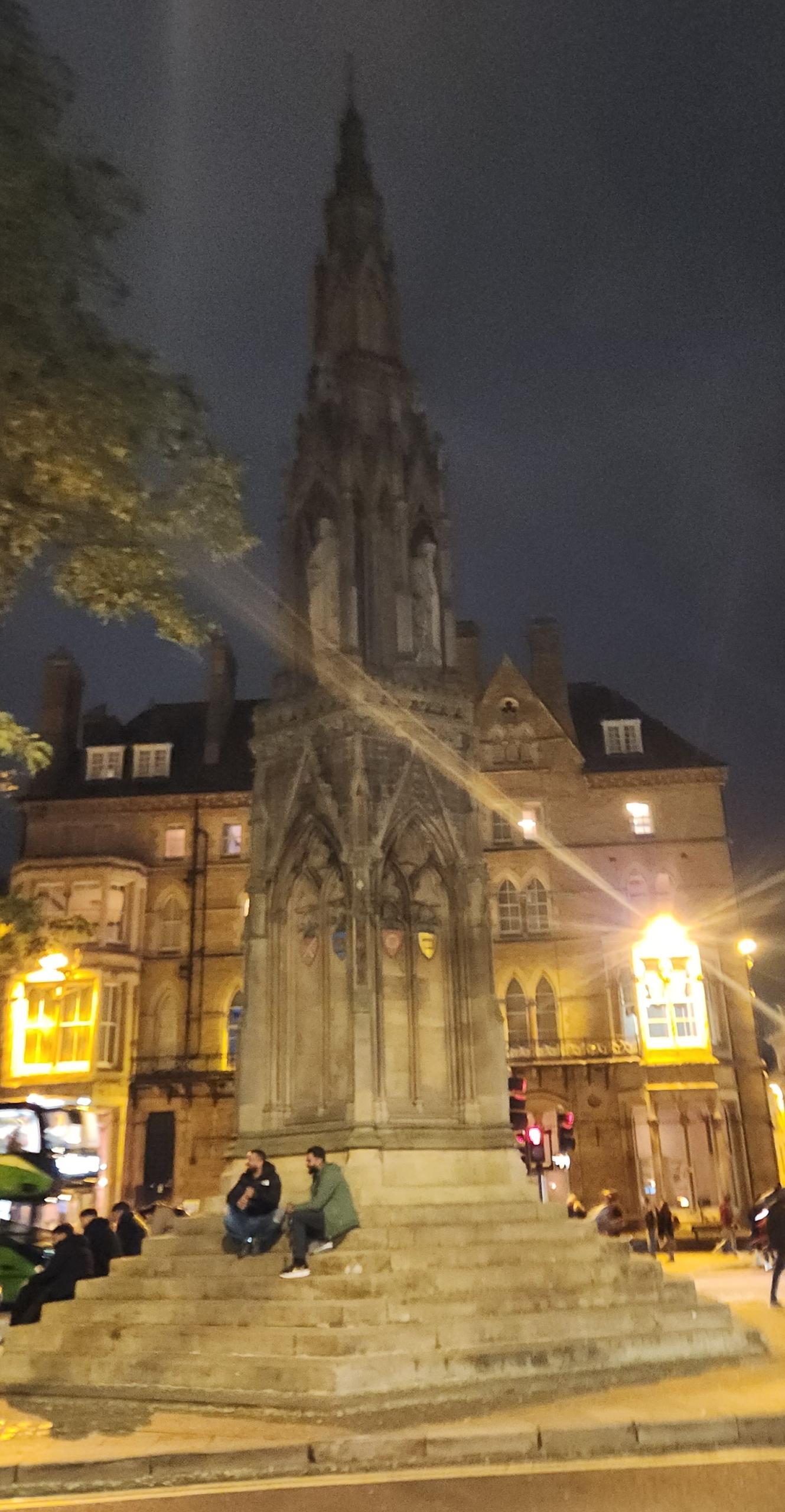
Memorial to the Protestant Martyrs on Magdalan Street, Oxford. Photo by author.
For my part, I remarked that to a modern U.S. Catholic accustomed to attending Mass in the new rite (i.e., post-Vatican II), a High Church Anglican liturgy might appear more Catholic than the Catholic Church, particularly when comparing a liturgy translated into English 500 years ago versus one translated in 1968. This is why for me and for my friend – who is Protestant, but who accidentally attended Latin Mass at the Oratory before I arrived to Oxford and who told me she wept as the choir sang – the beauty of Candlelight Compline at Keble College can be as moving as a Solemn High Latin Mass. Music is a universal language.
* * * * *
Last Wednesday evening, after wandering the streets of Oxford for hours, I ordered lamb and chips from a food truck near Somerville College, crossed over to Banbury Road, and sat on a bench in front of Wycliffe Hall to enjoy my dinner. A light rain began to fall, and as I pulled on the hood of my raincoat, the shrubbery behind me rustled. A slender red fox appeared, sauntering past me with a careful gait, before turning to face me and stare. For a few moments we held one another’s gaze, motionless. Finally, I said (in Spanish, the language I use with animals and my children) that I would not be sharing my food because I did not want to make it sick. At my coaxing, the little fox set off for home (University Parks?).
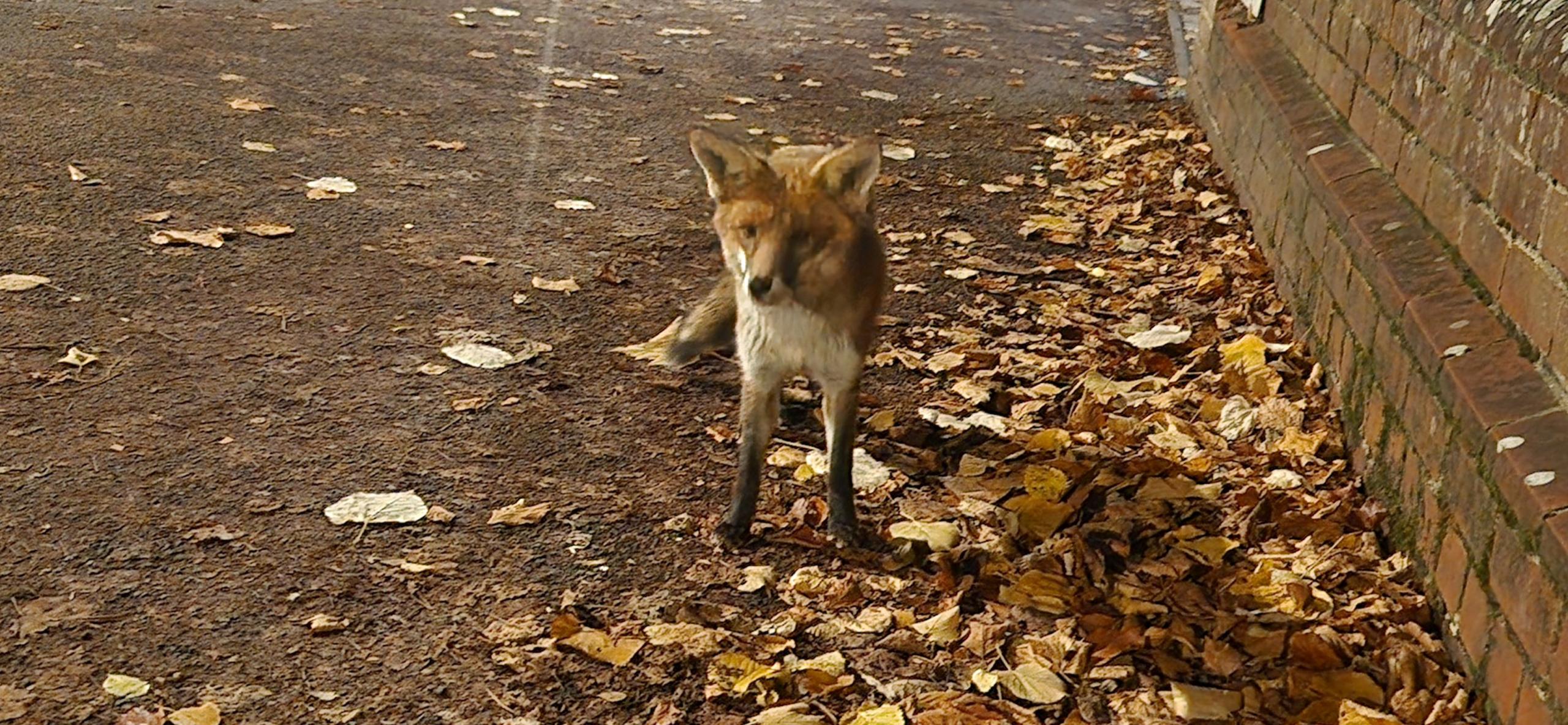
The little red fox that appeared at my side on Banbury Road. Photo by author.
This unexpected and magical encounter defined my week in Oxford, 27 years after I lived there as an undergraduate.





 Ad-Free & Subscriber Log-In