

Reformed Evangelical Concerns About Comer Escalate
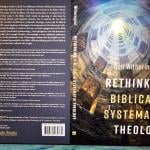
Over a hot summer August weekend in 2025, evangelicals on X engaged in a lively conversation about crucicentrism when Denny Burk went after John Mark Comer for his views on Penal-Substitutionary Atonement (PSA). Burk expressed less immediate concern with the biblical, theological, and social implications of Andrew Remington Rillera’s recent publication, Lamb of the Free (Wipf and Stock, 2024), which Comer lauded in an Instagram post as the “knock out blow to PSA [penal-substitutionary atonement].” In a reply to Rillera on X, Burk claimed, “I have seen what you are arguing in that book. In any case, my post isn’t about your book. It’s about Comer…”[1]

Crucicentrism and Atonement Theory
Marginalizing and undermining Comer’s influence was Burk’s overriding concern, and he employed crucicentrism as the chosen tactic for attack. Crucicentrism is “a stress on the sacrifice of Christ on the cross”, and it is “the conviction that Christ’s death on the cross provided atonement for sin and reconciliation between sinful humanity and a holy God.” Of the four theological convictions David Bebbington offered in Evangelicals in Modern Britain (1989), crucicentrism is possibly the most contested one. Perhaps this is because it is the most quintessentially Reformed conviction, and it signals the influence that Reformed theology has had upon the evangelical tradition. Simply put, crucicentrism is penal-substitutionary atonement (PSA) in layman’s terms, and some Reformed Evangelicals believe that this theory of the atonement is the exclusive orthodox analogy for this doctrine.[2]
However, more recent atonement studies have delivered theologians from adhering to one view of the atonement in exclusion to others. These studies recognize that numerous scriptures across the canon of the Old and New Testament and theologians from the canon of the Great Tradition have articulated multiple analogies and theories of atonement that are acceptable for an orthodox program of theology.
Anselm is an example of one who integrated multiple analogies of the atonement. While Cur Deus Homo presented satisfaction theory of the atonement as Anselm’s distinctive contribution to the development of this doctrine, this publication evidences a robust understanding of both PSA and ransom theory. In my own research on Jonathan Edwards’s interpretation of the Epistle to the Hebrews, I demonstrated that Edwards, like Anselm, favored a satisfaction view of the atonement while integrating penal-substitution and a modified ransom theory into his wider program of atonement theology.[3]
Other experts on atonement theory validate the advantage of integrating multiple analogies of this doctrine. From Anselm to Aulén and beyond, scholars have believed that each analogy expresses a recognizable facet of God’s program of redemption. Collectively these theories have rehabilitated a cosmic understanding of God’s redemptive and restorative plan for the social order of his creation and creatures. These studies have also revealed the historical and social peculiarities and potential shortcomings of PSA, demonstrating how its hegemonic influence arose in the immediate religious context of Europe’s post-reformed reformed scholasticism. This context ran contemporaneous with the expansion of European empire and colonialism, which birthed what economic theorists recognize as the era of merchant capitalism.[4]
Nonetheless, a number of Reformed Evangelicals have gone on record as stubbornly championing that orthodox fidelity demands a primary if not an exclusive embrace of PSA. Thus, PSA has become a shibboleth for Reformed Evangelicals and an essential doctrinal boundary for determining evangelical fidelity. Policing fidelity to this doctrine has become a technique for Reformed Evangelicals to decide who is inside and outside the bounds of evangelical orthodoxy, and whether one merits a seat at the table of evangelical power and authority.
John Mark Comer’s Rise
Hence why John Mark Comer has been assailed by certain Reformed Evangelicals. Comer’s allergy to PSA and his celebration of this doctrine’s purported downfall has revealed a potential vulnerability to exploit and undermine his influence, or at least this appears to be the tactic employed by a few key Reformed Evangelicals. These Reformed Evangelicals perceive Comerism as a threat to the gospel and their evangelical power and influence. Is it because Comer admits to having a complicated relationship to evangelicalism and an inclination to distance himself from the movement? Or is it because Comer has become something of a darling to many who call themselves evangelicals? It’s plausible that the recent rise in Comer’s stock indicates a concomitant fall in the stock of Reformed Evangelicals. Reformed Evangelicals are keenly aware of this situation and feel threatened by it. [5]
Comer possesses what historian Molly Worthen has recently argued is a powerful trait of leaders: charisma. His influence has put many, who broadly identify as evangelical, under his spell. Some among the Reformed Evangelicals are especially concerned that a new center of evangelical power is beginning to gather around him.[6]
The meteoric success of Comer’s ideas and publications has become evident over the past decade. Comer founded Bridgetown Church in Portland, Oregon and pastored the church for nearly two decades. In 2021, he passed on pastoral leadership of Bridgetown to one of his apprentice pastors and began leading the resourcing organization he had founded, Practicing the Way resources. He has published several bestselling works on spiritual living, including the 2019 ECPA (Evangelical Christian Publishers Association) bestseller, The Ruthless Elimination of Hurry, and the 2024 New York Times bestseller, Practicing the Way, which was awarded ECPA’s 2025 Christian Book of the Year. This latter publication distills and diffuses his model of discipleship widely to evangelical audiences and has been the target of recent Reformed Evangelical ire.[7]
Reformed Evangelical Critiques of Comer
Burk is not the only Reformed Evangelical to express reservations about Comer. Tim Challies may have been the first to sound the alarm about the Comer project in his September 2024 review of Practicing the Way. In what has become a repeated refrain among later Reformed Evangelical critiques, Challies alerted readers to the “understanding appeal” of Practicing the Way. The way this gets coded, for people who are in danger of falling under the spell of Comerism, is that there is a “gnostic” quality to his ideas. Comerism appeals broadly to seekers and those who fall in what some Reformed Evangelicals might cast as more superficial streams of evangelicalism. His ideas resonate with the modern imagination while being subversive to traditional Reformed Protestantism.[8]
It is his cryptic understanding of the gospel and objection to PSA that initially aroused Challies’s suspicion:
Comer writes often about the gospel and expresses the importance of telling others about it. He is somewhat vague about the content of his gospel, though he makes it clear that it is not the gospel of Evangelical churches—a gospel of penal substitutionary atonement.
Challies is similarly concerned by how Comerism leads to a spiritual-but-not-religious mindset. He conveyed that Comerism “seems to exclude what we might understand as a traditional local church”, hinting at a congruence between Comerism and the Emergent Church movement. Suffusing his readers with a fear that the specter of the Emergent Church has once again fallen upon them, Challies plays on anxieties:
I would not necessarily say that Comer is creating Emergent 2.0, but I do see that he is advocating something that expresses similar concerns and rejects similar components of Evangelicalism, and something that shares similar influences and is built on a similar foundation.
In other words, while not identical to the Emergent Church, Comerism must be a near cousin to it.[9]
In March of 2025, the Reformed Evangelical resource ministry 9Marks published Daniel Schreiner’s review of Practicing the Way. Early on, the review included a sharp warning to censure Comer’s influence. “Practicing the Way departs so much from biblical faithfulness and emphasis that I warn my church members against reading it and following its advice.” Schreiner continued by offering nine warnings for those who go ahead and read Practicing the Way anyway. Each warning recognizes a general premise that is true about Comer’s approach or arguments, but then subtly turns to how Comer did not quite say it how one of their own Reformed Evangelicals would have or how Schreiner himself would have.[10]
Another leading Reformed Evangelical, Kevin DeYoung, similarly published a lengthy cautionary review of Practicing the Way in late May of 2025, less than a month after ECPA awarded it the Christian Book of the Year. DeYoung’s review situated Comer within the Renovaré tradition founded by Richard Foster in 1988, and it demonstrated Comer’s many connections and dependence upon spiritual gurus like Dallas Willard, Henri Nouwen, Eugene Peterson, John Ortberg, Kallistos Ware and others from mainstream, Anabaptist, and Eastern-Orthodox streams of evangelicalism.[11]
DeYoung expressed concern about Comer’s use of ideas like “the Way” and “apprenticeship.” In Practicing the Way, Comer employed his understanding of these ideas to repair and redefine foundational Christian notions that post-reformation Protestantism had distorted. To DeYoung and other Reformed Evangelicals, Comer conveys a gnostic-like awareness (read secret understanding) as he retrieves primitive Christian mysticism for a simple way of discipleship that emphasizes spiritual habits of Christian living.
DeYoung stridently warned Reformed readers about Comer. While Comer’s understanding of Christian discipleship appears to map readily across multiple traditions, DeYoung cautioned that Comer is not Reformed nor are his ideas.
I know that most people reading John Mark Comer are likely not Reformed, so many of them will not care whether that label applies to his project (in fact, they may be glad if it doesn’t!). But most people who read Kevin DeYoung probably are Reformed. And to those people I want to underline—gently, but clearly—that Practicing the Way is not a Reformed approach to spiritual formation. If the genius of the book is that it can be laid on top of almost any broadly Christian tradition, that is also the book’s biggest danger.
DeYoung’s review was platformed by like-minded Reformed Evangelicals Denny Burk and Justin Taylor, who are among those amplifying a message that Comer’s ideas are heterodox and harmful to the renewal of evangelical Christianity.[12]
For those skeptical that this is part of the Reformed Evangelical project, heed Challies warning:
There is much in his book that is true and useful. Yet there is much that is false and unhelpful and therefore much to be concerned about. I am especially concerned that people who feel that longing for more—that sense that there must be more to the Christian life than this—will allow their disquiet to draw them into his teachings, into his practices, and ultimately, perhaps, right out of recognizable Christianity. What he offers is not merely a different perspective on the Christian life or an alternate set of practices, but a different gospel and ultimately a different faith.
Reformed Evangelicals have scrutinized and surveilled John Mark Comer for some time, and his recent Instagram post presented a tactical opportunity to attack him.
Comer’s Apology and Rishmawy’s Appeal
Following the blowback from the initial Instagram post, Comer circled around with an Instagram Story issuing an apology for his “carelessly worded post”. He went on to clarify his views with a thoughtful confession of belief in biblical and creedal authority. He succinctly interwove a holistic understanding of the trinitarian redemptive act from incarnation to crucifixion. Finally, he articulated his concerns about Western views of atonement theory.

Not long after which, TGC published an appeal from Derek Rishmawy. Rather than marginalizing or scorning Comer, Rishmawy offered a historical and theological argument clarifying the merit and necessity of PSA. Rishmawy clearly wished to de-escalate and beckon Comer to recognize an “evangelical” and “orthodox” [read these as synonymous] understanding of atonement theory, one that necessitates adherence to crucicentrism. So not all Reformed Evangelicals are trying to ostracize Comer.
Nonetheless, other Reformed Evangelicals do not believe that Comer meets their criteria of evangelical orthodoxy. Since Comer is not a crucicentrist, he forfeits the right to a seat at the center of evangelical power and leadership. Rather, these Reformed Evangelicals seek to exile him to the margins of evangelical authority. They have hinted that he is on the pathway to universalism and denying the existence of hell. In other words, he is the second coming of Rob Bell.
In recent digital tracts against Comer, Reformed Evangelicals have cast him as a wolf in sheep’s clothing who lurks to ensnare and lull away a sleepy Reformed Evangelical flock from Reformed Evangelical orthodoxy. While the ostensible premise for Comer’s censure is doctrinal infidelity to PSA, one might credit an amorphous gnostic texture from definitional ambiguities and innovations in his thought on apprenticeship to “the Way”, and a fear that he reintroduces the specter of the Emergent Church as two further causes for Reformed Evangelicals to object to the rise of this new evangelical darling.
[1] Denny Burk (@dennyburk), “Just saw this on Instagram from John Mark Comer. He’s Celebrating what he believes to be the downfall of Jesus’ penal substitutionary atonement.”, X, 08/09/2025, https://x.com/DennyBurk/status/1954323989721133333. Denny Burk (@dennyburk), “Yes, I know. I have seen what you are arguing in the book. In any case, my post isn’t about your book. It’s about Comer…”, X, 08/09/2025, https://x.com/DennyBurk/status/1954392138369679689. Andrew Remington Rillera, Lamb of the Free: Recovering the Varied Sacrificial Understanding of Jesus’s Death (Cascade, 2024).
[2] See Mark A. Noll, “Introduction,” Evangelicals, edited by Mark A. Noll, David W. Bebbington, and George M. Marsden (Eerdmans, 2019), 6, 34. David W. Bebbington, Evangelicalism in Modern Britain (Unwin and Hyman, 1989), 1–17.
[3] Anselm, Cur Deus Homo in Anselm of Canterbury: The Major Works, Oxford World’s Classics (Oxford University Press, 2008). Joseph T. Cochran, “Redemption in Hebrews” in Jonathan Edwards and Hebrew: A Harmonic Interpretation of Scripture, New Directions in Jonathan Edwards Studies, Volume 9, edited by Harry S. Stout, Kenneth P. Minkema, and Adriaan C. Neele (Vandenhoeck and Ruprecht, 2025), 177–97.
[4] For a helpful overview of various analogies of atonement, see James Beilby and Paul R. Eddy, editors, The Nature of the Atonement: Four Views (Intervarsity Press, 2006). Also see Fleming Rutledge, The Crucifixion: Understanding the Death of Jesus Christ (Eerdmans, 2017). On merchant capitalism, see James Fulcher, Capitalism: A Very Short Introduction, Second Edition (Oxford University Press, 2015), 1ff.
[5] On Comer’s complicated relationship to evangelicalism, see John Mark Comer, Practicing the Way, 35–36.
[6] Molly Worthen, Spellbound: How Charisma Shaped the American History from the Puritans to Trump (Forum Books, 2025).
[7] See Bridgetown.church and practicingtheway.org. John Mark Comer, The Ruthless Elimination of Hurry (Waterbrook, 2019). John Mark Comer, Practicing the Way (WaterBrook, 2024).
[8] Tim Challies, “John Mark Comer and Practicing the Way”, challies.com, September 25, 2024, https://www.challies.com/book-reviews/john-mark-comer-and-practicing-the-way/.
[9] Tim Challies, “John Mark Comer and Practicing the Way”, challies.com, September 25, 2024, https://www.challies.com/book-reviews/john-mark-comer-and-practicing-the-way/.
[10] Daniel Schreiner, “Engaging with ‘Practicing the Way’: Nine Thoughts on John Mark Comer’s Best Seller,” 9Marks.org, March 12, 2025, https://www.9marks.org/review/engaging-with-practicing-the-way-nine-thoughts-on-john-mark-comers-bestseller/.
[11] Kevin DeYoung, “Is This the Way? A Review of Practicing the Way by John Mark Comer”, ClearlyReformed.org, May 21, 2025, https://clearlyreformed.org/is-this-the-waya-review-of-practicing-the-way-by-john-mark-comer/. Also see, Kevin DeYoung (@RevKevDeYoung), “I can understand why many people are drawn to the mystical tradition found in Comer’s ‘Practicing the Way.’”, X, May 21, 2025, https://x.com/RevKevDeYoung/status/1925143304212983935.
[12] Kevin DeYoung, “Is This the Way? A Review of Practicing the Way by John Mark Comer”, ClearlyReformed.org, May 21, 2025, https://clearlyreformed.org/is-this-the-waya-review-of-practicing-the-way-by-john-mark-comer/. Denny Burk (@DennyBurk), “I don’t know what Comer believes about judgment and hell, but he often goes out of his way to explain away notions of divine wrath and punishment.” X, May 21, 2025, https://x.com/DennyBurk/status/1925151045560209641. Justin Taylor (@between2worlds), “Kevin DeYoung reviews John Mark Comer’s popular Practicing the Way”, X, May 21, 2025, https://x.com/between2worlds/status/1925182175277670812.












 Ad-Free & Subscriber Log-In