

Who Reads Scripture Better: Scholars or Disciples?
Who reads the Scriptures better—Bart Ehrman or my grandmother? One is a world-renowned scholar of the New Testament and textual critic, the other has no degrees in biblical studies nor any publications in the field. With this in mind, most would likely say Ehrman comes out victorious—sorry, grandma! But is this the best metric for reading Scripture rightly? To complicate things, Ehrman is famously an atheist, while my grandmother has been a faithful disciple of Christ for longer than Ehrman has been alive. Does faith not matter for reading the Bible properly? In other words, what is required to best interpret the Scriptures? Early Christians had a unique perspective that might aid in our discussion of these questions.
Historical Critical Exegesis—History Trumps All
Since the 1800s, historical critical exegesis has been one of the most dominate forms of biblical interpretation in the academy. While there are a number of important features of this hermeneutic, it often seeks to construct the historical world behind the scriptural narrative to contextualize the writings and ideas therein, thus employing the tools of historical research to make plausible arguments about what an Old or New Testament author might have meant when articulating certain claims (See: Law, The Historical-Critical Method). In other words, the key to unlocking the meaning of the Bible is good historical research—if we can know certain historical facts, we can read the Bible properly. In this, Ehrman has the degrees and historical skills to be considered a top-notch interpreter of the New Testament.
But there are a few latent assumptions in this mode of exegesis that the early church would question, or at least nuance. First, the assumption that the Bible is fundamentally a historical text. Now, the earliest Christian exegetes never denied the books of the Bible are articulated in history through historical figures. They always prioritized a literal or historical reading of the text, though they sought to understand the world of the text rather than the world behind the text, as historical critical exegesis does. But they would say the Bible is God’s Word, a single narrative of God’s provision towards his people, spoken to his people (See: Daley, Biblical Interpretation and Doctrine, Ch. 2-3). In other words, this book is fundamentally God’s speech, even if he speaks into history. Second, and relatedly, historical critical exegesis assumes that access to proper interpretation is granted through an understanding of the history of and behind the text. More history degrees equal better readings of the Bible, whether one is a Christian or not. While early Christians have different perspectives on the merits of education (particularly a secular one), it is unified in its affirmation that a proper reading of the Bible is not granted on the basis of historical knowledge, but through virtue granted by the power of the Holy Spirit.
Early Christian Scriptural Interpretation—Virtue is Paramount
While there are dozens of early Christians exegetes one might employ to discuss the role of virtue in hermeneutics (for a discussion of several early Christian exegetes and a particular interpretative practice, see last month’s post), allow me to focus
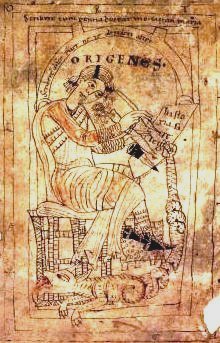
on Origen of Alexandria (185-253). Despite his occasionally speculative theological inquiry and his priority of allegorical interpretation, Origen was undoubtedly a man of the Scriptures (Heine, Origen: Scholarship in the Service of the Church, Ch. 3-5). He composed the first Christian work of textual criticism called the Hexapla, which compared six translations of the Old Testament in various columns. Further, he wrote homilies out of nearly every book of the Bible and commentaries on many of them. If academic knowledge and achievements are required to be a good exegete, Origen should be considered an exceptional one.
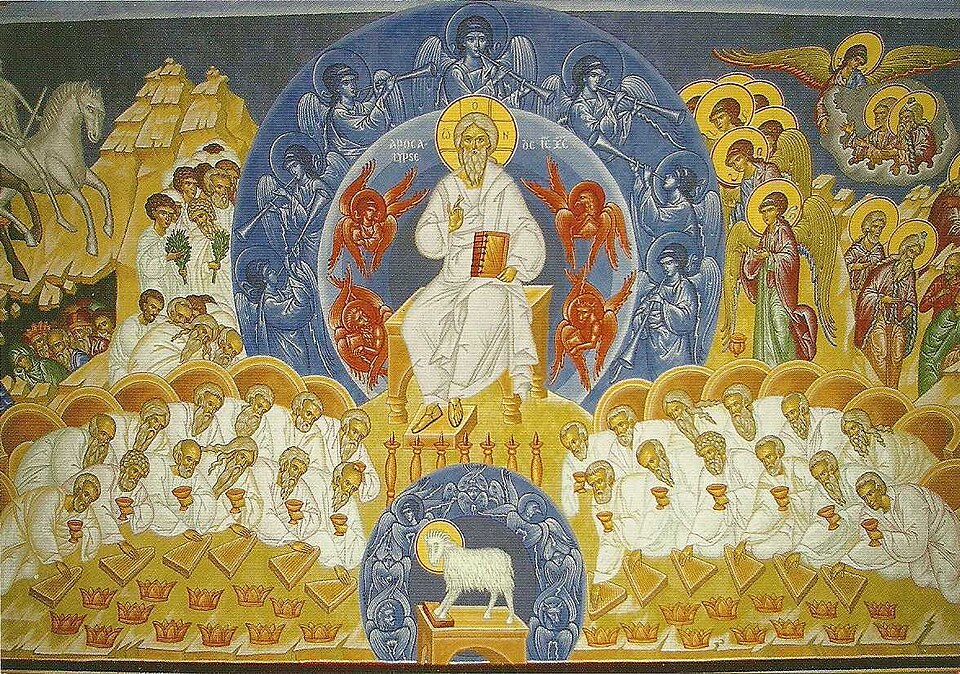
While, he does point to academic training as the basis for a robust hermeneutic (See: Martens, Origen and the Scripture, Ch. 2), the role of discipleship in reading the Scriptures rightly is most important. This is because of two factors: first, the Scriptures themselves. They are “full of riddles, parables, dark sayings, and other forms of obscurity that are difficult for human beings to understand” (Philocalia, 2.2) which lead to errors of interpretation. In On First Principles 4, he specifically mentions the errors of Jewish and heretical Christian sects, as they only read according to the “bare letter” without “keeping the rule of the heavenly Church of Jesus Christ through succession from the apostles” (On First Principles 4.2.2). In this, the “Holy Scriptures have been locked with the key of David and sealed,” and only can be opened by the one who is worthy. In a striking exegetical move, Origen claims the ‘scroll’ that is opened in Revelation 5 by the lamb of God is the Bible itself—Christ is the key to the Scriptures and only those in Christ can understand the text properly.
The second factor comes down to one’s ability to read the different layers of meaning in the biblical text:
“It is, therefore, necessary to register in one’s own soul the senses of the sacred writings thrice: so that the simple may be edified from the flesh, as it were, of Scripture, for so we designate the obvious interpretation; while one who has ascended a certain measure may be edified from the soul, as it were; and the person who is perfect and like those spoken of the Apostle… may be edified from the spiritual law, having a shadow of the good things to come” (On First Principles 4.2.4).
While we could discuss the attributes of the various levels, for the moment I am more interested in how to get to deeper levels of understanding: it is a life of Christlikeness.
For Origen, Christ is the eternal Logos (the rational intellect) in whose image humanity is made. The more one pursues a life of piety and virtue, the more they display the image of God in themselves. As Christians become more like the true Intellect, they more they advance “from small things to great, and from things visible to invisible,” and “attain to a more perfect understanding” of the Scriptures and of God (On First Principles 4.4.10). If Christ is reason itself, one becomes rational in conforming themselves to Christ. While a great exegete still strives to understand the Bible by “searching out and devoting himself to the deep things of the sense of the words,” to “become a participant in all the doctrines of the Spirit’s counsel” (On First Principles 4.2.7), this cannot be reduced to a certain type of intellectual knowledge. Only through the cultivation of virtue through the work of the Spirit in the life of a Christian, can one understand the rule of faith properly as handed down by the apostles, and thus read the Scriptures properly.
Right Reading Requires Discipleship
Let us return to my original question: Who reads the Scriptures better—Bart Ehrman or my grandmother? The early church would undoubtedly argue my grandmother (sorry Bart!). This is not because Ehrman is a bad scholar or thinker, but because of a different assumption about what is required to read the Bible well. My grandmother has displayed a life of discipleship in which she has conformed herself to Christ in virtue, which is the basis for a rich hermeneutic according to ancient Christians, and thus would be a better interpreter.
So, what should be required in our reading of the Bible? I am happy to say that instruction in the Scriptures should include historical research, perhaps even in the form of historical critical exegesis. In fact, I employ this method regularly in my research, sermons, and personal devotions. But I also believe that discipleship is required, insofar as the Bible is not just a historical book. Rather, it is the Lord’s “living and active Word” (Hebrews 4:12-14), “breathed out by God” (2 Timothy 3:16) for the life of the church. If Christ is the key to unlocking the Scriptures, so Christlikeness is required to understand its inner and deeper senses. This still means that rigorous effort is essential—even with the power of the Holy Spirit and a life of virtue, it is not as if the Bible becomes an ‘easy’ book to interpret. We must devote ourselves continuously to the book that brings life, using the tools that God has granted us. May we, therefore, go to the Bible, not only as historians, philosophers, or literary critics. May we approach the text as humble followers of Jesus Christ, illuminated by the Holy Spirit, responding to God’s speech as the church.










 Ad-Free & Subscriber Log-In