

How should we think about our flaws and misbehavior? For some, flaws are something to be embraced: we should be loved ‘warts and all’. For others, imperfections are simply based on our birthdays, an unavoidable result of our zodiac signs (“sorry I am late, I’m a Pisces!”). Or most nefariously, sin is justified as a natural part of one’s sex — “boys will be boys” – and thus certain bad behaviors are deemed as normative.
All of these answers have a common assumption: imperfections and sins are an inevitable part of what makes us human and thus should be excused rather than addressed. Thus, wicked actions are allowed to flourish while the perpetrator can simply throw up their hands and yell, “I’m only human,” thereby denying any responsibility. Christians, of course, should reject this notion—Adam and Eve were sinless before the fall and they were still human. Surely sin, therefore, is not part of human nature, but an accident to it! But this might not go far enough in reforming our conceptions. Perhaps, with Origen of Alexandria, we should view sin as a rejection of human nature.
Origen on the Image of God
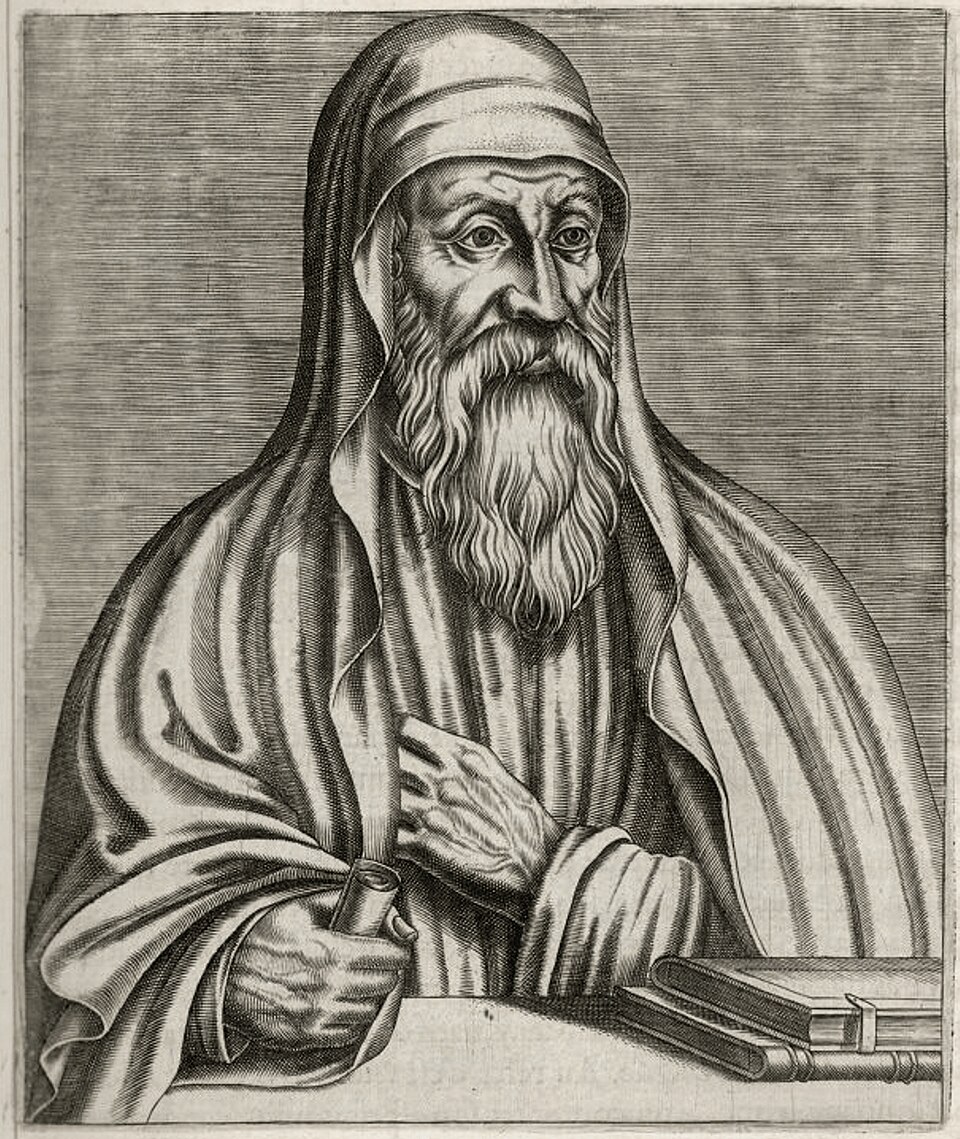
Origen of Alexandria was an influential priest, theologian, and biblical scholar from the third century, famous for his biblical exegesis and ambitious theological system (for a discussion of his exegetical assumptions, see my last post). Amidst my research on Origen’s theological anthropology for my next monograph, I have been struck by his discussion of sin as a denial of what it means to be human. But, to discuss this, we must first understand how Origen conceives of human nature. Thus, we must begin with a brief sketch of his theology of the image of God.
First, drawing from Colossians 1:15, Origen claims the image of God is none other than the eternal Son of God himself (see: On First Principles I.2.6). His image theology begins not with anthropology but with Christology. Second, Origen claims humans ‘are an image of an image, since the Son is the image’ (On Prayer 22.4). We are made to be like Christ in particular. Third, the image of God is assigned to the soul alone, not to the body or even the whole human person (see: Homilies on Leviticus 4.3). Fourth, while humans are created in the image of God at the beginning, they put on the image by conforming themselves to the true image, the Son of God, in virtuous living. Or conversely, they put on another image through a life of vice, what Origen terms ‘the image of the earthly’, thereby obscuring the image of God. Humanity is always moving towards an image, it just might be the wrong one.
In sum, to be ‘human’ for Origen, is to be like Christ. Thus, we become human the more we are “conformed to the image of his Son” (Romans 8:29), mirroring his heavenly and holy nature.
What Are We Imaging?
If you put on the ‘image of God’ through virtue, you put on the ‘image of the earthly’ through vice. Origen discusses this in a striking way in his exegesis of Ezekiel 14:4 and Leviticus 17:8, which contains an odd grammatical construction in the version that Origen uses (the Septuagint, a Greek translation of the Old Testament). Origen quotes from Ezekiel: “Thus says the Lord Adonai: Human-human of the house of Israel, who shall conceive his devices in his heart … I the Lord will answer him according to the things in which his mind is entangled…”
No, ‘human-human’ is not a mistranslation—the Greek version has repeated ‘human’ twice here: λέγει κύριος: ἄνθρωπος ἄνθρωπος. Origen probes into why ἄνθρωπος, which means ‘human’, is written two times.
So why does he say: “man-man,” and what is the significance of the double mention of the term man? It seems to me that this should not be passed over in silence. The apostle teaches that there is an “inner man” and an “outer man,” and the former is being “renewed from day to day according to the image of the man who created him”; but the latter is visible and is being corrupted (Homily on Numbers 24, 2.1).
Origen reads these words in Ezekiel in light of 2 Corinthians 4:16, which provides a sort of blueprint for human composition in his thought. Humans are made up of “dual aspects,” with the “outer human being” referring to the body and the “inner human being” referring to the soul (See: Commentary on Romans 2.13.34). In other words, ‘human-human’ is shorthand for our twofold nature: ‘human (body)-human (soul).’
But just because it says ‘human-human’ in Ezekiel 14, doesn’t mean that all human beings hold both titles. Origen writes,
“All men are born men, but we are not all “men-men,” … Be men-men, namely, because not all are men-men. Let us show from the Scriptures why some are not men-men. “When the man was in honor, he did not understand; he ‘has been compared with foolish beasts and he has been likened to them” [Psalms 49:12]. That is not a man-man but a beast-man, “Generation of vipers, who warned you to flee from the coming wrath?” [Matthew 3:7]. This type is not a man-man but a serpent-man. “The horses have become mad for the females, each one was neighing for his neighbor’s wife” [Jeremiah 5:8]. That one is not a man-man but a horse-man” (Homilies on Ezekiel 3.8).
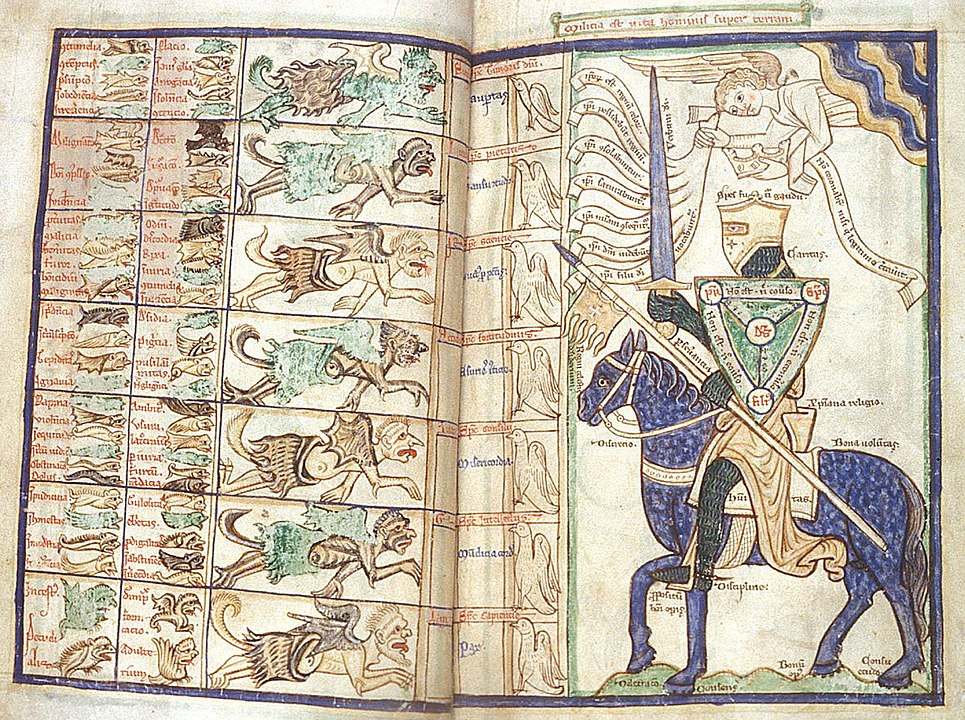
Origen employs various passages of scripture that compares humans’ vicious behavior to animals to claim these people are imaging something other than God. While the body is human, the ‘inner human’—the soul—is not human insofar as it has conformed itself to sin and evil rather than God. Thus, an unrepentant sinner might be a ‘beast-man’ or a ‘serpent-man’ or a ‘horse-man’, but not a ‘man-man’—to be a sinner is to reject that which makes you fully human, Christ.
The way to be ‘human-human’, therefore, is act like Christ.
When it has recovered its form in which God made it in the beginning, and when it has received the beauty of its previous form by the restoration of the virtues; then it can offer vows to God and then it will no longer be called merely a “man,” but a “man-man” (Homilies on Numbers 24, 2.1).
To recover the image of God, and therefore become a human in body and soul, is to engage in a spiritual program aimed at overcoming sin. Origen provides a training regime in this passage which discuss building virtue and good character, training in ‘divine principles of education’, seeking after God’s wisdom, and attaining ‘knowledge of the Scriptures’ (Homilies on Numbers 24, 2.2). When one rejects sin and pursues Christ “the inner man has persevered in the image of the Creator,” and “a man is born.” Thus, that one “becomes, according to the outer and inner man, a double man-man” (Homilies on Ezekiel 3.8).
I’m Only Human
While sin might be unavoidable in this fallen world, at least according to Paul (Romans 7:14-25), this does not mean we should assign sin to human nature. In fact, this has a tendency not only to normalize sin, but to institutionalize it. As followers of a holy God, sin is always to be addressed and overcome in repentance—not glossed over or shrugged at. Perhaps, learning from Origen, we should reconceptualize the relationship between sin and human nature. No, sin is not what makes us human—it is what denies our true humanity. Thus, we should not employ the phrase “I’m only human” after sinning to avoid blame, but rather in the context of virtuous actions. I’m only human when I love my neighbor well. I’m only human when I overcome sinful desires. I’m only human when I conform my life to Christ.











 Ad-Free & Subscriber Log-In