

AB: Ordinary Heroes of Racial Justice
OK full disclosure: I wrote this post before Daniel Williams posted his wonderful interview with Karen Johnson about her new book. But I’m posting anyway. Apologies for the redundancy, but also it’s telling that both Daniel and I thought her work would be a good fit for the Patheos audience. Get it, read, and join the conversation!
…
Last month, Karen Johnson, Professor of History at Wheaton College and author of One in Christ:Chicago Catholics and the Quest for Interracial Justice, published her latest, Ordinary Heroes of Racial Justice.

The book offers the stories of four individuals or communities that Johnson feels embody Christian work for racial justice in the long twentieth century: Catherine de Hueck and Friendship House, John Perkins and Voice of Calvary, Clarence Jordan and Koinonia Farm, and Raleigh and Paulette Washington and Glen and Lonni Kehrein of the Rock of Our Salvation Evangelical Free Church. In each of these examples, Johnson finds “imperfect” heroes who, through courage and faith, addressed the personal and systemic sin of racism in America.

Catherine de Hueck was born in 1896 to a noble family in Russia. When the Bolshevik Revolution seized the nation, Hueck and her husband faced persecution, starvation, and violence, before emigrating first to England (where she converted to Catholicism from the Russian Orthodox Church) and then to Canada. A talented storyteller, Catherine supported her family on the lecture circuit for a while, and then worked undercover as an informant for the Church to determine the appeal of communism among the working class. In this mission, she came to empathize deeply with the poor. Reflecting on her own life, she confessed her complicity with economic injustice prior to the Revolution and vowed her life to the poor. In 1938, she visited Harlem and there opened Friendship House, a place that sought to share the love of God with the poor by meeting their material, social, and spiritual needs. Given that so many of the poor in Harlem were Black, Friendship House, too, became a place that defied segregation and welcomed neighbors into one fellowship. She sharply criticized white Catholics who, through distance and apathy and profiteering, caused the suffering of their Black counterparts, though she herself was susceptible to white saviorism. Johnson concludes: “While Catherine did not always emphasize the agency of those with the empty stomachs, she also offered a powerful critique of the church, placing blame for people turning away from Christianity not on those who refused the faith but on the church for not offering a winsome, holistic, and helping embodiment of what is really meant to live faithfully.

Johnson next takes up the (well-known) story of John Perkins. A native Mississippian, Perkins spent his childhood in the “closed society,” largely sharecropping in the care of his grandparents. But after his brother was murdered at the hands of a deputy marshal in 1946, he fled the state for California and then military service in Korea. Only after becoming a Christian did Perkins return to Mendenhall, Mississippi in 1960, determined to actually live the gospel back in his home state. Moreover, he had hope that “the gospel could change white folks too.” But, Johnson argues, the racial and economic context of Mississippi posed challenges to that gospel. John and Vera Mae Perkins kept at it, meeting their fellow Black Mississippians’ physical and spiritual needs, preaching, worshipping, and founding an economic cooperative. Despite criticism, harassment, jailings, and violence, the Perkins’ persisted for decades. Eventually, after a move to Jackson, they developed what would become the three hallmarks of Christian community development: “to relocate among the poor, to reconcile people to God and one another, and to redistribute resources to restructure their local contexts so all could flourish.”

Johnson then moves back in time to examine Baptist minister Clarence Jordan, who, along with his wife Florence and Martin and Mabel England, founded the interracial Koinonia Farm in Sumter County, Georgia in 1942. A group of pacifists and committed Christians, those at Koinonia Farm practiced community, shared things in common, and worked the land. Prophetic and besieged, Koinonia Farm was also limited in its activism, both by means and perspective. Johnson points out, correctly, that Koinonia ignored Black members’ economic sacrifice, did not partner with Black congregations, and put Black lives at risk. (For an ever deeper critique of Clarence Jordan’s work at Koinonia, see David Evans’ recent Damned Whiteness (UNC Press, 2025). Still, Johnson urges humility in reading the Koinonia Farm story.

Finally, the book examined Rock of Our Salvation Evangelical Free Church and Circle Urban Ministries in Chicago. In 1974, Glen and Lonni Kehreins had founded Circle Urban Ministries (out of Austin Community Fellowship) in Chicago’s Austin neighborhood, a place experiencing the “changing racial geographies” of white flight in the North. In the early 1980s, Raleigh and Paulette Washington of Rock Church joined them as partners, ending what had been a “painful” season of interracial leadership at the ministry. Together, they partnered in a ministry marked by “honesty, understanding, confession, forgiveness, and healing” as well as “empathy.” Johnson attended the church during her graduate school years,and then worked with them for six more through Intervarsity ministry, bringing a personal perspective to these chapters. “I was excited,” she remembered, “to be in a place where my ordinary heroes lived and worked.” But the obstacles to real interracial Christian partnerships were complex. “For most White evangelicals,” Johnson explains, borrowing from Divided by Faith, “the theological toolkit containing individualism, relationalism, and antistructuralism only exacerbated their inability to see race.” Glenn and Lonni Kehreins did, though imperfectly–they stayed in the struggle, submitted to Black leadership and continued to practice and encourage empathy and unity in Christ. Johnson makes pains to emphasize that race still mattered for Rock Church and Circle Urban Ministries, and that authentic acknowledgement of differences of perspective fostered deeper connection, often through concession and forgiveness. After many years of “paying attention to race” and by “talking about race so much, members began to move beyond race…[and] saw one another primarily as brothers and sisters.”
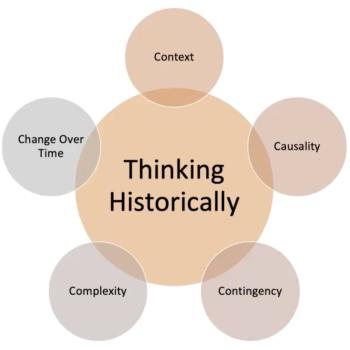
In each of these stories, context matters for faith. In Mississippi, segregationist theologies and a literalism about the Bible fostered economic oppression and white supremacist politics. In Chicago, individualism in evangelicalism prevented Christians from understanding the systemic and structural realities facing their neighbors. For Johnson, studying history and listening to the stories of others can provide an antidote. We must consider in the past and present “how the characteristics of a place influence how a person understands the implications of their faith, and why we need Christians from other contexts to more fully understand the implication of the Gospel.”Johnson invites both intellectual and spiritual reflection. If, as she begins, “Race has mattered throughout American and American church history, and it continues to shape our lives in ways we might not even see,” what do we do once we see race’s impact on our faith? Johnson offers three framing questions for this journey: How does context shape us? How are we historical beings? And how might we practice courage in the process of repentance?
Though Ordinary Heroes addresses many of the themes of Johnson’s previous work–Christian understandings of justice and unity, racism, historical thinking –it has a different central intent and tone. Published by InterVarsity, the book is targeting the educated religious public, not scholars or academics. “Many of the habits and practices historians use as they approach the past,” Johnson explains, “can help each of us become more faithful followers of Jesus.” Written from this openly Christian perspective, the book includes personal anecdotes, notes aimed at students and congregations, and questions for consideration as well as historical narrative. In the chapter on Catherine de Hueck, for instance, she asks: “What would it look like for us to see the pain of those suffering because of economic and racial dynamics in our contexts? To ask how Christians historically and today contribute to their suffering?”
In considering and doing history–in all its messy inquiry– Johnson is also asking for a current fearless moral inventory: what about us? What about now? She models this, too. In a deeply personal conclusion, she agonizes about her move from Chicago’s Austin neighborhood to the wealthy white suburb of Wheaton. “I had learned from John Perkins, Catherine de Hueck, and Glen and Lonni to resist narratives of upward mobility–a lesson that would be reinforced when, in the coming years, I studied Clarence Jordan,” she writes. “How would I hold up? What patterns would [we] fall into, living in such a wealthy place?”
There are many great histories of Christianity and race. And there are likewise great books about the craft of doing history. There are even a few directed at American Christians to address racial justice. But Ordinary Heroes is all three. At moments, the tone is more academic, then pedagogical, then devotional. While that might irk some readers, as might the moniker “heroes”, the book is well worth a reflective read. I’m grateful for Johnson’s humility and empathy in writing it, both as a historian and a Christian.













 Ad-Free & Subscriber Log-In