

This post grows out of my current book project, which is about US history in and around the pivotal year of 1893 (I posted a lot about that last year). I knew a great deal happened in that year, but only gradually have I realized how central a role it played in making what we regard as very familiar American iconography and national symbolism. Something dramatic was happening to national self-definition and self-consciousness, and in a very few years. It is almost an overnight event.
 All images in this post are in the public domain
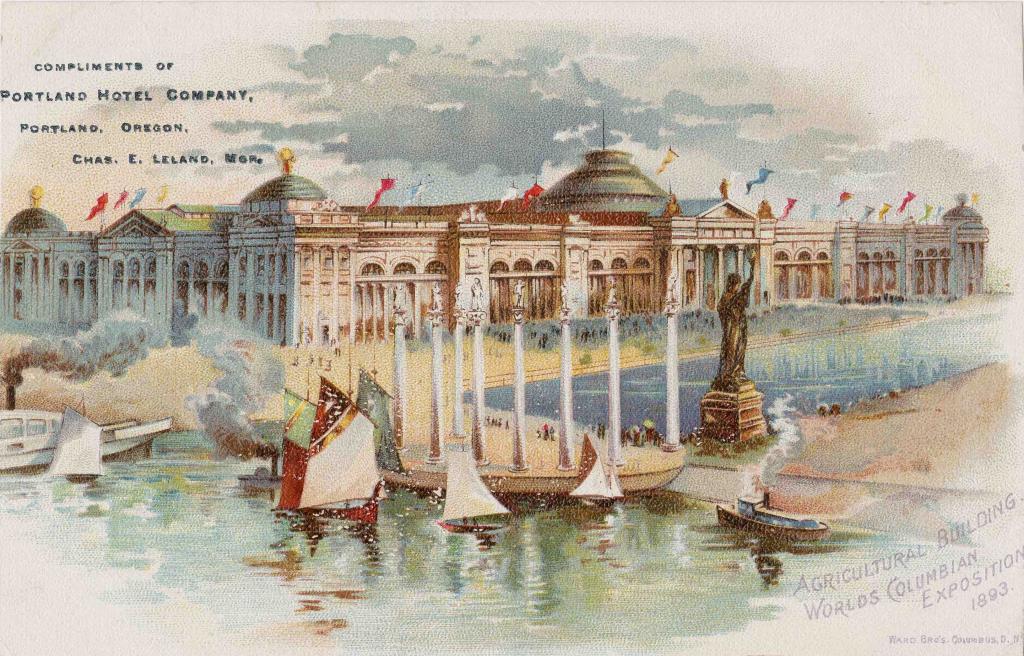
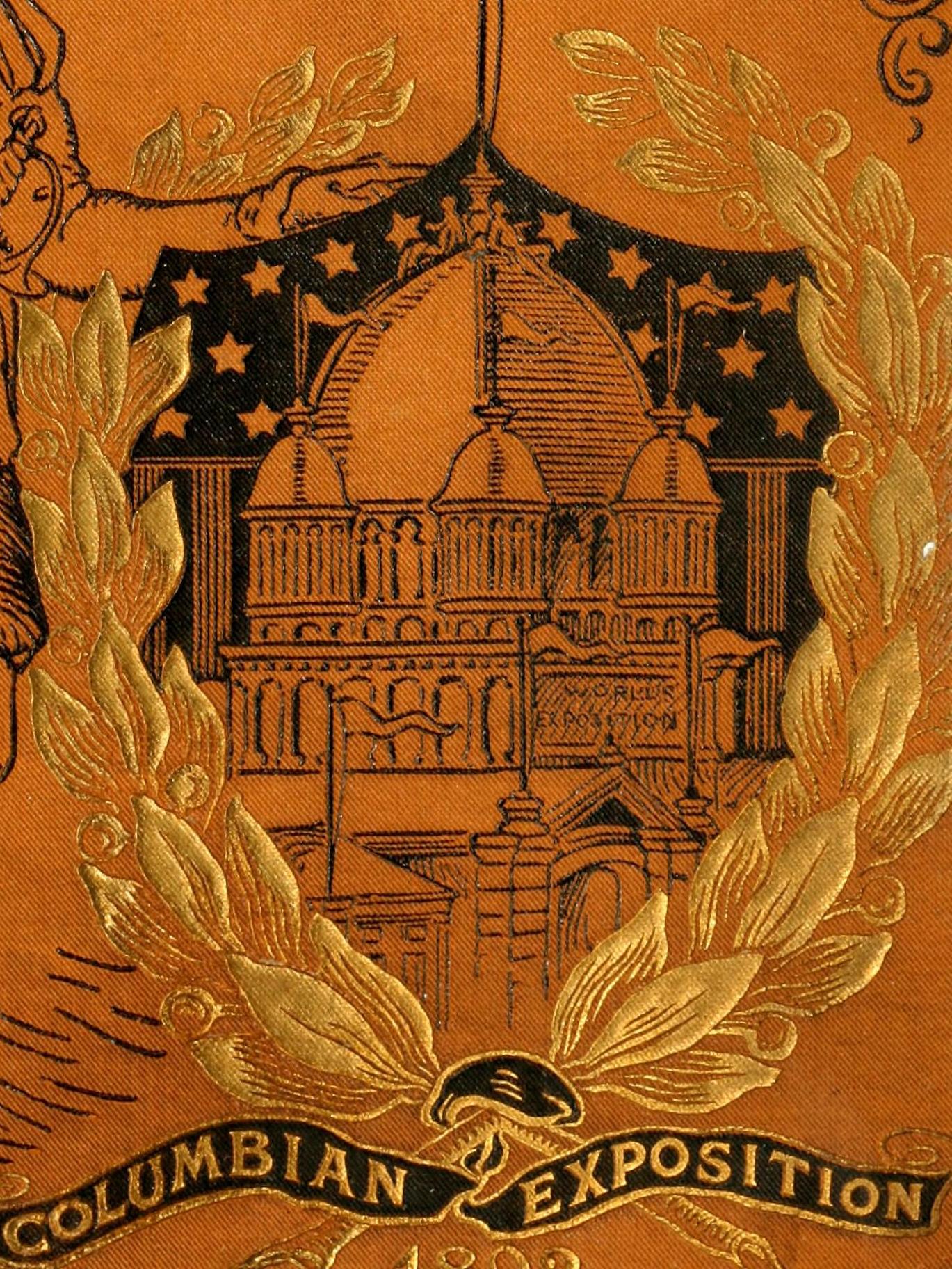
The central event of that year was the great Columbian Exposition in Chicago, which was built around a spectacular “White City.” That is referenced directly in a poem composed that year, although the author uses a slightly more artistic word for “white.”
O beautiful for patriot dream
That sees beyond the years
Thine alabaster cities gleam
Undimmed by human tears!
America! America!
God shed His grace on thee,
And crown thy good with brotherhood
From sea to shining sea!
In 1893, Katharine Lee Bates expressed in that poem the visionary feelings she had experienced when she had climbed Pikes Peak, in Colorado. Her work gained sensational fame when it was published in 1895, and because it so precisely captured the idealism of the age, “America the Beautiful” became nothing less than secular scripture.

But other patriotic icons were also appearing thick and fast. In that same year of 1893, hopeful visions of America were summarized by a European visiting the United States, namely the Czech Antonin Dvořák, who then directed the recently founded National Conservatory of Music in New York. In 1893, he composed his Ninth Symphony, “From the New World,” which drew on Black and Native American musical traditions. Contemporaries immediately recognized the New World terminology as a reference to the Columbian commemoration. As a splendid symbol of American hope, the symphony became immensely popular and it has been widely used in film scores. In 1969, Neil Armstrong took a tape recording to the Moon.
And while the origins of the practice are piecemeal, it was between 1889 and 1892 that The Star-Spangled Banner began its role as an official anthem, initially for the regular use of the armed services. John Philip Sousa’s “The Stars and Stripes Forever” was first heard in 1896.
Through the early 1890s moreover, Uncle Sam was achieving his classic visual image and attributes in Joseph Keppler’s cartoons in Puck magazine.

Another national token of that era was no less potent. In 1892, the Baptist cleric Francis Bellamy had created the original version of the Pledge of Allegiance, which ideally would hold together an increasingly diverse society. Francis was a Christian Socialist, and his Pledge extolled Liberty and Justice but at this stage of the Pledge’s history, it lacked any reference to God. That October, the Pledge made its epic appearance at the Chicago Exposition site during the dedication ceremony, when it was recited en masse by a legion of enthusiastic schoolchildren. Spreading swiftly around the country, the declaration now began its history as a symbol of a patriotic loyalty that transcended ethnic origins.

Reciting the Pledge at the dedication was intended to celebrate the new institution of Columbus Day, which was natural enough for proclaiming the Columbian Exposition, but that special date involved a sinister back story. Although Italian-Americans had for years campaigned to have the US acknowledge the great Discoverer, action only came following a hideous episode in 1891, when several members of that ethnic group were accused of the murder of the police chief of New Orleans, but acquitted. A furious mob then seized and hanged eleven of these supposed “Mafia” defendants in the largest single act of mass lynching in the country’s history. Besides the ethnic component, the victims were of course Catholic.
As a symbolic act of reparation to Italian-Americans, and to Catholics, President Harrison approved the celebration of Columbus Day, in what was originally intended as a one-time only commemoration. Following the Columbian enthusiasm aroused by the Exposition, however, and reinforced by swelling numbers of Italian immigrants, the Day was soon institutionalized as an annual event.

And then there were other vital symbols from around the same time. The Statue of Liberty was dedicated in 1886, and it was in the post-1885 decade that America’s leading cities first acquired their classic landscape of towering skyscrapers. It became easy to visualize and to symbolize America.
The classic American symbols of the new century were already in place.











 Ad-Free & Subscriber Log-In