

I have been posting on texts and scriptures as they are lost and found, with an emphasis on gospels and sacred writings. Today I want to complicate the story, by asking how “lost” some texts ever get to be, when they might actually be hiding right in front of us, in plain sight.
What made me think of this was the devious story of a well-regarded ancient writing called the Apology, by the second century Christian philosopher Aristides. This was in no sense a heretical work that the Church was hellbent on destroying. It just dropped out of sight, and was thus lost to scholarly view. During the great era of the rediscovery of manuscripts in the late nineteenth century, several separate attempts were made to identify the work in the several languages into which it had been translated, which included Syriac and Armenian. In 1889, that real-life Indiana Jones character J. Rendel Harris found a full-length Syriac version at Saint Catherine’s Monastery in Sinai, and a Greek text followed shortly.
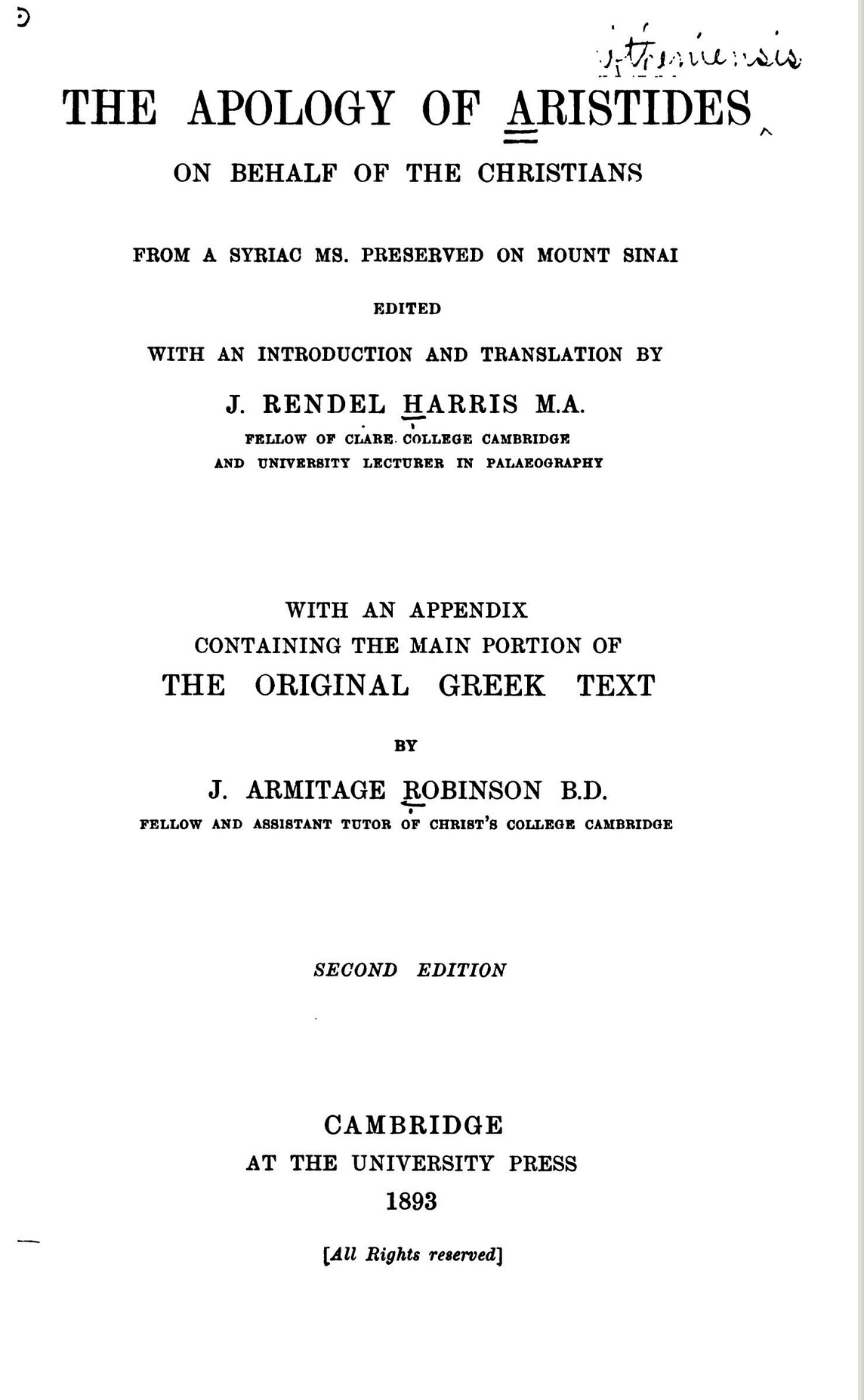
all images are in public domain
But then the ironies began. When scholars eventually found and read the long-sought Greek original, they realized that they already knew it, not as a free-standing tract, as a speech preserved in a well known eleventh century work called The Life of Barlaam and Ioasaph (or Josaphat). The speech is a somewhat abbreviated summary of the whole original, but that is definitely what we are dealing with. Without actually turning up the Apology and comparing the writings, there is no way they could have known that.
At the least, this should make us wonder when we regret the loss of some ancient work, whether it might actually be hiding in a similar way: I will resist the temptation to use quotes every time I use the word “lost” in what follows.
At the risk of being cryptic, I will circle round later to describing a terrific double irony in this story, which concerns that Life of Barlaam and Ioasaph, which was so hospitably offering a safe home to the Apology of Aristides.
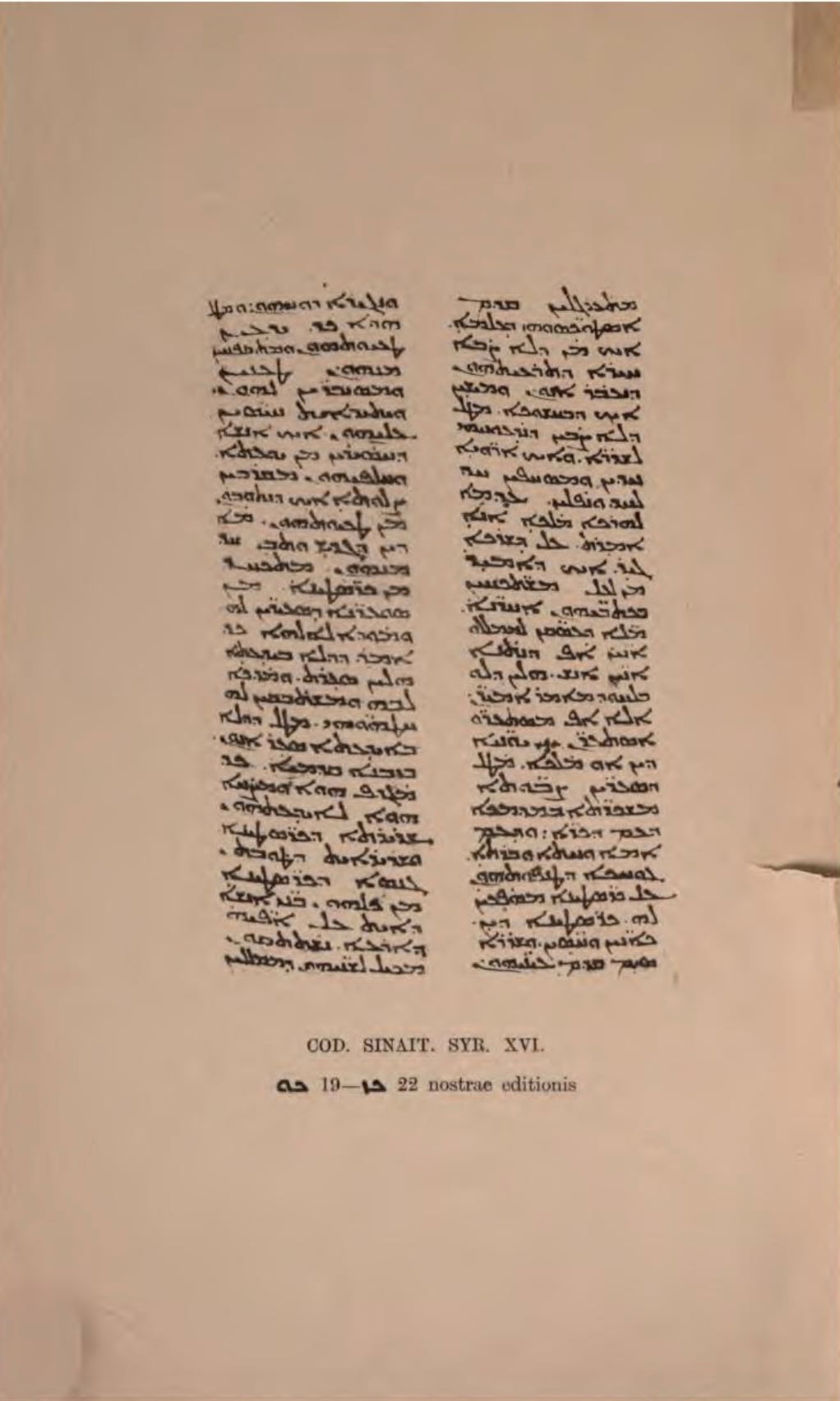
To return to loss and lostness, we often exaggerate just how totally works could be suppressed in ancient times, even if the full force of government was turned upon them. As everybody knows, governments issued ferocious edicts against the writings of particular schools of thought when they were designated as heresies. Assuredly, some once-important works were indeed lost beyond recovery, but others remained in hiding. As I have argued at this site recently, even something as provocative as the Gospel of Thomas remained above ground long after its official suppression by church and state.
From a great many other examples, we might look at the Acts of Thomas (no relation to the Gospel of Thomas). This second- or third-century Syriac work describes Thomas’s missions in India and other distant lands. Early leaders of the Orthodox/Catholic Great Church hated it because it so often assumes Gnostic ideas and myths and it was popular with various heretical groups, and it was often condemned for destruction. Even so, in somewhat censored form, the Acts ran loose across the wider Christian world, and it appeared in multiple languages.
In some versions, the Acts of Thomas includes the Hymn of the Pearl (or Hymn of the Soul), a lovely vestige of the religious world of Late Antiquity. Almost certainly a remnant of an early Gnostic movement, the hymn probably dates to the second century, and it originally circulated independently. It is a gospel, in the form of an allegory, in which a prince is sent to Egypt to retrieve a pearl from a serpent. However, the prince forgets his mission and even his identity, and is stripped of his royal garments:
I forgot that I was a King’s son,
And became a slave to their king.
I forgot all concerning the Pearl
For which my Parents had sent me;
And from the weight of their victuals
I sank down into a deep sleep.
He has to be restored to his true self by another emissary from the King of Kings. Retrieving the pearl, he returns home. According to most readings, the story reflects a Gnostic worldview, probably that of Bardesanes, who was famous as the founder of the Syriac tradition of hymn-writing. The prince represents the soul trapped in the word of matter, the dark Egypt, from which Christ redeems him, while the pearl is salvation. Those themes of sleep and awakening, of being lost amid the world’s snares, were central to Gnostic systems.
Because it was framed in the larger Acts of Thomas, that Hymn of the Pearl survived, in a way that it would assuredly not have done if it had been labeled as part of the work of the dreaded Bardesanes.
I also think of an episode that enchanted the many readers of Elaine Pagels’s writings on the Gnostic gospels. Pagels cites the evocative moment reported by the Apostle John in which Jesus “bade us therefore make as it were a ring, holding one another’s hands, and himself standing in the midst he said: Answer Amen unto me.” A liturgical call-and-response then follows
He began, then, to sing an hymn and to say:
Glory be to thee, Father.
And we, going about in a ring, answered him: Amen.
Glory be to thee, Word: Glory be to thee, Grace. Amen.
Glory be to thee, Spirit: Glory be to thee, Holy One:
Glory be to thy glory. Amen.
Technically, this is not from an explicitly Gnostic text, and nor is it a gospel. The source here is the Acts of John, a (mainly) second century source that presented many stories about the apostle, and which survives in multiple fragments. The work as a whole was once wildly popular, and it often inspired artists. We can argue how far this dance event reflects a Gnostic origin, but it certainly is far removed from anything in the mainstream traditions of the Great Church. It looks like the remnant of a broadly Gnostic commemoration or liturgy that has at some stage been attached to the developing body of lore and storytelling that had been attracted to the Apostle John.
Whether it was in any supposed original text of the Acts, or if it just adhered over time is anybody’s guess. But for whatever reason, we have here preserved a ritual that would assuredly have been suppressed if it existed in a freestanding form, but which circulated very widely because it was read in a context that was (generally) orthodox. Who knows but that one day, probably in Egypt, we will find a manuscript entitled something like “The Dance of the Lord,” and that it will look just like the text that we have already known for centuries in the Acts of John. Albeit under a very thin concealment, it has been in hiding. But lost? Not so much.
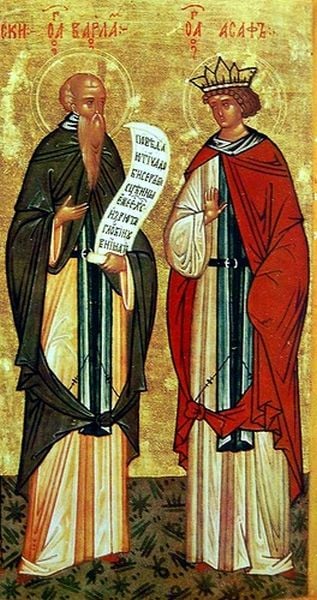
In this post on how literary works get concealed within each other, I will as I promised return to that The Life of Barlaam and Ioasaph/Josaphat, which was hiding the ancient Apology. That Life is a kind of religious novel, which tells of an Indian king who has been warned that his son will become a Christian. Alarmed, he locks the young prince away in a luxurious palace, but that cannot prevent him from encountering the holy hermit Barlaam, who duly converts him. Josaphat then becomes a noted Christian saint in his own right, in a tale that appears in many European cultures over the coming centuries.
Does the story sound at all familiar to you? It should, because it is pretty exactly the origin story of the Buddha, in the form that was gradually transmitted to the churches of the Middle East, and thence to Europe. The Life is a cherished tale from one religion that is unconsciously disguised as belonging to another faith: it is in masquerade. It thus contains within itself a kind of concealment, or at least of fundamental misunderstanding. A deceptive text conceals a hidden story.
And you also know the name Josaphat, or as the name would have appeared in the original tale: it was bodhisattva.










 Ad-Free & Subscriber Log-In