

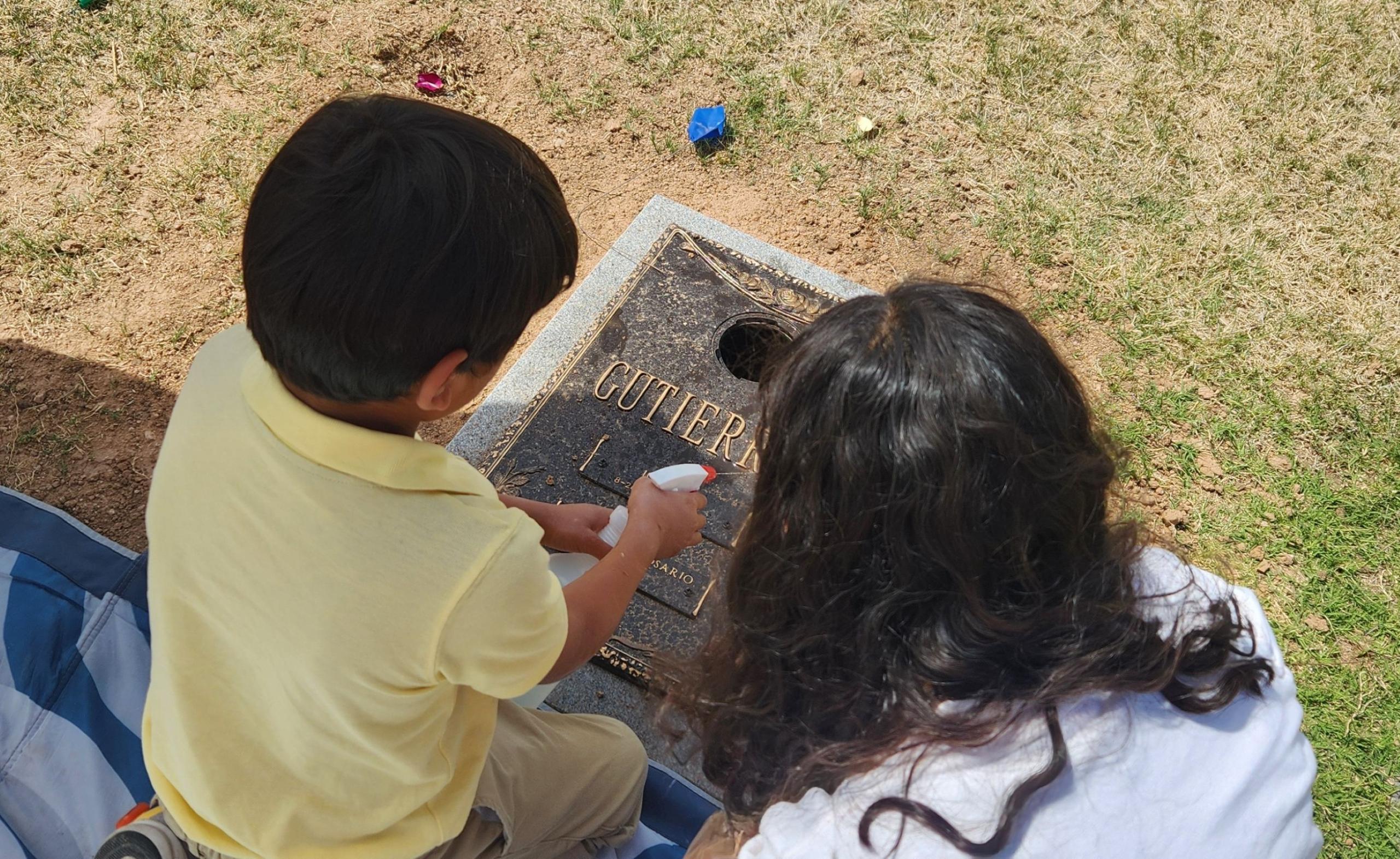
Author’s children cleaning their grandfather’s headstone
We walked gingerly over the browning grass and the clumps of disturbed desert clay, careful not to disrespect the dead buried below. At our designated plot, we unfurled a blue outdoor blanket onto which two of my children knelt, spray bottle and dust rag in hand. As they cleaned my father’s dusty headstone, my older son guided my mother onto her knees, then held open an umbrella over her to block the sun. I handed my mother a small white Easter basket decorated with fresh flowers, out of which she pulled a handmade cascarón. Cradling the brightly dyed eggshell for a moment, she promptly cracked it on the stone, sending forth a burst of colorful confetti. Reaching into the basket, we each took a cascarón to crack on the headstone. I was last, and as I knelt eggshell in hand, all the years I had chased after my dad as a child on Easter, unable to catch him to crack a cascarón on his head, flashed in my mind. Crushing the eggshell in my hand, I spread the released confetti over his name and wept.
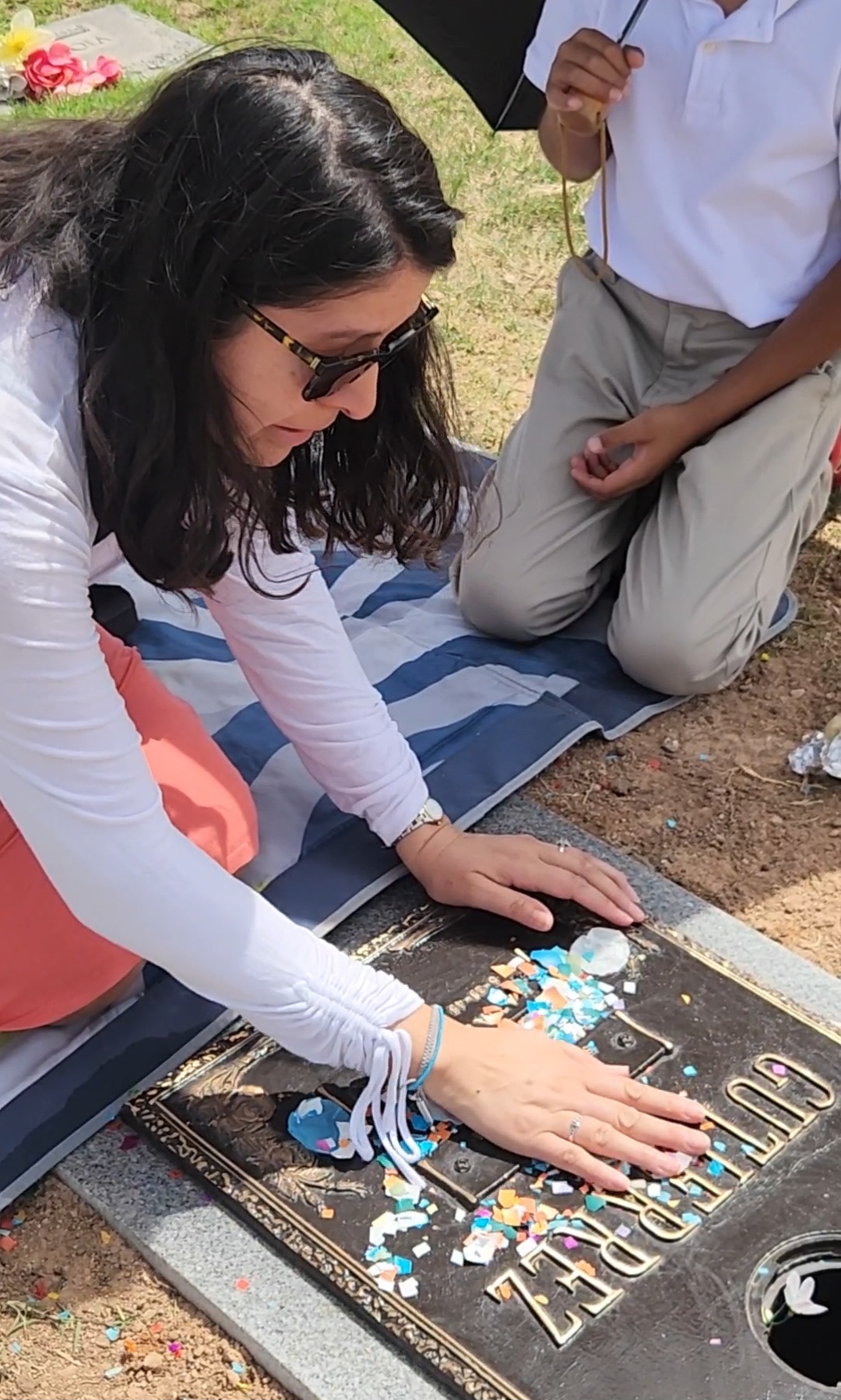 Author cracking a cascarón on her father’s headstone, Easter 2026
What are cascarones and why are they associated with Easter?
While the history of confetti eggs is hazy and its origins debatable, one unconfirmed story links the roots of the tradition to Asia. As the story goes, Marco Polo, delighting in the dyed eggshells filled with perfumed powders exchanged as gifts in China in the 13th century, took some examples back to Venice. An alternate version of this tale states that Marco Polo introduced the colorful eggshells to the royal courts of Europe. According to various sources, the custom found its way to Spain, and eventually to the Americas, popularized in Mexico in the 1860s by the Empress Carlota, wife of the Hapsburg Emperor Maximilian. Paper confetti eventually replaced perfumed powders, with the small openings atop the dyed or decorated eggshell capped with tissue paper.
Today, cascarones are popular in the Southwest in locations with significant Mexican or Mexican-American populations like Texas, New Mexico, Arizona, and California. Some will tell you that cracking cascarones on someone’s head denotes interest or affection. Others will say that the more confetti in your hair, the more popular you are. Children will say that cracking cascarones on their parents’ heads is the best part. The tradition has become so ubiquitous that mass-produced cascarones can be found in retail stores around Eastertime or ordered online. Some Mexican families have cascarones on hand for birthday celebrations or other holidays.
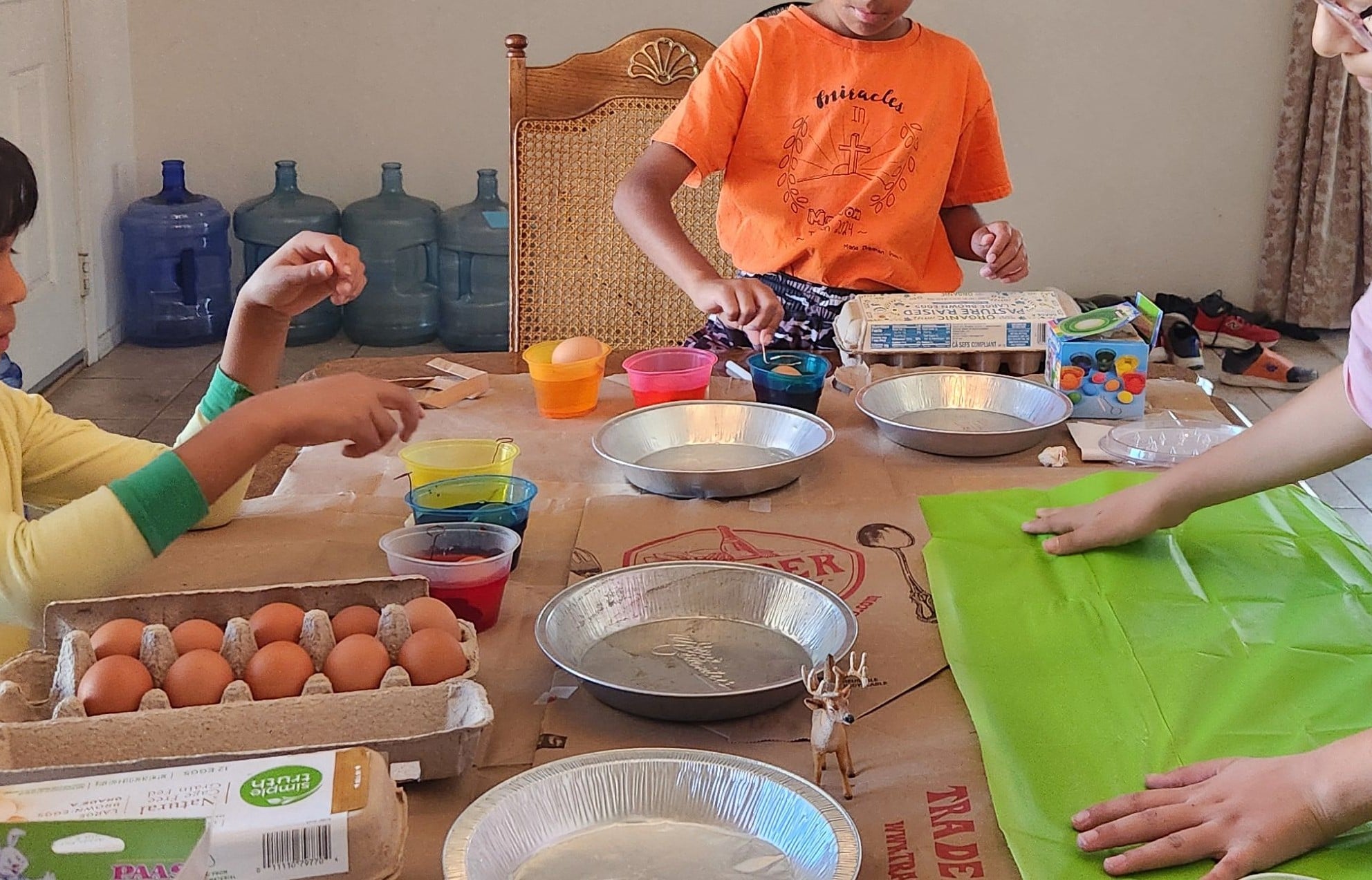
Author’s children decorating cascarones, Holy Saturday 2026
I’ve been cracking cascarones on Easter since I was old enough to hold one. My siblings and I would wake up one day and wander into the kitchen to see that our dad had lined up rinsed out egg shells on a paper towel by the kitchen sink; our anticipation would mount with each dozen that we collected. (My sister told me the other day that up until recently, our dad provided her children with eggshells during Lent to make cascarones; I did not know that). Our cousins’ parents would do the same – tapping small holes in the tops of their breakfast eggs or eggs consumed on meatless Fridays during Lent, then we children would dye them, fill them, and cap them on Holy Saturday. We’d gather after Easter Sunday Mass, our parents would hide the cascarones, we’d have a massive egg hunt, then crack, crack, crack!
As we were walking back from the park on Easter Sunday this year, empty egg cartons in hand and confetti in our hair, I asked my daughter why cascarones are associated with Easter. She told me that to her, the cracking of the eggshell symbolizes Christ’s breaking out of the tomb. I like that. Eggs are, of course, universal symbols of rebirth and new life, which is what we celebrate at Easter – Christ’s resurrection. In addition, the colorful confetti inside the hollowed eggs reminds us of the joy of the season.
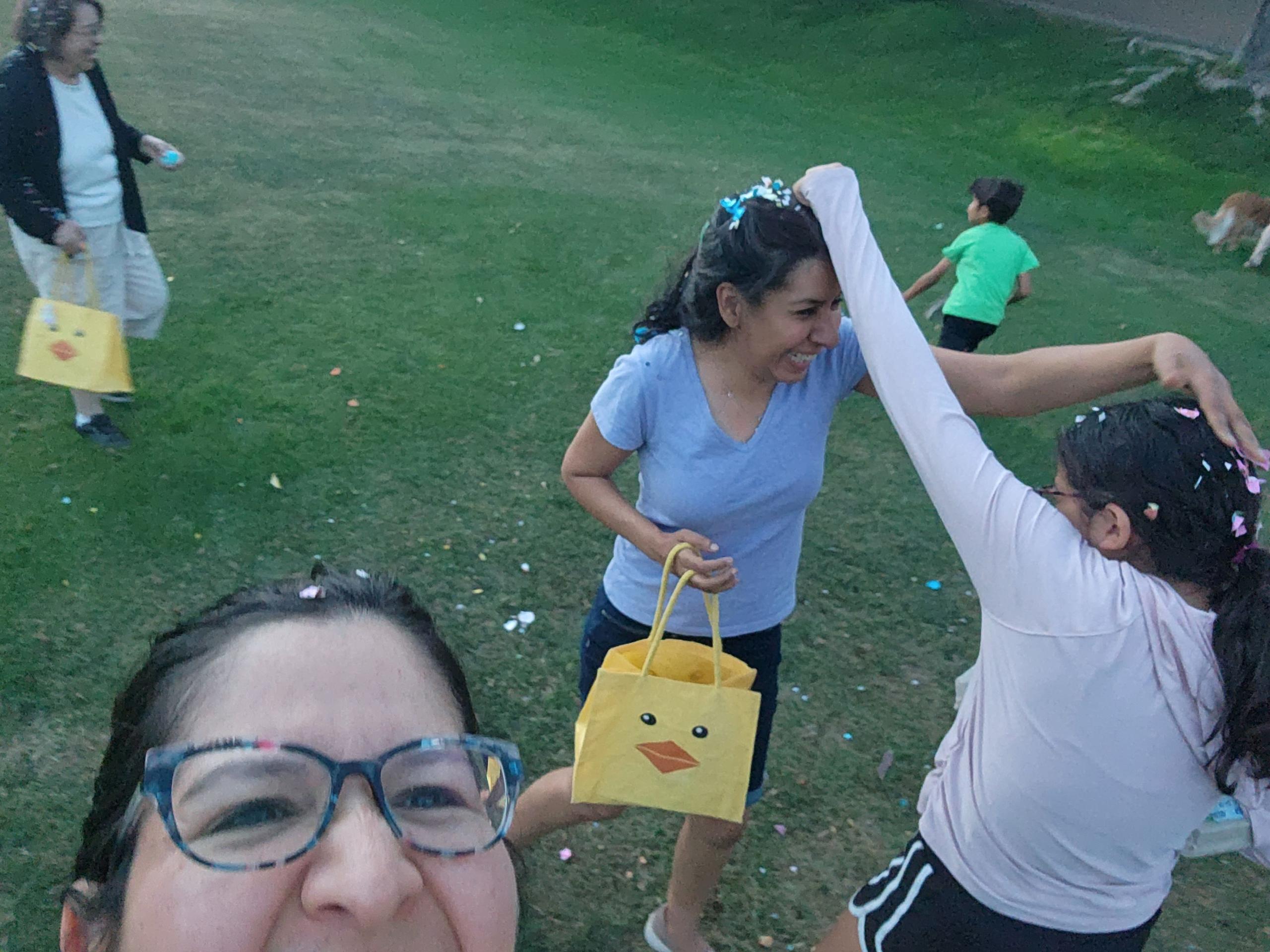
Author’s selfie as laughing family members crack cascarones in the background
Joy is something all of us could use; my family in particular needs the reminder. None of us expected to be without my dad this Easter; his sharp decline leading to his death three months ago took us by surprise. So, we found a way to be close to him. It was my idea to crack a cascarón on his headstone since I can no longer crack one on his head; I haven’t been in Phoenix for Easter in years, and don’t even remember the last time I got him.
After I spread the confetti on the bronze etching of his name on Easter Sunday, I stopped weeping, smiled, and whispered: Got you, Dad.
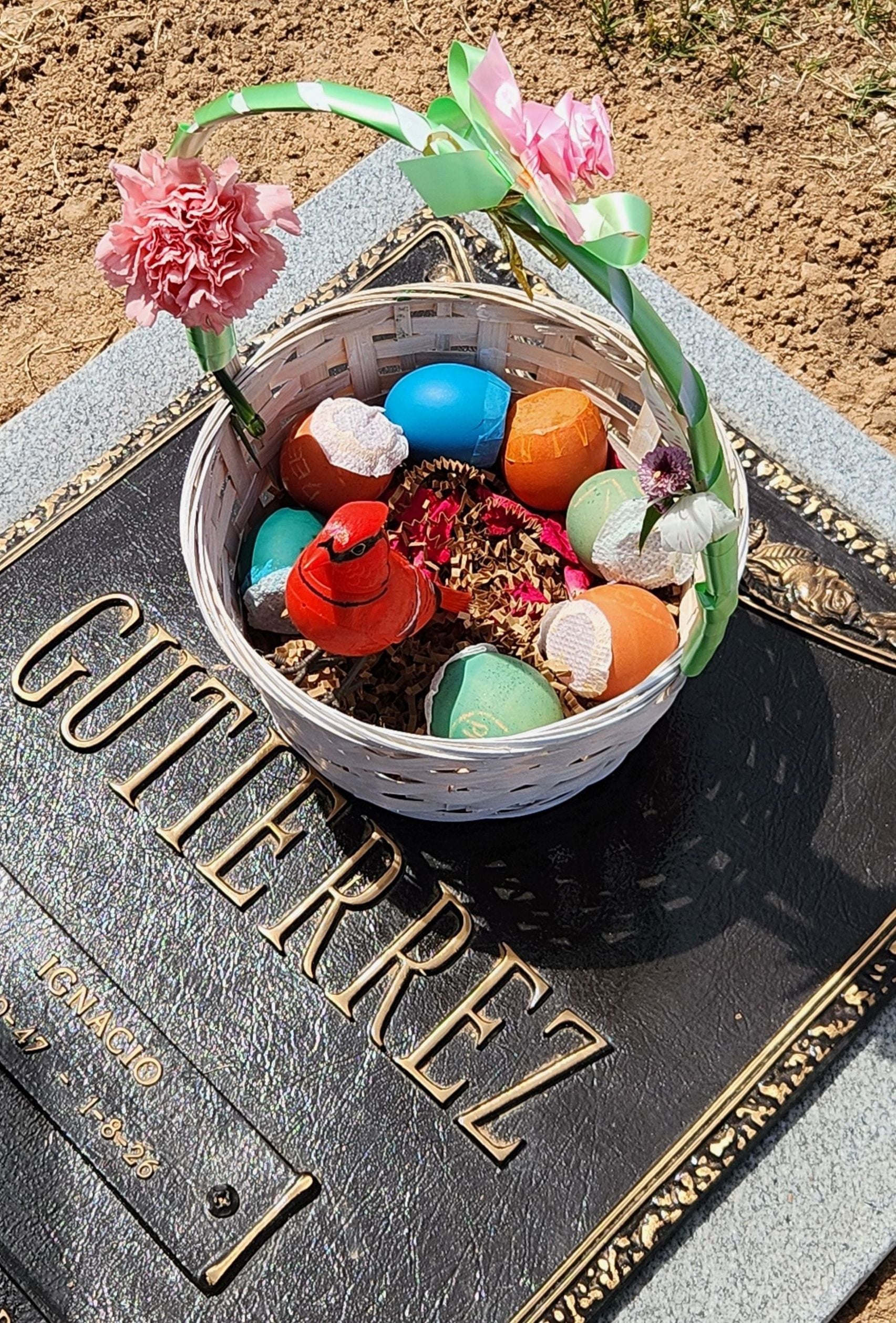
Easter basket for the author’s father










 Ad-Free & Subscriber Log-In