
Keep in mind that VBS is one of those traditions in American Christianity that is well-established, but not as old as you might think. Read more

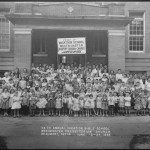
Keep in mind that VBS is one of those traditions in American Christianity that is well-established, but not as old as you might think. Read more

In 1891, Herman Melville published his final book, a collection of poems entitled Timoleon. I want to focus on one of these poems, which initially seems quite mysterious. But it can be understood, if we appreciate the prevailing historical views of the time about heresy and sectarian religion. I also want to touch on a theme that I will be exploring in more detail in coming posts, namely the wide-ranging influence of Theosophy in these years. The Melville work in... Read more

I have been posting about the quite widespread knowledge of alternative and apocryphal scriptural texts in the early twentieth century, long before most non-specialists would assume that this would have been possible. Today’s post concerns an extraordinary example of this phenomenon. The First World War years witnessed a wonderful flowering of music in Great Britain, much of which had a religious content. (Think Edward Elgar, Frederick Delius, Ralph Vaughan Williams …). It was in 1916 that Sir Hubert Parry set... Read more

Summer is here. For academics, that means there just might be time to pick up a random book and read it for pleasure. For those of us in American religious history, Heath Carter has just tweeted a handy list of 150 of his favorite books. But as pleasurable as these books are sure to be, sometimes it’s good to read a book without pencil in hand, without a thought as to how it might reframe one’s own research. To that... Read more
On September 19, 2016, I received news so shocking that the world stopped. I was walking across campus when the text came through. For a few seconds I am not sure what happened. I remember the sky flashing blue above me; I remember the sound of falling water from the nearby fountain. I had been walking, but when I could see clearly again, I found myself sitting on a low stone wall. For me, for that moment, the world really... Read more
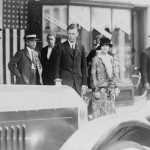
Chris introduces his next book project: a spiritual (but not religious) biography of Charles A. Lindbergh. Read more

I began this “Alternative Scriptures” series by noting the discovery of a “Dead Sea Scroll” type manuscript in the Genizah of a Cairo synagogue, in the 1890s. Tracing the probable history of that document tells a fascinating story. This “Zadokite Fragment” originated either at Qumran or another site belonging to the same sect, presumably around the first century BC. It found its way to the Cairo synagogue, among many thousands of other Jewish texts, which ranged in date from about... Read more
How an American poet popularized the Gospel of Thomas Read more
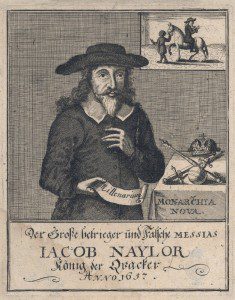
In October 1656, James Nayler rode into the English city of Bristol, accompanied by a small band of men and women who sang hosannas. Understood to have recreated Christ’s triumphal entry into Jerusalem, and accused of claiming to be Jesus Christ, Parliament convicted Nayler of “horrid blasphemy.” Nayler was scourged with the whip, his flesh flayed and dirtied. His forehead was branded with a “B” for blasphemy, and his tongue was bored with a red-hot iron. A bare recitation of... Read more
If you're traveling in the western United States this summer, consider visiting some more of our bloggers' favorite historical sites. Read more

Select your answer to see how you score.



 Ad-Free & Subscriber Log-In