

What political legacy did the Puritans leave to America? There was a time when historians commonly portrayed the Puritans as America’s founding democrats. No one better articulated this view than Alexis de Tocqueville, who wrote in Democracy in America that
Puritanism was not merely a religious doctrine, but it corresponded in many points with the most absolute democratic and republican theories. It was this tendency which had aroused its most dangerous adversaries. Persecuted by 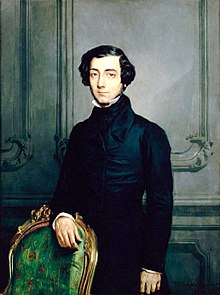 the government of the mother country, and disgusted by the habits of a society which the rigor of their own principles condemned, the Puritans went forth to seek some rude and unfrequented part of the world, where they could live according to their own opinions, and worship God in freedom.
Recent historians have, as often as not, emphasized the non-democratic qualities of the Puritans, particularly in their denial of religious liberty to dissenters, and their appallingly violent wars with Native Americans.
As I noted in an earlier post, I have been reading Michael Winship’s Godly Republicanism: Puritans, Pilgrims, and a City on a Hill , and am writing a full review of it for The New England Quarterly. The book is a remarkable scholarly achievement by Winship, one of our top scholars of the Puritans. Godly Republicanism is a complex treatment of English and American Puritanism, but one of its major contributions is to explain how Puritan church government influenced the development of their political views.
To Winship, the Puritans were not necessarily the original American democrats, but they may well have been America’s first republicans (with a small ‘r’). It was not so much the love of liberty or belief in equality that drove them, but the fear of ecclesiastical and political tyranny. Puritans shared “the dread of the corrupting effects of power, the fear of one-man rule, the emphasis on the consent of the people, and on balanced government” with the proponents of classical republican thought made famous by historians such as Bernard Bailyn [The Ideological Origins of the American Revolution].
Some historians, such as Mark Noll in his magisterial America’s God: From Jonathan Edwards to Abraham Lincoln, have portrayed the Puritans as fundamentally anti-republican, particularly because they associated republicanism with religious skepticism. But Winship is not concerned with the anti-orthodox leanings of many republican writers. The Puritans, he says, explicitly rejected the top-down authority of the bishops in the Anglican Church, and English Puritans became key opponents of the monarchy in their Civil War of the 1640s and ’50s. In Massachusetts, congregations elected elders to govern the churches, and politically, the colony extended the vote to all male church members. These practices made seventeenth-century Massachusetts the only place within the English empire “where the freemen had final control over all the officials who immediately affected their lives.”
Contemporary historians will undoubtedly continue to balk at oversimplified notions of the Puritan meetinghouse as a crucible of American democracy. But Winship makes a powerful case that America’s republican ideology did have strong Reformed and Puritan roots.









 Ad-Free & Subscriber Log-In