

In keeping with past tradition since joining the illustrious team of historians at the Anxious Bench, I am once again sharing my best books list for the year. The past few years have seen numerous amazing publications, and I am glad to share about some of them for this year’s Best Books of 2025. I have compiled a list of my twenty-four favorite reads of the year, among them are a number of first-time authors. This is a selection of recent publications, two books read each month, ordered chronologically from January–December. Just to be clear, this is not a ranked list and please do not interpret the order as such.
While I believe all of these publications are noteworthy, surely you may be curious about which publication I think are most significant. The publication that impacted me most as a historian is the brilliant work of Isaac B. Sharp’s in The Other Evangelicals. Sharp proved himself to be a first-rate researcher and writer of evangelical history. As a religious historian, I am convinced that Molly Worthen’s Spell-Bound and Thomas Tweed’s Religion in the Lands That Became America are two critical reads for my discipline and extremely significant contributions in the study of religious history. New noteworthy historical studies include Karen J. Johnson’s Ordinary Heroes of Racial Justice, Obbie Tyler Todd’s The Beechers, and Paul Putz’s The Spirit of the Game. Mulder and Marti’s The Church Must Grow or Perish, a biography of Robert Schuller, is a must-read showcase on the artform of producing stellar religious biography, as also is God the Bestseller, Stephen Prothero’s creative biography of Eugene Exman. Finally, as a Christian and follower of Jesus, the book that most shaped my spiritual journey this year was John Mark Comer’s Practicing the Way. It’s an essential read on spiritual living.

Paul Putz, The Spirit of the Game (Oxford University Press, 2024). 280 pp. $29.99.
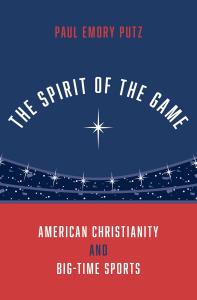
Basketball was born out of the Christian ministry of YMCA and spread around the world through its ministry and the mission work of Christians. It also became a go-to collegiate sport of Christian colleges and universities. But basketball has transcended Christian networks to becoming one of the most watched sports in the world. Putz tells this story, among others, in this history of “sportsianity”, how the Christian athletic movement took shape in America and became a central feature in Christian spirituality and activism.
Molly Worthen, Spell-Bound (Penguin Random House, 2025). 464 pp. $32.00.
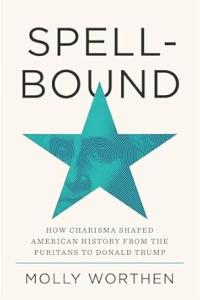
Molly Worthen’s recent evangelical conversion has made her a darling among conservative Christians. Not withstanding the foregoing, she is a scholar who has always stood on her own merit. Spell-Bound is without doubt my favorite recently published religious history. Worthen’s prose is elegant and her storyline is compelling. I love how she unearths overlooked characters and makes unfamiliar stories meaningful in her history of American charisma.
Stephen Prothero, God the Bestseller (Harper Collins, 2023). 384 pp. $26.39.
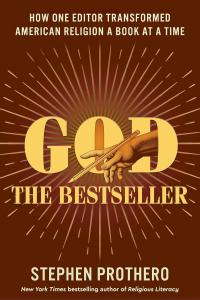
Prothero’s religious biography of Harper’s acquisition editor, Eugene Exman, is an exhilarating story of one man’s quest to shape religion in America by acquiring brilliant talent for its publishing house. More than a biography of Exman, each chapter features some of the most influential religious figures of the twentieth-century that Exman acquired for Harper, including: Harry Emerson Fosdick, Gerald Heard and Aldous Huxley, Dorothy Day, Albert Schweitzer, Martin Luther King, Jr, and Bill Wilson of Alcoholics Anonymous.
Malcolm Foley, Anti-Greed Gospel (Brazos Press, 2025). 192 pp. $21.99.
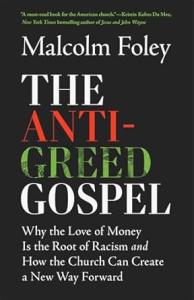
The gospel is a message that has social underpinnings, where all of society ought to be reshaped by the Christian living of those who claim the name of Christ. Jesus warns about the greatest threat to the gospel being greed. Malcolm Foley traces the story of how the construct of capitalism has perpetuated Christian avarice and how evangelicals have more readily served the God of mammon rather than love their neighbors and communities sacrificially.
John Dyer, People of the Screen (Oxford University Press, 2023). 272 pp. $35.99.
 The process of how evangelicals adopted digital technologies and created digital media for the purpose of Christians spiritual good is a vital part of recent evangelical history. I trust no one more with this story than Dyer, who is an expert in theology and technology.
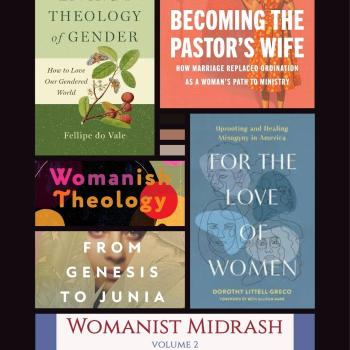
Beth Barr, Becoming the Pastor’s Wife (Brazos Press, 2025). 256 pp. $24.99
 One of the many revolutionary social shifts caused by the Reformation, included the shift away from male celibacy among the secular priestly order to a pastoral leader who was expected to take a wife. This shift not only reordered the male social order, but it dramatically affected the lives of women. Protestant women adherents shifted away from the celibate calling of a nun to the new social order of the pastor’s wife. With her profound knack to integrate memoir and history, Beth Barr tells the compelling story of this shift, and the long history of how it affected evangelical Protestant women all the way to the present.
Mark T. Mulder and Gerardo Marti, The Church Must Grow or Perish (Eerdmans, 2025). 344 pp. $32.99.
This religious biography recounts the crucial story of the rise of megachurch America through the cutting-edge ministry of Robert Schuller. Brimming with constructive criticism couched in a sympathetic depiction of its subject, this book is a showcase in producing outstanding and compelling biography that represents wider narratives and trends in history.
John Hawthorne, The Fearless Christian University (Eerdmans, 2025). 164 pp. $24.99.
Organizations led from a posture of fear are often frozen from being able to be the leadership catalysts required to move the world and shape its citizenry. Sociologist, John Hawthorne, analyzes trends in Christian higher education and provides evidence that long-term viability requires fortitude. The future of Christian higher education may very well rest in heeding this call to foster fearless Christian universities.
John Mark Comer, Practicing the Way (Penguin Random House, 2024). 288 pp. $26.00.
Comer’s creative re-imagining of following Christ as an apprentice rightly received all the awards it did during 2024. As is common for upstarts and newcomers that reimagine Christianity for a new generation, fundamentalists commonly rise up in arms against creative cultural engagement such as Comer’s. Nonetheless, the pearl-clutching efforts of Tim Challies, Kevin DeYoung, and 9Marks to thrust Comer outside the bounds of orthodoxy have proven unsuccessful. This provocative book is the most important and meaningful demonstration of cultural apologetic of this decade to reach audiences outside the church.
Karen Swallow Prior, You Have a Calling (Brazos Press, 2025). 160 pp. $21.99.
 The notion of vocation is sorely confused in evangelical circles and it seems that many evangelicals feel like they occupy second-class vocational status when they are not “called” to ministry. Prior helps us consider “calling” and expands our notion of vocation as being more than a career but a pursuit of the true, the good, and the beautiful. This important and thoughtful book is extremely practical and timely.
Brian J. Miller, Sanctifying Suburbia (Oxford University Press, 2025). 248 pp. $29.95.
This book examines Chicago case studies related to white evangelical flight in the twentieth-century and astutely describes the phenomena of white evangelical suburbia. Carefully cited research and meticulous analysis of data found only in this study makes Miller’s study a vital one to consult for both historians and sociologists.
Mark A. Granquist, A History of Christianity in America (Baker Books, 2025). 400 pp. $44.99.
 Granquist takes on the difficult task of surveying the history of Christianity in America. Rather than moving from one great micro-biography to another, as some histories appear to do, this history traces larger trends through the use of collected census and demographic data and collective denominational narratives for a people’s history of Christianity in America.
Cara Meredith, Church Camp (Broadleaf Books, 2025). 226 pp. $26.99.
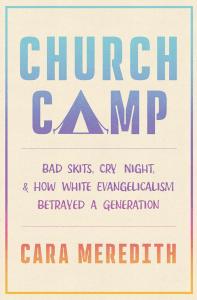
Rooted in revival encampment history, the emergence of summer church camps is an important part of twentieth-century evangelical history. Many can recall a care-free time of sports and leisure in the great outdoors, accompanied with a healthy dose of worship and revival. Meredith employs impressive verve to tell the story of how church camps have shaped the minds of young evangelicals and warns of the dangers and harms this ecosystem of spiritual renewal has had on many.
Jim Davis and Michael Graham with Ryan P. Burge, The Great Dechurching (Zondervan Academic, 2023). 272 pp. $29.99.
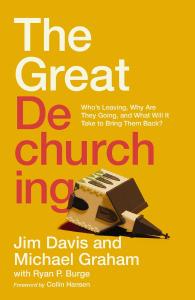
Gathering an impressive collection of data on the dechurched and organizing it into a meaningful story, these authors provide case studies and suggestions for how evangelicals might be able to invite the dechurched to return to the fold. This book puts empirical evidence to work towards solutions for one of the largest crises the evangelical church has faced since its inception.
Holly Berkley Fletcher, Missionary Kids (Broadleaf Books, 2025). 291 pp. $29.99.
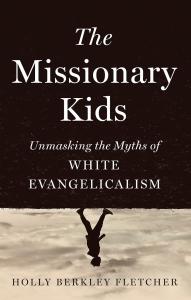
Told from the first-hand experience of a missionary kid, historian Holly Berkley Fletcher makes startling and powerful claims about what she has learned about evangelicals and their quest to evangelize the nations and how this endeavor has affected the children they brought with them on this quest.
Kevin W. Hector, Christianity as a Way of Life (Yale University Press, 2023). 328 pp. $40.00.
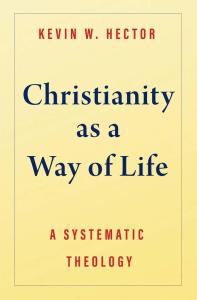 An analytical fusion of ethical and ontological philosophy with systematic theology produces this skillfully conceived theology. Privileging the practices of lived theology that transform our perception of the world, Hector offers Christians a way to be in the world, both individually and communally.
Thomas Tweed, Religion in the Lands that Became America (Yale University Press, 2025). 640 pp. $35.00.
Tweed’s work is a culmination of decades of research and thought on how to write America’s religious history. Considering space and movement among other metaphors, Tweed traces major shifts in history: foraging, farming, factories, and fiber optics—and how they influenced the religious activity of those living during those eras as well as the way the worker’s religious progressed across these eras.
Karen J. Johnson, Ordinary Heroes of Racial Justice (IVP Academic, 2025). 352 pp. $30.99.
Working from a strategy of telling marginal stories from below, Karen Johnson familiarizes evangelicals with some of the less commonly known characters and stories of the civil rights movement. Whether looking at urban Yankee stories or those from the deep South, this book combines practical instruction for seeking racial justice with the stories of the ordinary folks that modeled the effort.
Obbie Tyler Todd, The Beechers (LSU Press, 2024). 368 pp. $39.95.
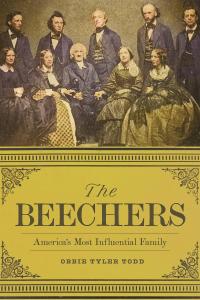
In compelling narrative, Obbie Todd tells the story of the rise and influence of what he believes is America’s most influential family, the Beechers. Todd’s detailed depiction of the Beecher family and his expertise in nineteenth century American history promises a reliable and thorough account of the contribution one family had in shaping and influencing American society and culture for over a century.
Joash P. Thomas, The Justice of Jesus (Brazos Press, 2025). 192 pp. $19.99.
What if the Jesus you were taught to follow and the Christianity you learned from childhood looked more like your Western dominant, capitalistic culture than the person of the Ancient Near East and the movement from the margins? Joash Thomas decenters the Western mindset, decolonizes the evangelical imagination, and baptizes readers into fresh perspectives of what it means to follow Christ from the margins.
Samuel Perry, Religion for Realists (Oxford University Press, 2025). 224 pp. $19.99.
Too often the religious shape of culture goes overlooked in interpretations, analyses, and constructions of modern and post-modern worldviews. Intellectuals sideline the religious inclinations of people to the detriment of their research. Furthermore, the obscurantist and anti-intellectual proclivities of many Christians cause them to look upon the analytical scientific study of religion with suspicion and skepticism. For both parties, sociologist, Samuel Perry, provides a compelling case for the role of the scientific study of religion and warns of the detrimental danger of neglecting this pursuit.
Marissa Franks Burt and Kelsey Kramer McGinnis, The Myth of Good Christian Parenting (Brazos Press, 2025). 240 pp. $19.99.
This team of writers fuse theological analysis with historical insight in telling the not so well understood story of how evangelicals were trained to parent their children. Many children are still recovering from the trauma of this experience and many parents are still asleep to the haphazard pseudo-scientific methods they adopted. Burt’s and McGinnis’s research makes sense of studies like The Great Dechurching, which demonstrated the all too common case that the dechurched suffered from a strained relationship with inflexible and ungracious evangelical parents.
Zach W. Lambert, Better Ways to Read the Bible (Brazos Press, 2025). 216 pp. $19.99.
Christian laypeople and leaders have too often weaponized their interpretations of the bible to reinforce a construct of control and power over culture, society, and its citizenship. Lambert revisits some of the most harmful ways that people have brought their presuppositions to the bible. By re-examining the lenses of literalism, apocalypticism, moralism and hierarchy, Lambert plots an improved pathway for better ways of reading the bible.
Isaac B. Sharp, The Other Evangelicals (Eerdmans, 2023). 384 pp. $34.99.
 Possibly one of the most important revisitations of evangelical history of recent time is Isaac Sharp’s outstanding study on the other evangelicals. This social history from below recounts stories of liberal, black, progressive, feminist, and gay Christians that fit much of the criteria of what it means to be evangelical: spiritually, theologically, and actively—yet, were sidelined by the elite center of evangelicalism. Exploring how evangelical history was written, as well as accounting for how “respectable” evangelicals self-identified through surveying, polling, and other means—this study sheds light on the contest that occurred to sit in evangelical spaces and be counted and how many had to just walk away in frustration.









 Ad-Free & Subscriber Log-In