

I recently came across a book that resonated with so many of my interests! This was The Foundations of Re-Enchantment: Freemasonry, Theosophy, and the Occult Revival, by Christopher Coome. Those Masonic and Theosophical themes have been of interest to me for a great many years, but especially right now with my work on America in the 1890s. See my last post here! Important stuff, with an endlessly fascinating roster of characters.
Chris kindly agreed to write this guest post for this site. He is an intellectual and religious historian focusing on the long nineteenth century, civil society, and the intersections of culture and mysticism. He holds a Master of Religious Arts from Yale and a PhD from Queen’s University. He is currently a Postdoctoral Fellow at Duke University.
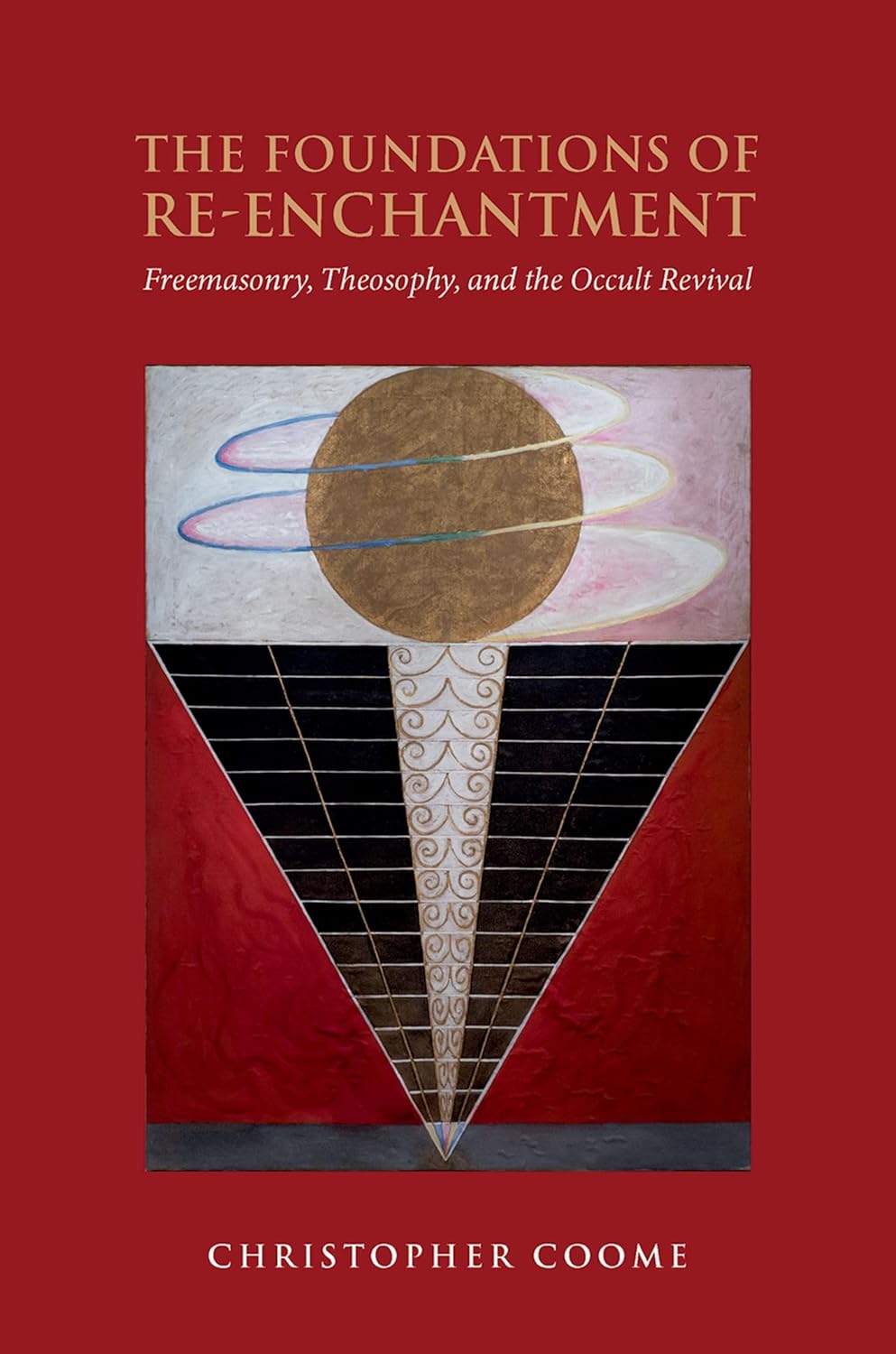
The Foundations of Re-Enchantment
Christopher Coome
In 1875, in a small apartment in New York city, a Russian émigré of noble stock was hosting visitors. Freemasons, Kabbalists, and Spiritualists sat around her parlor, drawn to the promise of engaging conversation and strange new ideas. Halfway through the evening, Helena Blavatsky scribbled a quick thought on a piece of paper and handed it to her American associate, Henry Steel Olcott. Would it not be a good idea to form a society for this kind of thing?
Olcott nodded in assent, and in that small New York apartment, Blavatsky, Olcott, and their associates formed what would become the most influential occult organization in history: the Theosophical Society. Setting themselves against Christian orthodoxy and scientific materialism, the Theosophical Society launched an enchanted crusade for spiritual humanism and the numinous realities that modernity had pushed to the side. Theosophy’s success created a cultural and religious whirlwind that can still be felt today, and from its mystical vortex other societies were spun out in different directions: the Hermetic Society of the Golden Dawn, the Ordo Templi Orientis, and the Anthroposophical Society. Together, these four organizations and the cultural upheaval they encapsulated are referred to by scholars as the “occult revival.” For almost a century, scholars avoided talking about these occult subjects, but today, contemporary academics and popular authors find a host of modern ideas, practices, and dispositions prefigured by these esoteric mystics and their occult revival.

This is the story told in my recent book, The Foundations of Re-Enchantment: Freemasonry, Theosophy, and the Occult Revival. It’s a story of spiritual mischief, wild creativity, and the pitfalls of clairvoyant hubris. It’s a story, in part, about the birth of modern spirituality, but it’s also a story about how I think we passed over major parts of that story itself—parts that may have much to tell us about the history of new religious movements, the decline of Christianity, and the birth of contemporary attitudes to religion. It’s a story that has a lot to do with—now bear with me here—Freemasonry.
What drew me to this research—besides the multitudes of mystics who keep bumping into my life—was realizing that all these organizations and their leaders shared a pattern. Almost all of them were freemasons. In many of their major books, they devoted entire chapters to Freemasonry, and references to Freemasonry were scattered liberally throughout their broader works. Sometimes, they would devote entire books to Freemasonry, and two of the major organizations, the Hermetic Order of the Golden Dawn and the Ordo Templi Orientis, were consciously based on masonic ceremonies—by their again, masonic founders. Yet, far more significant than this, each of the major figures, such as Helena Blavatsky, Rudolf Steiner, and Aleister Crowley, claimed that in some way and some fashion, their societies represented a continuation, progression, or purification of Freemasonry. All of them wanted to claim the pedigree of Freemasonry, but equally, they all claimed that they had surpassed Freemasonry—that Freemasonry was broken, and that they needed to carry the torch forward. This left me with a simple question. Why? Answering the question, however, proved far less simple, and far more exciting. Answering this question forced me to explore the nearly two-hundred-year history of Freemasonry that preceded the occult revival.
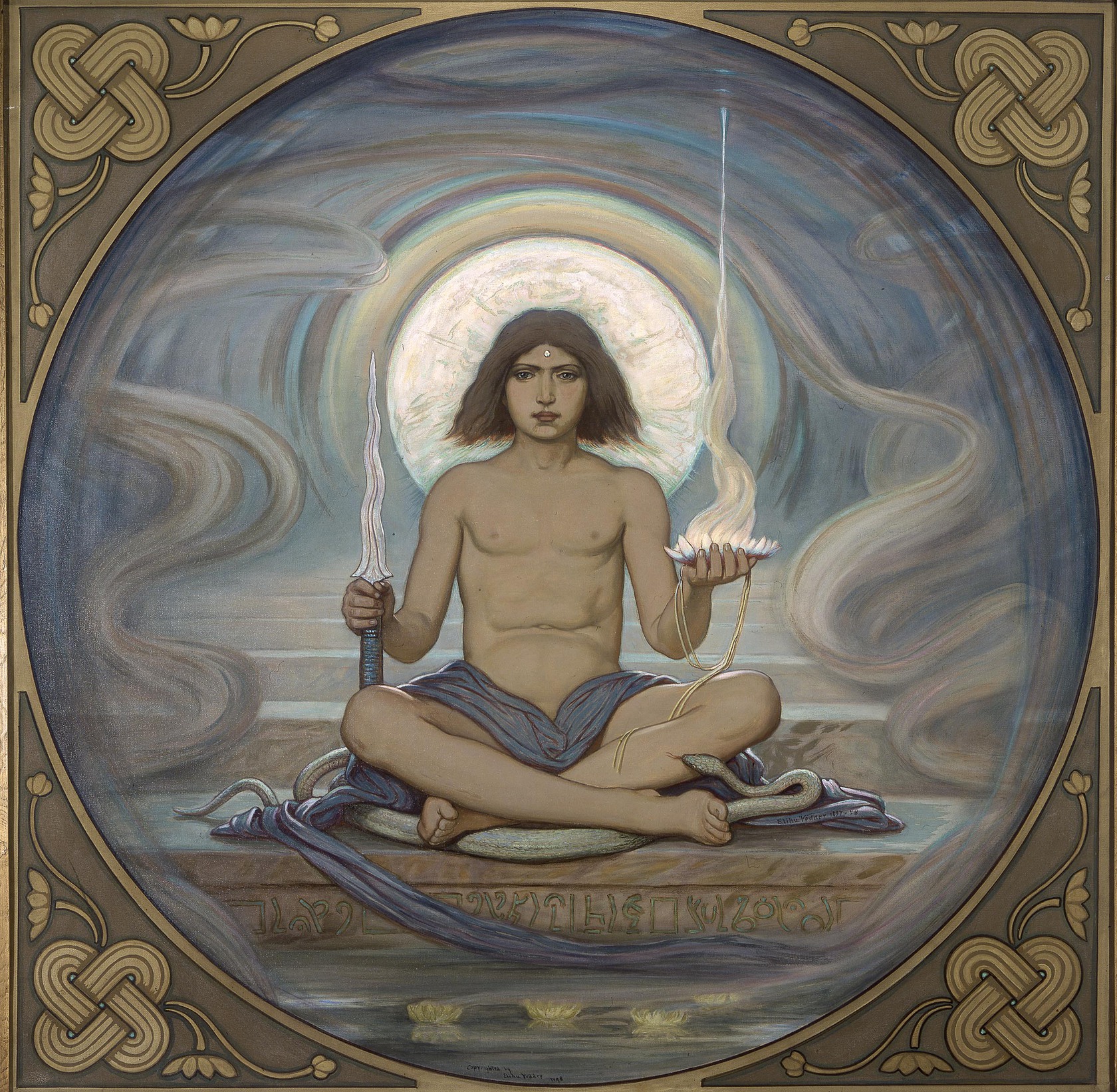
Blending the work of exceptional scholars with personal archival research revealed that Freemasonry was a remarkably complex phenomenon—one with centuries of informative engagement in the realms of politics, culture, religion, and civil society. Freemasonry was deeply intertwined with the Enlightenment, the growing interest in representative politics, the pursuit of civic virtue, and the desire for freedom of—and from—religion. At its core, Freemasonry appeared to be three things. It appeared to be one of the oldest—if not the oldest—voluntary fraternities and men’s club in the Western world. It appeared to be an active charitable organization which sought to provide aid to its impoverished members and broader society. And the third aspect…well that was less clear.
Determining the nature of this aspect—drawing its contours and delineating it—proved to be the marrow of my research. It was this third aspect that had proven so influential on the late 19th century occultists, and it was this aspect that they wanted to both appropriate and surpass. The terms that I came to use to describe this aspect were the “masonic intellectual tradition” or the “masonic religious vision.” This was a phenomenon I found hidden in the rich tradition of masonic literature, a tradition that began in the early years of the 18th century. Of primary importance were masonic books that explored the nature and history of Freemasonry—and significantly—the nature and history of religion. Piggybacking off the birth of the “science of religion” or comparative religious studies in the 17th century, certain masonic scholars began to conceive of a grand and inclusive religious vision. This vision sought to connect all major world religions like branches stemming from an ancient and primordial religious tree—something like a masonic perennial philosophy.
A significant focus of masonic scholarship was the “mystery cults” of the ancient world, the initiatic rites of Mithras, Isis, and Dionysius, which masons began to conceive as their typological, if not genetic ancestors. As the 18th century passed into the 19th, and European imperialism expanded across the globe, and the study of religion became more sophisticated, so too did this masonic religious vision. As masonic enthusiasm for the antiquity and grandeur of their order increased, masonic literature reveals that certain masons became convinced that Freemasonry was nothing short of a universal and esoteric religion. Even beyond that, some began to put forward the idea that Freemasonry might have been the world’s original religion.
It was this aspect, this universal and esoteric religion—this quest for the history of religion as such—that the occult revivalists saw themselves continuing in, and why they claimed to have surpassed Freemasonry. In their own quest to present a universal, esoteric religion, purified of religious and scholarly orthodoxies, the occultists were—just as they said they were—following in Freemasonry’s footsteps. The story this ultimately tells crosses centuries and continents and examines how the Western mind became ever more familiar with the ancient and global world, and sought ways to reconcile new and exciting information in kaleidoscopic religious visions.
It is my abiding hope that I have done justice to this fascinating subject. The book is based on my doctoral dissertation, greatly enhanced by the academic peer-review process, and graciously published by Oxford University Press. Yet, writing this book was also an adventure, one that took me from humble lodge libraries in North America to the archives of the palatial Freemasons Hall in London, to the headquarters of secretive and mystical orders. It involved the help of more than one esoteric individual, and endless emails with people much wiser and more informed than myself. If you find yourself with a copy, I hope that you enjoy reading it as much as I did writing it.








 Ad-Free & Subscriber Log-In