Last updated on: January 7, 2022 at 12:51 am By GFA Staff Writer
WILLS POINT, TX – Gospel for Asia (GFA World) founded by K.P. Yohannan, has been the model for numerous charities like Gospel for Asia Canada – Discussing GFA World’s report citing the lifesaving impact of malaria-fighting efforts across Asia as the world searches for a cure for COVID-19.
The hunt for a cure for COVID-19 draws attention to another “forgotten” health crisis that continues to claim more than 400,000 lives around the world every year — mosquito-borne malaria.
ANOTHER DEADLY SCOURGE: Political leaders and doctors suggest readily available anti-malarial drugs may be beneficial in treating coronavirus patients as Gospel for Asia (GFA World) and other organizations highlight the much-overlooked “deadly scourge” of malaria.
As some political leaders and doctors suggest readily available anti-malarial drugs may be beneficial in treating coronavirus patients, Gospel for Asia (GFA World) and other organizations are highlighting the much-overlooked “deadly scourge” of malaria.
World Malaria Day — an annual awareness event — is April 25 each year, and malaria-fighting organizations like Gospel for Asia (GFA) are eager to see that the ongoing battle against the mosquito-spread menace doesn’t get ignored or forgotten because of COVID-19.
Despite the effectiveness of anti-malarial drugs like chloroquine — recently touted as a treatment for coronavirus — malaria still kills more than 400,000 people worldwide every year, more than double the global coronavirus death toll to date.
Each year, there are more than 200 million reported cases of malaria, mostly in sub-Saharan Africa and South Asia. So far, the total number of confirmed COVID-19 cases worldwide stands at about 2.5 million and rising.
Mosquito Nets: Ten Dollar Lifesavers
Describing malaria as a “deadly scourge,” GFA World’s report is one of a series of in-depth special reports by the Texas-based mission agency examining critical global issues, promoting awareness, and challenging people to respond. A life-saving mosquito net costs as little as $10 — but that’s more than many of Asia’s poorest families, who earn less than $2 a day, can afford.
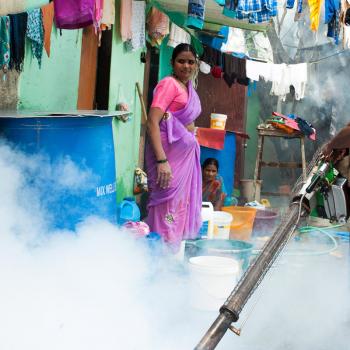
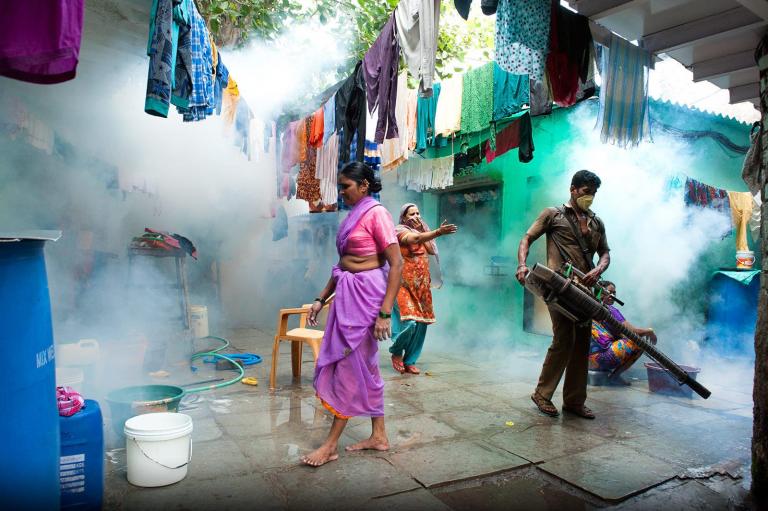
“For many years. . . teams across South Asia have been engaged in malaria prevention,” said Dr. Daniel, director of Believers Eastern Church’s medical ministry in Asia. “These committed local workers, often trekking miles on foot, distribute free mosquito nets — some 360,000 last year alone – to prevent malaria infection and provide clean water and community sanitation to help reduce mosquito breeding grounds.”
Although malaria has a lower mortality rate than coronavirus, the financial toll of malaria is huge. According to estimates, malaria costs the African economy $12 billion every year through healthcare and loss of productivity and investment.
With much of South Asia currently under COVID-19 lockdowns and restrictions, Gospel for Asia (GFA World) is supporting outreaches to those most severely impacted — including impoverished day laborers unable to earn money for food. Teams are providing free meals as well as mosquito nets.
“Even in lockdown amid COVID-19, we in the West have the opportunity to pray at home and support local workers in the field to save lives,” said India-born Gospel for Asia (GFA World) founder Dr. K.P. Yohannan, whose mission has served the poor in Asia for 40-plus years and has become one of the biggest mission organizations in the world.
About Gospel for Asia
Gospel for Asia (GFA) is a leading faith-based mission agency, bringing vital assistance and spiritual hope to millions across Asia, especially to those who have yet to hear the “good news” of Jesus Christ. In GFA’s latest yearly report, this included more than 70,000 sponsored children, free medical camps conducted in more than 1,200 villages and remote communities, over 4,000 clean water wells drilled, over 11,000 water filters installed, income-generating Christmas gifts for more than 200,000 needy families, and spiritual teaching available in 110 languages in 14 nations through radio ministry. For all the latest news, visit our Press Room at https://press.gfa.org/news.
WILLS POINT, TX – Gospel for Asia (GFA World) founded by KP Yohannan, whose heart to love and help the poor has inspired numerous charities like Gospel for Asia Canada reveals a shocking new special report that followed the International Day of the Girl on October 11, that girls face greater exploitation than ever, with 650 million child brides in the world today.
As women’s rights take center stage in the U.S. and many parts of the world, the reality for millions of girls worldwide is sexual exploitation and forced marriage before the age of 13.
The horrific treatment of girls — including sex trafficking, sex-selective abortions, and denial of education — is exposed in a special report titled Rewriting the Tragedies of Girlhood, released by Gospel for Asia (GFA World) to coincide with the U.N. International Day of the Girl, Oct. 11.
In 2014, the kidnapping of 200 schoolgirls in Nigeria by Boko Haram terrorists grabbed the headlines, but rampant abuse of girls across Africa and Asia continues largely under the radar:
In Bangladesh, a survey of 375 sex workers revealed nearly half of them were child brides, married as young as 11, and trafficked into prostitution
In China, sex-selective abortions resulted in a national shortage of women, fueling demand for child brides and sex workers
North Korean girls who escape across the border to China are forced to stay “invisible” and often end up in brothels and the cybersex trade
“Globally, millions of girls — nearly double the entire U.S. population, in fact — are trapped in a web of exploitation,” said Gospel for Asia (GFA World) founder Dr. K.P. Yohannan. “Girls living in areas of political instability, conflict, or oppression are especially vulnerable to forced marriage and sex slavery.”
In China, girls are trafficked from neighboring countries, lured by the promise of jobs. Victims are forced to cohabit with men who don’t speak their language, keep them locked in tiny rooms, and rape them at will. Often, girls are beaten and drugged.
UNICEF — the U.N. children’s agency that stages the annual International Day of the Girl every October to raise awareness — estimates there are 650 million child brides globally, including women who married in childhood. Girls are often forced to marry early because their parents don’t want them, placing a far higher value on boys.
‘You Should Have Been A Boy’
One of four sisters, Ruth was treated cruelly by her father who flew into a rage when she was born. “You should have been a boy,” he later told her. When Ruth decided to go to Bible college, she knelt at her father’s feet to get his blessing. Instead, he kicked her in the face.
“While Ruth was at college, her father’s heart softened and he came to know the love of Jesus,” said Yohannan. “When she traveled home and stepped off the bus, her father ran to hug her. Change happens when people see every single girl is precious because she’s created by God in his image.”
When 13-year-old Krupa realized she was being roped into a childhood marriage, she alerted workers at the Bridge of Hope center she attended. Within minutes, “they arrived at our house like angels” and intervened to stop the ceremony, she said. Today, Krupa has achieved her goal of becoming a teacher — and married of her own choice when she was 20.
Gospel for Asia (GFA World) is a leading faith-based mission agency, helping national workers bring vital assistance and spiritual hope to millions across Asia, especially to those who have yet to hear about the love of God. In GFA’s latest yearly report, this included more than 70,000 sponsored children, free medical camps conducted in more than 1,200 villages and remote communities, over 4,800 clean water wells drilled, over 12,000 water filters installed, income-generating Christmas gifts for more than 260,000 needy families, and spiritual teaching available in 110 languages in 14 nations through radio ministry. For all the latest news, visit our Press Room at https://press.gfa.org/news.
Last updated on: April 8, 2021 at 3:34 am By KP Yohannan
WILLS POINT, TX – Gospel for Asia (GFA World and affiliates like Gospel for Asia Canada, founded by KP Yohannan), one of the world’s biggest poverty-alleviating organizations spotlights the huge “uphill battle” facing many of the world’s 258 million widows in a just-released report.
Treatment of widows is often startlingly unfair and cruel, catapulting them into a crisis of survival, says the new global report by Texas-based Gospel for Asia (GFA World).
‘SHUNNED AND SHAMED’: Treatment of widows is often startlingly unfair and cruel, catapulting them into a crisis of survival, says a new global report by Texas-based mission agency Gospel for Asia (GFA World). Titled Widows Often Face Uphill Battle, the report examines the different struggles faced by widows in the U.S., Africa, and Asia.
Those struggles include battles over widows’ benefits in America, being stripped of homes and possessions in Africa, and the practice of shunning and shaming in Asia.
“In some Asian cultures, when a woman’s husband dies, she’s often stripped of her dignity, her worth, and her human rights,” said Dr. K.P. Yohannan, founder of Gospel for Asia (GFA World). “Many widows are deprived of their home, their property, and their possessions, leaving them destitute.”
In parts of Asia, many young widows face sexual harassment and abuse, often turning to begging or prostitution to survive.
Widows in some cultures are viewed with suspicion and disgust — sometimes even branded as witches or blamed for their husband’s death and shut out of community life.
‘Excluded and Invisible’
“Cultural shame and prejudice often render widows excluded and invisible,” said KP Yohannan, whose faith-based organization supports 40 local Sisters of Compassion teams helping widows across Asia. GFA World’s support includes vocational training for widows and giving them opportunity to take part in income-generating activities, such as sewing.
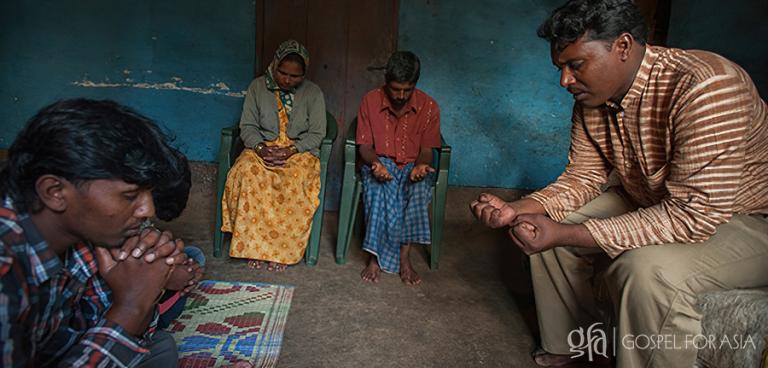
These GFA World teams of visiting women provide emotional and spiritual support, praying with widows in their homes and showing them they’re not alone.
Asia, the world’s biggest continent, has an estimated 57 million widows — roughly equivalent to the populations of California and Florida combined. “On the surface, this seems like an overwhelming uphill battle,” said KP Yohannan, “but every time a widow receives help and encouragement, we rejoice.”
Supporting the grassroots efforts of local churches in cities and rural villages, GFA World aims to “show the love of God” to outcast widows who’ve known only rejection.
“The Apostle James told us in his epistle that true religion is to care for orphans and widows in their distress,” KP Yohannan said. “The challenge facing the church around the world today is to not just read the Bible, but to do what is written in it.”
Gospel for Asia (GFA World) is a leading faith-based mission agency, helping national workers bring vital assistance and spiritual hope to millions across Asia, especially to those who have yet to hear about the love of God. In GFA’s latest yearly report, this included more than 70,000 sponsored children, free medical camps conducted in more than 1,200 villages and remote communities, over 4,800 clean water wells drilled, over 12,000 water filters installed, income-generating Christmas gifts for more than 260,000 needy families, and spiritual teaching available in 110 languages in 14 nations through radio ministry. For all the latest news, visit our Press Room at https://press.gfa.org/news.
Last updated on: November 20, 2022 at 4:14 am By GFA Staff Writer
WILLS POINT, TX – Gospel for Asia (GFA World and affiliates like Gospel for Asia Canada, founded by Dr. K.P. Yohannan) Special Report dicusses the staggering number of children living in crushing poverty globally — equal to the entire populations of the U.S. and Canada combined.
CHILDREN IN CRUSHING POVERTY: The staggering number of children living in poverty globally — equal to the entire populations of the U.S. and Canada combined — is revealed in a special report by mission agency Gospel for Asia (GFA World), as the U.N. marks the International Day for the Eradication of Poverty, Oct. 17.
The staggering global number — equal to the entire populations of the U.S. and Canada combined — is revealed in a special report by leading mission agency Gospel for Asia (GFA World), as the U.N. marks its annual awareness day, aimed at stirring action to fight poverty.
The report — Fighting Global Poverty With Ideas — says education and ideas, along with teaching values such as compassion and integrity, can help catapult the next generation out of the jaws of poverty.
“The ability to eradicate extreme poverty is here,” said Texas-based GFA World founder Dr. K.P. Yohannan. “Ideas and values together can transform the world.”
A Global Scourge
Grinding poverty is most often associated with developing nations in Africa and Asia, but it’s a scourge in wealthy, developed countries, too.
According to PovertyUSA.org — a Catholic initiative — nearly one-in-six children in the U.S. lives in poverty. The federal poverty threshold for a family of four is around $25,700 a year.
And, the group says, one in every four Americans with a disability lives in poverty.
Globally, millions of widows — and millions more living with the disease leprosy — are shunned by their families and neighbors, plunged into extreme poverty and struggling to survive as outcasts in their own communities. They’re seen as cursed, and excluded from the mainstream of life and business.
‘Don’t Deserve Anything Better’
“In Asia — the world’s most populated continent — people are often kept in deep poverty by superstitions, prejudices, and the belief that their lives are not important and they don’t deserve anything better,” said Yohannan, author of Never Give Up: The Story of a Broken Man Impacting a Generation.
Children like six-year-old Bir, who scavenges plastic bags for his parents, are led to believe they’re as worthless as the trash they sort through.
“It’s critical that this generation does not give up, that it’s empowered to break free from the stranglehold of poverty,” Yohannan said. “Otherwise, countless millions of children will be doomed to a life of misery in the world’s gutters and slums. They deserve so much better than that.”
Gospel for Asia (GFA World) is a leading faith-based mission agency, helping national workers bring vital assistance and spiritual hope to millions across Asia, especially to those who have yet to hear about the love of God. In GFA’s latest yearly report, this included more than 70,000 sponsored children, free medical camps conducted in more than 1,200 villages and remote communities, over 4,800 clean water wells drilled, over 12,000 water filters installed, income-generating Christmas gifts for more than 260,000 needy families, and spiritual teaching available in 110 languages in 14 nations through radio ministry. For all the latest news, visit our Press Room at https://press.gfa.org/news.
Laija awoke with a start, confused by the strange events in her dream. Why had she been refused passage through the door that led other people to a better place? Her mind kept going back to what the man at the door had told her: “This is not for everyone, but only for a selected few.”
Woman Lives Without Peace
Laija faithfully worshiped her family’s gods and delighted to participate in the religious ceremonies, yet her life was devoid of peace. She and her husband raised seven children and watched several of them marry, but love did not reign in their home. Financial struggles created a tense atmosphere, and her family quarreled continually.
Laija had heard about Jesus’ life and had visited worship services led by Gospel for Asia (GFA)missionaries, but like most people in her community, Laija had little room in her heart for anything other than her own beliefs.
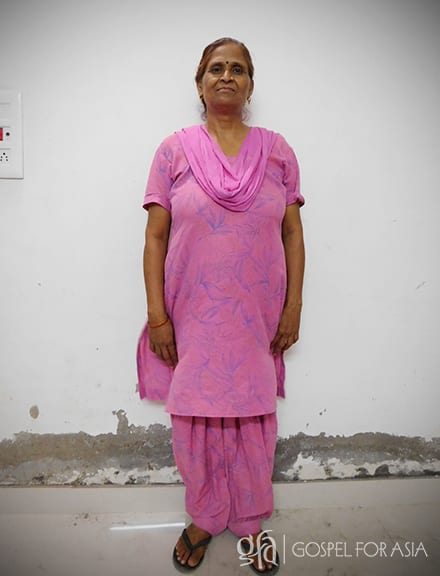
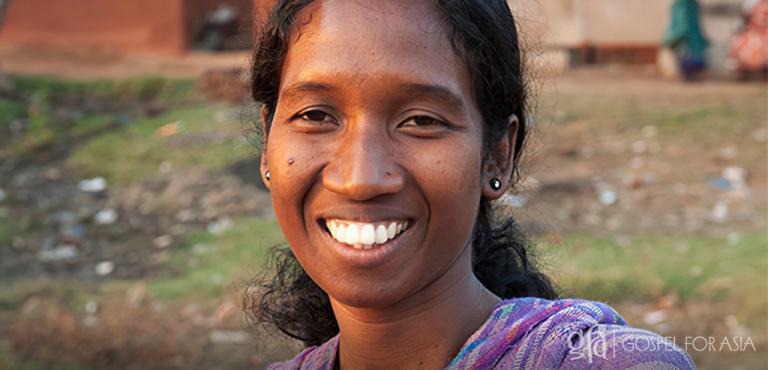
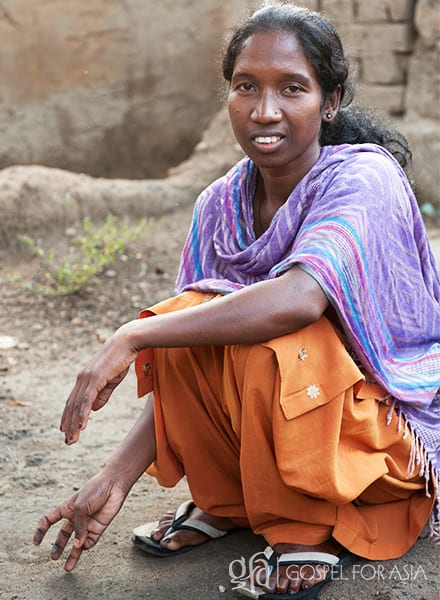
Laija (pictured) hungered to know Jesus the way her two missionary friends did, but she lacked the courage to embrace Him as her Savior.
Wife Befriends Beacons of Hope
Then one day, Laija met Vivaan and Abeyma, the Gospel for Asia (GFA)women missionaries ministering in her area. Laija heard again about the love of Jesus and the transformation He freely offers, but the seeds of faith still fell on the roadway of her heart and found no good soil in which to grow.
Laija’s friendship with the two missionaries did grow, however, and she soon confided in her new friends, explaining her family’s problems and the thoughts of her heart.
“I do not know who to believe,” she shared. “There is no peace in my life, and I am fed up with everything.”
Vivaan and Abeyma prayed for Laija and visited her often to share words of encouragement. Laija recognized the grace of Jesus being lived out in her two friends, and an earnest hunger to experience that same grace developed in her heart. The two women’s testimonies of God’s hand in their lives inspired Laija, but although she understood the goodness of the Lord, her dedication to the gods she had worshiped for all of her 47 years made Laija hesitant to embrace Jesus.
Dream Bewilders, Explanation Illuminates
Then Laija had a dream. In her dream, she saw a long line of people waiting to pass through a door. When she asked what was happening and why so many people were standing in a line, someone in her dream replied, “Everyone is getting ready to go to a cool and better place because it is becoming hotter here.”
“Oh, that is good,” Laija responded. “I also want to go there.”
But when Laija reached the door, a man stopped her and said, “This is not for everyone, but only for a selected few.”
She woke up, bewildered by her dream and the rejection she experienced in it.
The next day, Laija visited her missionary friends and told them about her strange dream. While Abeyma listened to Laija, she remembered Jesus teaching in Matthew 7 that only those who do the will of His Father will enter the kingdom of heaven.
Abeyma and Vivaan prayed for their friend and spoke into Laija’s life again by sharing passages from the Word of God. Gradually, Laija understood the meaning of her dream, and the many seeds that God had been sowing in her heart finally found good soil. She longed to know Jesus personally, so that day, she decided to follow Him.
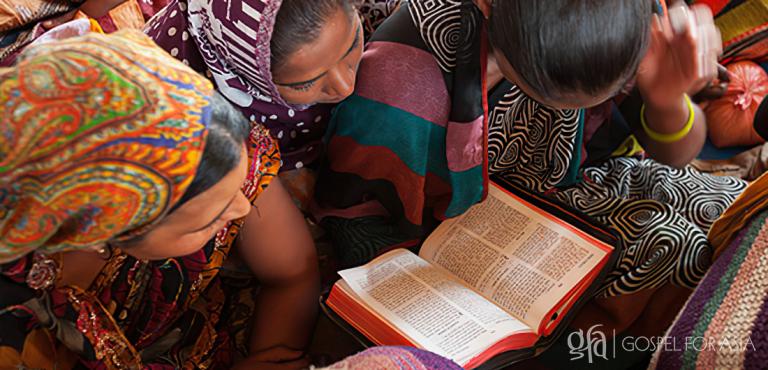
Laija grew in her knowledge of God while Abeyma and Vivaan shared from the Word of God, just as these women learn by reading their Bible.
An overwhelming peace and joy immediately followed Laija’s decision to embrace Jesus as her Savior. But her husband quickly tried to squelch her new hope.
Faith Holds Fast Under Opposition
“At this age, how can you be so serious about [following a different god]?” he demanded. “I do not believe a single word about whatever you are telling me. The sooner you take back your words, the better. I do not want to hear nonsense.”
When Laija stood firm in her faith in Christ, her husband’s aggression reached beyond verbal abuse. He began hitting her frequently, and when he observed her praying before eating her meal, he would take away her food and taunt her, telling Laija to ask her Jesus to give her food. Even Laija’s children began mocking and disrespecting her.
Although her husband and children turned against her, Laija steadfastly clung to her hope in Christ. She knew Vivaan and Abeyma cared deeply for her, and she went to them often for comfort, prayer and encouragement.
“God gives me the strength,” Laija said, grateful for the prayer support of her friends.
Today, even in her difficult situation, Laija holds fast to her Prince of Peace, and she prays her family may one day also experience the joy she found in Christ.
*Names of people and places may have been changed for privacy and security reasons. Images are Gospel for Asia stock photos used for representation purposes and are not the actual person/location, unless otherwise noted.
fire burned inside Myo Zaw. It was lit the day the Lord redeemed him, and it grew hotter and more intense every single day. He was like the prophet Jeremiah, unable to keep the love of Christ hidden within himself. If he tried, he felt restless, he felt sick.
Weary of holding it in, Myo Zaw shouted from the roadsides and in market places, “Christ [redeemed] me, and He will [redeem] you also!”
People thought he had gone mad. Those in his community already knew him as a hot-blooded drunkard who fought with people and beat his wife and children, and now he proved his insanity.
“But I knew I was not mad,” Myo Zaw says. “The love of God just would not simply keep [quiet] in my heart. I wanted to pour it out and share it.”
Independently Ministering
Consumed by a fire that could not be put out, Gospel for Asia Missionary Myo Zaw traveled throughout his region, walking from place to place, sharing the Word of God. He told people “how a sinner like me was found by God.” In three years, he visited 100 communities. His wife, Shway, sent him letters while he was away to encourage him.
“If your life can [be changed] by Christ, there is no one who cannot be changed by Christ,” she’d say. “So wherever you are going and sharing the Word of God, we are here to pray for you. I believe people will be changed by the love of Christ.”
And people were—350 of them. They heard of His great love and saw it lived out in His child, and it changed them.
Following Like Jesus: Gospel for Asia Missionary Network
Not long after, a man visited Myo Zaw’s village and shared about the different places in their country and how Jesus went to a foreign land, though heaven was His home.
The fire inside Myo Zaw intensified. He knew without any doubt that his life needed to be about sharing the Lord’s love with others. It was a powerful love that transformed him, and he knew others needed it, too.
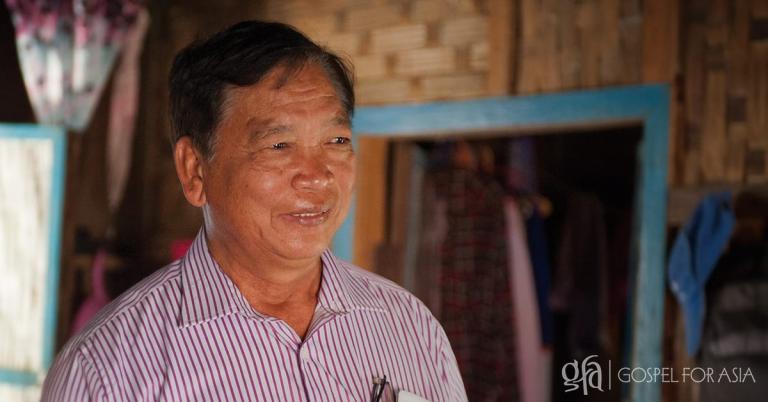
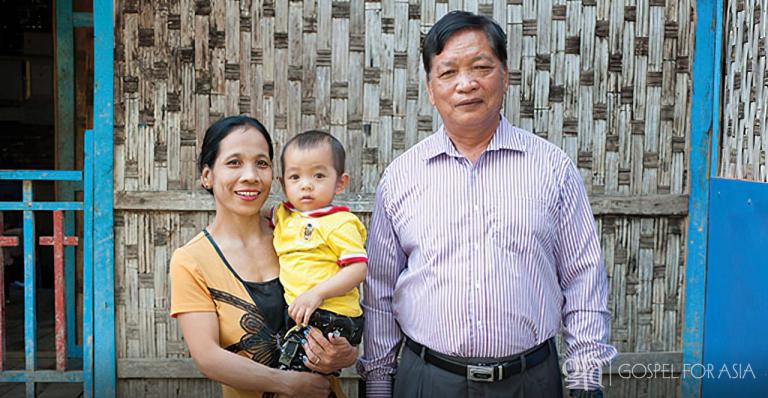
Myo Zaw (pictured) with his wife, Shway, and youngest son.
He told himself, “It is better that I go and give my life for the people in foreign lands.” So he and his wife prayed and prepared themselves to live in an area where people were unfamiliar with the Lamb of God.
Nearly 10 years later, God sent them to the southern region of their country as Gospel for Asiamissionaries.
Forced Out of Community
In their new community, people quickly realized Myo Zaw and his family were Christians and decided they would have nothing to do with the new arrivals.
“We were [forced] out of community,” Pastor Myo Zaw says, “and it is very difficult to live without community.”
People threw stones at Myo Zaw’s home and threatened to penalize others if they spoke to the Christians. Even Myo Zaw’s young children faced discrimination at school because of their faith.
“Sometimes, when we would go to the market,” Pastor Myo Zaw recalls, “they’d look at us as if we were enemies. All these things we faced, but the Lord showed His grace upon us through which we are still OK now.”
Gospel for Asia Missionary: Love Turning Hearts
Myo Zaw, Shway and their children trusted Christ throughout the hardships, and with the Spirit’s fiery love pulsating within them, they learned how to love the people in their new community.
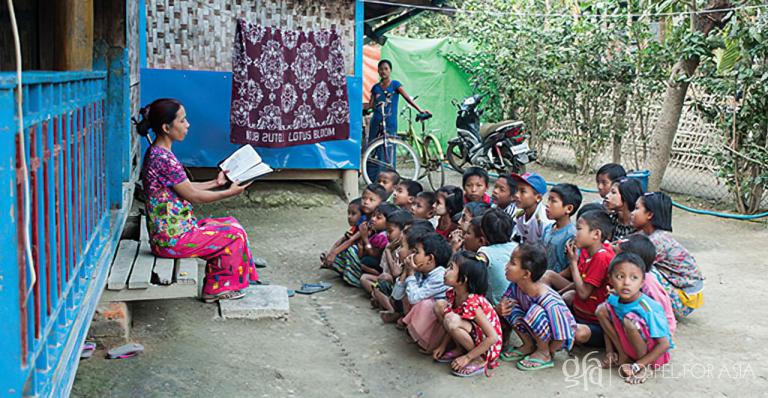
Myo Zaw’s wife, Shway, leading Sunday School in one of the local fellowships.
The pastor started with film ministry, showing people movies they enjoyed and also the film of Jesus’ life. The local children felt Myo Zaw’s and his wife’s warmth and began visiting them. Myo Zaw and Shway would give the young boys and girls treats, teach them songs and bathe the ones that came looking haggard.
The community watched how they cared for their children and wondered why this man and his wife loved them so much. Soon, people talked to them at the market, and Pastor Myo Zaw and Shway were able to reveal Christ’s love to them.
They cared for the sick and took people to the hospital when needed. When floodwaters destroyed homes and livelihoods, they and other Gospel for Asiaworkers helped provide relief. Pastor Myo Zaw frequently visited people to encourage them and offer words of life and hope in Christ Jesus. And people visited him as well.
God’s Most Powerful Weapon
“What I have found in my life is that love is the most powerful weapon we have from God.” —Myo Zaw
The fire God kindled within Myo Zaw on the first day of his redemption continues to burn brighter and hotter as the years pass.
“My love has become deeper for them. I care for them more,” he says of the people who are now his friends. “That’s why I don’t want to go back to my hometown. That is why I would like to sacrifice my whole life for them.”
After 14 years of displaying Christ’s love, people feel and understand Myo Zaw’s love for them and many return it. They’ve come to know that “everything I do is for them,” he says. And he does it because of Christ.
“What I have found in my life,” Myo Zaw says, “is that love is the most powerful weapon we have from God.”
*Names of people and places may have been changed for privacy and security reasons. Images are Gospel for Asia stock photos used for representation purposes and are not the actual person/location, unless otherwise noted.
Learn more about Film Ministry in Asia, as films on the life of Jesus have proven to be one of the best ways to let people in Asia know about the sacrificial love and deliverance of God.
Click here, to read more blogs on Patheos from Gospel for Asia.
Madira lay bedridden and hopeless. The witch doctors had given up. The medical treatments didn’t work. And now, six years of pain marked her life. Her thoughts yearned and searched for some ray of hope—something that would bring her healing. Then her thoughts turned to an event that happened 16 years ago.
She called her son over. “Now listen to me clearly,” she told him, “and do what I say.”
Madira (pictured) and her family lived happy lives until she began suffering with an unknown illness that left her unable to move her body with ease. She did everything the witch doctors told her to do, but after six years, the witch doctors gave up hope of her ever recovering.
When the Witch Doctors Gave Up
Madira’s family life wasn’t perfect, but they pressed on through the hard times. They grew more financially stable over the years, especially after her husband, Chakor, got a job as a police officer. With his new income, they were even able to build a better house for their family of five.
Madira learned in her childhood to honor, respect and adore her traditional religion. She was devoted to her gods and goddesses and turned to them for help in times of need. Such a time came for Madira when she experienced a peculiar, unknown sickness. Pain wracked her body, and normal movements brought deep discomfort.
Chakor gave his wife the best medical help he could, hoping she would recover quickly. But months dragged on to years, and her condition remained unchanged. They had no peace. Chakor and Madira did everything the witch doctors prescribed in hopes of finding relief from what was attacking Madira’s body. After six years, even the witch doctors gave up. They said her sickness was beyond their control.
Discovering the Hidden Treasure of God’s Word
In desperation, Madira’s mind turned to the day, many years ago, when her brother had given her a special gift. It was time to unveil the hidden treasure and try something new.
Now she wondered, with a new sense of courage, who was this Jesus?
Pulling her son aside, she said, “My son, we have done everything we could, but nothing is working. Now, listen to me clearly and do what I say. Bring the Bible, which was given by my brother, and read it for me. I would like to listen to it.”
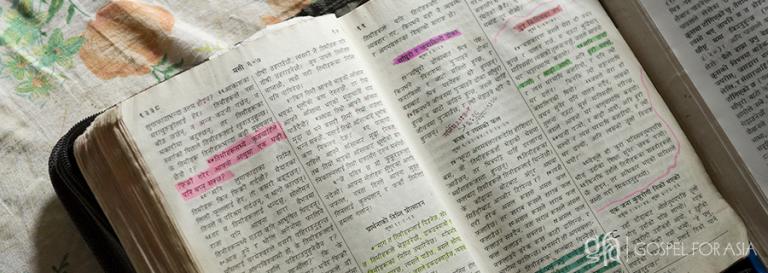
As her son took the old, neglected book in his hands and read the holy words of God something happened: The moment Madira heard what her son read aloud, pain left her aching body. Madira slept through the night, and she could move without struggle or discomfort. Madira now had a peace she hadn’t felt before. The words brought healing to her weary body. Now she wondered, with a new sense of courage, who was this Jesus?
After that day, Madira and her family searched for a church where they could learn more about God, whose written Word caused such an immediate change in Madira’s condition. Maybe this God would completely heal her?
After reading the Bible that Madira’s brother had given them 16 years prior, Madira felt better. After this, Madira’s family wanted to know more about the God they had read about.
Learning About the Healer
One day they met Seth, one of our national missionaries serving in their area. When they explained their problems, he shared about the love of Jesus and told them how Jesus is the Great Healer and Restorer.
“If you believe in the name of Jesus Christ, you will be healed,” he told them.
Discouraged after years of disappointing treatments, they responded, “We have done everything, but nothing is working out.”
When Seth, a national missionary, introduced the family to his pastor, they all were encouraged, and the congregation began to pray for Madira earnestly. Soon, the Lord healed her completely!
Seth encouraged them not to worry, because God is able to make impossible things possible for those who believe in His name. After finding no hope elsewhere, the family decided they wanted to go to church to learn about the love of God.
Finding Comfort Through the Body of Christ
Their new friend introduced them to Gospel for Asia (GFA) pastors and believers, and many prayers rose up on Madira’s behalf. From that day, Madira felt great relief. The believers prayed for her and her family regularly, and within a few weeks, Madira received complete healing! God had answered their prayers.
Now Madira is a testimony of God’s might and of His Word, which remains living and powerful. After 16 years of keeping a treasure, they finally understood its precious value. God waited patiently for them to realize His awesome love for them, and now they are living in His life and hope.
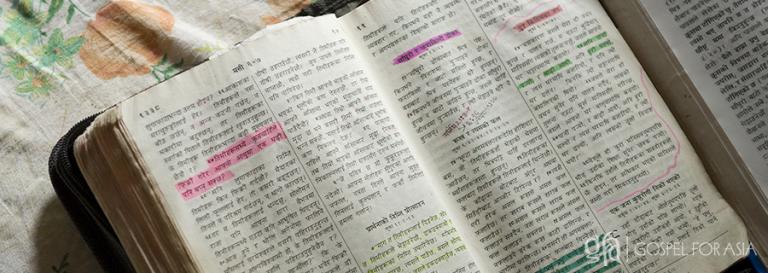
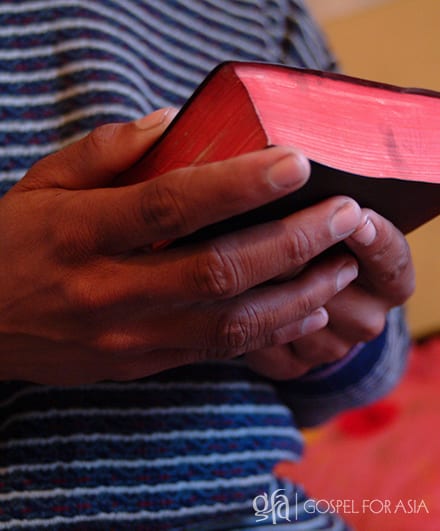
A Bible and a Gospel for Asia missionary brought God’s love to a hopeless woman. Learn more how you can share the Word of God with the millions of people in Asia — either as complete Bibles or New Testaments — which will enable many to grow and learn more about Jesus.
*Names of people and places may have been changed for privacy and security reasons. Images are Gospel for Asia stock photos used for representation purposes and are not the actual person/location, unless otherwise noted.
“Don’t open my bandage!” the leprosy patient cried out. For years the patient believed it was because of their sin that the destructive disease controlled their body. Now, they thought they must suffer and settle with bearing it alone.
With love and deep understanding, Sakshi, a Gospel for Asia (GFA)–supported missionary, revealed her own hands and feet to the patient, deformity clearly marking what leprosy’s nerve killing illness left behind.
“No, no, this is not some sin,” Sakshi said. “I myself have gone through this.”
The unique compassion for leprosy patients came from Sakshi’s own storehouse of experience. She too had wrestled with the same hurts, rejection and suffering from this disease. It came the hard way, but God used leprosy for Sakshi’s good and for the healing of many broken and lonely people.
When Sakshi was only a young girl, she found out she had leprosy. After others heard about it, they kept their distance, and she endured rejection—even among her own family members.
Contracting the Feared Disease
As a teenager, Sakshi found out she had leprosy. Being the oldest child, it was a sudden shock when her brothers and sisters, who usually looked up to her, abruptly pulled away and wanted nothing to do with her. It was a harsh transition she had no control over.
Many thoughts of what life would be like from now on flooded Sakshi’s mind. Now she wouldn’t be able to visit neighboring homes, and no one would want to be her friend anymore. The sorrow of rejection enveloped her and put her in a place of deep depression. She began to wonder why she should live any more. Who would love her and care for her now?
In her hopelessness, Sakshi tried to hang herself. Thankfully, her father saved her and spoke words of life into her weary soul. He told Sakshi she was a precious child and urged her to strengthen her heart through the pain and hardship.
“So my papa was becoming so much a comforter to me and he comforted me and even my brother and sister, they used to hate me, and they don’t want to talk with me, they were not in home at that time when I was doing all these things,” Sakshi shared. “So my father, he saw me and he pulled me from there, and he made me understand everything, and after that I became ok.”
After the conversation with her father, Sakshi gave up trying to end her own life, but she still felt alone and worried. Others said it was her fault she contracted the disease, and Sakshi began to believe it.
When Sakshi experienced complete healing from leprosy, she dedicated her life to serving the Lord and helping others. She attended Bible college and served in leprosy ministry after graduation.
Finding Healing and Ministry
As days, months and years went by, the leprosy in her body grew worse. One of Sakshi’s fingers bent in an awkward position, and she had terrible pain in her leg. Doctors encouraged her to go through with amputating her leg, but that frightened Sakshi. It was this time in her life when she met a few Gospel for Asia (GFA)–supported missionaries who encouraged her and prayed for her. They shared about the love of the Healer, and Sakshi began to pray in faith and ask Jesus to heal her own body. By God’s power and grace, a miracle happened and Sakshi was healed from leprosy!
Immediately after she was healed, Sakshi decided to serve the Lord full time. She attended a Gospel for Asia (GFA)-supported Bible college, and after graduation, her heart’s desire was to serve in the leprosy ministry.
With Christ’s compassion and love, and with true understanding received from her own experience with leprosy, Sakshi served the patients as though they were her own relatives. She touched those whom others would dismiss away in fear.
Touching the Untouchable and Despised
“Nobody is there to comfort [the leprosy patients] and to give any kind of encouragement,” Sakshi explained. “Nobody wants to love them, hug them or to come near to them to dress them.
“…They have so many inner pains in their heart, because they also are human beings. They also need love, care and encouragement from other people.”
With Christ’s compassion and love and with true understanding from her own experiences, Sakshi served the patients as though they were her own relatives.
“By seeing them, I am thinking that I will fill the gap,” Sakshi said. “I will give that love, which they are not getting from their grandchildren and daughters… I will become their daughter, I will become their grandchildren, and I will help them and encourage them and I will love them.”
The Lord healed the wound of rejection that had cut into Sakshi’s heart as a teenager. She suffered pain and hardship, but she could later tell her story to those who are walking in shoes she once walked in.
By helping them with housework, giving hugs, washing clothes and combing hair, Sakshi helped these precious patients see they are not forgotten by God and are created in His image. These simple acts of kindness mean the world to these who are often forgotten or thought of as being void of emotions and feelings. Sakshi understood this, and God has used her testimony to display the hope and true unchanging love of Jesus to the unloved.
“I know that God will love them,” Sakshi said. “As God loved me and He healed me, in the same way I want to love them.”
Jesus’s compassion for those with leprosy is found clearly in Scripture. Together we can be the hands and feet of Jesus and show the unloved they are indeed loved by the Healer!
Display the Compassion of Christ
In Mark 1:41, Jesus, moved with compassion, stretched out His hand to a man with leprosy and healed him. You too can be part of ministering to these precious people who will hear, some of them for the first time, that Jesus loves them and is not afraid to touch and hold them. Show Christ’s compassion through Gospel for Asia’s leprosy ministry!
*Names of people and places may have been changed for privacy and security reasons. Images are Gospel for Asia stock photos used for representation purposes and are not the actual person/location, unless otherwise noted.
Last updated on: May 17, 2022 at 12:39 pm By KP Yohannan
WILLS POINT, TX – Gospel for Asia (GFA World) founded by Dr. K.P. Yohannan – Hundreds of millions of people around the world can’t take the most basic precaution against the coronavirus or other diseases — because they don’t have clean water or soap to wash their hands, mission agency Gospel for Asia (GFA World) warned recently.
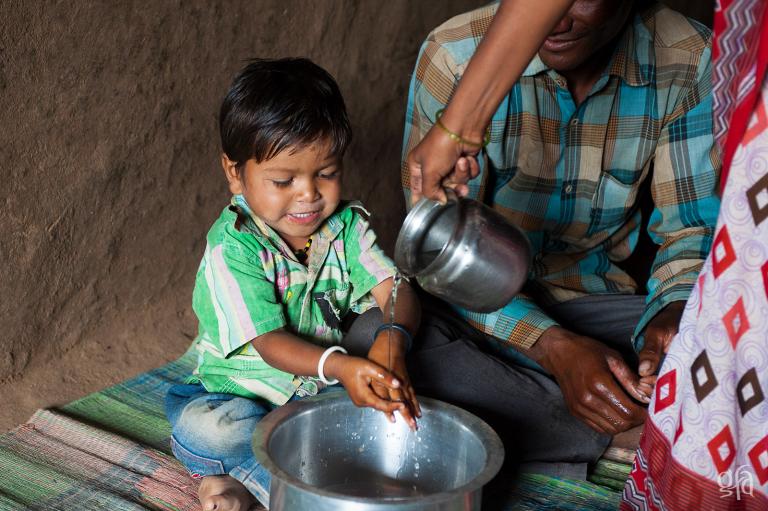
HANDWASHING CRISIS: Hundreds of millions of people around the world can’t take the most basic precaution against coronavirus — because they don’t have clean water or soap to wash their hands, warns mission agency Gospel for Asia (GFA) on the eve of World Water Day, March 22.
Experts say one of the most effective ways to halt the deadly virus — which has killed almost 8,000 people worldwide so far — is to wash hands regularly with soap for at least 20 seconds.
“Many people are terrified and living in fear right now,” said Gospel for Asia (GFA World) founder Dr. K.P. Yohannan, to mark World Water Day, March 22, an annual awareness event. “But with more than 2,000 people—mostly kids—who die every day from diarrhea alone, simply because they don’t have access to clean water to drink or wash their hands, that helps put things in perspective.
“For hundreds of millions of people, the coronavirus, though dangerous, is the least of their problems.”
The coronavirus — known as COVID-19 and declared a global pandemic — has spread to more than 160 countries and every U.S. state, with numbers climbing daily.
Stepping up its campaign to promote handwashing as the “frontline defense” against the coronavirus, the Global Handwashing Partnership, a coalition of health agencies, said handwashing with soap could reduce acute respiratory infections like the coronavirus by nearly 25 percent.
“Handwashing with soap is easy and saves lives,” the coalition said.
But for more than half the world’s population, “handwashing with soap and clean water is not easy at all,” said Yohannan. “It’s a problem we as a ministry have been actively helping to combat for years.”
According to the United Nations, 4.2 billion people around the world lack basic sanitation, including handwashing facilities that many in developed nations take for granted.
Under ‘Water Stress’
To make matters worse, the UN reports two billion people worldwide — one in every four people on the planet — live in regions experiencing “high water stress” or acute water shortages, primarily in South Asia and Africa. And a quarter of Earth’s major cities face a water crisis too, as detailed by Gospel for Asia (GFA) in The Global Clean Water Crisis.
“While we simply turn on a tap and press a soap dispenser, countless millions of people have to trek miles on foot to a communal well if they’re fortunate — or to a dirty watering hole if they’re not,” said Yohannan, whose Texas-based mission has helped the extreme poor in Asia for four decades, providing thousands of clean water pumps called Jesus Wells that supply entire villages.
In Asia’s slums, Gospel for Asia (GFA)-supported Bridge of Hope centers teach tens of thousands of children how to protect themselves against viruses like COVID-19 by practicing safe hygiene habits such as frequent handwashing.
“Gospel for Asia (GFA) applauds the efforts of agencies and governments around the world to promote handwashing and stop the coronavirus,” Yohannan said. “As our ministry serves the poorest of the poor in the name of Jesus, we also want to draw attention to the fact that, as we mark World Water Day, millions upon millions of people are unable to even properly or safely wash their hands — and we have to change that.”
About Gospel for Asia
Gospel for Asia (GFA World, and affiliates like Gospel for Asia Canada) is a leading faith-based mission agency, bringing vital assistance and spiritual hope to millions across Asia, especially to those who have yet to hear the “good news” of Jesus Christ. In GFA’s latest yearly report, this included more than 70,000 sponsored children, free medical camps conducted in more than 1,200 villages and remote communities, over 4,000 clean water wells drilled, over 11,000 water filters installed, income-generating Christmas gifts for more than 200,000 needy families, and spiritual teaching available in 110 languages in 14 nations through radio ministry. For all the latest news, visit our Press Room at https://press.gfa.org/news.
Last updated on: June 20, 2022 at 9:31 pm By Karen Mains
WILLS POINT, TX – Gospel for Asia (GFA World) founded by Dr. K.P. Yohannan issues an extensive Special Report on the deadly diseases brought by the mosquito and the storied impact of faith-based organizations on world health, fighting for the Kingdom to “come on earth as it is in heaven.”
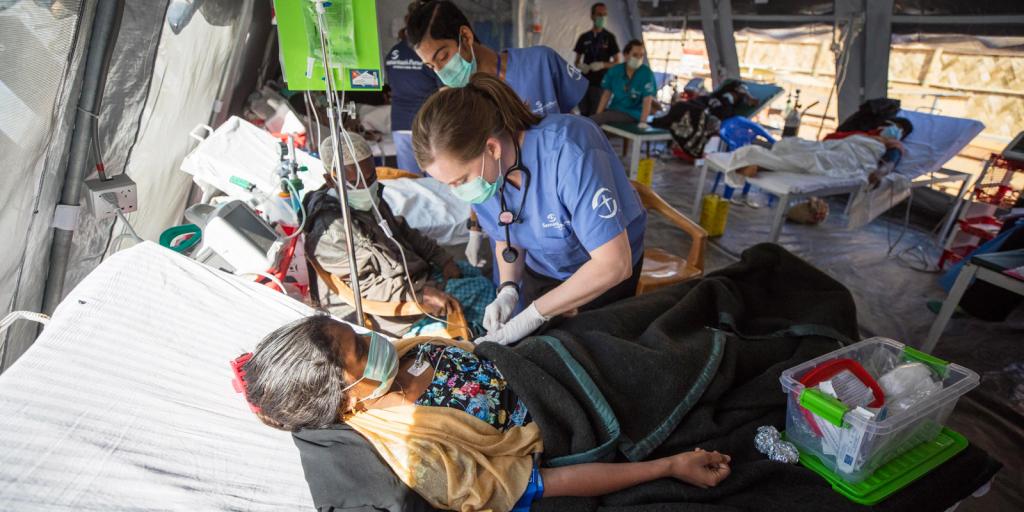
Bangladesh—Samaritan’s Purse treats Rohingya refugees affected by the diphtheria outbreak. Photo credit Samaritan’s Purse
This is Part 3 of a Three-Part Series on FBO Initiatives to Combat Malaria and Other World Health Concerns.
Go here to read Part 1 and Part 2.
=====
No Mosquitoes in the Room Now: A Quick Look at the Impact of Faith on Modern Medical Approaches
One of the most succinct summaries of the role of faith-based activity in relationship to ongoing health needs worldwide is a paper by Matthew Bersagel Braley, “The Christian Medical Commission and the World Health Organization.” In it, the author outlines the collaborative work done between the CMC and the WHO in the 1960s and 1970s. They both, concurrently and intentionally aided by the proximity of their headquarters in Geneva, Switzerland, sought to address many of the deficiencies that were (and still are) growing apace modern Western medicine with its rapidly increasing dependence upon expensive diagnostic and curative technologies.
Braley’s abstract explains, after referencing the existence of two previous international consultations organized by the World Council of Churches out of which grew the Christian Medical Commission: “What followed was a theologically informed [italics added] shift from hospital-based tertiary care in cities, many in post-colonial settings, to primary care delivery in rural as well as urban communities.”
They saw the mandate of the church as being that of working to restore (as much as is possible) the world to God’s original design.
The early consultations, Tübingen I (in Germany) and Tübingen II, had developed a theology of health that eventually culminated in a mutual understanding. Looking as they were through the lens of health and defining health as the kind of flourishing that God intended for His human creation, they saw the mandate of the church as being that of working to restore (as much as is possible) the world to that original design. Wholeness then is a kind of health—an “at oneness” with God, with fellow humans, with our communities and with our environment. As believers work toward this goal, despite the fact it will never be ultimately achieved until Christ returns, they consequently become healers or health-bringers with an emphasis on flourishing.
Health was also redefined as the ideal that God desired for the people of the earth, one that will probably not be achieved completely, but will have periodic breakouts in time. Health was seen not simply as the “absence of disease” as defined traditionally by the medical establishment, but the presence of ecological health, harmony within the community, at oneness within the individual and in his or her relationships. It was a presence of peace and a lack of warfare; it was an insistence and concern that the neglected, the poor and the oppressed should even be given preferential treatment because of the systemic unfairness, lack of parity and often true evil exercised by the powerful over the powerless.
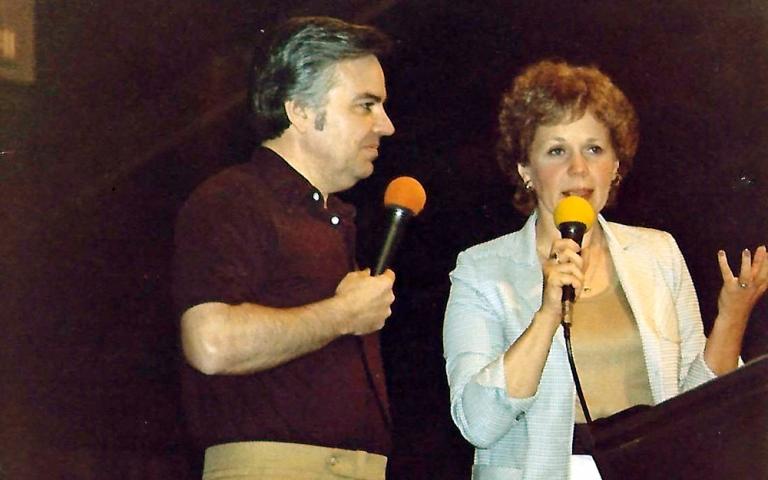
David and Karen Mains, 1983 at Mount Hermon Conference Center, CA
Personal Reflections
These theological comprehensions and conclusions have personal meaning to me, because I’ve seen firsthand the importance of working together to help others achieve this all-encompassing health. In 1967 we planted a church on the near west side of Chicago, across the expressway from what is now the Illinois Medical District. At that time, we knew it was one of the largest medical centers in the world; now it consists of 560 acres of medical research facilities, labs and a biotechnology business incubator, four major hospitals, two medical universities and more than 450 health care-related facilities. Needless to say, our small but rapidly growing congregation consisted of many medical grad students, nurses and doctors, and social workers.
There must have been something in the international waters, because totally unaware of the groundbreaking conversations going on among the professionals concerned with health impacts on the other side of the world, David Mains, my husband and the founding pastor of our church, discovered Christ’s major preaching theme was the Kingdom of God. Salvation, or being saved, was entry level to an understanding of that preeminent theme. If the predominance of this message was correct, then it totally shifted our thinking from an individualistic interpretation of faith lived out among private lives to a corporate identity framed through the mutual understanding of Scripture’s teaching of this breakthrough concept. Our salvation was worked out in dialogue around Scriptures and in community with other spiritual pilgrims.
“How important it is when members of faith-based consultations … across the world put aside their differences and … design outcomes that have the possibility to alter … whole nations for the good.
There were places in the world, I discovered as I traveled in the role of journalist, where the people used the word “I” but really meant “we.” I began to understand the Epistles often addressed readers with the word “you.” This was not an individual personal pronoun; in most cases, it was a plural pronoun requiring group action, as in “you, the people of God.” David preached a sermon series titled The Christian, the Church and Society including Christ’s two-part summary message, “Unless you are converted and become like little children, you will by no means enter the kingdom of heaven.” The dialogue of those Christians, listening to David’s sermon in that place and that time in history, when a whole revolutionary resistance movement was rising in our culture—against the war in Vietnam and against injustice, racism, sexism and government corruption—forced upon us a theological conversation that just didn’t happen in other places.
In addition, David, in his 30s, became the head of the Greater Chicago Ministerial Association, and we learned to dialogue across the whole body of faith-based confessions. So, we understand how important it is when members of faith-based consultations here at home or far away across the world put aside their differences and in respect and with deep listening capabilities design outcomes that have the possibility to alter cultures and societies and whole nations for the good.
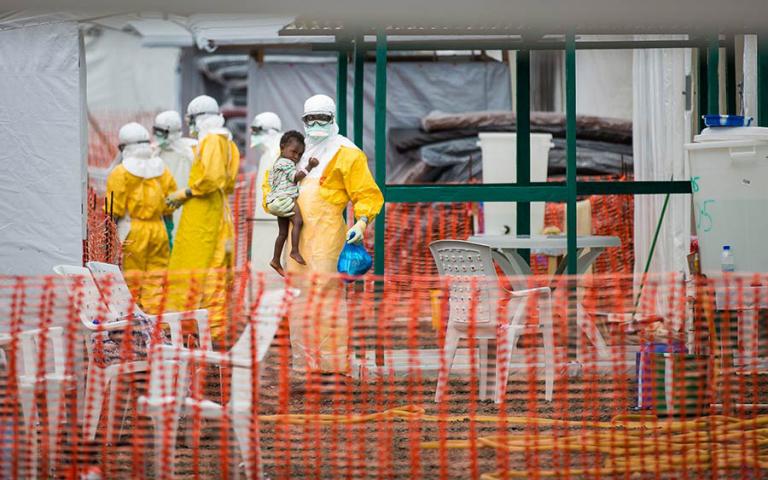
A part of Samaritan’s Purse relief efforts, these men and women helped fight the Ebola pandemic that swept across West Africa in the spring of 2014. Photo credit Samaritan’s Purse
Conclusion: Our Part in World-Changing, World Health
Matthew Braley’s chapter, taken from the book Religion as a Social Determinant of Public Health, is filled with theological terminology such as epistemology and eschatology, but for the average layperson, what is most important is the Christian Medical Commission’s (CMC) understanding that God’s desire for humankind was that humans flourish in environments most optimal to health as defined not by the absence of disease but by a growing wholeness, and that the thrust of Christ’s ministry and preaching demonstrated the ways to achieve this, aptly summarized in His explanation that we are to love God and love our neighbor as ourselves. The CMC’s struggle to understand redemption as a growing wholeness eventually resulted in the “game-changing” 1978 Declaration of Alma-Ata, the conference out of which the Millennium Development Goals proceeded.
All eight of those goals, delineated earlier in this article, are undergirded by and initiated from a theological understanding of the health emphasis, the redemptive purpose, the salvific meaning demonstrated by Christ and often emulated (though not often enough) by His followers. The MDGs are basically communal in the fact that they bring healing in the large sense of being at peace—or at home—with one’s self; with one’s family, friends and community; and with one’s place in the world. And they cannot be accomplished in a village or a nation or globally without the commensurate communal action of as many entities as possible, giving whatever they can to eradicate whatever suffering can be done away with through these human initiatives.
The participants at Tübingen I and II, the emergent Christian Medical Commission, and thousands of others of us who have, as the Jewish phrase states, worked at “repairing the world” for most of our lives would insist this is God’s work, in God’s way and with God’s help. Fortunately, as Bishop Tutu of South Africa said when he addressed the 2008 61st-annual meeting of the World Health Assembly, the World Health Organization’s governing body, “It is a godly coincidence … together WHO and WCC share a common mission to the world, protecting and restoring body, mind, and spirit.”
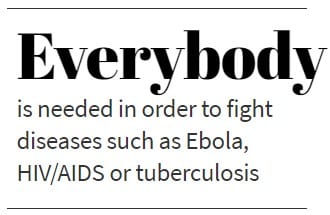
As Sharon Bieber responded: “Surely the relief and development organizations that are out there in the world can come to the same conclusion on this one thing—everybody is needed in order to fight diseases such as Ebola, HIV/AIDS or tuberculosis; every agency has strengths that will add to the synergy of the whole.”
So when we see groups like Gospel for Asia (GFA) working to hand out hundreds of thousands of mosquito nets to fight malarial infection, when we know tens of thousands of wells have been dug to provide clean water, and when we understand that the effectiveness of the message of Christ can often be measured by how many latrines have been built in a village or a city, we understand that this is what is necessary to help the participants in our world discover true, full health.
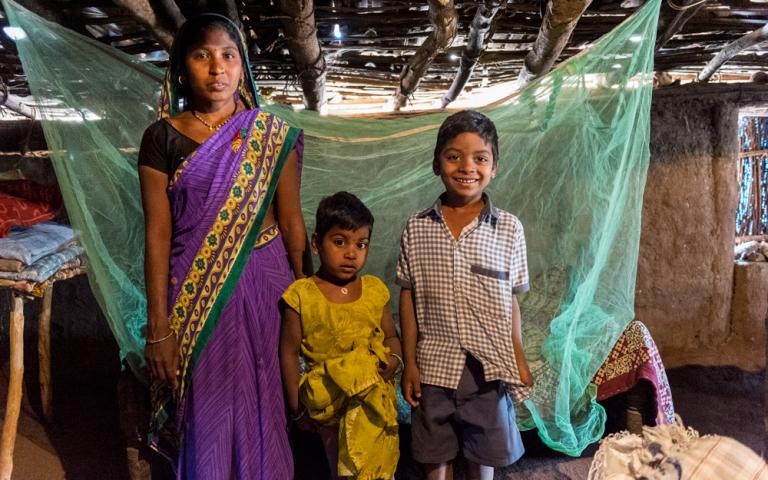
This family received a mosquito net at a Gospel for Asia (GFA)-supported Christmas gift distribution. Now they have protection from mosquitoes while they sleep.
Who knows what consultations among desperate folk with common passions are forming even now that will salvage our world at some future critical juncture?
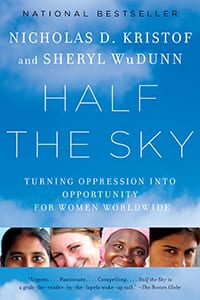
Perhaps you would like to be part of that network of people determined to spread goodness (God-ness) throughout the world. First, begin by educating yourself. Read the book Half the Sky by Nicholas Kristof and his wife, Sheryl WuDunn, which includes a compendium of organizations seeking volunteers. The authors do not hide how impressed they are with conservative faith-based organizations doing work in the world. Another book to read is To Repair the World by Paul Farmer, a medical doctor many consider to be a modern-day hero.
“This is a bold read by a humble visionary. For those who care about humanity, this is a handbook for the heart,” reads a blurb on the back cover written by Byron Pitts, the chief national correspondent for CBS Evening News.
Then circle one of the volunteer efforts that seems to be calling your name. Become an activist. No need to travel overseas (although that is highly recommended). There is plenty of work to do at home, wherever home may be for you. Just don’t only think about doing something: Do it! (I’m going to look up volunteering for disaster-relief training with The Salvation Army—or the American Red Cross—and I’m 76 years of age!)
At the end of the parable of the Good Samaritan, Jesus says to the young lawyer, “Go and do likewise.” No, there’s no danger pay for the faith-based health worker. I don’t know of any who have become wealthy. Most of them belong to the league of the nameless. For these, fame is not a motivator either; it generally gets in the way of doing the job.
But mercy? Compassion? Daring to go where others dare not go? Becoming more and more like Jesus? Yep, these are where most of those I know find deep satisfaction. A remarkable man once said, “Go and do likewise.” And they do.
Is that a mosquito I hear buzzing above my ear?
It only takes one mosquito bite to raise a welt.
It only takes one mosquito to kill a child.
It will take a multitude of innovators (believers or nonbelievers) to fight for the Kingdom to “come on earth as it is in heaven.”
It Takes Only One Mosquito — to lead to remarkable truths about faith-based organizations and world health:Part 1 | Part 2













 Ad-Free & Subscriber Log-In