

Yesterday, John Piper made social media waves again when he posted Leviticus 19:34 on X (formerly Twitter). “You shall treat the stranger who sojourns with you as the native among you,” the verse reads, “and you shall love him as yourself, for you were strangers in the land of Egypt.” Almost immediately, right-wing evangelicals pounced on Piper’s post, accusing the retired Minneapolis pastor of making a political statement against the administration’s immigration policies. (Enterprising social media researchers have since discovered Piper posts scriptures on the basis of a yearly Bible-reading plan. It just so happened that February 25’s reading included Leviticus 19—talk about the Bible being a double-edged sword!)
The responses were relentless from the typical peanut gallery of Christian nationalist social media culture warriors. Josh Daws wrote that Piper’s post dropped “in the middle of [a national debate about what it means to be an American]” and that “everyone in this conversation knows Piper chose that verse and not a verse that could be coded rightwing and the choice is doing political work whether he names it or not.” Sean Feucht lamented that “a theologian I once looked up to” had become “unbelievably woke while weaponizing scripture to justify the illegal invasion of a sovereign nation.” Hundreds of similar posts, repeating the same talking points, flooded evangelical X over the course of the day.
Whatever Piper’s inner monologue (say what you want about Piper, but I doubt he cares about what right-wing social media thinks about him), I thought it interesting to consider his place in the ongoing fight over self-identified Reformed evangelicals’ brand. It’s worth noting that Piper’s not the only Reformed minister to face backlash from his coreligionists over questions of immigration, social change, and the Bible. In fact, that fight is baked into the heart of the Reformed movement.
John Calvin, Refugee Pastor to Refugees
John Calvin was an immigrant and refugee. He fled persecution in his homeland of France in 1535, settling first in Basel before appearing in Geneva to help with the reformation of the Swiss city. In the 1540s, as pressure on Protestants in other lands mounted and Calvin’s reputation spread, massive groups of religious refugees flooded into Geneva. Bruce Gordon writes that French emigrees “radically transformed Geneva, and by 1546 their presence had become the dominant political issue.”
Gordon describes the social situation for these foreigners: “On the whole, the newcomers faced a welcome which was the common fate of religious refugees in the sixteenth century. They were slandered as disease-ridden burdens on charitable institutions who took local jobs and accommodation. It was the lot of refugees…to be treated with contempt and suspicion by those among whom they tried to settle.” Esther Chung-Kim surveyed Consistory records from the 1540s (the Consistory was the religious court in Geneva, led by the church elders of the city). She notes that Genevans were not infrequently brought before the court for hostility against French refugees. Chung-Kim writes that “from 1547 into the 1550s, the Consistory dealt with an increasing number of xenophobic violations, indicating the growing public expressions of anti-foreign sentiment.” Anti-French rhetoric echoed in the city streets, with Genevans calling “God unwilling, so many foreigners!” and “You are not one of us!” and “Go, join your other French devils!” As the demographics of the city shifted, Genevans began to look askance at the city’s leading pastor, assuming he valued his displaced countrymen over Geneva’s native inhabitants.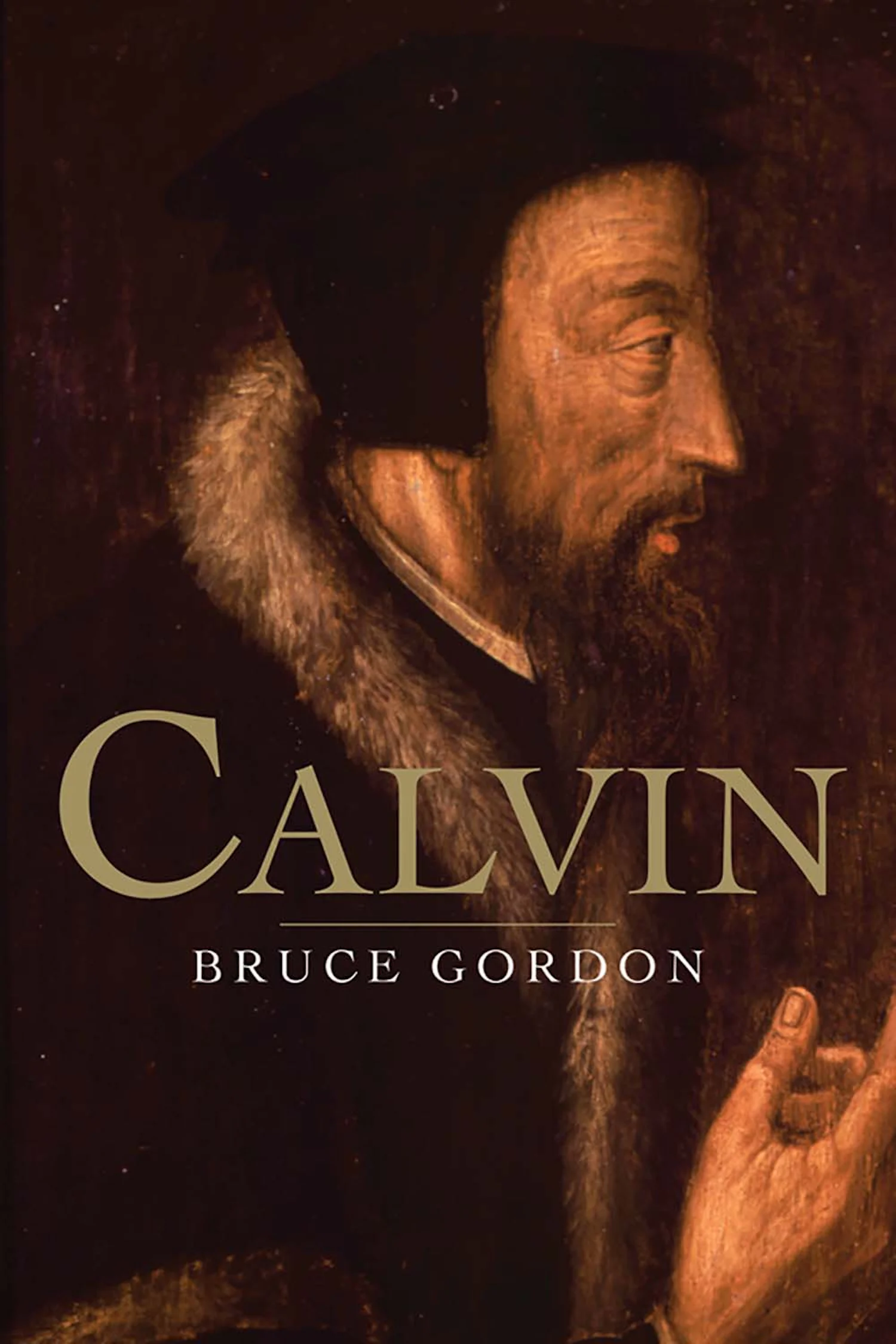
For Calvin’s part, he seems to have been uninterested in preserving the Genevan or Swiss ethnic character of the city and more concerned to establish the city’s Christian character. These two were not synonymous in Calvin’s mind. In terms of guiding the city’s leaders and wealthy population, Calvin showed a particular concern to maintain a rigorous poor relief for the city’s French poor, establishing a church-facilitated aid network known as the “French Fund.” As Chung-Kim’s research shows, Calvin knew Geneva was too small to handle the influx of immigrants with the city’s resources, but he also knew it was a Christian duty to uphold the poor. As such, wealthy donors, mostly French, “financed and administered the assistance, ranging from temporary housing, job retraining, tools or raw materials for artisans to set up trade, loans or grants to pay rent on a home or business, stipends for wet nurses, childcare, and medical expenses, in addition to the regular handouts and money to travelers.”
Calvin’s concern for the refugee poor in Geneva reflected his understanding of the precarity of foreigners in society. He must have had his own adopted city and its mass of non-Genevan neighbors in mind when writing his commentary on the Old Testament law. He began his Harmony of the Four Last Books of Moses in 1559, a commentary that attended to the commandments of Israel in historical and doctrinal perspective. He took up the question of Israel’s relation to the foreigner in volume 3, pairing Exodus 22:21-24 with Leviticus 19: 33-34 (the passage that has so energized John Piper’s haters). On Leviticus in particular, Calvin wrote that
I have thought fit to introduce this precept, wherein the people are commanded to cultivate equity towards all without exception. For if not mention had been made of strangers, the Israelites would have thought that, provided they had not injured any of their own nation, they had fully discharged their duty; but, when God recommends guests and sojourners to them, just as if they had been their own kindred, they thence understand that equity is to be cultivated constantly and towards all men. Nor is it without cause that God interposes Himself and His protection, lest injury should be done to strangers; for since they have no one who would submit to ill-will in their defense, they are more exposed to the violence and various oppressions of the ungodly, than as if they were under the shelter of domestic securities.
Calvin recognized that foreigners were especially in danger of exploitation and violence as they were not shielded by any kind of protected civic rights or family assistance, what he terms “domestic securities.” Foreigners and refugees didn’t have a social safety net. He continues,
Since, then, they are thus destitute of human aid, God interposes to assist them; and, if they are unjustly oppressed, He declares that He will be their avenger. In the first passage He includes widows and orphans together with strangers; in the latter He enumerates strangers only; yet the substance is the same, viz., that all those who are destitute and deprived of earthly succor, are under the guardianship and protection of God, and preserved by His hand; and thus the audacity of those is restrained, who trust that they may commit any wickedness with impunity, provided no earthly being resists them.
Calvin echoes his section in the Institutes, when he answers the question “who is our neighbor?” For Calvin, the neighbor is the one in need. He notes those who are closer to us, be it family, friend, or household neighbor are our “more intimate obligations,” but this is due to physical proximity, not ethnic or national identity. Calvin writes in the Institutes that “there is no distinction between barbarian and Greek, worthy and unworthy, friend and enemy, since all should be contemplated in God, not themselves.” Similarly, in his passage on Leviticus 34, he writes that “the name of neighbor is not confined to our kindred, or such other persons with whom we are nearly connected, but extends to the whole human race.”
“Who is a True Genevan?”
The recent turn from some Reformed evangelicals to ideas about “heritage Americans,” cultural inheritance, or preserving national identity through policing ethnic purity is an idea utterly dismissed by John Calvin. As a political refugee in a strange land, “Who is a true Genevan?” would have rung hollow to the French pastor. To be sure, Calvin’s Geneva was not a “melting pot” or multicultural utopia. French migrants and refugees tended to form a cultural and ethnic bloc of Reformed Christians within the city, undermining traditional religion and social norms, no doubt adding to Swiss skepticism and xenophobic sentiments.
The world of sixteenth-century Geneva was not our world, their political problems not our own. But in his best moments, Calvin as pastor saw his duty as attempting to cut through the factions and social anxieties of his parishioners and focus on practically performing the Bible’s unifying focus on care for those in need. Reformed evangelicals are rightly quick to emphasize Calvin’s concern for social order, but such order entailed attention to equity, mutual concern, and especially the dispossessed. While the events in Geneva cannot clarify federal policy on how to resolve the US’s broken immigration system, the moral voice of John Calvin (and large swaths of Christian reflection) can reaffirm that the God of Jesus Christ is the creator and protector of those living in political, social, or economic precarity. Calvin knew that God cared for the strangers who came into Geneva, and he spent years of his ministry directing the Christians in his parish to extend God’s care to them as well, via material goods and economic aid, without regard for whether they were “worthy or unworthy.”
The decades-long tension over refugee settlement in Calvin’s Geneva speaks into modern anxieties about forfeiting “Western” identity as well. Many religious arguments against the U.S.’s changing demographics rely on amorphous but narratively powerful notions of the United States being the culmination of a European, Christian civilizational project. In this story, Europe and Christianity serve as unifying identity-markers meant to set “the West” apart from peoples in West Asia and the Global South more broadly. More needs to be said on this than I can say here, but it is instructive that Swiss Genevans balked against the notion that French Protestants could become neighbors, much-less countrymen.
If the sixteenth-century Genevans and the French were fellow Europeans who built a society based on shared cultural, religious, and moral foundations, it would be news to them.












 Ad-Free & Subscriber Log-In