

My current research involves the loss and rediscovery of Jewish and Christian scriptures, with a focus on the years between roughly 1870 and 1940. However, my next few blogposts are going to explore these themes of “lost and found” much more broadly and cross-culturally, before circling back round to that Biblical/Scriptural focus. I think the themes that emerge are really enlightening in many areas. So today, I will begin far away from the Christian world, in the deepest foundations of the Classical tradition.
Homer’s epics seem set (yet again!) to be a major force in popular culture, with Christopher Nolan’s film The Odyssey due for release this coming July. After some 2,800 years, it might seem a foolish effort to try and say anything new about that work, or the Iliad, but I offer one observation that really floored me when I first discovered it. You know those legendary epics, which did so much to define Western culture? Those epics were only two out of a much larger body, which today survive only in very fragmentary form, if at all. We have simply lost most of the Greek epics that once existed. In part, the Iliad and the Odyssey are so famous because they were the last epics standing.
That fact really should make us think about just how much of human culture and literature we have lost, all the legend and mythology. We can easily understand such unforgiving oblivion with the Maya, say, where the conquerors made every effort to destroy the older culture, burning every piece of written material they could find. But we are looking here at the Greeks, where there is a continuous tradition dating from the Homeric world through medieval and Byzantine times.
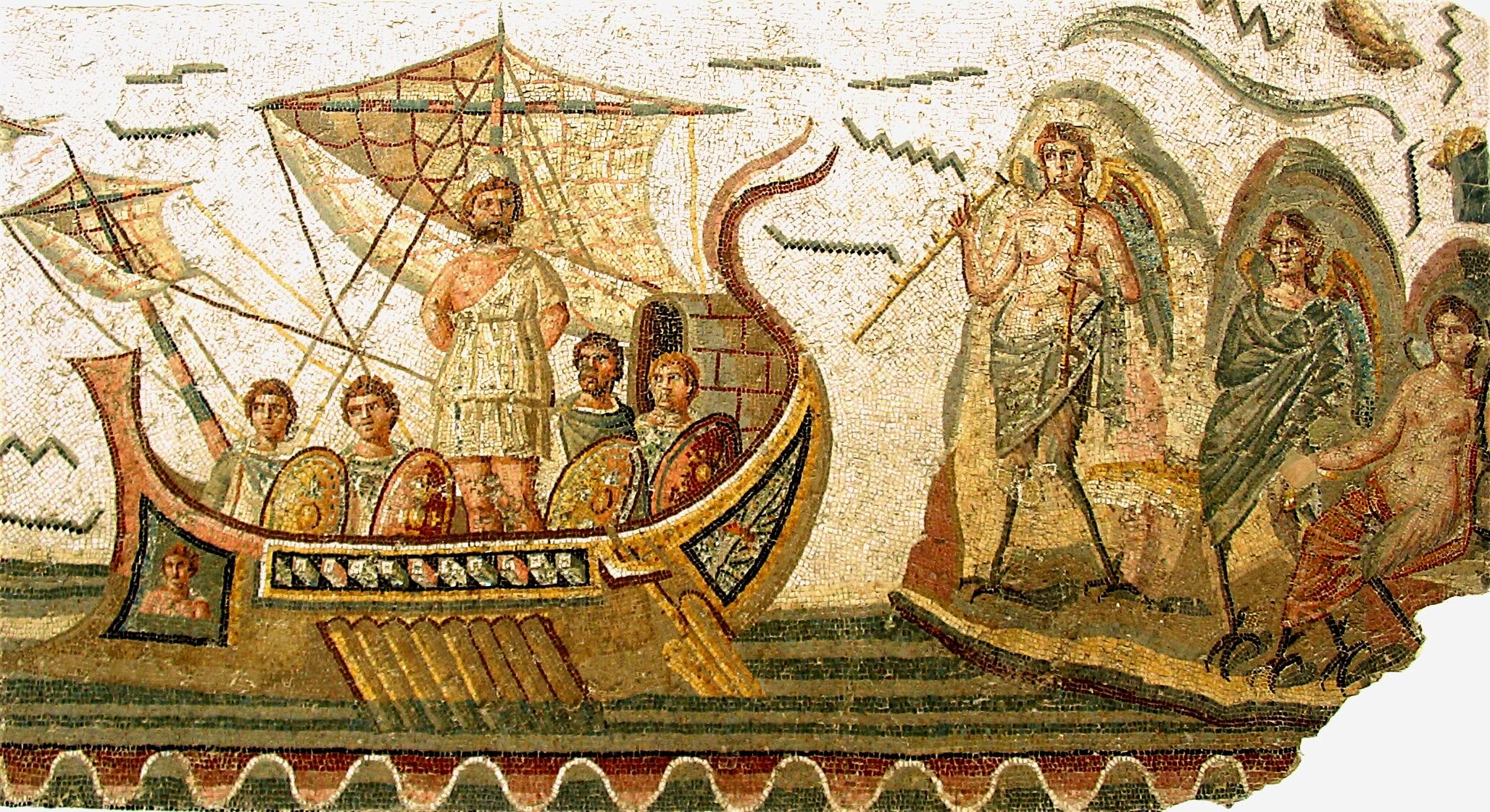
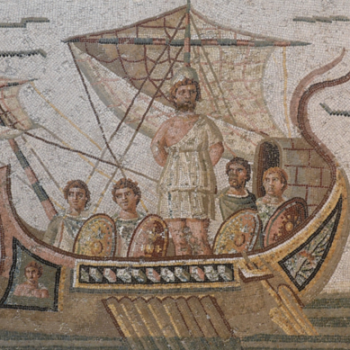
All images are in the public domain
That is not just true of epics: we have lost a huge amount of other Classical literature, even the works of some of the most venerated writers. Euripides, for example, was originally credited with 92 (or 95) plays, of which just nineteen survive to be read or performed today. The comparable figure for Aeschylus is seven survivors out of a known total of eighty or so; for Sophocles, the number is seven out of 120-plus. Taken together, that means we possess only some ten percent of the writings of those three superstar playwrights, and that takes no account of other contemporary authors whose oeuvre is entirely lost. See the amazing list of specific lost plays here. This does not mean that the missing works will never be recovered, and recent applications of new technology have brought to light ancient writings that were once thought irretrievably lost. But any such future finds remain in the realm of speculation.
If the Trojan War ever happened, it occurred around the twelfth century BC. Several hundred years after that, the Iliad recounted the story of the war, and the Odyssey told how Odysseus returned to his home after the struggle. Both works were attributed to Homer. But then there were the other works, which ancient writers included alongside the two blockbusters in the Epic Cycle, epikos kyklos, The exact contents of such a Cycle were debated, and several of the items usually included had nothing directly to do with Trojan affairs (I will return to this issue in my next post). Here is a brief working list of the titles directly relating to Troy and that generation of heroes:
Cypria The events leading up to the war, and preceding the occurrences in the Iliad
Aethiopis Battles between the Trojans’ allies and Achilles
Little Iliad Events surrounding the Trojan Horse
Iliou Persis “The Sack of Troy”
Nostoi “Returns”: How the various Greek heroes returned home after the war
Telegony More on Odysseus’s travels and his slaying.
Through later summaries, we know a lot about what these stories told, and some of the elements are worth retelling. In the Aethiopis, for example, we hear how the Trojans received the help of very distinguished foreign warriors, including the Amazon Penthesilea from distant Thrace, and the Ethiopian Memnon – that is, one from the Greek far north, one from the distant south. Unsure as ever of their exact geography, commentators claimed that the Ethiopian showed up with a large army of Indian warriors besides his own people. In the event, Achilles kills both.
Damn those woke ancient Greeks, with all this stuff on strong women and people of color!
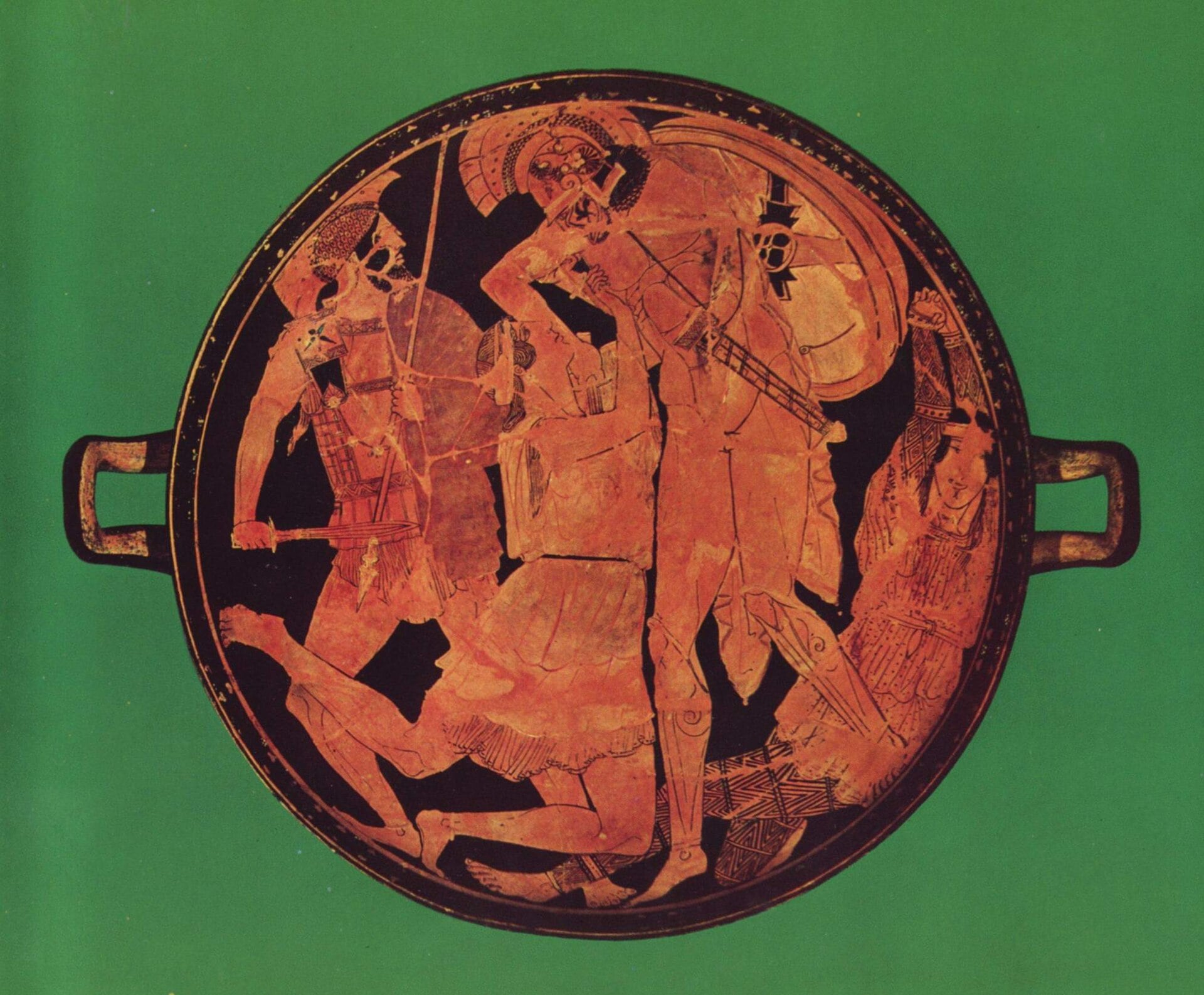
To be clear, nobody is suggesting that these works were strictly comparable to Homer’s, but they were seen as belonging to the same family. Ancient authorities differed as to whether they counted Homer in with all these writings, or if they drew a distinction between “Homeric” and “Cyclic,” which meant everything else. In the later pre-Christian era, some critics used “Cyclic” to mean “formulaic,” and critics like Aristotle had little good to say about their structure or plotting. Each, by the way, was considerably shorter than the Homeric epics. The Iliad and Odyssey each had 24 books, while most of the others ran to four or five apiece.
I note the description of the Cypria as “the world’s first-known prequel.”
The common assumption is that the Homeric works were older, and thus closer to the events they describe, but scholars are very divided on that, and a few see the “Cyclic” works as containing genuinely very old material. Emphatically, we are not just looking here at some kind of Homeric fan fiction: they contained many archaic traditions that are not found elsewhere.
For what it is worth, these other epics were usually attributed to figures living back in the eighth or seventh centuries BC. The Nostoi, for example, was said to be the work of either Agias or Eumelos, from that era, or possibly even Homer himself. Other names such as Arctinus of Miletus and Stasinus of Cyprus regularly feature as candidates. If not by Homer himself, they were Homer-adjacent.
Scholar Peter Gainsford raises some interesting questions about just why the Iliad and the Odyssey survived and triumphed, but not the other works. He quotes one story that Herodotus tells about a sixth century BC tyrant prohibiting the performance of “Homeric epic,” by which he meant neither the Iliad nor the Odyssey but the Thebaid, a now lost work to which I shall return next time. The poet Callinus of Ephesus also believed that Homer wrote the Thebaid, and plenty of ancient readers (and hearers) accepted his authority. At that point, there clearly was no sharp line separating the two great Trojan epics that we know from all the also-rans. “Homeric” was a fungible concept.
Yet even if they are shorter and later, it really does pay to be aware of those “other” epics, not least because they were so widely read in ancient times, and they left an indelible mark on other writers who really were significant. In the Latin world, that includes Virgil’s Aeneid and Ovid’s Metamorphoses, and at a minimum, Virgil assuredly used the Iliou Persis in his account of the destruction of Troy. No less important were the tales of the “Returns” (Nostoi) of warriors such as Agamemnon, which contributed to the Oresteian trilogy of Aeschylus. Although these stories find their main source in the Odyssey, the other texts supply additional and variant detail.
In all those plays, as in many of the famous Greek tragedies, the authors often do not bother to explain or identify characters because they can assume their authors will have read so much about them in other contexts, and by the time we get to the Athenian Golden Age, that often meant to works of the Epic Cycle. That was just what literate people were expected to know.
Often too, those stories are recorded in visual representations, in paintings on vases or pottery, and only by recognizing the “Cyclic” origins would we have any idea what exactly is happening. By some accounts, some of the “Cyclics” inspired far more visual depictions than the famous Homerics. The Iliou Persis was very popular for the many scenes it inspired in vase painting, notably the Death of Priam.
But if the “Cycle” is significant enough, it by no means exhausts the range of epics that deserve to be remembered. One tale I enjoy, from the distinctly non-serious end of the spectrum, is the riotous parody of heroic Homer in the Batrachomyomachia “The War of the Frogs and the Mice,” where all the characters are given ridiculous pseudo-Homeric names. It might be from round about 200BC. I ask the obvious question: Pixar, why have you not picked this up? I am casting the voice actors as I write.
Then there is the once-popular Margites, the comic story of an extremely stupid character, which Aristotle believed was Homer’s work. As he wrote, “[Homer] was the first to indicate the forms that comedy was to assume, for his Margites bears the same relationship to comedies as his Iliad and Odyssey bear to our tragedies.” The lost work has several echoes of the Batrachomyomachia, including some oddities of its verse structure. The character of Margites became proverbial, and the name was used to insult such blustering and arrogant figures as Alexander the Great.
But by no means all the “Other” texts were variations on Homer: there were other epic worlds, mostly now lost in whole or in part. Just look at the list of those here, and weep. Several other unrelated epics once existed, which today are known only sketchily, such as the Herakleia, about Hercules, while (of course) at least some credited The Capture of Oechalia to Homer.
Next time, I will discuss what would have been some of the greatest ancient epics, had they survived. Spoiler alert: some believe there was a time when the poets cared almost as much as Thebes as they did about Troy.
As a contemporary footnote, I was interested to see that Yann Martel’s new novel Son of Nobody concerns the modern-day rediscovery of a (wholly fictional) ancient work, the Psoad, an epic of the Trojan War as told by an ordinary foot-soldier, Psoas. As reviewer Daniel Mendelsohn remarks, the creation of new “alternate” epics is a flourishing modern-day enterprise:
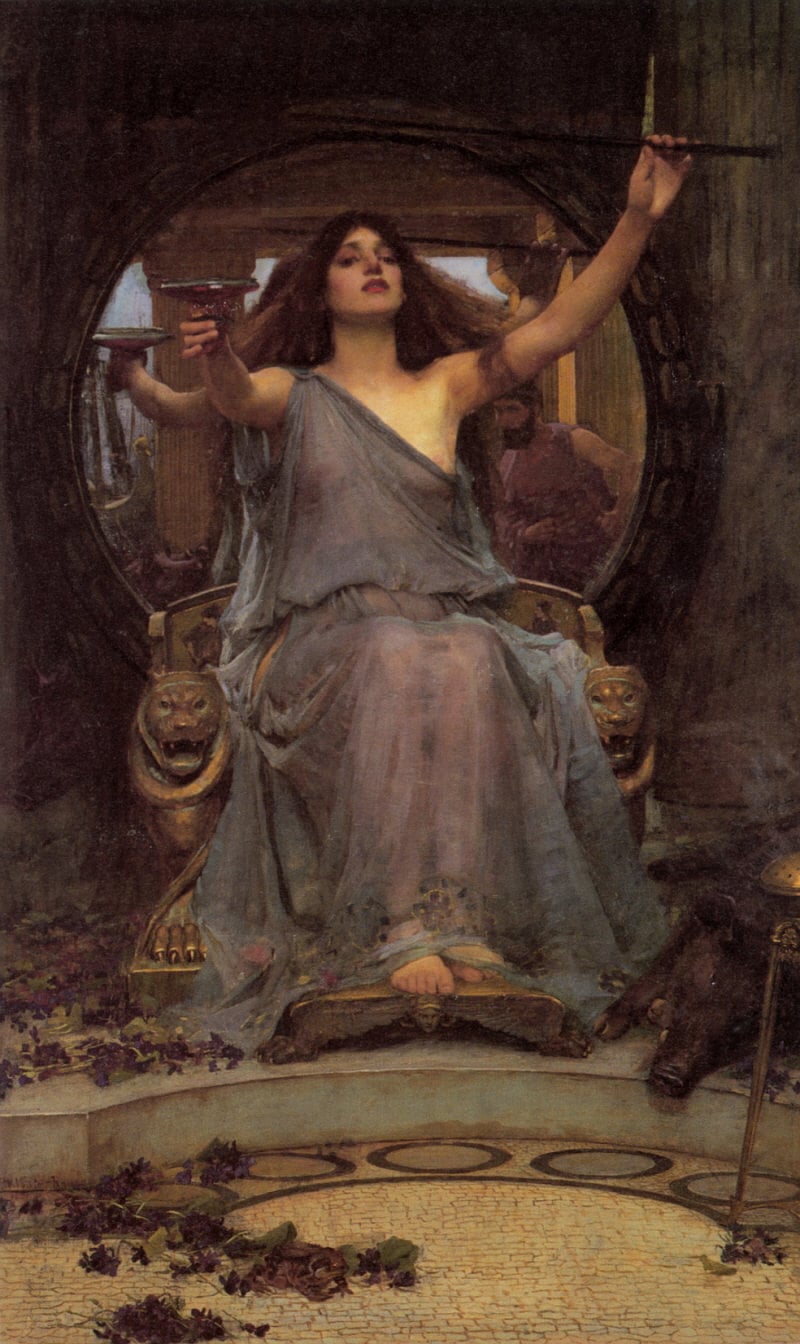
Madeline Miller’s 2018 best seller, “Circe,” takes a lesser figure from Homer’s “Odyssey,” a sorceress who turns men into pigs (a redundant metamorphosis, as one classicist friend of mine likes to say), and puts her squarely at the center of an adventurous life story. The distinguished British writer Pat Barker, who won the Booker Prize for a trilogy of World War I novels, has turned her attention to the Trojan War in a series narrated by that mythic conflict’s female characters. New iterations of Ariadne (seduced and abandoned by Theseus), Rhea (mother of Romulus and Remus — never mind that she-wolf) and even Hera, long-suffering consort of the philandering Zeus, suggest that there are plenty of new bottles for the old classical vintages.
On another topic, just this week, the Iliad is yet again in the news! We now have reports of the finding of a Roman-era mummy at Oxyrhynchus in Egypt, which had been buried with an extract on papyrus placed on its abdomen. Specifically, this was the passage from Book II with the Catalogue of Ships.
SELECTED REFERENCES
Elton T. E. Barker and Joel P. Christensen, Homer’s Thebes: Epic Rivalries and the Appropriation of Mythical Pasts (Washington, DC: Center for Hellenic Studies, 2019)
Philip Chrysopoulos, “Ancient Greek Parody of Homer’s Iliad Still Funny Today,” Greek Reporter October 10, 2025
Malcolm Davies, The Theban Epics (Washington, DC: Center for Hellenic Studies, 2014).
Malcolm Davies, The Greek Epic Cycle (Bristol Classical Press, 2001)
Marco Fantuzzi and Christos Tsagalis, eds., The Greek Epic Cycle And Its Ancient Reception: A Companion (Cambridge University Press, 2015).
Megan Gambino, “The Top 10 Books Lost to Time,” Smithsonian Magazine, September 19, 2011
Stuart Kelly, The Book of Lost Books (New York: Random House, 2005)
Edward N. Luttwak, “The Lost Homerics,” New Criterion January 2024
David B. Monro, “The Poems of the Epic Cycle,” The Journal of Hellenic Studies 5 (1884), 1-41
Benjamin Sammons, Device and Composition in the Greek Epic Cycle (Oxford University Press, 2017)
Martin L. West, Greek Epic Fragments From The Seventh To The Fifth Centuries BC (Harvard University Press, 2003).
Martin L. West, The Epic Cycle: A Commentary On The Lost Troy Epics (Oxford University Press, 2013).
Matthew I. Wiencke, “An Epic Theme in Greek Art,” American Journal of Archaeology 58(4): 285-306
Matthew Wright, The Lost Plays Of Greek Tragedy, Two volumes (Bloomsbury Academic, 2012-2018). “This first volume examines the remains of works by playwrights such as Phrynichus, Agathon, Neophron, Critias, Astydamas, Chaeremon, and many others who have been forgotten or neglected. (Volume 2 explores the lost works of Aeschylus, Sophocles and Euripides.)”











 Ad-Free & Subscriber Log-In