WILLS POINT, TX – Gospel for Asia (GFA World) founded by K.P. Yohannan, whose heart to love and help the poor has inspired numerous charities like Gospel for Asia Canada, to serve the deprived and downcast worldwide – Discussing Kassia who grew up illiterate which brought the compounded cost of extreme poverty throughout her adult life, and the GFA World Sisters of Compassion bringing a double blessing through a Literacy Class.
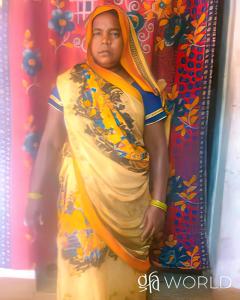
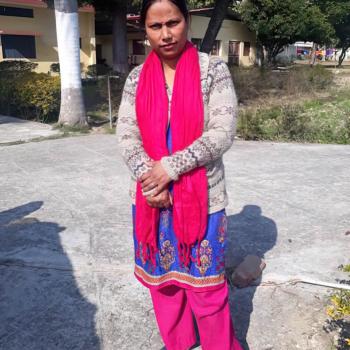
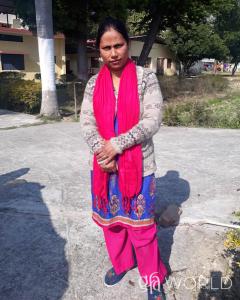
Kassia delights in her growing ability to read and write and is grateful for her renewed health.
Kassia’s mother passed away when she was young, setting off a series of consequences in the young girl’s life. Beyond dealing with the grief of losing her mother, Kassia was forced to give up her education to become “mother” to her younger siblings. She grew up illiterate, and when she married, had children and needed to care for her own family, Kassia worked the only jobs afforded to an illiterate woman: miscellaneous agriculture jobs.
Then, when Kassia was 45 years old, her health began to decline. For six months, she experienced swelling in her body and constantly felt weak and lightheaded. Her condition left her unable to serve her family as she had since she was young.
The family spent time and money seeking advice from a variety of doctors, who eventually diagnosed Kassia with low hemoglobin. Kassia’s family purchased the prescribed treatments in hopes they would restore the ailing woman to health. However, none of the solutions worked as intended, and Kassia continued to suffer.
In her pained state, Kassia’s worries were compounded by her family’s financial woes. She was all too aware the family was spending money they didn’t have in search of a solution to her health condition, and she was unable to add to the family’s income.
Invitation to Learn
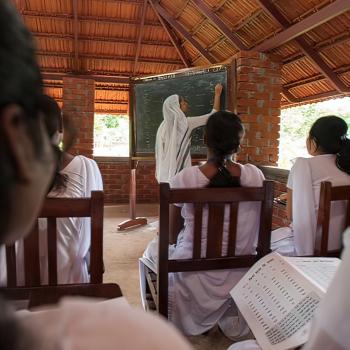
It was during this difficult time, as Kassia struggled to complete daily tasks, that she met four GFA Sisters of Compassion. Sister Morela and her companions listened to Kassia’s predicament, and they recognized one need they could surely meet: The Sisters offered literacy classes in the village and invited Kassia to attend.
Kassia was delighted with the prospect of finally learning to read and write. It was a small joy in the middle of a despairing situation. She didn’t know it yet, but it would lead to a blessing she had been looking for.
Unexpected Blessing
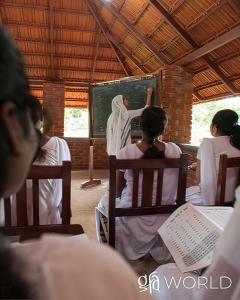
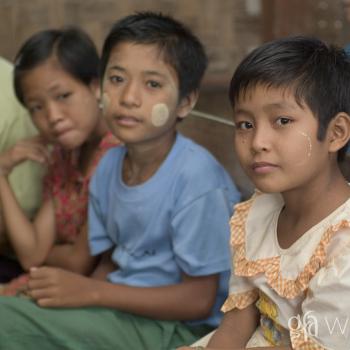
In a literary class like this one, Kassia eagerly absorbs each lesson, growing quickly in her ability to read and write.
Not long after Kassia began attending the class, the Sisters invited her to a Sunday worship service. Kassia had noticed that each literacy class opened with prayer and decided to see what occurred during a worship service. Just as in her literacy class, Kassia absorbed the lessons she learned during the service. As she continued to learn about Jesus and His power, she discovered she could put her trust in Him for her physical healing—and she did.
The Lord honored Kassia’s faith and healed her body completely from the weakening effects of low hemoglobin.
The family’s matriarch no longer suffered from the debilitating illness that limited her ability to care for her family. With renewed strength, Kassia joyfully resumed her daily work in taking care of her family.
“I am very thankful to the Lord for healing me completely,” Kassia said. “I trust in Him … as the Savior of my life.”
*Names of people and places may have been changed for privacy and security reasons. Images are Gospel for Asia World stock photos used for representation purposes and are not the actual person/location, unless otherwise noted.
Learn more about the Sisters of Compassion – those who are specially trained woman missionary with a deep burden for showing Christ’s love by physically serving the needy, underprivileged and poor.
Last updated on: December 8, 2022 at 1:42 pm By GFA Staff Writer
WILLS POINT, TX – Gospel for Asia (GFA World and affiliates like Gospel for Asia Canada) founded by KP Yohannan, issued this Special Report on the horrific realities girls face, child marriage, human trafficking, abuse & exploitation, and the restoration & redemption that God brings to their lives.
A recognition of girls’ inherent value will advance education for girls. Education helps girls learn basic skills like reading and writing, which are necessary to complete everyday tasks and conduct business in society. Education helps girls develop talents and interests. Education helps girls pursue the careers or paths that are right for them instead of being completely dependent on a husband. Ultimately, education helps girls unlock the freedom and knowledge to realize their potential.
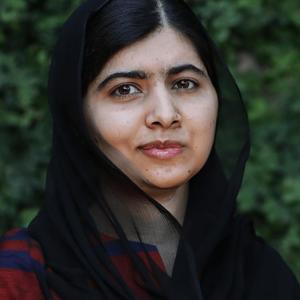
“I woke up 10 days later in a hospital in Birmingham, England,” Malala remembers. “The doctors and nurses told me about the attack—and that people around the world were praying for my recovery.”
After her remarkable recovery, Malala became the youngest winner of the Nobel Peace Prize in 2014. Now 23, she continues to advocate for girls worldwide: She and her father founded the Malala Fund to advance the mission of 12 years of free, safe, quality education for girls.
“Girls who complete secondary school become healthier, more prosperous adults,” writes the Malala Fund. “Girls who receive a secondary education are more able and likely to contribute fully in their families, communities and societies, as earners, informed mothers, and agents of change.”
As child sponsorship programs remove a financial burden from the family, they make it more likely for parents to keep their other children in school, even if only one child can join the sponsorship program. This changes the situation for families that would be tempted to keep their daughters at home, send them to work as child laborers or marry them off at a young age.
Girls who once would have only looked forward to marrying young or doing menial labor jobs now dream of being teachers, police officers, nurses or engineers. They have a much greater chance of achieving higher education.
Salena, a Bridge of Hope graduate, came from a poor background and watched her two older brothers labor in a hazardous factory. Until Bridge of Hope opened in her community, she didn’t have much to look forward to, as her parents struggled just to put food on the table for their six kids. But Bridge of Hope allowed Salena to excel in and complete her education.
“If I had not joined Bridge of Hope, I would have been looking after cows of a landlord, or I would have gotten married and gone to my in-laws’ home, because my parents had no money to send me to school,” Salena says.
“I clearly remember many nights we went to bed without food. … But then the Bridge of Hope project became … an agent of change and a stream of blessing in my life. Joy and peace came into my life as well as in my home. I was given all my needs from BOH like other children in the [program]. I discovered my hidden talents, abilities and life’s purpose.”
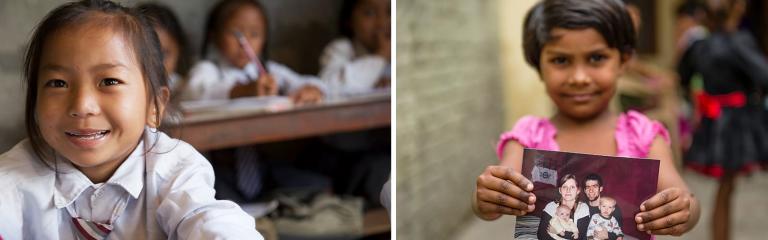
This English medium school in Nepal (left) is meeting a desperate need for education, health, nutrition, moral and spiritual values in the lives of young girls and boys. In Nepal that is a huge advantage resulting in open doors and respectability in the community. Vanshika (right) in Uttar Pradesh knows that she is loved, and she has hope for her future, because this family in the photo chose to sponsor her monthly.
UNICEF estimates that 45 percent of women in South Asia aged 20–24 were married before the age of 18. A fifth were married before the age of 15. Krupa was unknowingly set to be married at 13 but her desperation phone call for help brought a last minute intervention before the marriage ceremony could occur.
At age 13, Krupa, a Bridge of Hope student, came home one afternoon to find a crowd of people at her house. Bewildered, she asked her mother what was happening, but she only told Krupa to follow instructions. As Krupa’s neighbor started telling her to do things, Krupa realized she was being roped into a pre-wedding ceremony. Her parents were marrying her off.
Thankfully, Krupa had learned at Bridge of Hope about the dangers of child marriage, and she had promised herself she would never marry before age 18. She wanted to attend university and become a teacher.
Desperate to stop the impending wedding, Krupa borrowed a cell phone and secretly called Bridge of Hope staff members.
“Within just half an hour, they arrived at our house like angels,” Krupa recalls. “They came directly to me without looking at anyone. All I could say to them was, ‘I am only 13. What would you do if I was your child?’ They needed nothing more to hear and understand the whole situation.”
The Bridge of Hope staff talked to Krupa’s parents and explained the laws against child marriage. Krupa’s father promised not to arrange her marriage before she turned 18.
“I thank the Bridge of Hope staff for saving me from becoming prey to the trap of child marriage,” Krupa says. “My friends and school teachers admire me for my courage, but I am just glad to be an inspiration for many young girls.”
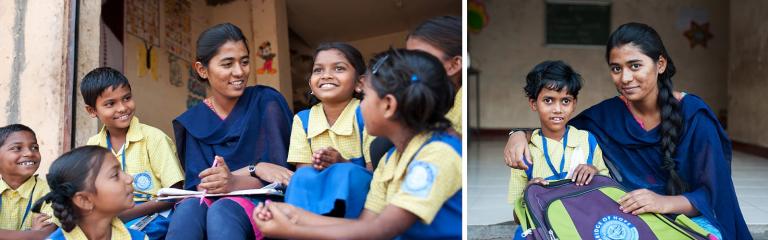
One of the daughters in this family in Maharashtra goes to a local Bridge of Hope center where she receives a daily meal, ongoing education and regular medical care under kind and loving teachers! GFA’s Bridge of Hope serves more than 70,000 at-risk girls and boys all across South Asia.
Bringing Freedom, Justice and Restoration to Victims of Child Labor, Trafficking, Child Marriage
International Justice Mission (IJM) is one of the largest organizations working to free, defend and restore victims of trafficking. IJM and other organizations often work to track brothels where girls under age 18 are being forced to work. They work with law enforcement to remove girls from the brothels, see that perpetrators are appropriately prosecuted and help survivors to receive aftercare.
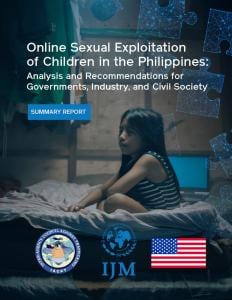
IJM recently released a report highlighting the nature and scale of online sexual exploitation (OSEC) of children – typically younger Filipina women – in the Philippines. This study was led by IJM, in partnership with the Philippine Government and a variety of governmental stakeholders in the US and abroad. Photo by IJM.org
Earlier this year, IJM worked with police from two states in India to disrupt a cross-country sex trafficking ring. Police in one region noticed girls were being trafficked to a city on the other side of India. IJM supported the police in both states as they located a brothel where many of these girls were being held. Manisha, who had been rescued from the same brothel when she was a minor in 2018, played an instrumental role, sharing information that helped direct police to the brothel. On February 22, the teamwork of IJM, the police and Manisha led to the arrest of four suspected traffickers and the rescue of two girls who had been imprisoned in the brothel.
Rani Hong, the creator of the Freedom Seal initiative, fights against trafficking as someone who has survived it. Rani was trafficked when she was only 7 years old, forced to work 12 hours a day in a brick factory and kept in a cage at night. After she became physically unable to work, she was trafficked in an illegal adoption scheme.
As a survivor of child slavery, Rani Hong knows firsthand the desperation and hopelessness experienced everyday by those who aren’t free. That’s why she dedicated her life to be a voice for the voiceless, to prevent slavery and liberate humanity one child at a time. Photo by Rani Hong, Facebook
Rani ended up in a loving home in the United States, grew up, got married, had children and eventually reconnected with her mother and siblings in India.
But Rani didn’t forget her childhood experience; she began working to prevent other children from facing the same fate. She spoke before the Washington State legislature to pass a law criminalizing human traffickers. She became a UN special adviser on the Global Initiative to Fight Human Trafficking, and she created the Freedom Seal label, mentioned above, to promote businesses free from child labor and trafficking.
Ashmita, the girl forced to work as a domestic servant, also found freedom from child labor. After government authorities learned of her situation, they placed her in a home for girls run by Gospel for Asia (GFA) workers. There, Ashmita received care and encouragement from Sisters of Compassion and other Gospel for Asia (GFA) missionaries. She got to attend school. She played and made friends with the other girls at the home, who became like sisters to her.
“I like this place so much; I like all these didis [older sisters]. They work hard for me and for all of us,” Ashmita shared. “I like this place, and I don’t [want] to leave this place and go to any other place or orphanage because of the love and care that we get here.”
Now, as Ashmita flourishes in a stable home where she is receiving education and care, she can dream about the future.
After the local government learned of Ashmita’s situation, they placed her in a loving home for girls, where she received constant care and encouragement, got to attend school, play and make friends with the other girls at the home, who became like sisters to her.
Writing New Chapters
In Jane Eyre, Little Women, Anne of Green Gables and most other popular coming-of-age stories about girls, the heroine gets a satisfying ending—the ending the characters and the readers both long for. Jane Eyre, Jo March and Anne Shirley find contentment accomplishing their dreams and living in safe homes with the people they love.
Real life doesn’t always bring neat, happy resolution, but it does bring the same element of hope found in those fictional stories—in an even more powerful way. In the true stories of girls such as Ruth, Ridhima and Ashmita, redemption is dawning over years of devastation and pain. As God brings restoration to their lives, they are helping many more girls to overcome the antagonists of abuse, discrimination and exploitation and to embrace their identities as daughters of the King of kings.
Ruth understands the power of this transformation as she continues to help more girls, women and communities by training younger women to minister Christ’s love to people in need.
“Let many sisters come up,” she says, “and then we will make a new history for the world and for Christ.”
Be Part of Writing a New Story
You can help write a new story for girls around the world. There are several ways you can give girls the chance to know their value in God’s eyes and to embrace the future with confidence and strength. Here are just a few:
Sponsor a girl through a child sponsorship program
Many organizations, including GFA’s Bridge of Hope Program, Compassion International and World Vision, are working to provide children with education, nutritious food and opportunities in the name of Christ. By sponsoring a girl, you can help give her education in a nurturing environment, unlocking the door for her to overcome poverty and setbacks. Even if you choose to sponsor a boy, you will still be helping these organizations advance their mission of educating both boys and girls, and you will most likely be giving this boy the opportunity to learn respect for girls and women.
Because of their vulnerable position in society, girls need advocates. They need adults to educate others about the importance of defending a girl’s life, dignity, health and education from many dangers. They need adults to fight for them when they face abuse, trafficking or forced marriage. They need adults to remove corruption from business supply chains and eliminate child labor from the marketplace. To promote awareness, justice and accountability, you can partner with organizations such as International Justice Mission to provide legal help and aftercare to girls who have been subjected to trafficking, sexual abuse or child labor. You can use information from Freedom Seal and other accountability initiatives to ensure that you are only supporting businesses that prevent girls from being exploited in child labor.
Partner with women missionaries
Women missionaries can effectively minister to girls’ and women’s emotional and spiritual needs. By supporting women missionaries like Ruth through prayer and finances, you can share hope with girls who need to know there is a God who loves and values them.
Sometimes the most effective way to help others is to seek God’s mercy and intervention. One individual can’t remove abuse or corruption from social structures, but when one individual joins with other individuals to intercede for girls who are neglected and abused, crying out for God’s justice, the Lord transforms hearts and lives—the first step toward social transformation.
Gospel for Asia (GFA World) is a leading faith-based mission agency, helping national workers bring vital assistance and spiritual hope to millions across Asia, especially to those who have yet to hear about the love of God. In GFA’s latest yearly report, this included more than 70,000 sponsored children, free medical camps conducted in more than 1,200 villages and remote communities, over 4,800 clean water wells drilled, over 12,000 water filters installed, income-generating Christmas gifts for more than 260,000 needy families, and spiritual teaching available in 110 languages in 14 nations through radio ministry. For all the latest news, visit our Press Room at https://press.gfa.org/news.
Read the rest of Gospel for Asia’s Special Report: Rewriting the Tragedies of Girlhood — Opening Doors for Girls Deprived of Opportunities —Part 1, Part 2
Learn more by reading these Special Reports from Gospel for Asia:
Last updated on: December 4, 2021 at 6:34 am By GFA Staff Writer
WILLS POINT, TX – GFA World (Gospel for Asia) founded by K.P. Yohannan, whose heart to love and help the poor has inspired numerous charities like GFA World Canada, to serve the deprived and downcast worldwide, issued this second part of a Special Report update on Taking the Toilet Challenge, where resolving Open Defecation continues to confound the world.
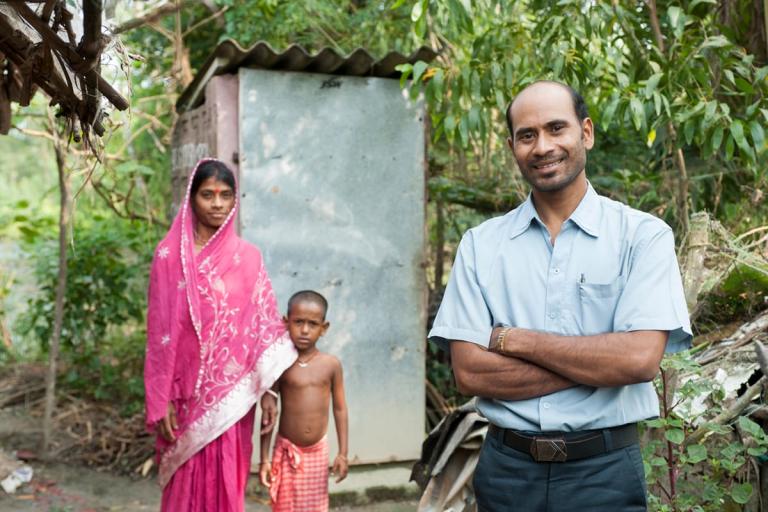
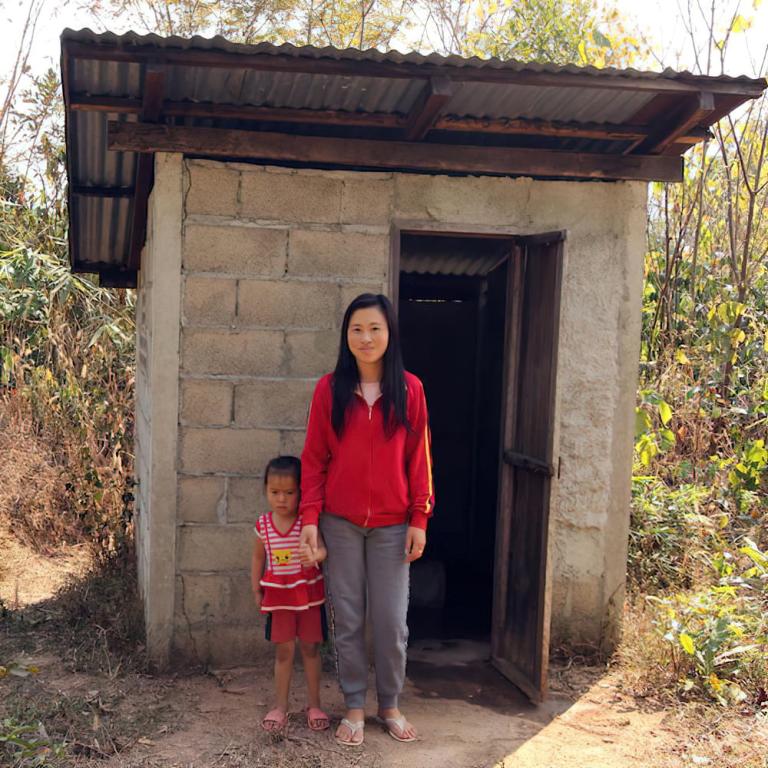
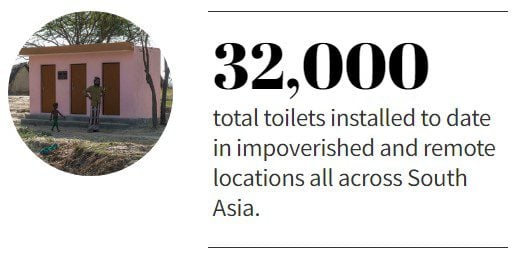
In West Bengal, a local Gospel for Asia (GFA World) pastor who identified needs of people in his community, including this woman and her child, was able to facilitate the construction of low-cost outdoor toilet to provide a safe, sanitary facility for her family. Gospel for Asia (GFA World) has helped to construct over 32,000 toilets to date in remote, impoverished communities throughout South Asia.
Open Defecation Still Persists Worldwide, Even in America
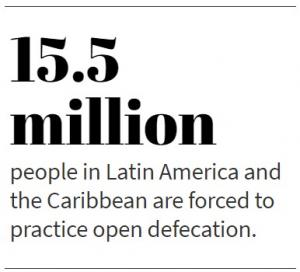
While places like South Asia, Nigeria and Indonesia are noted for problems with open defecation, this poor health habit exists worldwide. In late 2019, the Pan American Health Organization (PAHO) said 15.5 million people in Latin America and the Caribbean are forced to practice open defecation. Calling it an “unhealthy practice,” PAHO official Marco Espinal said, “Improving access to water and sanitation through multisectoral policies and actions is critical to prevent disease and save lives.”8
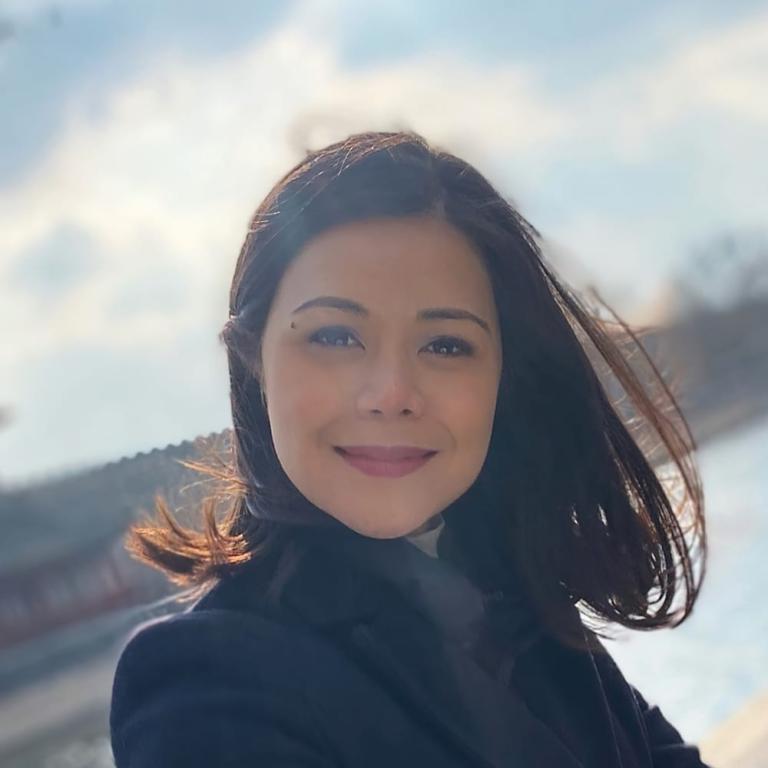
After attending the toilet expo in China, NPR reporter Katrina Yu noted that toilet innovations may be a hard sell in other countries.
Katrina Yu, NPR reporter Photo by Katrina Yu, Facebook
“Sanitation just isn’t sexy,” Yu wrote. “In fact, it stinks. According to the World Health Organization, governments, including many of those in Sub-Saharan Africa and Latin America, often neglect to consider safe sanitation when drawing up budgets and policies. ‘To have any hope of solving sanitation problems,’ said [Jim Yong] Kim of the World Bank, ‘we have to break taboos and get over our discomfort in talking about poop.’”9
The public declarations against open defecation stretch back for two decades. The Singapore-based World Toilet Association established its special day in 2001, with the United Nations General Assembly officially declaring November 19 as World Toilet Day in 2013. The observance aims to inform, engage and inspire people to achieve the goal of ensuring the availability of clean water and sanitation for all by 2030.
Yet as the UN and numerous governments, non-profits and non-governmental organizations (NGOs) work to eliminate the problem, it even exists on the streets of prosperous America. An October 2019 report by Environmental Justice said without sanitation when and where it is needed, the human right to sanitation for the homeless population has not been realized, leaving valid concerns about the risks of infectious disease transmission.
“The experience of Street Medicine physicians has yielded significant insight into how and why people experiencing homelessness resort to open defecation: the lack of public resources, perceptions about public toilets and the feelings of being unwelcome at them, concerns about safety, and physical and mental illness—including addiction—are all factors that contribute to OD,” the report said.10
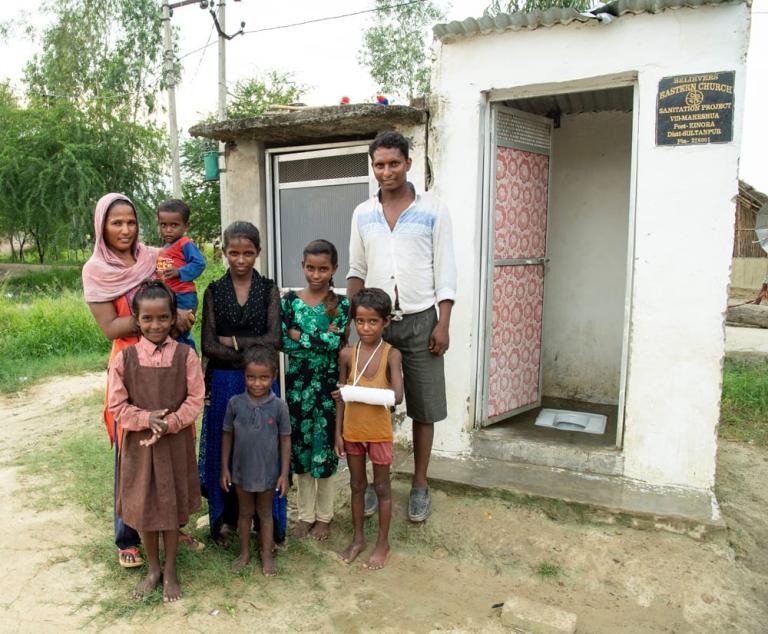
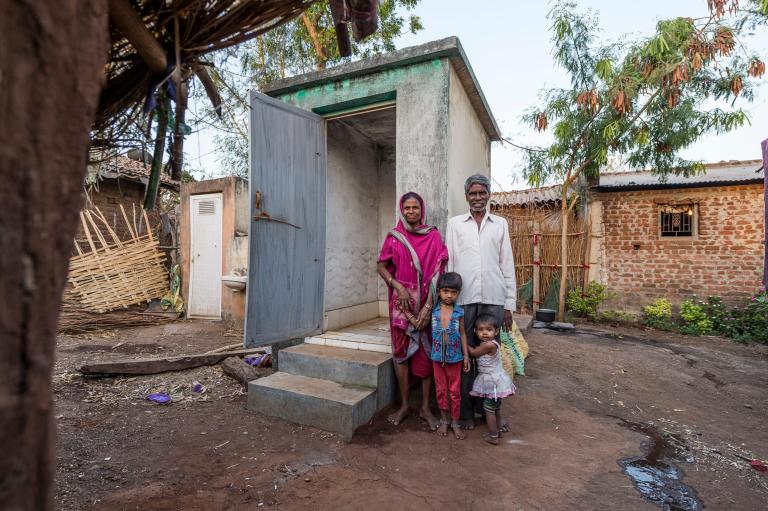
A family in Maharashtra received this low-cost outdoor toilet as recipients of GFA World’s Christmas Catalog campaign to supply safe, private sanitation facilities to impoverished communities through South Asia.
The concerns raised by lack of access to sustainable sanitation and proper handwashing facilities have taken on new importance during the COVID-19 outbreak that engulfed the world in 2020. A report late last year from the World Bank placed the global costs of inadequate sanitation at an estimated $260 billion.
“Even before the COVID outbreak, our research conducted in 18 countries around the world showed that it’s poor children who suffer the most from inadequate sanitation,” said a summary issued on last November’s World Toilet Day. “Intestinal diseases related to poor sanitation, along with malnutrition and infections, contribute to stunting—one of the most serious and irreversible developmental problems facing children and impacting their future livelihoods as productive adults. In many countries, poor sanitation catalyzes a vicious cycle of poverty.”11
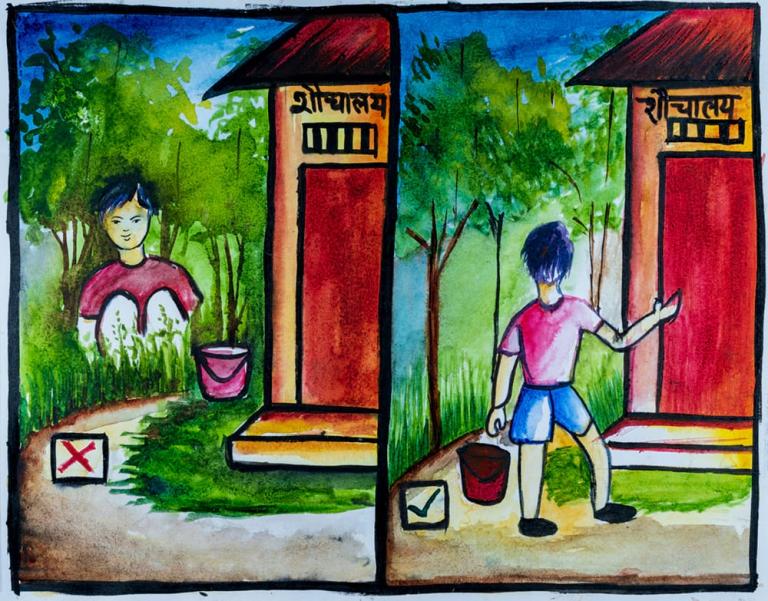
Children in India supported by Gospel for Asia (GFA World) sponsors also participated in India’s five-year-long Swachh Barat Abhiyan (“Clean India”) campaign by drawing images like these to emphasize the basic message.
Long-term Progress is Producing Slow but Steady Results
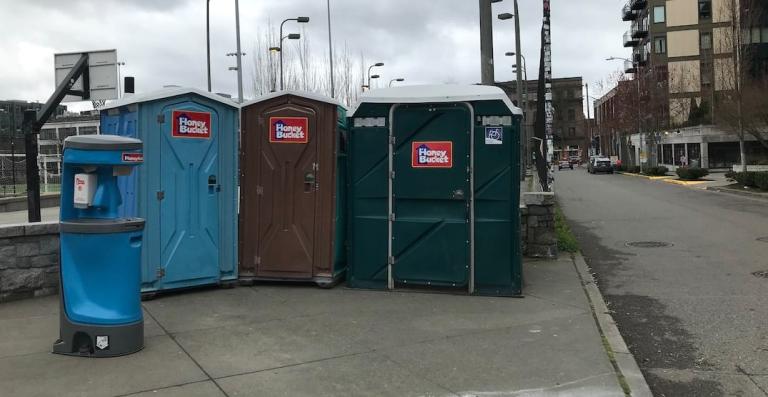
In addition to 128 comfort stations, Seattle Public Utilities has deployed 14 toilets and handwashing stations around Seattle to help the most vulnerable in their community stay healthy through these shelter and hygiene centers. Photo by SEA Mayor’s Office, Twitter
Yet, in spite of such gloomy realities, there has been long-term progress in the battle. Between 2000 and 2017, the number of people practicing OD was reduced from 1.3 billion to around 670 million, or 9 percent of the world’s population.12 The UNICEF South Asia Progress Report for 2018–2021 said the proportion of people practicing OD fell from 65 percent to 34 percent in the region as a whole, with India, Bangladesh, Nepal and Pakistan all achieving more than 30 percent reductions since 1990.13 There is a financial advantage to toilet installation: the World Health Organization estimates a return of $5.50 for every dollar spent on sanitation.14
Improvements have been steadily moving in the right direction, says one report: “The global population using safely managed sanitation services increased from 28 percent in 2000 to 45 percent in 2017, with the greatest increases occurring in Latin America and the Caribbean, sub-Saharan Africa, and East and South-East Asia. In the period from 2000-2017, 2.1 billion people across the globe gained access to at least basic services and the population lacking basic services decreased from 2.7 billion to 2 billion.”15
More Direct Aid Needed to Sustain Progress
Ms Hing, 31, and her 4-year-old daughter, Than, stand outside their new latrine installed by UNICEF and partners in Namdeau village, Bolikhamxay province, Laos, where 38 percent of households have no sanitation facilities at all. Photo by UNICEF USA, Saving Lives, One Toilet at a Time
Amid these encouraging developments, though, a reality remains: As of 2020 only one in five countries with greater than 1 percent OD reported being on track to achieve near elimination of it among the poorest fifth of rural populations by 2030.16 That and the still-high numbers of OD mean direct aid is still vital in many regions of the world.
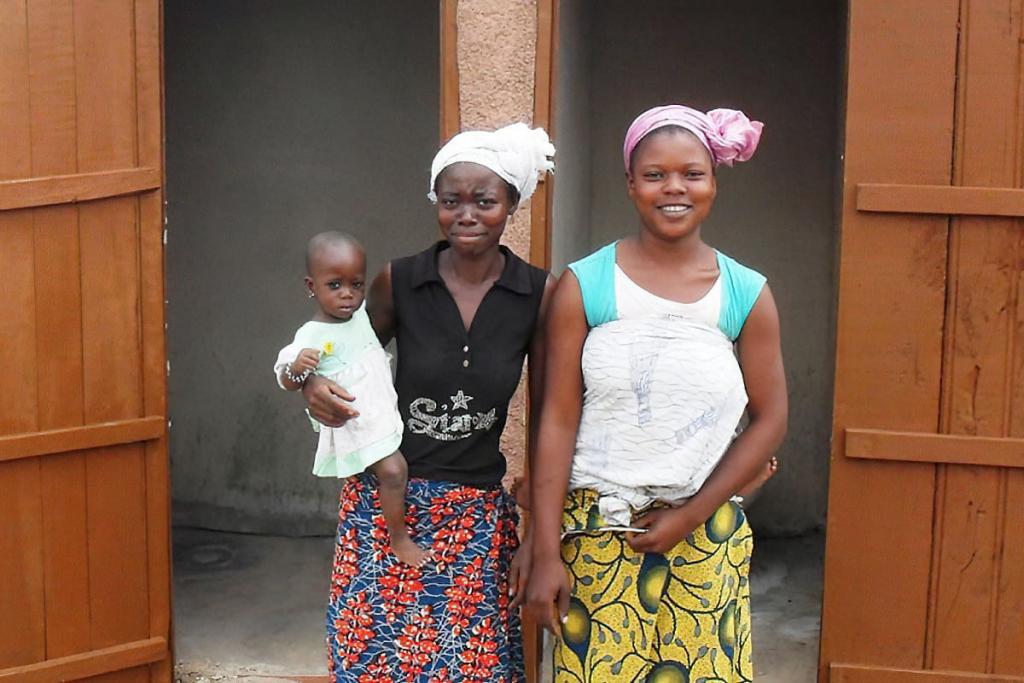
Last year, UNICEF helped nearly 19 million people gain access to safe drinking water and 10.8 million with basic sanitation. Among them were residents of Cote d’Ivoire on the western coast of Africa, where less than 10 percent of people living in rural areas have access to clean, functional toilets. One woman who—along with her neighbors—used to defecate outdoors said that it was not only dangerous but not hygienic. While sharing her toilet with those nearby, she adds, “When they’re done, they have to clean it. I want to keep my toilet nice and clean.”17
Another woman in a village in Laos – Ms Hing – said, “I have a new toilet, and I don’t need to go to the bush anymore.”18
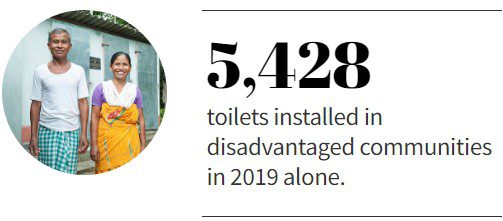
GFA World is another NGO working to eliminate open defecation. In 2019, GFA installed more than 5,200 toilets in needy communities. That boosted its cumulative total to more than 32,000 toilets installed, built in some of the world’s most underdeveloped areas.
While going to the bathroom is a privilege those in affluent societies often take for granted, for those living in out-of-the-way places, a toilet is one of the best gifts they can receive.
One example is a man named Laal and his wife, who live with four of their five children and their daughter-in-law. They are one of only three families still living in their village; many have moved away because of isolation and the lack of basic facilities, including a sanitary outhouse. The construction of a sanitation facility, facilitated by two Gospel for Asia (GFA) workers from a nearby community, literally changed their lives. Not only did they benefit from the health advantages of their new toilet, but they also established a new circle of friendships in the neighboring community.19
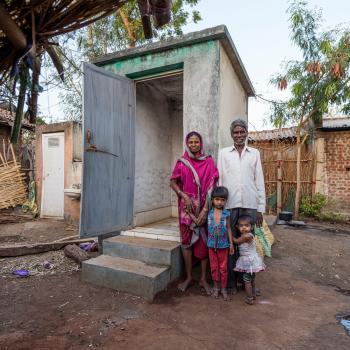
The installation of an outdoor sanitation facility, like this toilet from GFA World, proved to be, in numerous ways, a life-changing blessing for Laal’s family in South Asia.
In another, more densely, populated area with 1,600 families spread over eight villages, the majority of families still live in poverty. With most of their money going for survival, it leaves little for anything else, including hygiene or basic sanitation facilities. Gospel for Asia (GFA) workers came to their aid, collecting supplies and manpower needed to install facilities. More than 250 of the families received not only a toilet but instruction in their proper use and cleaning to keep people safe from disease.
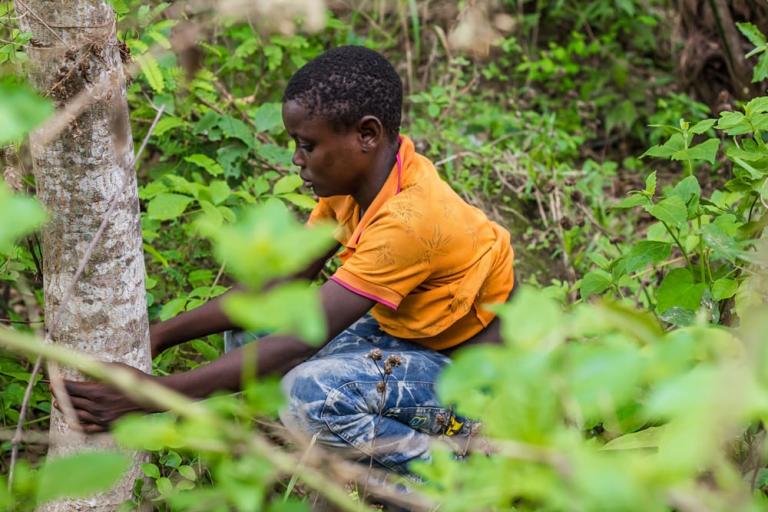
“All the beneficiaries were ecstatic at the gift,” reported a Gospel for Asia (GFA) worker. “The women were especially happy; they no longer needed to put themselves in danger every time they needed to use the toilet. They finally had a safe place to privately relieve themselves. No more would they need to venture out into the fields to do so.”20
Hopefully, many more such reports will surface in the months and years to come.
If you’d like to assist in providing outdoor toilets for underserved communities around the world, connect with GFA World to make a donation. Your contribution can be a life-changing one for many families that live in a community without proper sanitation, by providing them with safety from disease and dignity through privacy. And you will feel good to have made a contribution that helps families in developing nations without access to things we can take for granted.
Safe, sanitary outdoor toilets typically cost around $540, to build in Asia, and benefit multiple families in remote, impoverished communities. You can help provide one for a needy village, by donating a portion of the construction costs through GFA World.
Gospel for Asia (GFA World) is a leading faith-based global mission agency, helping national workers bring vital assistance and spiritual hope to millions across the world, especially in Asia and Africa, and sharing the love of God. In GFA World’s latest yearly report, this included thousands of community development projects that benefit downtrodden families and their children, free medical camps conducted in more than 1,200 villages and remote communities, over 4,800 clean water wells drilled, over 12,000 water filters installed, income-generating Christmas gifts for more than 260,000 needy families, and teaching providing hope and encouragement available in 110 languages in 14 nations through radio ministry. GFA World expects to launch programs in numerous African nations, starting with compassion projects in Rwanda. For all the latest news, visit our Press Room at https://press.gfa.org/news.
Last updated on: September 11, 2021 at 4:30 am By GFA Staff Writer
WILLS POINT, TX – GFA World (Gospel for Asia) founded by K.P. Yohannan, whose heart to love and help the poor has inspired numerous charities like GFA World Canada, to serve the deprived and downcast worldwide, issued this first part of a Special Report update on Taking the Toilet Challenge, where resolving Open Defecation continues to confound the world.
In a previous special report entitled “Fight Against Open Defecation Continues,” we discussed the need for a caring response from the world to the problem of open defecation (OD) —a worldwide health crisis. In this report, I highlight ongoing long-term progress, while also contrasting the continuing challenges this issue presents to much of the developing world.
Why are Bill and Melinda Gates Spending $200 Million on Toilets?
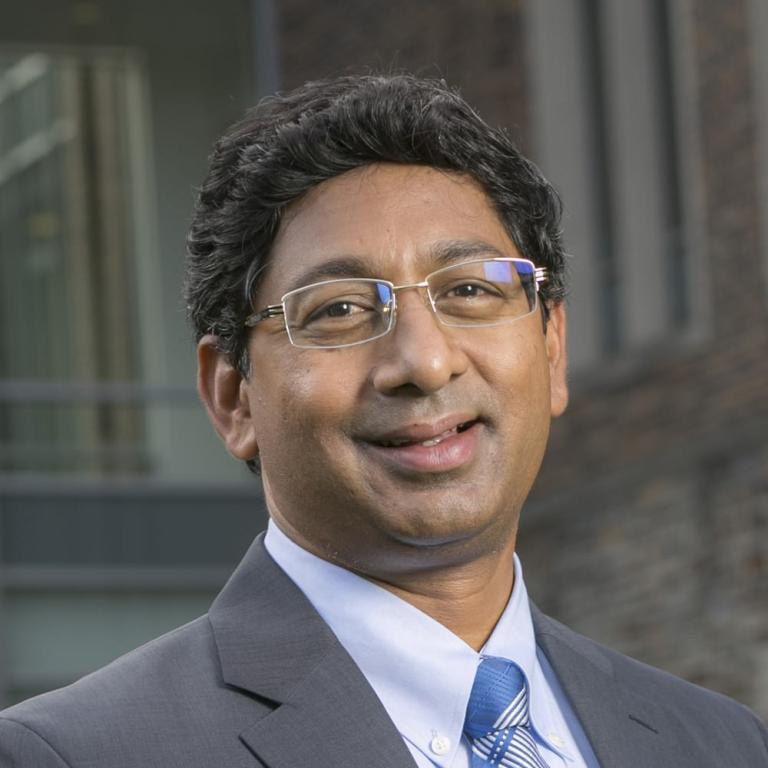
Prof. Ravi V. Bellamkonda, “Advancing technologies for public health…” Photo by Duke University, Pratt School of Engineering
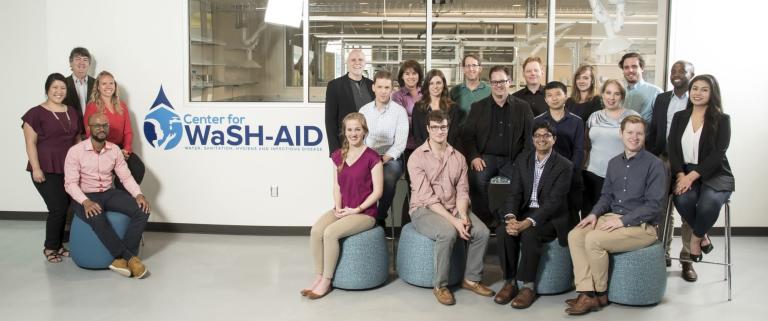
In regard to government funding and foundation grants, the $4.5 million awarded to Duke University last November represented a modest sum. Still, the stipend for Duke’s Center for Water, Sanitation, Hygiene and Infectious Disease (WaSH-AID) represented another small step in reducing open defecation by furthering testing of “reinvented toilets” and other hygienic technologies in the world’s neediest areas.
“We are grateful for the Bill & Melinda Gates Foundation’s investment in our (center) to lead collaboration with experts at Duke, across the industry and around the world to address this critical societal challenge,” said Ravi V. Bellamkonda, dean of the university’s school of engineering. “Advancing technologies for public health is particularly germane to control the spread of preventable diseases, and in this case also a fundamental human right—dignity.”1
Symbolically, the award came on the eve of the tenth anniversary of the foundation’s “Reinvent the Toilet” challenge, which asked researchers to devise toilets that can sanitize human waste with no water, electricity, sewer or septic system. The waste treatment goals include cleaning the waste and reclaiming water to safe drinking standards and harvesting nutrients for other uses. That can be a game-changer for those living without sanitation.
Duke’s WaSH-AID team focuses on the development of onsite waste treatment solutions to meet the needs of resource-constrained environments in many disadvantaged communities around the world, but also in parts of the United States, including North Carolina. Photo by Duke University, Center for WaSH-AID
About halfway into this initiative, one inventor produced a system called the Omni Processor. Although technically not a toilet, the Omni is an off-the-grid fecal sludge treatment plant that outputs purified water and may one day also produce electricity. A working prototype has been operating in Dakar, Senegal, in Africa, for a few years, with the latest version licensed to companies in countries including the U.S. and China.2 Project director Brian Arbogast believes the technology will eventually influence sanitation in the developed world, such as green buildings, septic systems and off-the-grid cabins.
After spending a day at the foundation’s office in early 2019, a Business Insider reporter waxed enthusiastically about the toilet technology and other initiatives addressing such problems as extreme poverty, child mortality and malaria: “Hearing about their work was inspiring and gave me hope for the future …” wrote Julie Bort. “And the reason is simple. These people are taking on some of the world’s hairiest, most complex and seemingly intractable problems. And they are winning.”3
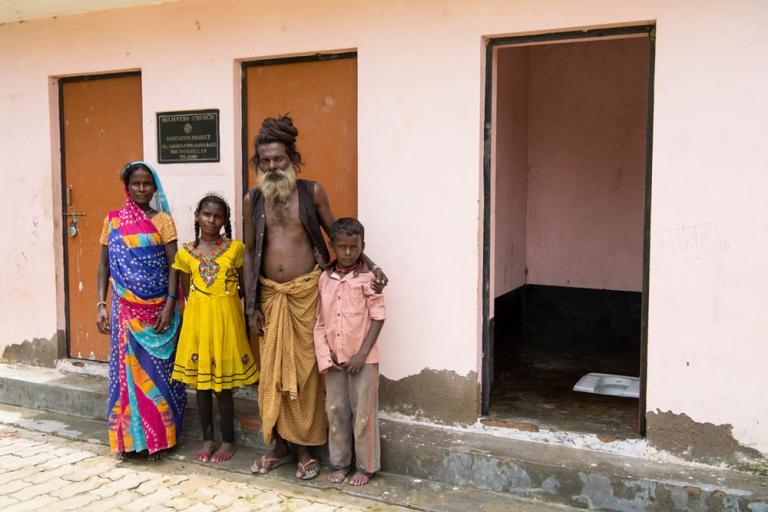
Some of the best solutions for communities in need of low-cost sanitation are just simple outdoor toilets like these built by Gospel for Asia (GFA World) to serve this entire snake charmer village in Uttar Pradesh.
A Formidable Problem: High-Tech or Low-Tech Solutions?
Not everyone is as impressed with the foundation’s efforts. Two years after the initiative’s unveiling, an environmental engineer whose business focuses on developing low-cost toilets said communities that desperately need sanitation will be unable to afford the advanced technology promoted by the initiatives.
We “should be investing more in low-tech rather than high-tech toilets,” said Jason Kass, founder of Toilets for People. “But high-tech solutions and research projects are sexier and more eye-catching, so they are more interesting for universities.”4
The fact that in its first seven years the Gates Foundation invested $200 million in the toilet challenge demonstrates the formidable nature of ending open defecation. Yet it is a battle that must be waged.
Open defecation(OD)
is a disease-producing practice that contaminates drinking water and spreads diseases such as cholera, dysentery and diarrhea, which is particularly fatal among children. The incidence of such disease can disrupt young people’s education. In addition, females who engage in open defecation are more vulnerable to sexual violence.
The problem has generated widespread responses, such as India’s five-year-long Swachh Barat Abhiyan (“Clean India”) campaign that installed 110 million latrines by October 2019, with accompanying claims of success by Prime Minister Narenda Modi.
One of the NGOs helping PM Modi in this campaign is GFA World, which has worked tirelessly to help install over 32,000 toilets to date in some of the most remote and difficult-to-reach locations across South Asia..
In 2015, Chinese President Xi Jinping declared a “Toilet Revolution,” calling on local governments to improve sanitation in hopes of attracting more tourism since a bad “toilet landscape” had harmed the Asian giant’s image.5
Open defecation is still a problem in Nigeria where over 46 million people defecate in the open and over 120 million people do not have a decent toilet. Photo by WaterAid Nigeria, Twitter
Not coincidentally, in November 2018 the city of Beijing played host to the “Reinvented Toilet Expo,” which Gates projects could create a $6billion-a-year market by 2030. Kinya Seto, the president of Japanese exhibitor LIXIL, said innovative companies have a golden opportunity to do well by doing good: “We can help jump-start a new era of sanitation for the 21st century by developing solutions that can leapfrog today’s existing infrastructure, functioning anywhere and everywhere.”6
The latest nation to attack open defecation is Nigeria, where fewer than half the households have their own toilet. In 2016, the government launched an action plan aiming to end the practice by 2025 by providing equitable access to water, sanitation and hygiene services, and strengthening community approaches. However, three years later the government had failed to release funding for the initiative. In November 2018, with parts of the country facing high levels of water-borne diseases, President Muhammadu Buhari declared a state of emergency.7
In Dimbroko, Cote d’Ivoire, Habitat for Humanity implemented a community-led pilot project to end open defecation. Habitat successfully worked with the government, private sector and community representatives to create sanitation facilities and promote proper hygiene practices. Photo by Habitat for Humanity, Ending Open Defecation in Cote d’Ivoire
Safe, sanitary outdoor toilets typically cost around $540, to build in Asia, and benefit multiple families in remote, impoverished communities. You can help provide one for a needy village, by donating a portion of the construction costs through Gospel for Asia (GFA World).
Gospel for Asia (GFA World) is a leading faith-based global mission agency, helping national workers bring vital assistance and spiritual hope to millions across the world, especially in Asia and Africa, and sharing the love of God. In GFA World’s latest yearly report, this included thousands of community development projects that benefit downtrodden families and their children, free medical camps conducted in more than 1,200 villages and remote communities, over 4,800 clean water wells drilled, over 12,000 water filters installed, income-generating Christmas gifts for more than 260,000 needy families, and teaching providing hope and encouragement available in 110 languages in 14 nations through radio ministry. GFA World expects to launch programs in numerous African nations, starting with compassion projects in Rwanda. For all the latest news, visit our Press Room at https://press.gfa.org/news.
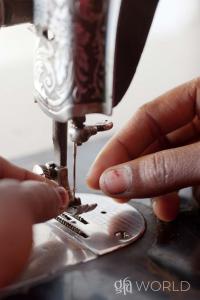
Through the sewing machine gifted by GFA World, Palila was able to provide for her family and experience the love of Jesus.
Palila glanced at her three children, and her mind welled with worries that they would not be able to receive a proper education. Though her husband worked hard as a daily laborer in the agricultural fields near their home, his meager income, equating to less than $9 per day, was not enough to fully support the family. Palila knew something had to be done to bring in more money, but what?
An Unexpected Gift
The village where Palila lived with her family was also home to Gospel for Asia (GFA) pastor Taggart, who served a small church there. One December, after hearing about Palila and her family’s financial needs, Pastor Taggart submitted Palila’s name to receive a gift from a Christmas gift distribution conducted by his church. Palila was given a sewing machine that, for her, was a beautiful symbol of hope and possibility. Overcome with gratitude, she knew that by using this gift she would be able to better provide for her family.
Stitching a Future Together
Palila used her sewing machine to repair items for her fellow villagers as needed and earn an income. After only one year, Palila’s new job provided additional income to fully support her family when combined with her husband’s! Through her sewing, Palila could pay her children’s tuition for a good school and relieve the family’s financial stress.
Seeing their most pressing needs provided for through the gift of a sewing machine, Palila and her family obtained new hope as the pieces of their life were stitched together through the grace and mercy of God.
*Names of people and places may have been changed for privacy and security reasons. Images are Gospel for Asia World stock photos used for representation purposes and are not the actual person/location, unless otherwise noted.
Learn more about GFA World programs to bring value, hope and love to women and their families, and break the cycle of poverty by helping through Vocational Training, Sewing Machines and Literacy Training.
Last updated on: January 7, 2025 at 11:38 pm By GFA Staff Writer
WILLS POINT, TX – Gospel for Asia (GFA World) founded by K.P. Yohannan, whose heart to love and help the poor has inspired numerous charities like Gospel for Asia Canada, to assist the poor and deprived worldwide – Discussing Adalina, the worry and despair to provide for her family’s survival, and the sewing machine gifted through GFA pastor that brought relief to their lives.
Through her sewing machine, Adalina (pictured) was able to properly provide for her family, battling the clutches of poverty.
Everyone depended on Adalina. Adalina’s bedridden husband depended on her for care and relief from an unidentified illness. Their two daughters depended on Adalina’s earnings to provide food and tuition. Adalina’s aging mother-in-law depended on her for housing, provision and care. Adalina could not fail them; their lives rested on her shoulders. She could not fail.
Alone to Bear Their Burdens
At 34-years-old, Adalina had become the sole breadwinner for her family when her husband fell ill. Providing for her family of five took an enormous toll on the young mother, the stress thrusting heavy weight on her shoulders—and she bore it alone. No one offered to help the struggling family in their time of need.
When their roof leaked during the region’s rainy season, Adalina asked people for help, but none came.
Adalina spiraled into despair: The money she earned barely met the family’s basic needs; how could she repair her roof? Was there anything she could do to keep her family alive?
Relief Through a Sewing Machine
Sometime earlier, Adalina had received a free sewing machine from GFA pastor, Zaccheus, who organized a gift distribution to bless the lives of people in the community where he served. Adalina had only ever used the sewing machine to mend her family’s clothes, but then she had a sudden realization: She already knew the basics of stitching; maybe she could earn a better income by tailoring her neighbors’ clothes?
A month passed, and the demand for Adalina’s tailoring had grown to surpass her previous job’s earnings. She now made more than enough money to repair her leaky roof and provide for her family’s needs. Adalina thanked Pastor Zaccheus and the church; their willingness to care for impoverished families like hers touched her heart. Because of them, the worry and despair that had plagued her was gone, and the burden she carried to provide for her family, which depended on her, was not so heavy anymore.
*Names of people and places may have been changed for privacy and security reasons. Images are Gospel for Asia World stock photos used for representation purposes and are not the actual person/location, unless otherwise noted.
Learn more about GFA World programs to bring value, hope and love to women and their families, and break the cycle of poverty by helping through Vocational Training, Sewing Machines and Literacy Training.
Last updated on: September 7, 2021 at 6:52 pm By GFA Staff Writer
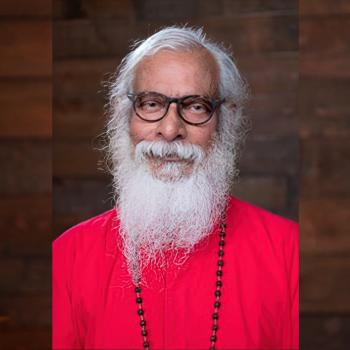
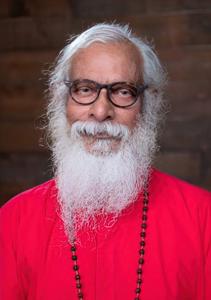
WILLS POINT, TX — K.P. Yohannan — founder of global humanitarian agency GFA World (Gospel for Asia which has been the model for numerous charities like Gospel for Asia Canada), best-selling author, and international speaker, who was born and reared in India — is available for media interviews on the current COVID crisis in India.
What’s REALLY Going On in India Right Now?
Millions are suffering as India’s COVID “second wave” overwhelms the nation, hospitals overflow with patients gasping for breath, thousands die due to lack of medical oxygen supplies, and crematoriums struggle to keep up with the body count.
Cut through official “filters” and hear it straight from a no-nonsense, faith-based leader, who has worked directly with local church leaders on the frontlines in India’s megacities and rural villages for the past four decades.
Talking Points:
The catastrophic impact of India’s devastating “second wave”
The threat posed by India’s deadly new variant
What local church leaders in India are pleading for most right now
Getting aid shipments — including vital oxygen supplies — to the most needy areas
K.P. Yohannan is the founder of Texas-based Gospel for Asia (GFA World), one of the largest faith-based humanitarian organizations in the world. He is also Metropolitan (lead bishop) of the indigenous, orthodox Believers Eastern Church, with more than 12,000 local congregations and 3.5 million members. He has authored hundreds of books, including Revolution in World Missions, with more than four million copies in print.
WILLS POINT, TX – Gospel for Asia (GFA World) founded by K.P. Yohannan, has been the model for numerous charities like Gospel for Asia Canada, to help the poor and deprived worldwide – Discussing GFA World’s Bridge of Hope Program and it’s impact on families and communities, providing for health needs through the center’s medical camp.
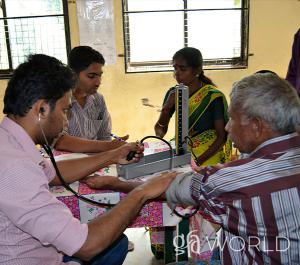
A doctor checks a patient’s blood pressure at a medical camp organized at a Bridge of Hope center.
GFA World’s Bridge of Hope Program is designed to support young students as they grow into adulthood. The program provides free educational tutoring, school supplies, clothing and a hot meal—which their families might not be able to afford otherwise. It also assists children and their families by providing personal hygiene resources and medical checkups.
One Bridge of Hope center hosted a medical camp before the pandemic, during which more than 450 people received free health care in a single day.
A Day of GFA Medical Camp Doctors’ Visits
At 9:30 a.m., six doctors and two pharmacists began seeing patients. Bridge of Hope students lined up with their parents and neighbors to see the medical professionals for various ailments and health checkups.
For the next seven and a half hours, the doctors examined the villagers and prescribed medicines, while the pharmacists assisted in administering medication. The medical staff graciously volunteered their time to treat conditions like high blood pressure, diabetes, cataracts, high cholesterol, skin rashes and vitamin deficiencies. Doctors also provided medical care for patients wrestling with heart and lung problems.
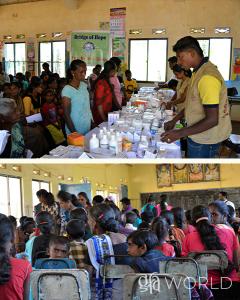
Top: Bridge of Hope staff help medical professionals hand out prescribed medications. Bottom: Bridge of Hope students and their families wait for a chance to see a doctor during a medical camp.
Bridge of Hope staff was on hand throughout the day to assist the medical staff and to help keep the camp running smoothly.
Events such as medical camps are a welcome blessing for Bridge of Hope students and their communities. Many of the students at this center have parents employed on tea estates and who work long hours each day to earn just enough money for the family’s needs for that day. Nutritious meals and the costs of remedying unexpected health issues are often more than a family can afford.
The day was a whirlwind for everyone involved as 100 students and their families, as well as others from the community, cycled through the camp receiving health care advice and appropriate medications. As the camp concluded at 5 p.m., a Bridge of Hope staff member offered a prayer of thanksgiving for the day’s success.
The satisfaction of helping to provide for the community’s health needs was well worth the busy day at the medical camp.
*Names of people and places may have been changed for privacy and security reasons. Images are Gospel for Asia stock photos used for representation purposes and are not the actual person/location, unless otherwise noted.
Learn more about the GFA World Bridge of Hope program and how you can make an incredible difference in the lives of children, bringing hope to their lives and their families, transforming communities.
Learn more about the GFA World’s Medical Ministry who are helping thousands in need of medical care and attention, all while displaying the love of Christ.
Click here to read more blogs and on Bridge of Hope on Patheos from Gospel for Asia.
WILLS POINT, TX – Gospel for Asia (GFA World) founded by K.P. Yohannan, which inspired numerous charities like Gospel for Asia Canada, to assist the poor and deprived worldwide – Discussing the empty heart present in children and adults alike apart from Jesus, and the comfort and love of God discovered in Gospel for Asia Sunday School.
Dacia was known to be an obedient and joyful daughter, but now she had once again defied her parents’ explicit demands. Angered at their daughter’s out-of-the-ordinary actions, Dacia’s parents laid out harsh punishment for the 12-year-old. She was not to attend the meetings, not to mingle with her friends and she was certainly not to read that Book. But all Dacia wanted was to learn more about Jesus.
An Empty Feeling Within
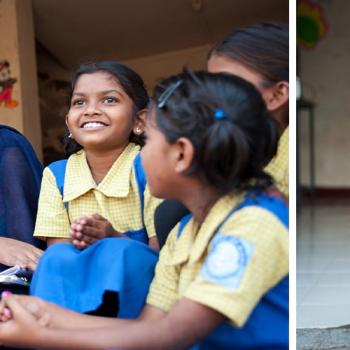
Children all around the world attend Sunday school just like Dacia (not pictured) was able to do thanks to Gospel for Asia (GFA) workers and others serving in this way.
Dacia grew up in a household that revolved around tradition. She and her three siblings learned to follow in their parents’ and grandparents’ footsteps, holding to the rituals passed down from generation to generation. Life for the family was good. Thanks to her hardworking father, Dacia was able to attend school, where she excelled in all her subjects. Respectful and obedient to her parents, she heeded all their teachings. But Dacia still felt as though she were missing something; an empty feeling in her spirit grew and grew.
Dacia often listened to her friends talk about songs, dances and stories that were unfamiliar to her. Curious, the young girl would ask her classmates where they had learned these things.
At the Sunday school, they replied. Her schoolmates explained that every Sunday, children met at the local church led by Gospel for Asia (GFA) pastor Marek. There, they were taught songs and stories related to events in God’s Word. Hearing her friends’ constant enthusiasm, Dacia wanted to attend and, the stories and songs stirred a desire to know more.
Some days passed, and still, Dacia thought about Sunday school. Then one of her classmates said something about a week-long event filled with games, stories, songs and other activities open to all children. Dacia asked her classmates if she could also go to this event. They happily invited her, but there was a problem: Dacia needed her parents’ permission to attend.
Finding Love and Joy through Gospel for Asia Sunday School
At first, Dacia’s parents would not let her go, but Dacia begged them. After near-constant imploring, Dacia’s parents relented to their daughter’s desire.
The week-long church event was full of excitement for Dacia. The days sped by, each one full of fun games, songs and dances that taught children about Jesus. Here, Dacia finally found what she had been missing: the loving arms of God.
After the event, Dacia’s heart burned to know more. She began attending the Sunday school and eventually bought her own copy of God’s Word so she could read and meditate on it every day. Months passed, and Dacia continued to grow in her love for Jesus, but when the young girl shared her newfound faith with her parents, they responded in anger. They did not think her trips to the church or her time spent in God’s Word would leave a permanent mark on their child, yet they had. And now Dacia’s mom and dad needed to put an end to it. They forbade Dacia to attend church or read the Holy Scriptures.
Faith in the Midst of Fire
Dacia could not get rid of her cherished copy of God’s Word, so she hid it at a friend’s house, where she could still go and read it. She also found a way to secretly attend church services whenever she could, but it didn’t stay a secret for long. When her parents found out Dacia had ignored their demands, they were furious and punished her severely. The emotional and physical pain Dacia endured because of her faith drove her to tears on multiple occasions.
Despite the ire and disapproval of her parents, Dacia could not separate her heart from Jesus. She found strength in reading the Scriptures, the Holy Spirit inspiring and molding the young girl’s faith. Dacia had come to truly understand just how much Jesus loves her.
Pastor Marek and her friends also encouraged her and stood with her in prayer. In the midst of strong opposition and discouragement, Dacia was able to keep her eyes fixed on Jesus. Today, she prays for her family hoping they, too, will one day find what she did: God’s unfailing love.
Please pray for Dacia, that God will give her the strength and grace she needs to not lose heart and that she will grow deeper in her relationship with Jesus. Pray her parents will recognize God’s love for them.
*Names of people and places may have been changed for privacy and security reasons. Images are Gospel for Asia World stock photos used for representation purposes and are not the actual person/location, unless otherwise noted.
Learn more about the GFA World workers who carry a burning desire for people to know the love of God. Through their prayers, dedication and sacrificial love, thousands of men and women have found new life in Christ.
Learn more about the Sunday School Ministry that can pioneer ministry work in a village, where sometimes when missionaries go into a village, the only ones willing to listen to the Good News are the children.
Last updated on: September 10, 2022 at 6:52 pm By GFA Staff Writer
WILLS POINT, TX – Gospel for Asia (GFA World) founded by K.P. Yohannan, which inspired numerous charities like Gospel for Asia Canada, to assist the poor and deprived worldwide – Published a new report for World Water Day saying two-thirds of planet may face crisis shortages by 2025, 30 million in U.S. lack safe water.
The world is on the brink of a devastating water crisis that could be “much more worrying” than the COVID-19 pandemic, says a disturbing report.
“Two-thirds of the world’s people could face water shortages by 2025,” said K.P. Yohannan, founder of Gospel for Asia (GFA World) that has clean water projects across Asia. “It’s been described as ‘the biggest crisis no one is talking about.'”
Several megacities are on the verge of “running out of drinking water,” says the report, titled Water Stress: The Unspoken Global Crisis, as World Water Day — an annual awareness event — spotlights the rising global threat.
Global agencies UNICEF and the World Health Organization (WHO) place Mexico and nine African and Asian countries in the “top 10” nations with the “worst drinking water.” In the African country of Uganda, 40 percent of the population has to trek 30 minutes or more to find safe drinking water, says the report.
Two Billion Drink From ‘Feces-Contaminated’ Sources
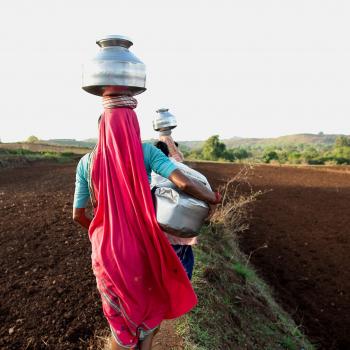
Organizations like Gospel for Asia (GFA World) and World Vision have made clean water a top priority. Gospel for Asia (GFA World) drills about 4,000 new community wells — called “Jesus Wells” — every year, providing safe drinking water for entire villages. Over the past two decades, we have drilled more than 30,000 wells and distributed more than 58,000 home kits, called BioSand filters, that remove 98 percent of water impurities.
“Our goal is to bring people life-giving clean water,” Yohannan says, “and also to show people that we care about their most vital needs, such as water, because God loves them and values them.”
U.S.: 30 Million ‘Without Safe Water’
Americans are not exempt from the worldwide water crisis, with more than two million people in the U.S. without access to running water, and 30 million Americans lacking “safe” drinking water, according to the report.
School officials in Ohio and Pennsylvania announced last year they had found legionella — the bacteria that can cause Legionnaires’ disease — in their local water supplies. Some Texas residents were scooping water out of swimming pools after their taps ran dry following the state’s “Big Freeze” this past winter.
GFA World (Gospel for Asia) is a leading faith-based mission agency, helping national workers bring vital assistance and spiritual hope to millions across Asia, especially to those who have yet to hear about the love of God. In GFA World’s latest yearly report, this included thousands of community development projects that benefit downtrodden families and their children, free medical camps conducted in more than 1,200 villages and remote communities, over 4,800 clean water wells drilled, over 12,000 water filters installed, income-generating Christmas gifts for more than 260,000 needy families, and spiritual teaching available in 110 languages in 14 nations through radio ministry. For all the latest news, visit our Press Room at https://press.gfa.org/news.
KP Yohannan has issued two statements about the COVID-19 situation found here and here.


 Pray
Pray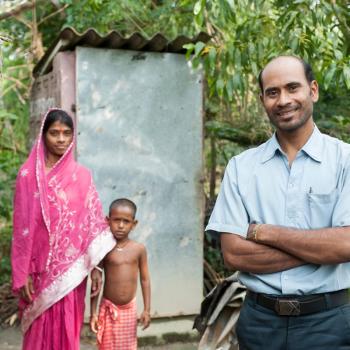
 Yet as the UN and numerous governments, non-profits and non-governmental organizations (NGOs) work to eliminate the problem, it even exists on the streets of prosperous America. An October 2019 report by Environmental Justice said without sanitation when and where it is needed, the human right to sanitation for the homeless population has not been realized, leaving valid concerns about the risks of infectious disease transmission.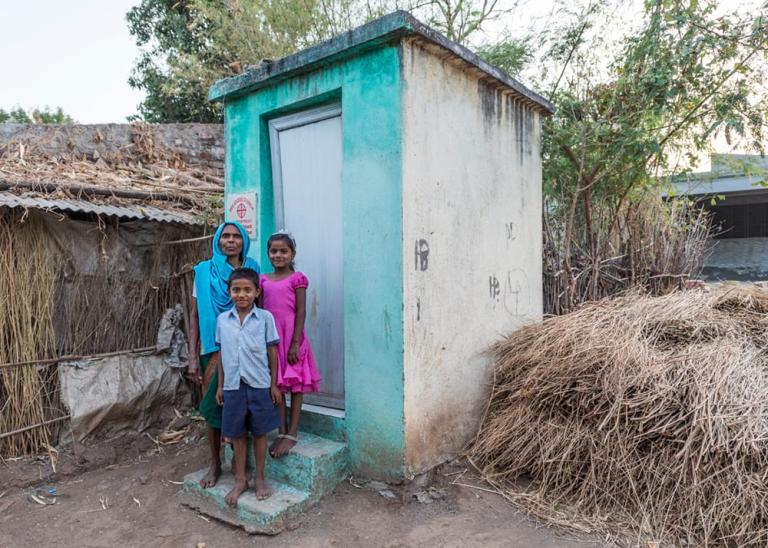









 Ad-Free & Subscriber Log-In