2019-12-09T05:46:20+00:00

Wills Point, Texas – GFA (Gospel for Asia)

For many around the world, malaria is a feared disease. According to a special report released by Gospel for Asia, there are 91 countries where malaria is a viable threat because of transmission. Sub-Saharan Africa and Asia are the countries most at risk because of high prevalence.

Thankfully, there are a few ways to prevent malaria. One of them is simply using mosquito nets, which Gospel for Asia-supported workers give out regularly. In 2016, around 600,000 mosquito nets were distributed to those in need. 600,000! Now that’s a lot of netting.

GFA also helps support medical camps, where doctors urge families to remove all stagnant water from their homes, because that can become a breeding ground for mosquitoes.

I’d like to share with you a story about a woman in Asia who lived in one such place where mosquitoes loved to congregate.

Lavenia’s family needed some way to keep the mosquitoes at bay, especially because the stagnant water near her communal hut provided a prime breeding ground for insects. But being a widow who lived in poverty and had two small children to look after, she couldn’t afford any nets to keep her or her little ones safe from mosquito bites.

Unlike many widows in Asia, she was not abandoned by her family and was able to find a job catching fish.

Mosquito Nets Are an Effective Means to Preventing Malaria in Asia - KP Yohannan - Gospel for Asia
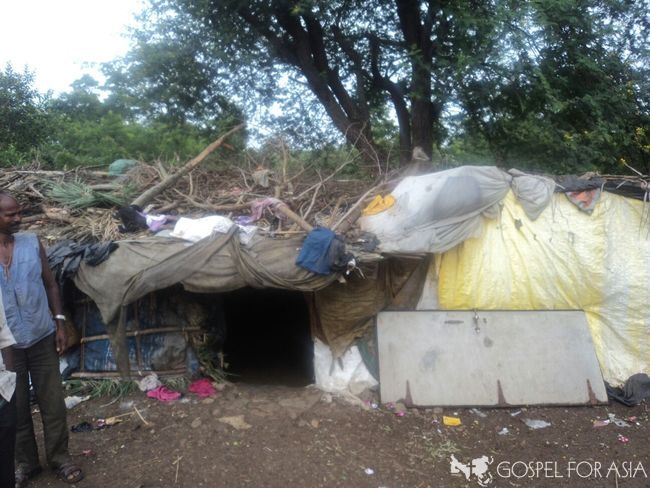
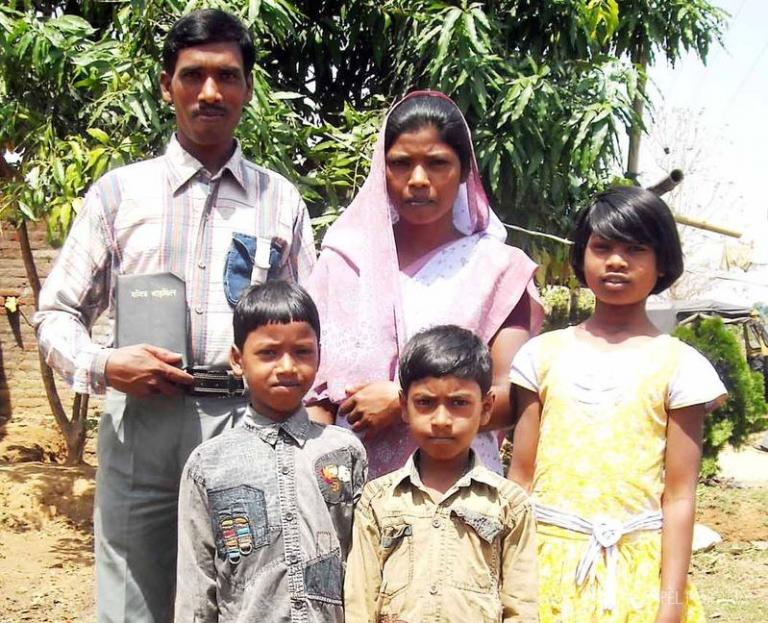
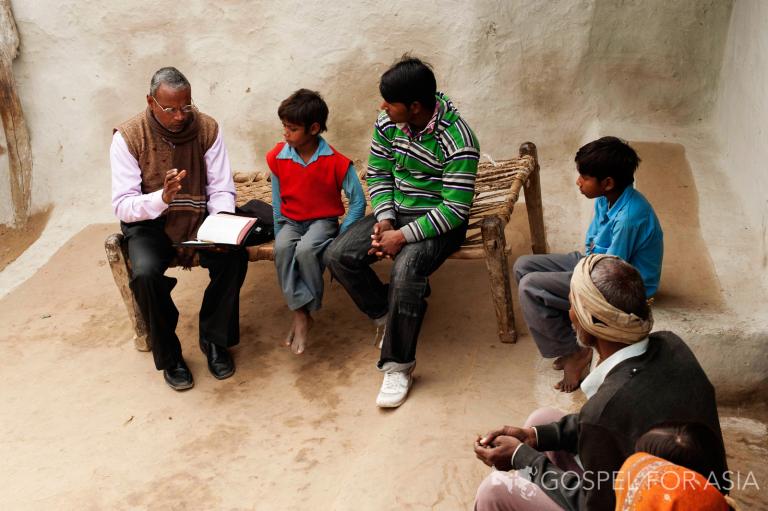
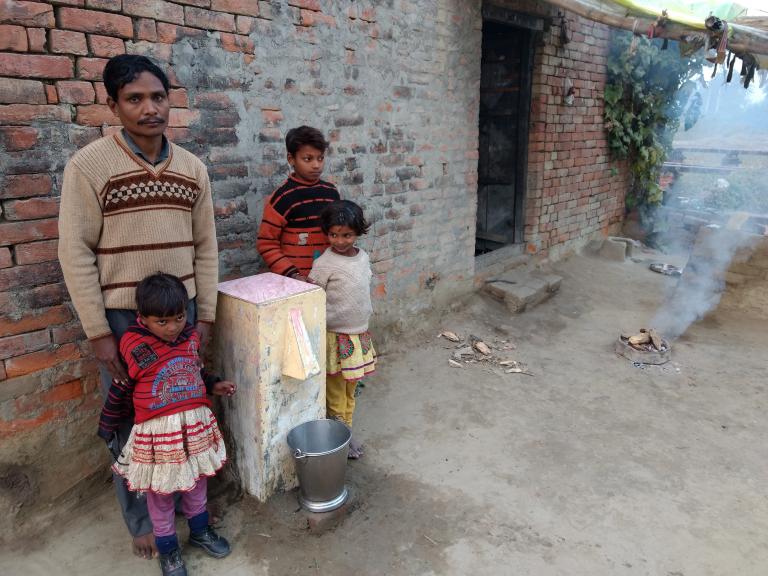
When Gospel for Asia-supported worker Akshay saw Lavenia’s living condition (pictured), he was heartbroken and prayed for an opportunity to help this family in great need.

GFA-supported pastor Akshay walked by Lavenia’s hut every day. He watched Lavenia’s children playing in ragged clothes by the roadside, and his heart broke over their squalid living conditions. As he passed by, he often prayed in his heart that the Lord would provide a chance for him to show the love of Christ to this desperate family. Then the Lord opened up an opportunity for him to minister to Lavenia and show her how much God loved her.

Pastor Akshay came to know how difficult it was for them to sleep at night because of the annoying mosquitoes. Soon Pastor Akshay arranged a mosquito net distribution at his church. As Pastor Akshay handed Lavenia and her family mosquito nets of their own, they were deeply touched. It meant they could rest well and be stronger for work each day. It spared them from disease and potential medical costs and gave them a sense of dignity.

Mosquito Nets Are an Effective Means to Preventing Malaria in Asia - KP Yohannan - Gospel for Asia
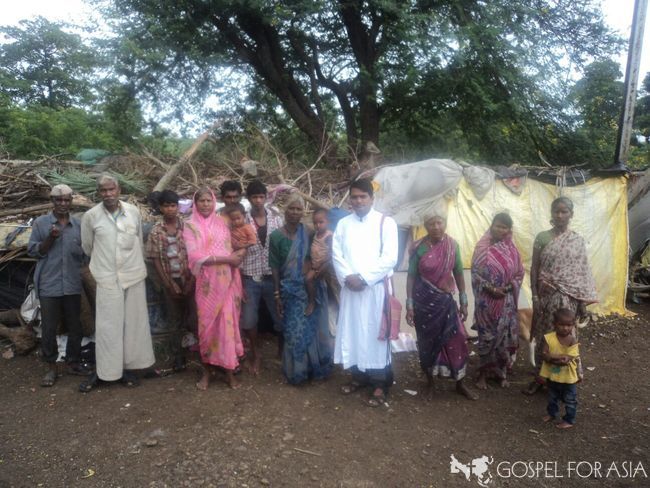
Lavenia with her family and the pastor in front of her home.

We at Gospel for Asia are so thankful Lavenia—and hundreds of thousands of other people—could receive this critical gift for her family’s wellbeing. Now, malaria is one disease she no longer has to fear.

=====

For more details on Fighting Malaria – a Chilling Disease, visit this Special Report.

Click here, to read more blogs on Patheos from Gospel for Asia.

Go here to know more about Gospel for Asia: Wiki | Flickr | GFA | GFA.org

2023-02-01T04:37:49+00:00

Gospel for Asia (GFA), Wills Point, Texas, Special Report 3/4

So let us take a deep breath. Let us think a moment about that peaceful and stunning NASA photo: AS17-148-22727.
The blue marble photo of Earth

Let us remind ourselves that of all the spinning planets in our solar system, it alone has been created uniquely to sustain water, and that not one other drop has been discovered anywhere else in interstellar space. Let us remember that 75 percent of our planet is covered with water, some 96.5 percent of that in its oceans. Then let us say a prayer for its water resource preservation and purification, and let us remember that some religious systems view water to be holy. Only then, let us absorb the fact that an investigative report by Reuters released December 19, 2016, found nearly 3,000 areas in the United States with lead poisoning rates at least double those in Flint.

This headline tagged a report released by the Associated General Contractors (AGC): “Both Public and Private Studies Find Astounding Gaps Between Current Spending and Projected Needs.” The analysis determined: “Modernizing and replacing aging water infrastructure may be the single largest public works endeavor in our nation’s history. The U.S. Environmental Protection Agency’s Clean Water and Drinking Water Infrastructure Gap analysis found a $540 billion gap between current spending and projected needs for water and wastewater infrastructure (combined) over 20 years. Other public studies conducted by the Government Accountability Office (GAO) and the Congressional Budget Office (CBO), and a private study produced by AGC partner, the Water Infrastructure Network, have similarly estimated the nation’s water infrastructure needs to range between $400 and $600 billion over a 20-year period.

The 2014–2017 Flint, Michigan lead-poisoned water crisis highlights possible impacts on communities if warnings are ignored and if appropriate budget planning is not prioritized. (“What is happening to us in Cape Town may not be an outlier. It could happen to you too.”) We need to understand that water degradation and evaporation and infrastructure decline is happening to us now.

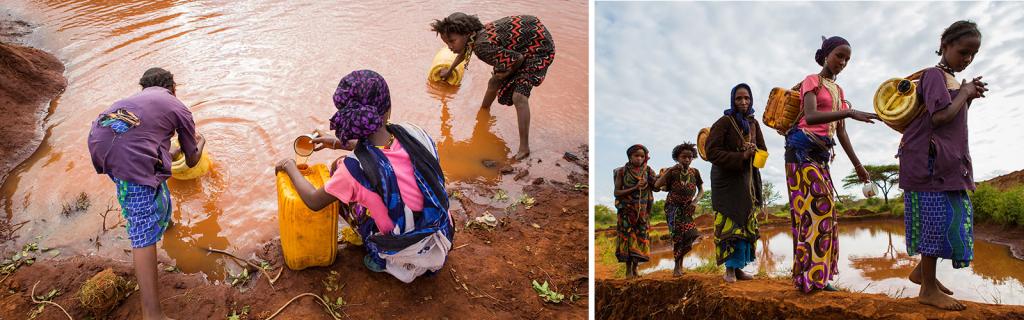
Women in Gayo, Ethiopia collect water from a rain water pool - KP Yohannan - Gospel for Asia
In Gayo Village, Ethiopia, a group of women and young girls collect water from a rain water pool. They use tablets to purify the water before they drink it. Around the world, mostly women and children bear the burden of collecting water for their families.

So what is the status of clean water worldwide? According to the World Health Organization, some of the global facts regarding safe water usage are these:

71%

of the global population in 2015 (5.2 billion people) used a safely managed drinking-water service—that is, one located on premises, available when needed, and free from contamination.

89%

of the global population in 2015 (6.5 billion people) used at least a basic service. A basic service is an improved drinking-water source within a round trip of 30 minutes to collect water.

840 million

people lack even a basic drinking-water service, including 159 million people who are dependent on surface water (water from rivers and ponds).

2 billion

people globally use a drinking water source contaminated with feces.

502,000

deaths every year are caused by diseases transmitted by contaminated water such as diarrhea, cholera, dysentery, typhoid and polio.

38%

of health care facilities lack an improved water source in low- and middle-income countries. 19 percent do not have improved sanitation, and 35 percent lack water and soap for hand-washing.

In addition to these above statistics, WHO also notes that “Yet diarrhea is largely preventable, and the deaths of 361,000 children aged under five years could be avoided each year if these risk factors were addressed. Where water is not readily available, people may decide handwashing is not a priority, thereby adding to the likelihood of diarrhea and other diseases.”

Is Anyone Doing Anything?

Certainly, organizations somehow, somewhere, are doing something about this? Right? This is the natural response of those of us who unthinkingly use clean water to flush our toilets and allow grey water to be piped into the sewer systems of our communities.

Actually, that thought many of us have when we read about water-distressed systems worldwide is right. Well-meaning help of all kinds, from missionary groups to hundreds if not thousands of non-government organizations to the World Bank and the United Nations to the World Health Organization to inter-agency coordinated efforts to private foundations with substantial granting means to individual governments to the largess of western countries—all of them are players in attempting to solve the water problems of the world.

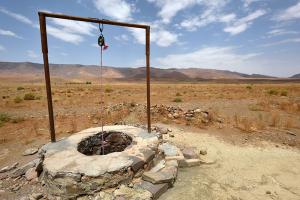
a well in disrepair in africa - KP Yohannan - Gospel for Asia
Many wells drilled by well-meaning organizations now lie broken or in disrepair.

However, even the best laid plans of sophisticated systems often go awry. Evidence of this is the estimated 50,000 wells in Africa dug by well-meaning organizations that now lie broken, abandoned and non-functional; a dismal testament to good intentions gone bad. Really bad. Jamie Skinner of the London-based International Institute for Environment and Development reported at the 2009 World Water Forum, a triennial summit, on the state of wells in Africa. He is a water development specialist with particular emphasis on West Africa. His report on “water points” included some of these disturbing facts:

Some naysayers have deemed this come-do-your-thing-and-go approach as “non-government organizational malfeasance.” Skinner gives the example of a badly constructed and poorly maintained shallow well, dug by a charity in Katine sub county in north-east Uganda, that was full of soil and animal feces and was making the local population sick. The African Medical and Research Foundation’s strategy to solve this well deficiency was to set up a local committee responsible to operate and maintain a new borehole with trained hand-pump repairmen available in case of breakdown. “There is no point in an external agency coming in, putting in a drill-hole and then passing it over to the local community if they can’t afford to maintain it over the next 10 or 20 years,” concludes Skinner.

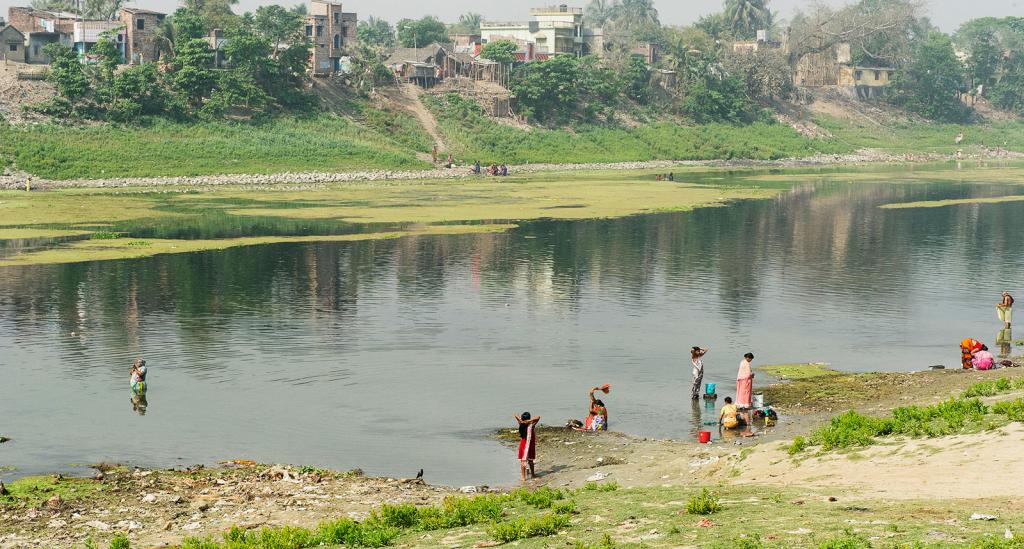
A river in India is often used for bathing, washing and drinking - KP Yohannan - Gospel for Asia
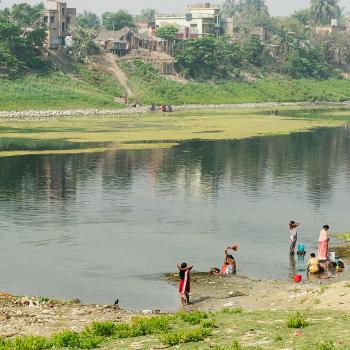
A river in India is often used for bathing, washing and drinking.

The Need for Clean Water in Asia

In her book Dirty, Sacred Rivers: Confronting South Asia’s Water Crisis, Cheryl Colopy takes us on nearly every footstep of her arduous investigation starting in the headwaters high in the Himalayas.

“This book chronicles my travels in Nepal, India, and Bangladesh, countries that are knit together by the Ganga and her various tributaries. I explain what I learned about glaciers melting in the mountains, sewage gluts and water shortages in the vast cities, and plans for engineering rivers that will have unknown consequences and perhaps limited benefits,” she writes in her introduction.

Interviewing hundreds of Asian water conservation experts who are concerned about their countries’ water shortages and misuse, we have a chance to listen over her shoulder to their love for their land and their attempts to solve water distress issues. Clean water, indeed, is the goal, but working through past mistakes, the consequences of climate change and its unknown future, population explosions, and unintended engineering mishaps gives the reader an extraordinary feeling of being party to all the discussions. As the flap copy explains, “Many are reviving ingenious methods of water management that thrived for centuries in South Asia and may point the way to water sustainability and healthy rivers.”

Simple is often best. Ancient civilizations solved their water needs in ways that speak to us today.

Here too, as with Jamie Skinner’s reporting on Africa’s abandoned wells, a theme emerges, one the author confesses she discovered during her essentially seven-year journey. “There is no way that I—a former medieval scholar turned environment reporter rather later in life—can claim to have answers to South Asia’s water crisis, if there are right answers. So I give you many highly intelligent, trained, sane, and committed water experts from that region. These authorities more often argue for the lighter hand, the softer path; not no engineering at all, but less invasive engineering, and techniques that are localized, decentralized, and draw on traditional methods along with the almost-lost wisdom of local people.”

a child carries water in kunene namibia - KP Yohannan - Gospel for Asia
A child of the Himba tribe carries a bucket of water in Kamanjab, Kunene, Namibia.

The themes of the book are: Simple is often best. Ancient civilizations solved their water needs in ways that speak to us today. The people who are most affected by water stresses are most often the ones who can solve the problem.

Indeed, the problems are real.

Sewage in the rivers: “Estimates of the amount of untreated raw sewage that enters the Ganga every day are hard to grasp: apparently something in the neighborhood of a billion liters. Much of it comes from homes that do have toilets, where relatively clean water is being flushed away and turned into sewage, which then turns rivers into sewers, a further loss of clean water.”

Climate change: “This lack of snowfall is the chief problem Dobhal (a glacier specialist) has seen in the high mountains in recent years. As a consequence, the glaciers are depleting, not developing. With good winter snowfall, they stay in balance, and the melting rate is not cause for alarm. Melting glacier ice accounts for 30 percent of the water in the rivers. The rest is from snow and from the monsoon. Now that there is less snow, the spring flow in the rivers comes directly from the older ice. When glaciers lose their volume, the rate of melting increases. It’s the difference between a melting block of ice and a melting ice cube. Big glaciers create their own climate. They make cold weather. Big glaciers can be more powerful than the sunlight that reaches them. But as glaciers shrink, the power of the sun to melt them grows.” Unpredictable behavior is ahead from flooding due to increased glacier melt to drought to drying rivers. One expert sums up the uncertainty, saying, “Climate change will manifest itself through water. It will affect every sector of life through precipitation, snow, rain, whatever. Livestock, forestry, soil, sanitation, disease, everything. But we have no idea how it’s going to happen.”

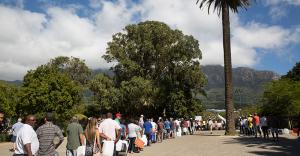
lines of people for water in cape town, south africa - KP Yohannan - Gospel for Asia
An uncanny sight in a first-world country: Lines of people waiting to collect natural spring water during the drought in Cape Town, South Africa.

Agricultural water scarcity: The global water scarcity problem is not limited to providing potable drinking water for humans, although without it we would not exist. Water is necessary for agriculture, for both crops and animal husbandry.

In water-starved South Africa, the first restrictions on water usage were levied upon the agricultural sector. Now, farmers are renegotiating their leases because they cannot produce enough income. Current economic forecasts anticipate that within the next five years as many as 98 percent of farms will have a negative Net Farm Income.

China’s Ministry of Water Resources recently declared a need “to fight for every drop of water or die.” Twelve northern Chinese provinces suffer from water scarcity. In eight, the scarcity is considered acute. This is particularly significant because those provinces provide 38 percent of the country’s agriculture. The rapid economic expansion in China has placed so much demand on water supplies that 28,000 rivers have disappeared over the past 25 years. The flow of the Yellow River has dwindled to a tenth of what it was prior to 1950. Pollution is so rampant in China that almost 10 percent of the groundwater is not even fit for agricultural use.

These countries and others are in a catch-22. Water for agriculture is limited, but it is needed to grow the crops and animals required to feed the demands of growing populations.

The rapid economic expansion in China has placed so much demand on water supplies that 28,000 rivers have disappeared over the past 25 years.

Recognizing the importance of water conservation, the Kerala Water Authority (KWA) in India is making a concerted effort to bring dramatic reform in their own jurisdiction. Infrastructure can cause as much as 45 percent water loss, far above the national average of 15 percent systemic water loss. As the KWA brings improvements to its clean water delivery system, the potential for positive impact is significant.

On the national level, Indian Prime Minister Shri Narendra Modi began promoting the implementation of a decades-old clean water initiative in 2014. One part of that project alone, linking the Ken and Betwa rivers, would make drinking water available for 1.35 million people plus provide enough to irrigate 600,000 hectares of farmable land. The project is pending approval from the environmental ministry, but nonetheless, we’re hopeful of the efforts making strides to resolve India’s water crisis.

In 2016, 330 million Indians were affected by drought, and the government is taking action to respond. “We are working on a big scheme to bring water to farmlands. We need to have a permanent solution to the drought,” the Prime Minister said.

There is a plan underway for 25,000 villages to get clean water wells, and 5,000 wells have been started, as of April 2017.

Dr. KP Yohannan, founder of Gospel for Asia and Metropolitan of Believers Eastern Church, met with high officials in the government in March 2016 to discuss ways in which India’s Christian community could collaborate with the government for the good of the nation. Believers Eastern Church has since been able to work together with the Indian government to work on cleaning up some of the nation’s rivers.

One of those voices Colopy interviewed—a highly intelligent, trained and committed expert—Sudhil Chaudhary, a professor of biology at Bhagalpur University has a plan. His is for forestry restoration, which also involves water reclamation. Sudhil would like local communities to be part of each and every decision about the plan. This is a theme that seems to be emerging all over the world. I find it stated more and more as I research world development needs and particularly, the Millennium Development Goals and its companion the Sustainable Development Goals. Things work when there is community buy-in, and often fail when there is none.

This material appeared in Gospel for Asia’s special report “The Global Clean Water Crisis: Finding Solutions to Humanity’s Need for Pure, Safe Water.”

=====

Click here, to read more blogs on Patheos from Gospel for Asia.

Go here to know more about Gospel for Asia: GFA | GFA.org | Facebook | Youtube

For more information about this, click here.

2023-09-13T10:46:38+00:00

Is Safe Water a Human Right or a Human Necessity - KP Yohannan - Gospel for AsiaDeveloping a broader awareness of various global safe water crises during 2018 has been prompted, in part, by the UN’s annual World Water Day on March 22. We at Gospel for Asia (GFA) have contributed several articles intended to bring attention to the drought in South Africa, the meeting of the World Water Forum in Brasilia, and a post about 12 major global cities facing water crises of one kind or another. Most notably, we published a special report documenting “The Global Clean Water Crisis – Finding Solutions to Humanity’s Need for Pure, Safe Water.”

Recently, a major religious organization declared that water is a human right. While it is not my desire to debate that issue, I do believe access to pure, clean drinking water is existential. It is a matter of survival for every man, woman and child on the planet.

Throughout the entire order of creation, God, in His infinite wisdom as our Creator, provided everything necessary for the survival and benefit of the pinnacle of His creation: man made in God’s own image. He didn’t create man first and follow that by adding the things we would need for healthy existence. Only when He had a place fully prepared, did He create man.

Today, billions of people in the 10/40 window across Africa, the Middle East and South Asia have limited access to clean, safe water. A significant part of GFA’s humanitarian efforts is providing clean water and access to pure water sources to families and communities that are in desperate, existential situations.

  • 2 billion people around the world use a drinking water source contaminated with feces.
  • 840 million people lack what is considered a basic drinking water service.
  • 502,000 deaths occur every year as a result of diseases contracted by the use of contaminated water.

The water crisis is not one of human rights. It is one of human existence.

That is why Gospel for Asia (GFA) presses on, freely giving BioSand water filters to families and installing Jesus Wells for entire communities. Each filter and each well installed not only provides a clean, safe water source, it provides life and health and hope to individuals, families and communities.

We are diligent in our calling, not because water is a human right, but because it is a human necessity.


Click here to learn how you can help Gospel for Asia supply Jesus Wells.

Click here to learn how you can help Gospel for Asia supply BioSand water filters.

=====

Click here, to read more blogs on Patheos from Gospel for Asia.

Go here to know more about Gospel for Asia: GFA.org | Facebook | Youtube | Twitter

For more information about this, click here.

2023-02-01T04:43:55+00:00

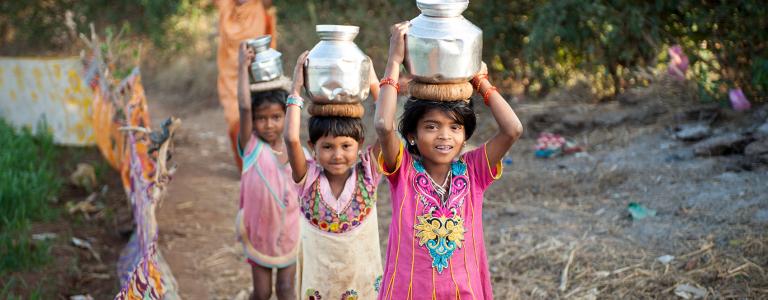
Asian girls carrying water for miles in a global clean water crisis - KP Yohannan - Gospel for Asia
Asian girls carry clean drinking water for miles because of the global clean water crisis.
The blue marble photo of Earth
The “Blue Marble” photo of Earth, taken on the Apollo 17 mission in 1972. (Public domain)

Gospel for Asia (GFA), Wills Point, Texas, Special Report 1/4 on the global clean water crisis.

The “Blue Marble” photo of Earth shot from Apollo 17, the last of NASA’s Apollo missions as the rocket ship was hurtling toward the moon, wasn’t the first satellite image of our planet, but it was the first full image—stunning in color—taken from some 18,000 miles in space, with the sun fully illuminating Earth. The south polar ice cap, despite heavy cloud cover, was clearly captured, and the photo showed almost the entire coastline of Africa, extending from Antarctica to the Mediterranean Sea. Most of us who saw it at that time were stunned with how much water covered our planet.

This one single dramatic image eventually gave the name “Blue Planet” to our Earth, due obviously to the abundant water sources we could see on its surface. The photo was taken on December 17, 1972 and for all of us at that time, caught up in the exploits of the space discovery, it forever altered the comprehension of our planet. Now, when I think of Earth, and when hundreds of millions of others think of Earth, this is the iconic image that comes to mind.

This is an article about the global clean water crisis, about clean water, about water from a tap or from a glass, hopefully free of pathogens that bring disease. This is an article about clay pots and large plantain leaves and cupped dried gourds that hold rainfall hopefully untainted by acid effluvium. This is an article about pole wells drilled beneath polluted soil, and the unintended arsenic poisoning of villagers. This is an article about drying water reservoirs, about waste and sewage and chemicals polluting streams and rivers and major waterways. It is about encroaching urban development laying acres of implacable concrete and miles of roadways over land where rains can now no longer replenish water tables. It is an article about taking responsibility for that Blue Planet spinning alone, and as far as science now knows, unparalleled in our universe. No liquid water has been confirmed as existing on any other planet in our solar system. As yet, not a single drop of water has been detected anywhere in interstellar space. Scientists have determined that only a planet of the right mass, the right chemical composition and the right location can support liquid water; in other words, a planet like ours, the Blue Planet, this Earth.

663 million people have no access to safe drinking water - KP Yohannan - Gospel for Asia
663 million people around the world do not have access to safe drinking water as of 2015. This is the first time the number has fallen below 700 million.

That information alone should evoke awe when we look again at the ubiquitous reproductions of the Apollo 17 photo (identified by NASA as AS17-148-22727.) This image is perhaps best described in the spare language of Genesis 1. “In the beginning God created the heavens and the earth. The earth was without form and void, and darkness was upon the face of the deep; and the Spirit of God was moving over the waters … And God said, ‘Let there be a firmament in the midst of the waters, and let it separate the waters from the waters.’ And God made the firmament and separated the waters which were under the firmament from the waters which were above the firmament. And it was so.” The Creation account then proceeds with the regular, rhythmical and dynamic pronouncement of the Creator, “And it is good. And it is very good.”

Just imagine: God looking at the actuality of what that splendid photo AS17-148-22727 replicates. Who can refuse to admit to experiencing a similar and deep soul sigh, it is good. It is very good . . .? According to United States Geological Survey (USGS), “The Earth is a watery place. But just how much water exists on, in, and above our planet? About 71 percent of the Earth’s surface is water-covered, and the oceans hold about 96.5 percent of all Earth’s water. Water also exists in the air as water vapor, in rivers and lakes, in icecaps and glaciers, in the ground as soil moisture and in aquifers, and even in you and your dog.”

I’m not sure about water content in the animal species, but data informs me that adult males are about 60 percent water and adult females are about 55 percent water.

Samuel Taylor Coleridge’s poem “The Rime of the Ancient Mariner” captures the analysis of contemporary oceanographers, “Water, water everywhere.” And unfortunately, due to the stresses of climate change, rising seas, urban sprawl, lack of urban planning, spoiled springs and creeks and raging rivers overwhelming their banks and flooding, the rest of that poetic lament is becoming all too real, “And not a drop to drink.”

A Quarter of Earth’s Major Cities Face Water Stress

At the time of this writing, the world is watching the water distress in Cape Town, South Africa, where the taps are scheduled to run dry due to extended drought that has emptied the water reservoirs. In fact, experts tell us that this coastal paradise city is not alone in its water depletion extremity. Literally millions of people around the world live without sufficient access to water; over 1 billion people lack water supplies, and another 2.7 billion find it scarce for at least one month of the year. A 2014 survey of the world’s 500 largest cities estimates that one in four are in “water stress.” In fact, right now, there are 11 major cities on the Blue Planet that are most likely to run out of drinking water—exactly like Cape Town. Those cities are:

  1. São Paulo, Brazil’s financial capital.
  2. Bangalore, India, where rapid growth as a technological hub outstrips advancements to the city’s plumbing, resulting in half its drinking water lost to waste.
  3. Beijing, China; the country is home to some 20 percent of the world’s population but whose continent has only 7 percent of the world’s fresh water.
  4. Cairo, Egypt, where the major water source, the River Nile, is the increasing destination of untreated agricultural pollutants and residential waste.
  5. Jakarta, Indonesia, where rising sea levels with saline water have resulted in 40 percent of Jakarta to be below sea level.
  6. Moscow, Russia, where 70 percent of the water supply is dependent upon surface water, but pollution, a leftover from the USSR industrial legacy, has contributed to the fact that 35 percent to 60 percent of total drinking water reserves do not meet sanitary standards.
  7. Istanbul, Turkey, which is now technically in water stress. Experts have warned that, if not checked, the situation could worsen to water scarcity by 2030. The city’s reservoir levels declined to less than 30 percent of capacity in 2014.
  8. Mexico City, Mexico, where 1 in 5 residents have tap water only a few hours a week, and another 20 percent have running water just part of the day.
  9. London, England, where the city draws 80 percent of its water from the Thames and the Lea rivers, has a waste rate of 25 percent, and consequently is predicted to have serious shortages by 2040.
  10. Tokyo, Japan, which is now initiating plans to collect rainwater due to its high precipitation—some 750 private and public buildings in the city have water collection and utilization systems.
  11. Miami, Florida, is suffering from an earlier project to drain its swamps, causing the unforeseen problem of the Atlantic Ocean rising as water warms and now contaminating the Biscayne Aquifer—the city’s main source of fresh water—and causing closure of nearby outlying wells due to saline infusion.

Studying this list makes one point crystal clear: Even if I (or you) may not be personally affected by water emergencies in the areas where we individually live, modern urbanized cities across the entire Blue Planet are now under water duress. They serve as the early warning systems that demand global attention! Attention! Attention! In addition, problems that were ignored 20 years ago are in need of urgent correction now, as are other situations that now need corrections in order to prevent water disasters in the near future.

The World Health Organization has made clean water a priority. According to the WHO Drinking Water Fact Sheet, “In 2010, The UN General Assembly explicitly recognized the human right to water and sanitation. Everyone has the right to sufficient, continuous, safe, acceptable, physically accessible, and affordable water for personal and domestic use.”

The American Society of Civil Engineers (ASCE) releases a yearly grade for infrastructure for the United States as well as a grade for each state. They gave the United States a grade of D+ for the year 2017. According to their report, this assessment for roads, bridges, airports, water systems, etc. is determined by measures like capacity, funding, operation and maintenance, and public safety.

These are the analytics that need to be explained in any discussions of America’s infrastructure hazards, and they are the modes for diagnosing our failing and crumbling public systems, upon which we are all dependent. Consequently, because of its looming water emergency, the thriving city of Cape Town has become the poster city for what, if the necessary correctives are not applied, will be water-scarcity crises duplicated in other large cities worldwide. Even now, that crisis is a reality for millions living in a world where the alarming estimate is that by 2025 half the world’s populations will be living in water-stressed areas.

“We are now limited to using 13 gallons of water per person per day. That’s enough for a 90-second shower, a half-gallon of drinking water, a sink full to hand-wash dishes or laundry, one cooked meal, two hand washings, two teeth brushings and one toilet flush.”

TIME Magazine’s reportage as to the causes of Cape Town’s severe water depletion point to several realities, which are also relevant to other urban centers. Climatologists at the University of Cape Town recognize that man-made climate change is a contributing factor in continuing drought patterns and warn that a drier future with increasingly unpredictable rain supplies is likely. It is generally agreed that the current water crisis is a result of what writers Mikhael Subotzky and Johnny Miller report is “a combination of poor planning, three years of drought and spectacularly bad crisis management. The city’s outdated infrastructure has long struggled to keep up with the burgeoning population. As dam levels began to decline amid the first two years of drought, the default response by city leadership was a series of vague exhortations to be ‘water aware.’”

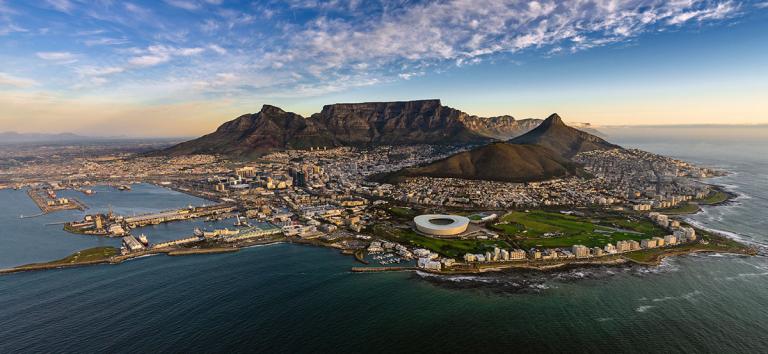
Cape Town, South Africa faces a global clean water crisis - KP Yohannan - Gospel for Asia
Cape Town, South Africa (population 433,688), where the taps are scheduled to run dry due to extended drought that has emptied the water reservoirs.

In February 2018, Cape Town’s mayor’s office announced more stringent water restrictions: “We are now limited to using 13 gallons of water per person per day. That’s enough for a 90-second shower, a half-gallon of drinking water, a sink full to hand-wash dishes or laundry, one cooked meal, two hand washings, two teeth brushing and one toilet flush.” The warning in the TIME article is this: “What is happening to us in Cape Town might not be an outlier. It could happen to you too.”

This material originally appeared in Gospel for Asia’s special report “The Global Clean Water Crisis: Finding Solutions to Humanity’s Need for Pure, Safe Water.”

=====

Click here, to read more blogs on Patheos from Gospel for Asia.

Go here to know more about Gospel for Asia: GFA.net | Wiki | Flickr | GFA

For more information about this, click here.

2022-10-20T14:08:53+00:00

Gospel for Asia - global water crisis - water stress

Gospel for Asia (GFA) News, Wills Point, Texas

Several billion people around the world live without sufficient access to clean water. Over one billion people lack water supplies. Another 2.7 billion find water scarce for at least one month of the year.

Read Gospel for Asia (GFA)’s Special Report on The Global Clean Water Crisis.

A 2014 survey of the world’s 500 largest cities estimates that one in four is in “water stress.” Twelve major cities are in danger of running out of clean drinking water, if not soon, within the somewhat near future.

  1. Cape Town. The water crisis in the Cape Town has commanded headlines around the globe when the African National Congress declared a national state of emergency as the city had expected to run out of drinking water by April. The deadline was moved to July but, during the third week of March, the government announced that the immediate crisis had been averted.
  2. Sao Paulo is Brazil’s financial center. The city of 20 million faced its own Day Zero in 2015. The city turned off its water supply for 12 hours a day, forcing many businesses and industries to shut down.
  3. Bangalore. The Times of India recently reported that Bangalore “could be the first victim (in Central India) to face an acute water crisis.” The water table in that area has dropped by as much as 25% in the past 20 years. Other cities are also at risk.
  4. Beijing. China is home to 20 percent of the world’s population but has only seven percent of the world’s fresh water available. China saw this coming as its economic expansion began to burgeon in 2005. The Minister of Water Resources said that China must “fight for every drop of water or die.” Over 8,000 rivers have “disappeared” in China over the past 25 years.
  5. Cairo. Egypt suffers a water deficit of 30 billion cubic meters. The national government has begun developing a water security strategy that includes desalination, managing wastewater, and rationing water usage. Challenges facing Cairo include the facts that 4.5 billion cubic meters of its water come from non-renewable sources and that its main source of water, the Nile, is a transboundary river.
  6. Jakarta. The capital city of Indonesia faces an unusual compound crisis. The city is literally sinking. Some officials are concerned that it could eventually end up entirely inundated. Forty percent of the city already sits below sea level. Some residents facing water shortages have taken to illegally draining groundwater, which exacerbates the sinking problem.
  7. Moscow. Russia possesses 25 percent of the world’s freshwater reserves, but 70 percent of its water supply is dependent upon surface water. Somewhere between 35 percent to 60 percent of total drinking water reserves do not meet sanitary standards.
  8. Istanbul, Turkey, is now technically under water stress. Experts have warned that, if not checked, the situation could worsen to water scarcity by 2030. The city’s reservoir levels had declined to less than 30 percent of capacity in 2014. Residents of Istanbul have already become accustomed to water shortages during the dry season.
  9. Mexico City. In Mexico City, 20 percent of residents have tap water available only a few hours a week, and another 20 percent have running water just part of the day. As much as 40% of its clean water is brought in from distant sources. And, like Jakarta, the city is sinking, having been constructed over a lake that had been drained by Spanish Settlers. The sinking is placing stresses on the water delivery infrastructure, causing breakage and collapses.
  10. London. Millions of residents have been urged to conserve water as shortages have arisen in Berkshire, Hampshire, Kent, Sussex, and Surrey due to excessively high demand and crumbling infrastructure. The city draws 80 percent of its water from the Thames and the Lea rivers.
  11. Tokyo is initiating plans to collect rainwater during its four months of high precipitation. Some 750 private and public buildings in the city have water collection and utilization systems. The city’s 30 million residents depend on surface water for 70 percent of their supply.
  12. Miami’s main source of fresh water, the Biscayne Aquifer is facing a water quality problem due to the rising sea level and salt water infiltration. The clean water problem is growing as the city grows by an average of 1,000 people per day, creating not only greater demand for fresh water, but adding the pressure of how to dispose of the additional wastewater.

Even if I (or you) may not be personally affected by water emergencies in the areas where we individually live, modern, urbanized cities around the world are now underwater duress. They serve as the early warning systems that demand correction now and in the future. A March 2018 report World Water Development Report from the UN said that 36 percent of the cities in the world will face a water crisis by 2050.

The World Health Organization has made clean water a priority. According to WHO, “In 2010, The UN General Assembly explicitly recognized the human right to water and sanitation. Everyone has the right to sufficient, continuous, safe, acceptable, physically accessible, and affordable water for personal and domestic use.”

Ensuring a safe water supply for families and communities in South Asia has been a significant part of Gospel for Asia (GFA)’s work. We see first-hand the sickness and disease from which people suffer by not having access to clean water.

No one can survive without water. Many people die from water-borne and vector-borne diseases by drinking or being exposed to contaminated water supplies. These diseases and the deaths they cause can be eliminated as we teach the unreached and as we help to provide them with sources of clean water.

We continue, as we have for many years, to provide BioSand water filters for individual families and small communities. Our gifts of Jesus Wells provide water for communities of up to 300 people, providing them an adequate supply of clean water for up to 20 years.

Read more about Gospel for Asia (GFA) Jesus Wells and BioSand water filters at these links.


Sources:

=====

Click here, to read more blogs on Patheos from Gospel for Asia.

Go here to know more about Gospel for Asia: GFA.net | Wiki | Flickr | GFA.org

For more information about this, click here.

2019-12-11T04:52:15+00:00

At Gospel for Asia, we’ve been praying for the water crisis that’s been happening in South Africa. Sometimes I think about it a little more as I take a shower, drink a glass of clean water, or see the rain pouring down. Millions upon millions around the world are wondering where their next drink of water will come from.

Can you imagine waking up this morning at the crack of dawn to wait in line for the water truck to arrive? Maybe you have to dunk your bucket into a dirty old well, because it is your only source of water supply. Your children are getting sick often and you know the brown substance you’re drinking is not ideal. But you have no other choice.

Balab and the other Christians in his village had a problem of their own. They were banned from the public water source—a source that was already polluted and full of bad bacteria. If they needed to get water, they had to wake up early before the sun rose to avoid being beaten or abused. It was an ongoing struggle.

No More Morning Secrets

Before Balab, his wife and five children met Jesus, they were often sick. Malaria, typhoid and jaundice frequently plagued their family, and there seemed to be no end to it. Balab had to start selling his land, cattle and even trees to pay for doctor fees. As sicknesses continued, the bills did too, and eventually Balab had to take out loans from his friends and family members.

Poverty took hold of their lives in more ways than one. Balab and his family were poor in spirit and discouraged. Peace had left their home, and there seemed no hope of help for their family.

But one day, Gospel for Asia (GFA)-supported pastor Salm met Balab, and the two men began to talk. Over the course of their conversation, Balab shared with Pastor Salm about his family and their deep discouragement. Balab learned about the hope Salm had in God’s Word and listened to the pastor as he prayed for him and his family.

pastor Salm and his family - KP Yohannan - Gospel for Asia
This is Gospel for Asia-supported pastor Salm and his family. God used him to speak hope into Balab’s life and to bring a Jesus Well for 150 villagers to use.

Pastor Salm visited Balab and his family once a week and saw with his own eyes the struggles they faced. The pastor earnestly prayed for them. Slowly he witnessed how the Lord answered his consistent prayers.

Balab and his family began to heal from their sicknesses, and joy entered their lives. Instead of sorrow, peace came into their home, and they began to go to church. They had experienced Jesus, and now nothing would take that hope away from them—not even opposition.

Rejection, Violence from the Community

When the villagers saw that Balab and his family had begun to follow Christ, they beat them and prohibited them from getting water from the village well or pond. Balab and his family had to wake up early in order to gather water without being harmed. If they didn’t secretly go to the forbidden well, they had to travel nearly a mile and a half to get water from the river.

Jesus Well Provides Safe Drinking Water, and Changes Attitudes Too 

Pastor Salm saw this struggle, so he requested a Jesus Well to be drilled in this village. By God’s grace, a Jesus Well was installed, and the village had a new source of clean, safe drinking water for everyone to use. The villager’s hearts began to change toward the believers as they, too, pumped water from the new well.

We, the Gospel for Asia (GFA) community, find great joy in knowing pure water is being given to many villages around Asia! The need is vast, but we know change comes one step at a time. We praise the Lord for the work that has begun and will continue by His grace! And we continue to pray for those in South Africa and Asia who are still struggling without enough water. May the Lord hear our prayers and provide. In Jesus’ name. Amen.

=====

Click here, to read more blogs on Patheos from Gospel for Asia.

Go here to know more about Gospel for Asia: Youtube | Twitter | GFA Reports | My GFA

For more information about this, click here.

2018-03-31T00:44:37+00:00

Momentum is not easy to capture. I am using that word to describe a force that starts to pick up steam and for a while appears to be almost unstoppable.

In the religious world I would describe times of authentic revival as extended periods of incredible spiritual momentum.

I am aware that some people have negative feelings about the term revival. Consequently, I am attempting to use a different word to describe those occasions when the Kingdom of God is marked by truly outstanding advances, such as what is recorded in the book of Acts.

Seasoned Christian leadersmen and women who have been around for a whiletalk often among themselves, and also when they are alone, they speak with the Lord about how to recapture that dynamic the New Testament church once possessed. They also study past revival-periods to see what can be learned from our more successful predecessors. How did they capture the spiritual momentum they knew? And what are we missing that hinders us from another such season of dramatic advances?

Spiritual Momentum Attracts Fierce Spiritual Resistance - KP Yohannan - Gospel for Asia

Here is a simple way to list the qualities they are interceding on behalf of without having to do an extensive study of revival history. Spiritual awakenings are ALWAYS marked by an overwhelming sense of the presence of the Lord. This is true whether describing one’s personal relationship to Christ; the awakening of a local church; revival in a large geographic area, such as a city or county; or even a vast nationwide moving of the Holy Spirit. Once again, the number-one characteristic of all such times is this palpable and powerful sense of the presence of the Lord.


“During a spiritual awakening, there is, first, an overwhelming awareness of the

Presence of God among his people.” —Ted S. Rendell, Fire in the Church


To be more specific, think of experiencing God’s presence this way. What would happen in a given congregation if Jesus Himself made His physical presence known for several months? My belief is that immediately upon recognizing Him in the Sunday service, people would get very quiet. Soon, many would drop to their knees, which is the body language of worship. Probably others would start to sing songs of praise to Him. Well, more often than not, worship is one of the earliest signs of possible revival.


“Suddenly, someone would begin to pray and praise God. As long as an hour would pass before the speaker could speak.” —C.L. Culpepper, The Shantung Revival


Even if Jesus was to do nothing more than be bodily present, very soon the importance of Christian love would permeate the Body. He wouldn’t even have to say anything. People would just know intuitively that this was expected behavior.


“The most powerful emotion of the entire meeting was love. … It was not a ‘sticky’ type of love, it was the pure love of God as described in First Corinthians 13.” —Charles K. Tarr, A New Wind Blowing


You are aware that in theory, godliness and sin don’t go together. So, special times when the presence of the Lord is experienced in a church are regularly marked by the confession of wrongdoing.


“The Spirit of God continued to work in their hearts until they found relief before God in confession often of things hidden for years.” —Alison Griffiths, Fire in the Islands!: The Act of the Holy Spirit in the Solomons


We’re considering what would probably happen Sunday after Sunday if Jesus were to make His presence known in a given church. Now to worship, love and holiness let’s add involvement in God’s service. People would be more than happy to help in His cause in any way possible.


“Laymen all over the revival area woke up to the biblical truth that they were Gods ambassadors. … Whole congregations were moved from dead center to catch  a glimpse of their contribution to the Body of Christ.” —Erwin W. Lutzer, Flames of Freedom


Even if Jesus isn’t the one doing the preaching, in times when His presence is strongly felt, it brings alive the opening of the Word. Just sensing that the Lord is there listening to every word not only changes the person preaching, but also those listening.


“There is a famine … of conscience-stirring preaching, a famine of heart-breaking preaching, a famine of soul-fearing preaching, a famine of that preaching like our fathers knew which kept men awake all night lest they fall into hell.” —Leonard Ravenhill, America Is Too Young to Die


When the Spirit of Jesus is powerfully felt in the church, people covet the opportunity of speaking to Him. That’s what prayer is all about … talking to the Lord. And has there ever been a revival not marked by all aspects of prayer—confession, intercession, praise, request, thanksgiving? Not really!


“Most churches are said to fail because they do not generate their own power. … Prayer is the generator. The great London preacher Charles Spurgeon once took some people down to his Metropolitan Tabernacle basement to show them his ‘Power Plant.’ There, on their knees, were about three hundred people praying for the service!” —Armin R. Gesswein, With One Accord in One Place


I am all too quickly listing what marks churches when they experience a special sense of the Lord’s presence. In review, these times of refreshing are characterized by worship, love, holiness, service, an anointing of the preached word, prayer, and I certainly need to add, evangelism. Numerous converts are always a sign of such times.


“A church which does not go out into the world to press the claims of the Kingdom would not know revival if it came.” —Ronald E. Coleman, Dry Bones Can Live Again: Revival in the Local Church


Let’s look at one more positive observation regarding revival, and then something negative that also needs to be mentioned. Revival results in a great sense of well-being. Much like the spiritual euphoria people often experience when they first become believers, so a similar sensation is felt all through a church.


“I have witnessed many revivals of God’s people—both individuals and  companies. The Holy Spirit’s working always brought a fullness of joy. Cups ran over. Worries disappeared. When Love and Joy and Peace came in at the door, Misery went up the chimney, search parties failing to locate it afterwards.” —J. Edwin Orr, Times of Refreshing: 10,000 Miles of Miracles Through Canada


All this should sound good!

Even though it has been a long time since America has known a movement of such magnitude, God’s Church in other parts of our world has truly been experiencing momentum factor. In my lifetime, this has certainly been true regarding the believers in China. Many nations in the continent of Africa have shown amazing Christian renewal. Significant regions in South America can also be cited where this new wine is being tasted. A vibrant indigenous church is emerging in the Indian subcontinent. For this, I certainly praise the Lord. Unfortunately, forward movements like these, which I am referencing, are always met by stiff opposition on the part of our spiritual enemy.

The truth be known, seasoned Christian leaders expect dramatic advances in the battle of the kingdoms to be met with fierce and foul counterattacks. Allow me to repeat that: Seasoned Christian leaders expect dramatic advances in the battle of the kingdoms to be met with fierce and foul counterattacks. Veteran spiritual heads aren’t surprised by Satan’s tactics. They agree with the Apostle Paul, who wrote, “We are not unaware of his schemes” (2 Cor. 2:11).

From the book of Acts alone, long-time Bible students know that the evil cunning of the devil included:

  • lies, bribes, threats, hiring of false witnesses …
  • spying, intimidations (like issuing dire warnings) …
  • muggings, staging riots, mass arrests and jailings …
  • whippings, beatings, stoning and, yes, murders!

That’s why spiritual leaders who have been around the block a time or two understand that remarkable church growth can be problematic. It has its pluses, but there are also minuses. Included on the “bad” side of the ledger is that the enemy will now pay more attention to what’s happening and realign his forces accordingly. So he lays sexual entrapments for the unwary. He attempts to separate long-time friends and coworkers in the cause. He preys on the jealousy of those who feel they aren’t being recognized as much as they believe they deserve.

Satan spreads gossip, hoping it will be picked up by any who are tempted to feed on such morsels. He tries to bully with threats of physical harm any who are working to plant a new Christ Kingdom flag over long-held enemy territory. In a way, it’s the Acts story enacted again and again in generation after generation.

Experienced church men and women wrestle with matters like these. For example, they know that social media can be used to quickly spread rumors and falsehoods; bloggers can use their platforms to spinincredible hearsay into credible sounding concerns; a trumped-up lawsuit can be easily filed against a trusted Christian to disparage their reputation; unscrupulous lawyers can entice newspapers to pick up on such an accusation and put it on Page One, even before a trial date has been scheduled; TV coverage can be influenced by simply giving exposure to innuendo, to rigged-up charges; a man or womans reputation can be tarnished before he or she has even had a chance to defend himself or herself in court. If eventually his or her total innocence is proven, that victory will get nowhere near the coverage the accusation did. More likely, it will never be reported on.

Spiritual Awakenings - KP Yohannan - Gospel for Asia

Those who have been in the arena for a while are aware that spiritual warfare all too often has victims, just like those in military encounters become wounded warriors. Even more amazing, as seen all through the book of Acts, is that those you have to be careful to keep a watchful eye on are more than often a part of organized religion. I wish someone had made this clear to me so many years ago when I was a young pastor up to my ears in inner-city ministry. It would have better prepared me for the enemy ambush I walked into.

Seasoned Christian leaders know that a man or woman who has experienced a glorious time of spiritual revival will eventually be attacked. The predator will first go after the easy targets—the young believers or those wounded in one way or another. The devil is biding his time, waiting until circumstances are to his liking.

Maybe I’m a slow learner, but later in life, during my most productive middle-years when I was the director of a nation-wide media and publishing ministry and at a time when we were starting to see some real Kingdom momentum involving thousands of churches working together in concert, it happened again. To be honest, the false accusations took me totally by surprise. I believed that my wife and I were Kingdom favorites! Why was God allowing this to happen to us? Couldn’t He just make it all go away?

You see, I naïvely thought spiritual warfare was a sermon series one preached, not a series of seemingly unending attacks that would destroy your ministry and from which you would barely escape unscathed. How naïve I was! What blinders I wore when I preached through the book of Acts. I almost missed the cost to those early advancing Kingdom commandos. I was blind to their shed blood … and I overlooked the bravery displayed by the early disciples.

The Scriptures read that when the opposition “saw the courage of Peter and John and realized that they were unschooled, ordinary men, they were astonished…” (See Acts 4:13.) These were not the kind of religious leaders the scribes and the Pharisees were used to dealing with. “…and they took note that these men had been with Jesus” (Acts 4:13). Jesus … who knew there was a cost involved in things in the world were going to change. And He was prepared to pay that cost with His life.

In my time of serving Christ and His kingdom, have I been bold and fearless? What’s the opposite of being bold? Fearful? Faint-hearted? I’m afraid that’s more of who I was when I encountered enemy opposition. But not one elder that I recall sounded a warning that moving aggressively forward on a spiritual front could stir up an enemy hornets’ nest.

Sure, I preached about revival and I earnestly prayed for it. I made it a lifetime study. But when our ministry started to experience it, the enemy counterattacked, and I screamed bloody murder. Looking back, I don’t think I was bold. I would describe my response as more one of great surprise and shock.

I write these words with deep feelings because the battle for Christ and His kingdom here in America and around the world is not going to be won by spiritual dandies or people playing at Christianity. It’s going to take a new breed of church leaders if our nation, America, is going to be saved. It’s going to require pastors and prophets and evangelists who are aware, up-front, that such service quite often involves real (real, not symbolic) victims.

I hold a conviction in regard to the ongoing spiritual battle in our land between the forces of good and evil, light and darkness, God and Satan. Be warned. Be informed. Make yourselves ready. Stand fast. My dear friends, this is a real battle, a battle that begins among the unseen, but then involves real men and women on planet earth.

=====

Click here, to read more blogs on Patheos from Gospel for Asia.

Go here to know more about Gospel for Asia: GFA.net | Wiki | Flickr

2019-12-06T12:46:33+00:00

BioSand water filter - KP Yohannan - Gospel for Asia
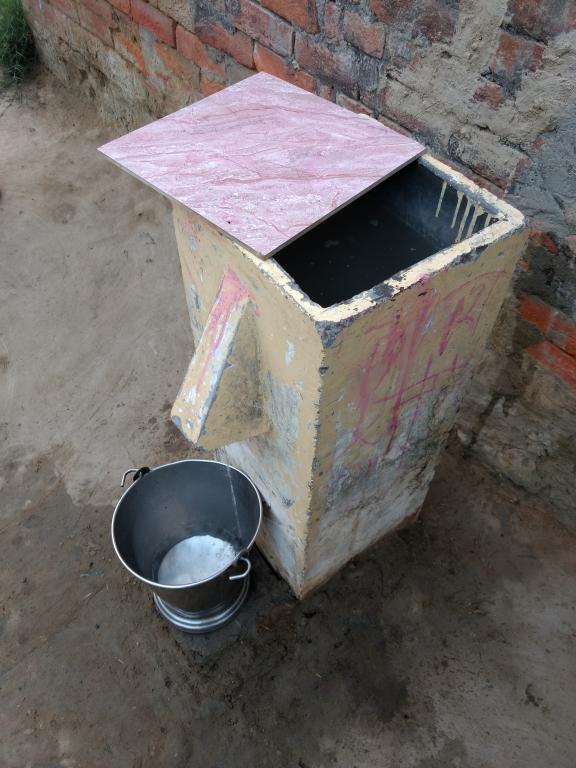
A BioSand water filter provides a single family in Asia with clean, healthy drinking water. They simply pour dirty water into the top, and the water is cleansed inside through the sand, gravel and biofilter layers. Dirty water comes out 98% pure and free of contaminants.

“Water is life, and clean water is health. “— Audrey Hepburn

Clean, pure water. It really is the stuff of life. And it’s such a non-issue in the Western world. When we need a drink, we turn on the tap. But for millions of men, women and children living in places across Asia and Africa, access to clean water is more than just a challenge; for many, it doesn’t exist.

Imagine for a moment preparing a simple meal for yourself or your children. You’ve probably made breakfast thousands of times. Now imagine that the only available water is contaminated with bacteria, heavy metals and even feces. Imagine what it’s like to feel thirsty or hungry and have no other option. Can you?

That’s not the setting for a dramatic movie script; it’s real life. And it’s why Gospel for Asia (GFA) strives every day to help families in Asia gain access to clean, healthy water, through solutions like BioSand water filters. They are simple, effective and can change a family’s life.

The Need for Clean Water Can’t be Overstated

Throughout many parts of Asia, clean water is either unavailable or it’s challenging to access. The numbers are staggering. Some estimates place surface-water contamination levels at 80 percent or higher in Asia. According to a 2016 Water Aid report, over 75 million people in one Asian nation have no access to clean water. That’s the highest concentration in the world. As surface-water contamination increases, groundwater reserves decline. More and more families either use polluted water or are forced to buy clean water elsewhere, a trend that’s only predicted to grow. Prices for clean water can be as high as 20 percent of a poor family’s income.

Sadly, contaminated water leads to illness and even death. Hundreds of thousands of Asian children die each year from diseases contracted by drinking and using contaminated water. That’s hundreds of precious children’s lives lost to preventable diseases every single day. Adults are not immune to waterborne disease either.

BioSand Water Filters Bring About Miraculous Changes

And whoever gives one of these little ones only a cup of cold water in the name of a disciple, assuredly, I say to you, he shall by no means lose his reward.” — Matthew 10:42

Sometimes, a simple kindness and a straightforward solution are life-altering in the best of ways. That’s the case with BioSand water filters. They need no electricity, no complex construction and no special tools or maintenance. Once set up and in operation, a family can turn life-threatening, contaminated water into clean drinking water for years.

These filters are often made from concrete with defined layers of washed gravel and sand inside, although some filters have a plastic or non-toxic housing. Once a biofilm layer develops and matures inside the filter, which takes up to four weeks, they continually eliminate an incredible amount of dangerous pathogens and solids. They also remove odors and colors, making water look and taste fresh, along with truly being safe to drink.

In January, GFA-supported workers visited one poor family who had received a BioSand water filter for their household. The funds to provide it were given by a generous donor, and the construction provided by the local Believers’ Eastern Church. This family below now experiences God’s love and tender compassion each day through the gift of healthy water.

clean drinking water - KP Yohannan - Gospel for Asia
A simple BioSand water filter, which costs just $30 to provide, gave this poor family in Asia access to pure, clean drinking water for many years to come. This keeps them from getting sick or ill from contaminated water sources.

Sadly, the wife and mother of this family had already fallen ill. She is not pictured above, as she was away from home being treated for her illness at the time of the visit.

“I know that the Lord will maintain the cause of the afflicted, and justice for the poor. Surely the righteous shall give thanks to Your name; the upright shall dwell in Your presence.” — Psalm 140:12-13

God’s love is boundless. He dries the tears of the weary and lifts up the brokenhearted. He cares about His children, even (perhaps especially) those who suffer most. Through the works of Gospel for Asia (GFA)-supported workers who share God’s love by providing cups of clean water, fewer families are losing their children to preventable diseases. Fewer families suffer the heartbreak of debilitating or incurable illness. The most basic human need—clean water—is becoming attainable, even to the poorest of the poor, whom God loves just as much as us in the West.

Will you help us provide BioSand Water Filters to families in Asia without access to clean, drinking water?

=====

Click here, to read more blogs on Patheos from Gospel for Asia.

Go here to know more about Gospel for Asia: Twitter | GFA Reports | My GFA

2018-03-02T00:23:06+00:00

When I was younger, I promised myself that I would never sit around and bore people about my increasing aches and pains. Now that I am older, I am naturally more empathetic to my age-set’s varying degrees of ills. Not that I make evidence of my own physical decline a subject for conversation, but ailments, aches and pains are part of the way our bodies remind us that there is an eventual life terminus in the offing. Such as this is, I am learning that ailments are a useful gift for the elderly (and for those of any age, actually) as a prod to intercede for the suffering church worldwide. How can this be?

I confess that it is all too easy for me to forget to pray for those who are struggling physically. I confess that I am often negligent in my intercession for those who are ill.

So at the risk of breaking my own vow not to bore others with discussions of personal physical ailments, let me nevertheless share about the wrestling match I had with my digestive system one whole night (and the rest of that week) and the lesson I learned about interceding for the sick from that unpleasant marathon event.

Years ago, on vacation with my husband, I ended up in the Emergency Room of a little town in Tennessee. I thought I was having a heart attack—the pain was so severe—but instead, after an EKG and a CAT-scan (Computerized Axial Tomography), the ER doctor announced there was nothing wrong with my heart, but it appeared that I had a hiatal hernia.

He didn’t flap his hands about it but suggested that the intrusion of part of my stomach through the diaphragm might be a condition that I would need to monitor. It appears that instead of having a heart attack, I was suffering from the late dinner we had enjoyed (rather too much country fried chicken). I learned my lesson, have avoided deep fried foods of any kind in the 20 years since this incident, researched the topic and have basically controlled the impact of the hernia by eating smaller portions, avoiding late-night meals, and finishing eating before my stomach had filled. Though over-the-counter medication for stomach ailments are seemingly endless in their variety (a recent shopping trip to Wal-Mart revealed a whole aisle of beautifully designed boxes dedicated to the cause of relieving stomach pain and intestinal discomfort), our medicine cabinet held a 20-year old bottle of Milk of Magnesia and a comparatively aging box of laxatives. The need for management of stomach issues has, obviously, been few and far between.

Every once in a while, if I experienced some discomfort, a feeling of being too full after eating, I learned if I paced in the house some, waiting for an hour or so for the food to pass through the digestive track, again making mental reminders all the while to 1.) Not eat too much at night, and 2.) To not eat after 5 o’clock or thereabouts at all, my hiatal hernia condition and I would get along just fine.


Every once in a while, a random X-ray would evoke a medical response: “You’ve got quite a large hiatal hernia!” This happened when I tripped over the open dishwasher door in my kitchen, fell headfirst against a cabinet, dislocated my right shoulder and consequently was scheduled for corrective arthroscopic surgery. Perhaps I was more concentrated on the ER doctor’s exclamation, “You mean you hauled yourself off the floor and up the stairs with a dislocated shoulder to get your husband to drive you to the hospital? What a woman!” Consequently, patting myself on the back in agreement with the doctor’s evaluation (he had to call in another doctor to help him reset my shoulder—a little tug-of-war going on there), I didn’t pay too much attention to the “large hiatal hernia” remark.

However, my relationship with my hiatal hernia changed drastically last month when, after a regular checkup, my general physician referred me to a gastroenterologist. This, ostensibly, was for the purpose of scheduling a routine colonoscopy. I personally think when one has survived decades and reached one’s 70s, one should not have to worry any longer about such diagnostic interventions.

I mentioned to the gastroenterologist that I had a hiatal hernia, and that it had never been examined. This led to an endoscopy, which led to an appointment with a referred surgeon, who professionally informed me that my hiatal hernia was actually a rather large paraesophageal hernia. A paraesophageal hernia could torque= and cut off the blood supply to the stomach, which would lead to the loss of that essential organ. Now there was some quiet, but professional, hand-flapping—why hadn’t anyone take notice of this before?

So back to the medical diagnostic unit of our nearby local hospital early one Monday morning, this time for a comprehensive blood draw panel and for a series of CAT-scans (“CT CHEST ABDOMEN PELVIS W CONTRAST Oral & IV,” reads the order I brought home from the surgeon’s office). These would give more accurate photos of the size, position and twist of what appeared to be a serious intrusive condition. A date was set for surgery as well as an appointment for another pre-op exam.

On Friday night of the same week, we invited new friends from the inner-city church we have been attending to our house for dinner. This was an African American couple; she is the administrator of a Meals-on-Wheels program (food delivered to the elderly) and he, an ordained minister, is highly involved in bringing churches together across the city of Chicago in activist movements that hold government officials accountable to social concerns they might not attend to if these grassroots organizations, all faith-based, did not participate in regular peaceful protests. I served broiled salmon and roasted vegetables. The conversation was stimulating. We had a lovely evening.

By 10 o’clock when our new friends left to drive back into the city, I was picking up signals that all was not well on the intestinal front; a war was beginning to wage in my digestive tract. By 4 o’clock, after six hours of moaning and groaning and huffing and puffing, with a stomach in turmoil, pain now shooting down my left arm, my husband and I agreed this was nothing to ignore.

He dropped me off at the ER in order to park the car, and I made sure the admitting desk knew I was concerned about a heart attack happening at the moment, or about a paraesophageal hernia having become fully torqued. Fortunately, with digital records, the ER team could pull up my Monday CAT-scans and compare those photos to the ones now being taken in the wee hours of Saturday morning. Although my stomach was two times as large as it had been earlier in the week, there was no torqueing of the hernia. A shot of morphine calmed my digestive system. Blood draws indicated all was well on the hematology front. EKG monitors assured us that my heart was not at risk.

After three hours, having sent David home to sleep once we knew there was no immediate danger, and after the morning ER shift change, I talked my way out of an imminent hospital room assignment, and using my Lyft APP, was able to schedule a driver to take me home. There was no need to wake David again. My husband gets nervous in hospitals; continued sleep would help him slough off the stress of our ER adventure.

Nevertheless, the whole next week was devoted to the management of pain-filled symptoms. I learned that the operative direction was “soft foods”—a phrase thrown out by my surgeon during the conversation before I had my CAT-scan exams, before the ER episode and before my following week at home learning how to persuade a suddenly dysfunctional digestive system back into some kind of normalcy. I began to search the refrigerator and cupboards for edibles that would not challenge my already threatened upper stomach and lower abdomen. Something soft. Soft food. Soft.

The second sleepless night after returning myself home from the ER, I began to appreciate the fact that abdominal mishaps must involve a huge percentage of the American population: How many of my fellow citizens were lying in bed, attempting to sleep, suffering from the pangs of digestive misfortune? I ceased to wonder at the row of highly designed stomach-aid boxes at Wal-Mart. They all were witness, this long wall of products, to a huge demand for over-the-counter treatments for this sour discomfort.

It was at this point, lying in my bed, not able even to toss and turn, my husband sleeping by my side, that a random thought whispered, What if this becomes a permanent physical condition for me? What if, for the rest of my life, I’m going to have pain and distress after eating even minimal amounts of food? (That day all I had was one banana, one bowl of yogurt, mugs of ginger tea, one piece of toast).

Pain Taught Me A Lesson

I decided that I would use the pain of that night (and the next three) to intercede for the sick in the world, for those who suffer perhaps without medical remedies. My pain was physical, real to me, but working itself out in a system where I had excellent medical care available and nearby, where I had a warm home to return to on a snowy morning, where a loving husband attended to me with concern and care, where we were safe from foragers and violence and evil men and from warmongers and rapists and land-grabbers. Here, in this sanctuary that is my life, which it is so easy to take for granted, I could use my computer to educate myself about hernias, stomach distresses, home remedy treatments and diets. I could even read up on the surgical procedure for giant paraesophageal hernias (aparoscopic Nissen fundoplication, for anyone else who might want to know). The least I could do was use my distress as a reminder of the distresses of others.

I have a prayer exercise I’ve learned to use through the years—particularly during those nighttime hours when I cannot sleep—being a light sleeper, they have been many. This approach is a form of wordless prayer in which I remind myself of all the intercessors worldwide and of that great cloud of witnesses in the heavens that the book of Hebrews speaks of, which sustain and support and undergird our planet. “I urge, then, first of all” writes Paul in 1 Timothy 2:1–2, “that requests, prayers, intercession and thanksgiving be made for everyone.”(NIV)

At night, in the quiet, without the rush of daytime activity, I mentally make myself available to join Christ who intercedes at the right hand of God, (“. . . since he [Christ] always lives to make intercession for them.” —Hebrews 7:25) Without words, but with a heart full of concern and love, eyes closed, body prone, I wait and almost always a prayer mantle of intercession comes over me (given how frail our attempts at words are to explain profound spiritual experience, this is the best that I can describe this practice). I feel as though I am entering that intercessory circle—that place where Christ holds to heart, eternally and without interruption, every little starving child, every woman filled with terror, every man courageously standing before accusers for his faith, every farmer bemoaning a failing harvest, every saint boldly taking the message of the Gospel where it has not before been heard, every parent holding a feverish infant and standing outside a village clinic in a long and snaking line.

And so, during this week of gastric distresses, asking myself what I would do if this were to become a lifetime disability, I decided I would use the nighttime moments of duress to pray, to pray for those who suffer, to pray for my Christian brothers and sisters worldwide who are sick. Prayers of intercession for others, I am learning, offered up when my own physical pain is present, impresses a reality upon me that does not happen when I am praying without pain.

Two nights ago I slept soundly without any stomach suffering. Today I am feeling stronger. Perhaps I’ve had gastritis, an infection of the stomach that has nothing to do with my hiatal hernia. I’m only slightly aware by checking sounds emitting from my abdomen that I’ve eaten a small breakfast of yogurt and honey, topped with bananas and cinnamon, and one slice of toast with a butter substitute spread—the most I’ve put in my stomach at one time over the last seven days.
Profoundest needs and cries - KP Yohannan - Gospel for Asia

But pain has taught me a lesson. Instead of praying for my body when it hurts, in the days ahead, I will pray for the Body, for those believers—wherever they may be in the world—who seek to follow Christ and serve God. Pain, along with discomfort, can bring us gifts if we so choose to allow it. Our own ills can sensitize us to the ills of others. The disease of a loved one demands our prayers. Concern and compassion, fearfulness and anxiety can cause us to spend hours on our knees and to hardly forget for a moment that the one we love is ill. Can we learn to remind ourselves that physical disease is also an opportunity to pray for those with similar struggles who have no one to pray for them? Prayers for those whom we know are sick are often used beyond our knowing for those we don’t know.

“And pray in the Spirit on all occasions with all kinds of prayers and requests. With this in mind, be alert and always keep on praying for all the Lord’s people.” —Ephesians 6:18 (NIV)

When we pray for those who are ill, we, like the people in the New Testament, are bringing them to Jesus. He casts out disorders for those who were possessed of demons; He healed all who were sick that were brought to Him (see Matthew 8:16). Let us use our own illnesses to remind us to intercede for those who are also ill—the ones we know and the ones we don’t know.

This morning, while writing this, I found an old note tablet and scanned the notes on the pages to see if there was anything I needed to retain. I had written out this prayer sometime in the past without knowing I would need it for this blog:

Through our fragmentary prayers

And our silent heart-hid sighs,

Wordlessly, the Spirit bears

Our profoundest needs and cries.

=====

Click here, to read more blogs on Patheos from Gospel for Asia.

Go here to know more about Gospel for Asia: Twitter | GFA Reports | My GFA

2019-12-06T14:04:34+00:00

The Pain of Leprosy Is Loneliness- KP Yohannan - Gospel for AsiaIf the greatest misunderstanding about leprosy is believing that it is a highly contagious disease, the second is misunderstanding its pain.

In fact, leprosy is highly treatable and curable, and nerve damage can be entirely avoided. Early treatment, in other words, limits leprosy to a minor skin disease. Even in people with advanced stages of leprosy, the likelihood of others contracting the condition is minimal at best.

As to the matter of pain, the nature of the leprosy bacteria is that it seeks primarily the cooler parts of the human body: the skin and the extremities. Once there, it can cause unsightly discolored lesions and nerve damage. The nerve damage compounds the damage by making the injuries, bruises, cuts and sores imperceptible to the victim. That unrecognized damage leads to more sores and, often, the eventual loss of fingers and toes.

Like many other diseases, the longer the disease is untreated, the greater the internal pain. But that is not the worst pain someone infected with leprosy a bears.

Leprosy, in its various forms and manifestations, has been viewed as an abomination  in every culture in which it exists for more than the millennia. The common fear of contagion and the response to the repulsion of the external damage have typically cut off people with leprosy from society to spend the rest of their lives dealing with the pain and misery of rejection, shame and loneliness.

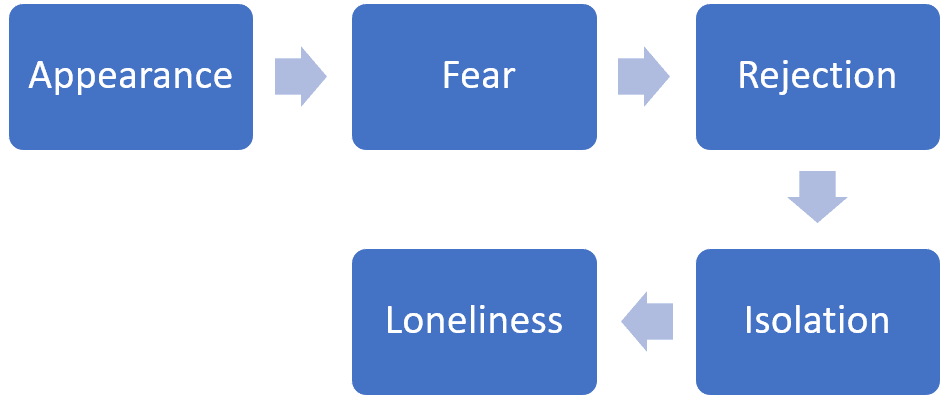
The unrealistic perception of the otherwise healthy population imposes medically irrational isolation on victims of leprosy. The path to the pain of loneliness looks something like this:

GFA World Leprosy Day Report - KP Yohannan - Gospel for Asia

Leprosy: The Path to Pain (GFA)

It is part of the human condition to fear the unknown – and to fear that which is not visually appealing. Leprosy presents both conditions. Therefore, the uniformed response is rejection at the family and communal levels.

The scope of rejection, in fact, goes far beyond, as evidenced by the fact that World Leprosy Day is necessary to raise awareness of the disease. Our human nature, left untransformed, doesn’t even want to think about it.

In some developing nations of Africa and Asia, the misunderstanding of leprosy runs deep. Most, but not all, cases of leprosy appear in the poorest of communities, so victims may already be objects of derision living in slums and already isolated from the community at large. But people with leprosy are rejected by their own equally impoverished families and friends.

“While this ancient disease may be largely forgotten in many parts of the world, it’s an everyday reality for many in Asia,” said Dr. KP Yohannan, Gospel for Asia founder.

Left to fend for themselves, they are relegated to leper colonies where they can be amongst “their own,” often without treatment and without apparent hope. This is the pain of leprosy. Life separated from family and former friends. Life where the other residents bear the same “shameful” marks and disease. Life where all you see is the unsightly and loathsome ravages that others don’t want to see. Life in the pain of despair.

Through national missionaries and aid workers, Gospel for Asia (GFA)-supported leprosy ministry provides practical relief services to these victims, including food distribution, medical aid, health and hygiene awareness programs, adult education and tuition centers for children.

The ministry also offers Sunday school and fellowship groups to those forced to live in leprosy colonies, giving sufferers the opportunity to hear about Jesus’ unconditional love for them.

During the week surrounding World Leprosy Day, Gospel for Asia (GFA)-supported missionaries demonstrate Christ’s love through special one-day programs. Beyond their routine care for these leprosy patients, they also clean leprosy colonies and individual patient homes. Doctors will also visit the colonies to provide much-needed medical care. In addition, missionary teams will provide patients with gifts, such as blankets, shoes and goats, which can be used for individual or community income-producing opportunities.”

Prayer Point: Pray that people with leprosy will see the unconditional love of Jesus, as demonstrated to them by GFA-supported national workers.


Sources:

=====

Click here, to read more blogs on Patheos from Gospel for Asia.

Go here to know more about Gospel for Asia: GFA.net | Wiki | Flickr

Follow Us!


TAKE THE
Religious Wisdom Quiz

Who fell out of a window and was restored to life by Paul?

Select your answer to see how you score.


Browse Our Archives