Last updated on: November 5, 2019 at 9:38 am By GFA Staff Writer
Is Cleanliness Next to Godliness?
That’s a good question. It may not be in Scripture, as many people believe, but it does have an element of truth. John Wesley is generally cited as the originator of the phrase in his sermon, “Cleanliness Is, Indeed, Next to Godliness.” It is certain that he was not the creator of the concept. Similar statements have been recorded in ancient literature.
While the Bible may not specifically say that cleanliness is next to godliness, it does, however, associate the two. Those stricken with leprosy in Biblical times were required by ritual law to announce that they were unclean should they appear in public.
Jesus described the hypocrisy of the scribes and Pharisees, saying that they were more concerned about outwardly cleanliness than internal cleanliness where they were “full of extortion and self-indulgence” (Matthew 23:25, 26).
Job described himself as “pure, without transgression” (Job 33:9).
The Psalmist similarly used cleanliness to describe his need for a return to righteousness: “Create in me a clean heart, O God, and renew a steadfast spirit within me” (Psalm 51:10).
Both Paul and John used cleanliness to describe holiness and righteousness. Paul urged the Corinthian church to cleanse themselves “from all filthiness of the flesh and spirit, perfecting holiness in the fear of God” (2 Corinthians 7:1). John reminds believers that when we confess our sins, the Lord “is faithful and just to forgive us our sins and to cleanse us from all unrighteousness” (1 John 1:9).
There seems to be a direct connection between cleanliness and godliness, at least in comparative terms.
If we must be cleansed from unrighteousness, then unrighteousness must be dirty.
If a leper who has been healed is declared clean, he is free of his disease.
Can Cleanliness Lead to Godliness?
That’s another good question – one which the western world does not always handle well.
We like to eat from clean plates and sleep on clean sheets. We avoid hanging out with people who haven’t bathed or washed their clothes.
The western world has come to take cleanliness for granted, and we withdraw from that which is dirty.
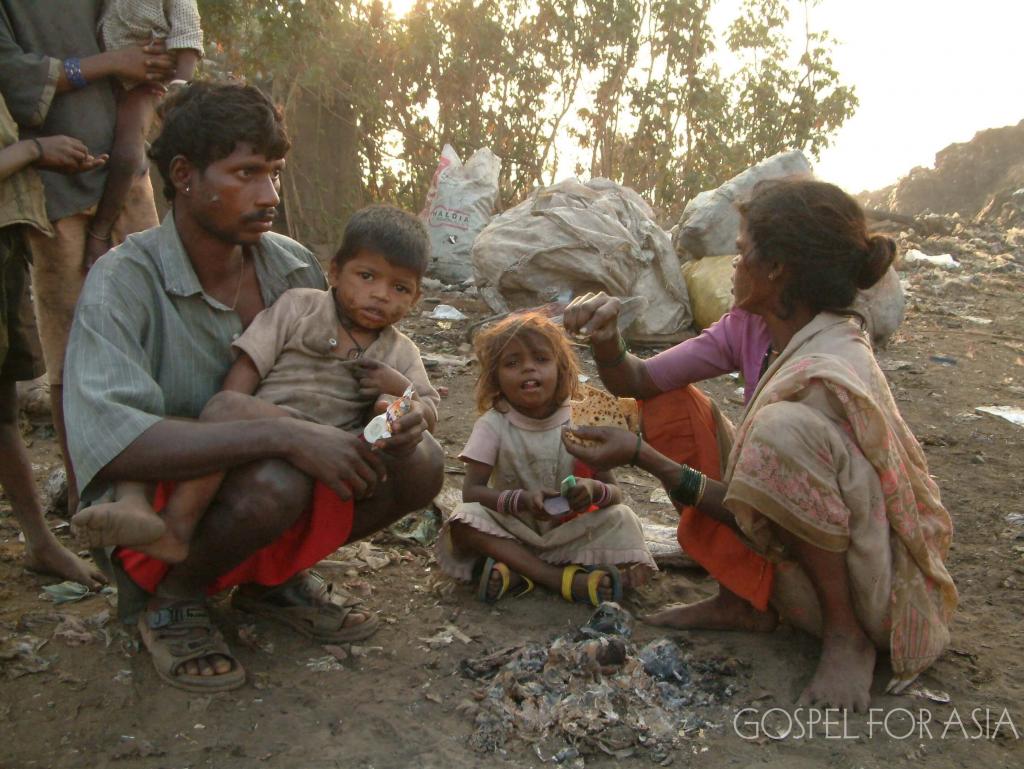
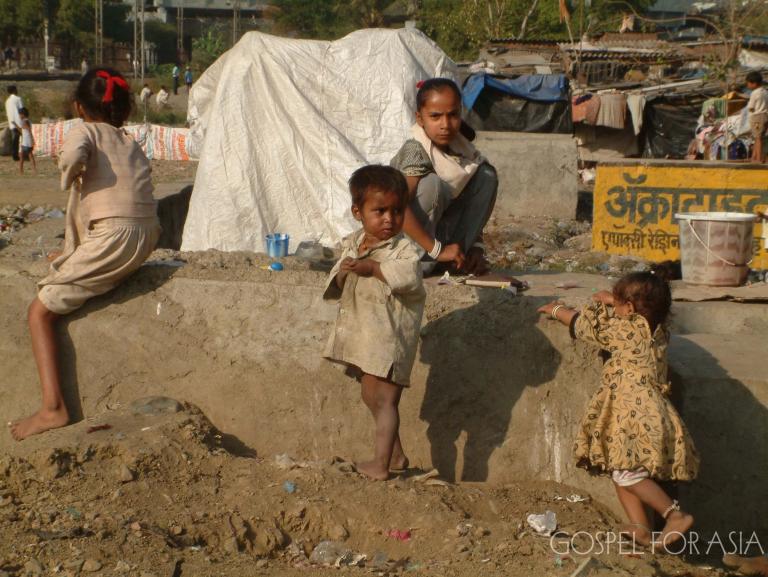
But what if we were to live as millions around the world do—in abject poverty, especially in Asian and African countries?
What if our lives consisted of living in unclean conditions from which there was no relief?
And what if a miracle should happen and someone appeared who could change our circumstances?
What would we do? How would we respond to being able to drink clean water and use private, sanitary toilet facilities—things which we didn’t have the privilege of before?
We would be eternally grateful.
That is why the global ministry of Gospel for Asia is so effective.
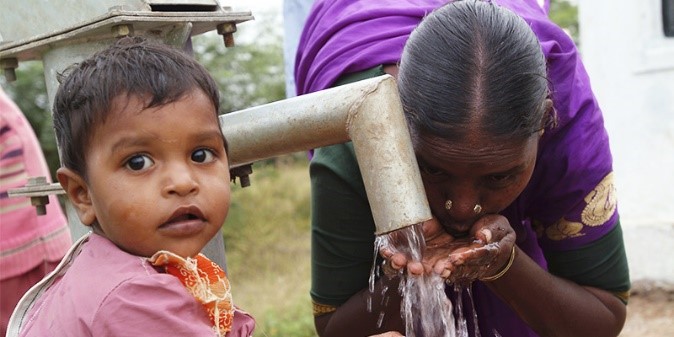
The many projects GFA undertakes as ministry efforts are to provide clean water, sanitation, and similar relief. One reason is because of the great need. Another reason is because we serve the Great Provider.
Our mission in life is to be devout followers of Christ and to live lives fully pleasing to Him. God has given us a special love for the people of Asia, and it is our desire to minister to them and help them through ministries like education, providing health information or practical gifts, or through the spiritual transformation of peaceful hearts, restored relationships and mended lives. We do all this in community and in partnership with the global Body of Christ.
The impoverished to whom we minister in Asia are so grateful for the kindness and cleanliness that Gospel for Asia (GFA) offers for their physical needs, they often welcome our ministry to their spiritual needs. They respond to kindness and love expressed by the offer of cleanliness.
Cleanliness may or may not be next to godliness, but at Gospel for Asia (GFA) we know that cleanliness can lead those who think they have no hope to the sure and certain hope we have in Jesus Christ.
=====
Click here, to read more blogs on Patheos from Gospel for Asia.
Last updated on: December 11, 2017 at 11:27 pm By Karen Mains
Last week, our pastor preached a sermon on the topic of King David bringing the Ark of the Covenant into Jerusalem. Sitting there as part of the congregation, I had a sudden stunning understanding about this passage from 2 Samuel chapter 6 that I’d never had before—an understanding so fraught with meaning that I’ve been thinking about it all week.
Karen Mains reflects on 2 Samuel 6 in preparation for the season of Advent.
Being a child raised in evangelicalism, my spiritual journey into adult faith has been grounded and formed by Scripture. As a youth, I memorized seven books from the Bible perfectly. I married an ordained minister, who himself preached a series on this topic in an inter-racial church we planted in the inner city of Chicago. Most preachers emphasize in some way or another that David, who had only recently assumed the appointment as king of Israel, stripped down to his linen ephod and danced before the procession, bringing the Ark back to the city. Few preachers avoid drawing an obvious parallel that the king was basically leaping and dancing around in his underwear.
Perhaps it’s because of the conversations I had while sitting around in Bible study groups as I traveled in Africa that the Old Testament stories come alive in new ways. Listening to Africans in Kenya, all modern and educated and wise, talk about their particular understanding of Bible stories made me realize there were nuances I just had simply never understood because of my American background, because of privilege, because of limited exposure to the world.
Take the story of Abigail and David as an example. Abigail, with her beauty, wisdom and insight, saves David from slaughtering in angry outrage her whole little village. She prepares food for his band of outliers, assuages David’s outrage, then tells her husband Nabal (whose name means “fool”) how his death has been avoided. Out of shock, he dies anyway, and Abigail immediately marries the leader of this renegade resistance movement, David (see 1 Samuel 25). I’ve often thought, Why did she marry him right away—or at least what appears from a surface reading as “right away”?
However, the Kenyan women sitting in our Bible discussion circle understood instantly. I gained insight when each described how her own tribe treated widows, not just in the past but in the present. Abigail, as a widow had no rights. She would not inherit her husband’s wealth; that would legally go to the nearest male relative. Widows are often outcasts in communities around the world, even today, having lost position gained through a husband. Suddenly, listening to my African friends, I got it and thought: This really is not an American story, is it?
The picture that came to my mind as my pastor spoke last Sunday was of a young man, “ruddy, and withal of a beautiful countenance, and goodly to look to,” deliberately stripping himself of all kingly regalia down to the kind of garments a working man might wear while breaking rock, or hauling grain from the field, or pushing felled and stripped logs toward a construction site.
Michal, David’s wife (also the daughter of King Saul, recently slaughtered in battle along with his sons), sees her husband dancing wildly in the streets and despises him. Commentators are often not kind to Michal—but her story is one of tragedy and agonizing family dysfunction. Remember, she had been torn from David and given to another man name Phalti, who followed her weeping when she was re-joined again to her first husband, now the king (see 2 Samuel 3:15–16).
I think Michal was a young woman corroded by depths of grief and shock. And there’s David, dancing in the streets before the crowd of joyful and ecstatic Israelites, bringing the Ark of the Covenant that had been stolen by Israel’s archenemies, the Philistines, back to the capital city (accompanied by some 30,000 able-bodied young men). Quite a picture.
The account in 2 Samuel tells us Michal despised David in her heart and says to him when he returns to bless his household, “How the king of Israel has distinguished himself today, going around half-naked in full view of the slave girls of his servants as any vulgar fellow would do!” There’s nothing like the sarcasm of a wounded woman. In other words, “I’m the daughter of a real king who knows how a real king should behave.”
I wondered what would have happened if the young David (and remember, a handsome and athletic man) hadn’t stripped down to the work garments of the common laborer. I wondered if he hadn’t led the people into worship as a man among men, a herder of sheep, a slaughterer of giants with nothing but a stone and a slingshot as weapons. I wondered if the people wouldn’t have entered fully into worship, rejoicing and thanksgiving if their young king hadn’t brought the Ark of the Covenant—a symbol of the Presence of God—to Jerusalem as one of them, simply as a man among men.
David responds to Michal, “It was before the Lord, who chose me rather than your father or anyone from his house when he appointed me ruler over the Lord’s people Israel—I will celebrate before the Lord. I will become even more undignified than this, and I will be humiliated in my own eyes. But by these slave girls you spoke of, I will be held in honor” (see 2 Samuel 6:21–22).
How extraordinary: Young women, torn from their families due to war or raids, utterly subservient to the will of arbitrary masters and mistresses, vulnerable and without position of any kind, powerless as virtual slaves—these understand what David was doing.
If I have any insight into this passage, think of what it must have felt for them to see King David divest himself of the symbols of kingly authority, strip down to the garments of a common working laborer (like all those groaning throngs in Hollywood historical films showing the building of the pyramids, for instance). This act of David’s, if there is any truth into my flash of insight, said to them, “I am just a man like any other. All are welcome to enter into exuberant worship, not just the high or the mighty or the wealthy or the well-placed. The God of Israel is the God of all, even of the lowly, the humble, the abandoned, the ordinary. Come dance and worship along with me and let us together extol the King of Heaven.”
If I had been a lowly slave girl that day, I too would have held this young man in honor.
We are in the season of Advent. These are the four Sundays before Christmas that the liturgical church has set aside to get ready to celebrate the coming of Christ, the King. He too divested himself of His kingly glory and authority, took on human form (a common fleshly garment, if you will) and was born among a people enslaved in multitudes of ways. He came among us to show us how to live and how to love. He invites us into a holy dance of delightful obedience alongside Him that is always centered in a worship of the Presence of God, the Father.
His earthly life ends when, as a young man wearing only what some might call a linen ephod or at least the undergarments of a common laborer, He gives up His life on a cross so that we, slaves as we were, might enter completely with Him into what early church theologians have termed the perichoresis koinonia—an image of the Holy Three dancing in unending and harmonious relationship.
The church my husband and I attend is an inner-city church thronged with eager and spiritually hungry millennials. It’s worship is vibrant (and loud). Baptismal services are held frequently. Some 56 new believers were baptized on the recent Sunday set aside for this. But it is not a liturgical church; we probably will not observe Advent this December 10. But the Holy Spirit (or perhaps some stray imagining of my own) or the memory of the Scriptural insights from my African friends, or simply looking at a familiar Scripture (2 Samuel 6) with a little fresh understanding is making this Advent Sunday deep with meaning. I am thinking of a young man, stripped, dancing before his people.
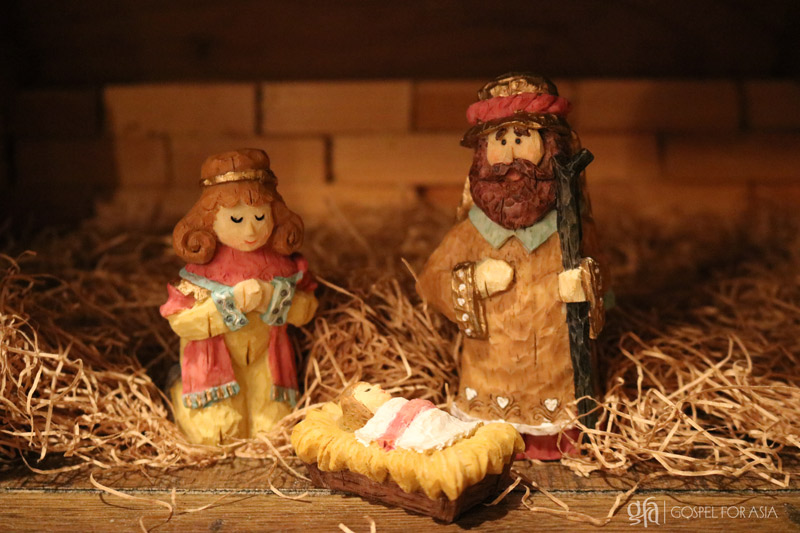
And this week, I am practicing waiting. The Advent wreath I purchased the Friday after Thanksgiving stayed cool for a few days in the trunk of the car. But now it has taken its place on our coffee table. The fall arrangements with gourds and pumpkins have been changed with greens, a small Christmas tree and artificial vines of red poinsettias to set the Christmas mood. A nativity scene, handmade from rusted metal, will be placed on the planting table on the front patio next week. Red, battery-powered lanterns will light the sidewalk on Christmas Eve. I’ve purchased tickets to take my family to hear the concerto The Messiah.
These are preparations for the Christmas Day that is coming, but none are so powerful as the inward preparation I am making. I am waiting for the celebration of the young King who has come and is coming and will come again and who has divested Himself of royalty and taken on the humble garments of human flesh—so that we might learn to dance with Him one day in the unending celebration of the Kingdom of His Father.
“David and all Israel were celebrating with all their might before the Lord, with castanets, harps, timbrels, sistrums and cymbals. … Wearing a linen ephod, David was dancing before the Lord with all his might, while he and all Israel were bringing up the ark of the lord with shouts and the sound of trumpets.” —2 Samuel 6:5, 14–15
=====
Click here, to read more blogs on Patheos from Gospel for Asia.
Last updated on: October 25, 2025 at 5:58 am By Karen Mains
I have an odd way of thinking about the quality of goodness.
In my mind, I have an impression of the earth spinning in space—the photo we’ve all seen so frequently taken from some satellite circling our planet. An exquisite globe shimmers in the dark, turning and turning. Blue mostly, vast seas accented by green and white with pinpricks of lights shining out through occasional cloud cover, across thousands of miles of dark. I know these are cities and towns glowing on the surface of our planet, but I prefer to think that these points of brightness mark an act of kindness here, a gift of sacrifice there or initiatives of uncommon goodness everywhere.
Perhaps this is purely fanciful, perhaps it’s imagination gone awry, perhaps it’s an artistic vision given for the purpose of prayer—or maybe, it’s just an old woman’s meanderings. However, it seems as though my mental fancy has some precedent.
The term “one thousand points of light” was used in a speech by George Bush at the 1988 Republican National Convention when he accepted his party’s nomination for president. He likened America’s social and volunteer organizations to “a brilliant diversity spread like stars, like a thousand points of light in a broad and peaceful sky.”
Before this, in the book You Can’t Go Home Again (1939), Thomas Wolfe lovingly describes the spirit of America saying, “It’s your pasture now, and it’s not so big—only three thousand miles from east to west, only two thousand miles from north to south—but all between, where ten thousand points of light prick out the cities, towns, and villages, there, seeker, you will find us burning in the night.”
The theologian C. S. Lewis employed a similar phrase in his 1955 novel The Magician’s Nephew in which he wrote: “One moment there had been nothing but darkness; next moment a thousand, thousand points of light leaped out.” In 1917, H.G. Wells three times states another variation of this in Mr. Britling Sees It Through: “But never was the black fabric of war so threadbare. At a thousand points, the light is shining through.”
So perhaps, with these literary precedents, the vision in my mind of a spinning earth with points of light representing each act of goodness is not so fanciful after all.
Advent is the season in liturgical settings that marks the beginning of the yearly calendar of the church, which helps Christians observe holy holidays by preparing them for Christmas, for Lent, for Easter and for Ordinary Time.Gospel for Asia (GFA) and its field partners celebrate Advent; and in our house, I try to set a traditional Advent wreath on the table before the fireplace in the living room as a reminder that Christmas is coming.
One of the things I appreciate about the liturgical systems is that Christians, all around the world, read the same lectionary, celebrate the same holy seasons, and many of them light the five candles of Advent in each home, on some table, around some kind of wreath from time zone to time zone to time zone. Think of it: African Christians, Asian Christians, Indian Christians, Russian Christians, Greek Christians begin to set themselves aside to get ready to remember the first coming of Christ, or His advent here on earth.
Pinpricks of light, if you will, in home after home reminding us to be still, to examine the condition of our souls, to not give into the frenzy of secularization, to anticipate the birth of a baby, God incarnate through some unfathomable mysterious act we can barely comprehend, candles warm and waxy and glowing reminding us to bow in holy awe at this Christ-gift, this ineffable evidence of love. “Light shines in the darkness and the darkness has not overcome it.” John 1:5 (NIV)
You may not be familiar with liturgical practices or you may have little knowledge of the church calendar. This could be a rich learning journey for those who seek to research the meaning of the Advent season—Advent Sunday One, Advent Sunday Two, Advent Sunday Three, Advent Sunday Four, Christmas Eve, then Christmas, and then twelve days later, Epiphany. The Internet is free, available and a rich resource of knowledge for those who seek; take some time to learn a little bit more about this season.
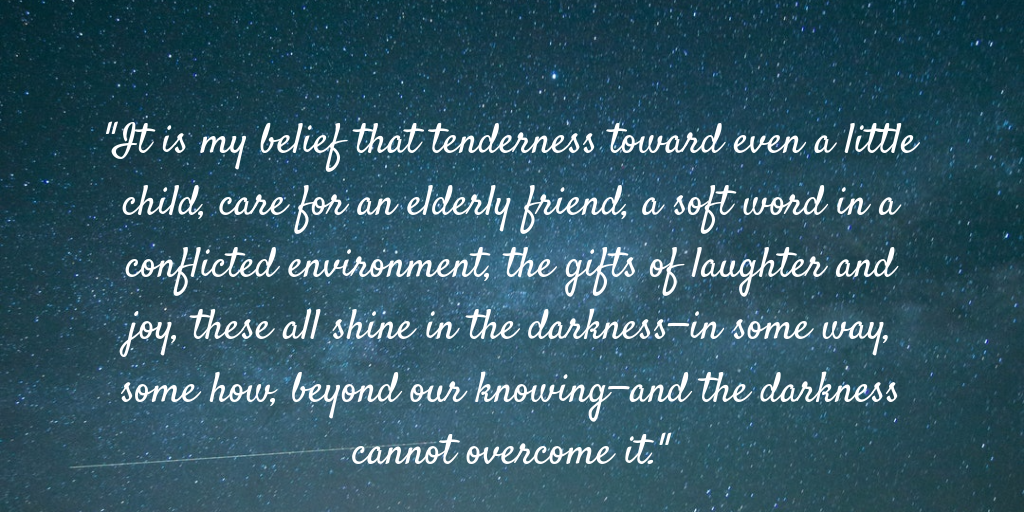
For all, however, it might be good to consider what holy acts of kindness, thoughtfulness, generosity and shared wisdom do to tip the atmosphere of our world. It is my belief that tenderness toward even a little child, care for an elderly friend, a soft word in a conflicted environment, the gifts of laughter and joy, these all shine in the darkness—in some way, some how, beyond our knowing—and the darkness cannot overcome it.
The week of this writing, I am putting aside the morning to run into Chicago, catch the suburban train to Ogilvie Station, walk a few blocks in the cold to meet with a young couple who attend our inner-city church and to spend some time with them because I care about them and their marriage, which is in big trouble. Then I will walk back to the station, praying in my heart that God will intervene for my young friends, catch the train back home, hopefully in time to make a 2 o’clock dental appointment.
Why put myself out? Because I believe that acts of goodness make a difference, somehow, in the balance of the world. I like to think they shine like pinpricks of light that can be seen from thousands of miles in space. And it appears that former president Bush thought so, as did C.S. Lewis, Thomas Wolfe and H.G. Wells.
Why make this effort? Because a young couple is in trouble, and the season of Advent is approaching. My time and effort is the greatest gift I can give to them. There are more ways to light an Advent candle than we can fathom.
Who knows how far the light of one small act of love can shine?
=====
Click here, to read more blogs on Patheos from Gospel for Asia.
Last updated on: November 28, 2019 at 1:05 pm By GFA Staff Writer
Tsunamis happen more often than we think. Just this year, the National Oceanic and Atmospheric Administration(NOAA) recorded four. In 2016, it recorded seven. In 2014, it recorded 11. Now that’s a lot of tsunamis. Thankfully, the majority haven’t been large enough to cause extensive damage, with waves cresting less than a foot above sea level. What a relief! But then there are times when the waves, upon reaching shore, reach heights of 10, 30, even 300 feet.
Tall walls of water crescendo and collide into coastlines, coursing through every crevice, collecting chunk after chunk of sea-side homes and business, sweeping away thousands of pounds of metal in the shapes of buses and other motor vehicles.
Husbands and wives, mothers and fathers, children and grandparents run, their backs to foaming black water that threatens to steal their lives.
The United Nations declared Nov. 5 as World Tsunami Awareness Day because of the amount of devastation this natural disaster creates. The day is attributed as being the “brainchild” of Japan, which is noted for experiencing a significantly higher volume of tsunamis than other countries.
But tsunamis can happen anywhere—including America. According to the National Centers for Environmental Information (NCEI), “Many places along the U.S. coastline fall in tsunami danger zones. The most destructive tsunamis in the United States and territories have happened along the coasts of Alaska, American Samoa, California, Hawaii, Oregon, Puerto Rico, and Washington.”
The deadliest of all tsunamis happened in the Indian Ocean on December 26, 2004, and affected 14 countries. Thousands upon hundreds of thousands of people felt its impact—especially those who are part of the GFA world.
Gospel for Asia-supported workers serving in Sri Lanka and India experienced the fatal tidal waves and lived in its aftermath. The story below is about one Gospel for Asia-supported pastor named Sagardut who served in Tamil Nadu, India, when the tsunami made impact.
After the Waves Left
“The ocean is coming! The ocean is coming!”
Sagardut heard the frightened shouts as he stood inside the church building. The Gospel for Asia-supported pastor was preparing for Sunday worship, but the commotion outside drew him away. He stepped through the church doors and saw people running, crying and screaming in terror of the danger that loomed on the horizon.
“The ocean is coming!”
As the crowds ran away, Sagardut jumped on his motorbike to investigate what was causing all of this chaos. The nearer he got to the villages by the seashore, the more devastation he saw.
The first wave had reached Tamil Nadu, India, where he was serving. The second wave was on its way.
“The ocean is coming!”
Sagardut could see the black wall of water towering 30 feet in the air. He was only 300 yards away from a force devouring houses, cars and people in seconds.
This is going to kill everybody, he thought.
Sagardut quickly turned his motorbike around and joined the masses fleeing to save their lives.
Soon after the tidal waves of the Indian Ocean Tsunami receded, Gospel for Asia-supported pastor Sagardut began bringing relief and the comfort of Christ to those who had suddenly lost everything.
The Deadliest Tsunami
Sagardut had escaped the deadliest and most destructive tsunami in history. On December 26, 2004, an earthquake, said to have released the energy of 23,000 Hiroshima-type atomic bombs, thrust the Indian Ocean seafloor upward, resulting in a series of killer waves that devastated the coastal lines of 14 countries from Indonesia to Africa.
When Sagardut came back to the village, he saw bodies floating in the waters. Thorn bushes had trapped women with long hair, so he went over to free their bodies and lay them on the dry roadside. Then he drew out the next body he saw, and then the next one.
As he helped clear the water of the deceased, a deep sorrow filled his heart seeing people who had died within seconds. They had no warning. In an instant, more than 200,000 lives were gone—and now Sagardut and the other tsunami survivors were left to cope with sudden unexplainable grief and a world of uncertainties.
Relieving the Grief
Everywhere Pastor Sagardut went, people were crying and unleashing their agony in mournful screams. For days, months and even years that followed that catastrophic day, people lived in fear of the ocean, wondering if another tsunami would come to finish off what the first one left behind.
“I remember thinking, It is the last days. The Lord’s coming is very near,” Pastor Sagardut recalls. “Then, at the same time, I knew it was my responsibility to rescue these people and bring them [the love of] Christ. … That’s what was on my mind.”
Because Sagardut and other Gospel for Asia-supported workers were already ministering in the region when the tsunami hit, survivors didn’t have to wait long to receive aid. Pastor Sagardut, and the believers who escaped death, immediately began bringing relief and especially comfort to those who lived to see another day.
They provided rice, milk and other food items, along with pots to cook with. People with injuries received medicine. Sagardut even took some to the hospital to receive treatment.
“When we saw people who had no home, we gave them shelter,” Sagardut says. “When we saw people who did not have clothes, we gave them the clothes we had. When we saw people who were in fear . . . we prayed for them and comforted them.”
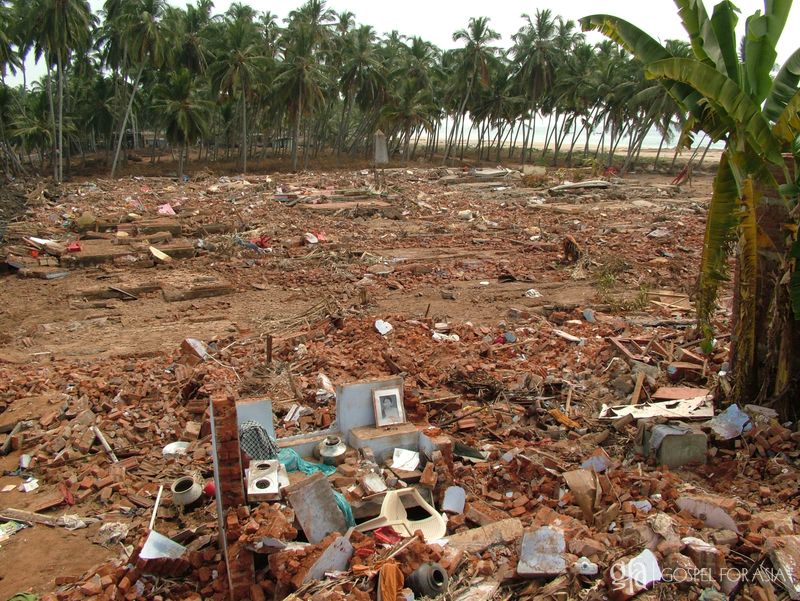
Hundreds of thousands of people were displaced after the Indian Ocean Tsunami turned villages into rubble.
What About the Future?
The immediate relief helped ease some of the tsunami survivors’ grief. But then came the long-term questions: Where will I live in a month? How am I going to earn an income? How am I going to live without my family? The questions weren’t easy to answer, but Pastor Sagardut knew more help would come.
Once the waters receded, Gospel for Asia began building permanent homes for the tsunami survivors. Boats and fishing nets, even goats and chickens, were given to families who had lost their only source of income. Gospel for Asia-supported Bridge of Hope centers were established to take in, educate and love children who had lost their mother or father—or in some cases, both parents.
When the waves took away Chiranjeev’s house, belongings and cattle, Gospel for Asia pastors began taking care of him and his family.
“We were struggling,” Chiranjeev remembers. “But at that particular time, Gospel for Asia came to help us. They started giving us food, clothes, and they . . . started building houses for us. Even I got one of these houses. Gospel for Asia took care of us at the right time, when we were really going through pain and struggle in our lives.”
Chiranjeev lost everything when the Indian Ocean Tsunami crashed into his village. But through the help of GFA-supported workers, he was able to rebuild his life. “I was just like Job; I had everything but I lost everything,” he says. “Just like Job God gave me back everything through [the church]. I didn’t have a house, the church gave me the house. I didn’t have goats, the church gave me goats. … I lost everything in tsunami, but I got back everything, even better than what I had.”
A Decade of Recovery
Ten years later, Pastor Sagardut still serves the people he helped when the tsunami waves crashed into his region. He visits their homes; he prays for them; he offers them comfort in the arms of Jesus when the painful memories come back.
He knows people all over the world helped provide relief and long-term care for his fellow tsunami survivors, and his heart overflows with gratitude.
“Because of them,” Sagardut says, “many people [embraced] Christ, many people were rescued, and now many people no longer live with anxiety or fear.”
Gospel for Asia is thankful for days such as World Tsunami Awareness Day that bring awareness to the tragedies that happen when natural disasters strike and urge people to be prepared. One earthquake, one landslide, one ginormous wall of water can change everything for hundreds of thousands of people…in one day. But when people are prepared, when people come together to help that, too, can make a world of difference.
=====
Click here, to read more blogs on Patheos from Gospel for Asia.
Last updated on: November 26, 2019 at 1:59 pm By Karen Mains
With our headlines screaming about one disaster after another—fires in the California hills, hurricanes, flooding, drought and warming seas rising—and with the increasing incidents of gun violence here in the States and of terrorism activating itself in the Middle East, the near East and in Europe, it is easy to forget there is good news happening beyond this barrage of warnings, distress signals and red flags flying.
One of the great news notices a majority of people have missed is that the U.S. Agency for International Development (USAID) announced in March 2016 that in the last 30 years, extreme poverty around the world has been reduced by half. This information was based on a United Nations assessment following its goal-setting at the dawn of the new millennium: to eradicate poverty by 2030.
This initiative was included in what was titled The Millennium Development Goals, which included eight international goals for the year 2015 that had been established following the Millennium Summit of the United Nations 2000. Among the goals were:
To eradicate extreme poverty and hunger
To achieve universal primary education
To promote gender equality and empower women
To reduce child mortality, etc.
Some critics have complained of a lack of thorough scientific analysis behind the millennial sustainable goals and its recently announced outcomes. Questions have risen about the justification for some of the analysis behind chosen objectives. Even deciding what comprises a poverty level baseline is difficult (right now it is those who earn less than the equivalent of $1.90 U.S. per day).
All experts on the topic know that whatever true success has been achieved (the World Bank, according to its studies, feels that the statistical results are even better than those announced by the United Nations), the situation of the marginally poor, those rising out of extreme poverty, is still fragile. War lords can tip one country, such as South Sudan, into starvation. Climate change, for instance, is thought to be able to plunge those with marginal economic achievements back into dire need.
The point of this good news, however, despite these considerations, is that the war on world poverty has succeeded beyond any one of the expert’s dreams. The big question for those of faith is: How do faith-based organizations (FBOs) fit into helping decrease the levels of poverty around the world? The presence of mission organizations and Christian relief and development NGOs literally span the world and can be found on every continent and in the majority of developing countries. Or perhaps, the question should be: Do they even count in this grand scheme of eradicating world poverty?
While attending the Global Missions Health Conference that convenes yearly in Nashville, Tennessee, I bumped into a gentleman, a medical doctor, who has vast experience in world health efforts. We talked about the Millennial Goals and I asked him my question: How do faith-based organizations contribute to the amazing statistics that are developing out of these worldwide initiatives? Do they? And if they do, what measurements show their contributions?
He smiled, took out a business card and wrote some notes on the back, directing me to a section of the World Health Organization’s website. “When you get time, look at this,” he told me. “Several years back, WHO did a study of faith-based organizations during the HIV/AIDS epidemic in Africa. Their conclusions were amazing.”
On arriving home, I went web-searching and found a 33-page report based on extensive research observation, followed by another three pages of resources (some 113 in all), which gave strong evidence that faith-based organizations in relationship to health endeavors were invaluable and should be included in the overall joint partnership efforts that were outlined in the Millennial Goals. Included are just a few quotable assessments out of the broad study:
FBOs are significant health care providers in the developing world.
FBO health projects are often independently funded and do not, in general, receive an adequate proportion of public funds distribution.
Compassion is the primary value underlying major religious systems.
Many religious traditions are characterized by a focus on healing: “A primary focus of religious expectations in the 21st century is the multidimensional longing for healing of body and mind, of soul and spirit, of personal and social relations, of political and ecological dimensions in this broken world.”
The extensive evaluation offers suggestions for improvement—mostly in outcomes reporting, data collection, and the opening of dialogues between the public sector and faith-supported initiatives. One concluding section, however, begins with the statement, “Evidence suggests that FBOs already offer tangible value by:
Delivering services that supplement government offerings
Bringing external resources from a range of donors
Arising within religious and cultural loyalties of the local communities they serve
Being numerous and, on the whole, more integrated with the communities they serve
Connecting into associated services that are considered valuable within primary health care strategies.”
The end result of this extensive study was the recommendation by the World Health Organization that religious entities already on the ground and substantively rooted in their communities are ideally placed, perhaps even more so than many in the international aid systems, to bring a holistic (or some would call it an integral) approach to humans who suffer from the effects of dire and marginal poverty. After all, how many aid organizations are truly equipped to serve the whole person—body and mind, soul and spirit? Which of them show a multi-dimensional longing for the healing of personal and social relations, of political and ecological dimensions in this broken world?
This blog is dedicated to the exceptional work being done by one of those faith-based organizations, Gospel for Asia, which specializes in bringing the awareness of God’s love through an emphasis that is community grounded, understands the religious and cultural loyalties of the places and people they serve, and literally employs tens of thousands of financially underwritten or volunteer workers to help eradicate poverty, but in a way that ministers to the whole person, body and mind and soul and spirit.
Here are a couple ways GFA-supported workers are helping eradicate poverty:
Romila’s Story
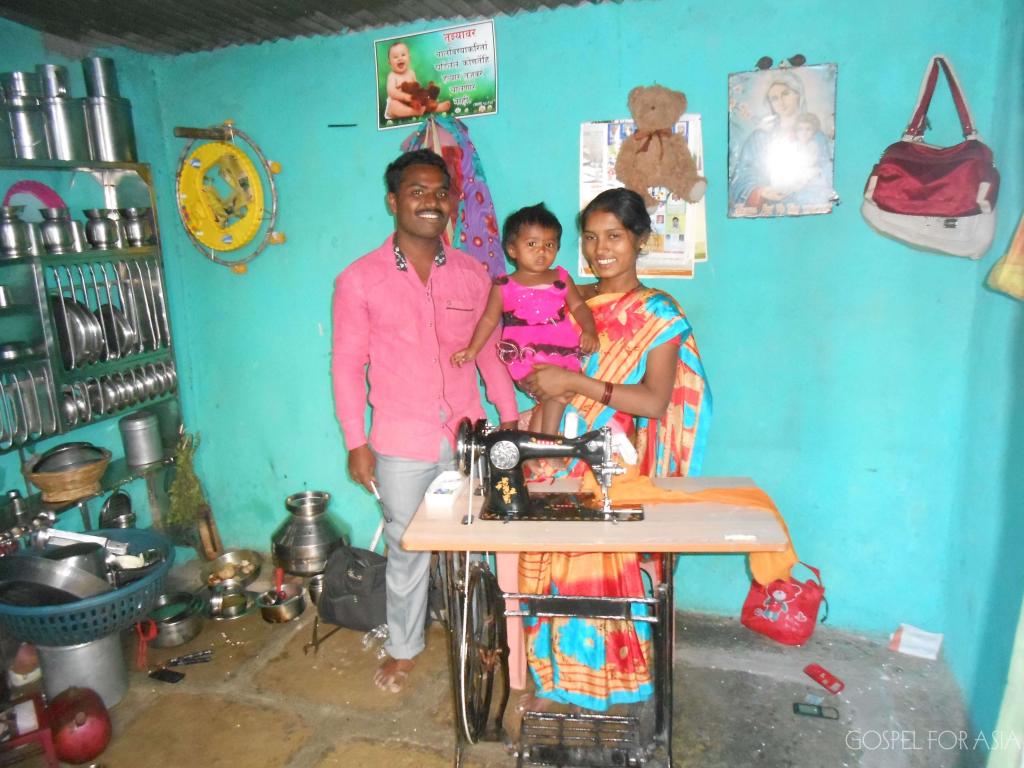
This is Romila with her husband and child.
A plumber by trade, Romila’s husband, Taraswin, worked faithfully to provide for his wife and little baby girl. However, no matter how hard he tried, he struggled to find work. Day by day they were sinking financially. A friend directed Taraswin to a job opportunity in another village. Believing this would help change things, they moved to start afresh.
But work was inconsistent, and this new job soon proved to be of no help to their financial state. As monthly rent drained their income, things did not look bright.
Then, one day, they were chatting with their neighbor, and he introduced Taraswin and Romila to his friend, a Gospel for Asia-supported pastor named Rochan. As Pastor Rochan struck up a conversation with the couple, they began to open up about their struggles. When Pastor Rochan walked away, he felt compelled to do everything he could to help this family.
Three weeks later, he invited Taraswin and Romila to a Christmas gift distribution program. Romila could hardly believe her eyes when she received her sewing machine.
“I was really longing for a machine,” Romila recalls. “I have no words to express my feelings and thanks to the church.”
Now Romila can help provide for her family by sewing clothes from her home. The hopelessness which hung over Romila and Taraswin lifted, as they now can easily pay for their rent with plenty left over for additional expenses.
Dhansukh’s Story
Daily life was a struggle for Dhansukh and his family. Because Dhansukh had difficulty walking, he couldn’t work as a daily wage laborer, which is a common job for many people in Asia. Instead, Dhansukh provided for his family by selling vegetables.
But after some time, Dhansukh’s business began running into the ground. Fewer people made purchases, and the vegetables that remained started to rot. Dhansukh tried all he could to save money and make up for the lack. He took his children out of the private school they were attending and sent them to a public school instead. He asked his brothers and his sister for hand-me-downs for his children.
But even as he cut down on expenses left and right, eventually the vegetable-seller could no longer afford to buy fresh vegetables to feed his family. The meals they would eat in one day became fewer and fewer.
In the middle of the family’s crisis, Gospel for Asia-supported pastor Vismay came to buy vegetables one day. Dhansukh told Pastor Vismay about his business troubles and asked him to pray for him.
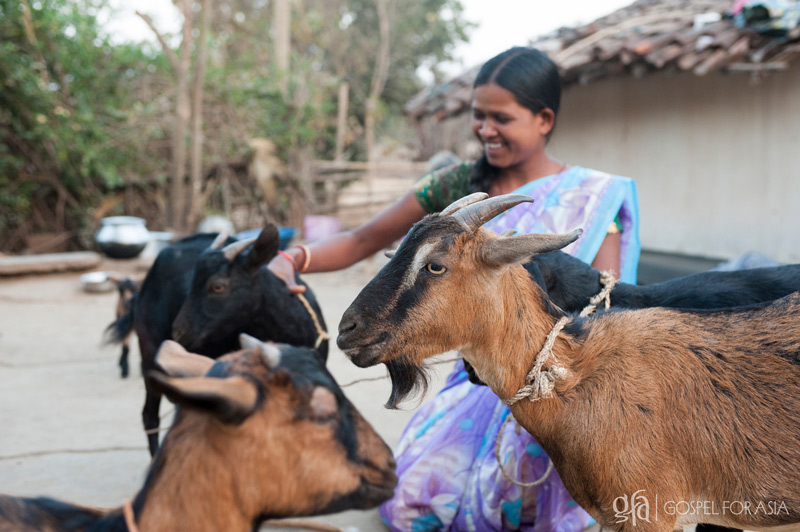
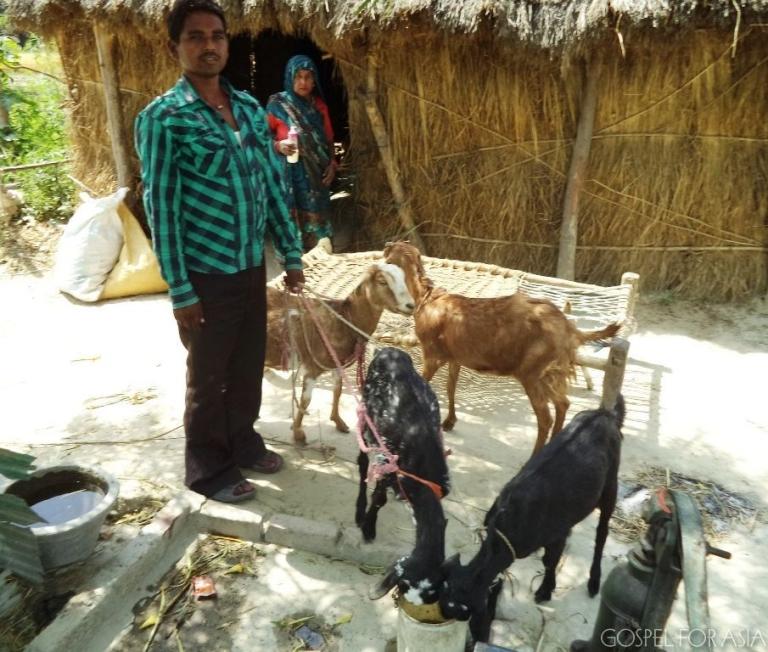
Pastor Vismay kept Dhansukh’s prayer request in mind, and God eventually provided an opportunity for him to help Dhansukh’s family practically by giving him two female goats at a Christmas gift distribution.
These gifts impacted Dhansukh in a special way: As he witnessed firsthand the Lord’s power to answer prayers, he realized God loved him and Jesus’ followers cared about him. And now, with the income these goats will provide, Dhansukh will be able to take care of his family.
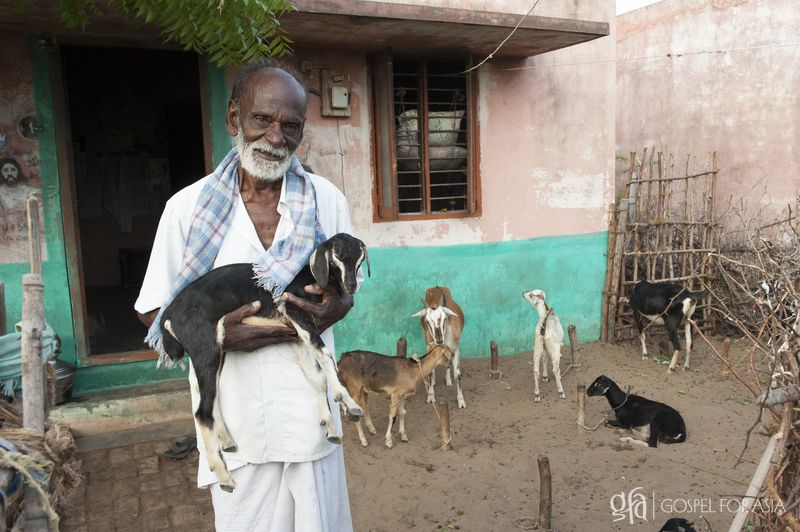
This is Dhansukh with his goat that was given to him by a Gospel for Asia-supported pastor. The goat ended up multiplying!
The help this faith-based organization provided went beyond just material provision, as you can see from Romila’s and Dhansukh’s testimonies. It ministered to their soul and spirit as they understood how much they were loved by God and His people.
Often secular skeptics involved in international development look askance at those who work in faith-based missions around the world. The evidence being gathered, however, by objective outside observers seems to be producing a body of proof that some of the front-line participants in the change that is occurring in the eradication of poverty is being carried out by the unsung, unrecognized, diligent, altruistic people who love God and whose lives are driven by that love manifested as it is in concern and care for the downtrodden and the forgotten, for the abused and the neglected of the earth. Of this, those of us in faith-based communities have nothing to be ashamed.
I personally stand in awe of many of my brothers and sisters worldwide, some close friends, many of whom put their lives on the line every day, who have little thought of personal success or notoriety, who have shunned financial security and through a dogged kind of compassion serve God. One day in time, we will know what all they have done toward this remarkable goal of eradicating extreme poverty worldwide.
=====
Click here, to read more blogs on Patheos from Gospel for Asia.
Last updated on: March 18, 2025 at 8:19 pm By KP Yohannan
Since 1979, Gospel for Asia (now GFA World) has been committed to serving the “least of these” in Asia, often in places where no one else is serving, so they can experience the love of God for the first time. GFA supports national workers serving as the hands and feet of Christ in four main ways. Sponsoring national missionaries to minister to people’s needs, sponsoring children, investing in community development, and helping families in need of care or during disasters.
Gospel for Asia is about changing communities—both for this life and for eternity. GFA is present in India, Bhutan, Sri Lanka, Nepal, Myanmar, Bangladesh, Cambodia, China, Laos, and Thailand, Rwanda and Liberia.
Programs
National missionaries
GFA’s main focus is to train and equip national missionaries who come from different cultures and languages rather than nation-states. This selection provides GFA with people within a single nation-state who are specialized in the particular village that they are ministering to. Some of these missionaries actually belong to these villages which makes it easier for them to share the love of Christ. In 2018 GFA reported that they have over 16,000 missionaries and church planters in 18 Asian nations.
Church buildings, Bibles, and gospel literature
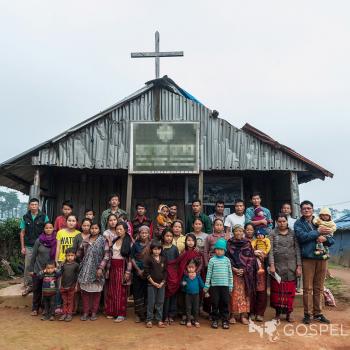
Part of GFA’s program for discipleship is the establishment of Christian worship centers in small villages. These centers also provide a visible meeting place for Christians. In major cities, GFA builds large cathedral-type buildings to cater to bigger congregations. Similarly, GFA distributes native-language bibles and evangelical Christian literature to the region.
Radio and television broadcasts
GFA provides biblical content through its radio program, Athmeeya Yathra (Spiritual Journey) and its YouTube channel, Athmeeyayathra Television.
Bible colleges
GFA has established 56 bible colleges in India, Nepal, Bangladesh, Myanmar and Sri Lanka. These institutions train native missionaries within their own dialects and cultures so that they will be effective ministers. The program includes three years of instruction, including field instruction and experience.
Bridge of Hope
Bridge of Hope is a child sponsorship program for poor families in underserved communities, especially lower-caste families and Dalits. The program offers education, physical and spiritual care, including healthcare training and vocational training for women.
Wells
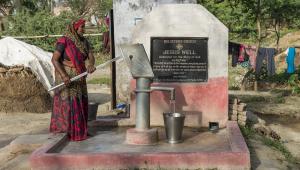
This is a Jesus Well in a remote village in Asia.
In response to water shortage problems in communities, GFA digs wells for long-term use near churches, bible colleges, or Bridge of Hope centers. These wells are turned over to the local church and are maintained by a local pastor.
Leprosy Ministry
This ministry is also called “Reaching Friends Ministry” to help people suffering from the disease through social and relief work, medical aid, and health and hygiene awareness.
Expansion to Africa
In 2020, GFA started World Child Sponsorship in the slums of Kigali, the capital of Rwanda. It also include training national missionaries, clean water projects, medical ministry, education for the underprivileged, women’s empowerment, and community development projects. In 2025, GFA World extends missionary movement to Liberia, West Africa.
Affiliate Offices
GFA has or had 14 known affiliated LLCs registered in Willis Point, TX as well as national offices in various countries in which they operate mission efforts.
Believers Eastern Church
Believers Eastern Church is administratively based in the state of Kerala in southwestern India. It was reorganizd in 2015 into 33 dioceses. Its membership includes over 3.5 million people in 10 countries speaking a hundred languages. The Church currently has 30 Bishops, and the current Metropolitan Bishop is Athanasius Yohan I.
GFA Canada
The GFA Canada office is registered with the Canadian government. It was established in 1986 and is located in Ontario. As a charity office, it provides disaster relief among other humanitarian efforts to communities.
History
Dr. K.P. Yohannan founded Gospel for Asia as a Christian NGO in 1978. In the US, the organization is located in Wills Point, TX. In 1981, a branch was established in Kerala, India. Another headquarters was set up in Tiruvalla in 1983. GFA has also established bible colleges, compassion and community development projects, and disaster relief operations. GFA is supported by donations and has been considered to be “one of the most financially powerful mission undertakings in India in the 1980s.”
What Others Are Saying About Gospel for Asia
George Verwer shares why he stands with Gospel for Asia
“Gospel for Asia is not a movement but a phenomenon. GFA has become one of the most significant mission organizations of this century.
“I praise God for the great love and commitment of K.P. and Gisela Yohannan for the people of Asia. Millions have received the Word of God because of them and the ministry of Gospel for Asia.”
—George Verwer, founder of Operation Mobilization and world missions advocate
Ajith Fernando, teaching director of Sri Lanka’s Youth for Christ
“I am grateful for the training that Gospel for Asia has given to many evangelists who are effectively reaping the ripe harvest fields of Sri Lanka.”
—Ajith Fernando, teaching director of Youth for Christ in Sri Lanka
Paul Louis Cole, president of Christian Men’s Network
“Dr. K.P. Yohannan is a missionary statesman, a pastor to pastors, a mission leader to mission leaders, and a father to the fatherless. At Christian Men’s Network, we look for deserving men around the world to highlight as role models for our Global Fatherhood Initiative. My introduction to Dr. Yohannan was reading Against the Wind, Finishing Well in a World of Compromise, which stirred me deeply. In a unanimous decision, the CMN board presented Dr. Yohannan with the first annual Reggie White Fatherhood Award, to honor his demonstration for over 40 years of what it means to be a father by providing leadership to compassionate workers of faith and hope to the defeated.”
—Rev. Paul Louis Cole, D.Th., president of Christian Men’s Network
Francis Chan, pastor and author
“K.P. has been a mentor to me for years. The way that he speaks to God and about Him is different from anyone else I know. His words and actions have led to me loving Jesus more consistently and deeply. He continues to be an example to me. For this, I am eternally grateful.”
Gospel for Asia is also a community inspiring others in the West to be committed to Christ
GFA’s first Core Value is knowing the Lord Jesus more fully and intimately. This value is lived out daily by GFA staff and since its inception; GFA has provided ways for people to live out their commitment to Christ.
GFA School of Discipleship in Texas
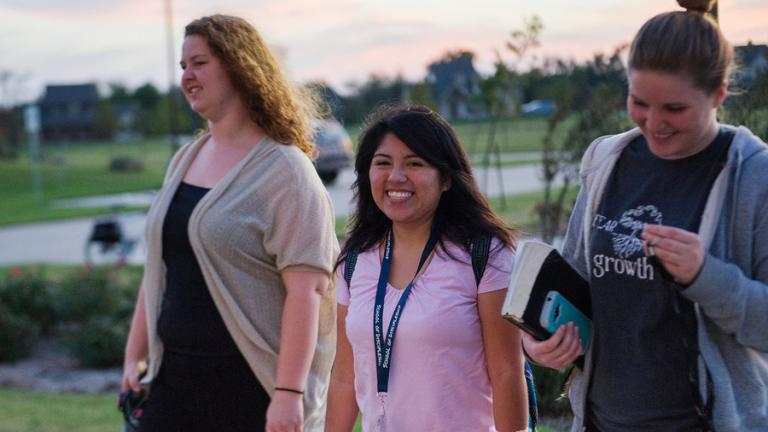
GFA created an immersive, authentic discipleship program for youth ages 18 – 27. Daily students are challenged to “die to yourself” while living in a community of believers who love Christ and serve others.
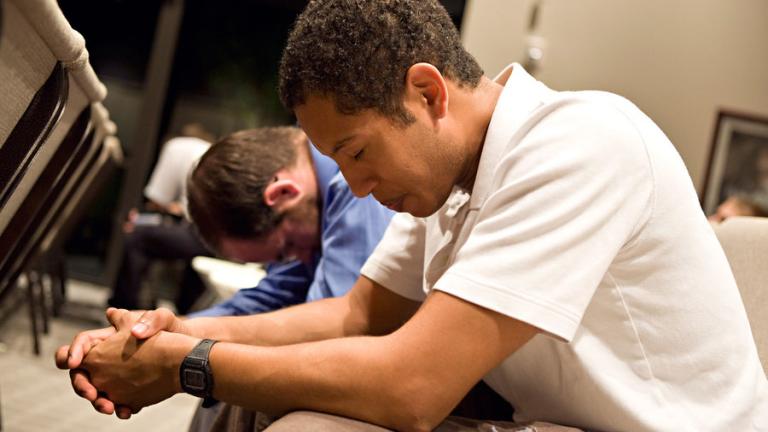
The foundation of GFA’s ministry is prayer. We know nothing is accomplished without prayer, and therefore, we give it a place of priority. GFA-supported missionaries and GFA staff around the world pray consistently and with great fervor for those who have yet to comprehend the depth of God’s love and grace.


 Our mission in life is to be devout followers of Christ and to live lives fully pleasing to Him. God has given us a special love for the people of Asia, and it is our desire to minister to them and help them through ministries like education, providing health information or practical gifts, or through the spiritual transformation of peaceful hearts, restored relationships and mended lives. We do all this in community and in partnership with the global Body of Christ.

 The church my husband and I attend is an inner-city church thronged with eager and spiritually hungry millennials. It’s worship is vibrant (and loud). Baptismal services are held frequently. Some 56 new believers were baptized on the recent Sunday set aside for this. But it is not a liturgical church; we probably will not observe Advent this December 10. But the Holy Spirit (or perhaps some stray imagining of my own) or the memory of the Scriptural insights from my African friends, or simply looking at a familiar Scripture (2 Samuel 6) with a little fresh understanding is making this Advent Sunday deep with meaning. I am thinking of a young man, stripped, dancing before his people.













 Ad-Free & Subscriber Log-In