2022-08-20T18:44:24+00:00

Wills Point, Texas – GFA Special Report (Gospel for Asia)Discussing the present day tragedy of modern slavery & human trafficking, where there are more slaves today than at any time in history.
Gospel for Asia: Scandal of 21st Century Slavery & Human Trafficking (Part 1) - KP Yohannan - Gospel for Asia

Around 10 million people are currently behind bars somewhere in the world. Some have yet to face trial, a few have been wrongly convicted, but most are prisoners for a crime they have committed.

Meanwhile, four times as many people are being held against their will because of a crime committed against them—they are part of the global slave population estimated to be more than 40 million.

That number is higher than the entire population of Canada. Many of these victims are literally kept under lock and key, while others are effectively imprisoned by coercion, manipulation and extortion.

Slavery: Stronger Today than Ever

Slavery may long have been officially outlawed, but difficult though it may be to believe, numerically there are more slaves today than at any time in history.

Among them:

  • Twin brothers, Aimamo and Ibrahim, who at age 16 left grinding poverty in their native Gambia for what they hoped would be a better new life in Libya.
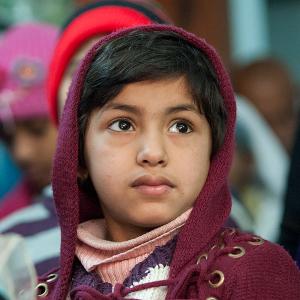
  • Instead of well-paying jobs, they found themselves enduring beatings and threats as they labored on a farm alongside scores of other sub-Saharan Africans, locked in at night to keep them from escaping.
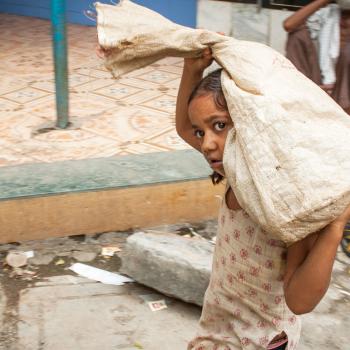
  • “A,” who was sent by her desperate mother to live with another family in Asia as a servant after the death of her father.
  • Forced to work from morning to night cleaning dishes and washing clothes, the small girl was beaten and slapped when she didn’t keep up. And when she fell asleep one night while massaging the legs of her “owner,” the woman smeared chili powder into her eyes as punishment.
  • “K,” who was sold at age 5 by family friends and then taken to truck stops along route 80, one of the busiest interstate highways in the United States.

There, anesthetized by drugs and alcohol, this little girl would be forced to knock on the doors of the trucks and sell herself to the drivers.
Since 2011, almost 90 million people have experienced some form of modern slavery for periods of time ranging from a few days to several years.

Total profits from this trade in slave labor are dwarfed only by sales of illegal drugs and illicit arms.

Every country in the world is affected by human trafficking,” says the United Nations, “whether as a country of origin, transit, or destination for victims.”

So concerning is the issue that it is spotlighted by not one but two of the UN’s annual international awareness days.

The World Day Against Child Labor (June 12) highlights the plight of nearly 170 million children worldwide who have to work—half of them in “hazardous” situations—and whose number includes those in bonded labor. Though the number of working children has dropped significantly since the turn of the millennium, that pace of decline has “slowed considerably” in the past few years, says the International Labor Organization.

Meanwhile, children comprise a third of all victims of human trafficking, which is the focus of the World Day against Trafficking in Persons (July 30).
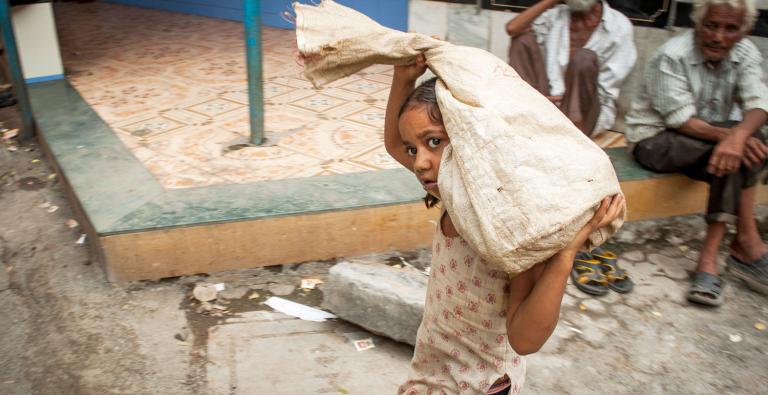
Money from Misery - KP Yohannan - Gospel for Asia

Money from Misery

That human trafficking relates to two UN days of awareness also hints at the complexity of the issue. Because the particularly harrowing nature of sex trafficking means it garners a lot of headlines, many people assume this is the main area of human trafficking.

However, research tells another story: Of the 25 million people ensnared in forced labor in 2016, only 5 million were involved in sexual exploitation.

Sex trafficking doesn’t only generate more headlines than other forms, though; it also generates a lot more money.

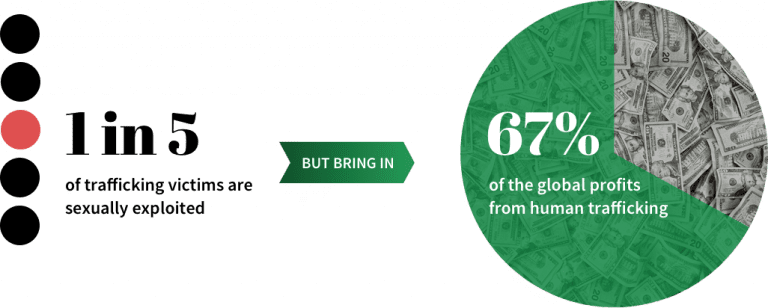
One in five trafficking victims may be sexually exploited, but they bring in two-thirds of the total global trafficking profits.

A typical woman forced into prostitution makes around $100,000 a year of profit for those who control her, six times the average profit of other forced workers.
Human Rights First says that studies have shown that sexual exploitation can yield a return on investment ranging from 100 percent to 1,000 percent, while an enslaved laborer in less profitable markets—such as agricultural work—can generate something over 50 percent profit.

Such numbers underscore how human trafficking is really big business. As with so many of the world’s major problems, the causes are complex. Politics and prejudice, commerce and corruption, disasters and discrimination are all part of the roots of this diseased tree.

“Vulnerability to modern slavery is affected by a complex interaction of factors related to the presence or absence of protection and respect for rights; physical safety and security; access to the necessities of life such as food, water and health care; and patterns of migration, displacement and conflict,” say those behind the sobering 40 million statistic.

Meanwhile, Anti-Slavery International (ASI) lists “strict hierarchical social structures and caste systems; poverty; discrimination against women and girls and lack of respect for children’s rights and development needs” among the fertilizers.

However, one thing distinguishes human trafficking from many other key global issues.

Andrew Forrest, anti-slave campaigner (CC BY 3.0 AU / Australia Department of Foreign Affairs and Trade)

“This is a human condition,” says Australian businessman and anti-slavery campaigner Andrew Forrest. “This isn’t AIDS or malaria or something which is thrust upon us by nature. This is the choice of man, so the choice of man can stop it.”

There are widespread efforts being made to do that, from those advocating for changes in the law to those pushing for businesses to take more responsibility for the shadow side of globalization. Others work with authorities to free people from brothels and brick factories or, like many Gospel for Asia (GFA)-supported workers, care for and help to rehabilitate the victims left with physical and emotional scars.

Those shocked by the scale of slavery in the 21st century, imagining it had effectively been abolished in the 1800s, may be equally surprised by its many forms. They range from sex trafficking and forced marriage—some 15 million people in 2016, many of them young girls—to forced labor and bonded labor.

The latter is especially common in Asia, where exorbitant interest rates by lenders can lock generations of families into working to pay off what began as a small debt—likely for an essential such as food or medicine—that keeps mushrooming.

“This isn’t AIDS or malaria or something which is thrust upon us by nature. This is the choice of man, so the choice of man can stop it.”

“Modern slavery takes many forms and is known by many names,” says the Freedom Fund.

Today’s slaves are trapped in fishing fleets and sweatshops, in mines and brothels, and in the fields and plantations of countries across the world. It can be called human trafficking, forced labor, slavery, or it can refer to the slavery-like practices that include debt bondage, forced or servile marriage, and the sale or exploitation of children.”

According to Free the Slaves, today’s trade has two chief characteristics: It’s cheap, and it’s disposable.

“Slaves today are cheaper than ever,” says the group. “In 1850, an average slave in the American South cost the equivalent of $40,000 in today’s money. Today a slave costs about $90 on average worldwide.”

Human trafficking may be a global disease, but it is more virulent in certain parts of the world, where poverty and social inequality more readily enable it to thrive. The 2016 Global Slavery Index (GSI) found that just five countries accounted for almost 60 percent of the global slave population.


21st Century Slavery & Human Trafficking: Part 2 | Part 3

This article originally appeared on gfa.org

To read more on Patheos on the desperate issue of ongoing 21st century slavery, go here.

Click here, to read more blogs on Patheos from Gospel for Asia.

Go here to know more about Gospel for Asia: GFA.net | Wiki | Flickr | GFA
2021-04-30T08:37:21+00:00

Wills Point, Texas – Gospel for Asia Special Report (GFA) – Discussing the troubling problem of the lack of toilets – basic sanitation, and open defecation for millions throughout the world.

What If You Didn’t Have a Toilet?

So I remind myself of toilet scenarios I do know about, then extrapolate some personal situations out to extreme what-ifs. Our home, in which we have lived for 38 years, has its own septic system. During that time, when we had extreme storms, the power would go out. This meant that no water could be pumped from our underground well, and this electric outage disabled our showers, our faucets and our toilets.

I used to store plastic bottles of water so when things went black we could brush our teeth, get dressed by candlelight (since there are no windows in any of our bathrooms), and—get this—flush our toilets. If the power did not come back on for a couple days, the frozen food thawed and an excess of detritus threatened to overflow the toilet basin.

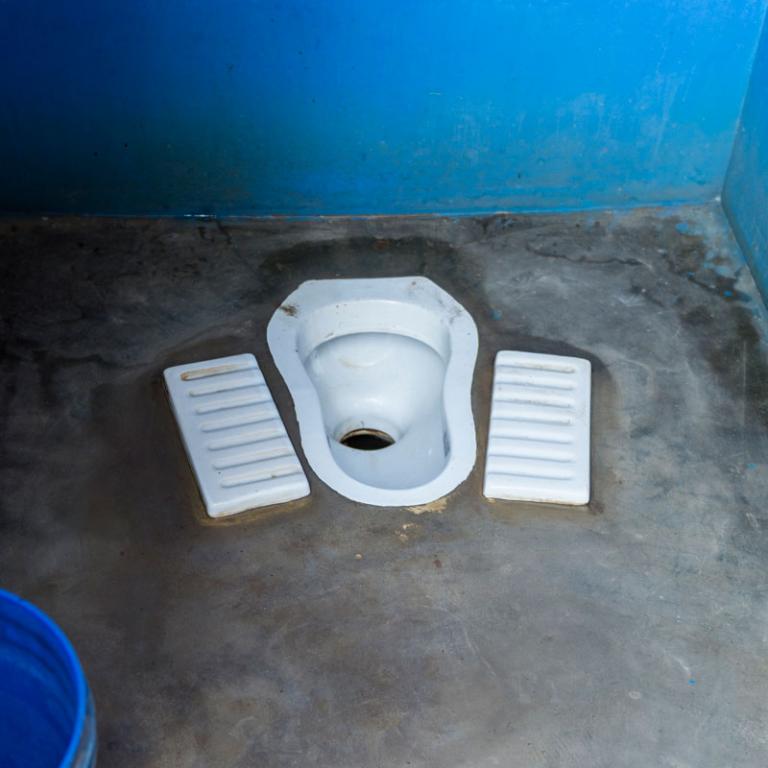
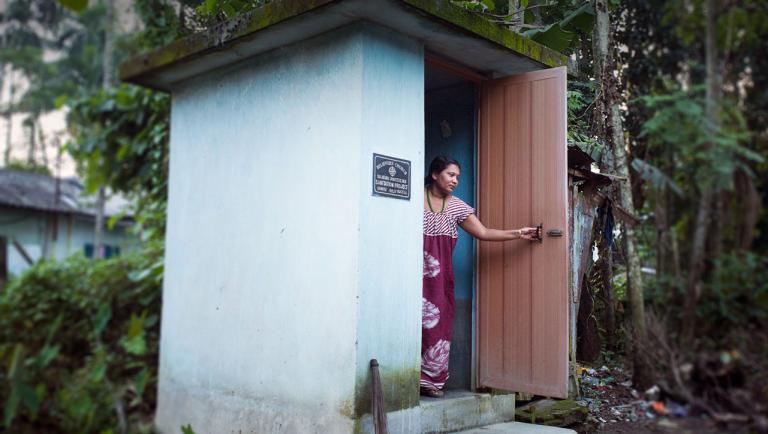
A Squat Outdoor Toilet in Asia - KP Yohannan - Gospel for Asia
A well-cleaned squat toilet in Asia.

So I extrapolate—what if this happened all the time? What if sewer lines broke, became clogged and backed up regularly? What if I lived in poverty and there were no plumbers and no money and no electric company to call to fix our difficulties? What if I had to stand in line to use a communal latrine where flies buzzed, the floor was filthy, someone had evacuated due to acute diarrhea, and no one wanted to clean the mess? Now we’re getting closer.

In the refugee camps of the world, my travel companions and I held ridiculous discussions as to who had invented squat toilets—men or women? Someone shot a photo of me holding a rickety latrine toilet door upright while a woman co-worker trusted me to guard her privacy while she did her business inside. I am laughing, howling with laughter really, at a ridiculous situation, but this is, for most of the world, not a laughing matter.

Extrapolate. What if there was no female friend to hold the door? What if the floor around the squat toilet inside was filthy and you had to pull up your sari and rest the top half of the door against your forehead to keep it from falling? What if you believed that the little structures, dark and dank and scary inside, were really inhabited by demons?

Smelling an overflowing latrine from 20 feet away might persuade even a Westerner to think similarly, even if only metaphorically. In truth, I don’t like the few outhouses I’ve been forced to use in the States, nor many of the spooky national park public facilities, and I certainly avoid, if I can help it, those portable potties hauled in on trucks for public events or construction work sites.

When Your Septic Tank Problems Bring Embarrassment

My last attempt at toilet empathy. About 10 years after we had moved into our home in West Chicago, Illinois, our neighbor across the back yard knocked on the door and apologized for needing to complain about the standing, stinking water that was seeping into his property.

“I think you may be having trouble with your septic system,” he reported, embarrassed to have to point this out.

I called two septic companies. One told me I needed to have the whole septic field replaced; it would cost us $10,000. The other service man diagnosed another problem, but his estimate was about the same as the first. Then I went to the DuPage County Health Department and asked what septic firms they would recommend. I called Black Gold, whose reps complained about the septic map drawn by the original company that laid our field that was now leaking.

“Would the health department let us get away with a layout like this?” he asked his partner. They both obviously thought the field plan had been rendered by some septic idiot. Sure enough, after spending about 45 minutes prodding our three-quarters-of-an-acre lot with long poles, I was informed: “Lady, you don’t need no new septic field. The lines of what’s there ain’t connected to the tank.” His fee was $3,000. I made a garden out of the areas that were torn up by their repairs.

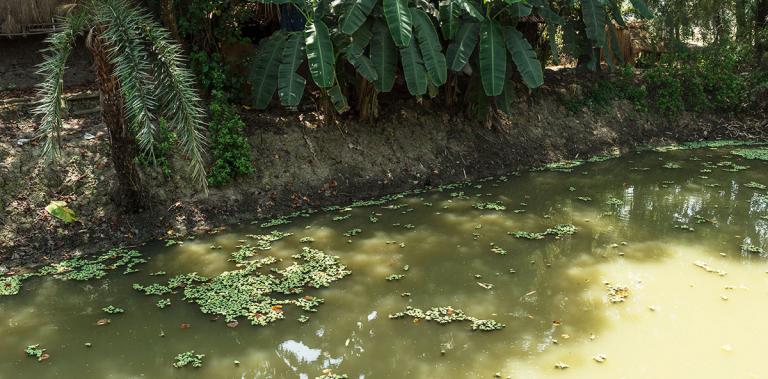
Many people in Asia draw water from smelly, vile ponds - KP Yohannan - Gospel for Asia
Vile, brown liquid that some in Asia count on as their water source.

So what if I lived somewhere that permanently seeped smelly, vile, germ-ridden, brown liquid? What if the river at the back of the land was a running sewer, and my grandchildren couldn’t romp and splash in it? (As one writer vividly describes: “In stagnant reaches, methane bubbles up through the grey-green water, and the stench of rotten eggs—hydrogen sulfide—wafts into homes.”) What if the fields were filled not only with animal feces but the excreta of some 300 neighbors?

You come up with your own empathy-building stories.

Communities Band Together to Improve Sanitation

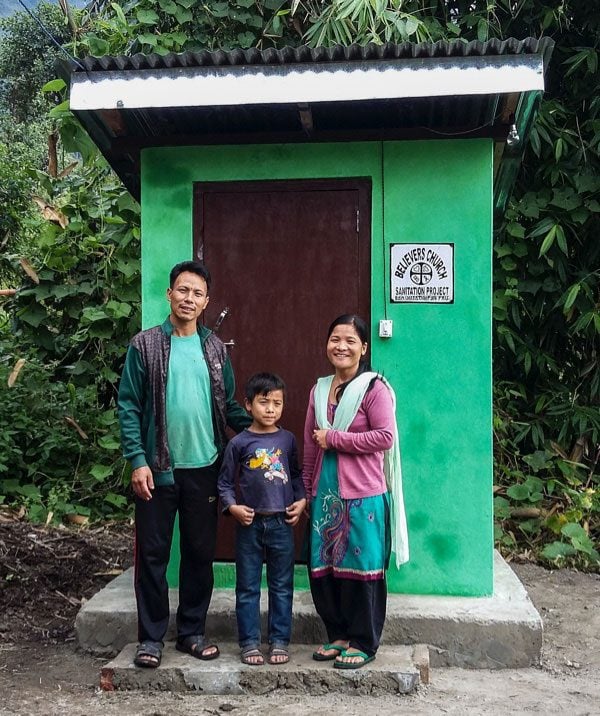
A family in front of a GFA-provided outdoor toilet and sanitation facility - KP Yohannan - Gospel for Asia
A family in front of a GFA-provided local sanitation facility.

Prime Minister Modi and his teams are sold on community-led initiatives, and so should they be. Change works best when a whole population is committed to seeing it happen.

Elizabeth Royte wrote: “The Indian government is rewarding certified ODF villages by moving them to the front of the line for road or drinking-water improvements. It has launched an advertising campaign that exalts Swachh Bharat mascots, like the 106-year-old woman in Chhattisgarh state who sold seven goats to build two toilets. It has enlisted cricket and Bollywood stars to exhort people to use the new latrines.”

Community development often works best when it is exactly that: an idea that grows out of the mind of some visionary who lives within the locality that has a need, a visionary who is not only capable of strategic thinking but also feels empathy and who is moved by compassion by the people nearby—his or her neighbors. And when a whole community becomes involved in “cleaning up its act,” there are few powers on earth that can withstand such initiative.

Now what’s interesting about Gospel for Asia‘s stories surrounding sanitation is that it is the local pastor in the village, who out of concern and knowing that open defecation is a deadly disease-breeding potential, exercises his compassion to love his neighbors by being concerned about the availability of latrines.

This is an excerpt from one of Gospel for Asia (GFA)‘s stories called “Welcome to Their Toilet” that talks about how one community was forced to use the open fields to defecate because they had no other proper place.

The local GFA pastor, Vidur, understood the villagers’ struggle. He himself had been ministering in the area for more than 10 years. Knowing people’s lives were at risk whenever they used the fields as their toilet, he wished there were a way to help them.

Then he found out Gospel for Asia had started a program to promote sanitation in underprivileged areas. Excited about the opportunity to help his community, he asked his leaders to build four toilets in the village.

That’s when Janya and her husband, Lalan, gladly offered some of their land for one toilet.

In January 2013, when the villagers saw a concrete outhouse rise out of the dusty ground, they poured out their gratitude to Pastor Vidur and the church.

“[This] saved the lives of people from illness,” shared one villager.

Even the village leader expressed thanks. “[The church] is always concerned about the need of people and works hard for a brilliant life for the community,” he said.

What an extraordinary example of love in practical action.

“Love the Lord your God with all your heart and mind and strength. And love your neighbor as yourself.” —Luke 10:27

On the Brink of Innovations, Change in Sanitation

Toilet technology is on the edge of remarkable, cost-effective, ecologically friendly frontiers. They’re becoming self-cleaning and solar-powered. A solar-powered toilet that converts waste into charcoal that could then be used as fertilizer.

An indoor toilet that works like a garden composter, spinning the contents and reducing odor and the number of dangerous pathogens. Portable rickshaw toilets. A community bio-digester toilet designed to convert human waste into gases and manure. Once ideas begin flourishing, there is no limit to what can happen.

I’m banking on Prime Minister Modi’s ODF Campaign to be successful. The hardest pull of any new effort is most always at the beginning, but once new ideas start rolling, they gather momentum. Some of the new toilet technologies may become catalysts as well.

In addition, there are hundreds of international organizations working on sanitation solution. They understand that one size does not fit all the variables that make up the particulars in this vast discussion, but added all together, it is a prohibitive association with evidence of remarkable dedication.

“And when a whole community becomes involved in ‘cleaning up its act,’ there are few powers on earth that can withstand such initiative.”

A Canadian doctor, one of those “creative renegades” unhappy with the condition of the world and one whom I have come to admire and love, was appointed as a Provincial Health Officer in the highlands of Papua, New Guinea.

While making an aerial survey, he and his team discovered one village that was distinctly cleaner and healthier. Far below them was the evidence of what turned out to be a pastor with some basic health training who had taught his people those lessons, and the difference could be seen from the air. That one flight changed their lives. They began to search for a more integral way of ministering and soon began using and teaching a community health evangelism methodology, which had been developed in Africa.

Sometimes we get lost in the details on the ground. We need to stand back, take deep breaths and find some way to gather broader assessments—some kind of aerial view. Progress is being made; it’s just a little harder in some places than in others. I’m proud that Gospel for Asia is one of the players. Last year, GFA helped provide 10,512 toilets for needy communities throughout Asia.

Shout Out to Toilets!

Christianity has everything to do with sanitation. We serve a God who is expecting us to help restore the world He created to its original design. That is a world, among many other things, without rampaging diseases. One day, Scripture promises, it will be a world without death and suffering. So in this interim, let’s hear a shout out for all the toilets in the world!


Saving Lives at Risk from Open Defecation: Part 1 | Part 2

This article originally appeared on gfa.org

To read more on Patheos on the problem of open defecation, go here.

Go here to know more about Gospel for Asia: Youtube | Twitter | GFA Reports | My GFA | Instagram

For more information about this, click here.

2021-04-30T08:05:17+00:00

Wills Point, Texas – Gospel for Asia Special Report (GFA) – Discussing the troubling problem of open defecation and the lack of basic sanitation facilities for millions throughout the world.

Saving Lives at Risk from Open Defecation (Part 1) - KP Yohannan - Gospel for Asia
2.3 billion worldwide lack basic sanitation facilities and 892 million still defecate in the open, according to World Health Organization.
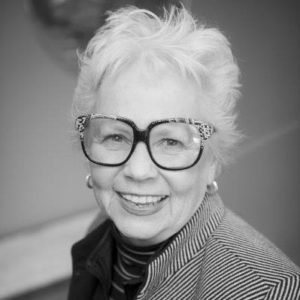
Karen Mains, author
Karen Burton Mains, author

For much of my adult life, it has been my privilege to hang out with the “renegades” of Christian missions, that relief-and-development crowd that rushes to help during natural disasters, struggles to alleviate the suffering and abasement of refugee displacement, and pays concerted attention to the everyday struggles of everyday living in the developing nations of the world.

The first trip I made around the world was at the invitation of Food for the Hungry, and I traveled with Larry Ward, the executive director at the time, and his wife, Lorraine. It was on this trip I became convinced this particular crew of crisis-ready, crisis-solving, crisis-adaptive humans was fueled solely by adrenaline (“When does he sleep?”).

The purpose of the trip was an international field survey with an emphasis on the refugee crisis in the world, which at that time in the 1980’s was the largest since World War II. We started in Hong Kong and ended seven weeks later in Kenya, Africa. My assignment was to observe with fresh eyes and to write about what I had seen.

The book I wrote, The Fragile Curtain, with the help of daily briefings from the U.S. State Department and the excellent international reporting of “The Christian Science Monitor” (as well as some generous coaching from a Pulitzer Prize-winning newspaper reporter) won a Christopher Award, a national prize for works that represent “the highest values of the human spirit.”

Eventually, I brought the accumulated exposure of my world travels—some 55 countries in all—and the learning I had gathered through journalism research and the actualities of dragging through camps and slums to the board table of Medical Ambassadors International (MAI), a global faith-based health organization.

The former international field director of MAI, now working to create a coalition of some 250 mission groups and development organizations implementing the MAI teaching methodology, made a statement I thought about for years:

“I never realized,” he said, “that I would eventually measure the impact of the Gospel by how many toilets had been built in a village.”

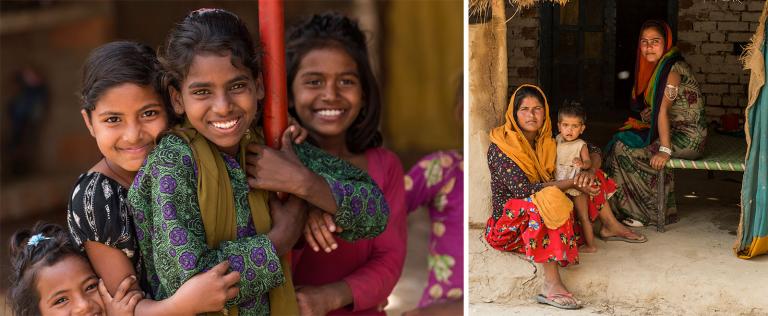
Women and girls are often at risk when open defecation - KP Yohannan - Gospel for Asia
Women and girls are often at risk when open defecation is the only option for relieving themselves. Thankfully, these precious faces can smile because a toilet facility was recently built in their village.

GFA’s Story: Fighting Open Defecation, Helping to Improve Sanitation in Asia

So what does Christianity have to do with the defecation problems of the world?

Gospel for Asia (GFA) is an organization close to the heart of my husband, David Mains, and to myself. We met K.P. Yohannan, GFA’s founder, when it was just an impelling vision in the heart of a young Indian man—one of those divine nudges that simply would not stop pushing at him. Since then, David has traveled to Asia at the invitation of Gospel for Asia (GFA) some eight times; I have visited Asia under their auspices once. We’ve watched as K.P.’s vision grew from a dream to an actuality with numbers beyond anything we could have considered possible.

GFA’s website tells its story, and its story is vast:

  • In 2016, some 82,000 impoverished children were fed, clothed and schooled;
  • 829 medical camps provided hundreds of people with free medical care and advice;
  • 10,512 latrines with dual-tank sanitation systems were constructed.
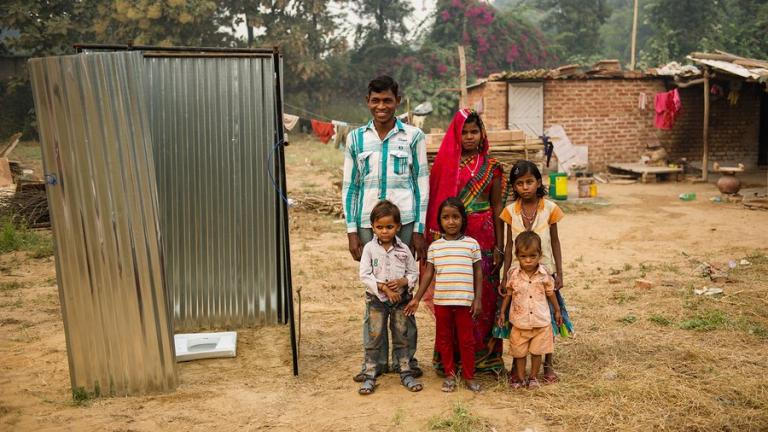
Family in Asia next to a sanitation project from Gospel for Asia - KP Yohannan
This family stands in front of a latrine or “squatty potty” that was installed by GFA-supported national workers.

Gospel for Asia (GFA) started building latrines in 2012, setting a goal of constructing some 15,000 concrete outhouses by 2016. Potable water, of course, travels hand in hand with sanitation, and in 2016, the ministry’s field partners constructed more than 6,822 “Jesus Wells” and distributed 14,886 BioSand water filters to purify drinking water. Touching vignettes on GFA’s website make the statistics personal.

“This saved the lives of people from illness,” stated one villager—and indeed, toilets, when and if they are used, do just that.

A village elder expressed thanks:

“The church is always concerned about the need of people and works hard for a brilliant life for the community.”

There, indeed, is a thread that runs through Gospel for Asia’s stories of toilets: The pastor of the church in this village or that hamlet seems to be the catalyst for health improvement.

Organizations Tackling the Open Defecation Sanitation Crisis

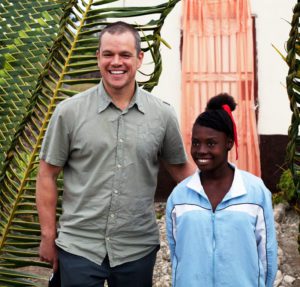
Matt Damon from water.org smiling about clean water - KP Yohannan - Gospel for Asia
Matt Damon, the founder of Water.org (photo credit Water.org)

Much of the world is in a war against the perils caused by inadequate or non-existent sanitation. People as diverse as Matt Damon, a Hollywood celebrity, award-winning actor and producer/screenwriter; and Narendra Modi, the current prime minister of India, are battling uphill against open defecation (in the sewers, in running streams, by the roadsides, in the fields and the forests, in garbage dumps).

Damon, driven by a desire to make a difference in solving extreme poverty, discovered that water and sanitation were the two basic foundations beneath much of what ails the world. Through his charity, Water.org, he and his business partner, Gary White, are using the microfinance template to provide loans for underserved people to connect to a service utility or to build a latrine for their homes. Some 5.5 million people have been impacted by his approach, and the group estimates they will reach another 2.5 million by the end of 2017.

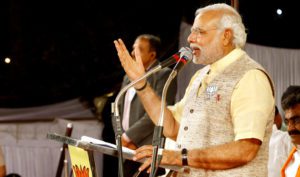
Prime Minister Modi campaigned to end open defecation and build latrines for India - KP Yohannan - Gospel for Asia
Prime Minister Modi campaigned to end open defecation and build latrines for India. Photo by narendramodiofficial on Flickr / CC BY-SA 2.0

Modi actually campaigned for office with the slogan “Toilets Before Temples.” Using Gandhi’s 150th birthday—October 2, 2019—as a goal, the Indian prime minister declared his intention to end open defecation in the country by that date. A campaign was framed, Swachh Bharat Abhiyan (Clean India Mission), and $40 billion was allotted for building latrines and changing mindsets, while the World Bank contributed loans totaling another $1.5 billion.

Another big player in the sanitation action is the United Nations, which in 2000 established Millennium Development Goals to be achieved by 2015. While many of these goals were reached (some statisticians conclude that world poverty was halved; others, of course, disagree), progress nevertheless was erratic—great success here and there with some signee countries having few or no results.

Whereas, as Matt Damon discovered, improving sanitation along with clean water, undergirds many of the problems included in what is now being reframed by the UN as Sustainable Development Goals, the target to halve the proportion of the population living without access to improved sanitation facilities by 2015 was missed by almost 700 million people.


Saving Lives at Risk from Open Defecation: Part 2 | Part 3

This article originally appeared on gfa.org

To read more on Patheos on the problem of open defecation, go here.

Go here to know more about Gospel for Asia: GFA | GFA.org | Facebook | Youtube | Twitter

For more information about this, click here.

2019-11-25T10:46:37+00:00

October 16, 2018, marks the 38th anniversary of World Food Day. The date was selected to celebrate the anniversary of the establishment of the United Nations’ Food and Agricultural Organization (FAO) in 1945. On World Food Day, people from around the globe participate to declare their commitment to eradicating worldwide hunger during our lifetime.

Halting Hunger: World Food Day - KP Yohannan - Gospel for Asia

Hunger hurts. Numerous agencies are working to ensure that every individual around the world has continual access to nutritious meals. The United Nations cites eight reasons why eliminating hunger could change the world from the perspective of its global Sustainable Development Goals.

8 Ways Eliminating Hunger Could Change the World

  • Zero hunger could save the lives of 3.1 million children a year.
  • Well-nourished mothers have healthier babies with stronger immune systems.
  • Ending child undernutrition could increase a developing country’s GDP by 16.5 percent.
  • A dollar invested in hunger prevention could return between $15 and $139 in benefits.
  • Proper nutrition early in life could mean 46 percent more in lifetime earnings.
  • Eliminating iron deficiency in a population could boost workplace productivity by 20 percent.
  • Ending nutrition-related child mortality could increase a workforce by 9.4 percent.
  • Zero hunger can help build a safer, more prosperous world for everyone.

UNICEF is the world’s largest supplier of ready-to-use therapeutic food for malnourished children. The organization helped to increase the world’s supply of therapeutic food by more than 9,000 percent between 2008 and 2012.

Every day around the globe, 2,500 World Food Program (WFP) logistics staff members manage an average of 5,000 trucks, 30 ships and 50 aircraft; a network of 650 warehouses and a fleet of approximately 700 all-terrain trucks to support its efforts to deliver food where it is needed most.

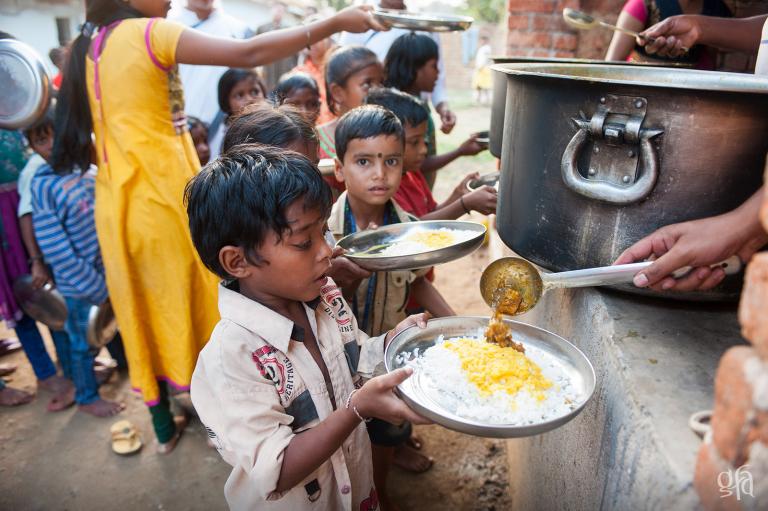
Gospel for Asia provides healthy meals to children attending Bridge of Hope centers, widows, leper colonies, and families living in remote villages and urban slums. We do this because, as our friends at Food for the Hungry say,

“Our Christian belief [is] that every person has intrinsic value and that it is our responsibility to advocate for the poor and the marginalized.”

The goal is to end hunger and ensure access to food by all people, end all forms of malnutrition, ensure sustainable food production systems, and double agricultural productivity and the income of small-scale food producers.

The task is almost beyond imagining in the context of the United Nations’ Sustainable Development Goal Number Two for 2030.

The World Food Program describes the magnitude of the problem.

“The global food security challenge is straightforward: by 2050, the world must feed 9 billion people. The demand for food will be 60% greater than it is today.”

Although hopes continue to run high that the eradication of hunger can be accomplished, the 202-page Special Report from the FAO, Food Security and Nutrition Around the World in 2018, cites three growing concerns:

  • New evidence continues to point to a rise in world hunger in recent years after a prolonged decline. An estimated 821 million people – approximately one out of every nine people in the world – are undernourished.
  • Undernourishment and severe food insecurity appear to be increasing in almost all regions of Africa, as well as in South America, whereas the undernourishment situation is stable in most regions of Asia.
  • The signs of increasing hunger and food insecurity are a warning that there is considerable work to be done to make sure we “leave no one behind” on the road towards a world with zero hunger.

The WFP published a World Hunger Map this year that presents the prevalence of undernourishment in the world from information gathered over the past three years. The map graphically illustrates what the organization calls

“The alarming signs of increasing food insecurity and high levels of different forms of malnutrition are a clear warning that there is considerable work to be done.”

In South Asia where Gospel for Asia’s efforts are focused, the percentage of undernourished people has declined from 21.5% in 2005 to 14.8% in 2017 (considered marginally low). The total number of undernourished people there has decreased from nearly 400 million in 2005. Yet, there are still more than 227 million who remain undernourished – the largest regionally-measured group on the planet.

Other regions and nations that fall into the same group of “moderately low” undernourishment include South Africa, China, Southeast Asia, the Dominican Republic, 10 nations in Western Africa stretching from Mauritania to Gabon, Serbia, Albania, Lebanon, Jordan, Saudi Arabia, and Oman, and five of the form former Soviet republics.

Bolivia, Ethiopia, Kenya, Angola, Nicaragua, Guatemala, Honduras, Pakistan, Bangladesh, Mongolia, Laos, Cambodia, and four Western African nations are cited as having moderately high undernourishment rates (up to 24.9%).

Eight African nations and three Middle Eastern nations are rated as high in undernourishment (from 25% to 34.9%).

Ten African nations and North Korea suffer the worst undernourishment rates of more than 35%.

World Food Program Executive Director David Beasley noted that “Conflict remains the main driver of hunger.”

On This World Food Day

We encourage you to be aware of the problem of world hunger on World Food Day. Set aside a part of the day to pray for those who are suffering from hunger.

This is Gospel for Asia’s 39th year working in South Asia. A major part of our work is providing nutritious food to many families, women, children, widows, lepers and the disenfranchised.

Pray for GFA and other similar initiatives to be able to continue to supply food to those who would otherwise be hungry and undernourished.

Pray that we will be able to expand our reach to many more in need and that in doing so, they will see our love for them and glorify our Father in Heaven.


Click here, to read more blogs on Patheos from Gospel for Asia.

Go here to know more about Gospel for Asia: GFA.org | Facebook | Youtube | Twitter | GFA Reports


Sources:

2018-10-05T15:27:14+00:00

Fighting Malaria - a "chilling disease." - KP Yohannan - Gospel for asiaWill malaria finally stop claiming innocent lives in this decade or this century? Maybe. Great strides are made every year toward infection prevention and disease cures. Still, since time immemorial, it remains one of the most stubborn diseases in the world.

Malaria preventatives and cures work if the right medication is administered in time. That’s a blessing. A childhood vaccine that could protect against infection is finally on the horizon. Insecticides also attack the disease from the opposite direction by controlling the population of malaria-carrying mosquitoes.

Yet, even with all these efforts, the insects as well as the parasites they host are notoriously resilient. It’s always an uphill battle.

The World Health Organization (WHO) believes several countries could eliminate malaria by 2020. They refer to those locations as “E-2020” countries. Global organizations and medical research groups do great work toward eventual total eradication. South-East Asia, Africa and the Americas, they explain, have seen the most notable, recent success in fewer lives lost to the terrible disease.

In the meantime, how many more people will become infected? How many will die? Eradication matters, but so do the lives of people suffering and at risk today.

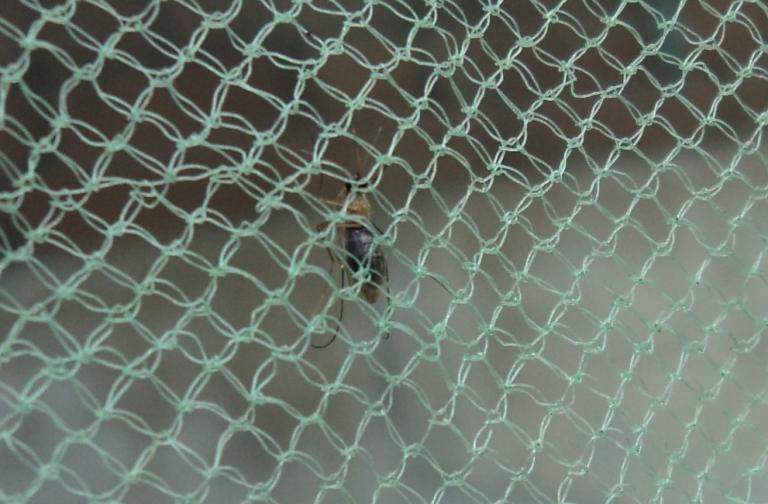
Global elimination efforts are complex and cost billions, according to WHO. But a person can find safety tonight behind a simple, inexpensive mosquito net. That’s where GFA-supported workers step in. Netting can’t erase this terrible disease from Earth, but it can help families stay healthy until that day arrives.

With Malaria, Even a Simple Kindness Matters - KP Yohannan - Gospel for Asia

There is No Harvest Tomorrow Without Labor Today

You can’t plant a crop in the morning and expect a meal from the same field for tonight’s supper. The same could be said of the efforts to eliminate malaria. The seeds planted today may yield a bountiful harvest of health and happiness in years to come. But what happens in the meantime?

The simple protection of a mosquito net might seem less grand in scope than wiping the disease from the planet. Maybe no one will win an award for going from village to village with stacks of netting to distribute to people in need. For the lives they save today, those small kind gestures are priceless.

Mosquito nets in conjunction with insecticides, preventative medications and medical cures form a more united front. They help fewer people become infected with malaria and help more infected people survive.

God Asks Us to Tend to the Here-and-Now

Right now, people stand at risk of contracting a disease that’s a legendary killer. We should plan for a brilliant tomorrow without malaria. We should celebrate the wonderful research that could make it a reality. That’s the only way a healthy harvest can ever be realized. It also appears to be the trajectory we’re on. But planning and hope shouldn’t come at the expense of tending to the sometimes-unglamorous business of today. If a life’s work is only unglamorous, it still matters; it still makes a difference.

Jeremiah 29 contains powerful lessons about perseverance and optimism. Although some verses—especially verse 11—is often interpreted as God’s promise of swift deliverance from all suffering, many Bible scholars agree that’s not the case. Dig in a little deeper.

In context, this chapter and verse teach us that God does, indeed, have a wonderful plan for the future. Deliverance might not happen in this life, and it still requires something from us today.

God asks us to do what we can to make the best of where our feet are planted, whether or not we take part in reaping a grand crop. That’s why the humble work of distributing mosquito nets matters so much.

The British Medical Journal (BJM) says each year brings approximately 250 million new cases of malaria worldwide. Of the people infected, nearly 800,000 don’t survive the ravages of the disease.

There is no guarantee that malaria will be eliminated this year, this decade or this century, but people still need help today.

Mosquito nets make an enormous difference in protecting people - KP Yohannan - Gospel for Asia
Mosquito nets make an enormous difference in protecting people at risk of getting bit by a malaria infected mosquito.

GFA-supported Workers Take Help Directly to the People at Risk for Malaria

If you have children or you’ve spent much time around them, you probably know the devotion of a loving parent. When a child is sick, Mom or Dad are on call. If there’s a risk of illness, they watch over their child for any signs that it’s true.

Imagine, then, the restless nights of parents whose children could suffer a deadly mosquito bite while they sleep. How would you protect your child? Would you stand guard all night with a fan to wave the mosquitoes away? What if just one—the wrong one—gets past you? Would you use insecticide? What if it stops working? If your child does become sick, is there medicine nearby to cure them, and will the medicine work? WHO explains that drug resistance is a growing problem.

Children are the most innocent among us. It’s easy to have your heartstrings twisted into knots thinking about a sweet life cut short. When children do survive, they may suffer lifelong effects. Malaria Journal points to research that shows some children suffer cognitive impairments as well as short- and long-term behavioral challenges.

But malaria has no respect for anyone of any age. Moms and dads can succumb to the disease. So can teenagers and young adults. Elderly people are at an especially high risk of dying, says BJM, much higher than adults under the age of 65.

Mosquito nets do so much more than protect children and whole families against insects that carry deadly parasites. They bring peace of mind right now where the need is great. They’re simple, inexpensive, easy to transport, and they go to work immediately. They require no special medical or technical knowledge, and they can remain effective for as long as the fabric holds up.

With support from GFA, devoted workers in malaria-torn regions can illustrate the love of God face to face in one of the most touching and tangible ways. When one simple mosquito net passes from the hands of a worker into those of a person in need, the love of God is shared along with it.

=====

To give the gift of a simple kindness — mosquito nets — visit the GFA website.

Learn more about malaria prevention by visiting our Special Report.

Read more blogs about malaria on Patheos … 1 2 3 4 5

Click here, to read more blogs on Patheos from Gospel for Asia.

Go here to know more about Gospel for Asia: GFA| Facebook | Youtube | Twitter


Image Sources:

  • Mosquito net: By தகவலுழவன் [GFDL or CC BY-SA 3.0], from Wikimedia Commons
2018-10-05T15:28:36+00:00

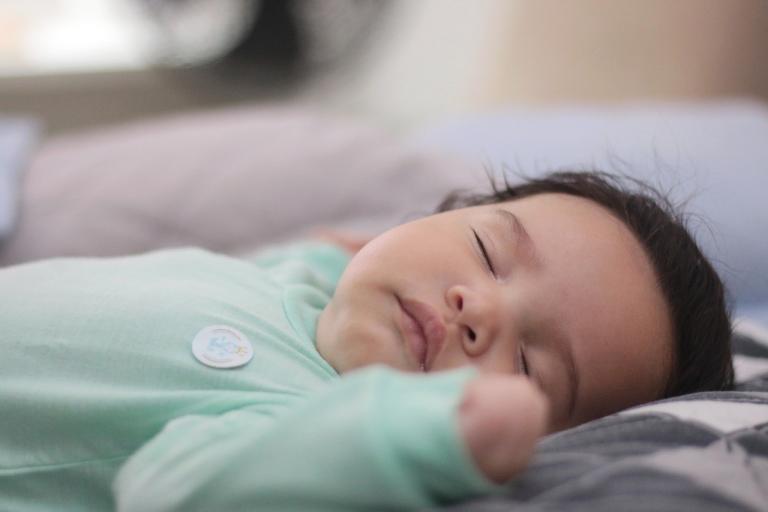
How Malaria Spreads and Kills and How to Help - KP Yohannan - Gospel for AsiaIs there anything in the world more precious than a baby who’s safe and sound in dreamland? Parents do everything they can to protect their children from harm. Unfortunately, some of the most dangerous risks are unavoidable without help. Many exist just because of where a family happens to live.

Malaria is one such risk, and it has no respect for the age, fragility or innocence of a person.

Malaria is no ordinary disease. You’ve heard of it, almost certainly. You probably have a general idea about how it spreads and in which parts of the world it tends to thrive. But do you know what really happens when a person is infected? And are you aware that the world’s first malaria vaccine has only recently entered testing in the field?

It’s an age-old problem that still needs a definitive solution.

How old? According to the Journal of Infectious Disease, Hippocrates, widely regarded as the father of medicine, discussed a disease that many believe was malaria. Modern scientists have also discovered infected mosquitoes preserved in primitive samples of Baltic amber.

It seems to have nearly always been around. But stopping it has been proven to be an insurmountable task. Malaria-preventive medications exist, but a vaccine has been a long and laborious journey. While mosquito netting seems like an ordinary thing, it has the power to save lives by preventing mosquito bites. Netting isn’t new or fancy, but it’s on the front lines of defense, especially in parts of the world where medical care is more difficult to find.

Galatians 6:2 tells us, “Bear one another’s burdens, and so fulfill the law of Christ.” Through the combined efforts of devoted missionaries, the World Health Organization (WHO) and several other globally recognizable organizations and foundations hard at work, we can protect against this terrible disease and cure it when it happens.

Gospel for Asia is involved in the good fight to protect people from malaria. GFA has distributed hundreds of thousands of mosquito nets to people throughout South Asia who could die without them. In 2017 alone, GFA distributed over 300,000 mosquito nets.

What Exactly is Malaria?

Malaria isn’t a bacterial or viral infection; it’s a tiny parasite called plasmodium, which has five known types, according to the Centers for Disease Control (CDC).

  • Plasmodium vivax
  • malariae
  • ovale
  • falciparum
  • knowlesi

Of these, P. vivax and P. falciparum are the most common. Of the two, P falciparum is the deadliest form. It’s also the most common in sub-Saharan Africa. P. knowlesi often infects primates, but it can also infect humans, specifically people living and traveling in Southeast Asia.

Each type of malaria has its own nature, but all infections have a similar course. First, they travel to the liver of the infected person, where they pause and multiply. Then they infect the red blood cells, where they multiply and spread.

Depending on the age and health of the infected person, symptoms emerge between one and two weeks after being infected with the parasites. The first symptoms, says WHO, are similar to a bout with the flu: fever, chills, headache and vomiting.

Fortunately, malaria is often curable. However, a cure depends on timely diagnosis, the right medication—and enough of it. Caught early, medication eliminates the parasite. Unchecked, a person infected with the parasites can die.

Without treatment, or without the correct medication for the person, malaria advances by destroying red blood cells and blocking capillaries to vital organs, which can end in organ failure and death.

Malaria preventive medications kill the parasites if they enter the body. Several such medications exist, but not every drug is right for every person. For people traveling where malaria is a problem, they offer reliable protection. But for people living where malaria is always a risk, daily medications aren’t a viable solution.

The female mosquito spreads the malaria virus - KP Yohannan - Gospel for Asia

How Does the Malaria Disease Keep Spreading?

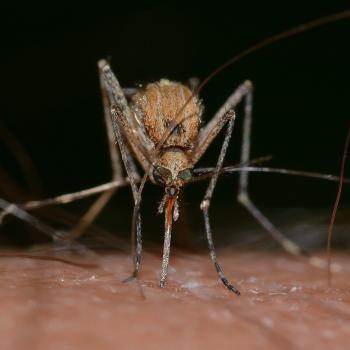
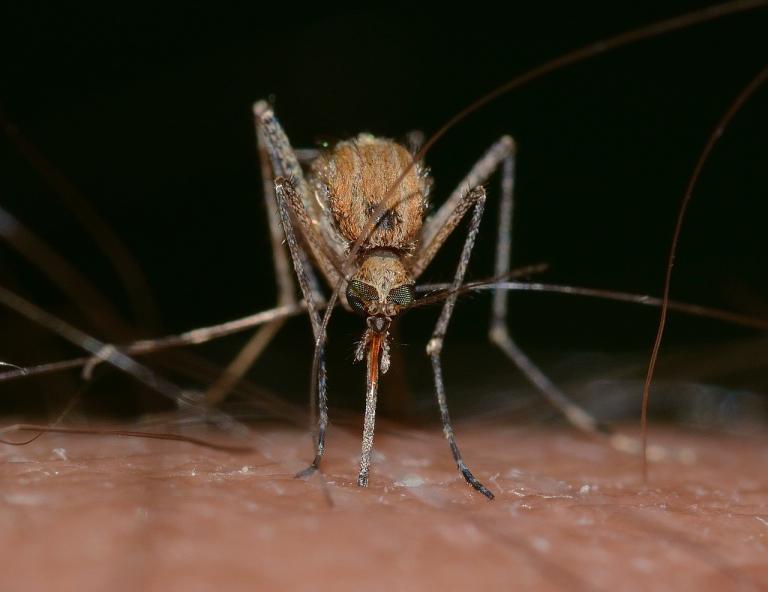
The plasmodium parasite is only transmitted by female mosquitoes of the Anopheles genus. Female Anopheles mosquitoes don’t inherently carry the parasite as part of their biological makeup, so not all of them can infect a person. However, WHO explains that all malaria-carrying mosquitoes that transmit the disease to humans are the female Anopheles.

Anyone who welts up and itches practically at the thought of a mosquito knows these insects are nearly always hungry. They bite humans to find a blood meal, which helps them nourish their eggs. When the right mosquito takes a blood meal from a person with malaria, the parasite enters the insect’s body, where it reproduces. The cycle for that mosquito has then begun.

But mosquitoes don’t bite in the truest sense of the word, and they also do more than extract blood. Infection begins with an injection.

The familiar sting comes from the proboscis, which is the scientific name for a mosquito’s long, multi-prong, needle-like nose. The bite is really a stab, which allows the mosquito to withdraw blood and inject its own saliva. Plasmodium parasites thrive in the saliva of infected female Anopheles mosquitoes.

Once the mosquito extracts malaria parasites from its victim, the parasites reproduce inside the insect’s body. The next time the mosquito needs a blood meal, the stab injects parasites into its new victim while it extracts blood. The more people it bites, the more people it infects, and the more people who carry the malaria parasite to infect more and more female Anopheles mosquitoes.

It’s a vicious, unrelenting cycle.

What Strides are Being Made Toward Malaria Prevention?

With anti-malaria drugs long in existence, people have had protection against the parasites multiplying and attacking the blood and vital organs. Quinine was the only reliable drug known to cure malaria until the 1930s, according to the Nobel Prize website. Several other drugs, such as Chloroquine and the drug combination known as Malarone, have been developed along the way. Prevention has always been elusive.

A physical barrier is one way to protect against the dreaded stab of the infected mosquito, not to mention the frustrating itch of any mosquito bite as well as other annoying insects. Mosquito netting might seem like a rather primitive method, but it works. Not only that, it carries the one-two punch of being effective and inexpensive. Treated with insecticide, netting becomes a bonafide protective barrier. That’s a boon for parts of the world where millions are at risk.

Mosquito netting is a lightweight mesh material with tiny openings. Air can breeze through, but mosquitoes can’t. Babies can sleep safely and soundly. So can their siblings, parents, grandparents and everyone else who has a net.

God calls us throughout the Bible to lend a helping hand to our brothers and sisters in need. Philippians 2:4 reminds us, “Let each of you look not only to his own interests, but also to the interest of others.” That is the way of the missionary. But missionaries aren’t the only ones who can make a difference. Anyone can play a part.

GFA-supported workers distribute mosquito nets, providing effective barriers in villages where the need is greatest. It’s amazing how something so simple can work so well. We have helped distribute hundreds of thousands of nets to communities in need. The work of this ministry wouldn’t have been possible then, and couldn’t be possible now, without many people working together to make it happen.

Nets have been around for many, many years. An effective vaccination, however, hasn’t.

Malaria is one of the most resilient and persistent parasitic infections in the world. Just when incidence of infection begins to show signs of improvement, it surges once again. It tends to favor climates where mosquitoes thrive, which means it’s not confined to any particular region. People throughout Africa, Asia and South America are at a particularly high risk. Some cases have been noted in North America but have generally been attributed to infected travelers returning from abroad.

Until the disease is eradicated, malaria prevention requires all life-saving methods available and all hands on deck. And that includes mosquito netting. For a thorough look at the disease and how we’re fighting malaria worldwide, see our Special Report on this topic.

GFA believes in helping carry the burden of our brothers and sisters around the world. We’re devoted to sharing God’s boundless mercy and love, sometimes in the simplest and most surprising of ways.

What could be simpler than a length of plain, fine mesh fabric? It’s not sophisticated like medications that take years of research and testing. But in some ways, it’s better because the effect is immediate. While people around the world continue to wait for a medical solution to malaria, mosquito nets shield them in the here and now. They work without any unfortunate side-effects, and one inexpensive net can last for years.

Proverbs 19:17 tells us that God sees and remembers our kindness toward the people in need. ‘Whoever is generous to the poor lends to the Lord, and he will repay him for his deed.”

Think about a precious baby living in danger of contracting a life-threatening disease from a mosquito bite. Now imagine protecting the health of that child for about the cost of a fast food meal. If you want, you can do that online by going to this webpage at gfa.org.

=====

Click here, to read more articles on Patheos by Dr. KP Yohannan Metropolitan.

Go here to know more about Dr. KP Yohannan: Twitter | Book | OnePlace | SermonIndex

2023-09-13T10:40:47+00:00

Caring for Women & Providing Clean Water Serve - KP Yohannan - Gospel for Asia
National missionaries provide hope and help to women with desperate needs all across Asia, and thereby serve the least of these.

Gospel for Asia (GFA World), Wills Point, TX – Discussing what motivates us to serve “the least of these”.

Driven by a passion to serve people Jesus referred to as “the least of these,” in 1979, Dr. KP Yohannan led a group of prayer believers to establish Gospel for Asia with a vision to turn the passion into practice.

Putting Our Passion into Practice to Serve the Least of These

While millions of people in North America were consumed with the debut of the Dukes of Hazzard, the release of The Muppet Movie, the introduction of the McDonald’s Happy Meal, and things on a more significant scale such as the American hostage crisis in Iran, the search for the Unabomber, and the peace talks in Washington between Egypt’s Anwar Sadat and Israel’s Menachem Begin, a small group of Christians had been fasting and praying in Dallas. They were praying that the Lord would open the way for them to reach “the least of these” in ways that would improve their living conditions and demonstrate the love of Jesus to change their lives forever.

Serving women who need literacy or vocational training - KP Yohannan - Gospel for AsiaWho are “the least of these?” There is no simple definition and there are even theological debates on the subject. The Lord referred to them as the hungry, the thirsty, the poor, the sick, and the imprisoned. The answer boils down to this – God has always shown a special concern for the poor and needy, so it should come as no surprise that He expects us to do the same. This is not a matter for debate. It is an indicator of Christ-mindedness.

A native of South Asia, Dr. Yohannan has always been acutely aware of the presence and needs of those whom we could call “the least of the least,” “the poorest of the poor,” and those without access to the common necessities for healthy lives or to an awareness of the Gospel.

The vast majority of these people live in what has been called the 10/40 window. The 10/40 window encompasses the area between the 10th to the 40th parallels north of the equator and stretches across Africa, the Middle East, and Asia. About two-thirds of the world’s total population lives within this ‘window’ that includes nearly all of South Asia.

Dr. Yohannan also understood that the leadership of the emerging nations, many of which had endured the commercialization associated with the colonialization of the British Empire, were wary of outsiders and their agendas. His ground-breaking book, Revolution in World Missions, pointed to the necessity and marked the beginning of reaching, training, and equipping local believers within their native countries who could reach their own people with the love of Jesus.

One of the ways that Gospel for Asia’s national workers serve “the least of these” is by providing care for women, the objects of culturally-based rejection and scorn in much of South Asia.

Serving Women Who Need Training and Assistance

Serving women who need literacy or vocational training - KP Yohannan - Gospel for Asia
Serving women who need literacy or vocational training minister to the least of these.

In 2017, Gospel for Asia (GFA) and its worldwide affiliates working in 18 Asian nations empowered more than 350,000 women through various ministry efforts.

In some areas where GFA-supported workers minister, women especially have it difficult. Some silently suffer violence at the hands of their husbands, their close and distant relatives and even strangers who exploit and abuse them.

In 2017, to make a positive difference, Gospel for Asia (GFA) helped provided free health care training to 289,033 women. This training focused on teaching women the basics of how to care for themselves and their families. They also learned how to keep a safe and hygienic home for their families and how to take care of themselves while pregnant. In addition, GFA taught 50,624 women in rural villages how to read and write, which will safeguard them from being cheated at the market and from entering into exploitative and usurious agreements with lenders. Another 10,965 women received vocational training that will provide them with valuable skills to make an honest living.

But more than this, as women experience the love of fellow human beings who are willing to serve and minister to them, their understanding of their worth and value in society is elevated. GFA-supported workers treat each girl and woman they meet with respect. They speak words of life into the hearts of women who’ve silently suffered violence, letting them know they matter, they have value and they are loved — even if the rest of society doesn’t think so.

As Dr. KP Yohannan noted, “It’s heartbreaking to consider the unthinkable struggles so many women go through, many of them unseen by anyone else in the world. We want them to know that they are precious in God’s sight, that they have unique value and worth as people created in His image, and that they are not forgotten.”

Providing Clean Drinking Water to Those Using Contaminated Sources

Another problem that plagues around two billion people worldwide – both women and men – is drinking water from stagnant ponds or water sources contaminated with feces. It is estimated that 502,000 deaths are caused each year by diseases, such as diarrhea, cholera, dysentery, typhoid, and polio, which are transmitted through contaminated water.

Providing clean water - KP Yohannan - Gospel for Asia
Providing clean water serves the least of these who are getting sick from contaminated water sources.

To meet the critical need for water in some of the neediest regions across Asia, GFA has spearheaded the “Jesus Well” project. In 2017 alone, Gospel for Asia was able to help provide 4,673 wells. That’s 4,673 sources of clean, fresh drinking water. One well typically provides clean water for at least 300 people and can last up to 20 years. GFA supporters around the world have allowed the rate of installation of Jesus Wells to continue and remain consistent, with tens of thousands of wells installed in the past several years. The Jesus Well project is one of the largest clean water initiatives in the world.

In regions where water might be accessible, but it’s just not safe to drink, GFA-supported workers provide BioSand water filters. These simple structures — locally built from concrete, sand, and rocks — filter water to remove 98 percent of biological impurities, providing safer water for drinking and cooking. In 2017, GFA helped provided 11,324 BioSand water filters for families and individuals.

As critical as these needs are, they are just a sampling of all that God has done through GFA in 2017. Around 234,300 families received much-needed income-generating gifts. GFA-supported workers organized 1,245 medical camps in villages and remote communities. They also helped install 6,364 toilets in communities desperately in need of safe sanitation facilities—and so much more.

“These statistics serve as an aerial view of what God accomplished in one year throughout communities in Asia,” Dr. Yohannan said. “God has done so much through His servants, who are faithfully ministering to the poor, desperate and needy around them. We praise God for giving us the opportunity to join Him in his work, and we are deeply grateful for the love, prayers and sacrificial giving of our donors so others may experience the grace and mercy of Christ.”

To learn more about all that God accomplished in GFA, click here.


About Gospel for Asia

Gospel for Asia is a Christian organization deeply committed to seeing communities transformed through the love of Christ demonstrated in word and deed. GFA serves “the least of these” in Asia, often in places where no one else is serving, so they can experience the love of God for the first time.

=====

Click here, to read more blogs on Patheos from Gospel for Asia.

Go here to know more about Gospel for Asia: GFA Reports | GFA.net | Instagram | GFA.com

For more information about this, click here.

2019-10-27T13:47:48+00:00

Wills Point, Texas – GFA (Gospel for Asia) – Discussing where violence against women occurs worldwide, including violence against widows.

Widows in Meru, Kenya, Africa who have lost their husbands - KP Yohannan - Gospel for Asia
Widows in Meru, Kenya, Africa who have lost their husbands and have only themselves as a group to look after each other.

If a woman happens to escape the abuse so common in marriage, what happens to her once she is no longer married and becomes a widow? Does the violence against widows end?

Violence Against Widows

“Gulika’s life drastically changed the day her husband died. … Bearing the title ‘widow’ was a heavy weight to carry. The sharp, condemning words of the villagers stung Gulika’s already broken heart. Because of this, the pain of losing her husband increased all the more. It seemed that every time she stepped out of her home she wasn’t safe from their harsh criticism.

“The villagers believed Gulika was cursed. They were even afraid that if she passed them on the street, she would bring them bad luck. This shame and rejection, on top of the reality of her husband’s death, grew unbearable. Soon Gulika fell into deep emotional despair.”

Condemnation. Shame. Rejection.

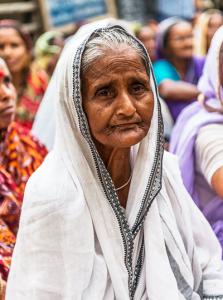
a widow has lost all “color” from her life once her husband has died - KP Yohannan - Gospel for Asia
Wearing a white sari symbolizes that a widow has lost all “color” from her life once her husband has died.

Gulika, like so many other widows in South Asia, incurred the blame for her husband’s death—even though he had died crossing railroad tracks as an oncoming train headed his way. But that didn’t matter. The cause of a husband’s death, no matter how arbitrary or natural, is blamed on the wife.

People believe the husband’s death came about because the wife is a curse, a bad omen. They may strip her of her jewelry, shave off her hair, and force her to wear a white-colored sari, signifying she no longer has any “color” and must spend the rest of her days on earth in mourning. Often, she’s cast out of the home, left with no property and no way to fend for herself. She no longer has any family unless she has dependent children. In order to survive, she may need to beg or turn her body over to prostitution.

There are more than 57 million widows in Asia—and it transcends ages and social statuses. A person can become a widow as young as 7 years old (depending on if they were forced into a child marriage) or can come from a wealthy, high-class family. But once a girl or a woman bears the name “widow,” who they were before no longer matters. They’re obligated to live out the rest of their lives forgotten, shamed and without any hope.

The cause of a husband’s death, no matter how arbitrary or natural, is blamed on the wife.

In an article published by National Geographic, journalist Cynthia Gorney was able to get an insider’s view on the plight of widows. In one interview, she noted the “fury” a social worker named Laxmi Gautam had when talking about the condition of widows:

“We asked whether Gautam had ever imagined what she would change if she were given the power to protect women from these kinds of indignities. As it turned out, she had. ‘I would remove the word ‘widow’ from the dictionary,’ she said. ‘As soon as a woman’s husband is gone, she gets this name. This word. And when it attaches, her life’s troubles start.’”

There are more than 57 million widows in Asia - KP Yohannan - Gospel for Asia
There are more than 57 million widows in Asia

When Will the Violence Against Widows End?

From one stage of life to the next, it would seem the women of Asia hardly get any reprieve from abuse and discrimination. Violence against women is “from the womb to the tomb,” as the old saying goes.

But in the midst of such gloom, Gospel for Asia—and other governmental and non-governmental organizations working on behalf of women’s rights in Asia—is seeing a new dawn rising for hundreds of thousands of women.

As women experience the love of fellow human beings who are willing to serve and minister to them, their understanding of their worth and value in society is elevated. Gospel for Asia-supported workers, including men, treat each girl and woman they meet with respect. They speak words of life into the hearts of women who’ve silently suffered violence, letting them know they matter, they are important, they are valuable, they are loved—even if the rest of society doesn’t believe so.

Remember Aamaal, the woman who tied a noose and was planning on hanging herself to escape her husband’s abuse? She didn’t jump. She didn’t kill herself. Instead, a relative offered her hope in the name of Jesus and led her to a compassionate GFA-supported pastor. Because of that, her life changed—and her husband experienced renewal too! He no longer drinks. He no longer beats his wife, and Aamaal is no longer living the life of an abused woman.

Geeta and her two young children rebuilt their lives - KP Yohannan - Gospel for Asia
Geeta and her two young children rebuilt their lives after their abusive father left, through the support of their local church.

When Geeta’s abusive husband left her, she went from fear to despair—not relief. She faced pressure to sell her body as a prostitute, and she eventually started working as one. But one of her friends, a believer, knew there was a better way to live. She shared loving counsel with Geeta, something she had been searching for.

The hunger and poverty Geeta and her children faced remained a problem, however, until Geeta’s children were enrolled in a Gospel for Asia-supported Bridge of Hope center. The local church has also came alongside the family, helping them find a safer place to live and provided help and encouragement.

As GFA-supported workers lead their congregations to truly value women, whole portions of society are showing women respect they’ve never experienced before. Believers can be heard thanking God for their newborn baby girls. They educate their daughters to give them a future of their own. They refuse to receive dowry as a testimony to the love of Christ. And when their sisters in Christ become widows, they embrace and support them rather than reject them.

Gospel for Asia-supported Initiatives Helping to End Violence Against Widows, Women

Through various GFA-supported initiatives, girls and women have opportunities to reach heights they were once barred from reaching because of their gender.

Literacy Training - KP Yohannan - Gospel for Asia
Literacy Training is key for helping women and widows get back on their feet.

Literacy Training

provides adult women with the opportunity to learn how to read and write—skills they never had the chance to learn, most likely because in the minds of many parents, a girl’s education is not worth investing in.

Health care seminars - KP Yohannan - Gospel for Asia
Health care seminars give women and widows practical training in personal hygiene.

Health Care Seminars

teach women how to properly take care of their pregnancies, their babies, their homes and families, which empowers them inside the home.

Gospel for Asia's bridge of Hope program - KP Yohannan - Gospel for Asia
Gospel for Asia’s Bridge of Hope program helps widows with children keep them in school.

Gospel for Asia’s Bridge of Hope Program

is a child sponsorship program that helps keep young girls off the streets and provides them with an education—while teaching every student how boys and girls are created equal in God’s sight.

Vocational training and Income-generating gifts - KP Yohannan - Gospel for Asia
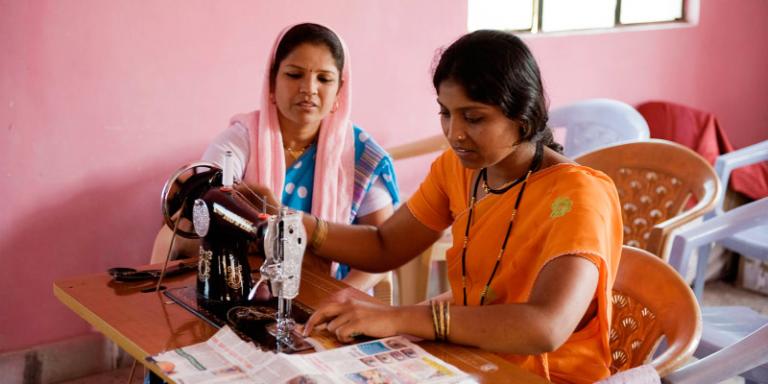
Vocational training and Income-generating gifts like sewing machines give widows practical skills to earn a living.

Income-generating Gifts

give impoverished women the ability to take care of themselves and their families if their husbands are struggling to provide, unemployed, or incapacitated due to alcohol or other addictions. Vocational training makes it possible for women to learn skills that will help them find good jobs—or even start their own business!

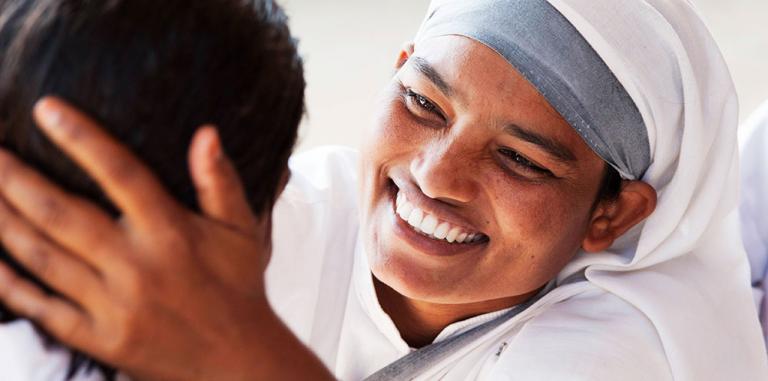
At the heart of many of these initiatives are GFA-supported women missionaries and Sisters of Compassion, specialized women missionaries. They stand beside and advocate for the rights of abused and neglected women. They show others how to love and care for the people around them, regardless of their gender. Through them—and the guidance and teaching of male pastors and missionaries who see each woman as precious, valuable and made in the image of Almighty God—violence against women is ending. Women are enjoying new life safe from hands that once sought to abuse them.

Sisters of Compassion - KP Yohannan - Gospel for Asia
Sisters of Compassion help widows in need of support, encouragement or medical attention.

As for Geeta, she has a solid group of people who have stood with her through her hardships. We, too, can come alongside women like Geeta. Through our prayers and support of national workers, we take part in helping end the violence against women in Asia.

When we come alongside GFA-supported workers, we empower them to empower others. We have seen the fruit of these efforts over and over again, and by God’s grace, we will see more and more women set free—physically, emotionally and mentally—from the abuse and neglect they’ve known their entire lives.


For more on Patheos about violence against widows, their plight and need, go here.

This article originally appeared on gfa.org.

=====

Click here, to read more blogs on Patheos from Gospel for Asia.

Go here to know more about Gospel for Asia: Facebook | Youtube | Twitter | GFA Reports | My GFA

2018-11-07T22:27:46+00:00

Wills Point, Texas – GFA (Gospel for Asia) – Women hold up half the sky, and other mother’s day topics from Karen Mains, Gospel for Asia blog contributor

The recent death of Barbara Bush—a consummate mother and grandmother—reminded me of learning plug-ins that can also dramatically shift the future trajectory of others. There have only been two women who have been both the wife of a President of the United States and a mother of a President of the United States. Abigail Adams was one; Barbara Bush was the other.

The news media has spent an amazing amount of time in tributes and testimonies of friends and political associates about this woman who died at age 92. In fact, I can’t remember another president’s wife (not even Jacqueline Kennedy) who, upon death, has received so many accolades. Most comment on her warmth and hospitality, her acerbic wit, her political instincts, the way she “called it as she saw it,” and the long love affair with her husband of 73 years, George H. W. Bush.

Some have dubbed Barbara Bush “America’s Matriarch.” When asked why she had gained America’s favor, she replied, “My mail tells me that a lot of fat, white-haired, wrinkled ladies are tickled pink. I mean, look at me—if I can be a success, so can they.” When the Bushes left the White House, she had an astonishing 86 percent approval rating.

The recent death of Barbara Bush…reminded me of learning plug-ins that can also dramatically shift the future trajectory of others.

What impresses me about Barbara Bush is the interest she had in illiteracy before she came to the White House, during her time as the president’s wife, and after he lost the election for a second term. This would be an example of a “plug-in” educational issue, learning not demanding formal schooling but absolutely essential for the future success of a growing child. One needs to know how to read.

Bush helped to pass the National Literacy Act, which focused on teaching millions of American adults to read, and she also founded the Barbara Bush Foundation for Family Literacy, which encouraged reading and writing in low-incomes households (for both child and parent). Partnering with local organization, more than $110 million has been made available for the purpose of expanding literacy programs across the country. According to ProLiteracy, just in the United States:

  • 36 million adults cannot read or write above the third-grade level.
  • 68 percent of literacy programs are struggling with long waiting lists, and less than 10 percent of adults in need are receiving service.
  • Children whose parents have low literacy levels have a 72 percent chance of being at the lowest reading levels themselves. These children are more likely to get poor grades, display behavioral problems, have high absentee rates, repeat school years, or drop out.
  • Low literacy costs the U.S. $225 billion or more each year in non-productivity in the work force, crime and loss of tax revenue due to unemployment.
  • 43 percent of adults with the lowest literacy levels live in poverty.
  • 75 percent of state prison inmates did not complete high school or can be classified as low literate.

One needs to know how to read. Using the local church again as a baseline because of its parish membership consisting predominately of people who are concerned about the good and about doing good, what if five volunteers from each church in a town or village or rural hamlet or big city would seek to take tutoring training for helping parents (and their kids) develop reading skills—what could happen? What if that team of five people found out what kind of waiting list existed in their communities and then began to recruit reading tutors from their social affiliations to reduce the list? What if . . .?

Ten years ago, David and I received a letter from a friend, an M.D., who with his wife, a nurse, returned home from Africa where they had been working in the HIV/AIDS epidemic to co-lead Medical Ambassadors International, a faith-based, world health organization. The letter read: “We are wondering if either Karen or David would be able to serve on the board of MAI. Particularly, we are wondering if Karen would be able to serve because our board of directors is all men, and we need to find capable women who are experienced and qualified to work along with them.”

Well, who could resist an invitation such as that? I gladly agreed to serve on the board of MAI. Every year, the International Council (IC), field leaders from all over the planet, of all nationalities, gather in the States to confer with one another, visit their supporting donors and attend an international health conference that has value to all. At the very first IC gathering I attended, preceded by a directors’ meeting, I chatted with the woman who had graciously opened her home to our group of about 35 people and was also, with a team of volunteers (some wives of the board members), providing our meals.

“Oh, I want to show you something,” she said and pulled her laptop computer to a clear spot in her very crowded dining room. It was a home video of a teaching in another country involving local women.

“This is the Women’s Cycle of Life teaching unit,” she explained.

I knew some things about MAI, but my learning curve was to be long and arduous in the days ahead. I knew that Medical Ambassadors had moved from the clinic-treatment model to a preventive-health care model that prevented some 80 percent of the diseases before they became clinical. I had even taken a week-long training of trainers session that exposed me to the non-lecture teaching methodology that had been developed, field tested across the world, enculturated and, at this time, was present for the taking-down off the web free to all—some thousands of lessons. I also knew that the teaching model was based on a participatory model, not a lecture model, incorporated dramatic enactments by the students, was designed using orality principles because many of those being trained were either illiterate or semi-illiterate.

Using a system of questions, the trainees discovered answers to the health lessons for themselves. This process gave them a heightened sense of ownership. Charlene, the designer of the Women’s Cycle of Life (WCL), had been a former public health nurse and had adapted many of those lessons she taught in her California job to the Medical Ambassadors teaching formula, called CHE (Community Heath Education). In essence, WCL was everything a woman needed to know about her own body, her own health, her own reproductive system from the womb to the tomb.

“How much is this being used internationally?” I wondered and gathered from her response that the answer was, “Not much.”  My next question was: “What does this need to go international?” We talked about it a little and decided that a WCL international director funded full-time would give the program the boost it needed, at least as a start. At the next board meeting, I spoke to my new friends around the table, who indeed, were all men, all well-meaning, intelligent and good hearted.

Women hold up half the sky according to the Chinese proverb.

“Do you know what we are sitting on? I mean, after all, women hold up half the sky according to the Chinese proverb.”

It didn’t take much advocacy, and in an amazingly short time, a director was hired: a nurse who had a Ph.D. in community health. She launched the WCL training of trainers and started pushing the Women’s Cycle of Life program outside its U.S. confinements.

I had nothing to do with developing this program, knew nothing about the program, but was in the right place at the right time to become an advocate for the program. Women’s Cycle of Life has gone worldwide. Men from many countries watching their wives learning from WCL have requested something similar: a men’s cycle of life.

I’m proud of the gentlemen sitting at that Board of Directors table who so quickly responded to my prodding. Being an advocate for the Women’s Cycle of Life program is one of the best things I’ve done in my whole life.

Being an advocate for the Women’s Cycle of Life program is one of the best things I’ve done in my whole life. As WCL was launching, the field director in Ethiopia, a woman—whom I told rides her motorcycle through traffic in Addis Ababa—along with the wife of the executive director of MAI trialed a program for women. In two sessions, some 42 women were invited for a week-long WCL training. For many, this was the first time they had left their homes, had someone else cook their meals or stayed in a dormitory setting with other women. They gobbled up the training, and because they were Christians, they were impacted by the Scripture integrated into each unit of teaching—childbirth, for instance, conception, hygiene, etc. After four months, oral interviews were conducted (many on camera) with those who had received the WCL training. Those 42 women had taught a cumulative total of some 1,600 lessons to other women.

Now, if I were going to radically transform Mother’s Day (which realistically, I know I probably won’t be able to do), I would ask some well-meaning families who love their moms to reconsider taking some of that $23.6 billion retailer’s spend on Mother’s Day and use it in a way that really, really, really makes a difference for other remarkable mothers, or remarkable mothers-to-be, or the mothers who want to be remarkable all around the world.

I’d encourage a look into literacy training in an interested party’s home town.

I’d check out Nicholas Kristoff and Cheryl Wu Dunn’s book, A Path Appears, which in 315 pages gives examples of ordinary people doing extraordinary things in the States and across the world. Pages 316-317 list “Six Steps You Can Take in the Next Six Minutes”, one of which is “Consider supporting an early childhood program.  That might mean giving to Reach out and Read, which for $20 can take on a new child and introduce him or her to the joys of reading.” Then, this husband and wife writing team provide comprehensive lists of organizations they trust as suggestions for further involvement (other than just Mother’s Day).

You know, there are other possibilities we might explore as a family this Mother’s Day.

Or a woman might say to herself, You know, there are other possibilities we might explore as a family this Mother’s Day.

Go to the Gospel for Asia website, www.gfa.org and order a free copy of the book No Longer a Slumdog, which tells the incredible story of India’s neglected and forgotten slum children. Reading this book is a means of educating yourself as far as the incredible difficulties of slum children in India and the possibilities that exist to sponsor one of these desperate children who have little hope and a very bleak future without intervention through education in a Bridge of Hope center.

I will never forget the day, visiting in Calcutta, walking down the busy streets and seeing a boy, about eleven years of age, sleeping alone on the hard, concrete sidewalk. I promise you that this book, written by Dr. KP Yohannan, will give you a heart of passion for the “slumdogs” of the world.

Then map out a Mother’s Day plan. Figure out how you or your friends or your women’s group or your mother and your daughter who is also a mother can transform this day so that it is really special.

Let me know what you do.

Let me know what you think.

=====

Click here, to read more blogs on Patheos from Gospel for Asia.

Go here to know more about Gospel for Asia: Facebook | Youtube | Twitter | GFA Reports

Read my prior two blogs on this topic: Part 1 | Part 2


2019-10-27T14:39:03+00:00

A young Indian woman happily poses with her newborn baby - KP Yohannan - Gospel for Asia
A young Indian woman happily poses with her newborn baby.

Wills Point, Texas – GFA (Gospel for Asia) – Discussing the Missing Women Quandary on Mother’s Day

I have decided that Mother’s Day has the potential to make as many women unhappy as it does to make them feel loved and revered.

This realization hit me early in my marriage when I was a young mom with four wonderful, but often neglectful, kids.

“The kids haven’t done anything for Mother’s Day!” I would complain to my husband. “You have to coach them,” I would explain.

This was invariably answered by the proverbial husbandly defense, “But you’re not my mother!”

I have decided that Mother’s Day has the potential to make as many women unhappy as it does to make them feel loved and revered.

David never really made the connection to the fact that his offspring recognized him on Father’s Day because I reminded them that Dad’s Day was on the calendar. (This in spite of the fact that David Mains is not my father.)

Due to this yearly in-house male resistance, I finally figured to myself, Why am I making myself unhappy over this highly over-commercialized day anyway? (The National Retail Federation’s spending survey for Mother’s Day indicated that some $23.6 billion dollars was spent in 2017 on United States’ moms.) Ahah! I thought to myself. Plan a day for yourself. Do something you want to do. Spend a few hours enjoying some activity that brings solace and delight to your own soul. This year, for instance, I’m giving myself the gift of signing up at the local community college for two courses in Advanced Gelli Printmaking: Digital Photo Transfers and Homemade Texture Rolls. Decades ago, I decided that I had the power to design my own Mother’s Day trajectory and avoid any of the blues that can bite moms due to offspring neglect.

“Don’t spend any money on me,” I’ve instructed my adult children. A phone call or a card will be enough. Between nine grandchildren and four adult children (and their various spouses), our cumulative offsprings’ Mother’s Day batting average is about 50 percent. Not bad. I am slightly smug that the Mains clan is not contributing to the national GDP due to the over-hyped, over-sentimentalized advertising campaigns of the greeting card industry, restaurateurs, and local florists; at least, they’re not contributing to it on my behalf.

There are also deeper considerations that I’ve learned through the years regarding responses to Mother’s Day. While designing a healing liturgy with a team of women who had all experienced childbirth losses, I became aware that Mother’s Day was for many a painful event.

“I don’t go to church on that Sunday,” several explained.

It just hurts to recognize other mothers when you have suffered childbirth losses or when you have not been able to have children or when you have never married. It’s not that you’re not happy for all the friends who are being honored. It’s just that the wounds from past pains are still real but often unrecognized by others or just not understood. On every Mother’s Day since creating the gentle healing liturgy, I always hear my friends’ voices, “It’s just too painful.”

Recently, I’ve had some other radical thoughts about Mother’s Day and how it might be used to make a difference for other mothers in the world and in a way that wouldn’t evoke pain for those who suffer silently.  Partly, this is because I‘ve been writing about and consequently researching the dilemma of women worldwide. Partly, this is because I served for eight years on the board of directors for a faith-based international health organization that had developed a remarkable training program to train women to train women. Partly, this is because, for much of my life, I worked in women’s ministries and consequently, co-wrote a book titled Child Sexual Abuse: A Hope for Healing.

To begin thinking about my idea for a radical approach to Mother’s Day, let’s begin with what is called the “Missing Women Quandary.

A mother in Sri Lanka - KP Yohannan - Gospel for Asia
A mother in Sri Lanka, whose husband is having health problems, would face an uncertain future if he were not to improve.

According to demographers, there are some 100 million women missing in the world. This phenomenon was first noted by the Nobel Prize-winning economist Amartya Sen in an essay he published in 1990 in The New York Review of Books. Through the following decade he continued to expand his exploration and discoveries that were published in many subsequent academic works. The present estimates of between 90 to 101 million “missing women” and the various causes for the phenomenon has been studied, debated and analyzed by demographers and social scientists in the years since Sen’s original announcement, but most agree now to the reality that millions of women worldwide are missing.

This number is determined by what is called the sex ratio—a means of measuring the amount of males born in a society against the amount of women. Generally, the ratio between male and female births is slightly biased toward the masculine sex. Due to some kind of equilibrium matrix, nature allows for, on average, some 105 male births for every 100 female births.

These numbers tell us, quietly, a terrible story of inequality and neglect leading to the excess mortality of women.

Demographers propose that this is because men are at a higher risk of dying for a variety of causes—violence, accidents, injuries, war casualties—and in time, the sex ratio of a given population for any particular age set begins to equalize. However today, when what should be a normal equalized sex ratio is measured in many current populations, particularly in developing countries in Asia, as well as in the Middle East and in parts of Africa, results show a divergence from the norm. The current sex-ratio measured against what should be the normal sex-ratio in China, for instance, reveals not a ratio that is beginning to become even between the sexes but an expanding ratio of men to women of 1.06 (l.06 men per 1 woman), which is far higher than in most countries. Researcher Amartya Sen concludes, “These numbers tell us, quietly, a terrible story of inequality and neglect leading to the excess mortality of women.”

There is now a general consensus as to the reasons why sex ratios are teetering on a wild imbalance in various countries of the world: sex-selective abortions, female infanticide, inadequate health care and nutrition for female offspring, lack of pregnancy and childbirth education, and the now-booming sex-slave trade industry.

Nicholas Kristoff and his wife, Sheryl WuDunn, report, “In other words, far more women and girls are shipped into brothels each year in the early twenty-first century than African slaves were shipped into slave plantations each year in the eighteenth or nineteenth centuries.”

This horrendous reality is verified by the Foreign Affairs journal, and the above husband-and-wife writing team estimate that some 3 million women and girls (very few boys) worldwide are entrapped in the sex slave trade.

Far more women and girls are shipped into brothels each year in the early twenty-first century than African slaves were shipped into slave plantations each year in the eighteenth or nineteenth centuries.

A Radical Approach to Mother’s Day & Our Missing Women Quandary - KP Yohannan - Gospel for Asia
Geeta, a single parent in Asia whose husband abused her, worries about her ability to provide for her children, as well as keep them safe throughout the day, when she has to work as a single mom to sustain their family.

The issue of malnourishment also takes a generational toll. When children are malnourished, and historically girls are malnourished, they give birth to underweight babies, whose bodies are then more susceptible to disease. Malnourished girls become malnourished women, prone to childbirth losses—miscarriages, stillbirths, infant deaths—and multiple pregnancy complications resulting in mortality.  In India, for instance, demographers find that by and large, the main cause for female deaths is cardiovascular disease, diseases of the heart and blood vessels that can lead to heart attacks or strokes. Medical researchers have discovered a close relationship between low birth weight and eventual cardiovascular diseases at a later age.

Maternal mortality refers to the amount of women who die in childbirth. Some 99 percent of women in the world who die giving birth are from poor countries. This is determined by another ratio—the MMR or the maternity mortality ratio, which is the number of maternal deaths for every 100,000 live births.

The MMR measures the potential of death per pregnancy. Another ratio measures death probability over a lifetime of multiple pregnancies. The lifetime risk of dying in childbirth is 1,000 times higher in a poor country. Kristoff and WuDunn, Pulitzer Prize winners, wrote a report on the worldwide status of women in their comprehensive book, Half the Sky: Turning Oppression into Opportunity for Women Worldwide. They write, “This should be an international scandal.” Here are some alarming statistics they quote:

  • The highest maternal mortality risk in the world is the African country of Niger. Here the lifetime risk of dying in childbirth is 1–7
  • In sub-Saharan Africa, the lifetime risk of death is 1 in 22
  • In Asian countries like India it’s 1 in 70
  • The U.S. is 1 in 4,800, which is actually a high ratio for a developed and wealthy country
  • In Italy, the lifetime risk is 1 in 26,000
  • In Ireland, the chance of dying in childbirth is 1 in 46,000

Morbidity is different than mortality. Maternal morbidity deals with injuries in childbirth, and they occur even more frequently than maternal mortality. The book Half the Sky, concentrates pages on the occurrence of morbidity, particularly fistulas; in this case rectovaginal fistulas, which are often the result of trauma in childbirth. Here a tear between the vagina and rectum (also caused by rape) is left untreated where there is inadequate health care. These women, many now mothers, having successfully delivered an infant, become outcasts in their villages since they cannot control urine or feces flow.

“For every woman who dies in childbirth,” Kristoff and WuDunn write, “at least ten suffer significant injuries such as fistulas or serious tearing. Unsafe abortions cause the deaths of seventy thousand women annually and cause serious injuries to another 5 million. The economic cost of caring for those 5 million women is estimated to be $750 million annually. And there is evidence that when a woman dies in childbirth, her surviving children are much more likely to die young as well, because they will have no mother caring for them.”

I have this gnawing intuition that Mother’s Day might be utilized as a day to contribute positively and substantively to the plight of women worldwide.

All these factors are symptoms of one major toxic cause: female discrimination—women in a cross section of wide-ranging cultures are not valued. In fact, they are actively abused, neglected and abandoned through countless engrained cultural practices that deem women as inferior to men and ensure that they stay in subsistence-like conditions.

I have this gnawing intuition that Mother’s Day might be utilized as a day to contribute positively and substantively to the plight of women worldwide. I have some ideas that are stewing in the creative caring part of my soul; and I plan to share them over the next two days within two more blogs: Part 2 | Part 3

In the meantime, I would love to have you comment on this post below by sharing any of your ideas.

=====

Click here, to read more blogs on Patheos from Gospel for Asia.

Go here to know more about Gospel for Asia: Flickr | GFA | GFA.org | Facebook
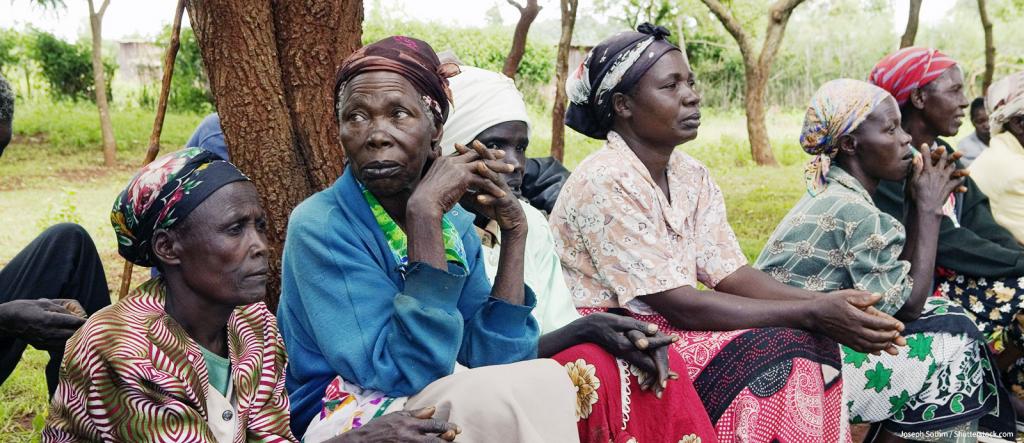
Follow Us!


TAKE THE
Religious Wisdom Quiz

What are the names of the two witnesses in Revelation who prophesy for 1,260 days?

Select your answer to see how you score.


Browse Our Archives