Last updated on: September 3, 2022 at 6:50 pm By GFA Staff Writer
WILLS POINT, TX – Gospel for Asia (GFA) – Discussing the lives that are trapped in a seemingly endless cycle of poverty, and the gift and hope that a sewing machine can bring, opening doors to a better life.
Poverty is one of the greatest physical burdens facing modern humanity, if not the greatest. The World Bank, a main source of information on poverty, considers a person to be in extreme poverty if they make less than $1.90 a day.
Those in Need and Those Who Help
The United Nations, in its fight to end global destitution, set specific development goals in its 2030 Agenda. By 2030, the aim is to have no more than 3 percent of the world’s population—255 million—living below the poverty line.
The strides made toward ending global poverty have been monumental. In 1990, 1.85 billion people lived in extreme poverty, but today that number is down to 600 million, or 8 percent of the global population.
More work yet remains. Despite the progress made, millions remain burdened in a destitution that is passed down—generation to generation—forming a seemingly unending cycle of absolute poverty. Gospel for Asia (GFA) seeks to uplift families and individuals in situations such as these with income-generating gifts.
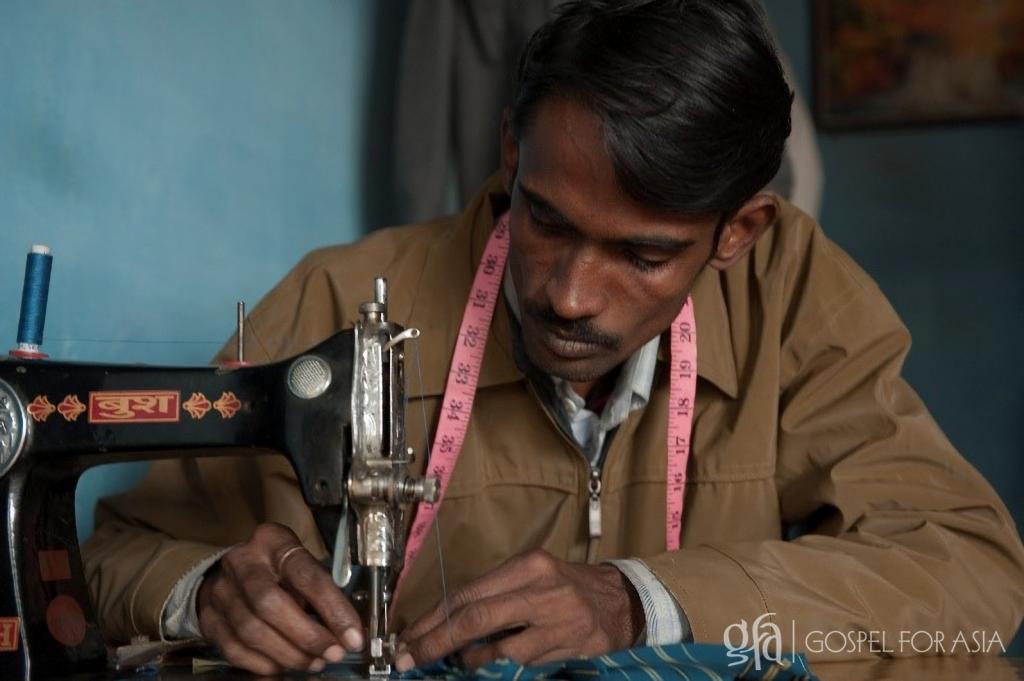
An income-generating gift can be anything from a cow to a trade-related tool. In Nalah’s case, it was a sewing machine.
Caught in a Cycle
All Nalah knew growing up was poverty. His father, a poor laborer, worked hard to provide for his family, but he earned barely enough money for food, let alone for education. So, Nalah didn’t go to school, but he learned enough of his father’s work to follow in his footsteps as a daily laborer.
As an adult, Nalah found himself in the very same position his father once held—working in the fields, making barely enough money to support his wife and four children. Unable to properly provide for his burgeoning family, Nalah turned to the only source of happiness he could find: drink. Nalah drank and gambled his sorrows away, while the poverty and problems he and his family faced only grew worse.
Given a Gift, Given Hope
One day, Nalah happened to meet a traveling evangelist who shared with him of God’s love. When Nalah heard he was loved and cherished despite his failures and inadequacies, he found a spark of motivation to change his ways.
“I want to live a good life for my family,” Nalah thought to himself. That very moment, Nalah decided to readily welcome God into his heart.
Some days after this miraculous meeting, Nalah met Gospel for Asia (GFA)-supported pastor Gunesh. The pastor began encouraging and visiting Nalah, rejoicing in his newfound faith. During his visits, Pastor Gunesh saw the financial struggles Nalah and his family experienced. Poverty hung over them like a cloud. Determined to help this family, Pastor Gunesh requested Nalah receive a gift at the next gift distribution his leaders organized.
To his surprise, Nalah received a sewing machine during the next distribution! Through this gift, Nalah, and his son, began stitching clothes, and soon they were making enough money to not just survive but also to thrive.
“I did not just receive a sewing machine,” says Nalah. “But I have received a source of income.”
Nalah and his family join the many who’ve been helped with income-generating gifts through Gospel for Asia (GFA) or other organizations. They now have the opportunity to better their lives and the lives of their children, and work to eliminate generational poverty.
Last updated on: September 6, 2022 at 6:36 pm By GFA Staff Writer
WILLS POINT, TX – Gospel for Asia (GFA) – Discussing Pastor Roshan, from alcoholism, to being filled with the Spirit, through limitation and imprisonment, and the impact a bicycle can bring, maximizing the effectiveness of national missionaries to reach people for Christ.
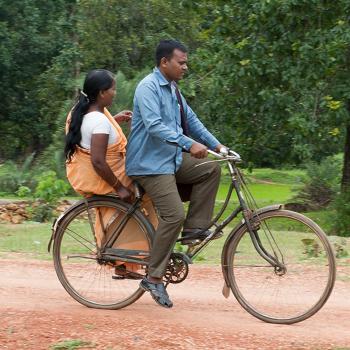
Pastor Roshan slung his bag over his shoulder and helped his wife onto their bicycle. They had a lot of ground to cover. As they cycled out of their village, Roshan found a sustainable pace for the trip. His muscles might be tired by the time he reached his destination, but that didn’t matter. Teaching from God’s Word in the distant forest villages and seeing believers grow in their love for Christ made the trip seem like a small sacrifice.
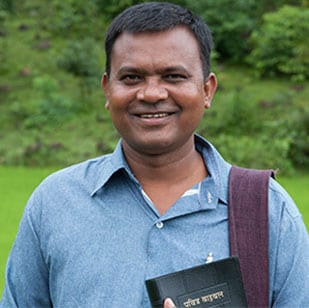
Pastor Roshan
Roshan didn’t always have a bicycle—or ministry in any of these villages. In fact, just a few years earlier, his relationship with Christ was anything but exemplary.
An Alcoholic Sunday School Teacher
Roshan grew up in a nominal Christian environment. He attended a church and was even assigned roles of prominence within the congregation, but in reality, everyone knew his heart’s affection was for alcohol, not Christ. He neglected his wife and children and often squandered all his earnings on drink. While intoxicated, he roamed his village and intimidated those he met, even threatening to kill them. Then on Sunday, he went to church and led Sunday school, teaching action songs and Bible stories.
“People knew I was of not-good character,” Roshan says. “Still, nobody minded, and I was given all these responsibilities in the church.”
However, Roshan’s brother, a Gospel for Asia (GFA)-supported worker, counseled Roshan often and prayed he would leave his destructive ways and pursue Christ. Slowly, Roshan’s conscience began to awaken within him.
One day, Roshan jolted awake at 3 a.m. Conviction washed over him as he felt the Lord working within his heart. He realized he could no longer continue in his selfish life.
“I knew it was the Holy Spirit who told me that going out with friends and involving in drinking, gambling and quarreling and fighting with people is not going to give me life,” he says. “The Lord touched my heart that early morning. That was the turning point of my life.”
Strong Character, Limited Body
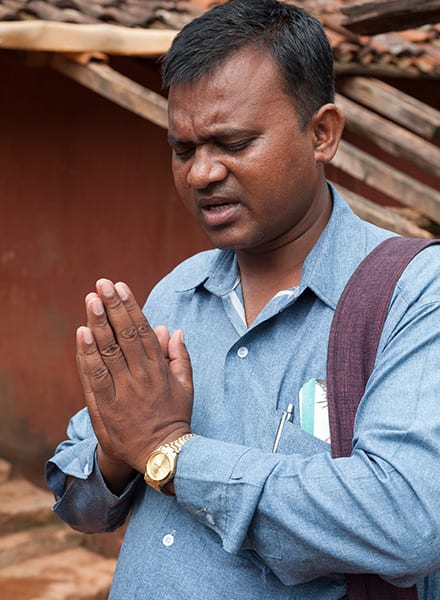
After years of letting alcohol rule his life, Roshan (pictured) realized his responsibility to his family, and God empowered his weak body to labor hard to provide for them. Later, Roshan’s heart became burdened for those in his community who didn’t know Christ, and he dedicated his life to ministering to them.
Roshan bravely turned toward a new life as a God-honoring husband and father. He recognized his duty of providing for his wife and children, but the only work he could find was manual labor. At that time, he weighed barely 80 pounds. Years of drinking and irresponsible behavior had left him ill and weak. Even so, he woke up early every day and walked around four-and-a-half miles to his jobsite, where he carried and hoisted sacks of coal weighing as much as he did. Then he walked all the way home.
Life was tremendously difficult, but Roshan’s determination held fast through the strength of God’s favor.
He labored this way for three-and-a-half years, until he felt God impressing ministry upon his heart. In obedience, Roshan equipped himself for ministry at a Bible college and then returned to his home village.
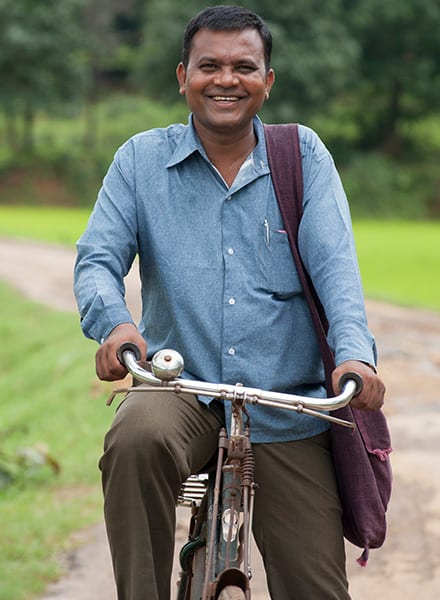
His passion to see his own family thrive grew to include every individual he met. The same energy and courage he applied to his manual labor job now found an outlet in his ministry. The needs within a cluster of villages tucked in a forest several miles from his hometown gripped his heart, and he began making the journey regularly. Years before, Roshan had walked nearly five miles to his job in order to care for his family, and he was prepared to do the same for other families so they could know the love that transformed his life. Thanks to the generosity of believers around the world, he didn’t need to spend hours walking anymore: He owned a sturdy bicycle that allowed him to travel much faster and easier. He could even bring his wife with him to minister to the ladies they met.
Thanks to the generosity of believers around the world, he didn’t need to spend hours walking anymore: He owned a bicycle that was sturdy and allowed him to travel much faster and easier.
Faithfulness Despite Imprisonment
During the next three years, God worked through Roshan in powerful ways. Several families in each village began gathering for prayer and Bible study, and soon it became clear they needed a permanent place where they could worship together. God provided yet again through His children in various places, and construction for a church building began.
But the construction activity disturbed some of the community members. They started believing Pastor Roshan received the funds for the building through an insurgent group that haunted their area. Under these false accusations, Pastor Roshan spent the next 18 months of his life behind bars.
Shock and discouragement cast a shadow over Roshan during the first few days of his imprisonment, but he quickly aligned his heart with the peace of Christ. He still carried a deep desire to see troubled lives transformed—and there were many troubled men in the prison around him.
“No one can come personally here and tell [the inmates] about Jesus, live with them and show them what a Christlike life is,” Roshan remembers thinking early in his imprisonment. “So, I thought maybe this is how the Lord is going to use me.”
Even while imprisoned under false accusations, Pastor Roshan (pictured) poured his life out for the sake of those around him. By the end of his imprisonment, dozens of inmates wanted to know Jesus, including these two men.
And the Lord did use him. When Roshan’s release occurred 18 months later, dozens of inmates had expressed a desire of living for Jesus.
Even during Pastor Roshan’s absence, his ministry continued. His wife, Saachi, assumed her husband’s mantle of ministry while he was absent, using his bicycle to continue visiting believers and answering questions about Christ in various villages. She even traveled several miles to the construction site regularly and oversaw the completion of their place of worship for her husband. Through their teamwork as a couple, even while separated, lives changed within prison and without.
Maximizing the Effectiveness of Willing Workers
A bicycle played a vital role in Pastor Roshan (pictured) and his wife’s ministry. Bicycles offer reliable transportation and help many other national workers, breadwinners and schoolchildren alike to accomplish their day’s goals.
Pastor Roshan’s bicycle served as a tool to increase his effectiveness in ministry. Without it, he would have had to spend more time walking and less time ministering, and his ministry in distant villages would have been severely hampered. It even enabled his wife to minister in a greater capacity.
Transportation impacts the productivity of national workers and breadwinners alike. What a different Pastor Roshan’s heavy-labor days would have been if he had owned a bicycle then! He had to walk around nine miles round trip every day for one year, which is the equivalent of walking from Augusta, Maine, to San Diego, California—this was in addition to his grueling heavy labor and ill health.
Similarly, schoolchildren who live in remote areas often lack transportation and struggle to attend school. Walking several miles alone to class each day is unsafe in many areas, especially for young girls, and the wear on their bodies hinders their studies—and their futures.
Your donation today to provide national workers, breadwinners or school children with a sturdy, Asian-made bicycle will dramatically impact their lives. They are pouring diligent effort into their different roles—you can enable them to maximize their effectiveness!
*Names of people and places may have been changed for privacy and security reasons. Images are Gospel for Asia stock photos used for representation purposes and are not the actual person/location, unless otherwise noted.
Last updated on: September 17, 2022 at 6:03 am By GFA Staff Writer
WILLS POINT, TX – Gospel for Asia (GFA) – Discussing the stories of families and people who struggle against poverty, the destitution that they experience, and the life-altering impact tangible gifts of generosity can bring to the marginalized.
I certainly wasn’t rich growing up, but I never knew poverty, either. I always had three meals a day, a roof over my head and A/C and heating (rarely needing heat because Texas winters are mostly mild). Poverty was never something I personally experienced, but having seen its effects on families and communities, I am familiar enough with it.
Absolute Poverty
Growing up at Gospel for Asia (GFA), I heard countless stories of the struggle against poverty. But I also heard how Gospel for Asia (GFA)-supported workers—both with the truth of God’s love and with income-generating gifts such as farm animals and tools—have brought hope to numerous impoverished families.
Compared to them, I have had nearly everything handed to me on a silver platter. My daily prayer is that I don’t take for granted the blessings around me. There are children starving, literally eating dirt to satiate their hunger. Dr. K.P. Yohannan, president and founder of Gospel for Asia (GFA), shared this story in his book No Longer a Slumdog:
“One of my most painful memories has to do with a little girl named Meena. Meena was a beautiful 5-year-old living in a slum. She had the biggest brown eyes. When social workers first saw her, she was standing in six inches of sewer water. … Later, I learned that she began eating the sewage-infested dirt off of the streets. Soon she went into a coma and died.”
Breaking the Cycle
Poverty encompasses millions within its grasp; whether abandoned street children, struggling farmers or mistreated widows, millions are trapped in destitution.
Yet in the face of such despair, countless Gospel for Asia (GFA)-supported workers and pastors toil joyfully among the struggling and hurting. It is their goal to see the impoverished and lowly lifted up—through gifts provided by our supporters and partners, they are doing just that.
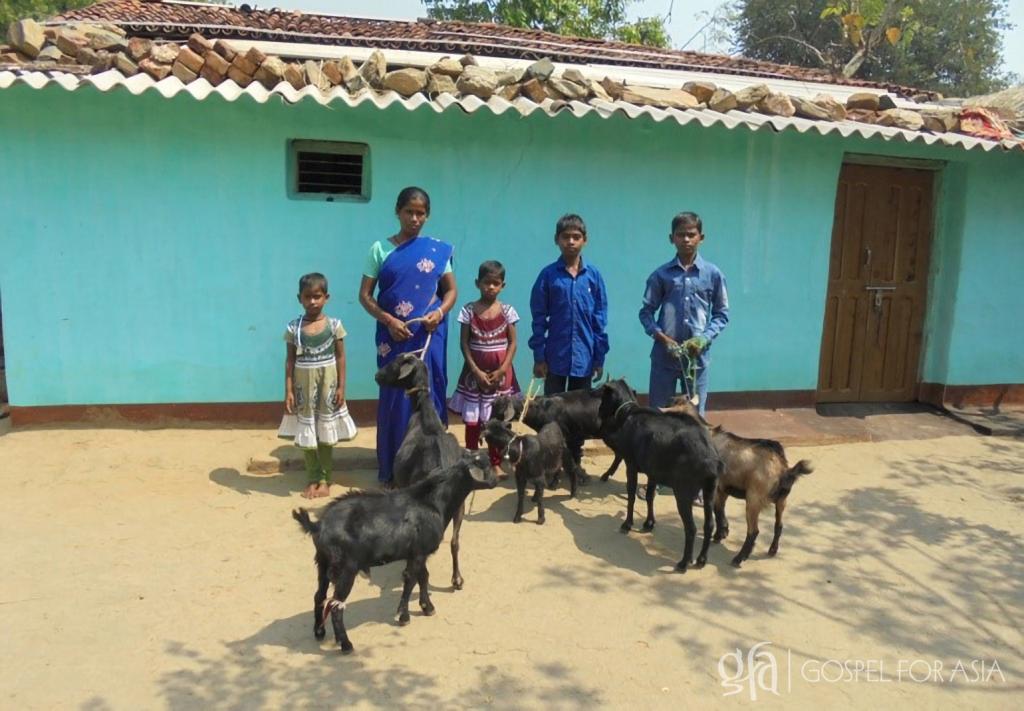
But, you may ask, what gifts exist that help those in poverty? Income-generating gifts include farm animals such as cows, goats or chickens; tools such as sewing machines and pull carts; and vocational training and literacy classes. Each gift brings help in some form to families in desperate need. Goats, for instance, provide nutritious milk to sell or consume, and their offspring can be sold for additional income. Kirpal and Bani are one couple helped through a pair of goats.
Provision Amongst Struggle
One day, a believer in Gospel for Asia (GFA)-supported pastor Taranga’s church informed him of a struggling family in the village. The believer asked if Pastor Taranga could go to the family and offer prayer and encouragement, because they were truly struggling, both financially and emotionally. Together with other members of the church, Pastor Taranga set out to see what help they could bring this struggling family.
The pastor met Kirpal and Bani who, together with their four children, had fallen on hard times. Bani had been struggling with an unidentifiable illness for quite some time. Her condition made it hard to eat. She became weakened to the point of being unable to walk.
All of Kirpal and Bani’s money had gone to finding a cure, but nothing had worked. Their money practically gone, the family had barely enough to survive. On top of it all, the roof of their house was flimsy, making worrying sounds in the night and leaking during rainy season.
After hearing the couple’s woes, the pastor was filled with compassion. He and the believers prayed for Kirpal and Bani, and before leaving, also promised to continue visiting. For the next several months, Pastor Taranga continued to visit Kirpal and Bani, always praying for the harried and hurting family. Through constant prayer, the illness afflicting Bani completely disappeared.
With one burden lifted off the family, Pastor Taranga began thinking of other ways to bless Kirpal and Bani. Then it came to him. Some months later, a Gospel for Asia (GFA)-supported gift distribution was organized—Kirpal and Bani were invited. There, they received a pair of goats.
One year found those two goats turning 12. Kirpal was able to sell six, taking the money to buy thin sheets of cement to finally fix their leaky roof. It was also enough to pay school fees for their four children and buy enough food.
Alleviating Poverty, One Family at a Time
All it can take is one gift to truly save a family from utter destitution. Through income-generating gifts, countless lives in Asia have been changed, and will continue to be changed.
Last updated on: October 29, 2022 at 5:28 am By GFA Staff Writer
The first time Tanul tried alcohol, it must have burned his throat and boiled in his belly. Unpleasant as it was, it would not be the last time he put his lips around the bottle. In fact—like the poverty he was born into—it became his constant companion. By the time Tanul was a teenager, he drank regularly. Like most young men in his rural village, Tanul filled his body with alcohol to erase the shame of poverty from his heart and mind. This destructive habit would follow Tanul as he began to build a life for himself.
When Tanul married, he did not lay aside his drinking. As the burden of caring for a family increased, so did his time with the bottle. Children came, and Tanul was unable to provide adequate food for his family or cover school fees—making a hopeful future for them impossible. Tanul was stuck in a vicious cycle, and the more he drank, the less hire-able he became.
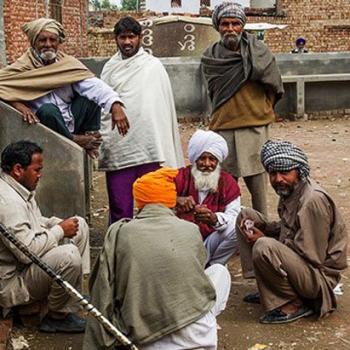
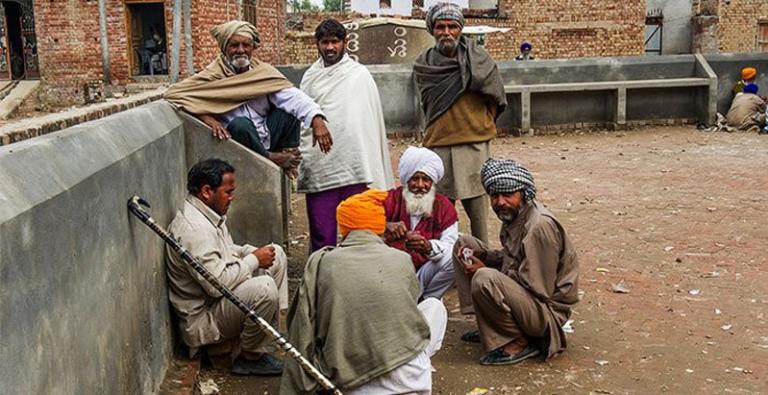
In many rural villages plagued by poverty, men gather to gamble and drink in the absence of work.
Tanul’s journey is not an isolated incident. It’s a problem all over the world; alcoholism and poverty go hand-in-hand. Though it is not proven that one always leads to the other, there is an ugly, symbiotic relationship. As alcohol consumption increases, employability decreases. While employment dries up, many use drinking to ease the shame, which exacerbates the cycle. Often, the only work left for alcoholics in Asia is manual labor for which they are hired on a day-by-day basis. Because of the difficulty—and sometimes the impossibility—for the poor to rise above these employment options, many turns to alcohol to ease poverty’s sting. The stress of not knowing if you will find work each day inflates the problem.
Abuse Multiplied: Poverty, Alcohol, and…
As Tanul’s family fell apart, another near relation to the twin problems of alcoholism and poverty arrived: domestic violence. Coming home intoxicated and angry, Tanul began abusing his wife and children daily. The little money he earned went to supporting his addiction. This family, plagued by poverty, alcoholism and domestic violence, was living out the well-worn path blazed by many of the world’s extreme poor.
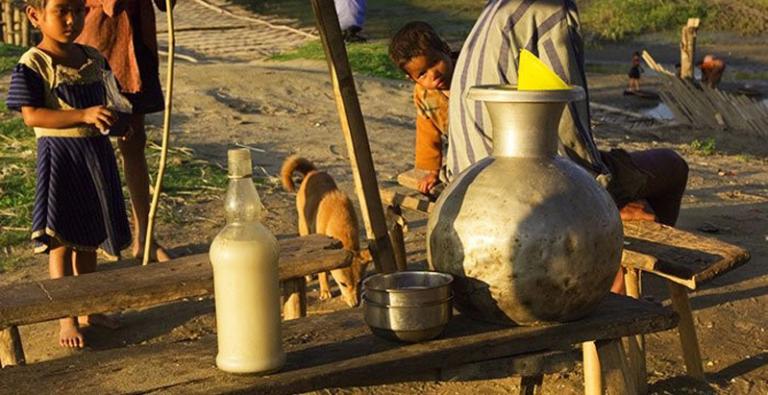
In the village pictured, 80 percent of the rice crop is used to brew homemade alcohol— resulting in a high consumption of alcohol. This leads to frequent occurrences of domestic violence.
Step One on the Road Out of Poverty
Pastor Teja, who has a church in a nearby village, met Tanul’s family one day when he was offering prayer for families in need. The Gospel for Asia (GFA)-supported pastor saw the pitiful condition of this family, and his heart was heavy. The family invited him back to pray for them, and a friendship began. Tanul’s family began to attend Pastor Teja’s church. Then members of the church continually prayed for Tanul’s deliverance from alcohol—the thing that bound them to the poverty they lived in. Through their faithful prayers and Pastor Teja’s counseling, Tanul overcame his addiction to alcohol. The Lord completely transformed Tanul’s heart!
For the first time, Tanul’s family experienced freedom—freedom as a gift from God above that trickled down into their hearts and flowed toward each other in love. This freedom from bondage gave them hope for the future. But in the present, they are still stuck in the poverty trap.
This predicament of the extreme poor—not being able to find work that will support a family’s daily needs—is one of the basic issues addressed by world leaders and organizations dedicated to alleviating poverty around the globe. One expert working with the Borgen Project, a non-profit dedicated to fighting global poverty, is convinced the first step[1] in reducing extreme cyclic poverty is helping the poor create their own businesses. This is the very thing many Gospel for Asia (GFA)-supported pastors and missionaries can do with income-producing gifts provided by donors all over the world.
Pastor Teja knew that Tanul needed a way to earn enough income to support his family. He arranged to hold a gift distribution and presented Tanul with a rickshaw—something he never could have afforded on his own. Tanul was overcome with gratitude at God’s provision.
Tanul’s whole family has been transformed since the Lord entered their lives.
A New Reputation
With his new gift, Tanul loaded vegetables onto his rickshaw and began selling throughout the village—even delivering produce to customers’ homes. God blessed Tanul’s diligence and hard work, enabling him to earn a good income selling vegetables. Setting his own prices and being able to keep all his earnings, Tanul had enough money to send Maahir to school to learn a skilled trade. Maahir completed his education and started working as a carpenter. The two men now adequately support their growing family, including Maahir’s wife and two children.
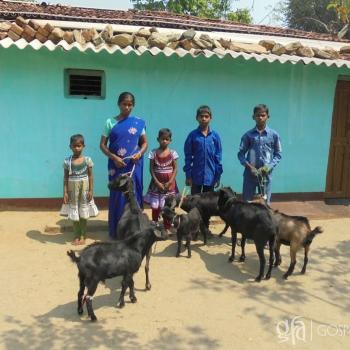
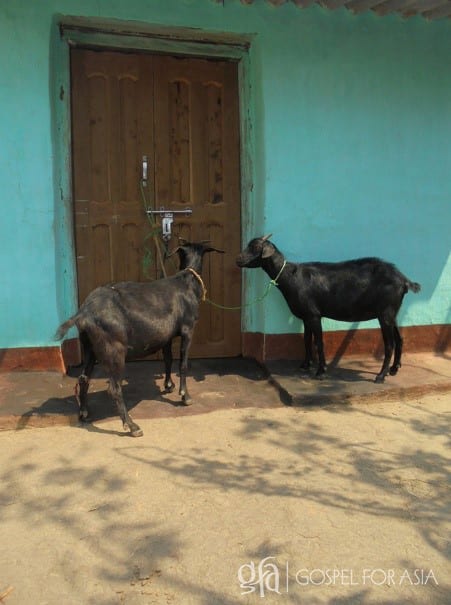
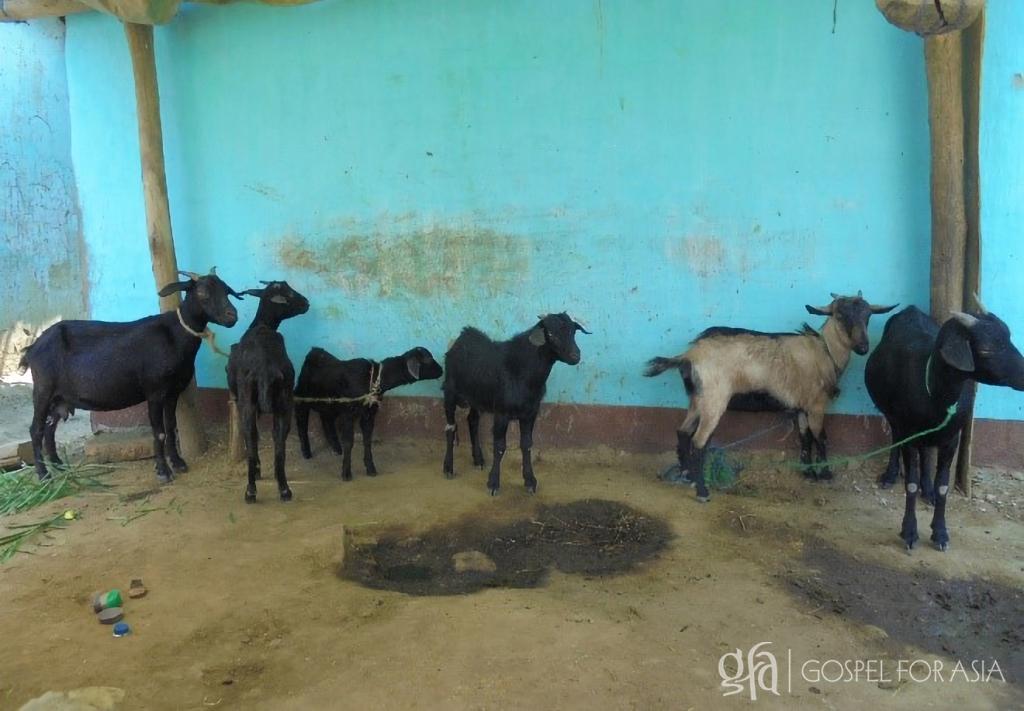
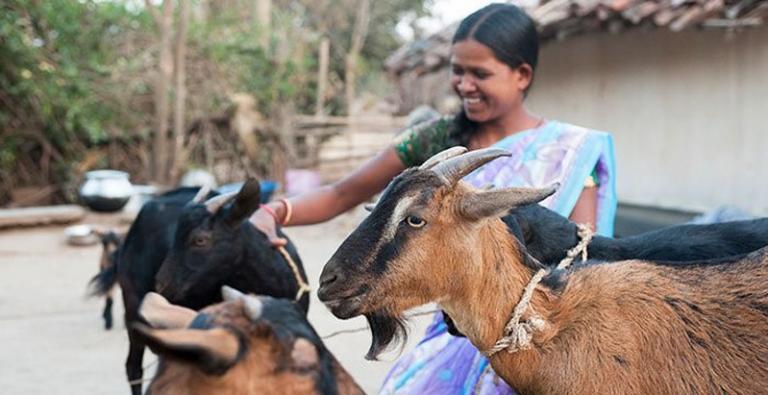
Income producing gifts, like these goats, help lift impoverished families in Asia out of the trap of poverty.
Join the Global Effort to End Extreme Poverty
The fight against extreme poverty is not finished—736 million people in 2015 were still living on less than $1.90 a day.[2] Almost half of these people reside[3] in the countries where Gospel for Asia (GFA) supports national workers. Gospel for Asia (GFA) believes that together, we can make a lasting difference in the lives of those caught in the extreme poverty trap.
Last updated on: November 20, 2019 at 3:37 am By GFA Staff Writer
Wills Point, Texas – GFA Special Report (Gospel for Asia) – Discussing the large and small scale efforts and solutions to end inequality, social injustice, grinding poverty, human rights violations, that continues to exist, affecting millions of women, men and even children.
Small Steps, Big Change
In the face of such enormous inequalities, it can be difficult to know how to respond and where to start. But just as the problem of social injustice is not really a single, abstract issue so much as the many individuals it affects, so ending inequality is about changing personal circumstances as well as addressing the structures that allow inequality to continue.
That sort of action is taking place on large and small scales. At one end of the spectrum, the World Bank is supporting a $63 million empowerment project in Jharkhand, India, which aims to help adolescent girls and young women complete secondary-level education and acquire job skills.
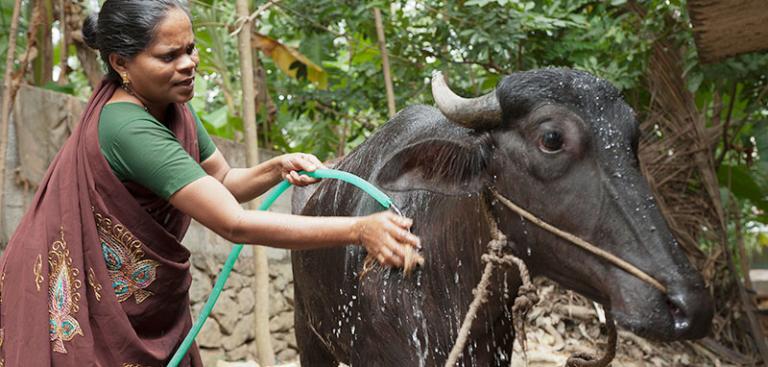
A microfinance loan enabled this woman to buy a water buffalo and keep her family out of the cycle of grinding poverty. She washes the buffalo every day to ensure it does not get sick.
Another way of improving the situation for poor families has been providing microloans that keep them away from predatory loan sharks. Many families have found themselves caught in bonded labor for generations after borrowing a small sum, only for their debt to keep spiraling beyond their reach.
The “Jeevika” program launched a decade ago in Bihar, India, by the state and national Indian government has seen some 600,000 women helped to start small businesses as farmers, dairy and poultry producers and entrepreneurs in small businesses.
“These women are also emerging as a political and social force,” notes India Spend.
The 2016 Global Gender Gap Report by the World Economic Forum concludes that at its current rate of progress, it will take South Asia an entire millennium to reach gender equality in the workplace.
Increasingly aware of living in a globalized economy, where production is outsourced to where labor may be cheapest, some in the West are recognizing how their spending may affect the poor in other parts of the world.
“Ending inequality is about changing personal circumstances as well as addressing the structures that allow inequality to continue.”
Yet while encouraging Western consumers to challenge companies about their supply chain practices, to ensure they are not supporting sweatshop businesses, groups like ASI don’t advocate boycotts.
Such actions “can actually make the situation worse and undermine the economy of an already poor country,” says the organization. “As well as hurting employers using slavery-like practices, they could also hurt those who are not exploiting their workers, and worsen the [grinding poverty] that is one of the root causes of slavery.”
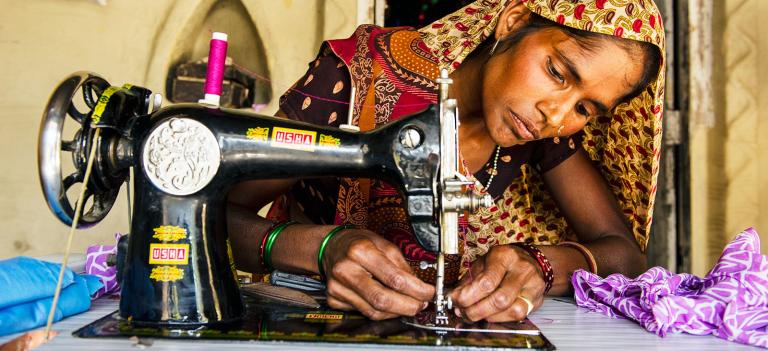
Sewing machine provides a widow with dignity and a way to earn an income despite the loss of a spouse.
Gospel for Asia Fights Grinding Poverty in Asia on a Local Level
Complex though the issues are, simple actions can make a difference. Through a wide range of services and programs, Gospel for Asia (GFA) is working among Asia’s poor to offer help and hope for a better tomorrow. And GFA can testify that even a small gift for a family can create big change.
Vocational training courses that cost just $30 can teach skills like fishing, welding and tailoring to equip men for better-paying work. For $75, GFA provides tool kits that may include items like axes, shovels, saws and plows, which enable farmers to increase their productivity.
An $85 donation supplies a sewing machine that allows men and women to start a home-based business, rather than being dependent on others. Not only does this mean they can work from home and take better care of their children, it also multiplies their income significantly. Many who have received a machine say they no longer feel they need to keep their children from school to help make money.
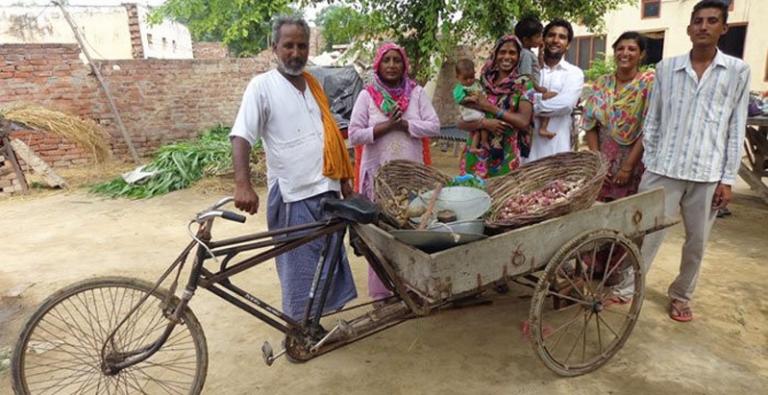
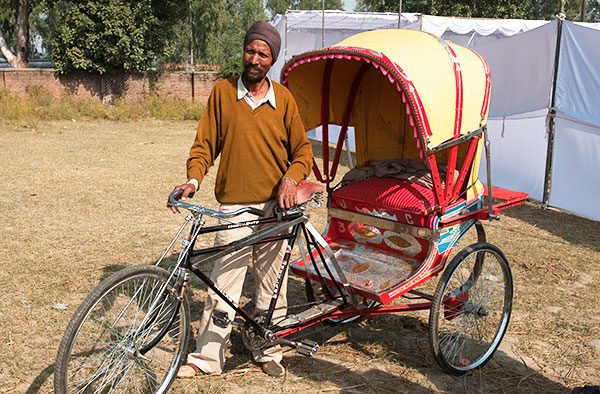
The gift of a bicycle rickshaw can change the financial situation of an entire family, and life them out of grinding poverty in Asia.
Costing $200, a rickshaw opens up a whole new level of opportunity for a family. Instead of having to rent a vehicle at often high rates, rickshaw drivers can keep all their earnings from ferrying passengers and products around.
Gospel for Asia also helps to ensure that a family’s situation improves beyond one generation, by encouraging parents to keep their children free from the burden of work. Indeed, GFA sees education as important as equipment, if not more so, in bringing about long-term change.
Currently, around 75,000 children are enrolled in GFA-supported Bridge of Hope centers, where they are helped with their schooling and holistic development. Since 2004, many others have come through this program, which also provides food and medical checkups.
The importance of greater access to education, especially for women and girls, cannot be emphasized enough. Funding such efforts “isn’t charity but investment, and the returns are transformational,” notes activist and singer Bono in a recent opinion piece for TIME magazine in which he asserts that “poverty is sexist.”
GFA’s Bridge of Hope program helps about long-term change in families and gives the next generation a chance for a better future—one where they can rise above the cycle of grinding poverty.
When girls get an extra year’s schooling, their wages increase by almost 12 percent, he writes. Closing the gender gap in education could generate up to $152 billion a year for developing countries.
“When you invest in girls and women,” he goes on, “they rise and they lift their families, their communities, their economies and countries along with them.”
One example of that is recounted in Global Fund for Women’s (GFW) Breaking Through report on gender equality in Asia and the Pacific. After joining a women’s self-help group, a 29-year-old became the first housewife elected to the panchayat, or local government, also helping win equal pay for equal work for women at a local factory.
New opportunities have opened up for the more than 100,000 women who have completed one of GFA’s literacy courses. Another 30,000 women are currently taking part in the program, which is offered in 16 languages.
“When you invest in girls and women, they rise from grinding poverty and they lift their families, their communities, their economies and countries along with them.”
One graduate of the GFA-supported literacy program told how learning to read at the age of 40 had changed her life. “I have been deceived many times because of my illiteracy,” says Baasima.
“When I used to go for shopping, bad shopkeepers deceived me, taking more money and not returning the balance amount. But now I can calculate myself. They cannot deceive me. I am very happy now.”
Learning to read has not only enabled Baasima and others to provide and care for their families better-the health of your child is endangered when you can’t read a prescription they may need-but it has also raised their standing in their communities. And along with that improved status can come a new sense of personal worth and identity as they discover God’s love for them in the pages of the Bible.
Literacy training enables women to care better for their families and increases their sense of self-worth.
Indeed, all of GFA’s efforts to address the inequalities that press down on millions across Asia are anchored in the belief that true social justice means not only seeking better opportunities for all economically and educationally, but also spiritually-the chance to hear of a God who loves all equally, and to see that love demonstrated through actions that help lift them up.
While GFA celebrates the attention that the annual World Day of Social Justice brings to the plight of the overlooked and down-trodden and the enormity of the challenge, it quietly works year-round to change things one person at a time, echoing the approach of Mother Teresa, who remarked of her years caring for some of India’s poor that, “There are no great acts, only small acts done with great love.”
GFA-supported workers seek to walk out the call of the prophet Isaiah (1:17, NIV):
Learn to do right; seek justice. Defend the oppressed. Take up the cause of the fatherless; plead the case of the widow.”
Seeking Justice and Defending Human Rights: Part 1 | Part 2
Last updated on: November 5, 2018 at 6:52 am By GFA Staff Writer
Wills Point, Texas – GFA (Gospel for Asia) – Discussing how GFA-supported Bridge of Hope centers change the lives of children, their families, and in turn their communities.
150,000 infant deaths per month 34,615 deaths per week 4,945 deaths per day 206 deaths per hour
The sad plight of the surviving children living in poverty in South Asia is impossible for our minds to comprehend unless we have seen it with our own eyes.
These children wake up every morning in squalor, waste, rubbish and odors—not unlike survivors of a tornado, hurricane or earthquake experience. The major difference for these children is that every morning is the same. For these children and their families, there is no likelihood for a better future. There is no hope.
Watch this short (1:14) video to understand what life is like for many of these children living in unspeakable circumstances.
GFA-supported Bridge of Hope centers have been changing the prospects for the lives of tens of thousands of children every year since 2004.
Most people familiar with GFA’s Bridge of Hope Program can summarize the work as education, nutrition and healthcare. Certainly, Bridge of Hope centers provide these three key elements, but they do much more than that.
Here are 7 things you may not have realized that Bridge of Hope centers provide:
1. Emotional Growth
Bridge of Hope staff seeks to help each child achieve emotional maturity and a sense of confidence that are essential strengths for a balanced life. Children are encouraged not to base their future on the past, but to move on to their full potential.
2. Building Character
Bridge of Hope emphasizes a disciplined, value-based environment, which builds character. The goal is to prepare children to become good responsible citizens of their nation. The children regularly learn moral values and manners that enable them to respect authority and care for the needs of others.
3. Social Responsibility
The children at Bridge of Hope centers are taught social awareness through participation in rallies and programs on social issues such as HIV/ AIDS, tuberculosis, illiteracy, child labor and unhealthy habits such as smoking, drinking and tobacco use.
4. Assisting Parents
Staff invest not only in the children but also in their parents. Staff members visit parents and conduct special training programs for them. Topics covered include general awareness on child care, health and hygiene, good parenting, child labor and family planning.
5. Equipping Parents
Bridge of Hope offers parents literacy and tailoring classes so they can earn a better living and improve their circumstances and those of their family.
6. Vocational Training
Bridge of Hope helps parents learn how to succeed in self-employment by providing them with self-sustainable gifts such as livestock, sewing machines, bicycles and push trolleys for street vending.
7. Community Involvement
Bridge of Hope centers provide opportunities for children and their families to improve and care for their surroundings by planting trees and helping neighbors.
More than anything else, the millions of children in South Asia need to know they are loved, that someone cares about them and they can have a life filled with a real hope for a better future.
We cannot help the millions by ourselves, but each child we do help is a family impacted. Each family impacted can bring improvement and change to an entire community.
Please pray for the dedicated staff members of each Bridge of Hope center. Pray that the love of Jesus will be obvious whether they are teaching literacy, cooking meals or encouraging parents.
Please pray for the children. Pray they will be attentive and apply what they have been taught. Pray that our efforts on the Lord’s behalf will change their precious lives for the better forever.
To read more posts on Patheos on Bridge of Hope, go here.
Click here, to read more blogs on Patheos from Gospel for Asia.
You can supply a bible to needy people in Asia! Click this image to find out how.
Every worker needs to be equipped with the tools to do their job. The most important thing when selecting a tool is to get the right tool for the job. Since the creation of Gospel for Asia, we have devoted ourselves to sharing God’s great love for the people of Asia.
Over the years, our partners have given generously to supply important tools for national workers ministering to the needs of those in Asia. Together we have been able to help supply much-needed tools, such as bicycles, projector kits, lanterns, generators, flip charts, mobile public-address systems and vehicles.
Each local worker has different needs, often depending upon where they live and minister. The right tools for a national worker in an urban area may be expected to be different than that for another in a remote village. The right tools for ministering in mountainous regions may be different still. However, there is one tool that is the right tool—even the most important tool—for any type of ministry. That tool is the Bible.
We live in a culture where having a Bible is pretty well taken for granted. Even those who are not Christians know Bible stories, often learned when young children. But the workers we help support in Asia are ministering in regions where not everyone is familiar with the Scriptures nor are copies readily available to them in their own language.
The Bible is the direct Word of God. Peter describes the writing of Scripture as never coming “by the will of man, but holy men of God spoke as they were moved by the Holy Spirit” (2 Peter 1:21).
The Bible is the living Word of God. The writer of Hebrews says that “The Word of God is living and powerful, sharper than any two-edged sword, piercing even to the division of soul and spirit, and of joints and marrow, and is a discerner of the thoughts and intents of the heart” (Hebrews 4:12).
The Bible is the everlasting Word of God. The writers of the synoptic Gospels quoted Jesus saying that “Heaven and earth will pass away, but My words will by no means pass away” (Matthew 24:35; Mark 13:31; Luke 21:33).
The Bible is the tool that leads to faith in God. “How shall they call on Him who they have not believed? And how shall they believe in Him of whom they have not heard? And how shall they not hear without a preacher?” And “Faith comes by hearing, and hearing by the Word of God” (Romans 10:14,17).
The Bible is the tool that helps us grow in faith. “All Scripture is given by inspiration of God, and is profitable for doctrine, for reproof, for correction, for instruction in righteousness, that the man of God may be complete, thoroughly equipped for every good work” (2 Timothy 3:16–17).
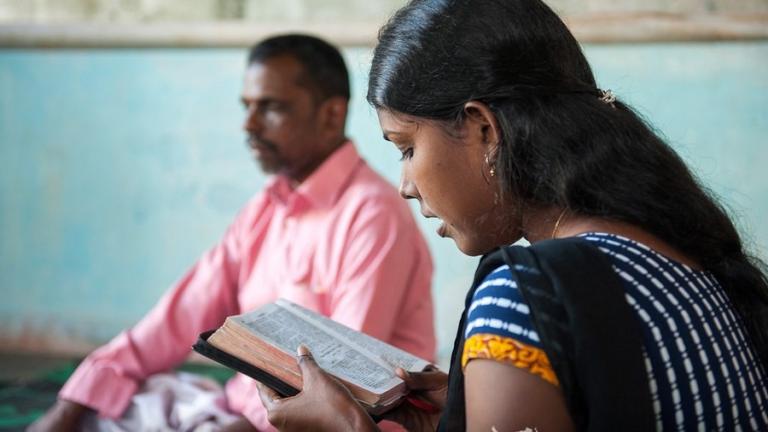
Many in Asia do not have a Bible. They don’t simply lack a book, they lack a treasure that is filled with wisdom, instruction, encouragement and glimpses of the heart of their Creator. They are unable to search Scripture for themselves, and they have no way of sharing His Word with others.
You can share a Bible and the Word of God with Asia! Click this image to find out how.
Mahabala and his wife, Nitara, were unable to get a Bible in their own language. New in their love for Christ, they had no fellow believers to help them grow spiritually.
Adding even more hardship, Mahabala’s parents kicked them out of the family home because of their new faith.
Then they met Timothy, a GFA-supported national missionary. To encourage them, Timothy gave them a Bible provided through friends of GFA. They were so delighted to receive the Word of God, and they faithfully read it every day. They also began to attend worship services. As a result, their fellowship with Him increased day by day, and they became strong in their faith.
Then their commitment to Christ was severely tested. After Mahabala’s father kicked them out of his home, he used his influence to get his son fired. With the loss of Mahabala’s salary, the couple began selling their jewelry to pay the rent. In their culture, this was the last step before turning to begging.
But Mahabala’s father made an offer: If they would reject Jesus, he would give them the equivalent of 18 months of Mahabala’s previous salary. When Mahabala didn’t respond, his father doubled and quadrupled his offer. Yet Mahabala and Nitara decided to hold firm in their faith, even if it meant living in poverty.
You see, they had learned from their new Bible that their true riches were stored up in heaven and that following Christ was worth more than gaining the whole world.
Only God’s Word has that kind of power. His heart is for His Word to be known by new believers like Mahabala and Nitara—and by those who do not yet know He loves them so much He sent His Son to die in their place.
=====
Click here, to read more blogs on Patheos from Gospel for Asia.
Last updated on: December 5, 2019 at 4:08 am By GFA Staff Writer
Gospel for Asia is in the business of providing answers. Providing answers to questions like:
“Does my life have any value?”
“Does anyone care about whether I live or die?”
“How can I find peace for my restless heart?”
To those questions, our workers can say confidently, “Yes, your life has incredible value; God cares so much about you that He sacrificed Himself in order to make a way for you to live with Him for eternity; the longing in your heart is met through relationship with Christ.”
Gospel for Asia (GFA)-supported workers help provide other answers too—like the solution for a family trapped in poverty or for a community battling illnesses due to impure water. Just in the last 10 years, hundreds of thousands of families have received clean water and income-generating gifts, such as livestock or sewing machines, through the ministry’s community development initiatives.
But what answer is there for a pastor who doesn’t have a way to visit all his congregants or neighboring communities for prayer ministry? Or for the farmer who struggles to carry his produce to market, or for the child whose legs ache from the long walk to school?
For these problems, we rejoice in the simplicity of the answer: bicycles!
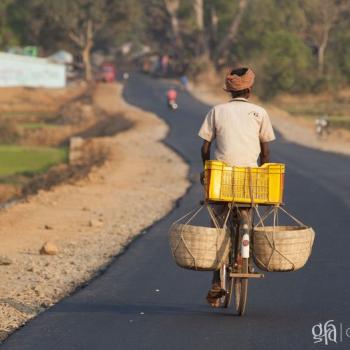
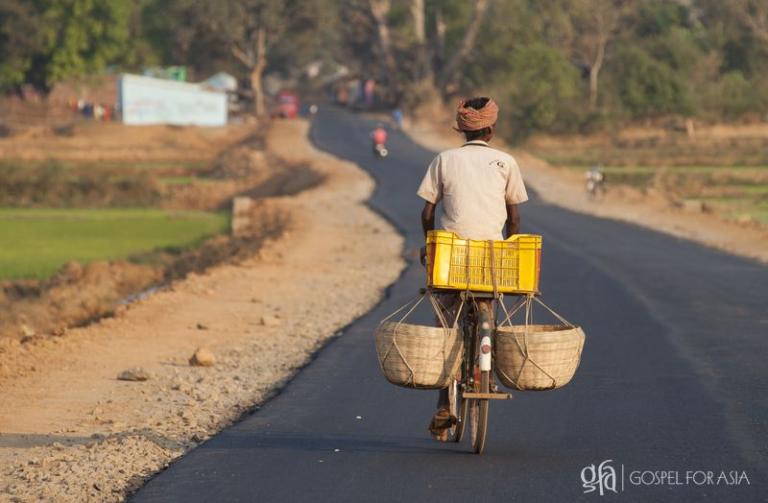
Gospel for Asia helps bless families with bicycles, which are extremely versatile modes of transportation in Asia. They are often used to carry loads of produce, water jugs, or multiple family members to jobs, school or worship services!
Imagine trying to do all your daily tasks without owning any form of transportation. Your job options would be severely limited, and you would spend precious time walking from place to place instead of working, caring for your children or studying.
Yaswar’s job was arduous: providing water for the laborers in the tea garden. He owned no form of transportation, so he had to carry heavy water pots on his shoulders. The long walk to the nearest water source wearied the 51-year-old’s body, but if he was ever late in bringing water, his co-workers grumbled and scolded him. Yaswar never said anything back, even though their words greatly discouraged him.
As a believer in Christ, Yaswar spent time with other Christians. He shared his problem with his pastor, Gospel for Asia-supported pastor Kundan.
“I am facing a problem in doing my duty [at the tea garden],” Yaswar told Pastor Kundan. “Because I have to carry water pots on my shoulders and walk for a long distance, I find it so difficult to do this job. I need time, but all the workers are asking me to come on time. Because of this hard work, my whole body is weak and tired. But I have no other option.”
“Don’t worry,” Pastor Kundan said, encouraging Yaswar. “God will do some miracle for you.”
Sometime later, Pastor Kundan organized a Christmas giftdistribution program, and he put Yaswar’s name on the list of recipients. Understanding Yaswar’s need, Pastor Kundan gifted Yaswar with a bicycle he could use while he fetched water for his co-workers at the tea garden. Yaswar could finally relieve his weary body by carrying the heavy water pots on his bicycle as he rode the long distance.
“I am very glad,” he said. “Our church has great compassion for the downtrodden community.”
We rejoice over stories like Yaswar’s. What a joy it is to be part of providing the answers to people’s problems! Yaswar—and the thousands of others who have received bicycles over the past 30 years—received a physical answer to his physical problem, as well as a reminder that Christ is the God who sees us in our need and moves on our behalf.
=====
Click here, to read more blogs on Patheos from Gospel for Asia.
Last updated on: December 5, 2019 at 4:59 am By GFA Staff Writer
My favorite Christmas gift I have received is a small whisk, a little bigger than a pencil. My children bought it for me three years ago. It is perfect for whipping up a glaze for scones, which I make quite often. It is also useful for whisking just one egg for an egg wash. I love kitchen items as gifts because they are very useful but something I rarely splurge on for myself. They are a practical luxury. Do I need a pencil-sized whisk? Of course not. Do I use it often? You bet!
Giving thoughtful gifts is a genuine act of love. A gift that someone would use all the time but would not buy themselves is the best kind. Fulfilling a need shows care. Many items in Gospel for Asia Christmas Gift Catalog are practical luxuries: They are gifts that our partners on the field often make do without, but such gifts can be an everyday blessing.
Bible-college students studying in the Himalayan mountains received winter clothing packets.
Many of these women are from poor backgrounds and came to Bible college without warm clothing.
Take the gift of a bicycle for a missionary who has been traveling on foot. He cares for multiple congregations; plus, he visits even more villages. He walks many miles every week just so he can be there for everyone. At the end of the day, he may get home just in time to tuck his children into bed—or not. With the gift of a bicycle, he may make it home in time for dinner with his family. He may be able to visit his congregations more frequently. He may be able to share with others the amazing gift of Christ Jesus! A bicycle may seem like a child’s gift to us, but for a missionary in Asia, it is a gift that will dramatically impact his daily life.
A few years ago, a group of women attending a Bible college on the slopes of the Himalayan mountains received such a gift. It is very cold year-round, but especially in the winter. Many of these women come from poor backgrounds and arrived at Bible college with very few possessions. It is common for women in Asia to not have the support of their families to attend Bible college. They are often expected to marry and help care for the family. Many are cast out of their families for following Jesus. In such cases, these women come to Bible college without much more than the clothes on their bodies and with no financial support. There receive no care packages from home with toothpaste, soap and homemade goodies.
In these situations, gifts are a very tangible way to show God’s love and provision. These Bible college students studying in the frigid Himalayas received winter clothing as part of a Christmas gift distribution. Rose, a first-year student, said, “I really did not have any warm clothes to wear in this winter season, but by God’s grace, I have received warm clothes. These warm clothes will surely help me in this cold season.”
I am grateful that we can give practical luxuries such as bicycles and winter clothing to those serving the Lord on the other side of the world. We can give simple gifts that do not cost much but that impact someone’s daily life as they reach out to those around them with the message of hope. We can enable missionaries and Bible college students to continue meeting with people in the cold months, instead of needing to stay indoors where it is warm. We can provide needed transportation for pastors to reach their congregations and minister to them.
Let’s thank God for the gifts He has blessed us with: the gifts of family, friends and Himself. Take a moment to remember simple, sweet gifts you have received from caring friends who knew just what you needed. And let us look to others and how we might bless them in tangible ways with the love of Christ this Christmas season.
=====
For more blogs on Patheos from Gospel for Asia, go here.
To see our Christmas catalog of gift for missionaries in Asia, go here.
A bicycle can literally change the course of someone’s life. In Asia bicycles are a major form of transportation. The two-wheeled machine can often save hours of travel time, enabling much more productivity to the user.
One of our favorites gifts to give impoverished people in Asia are bicycles. Whether that be for a school-going child or a hard-working dad, we have seen how these simple tools have amazing effects. In Gospel for Asia (GFA) 2016 Special Report, there’s a story about a man named Tosa who received a bicycle through the kindness of donors and supporters across the globe.
Here’s a snippet:
Tosa was known as the poorest man in his village. Though Tosa and his wife both worked as much as they could, they were barely scraping by. If they couldn’t work, they didn’t eat that day.
Tosa knew that if he could get to the city, he would find better work and be able to feed his family. But there was a problem: His family owned only one bicycle, and his children needed it to get to school each day. There were no other means of transportation he could afford. So he stayed in his village—sometimes walking by foot to nearby villages—looking for work so his family could live.
Doors Begin to Open
Whenever Gospel for Asia-supported pastor Gobi visited Tosa’s village, he made it a point to check in with Tosa and his family. As they saw the genuine love and care Gobi had for them, they decided they wanted to learn more about Jesus, the One who deeply loved the world.
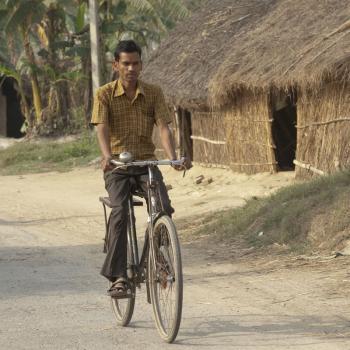
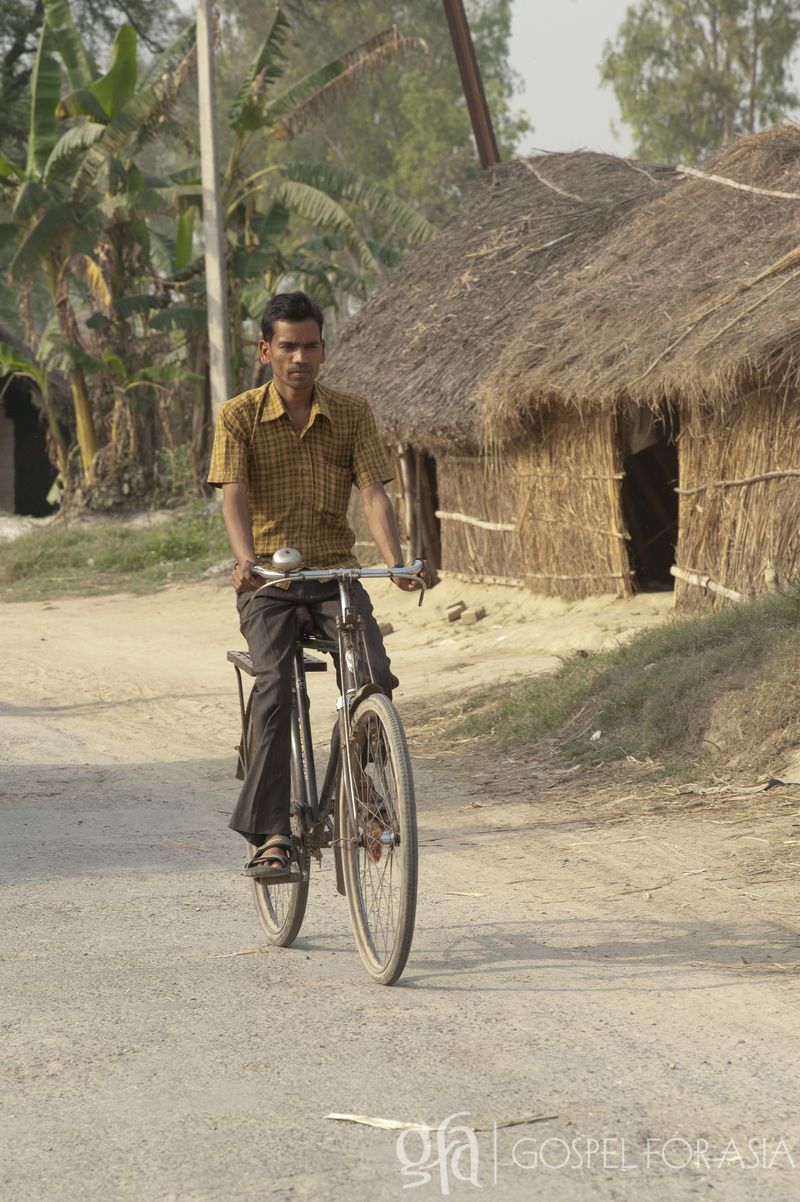
Those who receive bicycles are able to go travel from village to village faster.
Christmas Give Brings Hope on Wheels
When Pastor Gobi organized a Christmas gift distribution, he requested that Tosa be added to the list of recipients. Two months later, Tosa was presented with a bicycle. With this useful gift, Tosa traveled to the city and began to earn a better living. Soon his family could enjoy three meals a day, and he was even able to purchase more clothing for his family, including school uniforms for his children.
Breakthroughs in the Village
As Tosa and his family’s lives began to transform, the villagers watched them closely. Slowly others’ hearts began to soften. Their ideas about Pastor Gobi and God began to change. The villagers began to take the literature Pastor Gobi offered, and they read it with curiosity. They have begun to ask Pastor Gobi for prayer when they are sick or in need of peace.
Can you imagine being in Tosa’s shoes?
He no longer has to helplessly stand by watching his family suffer from hunger. This thoughtful gift made such an impact on Tosa’s family that now their village has hope in the love of Christ.
It is pretty amazing to watch the Lord work through practical things like a bike. The compassion of Jesus is alive today as it motivates us to action when we see someone suffering. And Tosa’s life is living proof of that unending compassion.
=====
Click here, to read more blogs on Patheos from Gospel for Asia.














 Ad-Free & Subscriber Log-In