2022-08-12T22:26:53+00:00

WILLS POINT, TX – Gospel for Asia (GFA) Part#3 Special Report on the aftermath of acute gender imbalance: Discussing the horrendous reality of 100 million missing women worldwide.

A Little Girl’s Future Transformed

A beautiful story from Gospel for Asia’s archives tells about the day a cook at a Gospel for Asia (GFA)-supported Bridge of Hope center noticed an elderly woman begging on the street. The cook was distressed because the older woman had a little girl, filthy and dressed in rags, in tow.

Knowing that adult beggars will often use children as bait to receive monies, then pocket the funds and do nothing for the child, the cook challenged the older woman, “Why are you exploiting this child?”

To the cook’s surprise, the older woman broke into tears and wept.
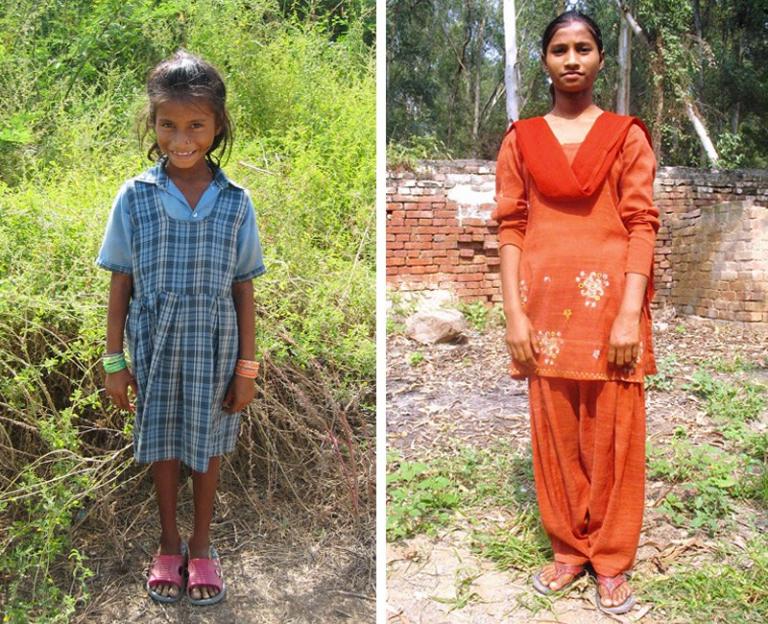
Daya, pictured at age 8 and age 15. Once among beggars in the street, she is now a thriving teen finding her place in this world and walking in her faith.

She wasn’t a professional beggar at all, but the grandmother of the little girl, Daya, who had been abandoned by both her mother and father. Without income and desperate, the grandmother had begun begging at bus stops, train stations and on the streets. With a change of heart, the cook invited the grandmother to enroll Daya in the Bridge of Hope center, which was in a building wedged between a railway station and a slum, conveniently available to children without a future.

The little girl was enrolled in the center but was so filthy that other parents complained. The Bridge of Hope staff conducted an intensive scrub session to relieve the child of dirt and germs and to replace the same filthy clothes she wore each day with clean clothes. They introduced her to soap and taught her to use it when she washed.

As the report states, “Daya’s future hung in the balance. If rejected from the Bridge of Hope center, she would return to the streets as one of the hundreds of thousands of child beggars in Asia. At some point, she would likely join the 20 to 30 million other boys and girls who are exploited as child laborers.”

The staff was determined to see that Daya thrived in Bridge of Hope, and she grew up to be an educated young woman. However, millions of other children never get that chance.
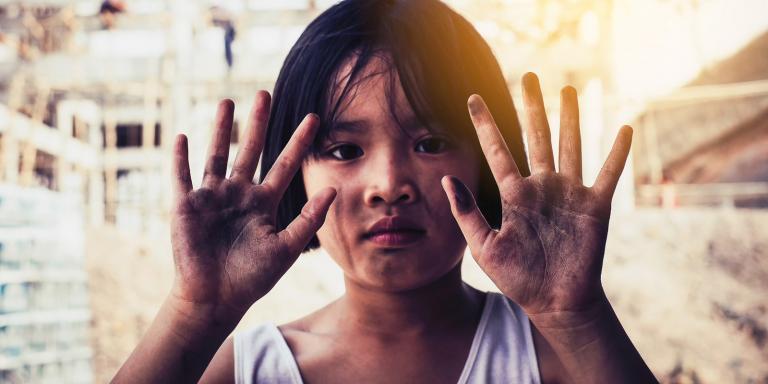
These are the hands of a child, covered in filth from doing construction work. Thousands of children, just like this one, can’t go to school because they are caught in bonded labor. Some 31 million girls of primary-school age are not in school. Seventeen million of these are expected to never enter school.

Child Exploitation

In a fact sheet on girls’ education, UNESCO (United Nations Educational, Scientific and Cultural Organization) explains:

  • Some 31 million girls of primary-school age are not in school. Seventeen million of these are expected to never enter school.
  • Some 34 million female adolescents are missing from secondary schools, which often offer vocational skills that are essential for procuring future jobs.
  • Two-thirds of the 774 million illiterate people in the world are female.
    Thousands of these children can’t go to school because they are caught in bonded labor.

“It is doubtful they’ve ever held a toothbrush or a bar of soap; they’ve probably never eaten an ice-cream cone or cradled a doll,” Gospel for Asia (GFA) states. “The child laborers of Asia toil in fireworks, carpet and match factories; quarries and coal mines; rice fields, tea plantations and pastures; and even brothels. Because they are exposed to dust, toxic fumes, pesticides and disease, their health is compromised, and their bodies can be crippled from carrying heavy weights.”

Worse still, these children could be entrapped in prostitution.
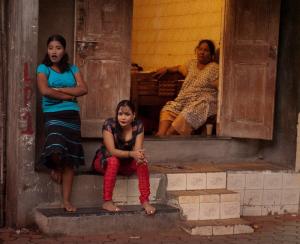
These young women are prostitutes in the red-light district; some most likely entrapped since childhood.

According to Reuters, “Of an estimated 20 million commercial prostitutes in India, 16 million women and girls are victims of sex trafficking, according to [data gatherers].”

Prostitution is not illegal in India so the chances of victimization are mind-blowing. In addition, many impoverished families sell their daughters to opportunists who promise a better life for their children.

ABC News reports, “Aid organizations estimate that 20 to 65 million Indians have already passed through the hands of human traffickers at one point in their lives. Ninety percent of them remain within India’s national borders, and the majority are female and under the age of 18.”

One social worker, Palavi, explained, “Human trafficking works because the victims are afraid and cannot communicate. … Many of them have children who live in constant danger of also being sold or sexually abused. They grow up under the beds where their mothers were robbed of their dignity.”

When census data is gathered, these women, mothers and little girls are not in their villages, local communities or urban settlements. They are hidden by sex slave traders (but made available to the men who seek them out).

Let me ask again the question Jesus asked Simon the Pharisee, “Do you see this woman (or child, or little girl or teenager)?”


I have a granddaughter named Eliana who is 10 years old. Four mornings a week, I pick up Eliana and her brother, Nehemiah (8), to drive them to school. Their younger sister, Anelise (5), is picked up by the preschool bus. My driving effort is to help out their mother, who was married to our son Jeremy Mains. Our son, her husband and the children’s father, died five years ago at age 42 of blastic mantle cell lymphoma.

Angela, my daughter-in-law, is raising the children by herself while holding a full-time job as the director of a local community-outreach organization. She has just completed her dissertation and received a doctorate in adult education. Nevertheless, even with remarkable mothers, studies show that children raised without fathers are vulnerable. So my husband and I live close, are on call when babysitters fall through and try to do a lot of one-on-ones with our grandchildren.

Though I watch these grandchildren grow with an attentive heart, I am certain my granddaughter Eliana will never worry about entering bonded labor or be forced to go begging on the streets. It is impossible for me, even for the sake of achieving a frightening empathy, to impose through my imagination the horror of the lives of some 20 to 65 million trafficked females on these precious little girls I love.
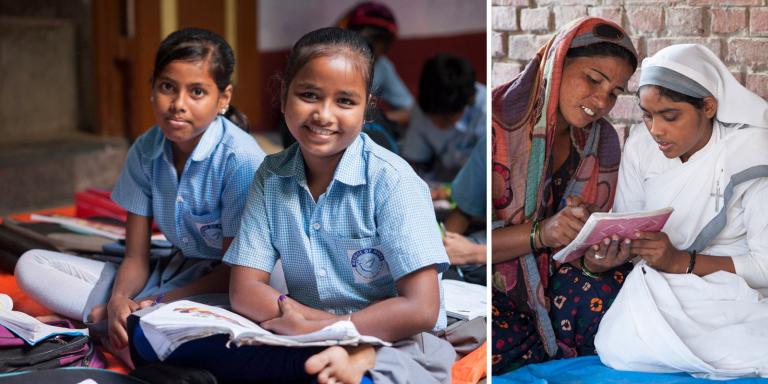
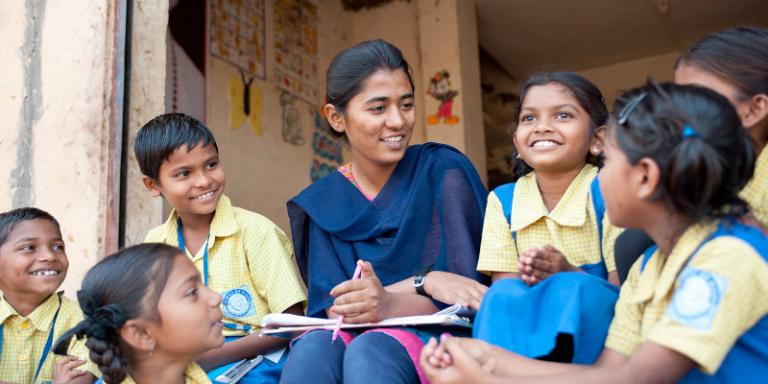
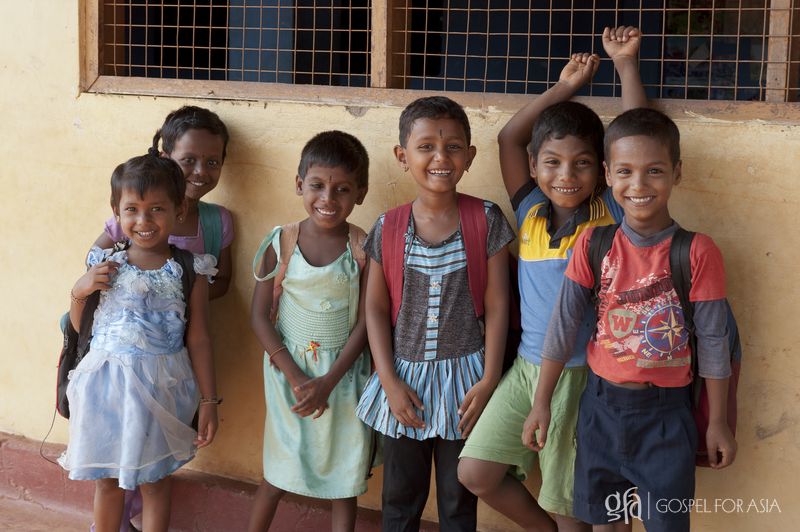
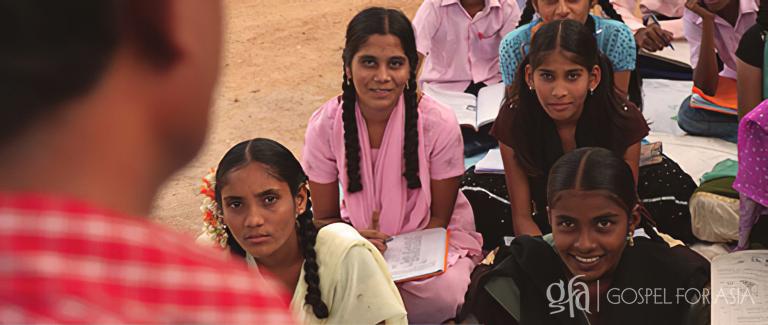
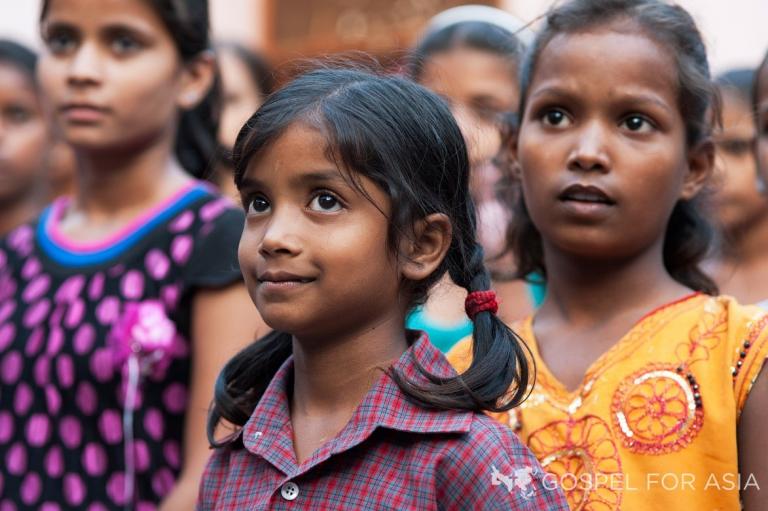
These Bridge of Hope students look happy during class time at GFA’s Bridge of Hope program. Education can protect a girl from exploitation—and redirect her future. This is a primary solution to begin changing the statistics of 100 million missing women.

Education as a Deterrent

Education can protect a girl from exploitation—and redirect her future. An educated girl can read. She can find work. She can get training to become a teacher, a doctor or a policewoman, for instance. She can tutor other children. A social system begins to change slowly, very slowly, one educated girl by one educated girl.

The latest statistics regarding GFA’s supported work with women in 2018 include:

290,753

women received free health care training

8,812

sewing machines distributed as a means to obtain work as a seamstress

61,880

illiterate women learned to read and write

11,000+

women desperate for jobs received vocational training

Educating girls is a primary solution to begin changing the statistics of 100 million missing women. The Global Partnership for Education maintains, “The power of girls’ education on national economic growth is undeniable: a one percentage point increase in female education raises the average gross domestic product (GDP) by 0.3 percentage points and raises annual GDP growth rates by 0.2 percentage points.”

The World Bank stresses that girls’ education goes beyond getting into school. It is also about ensuring they learn and feel safe in school. One research study in Haiti indicated, “One in three Haitian women (ages 15 to 49) has experienced physical and/or sexual violence, and that of women who received money for sex before turning 18 years old, 27 percent reported schools to be the most common location for solicitation.”

Through Bridge of Hope, Gospel for Asia (GFA) offers child sponsorships for the neediest impoverished children whose families are caught in the cycle of poverty and are unable to provide education for their offspring. The sponsorship amount is $35 per month per child. This educational ministry sees that some 70,000 children (both boys and girls) are given a daily meal, regular medical checkups and training in basic hygiene.
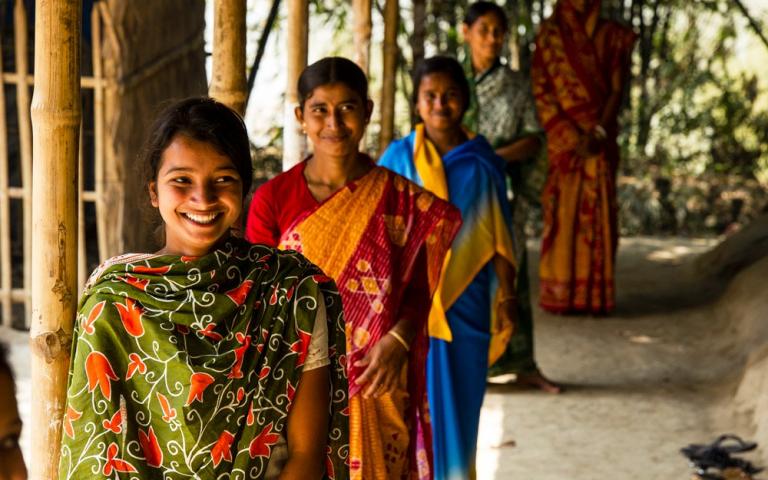
What can we—those of us who have hearts that beat with concern about the unbelievable evils of this world—do about the women worldwide who face discrimination and violence? How can anyone make a dent in a problem with such magnified proportionality? How can that horrific statistic—100 million missing women—be conquered, overcome, defeated, reduced or even eliminated?

What Can We Do? How Can We Conquer the Horrific 100 Million Missing Women Statistic?

What can we—those of us who have hearts that beat with concern about the unbelievable evils of this world—do about the 100 million missing women worldwide who face discrimination and violence? How can anyone make a dent in a problem with such magnified proportionality? How can that horrific statistic—100 million missing women—be conquered, overcome, defeated, reduced or even eliminated?

Well, there are some things we can do, small as they seem, but mighty nevertheless in their possibility:
We can sponsor girls (and boys) so they get educated through programs like GFA’s Bridge of Hope Program. And if $35 a month is too much for you (and it is for some compassionate people), invite your small group, Sunday School class, men’s softball league, neighborhood coffee-klatch or members of your extended family to pool funds.

Think about this question: Why do more people not see this inequality and neglect, not grieve for the 100 million missing women and girls who have experienced such hardships and take action to be part of the solution? Then read the book of Luke and think about the societal shift that begins with women’s encounters with Jesus.

Remind yourself of Christ’s question: “Do you see this woman?” Write it out on a card, and then use it as a bookmark in the books you read or paste it on your bathroom mirror. Write out a prayer, like the one I included in the beginning of this article, but adapt it to this horrific dilemma: Lord, what do You want me to do about the masses of women? And if you are not a praying person, send some discontented energy into the atmosphere any way you feel fit. Just don’t forget.

Let us conclude by going back to Jesus, except now He is not eating at the table of the VIPs. He is bloody, tortured, hanging from a cross and nearing death. The Gospel of John describes the inhumanity of the Roman soldiers and the crowds standing beneath the cross.

“Now there stood by the cross of Jesus His mother, and His mother’s sister, Mary the wife of Clopas, and Mary Magdalene. When Jesus therefore saw His mother, and the disciple whom He loved standing by, He said to His mother, ‘Woman, behold your son!’ Then He said to the disciple, ‘Behold your mother!’ And from that hour the disciple took her to his own home.”

Concern for the widow. Concern for the women.

“Look at this woman. Do you now see your mother?”

So, let us also be about this work in the world.

Oh, Lord, help us to care for every human with hearts that beat like Your heart beats for them. And help us, please help us, no matter our gender, to see the women.


Read the rest of Gospel for Asia’s Special Report on 100 Million Missing Women & the Aftermath of Acute Gender Imbalance here: Part 1Part 2

Learn more about Gospel for Asia’s programs to combat the 100 million missing women reality by helping women through Vocational Training, Sewing Machines and Literacy Training.

This Special Report article originally appeared on GFA.org


Read more on the 100 million missing women dilemma on gender imbalance and violence against women on Patheos.

Click here, to read more blogs on Patheos from Gospel for Asia.

Go here to know more about Gospel for Asia: Facebook | Sourcewatch | Integrity | Flickr | GFA | Lawsuit
2019-11-21T15:10:00+00:00

“Being confident of this very thing, that He who has begun a good work in you will complete it until the day of Jesus Christ.” —Philippians 1:6

I was watching a video this morning of my friend Dr. KP Yohannan visiting the home of a girl enrolled in the third grade of a Bridge of Hope center sponsored by supporters of Gospel for Asia (GFA). The video featured a visit to the humble home where the little girl lives with her grandmother in the slums of Mumbai.

As the story unfolded, Brother KP wondered how long the woman would be able to care for her precious granddaughter as they both grew older. He spoke of the potential of the child to grow up into an adult who cares deeply for others, whether in business or as a loving mother. She has a long way to go, but the Bridge of Hope center is preparing her for such a future.

Commitment to Stay With Her Till She Makes It - KP Yohannan - Gospel for Asia

Just as I was thinking about the likelihood of her actually completing the journey across that bridge to a future of hope and prosperity, Dr. Yohannan made a statement that both pierced and blessed my heart.

He said, “Our commitment is to stay with her till she makes it.”

Within that moment, my entire understanding of child sponsorship was transformed.

My perspective on sponsorship was pretty much limited to providing education, food and health care. I realized that I had neglected the fact that we also provide a place for character development, a setting where the child can learn to discern truth from error, and a place where the love of Jesus is demonstrated in a way that it can transform their lives and embody it as they grow into adulthood.

I realized anew the commitment that GFA and its field partners have to ensure that Bridge of Hope children actually find that hope, not just from day to day, but for their entire future.

“Our commitment is to stay with her till she makes it.”

Supporting children in Bridge of Hope centers in Asia is more than pointing them to hope. It is leading them to a future where their hope is certain and sure, and where they can share their hope with others.

Just as the Apostle Paul assured the Philippians that the Lord was committed to completing the good work He has begun in us, our gifts help to ensure that GFA, its field partners and Bridge of Hope staff members are able to make and keep their commitment to stay with each student until they make it.

What kind of hope would we provide if all we did was educate and feed children and tell them there is hope without leading them every step of the way, all the way to that hope?

And how short-sighted would our efforts be if we failed to interact with the parents (and grandparents) who are struggling to raise these innocents? Part of the miracle of Bridge of Hope is that center staff members involve the parents or guardians, encouraging and assisting them as well. We have the joy of seeing individual children, their families and entire communities transformed with hope.

We will not be a bridge to nowhere. We are committed to being a Bridge of Hope.

Will you pray for GFA and our Bridge of Hope partners? Here are some ways to pray specifically for the needs of children in Asia.

Will you pray for Dr. KP Yohannan as he nears his 40th year of leadership at Gospel for Asia?

Will you consider sponsoring children who need a Bridge of Hope? Who knows when we might be the only source of the financial support that child needs?

Image Source: Gospel for Asia, Photo of the Day


To read more posts on Patheos on Bridge of Hope, go here.

Click here, to read more blogs on Patheos from Gospel for Asia.

Go here to know more about Gospel for Asia: Youtube | Twitter | GFA Reports | My GFA | Instagram

2019-10-27T13:47:48+00:00

Wills Point, Texas – GFA (Gospel for Asia) – Discussing where violence against women occurs worldwide, including violence against widows.

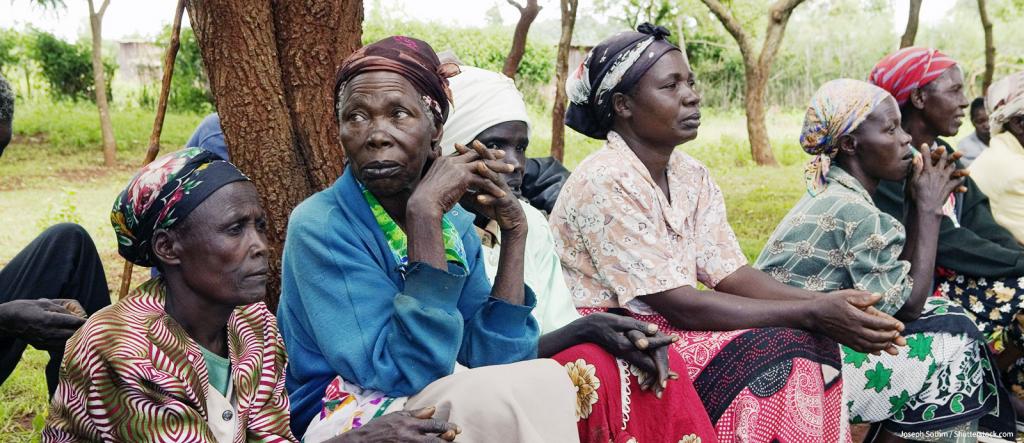
Widows in Meru, Kenya, Africa who have lost their husbands - KP Yohannan - Gospel for Asia
Widows in Meru, Kenya, Africa who have lost their husbands and have only themselves as a group to look after each other.

If a woman happens to escape the abuse so common in marriage, what happens to her once she is no longer married and becomes a widow? Does the violence against widows end?

Violence Against Widows

“Gulika’s life drastically changed the day her husband died. … Bearing the title ‘widow’ was a heavy weight to carry. The sharp, condemning words of the villagers stung Gulika’s already broken heart. Because of this, the pain of losing her husband increased all the more. It seemed that every time she stepped out of her home she wasn’t safe from their harsh criticism.

“The villagers believed Gulika was cursed. They were even afraid that if she passed them on the street, she would bring them bad luck. This shame and rejection, on top of the reality of her husband’s death, grew unbearable. Soon Gulika fell into deep emotional despair.”

Condemnation. Shame. Rejection.

a widow has lost all “color” from her life once her husband has died - KP Yohannan - Gospel for Asia
Wearing a white sari symbolizes that a widow has lost all “color” from her life once her husband has died.

Gulika, like so many other widows in South Asia, incurred the blame for her husband’s death—even though he had died crossing railroad tracks as an oncoming train headed his way. But that didn’t matter. The cause of a husband’s death, no matter how arbitrary or natural, is blamed on the wife.

People believe the husband’s death came about because the wife is a curse, a bad omen. They may strip her of her jewelry, shave off her hair, and force her to wear a white-colored sari, signifying she no longer has any “color” and must spend the rest of her days on earth in mourning. Often, she’s cast out of the home, left with no property and no way to fend for herself. She no longer has any family unless she has dependent children. In order to survive, she may need to beg or turn her body over to prostitution.

There are more than 57 million widows in Asia—and it transcends ages and social statuses. A person can become a widow as young as 7 years old (depending on if they were forced into a child marriage) or can come from a wealthy, high-class family. But once a girl or a woman bears the name “widow,” who they were before no longer matters. They’re obligated to live out the rest of their lives forgotten, shamed and without any hope.

The cause of a husband’s death, no matter how arbitrary or natural, is blamed on the wife.

In an article published by National Geographic, journalist Cynthia Gorney was able to get an insider’s view on the plight of widows. In one interview, she noted the “fury” a social worker named Laxmi Gautam had when talking about the condition of widows:

“We asked whether Gautam had ever imagined what she would change if she were given the power to protect women from these kinds of indignities. As it turned out, she had. ‘I would remove the word ‘widow’ from the dictionary,’ she said. ‘As soon as a woman’s husband is gone, she gets this name. This word. And when it attaches, her life’s troubles start.’”

There are more than 57 million widows in Asia - KP Yohannan - Gospel for Asia
There are more than 57 million widows in Asia

When Will the Violence Against Widows End?

From one stage of life to the next, it would seem the women of Asia hardly get any reprieve from abuse and discrimination. Violence against women is “from the womb to the tomb,” as the old saying goes.

But in the midst of such gloom, Gospel for Asia—and other governmental and non-governmental organizations working on behalf of women’s rights in Asia—is seeing a new dawn rising for hundreds of thousands of women.

As women experience the love of fellow human beings who are willing to serve and minister to them, their understanding of their worth and value in society is elevated. Gospel for Asia-supported workers, including men, treat each girl and woman they meet with respect. They speak words of life into the hearts of women who’ve silently suffered violence, letting them know they matter, they are important, they are valuable, they are loved—even if the rest of society doesn’t believe so.

Remember Aamaal, the woman who tied a noose and was planning on hanging herself to escape her husband’s abuse? She didn’t jump. She didn’t kill herself. Instead, a relative offered her hope in the name of Jesus and led her to a compassionate GFA-supported pastor. Because of that, her life changed—and her husband experienced renewal too! He no longer drinks. He no longer beats his wife, and Aamaal is no longer living the life of an abused woman.

Geeta and her two young children rebuilt their lives - KP Yohannan - Gospel for Asia
Geeta and her two young children rebuilt their lives after their abusive father left, through the support of their local church.

When Geeta’s abusive husband left her, she went from fear to despair—not relief. She faced pressure to sell her body as a prostitute, and she eventually started working as one. But one of her friends, a believer, knew there was a better way to live. She shared loving counsel with Geeta, something she had been searching for.

The hunger and poverty Geeta and her children faced remained a problem, however, until Geeta’s children were enrolled in a Gospel for Asia-supported Bridge of Hope center. The local church has also came alongside the family, helping them find a safer place to live and provided help and encouragement.

As GFA-supported workers lead their congregations to truly value women, whole portions of society are showing women respect they’ve never experienced before. Believers can be heard thanking God for their newborn baby girls. They educate their daughters to give them a future of their own. They refuse to receive dowry as a testimony to the love of Christ. And when their sisters in Christ become widows, they embrace and support them rather than reject them.

Gospel for Asia-supported Initiatives Helping to End Violence Against Widows, Women

Through various GFA-supported initiatives, girls and women have opportunities to reach heights they were once barred from reaching because of their gender.

Literacy Training - KP Yohannan - Gospel for Asia
Literacy Training is key for helping women and widows get back on their feet.

Literacy Training

provides adult women with the opportunity to learn how to read and write—skills they never had the chance to learn, most likely because in the minds of many parents, a girl’s education is not worth investing in.

Health care seminars - KP Yohannan - Gospel for Asia
Health care seminars give women and widows practical training in personal hygiene.

Health Care Seminars

teach women how to properly take care of their pregnancies, their babies, their homes and families, which empowers them inside the home.

Gospel for Asia's bridge of Hope program - KP Yohannan - Gospel for Asia
Gospel for Asia’s Bridge of Hope program helps widows with children keep them in school.

Gospel for Asia’s Bridge of Hope Program

is a child sponsorship program that helps keep young girls off the streets and provides them with an education—while teaching every student how boys and girls are created equal in God’s sight.

Vocational training and Income-generating gifts - KP Yohannan - Gospel for Asia
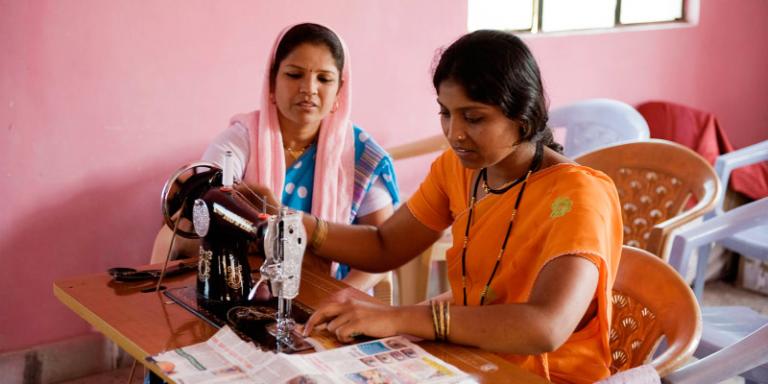
Vocational training and Income-generating gifts like sewing machines give widows practical skills to earn a living.

Income-generating Gifts

give impoverished women the ability to take care of themselves and their families if their husbands are struggling to provide, unemployed, or incapacitated due to alcohol or other addictions. Vocational training makes it possible for women to learn skills that will help them find good jobs—or even start their own business!

At the heart of many of these initiatives are GFA-supported women missionaries and Sisters of Compassion, specialized women missionaries. They stand beside and advocate for the rights of abused and neglected women. They show others how to love and care for the people around them, regardless of their gender. Through them—and the guidance and teaching of male pastors and missionaries who see each woman as precious, valuable and made in the image of Almighty God—violence against women is ending. Women are enjoying new life safe from hands that once sought to abuse them.

Sisters of Compassion - KP Yohannan - Gospel for Asia
Sisters of Compassion help widows in need of support, encouragement or medical attention.

As for Geeta, she has a solid group of people who have stood with her through her hardships. We, too, can come alongside women like Geeta. Through our prayers and support of national workers, we take part in helping end the violence against women in Asia.

When we come alongside GFA-supported workers, we empower them to empower others. We have seen the fruit of these efforts over and over again, and by God’s grace, we will see more and more women set free—physically, emotionally and mentally—from the abuse and neglect they’ve known their entire lives.


For more on Patheos about violence against widows, their plight and need, go here.

This article originally appeared on gfa.org.

=====

Click here, to read more blogs on Patheos from Gospel for Asia.

Go here to know more about Gospel for Asia: Facebook | Youtube | Twitter | GFA Reports | My GFA

2019-11-29T07:59:33+00:00

Gospel for Asia (GFA) News, Wills Point, Texas

I hear the stories all the time. I work at a missions organization, so, of course, I’m aware of suffering children in Asia. Sometimes I pause and let it break my heart, but other times my mind glides over the words and tucks the story into a pile of “sad things” and moves on with my day.

But today I want to hear these stories with Jesus’ heart, to pause and take time to be there with these children, imagining they are my own. Listen to this little girl talk about her sister Lakshmi:

“My sister is 10 years old. Every morning at 7 she goes to the bonded labor man, and every night at 9 she comes home. He treats her badly. He hits her if he thinks she is working slowly, or if she talks to the other children, he yells at her.

I don’t care about school or playing. All I want is to bring my sister home from the bonded labor man. For 600 rupees I can bring her home—that is our only chance to get her back.

We don’t have 600 rupees…we will never have 600 rupees [the equivalent of U.S. $14].”

In another place in Asia, Neha and Prema shared a six-by-eight-feet hut with their parents and five other siblings. For a bathroom, they had to go to the railroad tracks—they had no alternatives to escape prying eyes. Their parents worked as garbage collectors, digging through people’s trash every day to look for anything they could sell or recycle. Prema and Neha often ended up helping their parents, hoping they could provide that little bit extra their family always needed.

Then there’s Sashmita and her family, who lost everything they had in a flood. Already poor, Sashmita’s parents struggled to get back on their feet and provide for their three children. After the flood, the family had to move, and they couldn’t afford to send Sashmita and her brothers to school for several years.

Children provided hope - KP Yohannan - Gospel for Asia
Children like these are being provided hope through the work of Gospel for Asia-supported Bridge of Hope.

Like many other families in Asia, all these children were stuck in a nearly unbreakable cycle. As poverty kept them from attending school, their chances for a good education—and to rise out of poverty—faded. Most likely, their children and grandchildren will inherit the same struggles.

Fortunately, for tens of thousands of children throughout Asia, this is no longer their story. The cycle of poverty is being halted at the first step: educating the children. For the more than 82,000 boys and girls enrolled in Bridge of Hope, a child sponsorship program supported by Gospel for Asia, poverty is no longer an obstacle to education.

Thousands of families have been transformed by the support they receive from the GFA community across the world to provide children in Asia with quality education and care. People from the U.S. to the U.K., from Canada to Finland, from South Korea to New Zealand and many other places around the globe are all fighting for the children of Asia to succeed. And they’re helping provide Bridge of Hope with the resources needed to ensure every child in the center—whether sponsored or not—is taken care. Because of this, we’re seeing boys and girls breaking free from the cycle that threatened to keep them stuck.

When Neha and Prema joined Bridge of Hope, their lives changed dramatically. After four years of support and education, they were able to build a three-bedroom home with an indoor bathroom for their family. Their next goal is to both become teachers to help other children in need, a goal that would have been impossible before Bridge of Hope.

For Sashmita, after enrolling in Bridge of Hope, she could return to school and receive the extra help she needed after missing so many years of education. This helped her family’s financial burden and enabled her brothers to return to school as well.

Children enrolled in Bridge of Hope are provided with school supplies they may not be able to afford and tutoring so they can excel in school. They are given a daily meal, relieving a burden for many families. They receive medical care and lessons about hygiene. Entire families and communities are impacted by the Bridge of Hope centers, freeing their children from the cycle of poverty.

It is a privilege for us to impact the lives of so many children across Asia. As Jesus said, “Let the little children come to Me and do not forbid them; for of such is the kingdom of heaven” (Matthew 19:14).

Hope and a flourishing future is the new inheritance for these children.

=====

For more blogs on Patheos from Gospel for Asia, go here.

Go here to know more about Gospel for Asia: GFA.net | GFA Wiki | GFA Flickr

2025-03-18T20:19:27+00:00

Since 1979, Gospel for Asia (now GFA World) has been committed to serving the “least of these” in Asia, often in places where no one else is serving, so they can experience the love of God for the first time. GFA supports national workers serving as the hands and feet of Christ in four main ways. Sponsoring national missionaries to minister to people’s needs, sponsoring children, investing in community development, and helping families in need of care or during disasters.

Gospel for Asia is about changing communities—both for this life and for eternity. GFA is present in India, Bhutan, Sri Lanka, Nepal, Myanmar, Bangladesh, Cambodia, China, Laos, and Thailand, Rwanda and Liberia.

Programs

National missionaries

GFA’s main focus is to train and equip national missionaries who come from different cultures and languages rather than nation-states. This selection provides GFA with people within a single nation-state who are specialized in the particular village that they are ministering to. Some of these missionaries actually belong to these villages which makes it easier for them to share the love of Christ. In 2018 GFA reported that they have over 16,000 missionaries and church planters in 18 Asian nations.

Church buildings, Bibles, and gospel literature

Part of GFA’s program for discipleship is the establishment of Christian worship centers in small villages. These centers also provide a visible meeting place for Christians. In major cities, GFA builds large cathedral-type buildings to cater to bigger congregations. Similarly, GFA distributes native-language bibles and evangelical Christian literature to the region.

Radio and television broadcasts

GFA provides biblical content through its radio program, Athmeeya Yathra (Spiritual Journey) and its YouTube channel, Athmeeyayathra Television.

Bible colleges

GFA has established 56 bible colleges in India, Nepal, Bangladesh, Myanmar and Sri Lanka. These institutions train native missionaries within their own dialects and cultures so that they will be effective ministers. The program includes three years of instruction, including field instruction and experience.

Bridge of Hope

Bridge of Hope is a child sponsorship program for poor families in underserved communities, especially lower-caste families and Dalits. The program offers education, physical and spiritual care, including healthcare training and vocational training for women.

Wells

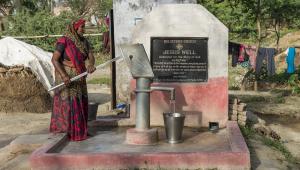
Jesus Well Gospel for Asia
This is a Jesus Well in a remote village in Asia.

In response to water shortage problems in communities, GFA digs wells for long-term use near churches, bible colleges, or Bridge of Hope centers. These wells are turned over to the local church and are maintained by a local pastor.

Leprosy Ministry

This ministry is also called “Reaching Friends Ministry” to help people suffering from the disease through social and relief work, medical aid, and health and hygiene awareness.

Expansion to Africa

In 2020, GFA started World Child Sponsorship in the slums of Kigali, the capital of Rwanda. It also include training national missionaries, clean water projects, medical ministry, education for the underprivileged, women’s empowerment, and community development projects. In 2025, GFA World extends missionary movement to Liberia, West Africa.

Affiliate Offices

GFA has or had 14 known affiliated LLCs registered in Willis Point, TX as well as national offices in various countries in which they operate mission efforts.

Believers Eastern Church

Believers Eastern Church is administratively based in the state of Kerala in southwestern India. It was reorganizd in 2015 into 33 dioceses. Its membership includes over 3.5 million people in 10 countries speaking a hundred languages. The Church currently has 30 Bishops, and the current Metropolitan Bishop is Athanasius Yohan I.

GFA Canada

The GFA Canada office is registered with the Canadian government. It was established in 1986 and is located in Ontario. As a charity office, it provides disaster relief among other humanitarian efforts to communities.

History

Dr. K.P. Yohannan founded Gospel for Asia as a Christian NGO in 1978. In the US, the organization is located in Wills Point, TX. In 1981, a branch was established in Kerala, India. Another headquarters was set up in Tiruvalla in 1983. GFA has also established bible colleges, compassion and community development projects, and disaster relief operations. GFA is supported by donations and has been considered to be “one of the most financially powerful mission undertakings in India in the 1980s.

What Others Are Saying About Gospel for Asia

George Verwer shares why he stands with Gospel for Asia

“Gospel for Asia is not a movement but a phenomenon. GFA has become one of the most significant mission organizations of this century.

“I praise God for the great love and commitment of K.P. and Gisela Yohannan for the people of Asia. Millions have received the Word of God because of them and the ministry of Gospel for Asia.”

—George Verwer, founder of Operation Mobilization and world missions advocate


Ajith Fernando, teaching director of Sri Lanka's Youth for Christ
Ajith Fernando, teaching director of Sri Lanka’s Youth for Christ


“I am grateful for the training that Gospel for Asia has given to many evangelists who are effectively reaping the ripe harvest fields of Sri Lanka.”

—Ajith Fernando, teaching director of Youth for Christ in Sri Lanka


Paul Louis Cole, president of Christian Men's Network
Paul Louis Cole, president of Christian Men’s Network

“Dr. K.P. Yohannan is a missionary statesman, a pastor to pastors, a mission leader to mission leaders, and a father to the fatherless. At Christian Men’s Network, we look for deserving men around the world to highlight as role models for our Global Fatherhood Initiative. My introduction to Dr. Yohannan was reading Against the Wind, Finishing Well in a World of Compromise, which stirred me deeply. In a unanimous decision, the CMN board presented Dr. Yohannan with the first annual Reggie White Fatherhood Award, to honor his demonstration for over 40 years of what it means to be a father by providing leadership to compassionate workers of faith and hope to the defeated.”

—Rev. Paul Louis Cole, D.Th., president of Christian Men’s Network


Francis Chan, pastor and author

“K.P. has been a mentor to me for years. The way that he speaks to God and about Him is different from anyone else I know. His words and actions have led to me loving Jesus more consistently and deeply. He continues to be an example to me. For this, I am eternally grateful.”

-Francis Chan, pastor and author

Read more quotes
25 Christian Leaders affirm Gospel for Asia


Gospel for Asia is also a community inspiring others in the West to be committed to Christ

GFA’s first Core Value is knowing the Lord Jesus more fully and intimately. This value is lived out daily by GFA staff and since its inception; GFA has provided ways for people to live out their commitment to Christ.

GFA School of Discipleship in Texas

GFA School of Discipleship in Texas

GFA created an immersive, authentic discipleship program for youth ages 18 – 27. Daily students are challenged to “die to yourself” while living in a community of believers who love Christ and serve others.

Learn more

Prayer Team

Prayer Team

The foundation of GFA’s ministry is prayer. We know nothing is accomplished without prayer, and therefore, we give it a place of priority. GFA-supported missionaries and GFA staff around the world pray consistently and with great fervor for those who have yet to comprehend the depth of God’s love and grace.

Join us in prayer

Learn more about Gospel for Asia

kp-yohannan

KP Yohannan – Founder of GFA

Dr. KP Yohannan is the founder and director of Gospel for Asia and author of numerous books including Revolution in World Missions.

More about KP

What We Believe

GFA’s Mission and Beliefs

Our mission in life is to be devout followers of Christ and to live lives fully pleasing to Him. Find out more of what we believe and what drives us.

More about GFA’s Mission

regions-where-we-work

Countries We Serve

GFA supports work in more than ten countries around the world including India, Nepal, Bangladesh and Sri Lanka.

Learn More

2022-11-04T03:56:41+00:00

WILLS POINT, TX – Gospel for Asia (GFA World) founded by KP Yohannan, has been the model for numerous charities like Gospel for Asia Canada, to help the poor and deprived worldwide, issued this 1st part of a Special Report update on the state of Modern Day Slavery amid the COVID 19 pandemic.

Gospel for Asia (GFA World) founded by KP Yohannan, issues this Special Report on the state of Modern Day Slavery amid the COVID 19 pandemic.

In my original report, 21st Century Slavery & Human Trafficking, I unveiled the overwhelming reality that more than 40 million people in our modern world are trafficked as slaves—more than any other time in human history. In this sequel, I unpack how modern slavery is growing—not slowing—under the covering of the worldwide COVID-19 pandemic.

Desperation, Fear
The global COVID-19 pandemic has only heightened the desperation of those at risk, and deepened the cunning of human traffickers.

If there is any sliver of a silver lining to be seen in the coronavirus cloud that has darkened the world in 2020, a reduction in human trafficking might be suspected. After all, with half the globe locked down, the modern-day slave trade must have at least slowed, if not stalled, right?

Sadly, no. If anything, the global pandemic has only heightened the desperation of those at risk and deepened the cunning of traffickers. For example, the World Bank expects poverty to rise for the first time in 20 years, as circumstances push an additional 88-115 million people into extreme poverty, depending on the severity of economic contraction worldwide.

The World Health Organization issued a statement on October 13 saying:

“The pandemic has decimated jobs and placed millions of livelihoods at risk. As breadwinners lose jobs, fall ill and die, the food security and nutrition of millions of women and men are under threat, with those in low-income countries, particularly the most marginalized populations, which include small-scale farmers and indigenous peoples, being hardest hit.

“With low and irregular incomes and a lack of social support, many of them are spurred to continue working, often in unsafe conditions, thus exposing themselves and their families to additional risks. Further, when experiencing income losses, they may resort to negative coping strategies, such as distress sale of assets, predatory loans or child labor.”

With poverty worsened and government resources stretched to capacity, COVID-19 has widened the crack through which the vulnerable fall—or are pulled through. The United Nations Office on Drugs and Crime (UNODC) details how COVID-19 has impacted “the capacity of state authorities and non-governmental organizations to provide essential services to the victims of this crime.”

21st Century Slavery & Human Trafficking
Worldwide, over 40 million people are enslaved or trafficked, which is higher than the entire population of Canada. Many of these victims are literally kept under lock and key, while others are effectively imprisoned by coercion, manipulation and extortion.

Income, food, housing and health care inequalities have increased in impoverished parts of the world, and these “drivers … increase the risk of sexual and labor exploitation, and are being used by criminal groups to scale-up modern day slavery activities,” warns the distinguished British medical journal The Lancet.

Rather than diminishing it, the ongoing coronavirus crisis has cemented human trafficking as the third biggest illicit trade on the planet, behind only illegal arms and drugs.

As detailed in a previous Gospel for Asia special report on the issue, human trafficking generates an estimated $150 billion a year from the oppressed lives and broken hearts of men, women and children. What sets human trafficking apart from other major issues Gospel for Asia (GFA) has addressed in its series of articles on key global challenges is that it is entirely man-made, both exacerbating and taking advantage of natural factors like disease, economic impoverishment, climate change and the coronavirus.

Photo of forced labor
Those people already working in forced labor conditions may face further hardships because production costs are being squeezed, while more people unable to make ends meet may turn to loan sharks for money and so risk getting caught in a debt pit they can’t climb out of, effectively enslaving them for life.

Exploitation on the Rise

“Instability and lack of access to critical services caused by the pandemic mean that the number of people vulnerable to exploitation by traffickers is rapidly growing,” said U.S. Secretary of State Mike Pompeo as he introduced the government’s 20th annual Trafficking in Persons (TIP) report, which monitors the crime and efforts to combat it.

Mike Pompeo, U.S. Seecretary of State
Mike Pompeo, U.S. Secretary of State Photo by United States Department of State

“The bottom line is that traffickers have not shut down,” Pompeo said elsewhere. “Traffickers are continuing to exploit people. And as vulnerable people become more vulnerable due to COVID, it’s making it easier and easier for traffickers to operate.”

Victims of trafficking are also “disproportionately at risk” of getting COVID-19 for a variety of reasons, according to The Lancet. Among the causes: pre-existing health needs, unregulated and unsafe working environments, over-crowded living conditions, poverty, malnutrition and substance misuse.

A United Nations report reveals just how COVID-19 has made trafficking easier. Travel and border restrictions intended to slow the spread of the virus may have only driven traffickers further underground, it says, while also making victims harder to identify. Additionally, those already working in forced labor conditions may face further hardships because production costs are being squeezed, while more people unable to make ends meet may turn to loan sharks for money and so risk getting caught in a debt pit they can’t climb out of, effectively enslaving them.

Rather than diminishing it, the ongoing coronavirus crisis has cemented human trafficking as the third biggest illicit trade on the planet, behind only illegal arms and drugs.

Meanwhile, children are at heightened risk of exploitation because schools are closed. For many of them, school was both a safe place and one of their only sources for a regular meal. Now they may be left to fend for themselves with parents unable to care for or supervise them at home.

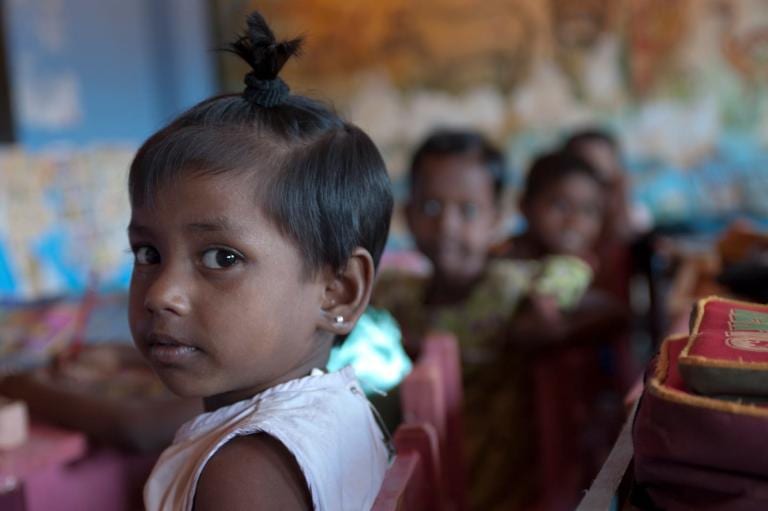
Photo of little girl from Sri Lanka
Nearly all the children in villages like this one in Sri Lanka do not have any parental guidance whatsoever as many come from broken or illiterate families, which makes these kids vulnerable to predation and trafficking. For many of them, school was both a safe place and one of their only sources for a regular meal. Local lockdowns due to COVID have left many to fend for themselves, as parents are unable to care for or supervise them at home, increasing their risk of exploitation.

Online Predators on the Rise

Dark web chatter
Chatter in dark web forums indicate that online offenders see the COVID-19 pandemic as an opportunity to commit more offenses against children.

It’s not only children and young people in poorer nations that are at risk, either. In North America, the pandemic has seen everyone spending even more time online than usual—exposing them to predators who scour the web looking for innocent children.

“It’s easier for traffickers to sit behind a computer screen and actually reach out to multiple people, hoping that one or two bite,” says Karley Church, a human trafficking crisis intervention counselor with Victim Services of Durham Region, near Toronto, Canada.

A spokesman for the Royal Canadian Mounted Police said that “chatter in dark web forums indicate that offenders see the pandemic as an opportunity to commit more offenses against children.”


Give Towards Strategic Field Ministries

Your donation enables GFA World national workers to reach out to multitudes of needy people and provide for their most crucial physical and spiritual needs.


About Gospel for Asia

Gospel for Asia (GFA World) is a leading faith-based mission agency, helping national workers bring vital assistance and spiritual hope to millions across Asia, especially to those who have yet to hear about the love of God. In GFA’s latest yearly report, this included more than 70,000 sponsored children, free medical camps conducted in more than 1,200 villages and remote communities, over 4,800 clean water wells drilled, over 12,000 water filters installed, income-generating Christmas gifts for more than 260,000 needy families, and spiritual teaching available in 110 languages in 14 nations through radio ministry. For all the latest news, visit our Press Room at https://press.gfa.org/news.


Read the rest of Gospel for Asia’s Special Report: Modern Day Slavery Speeds up Under Cover of COVID-19 – Growing during pandemic: People vulnerable to exploitation Part 2

Read more about Gospel for Asia, Modern Slavery, and the COVID 19 Pandemic on Patheos from Gospel for Asia.


Learn more by reading these Special Reports from Gospel for Asia:

KP Yohannan has issued two statements about the COVID-19 situation found here and here.

GFA’s Statement About Coronavirus


This Special Report originally appeared on gfa.org.

24 Christian Leaders affirm Gospel for Asia’s integrity and credibility.

Learn more about Gospel for Asia: GFA World on Facebook | GFA World on YouTube | GFA World on Twitter | GFA World on LinkedIn | Gospel for Asia on SourceWatch | Gospel for Asia Media Room | Gospel for Asia International Offices | Gospel for Asia Sponsorship Options | Gospel for Asia (GFA World) Transforming Communities |

Notable News about Gospel for Asia: FoxNews, ChristianPost, NYPost, MissionsBox

Click here, to read more blogs on Patheos from Gospel for Asia.

2021-12-06T23:55:53+00:00

WILLS POINT, TX – Gospel for Asia (GFA World) founded by K.P. Yohannan, which inspired numerous charities like Gospel for Asia CanadaDiscussing Lahar, his struggles to fight alcoholism and provide for his family, and finding a faithful friend in Gospel for Asia Pastor who shared the redemption of Jesus for their lives.

When Pastor Chanchal and Lahar met, Lahar was uninterested and even hostile toward what Pastor Chanchal had to say. Lahar had his own religious beliefs, a family to take care of and an inner battle to wage—a battle between leading a responsible life and giving in to the addiction that threatened to destroy that life.

Even though Lahar often grumbled at Pastor Chanchal’s words and sometimes even scolded him, the two men continued to talk with one another. For years, Pastor Chanchal spent time with Lahar and his family once or twice a week. As their relationship deepened, Lahar gradually became interested in what the pastor had to say, and Pastor Chanchal had opportunities to tell the family about Jesus’ love.

Man Struggles to Fight Alcoholism, Provide for Family

Lahar’s life had always involved struggle: When Lahar was young, his father neglected his family, blinded to their needs by his alcoholism, so Lahar bore the burden of providing for his parents and siblings.

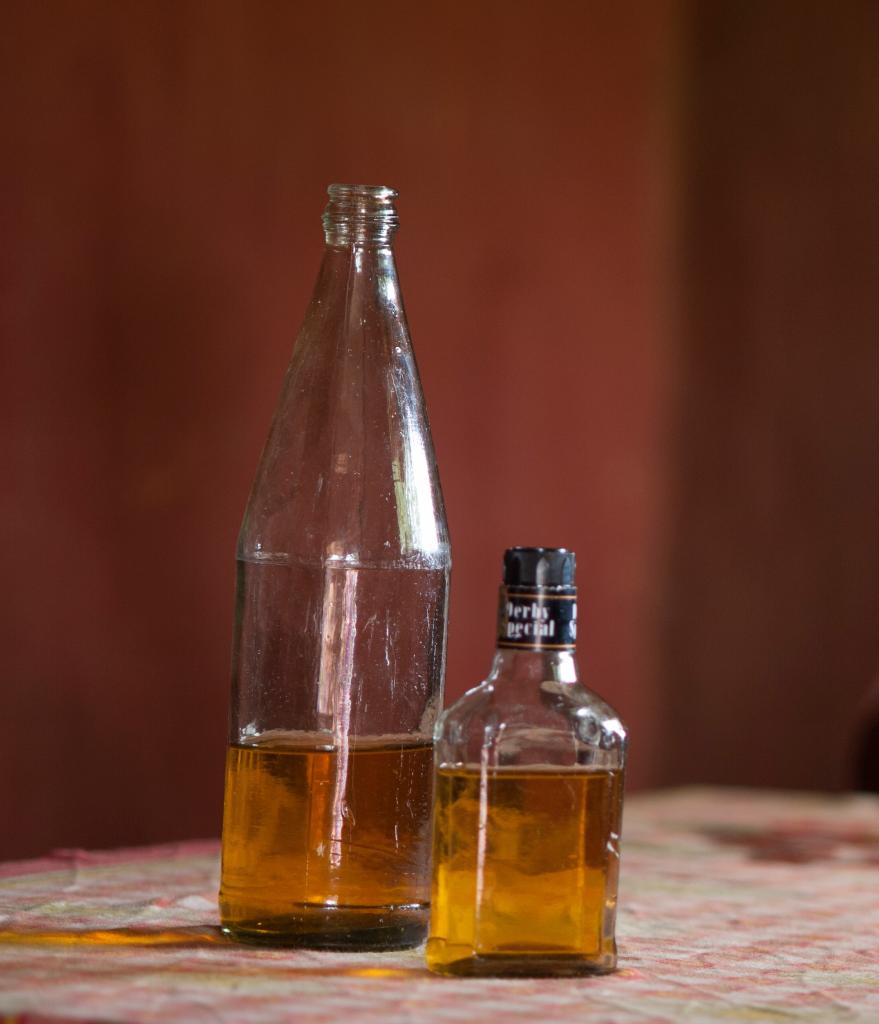
Unfortunately, Lahar began walking in his father’s shoes: He became addicted to alcohol at the age of 18. After Lahar married, his alcoholism brought much grief to his wife, Lajja, and drove her away to her parents’ home for three years.

Discussing Lahar, his struggles to fight alcoholism, & the friend in Gospel for Asia Pastor who shared the redemption of Jesus for their lives.
Lahar had been a heavy drinker since he was 18 years old, and his addiction even drove his wife to move in with her parents for three years.

With effort, Lahar eventually stopped drinking and reunited with his wife. Together, the couple worked to provide for their growing family. Eventually, they started a business; it seemed their lives were getting better.

An Unlikely Friendship Develops

Meanwhile, Gospel for Asia (GFA World) pastor Chanchal had started ministering in Lahar’s village. Like most of the other villagers, Lahar didn’t want to hear the message of hope Pastor Chanchal had to share. But Lahar did allow Pastor Chanchal to continue visiting his family, and over the course of several years, a friendship grew.

Pastor Chanchal’s words touched the heart of Lahar’s mother, and she started attending the local worship place. But because Lahar’s father was the elder of their village, people criticized the family for her interest in Christ. Under society’s pressure, Lahar and his father told her she couldn’t attend services for more than a year. But Lahar’s mother continued walking with Jesus, and soon the source of family turmoil shifted from her to Lahar.

Man Hits Rock Bottom

Lahar slipped back into the grip of alcoholism, throwing away the hard work he had invested to quit drinking, reunite with his wife and start a business. Not only did Lahar waste his days drinking with friends, but he also started stealing things at night. He, like his father, stopped providing for his family.

During this time, Lajja and her children experienced Christ’s love through Lahar’s mother, who helped take care of them. Seeing this love led Lajja and her children to the feet of Jesus too. Soon Lajja began joining her mother-in-law in praying for Lahar’s life to change.

As they prayed, Pastor Chanchal continued reaching out to Lahar. The pastor told him of Jesus’ grace and invited him to the place of worship. As God responded to prayer and spoke through the Pastor’s encouraging words, Lahar’s life began to change. He stopped stealing and drinking alcohol, and he joined the service one Sunday.

After Lahar (not pictured) returned to his drinking habit—and started stealing things—Gospel for Asia (GFA World) Pastor Chanchal continued being a friend to the young man. Eventually, Lahar’s heart opened to the love of Christ.

There, as Lahar stood among the believers worshiping, he felt as if a burden had been lifted from him. With a new peace and joy in his life, he decided to entrust his life to Jesus, and he has continued to change from the inside out! Now Lahar takes care of his family, and they rejoice in the redemption Jesus has worked in their lives. Lahar even supports his friend, Pastor Chanchal, as he continues ministering the grace of Jesus in the village.

Many Find Friendship with Jesus

in Gospel for Asia (GFA World) Pastor Chanchal’s commitment to befriend and share hope with Lahar and his family, Lahar found the best friend of all, Jesus Christ.

Millions more people wait to know friendship with the God who makes all things new, but you have the opportunity to give not just one but many people that chance. Sponsor a national worker like Pastor Chanchal to reach more families with Jesus’ love.


Sponsor today and get a packet including their photo and testimony, along with exclusive updates from the mission field that let you see how your sponsorship makes a difference.

*Names of people and places may have been changed for privacy and security reasons. Images are Gospel for Asia stock photos used for representation purposes and are not the actual person/location, unless otherwise noted.


Source: Gospel for Asia Featured Article, Far-Fallen Man Finds Faithful Friend

Learn more about the GFA national workers who carry a burning desire for people to know the love of God. Through their prayers, dedication and sacrificial love, thousands of men and women have found new life in Christ.

Click here, to read more blogs on Patheos from Gospel for Asia.

Learn more about Gospel for Asia: Facebook | YouTube | Instagram | LinkedIn | SourceWatch | Integrity | Lawsuit Update | 5 Distinctives | 6 Remarkable Facts | 10 Milestones | Media Room | World Water Crisis | Endorsements | 40th Anniversary | Lawsuit Response |

Notable News about Gospel for Asia: FoxNews, ChristianPost, NYPost, MissionsBox

2022-07-02T13:31:20+00:00

WILLS POINT, TX – Gospel for Asia (GFA World, www.gfa.org) founded by Dr. K.P. YohannanDiscussing Rachna and her family, the abandonment and acute struggles, and the Gospel for Asia-supported Bridge of Hope used by God to lift this mother’s burden.

A day in Rachna’s house was always a gamble. One night, her husband, Sahay, was a doting father who brought home a feast for his children; the next, he was a raving drunkard who beat his wife. Twice, Sahay’s violence had even caused a pregnant Rachna to miscarry.

Rachna was desperate for a way out, but she had nowhere to take her four children. It almost seemed easier for Sahay to just disappear from his family’s life—until the day he did.

Father Goes Missing after Work

Gospel for Asia founded by Dr. K.P. Yohannan – Discussing Rachna and her family, the abandonment and acute struggles, and the Gospel for Asia-supported Bridge of Hope used by God to lift this mother's burden.Sahay was a laborer at a construction site far from home, so it was understandable when it took him a long time to return at the end of the day. If he was stopping to get food for the children or if he was getting drunk, he would be out even longer. But as the hours ticked by one night, Rachna realized Sahay wasn’t just late.

As cruel a husband as Sahay was, Rachna wasn’t relieved. He provided the family’s only source of income. Whether he was lovable or not, they needed him in order to survive.

Rachna mobilized her three oldest children, Ujala, Yaalisai and Aadi, to walk from house to house asking if anyone had seen him. The whole family went to Sahay’s workplace, but he wasn’t there either, so Rachna left the children there and went out on her own.

She wandered the streets, showing Sahay’s photograph to anyone who would look. Most of them didn’t even recognize him.

Finally, an old man told Rachna she could find her husband at the end of the street in a large house with a big gate.

Mother Uncovers Father’s Secret Life

When Rachna arrived at the large house, a woman answered the door. Unlike the people on the streets, she knew exactly who Sahay was. Sahay, the woman said, was living with her, and all the food he had brought to the children had come from her.

The news shocked Rachna. She had never suspected Sahay was having an affair. She wept the entire way home.

Sahay came home that evening without a thought of repentance. As if he were the wronged party, he viciously attacked Rachna and set fire to the family’s possessions. He turned on the children, too, trying to set them and Rachna on fire, but the mother and children ran from the house.

Neighbors rushed to rescue Rachna, Ujala, Yaalisai, Aadi and Chaitra. Meanwhile, Sahay disappeared again.

Gospel for Asia founded by Dr. K.P. Yohannan – Discussing Rachna and her family, and the Gospel for Asia-supported Bridge of Hope used by God to lift this mother's burden.

Mother Struggles to Feed Family on Her Own

As a homemaker, Rachna didn’t have any ready source of income, and finding a job without any qualifications was difficult. She resorted to searching the streets, looking for plastic items she could sell.

Gospel for Asia (GFA, www.gfa.org) founded by Dr. K.P. Yohannan – Discussing Rachna and her family and the Gospel for Asia-supported Bridge of Hope.Working as one of the estimated 10,000 waste pickers in Rachna’s country is full of risks. Men and women sort through their cities’ waste with bare hands, exposing themselves to disease and infection, and the constant bending over causes many to suffer from back pain. As a woman, Rachna was also vulnerable to harassment by male trash collectors.

Despite the hazards, Rachna continued in the only work she could find. However, the pay was so little that she couldn’t give her children more than half the food they needed each day, and she didn’t know how she would keep them in school.

Rachna’s oldest daughter, Yaalisai, was old enough to legally drop out of school, and the 15-year-old worried that she would have to do so. Instead, Rachna’s 17-year-old son, Ujala, started finding jobs each day so his younger siblings could stay in school.

The extra income helped, but Yaalisai still struggled with her homework amid the family’s rocky situation.

Seeing Yaalisai’s challenges, the family’s neighbor Edna told her about Gospel for Asia (GFA)-supported Bridge of Hope, a program that would not only help her in her studies but would also feed her and provide medical care. Even better, Edna could help Yaalisai get into the program.

For the first time in months, the family saw a glimmer of hope.

Gospel for Asia-supported Bridge of Hope Lifts Mother’s Burden

Although the Bridge of Hope center didn’t have room for Yaalisai’s siblings, Yaalisai’s own attendance has improved the family’s situation. Now, Yaalisai’s school fees and tuition are paid for by the center instead of her mother and brother, and thanks to the center’s cook, she is eating well again.

The staff also regularly give Yaalisai gifts like shoes, material for her uniform, books, a school bag and a lunch box, allowing Rachna to rest easy about Yaalisai’s needs and redirect her earnings to toward her other children.

“Bridge of Hope helps me and reduces my mother’s burden about me,” Yaalisai says.

Gospel for Asia (GFA, www.gfa.org) founded by Dr. K.P. Yohannan – Discussing Rachna's family and the Gospel for Asia-supported Bridge of Hope used by God.
Through Gospel for Asia (GFA)-supported Bridge of Hope, God is enabling these children to become all they possibly can be, so they can one day be a blessing to many others throughout Asia.

Meanwhile, Yaalisai is excelling in her studies, and best of all, she is learning about Jesus Christ and the love He has for her and her family.

After Yaalisai joined Bridge of Hope, Rachna found a cooking job that meets more of the family’s needs. Later, Sahay was kicked out of his lover’s home and went back to live with his family. Although he continues to drink, his dependence on Rachna’s income keeps him from abusing her.

As Yaalisai continues to grow through Bridge of Hope, we pray that, one day, her entire family will recognize the life-changing love of Christ already at work in their lives.

Your sponsorship not only rescues a child but also lifts the burden of an entire family. Please join us in prayer for Yaalisai’s family, and consider showing Christ’s love to a family like hers through Gospel for Asia-supported Bridge of Hope.


*Names of people and places may have been changed for privacy and security reasons. Images are Gospel for Asia stock photos used for representation purposes and are not the actual person/location, unless otherwise noted.


Source: Gospel for Asia Feature Article, Waiting for her Husband to Disappear

Learn more by reading the GFA Special Report: Child Labor: Not Gone, but Forgotten – Millions of Children Trapped between Extreme Poverty and the Profits of Others.

Learn more about how to sponsor and help children trapped in generational abject poverty through Gospel for Asia-supported Bridge of Hope.

Click here, to read more blogs on Patheos from Gospel for Asia.

Learn more about Gospel for Asia: Facebook | YouTube | Instagram | LinkedIn | SourceWatch | Integrity | Lawsuit Update | 5 Distinctives | 6 Remarkable Facts | 10 Milestones | Media Room | Child Labor | Endorsements | 40th Anniversary | Lawsuit Response |

2022-08-17T14:51:48+00:00

WILLS POINT, TX – Gospel for Asia (GFA) issues an extensive Special Report on illiteracy, the dominant disabler to flourishing for millions around the world, and the miraculous potential of literacy that is able to change the lives of men, women and children for generations.

Gospel for Asia issues an extensive Special Report on illiteracy, the dominant disabler to flourishing for millions around the world, and the miraculous potential of literacy that is able to change the lives of men, women and children for generations.
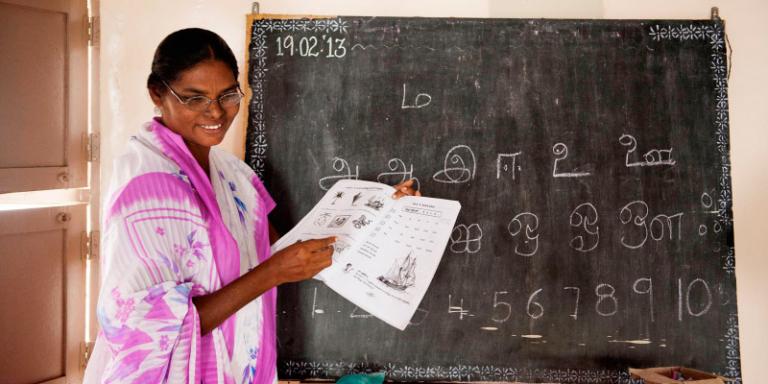
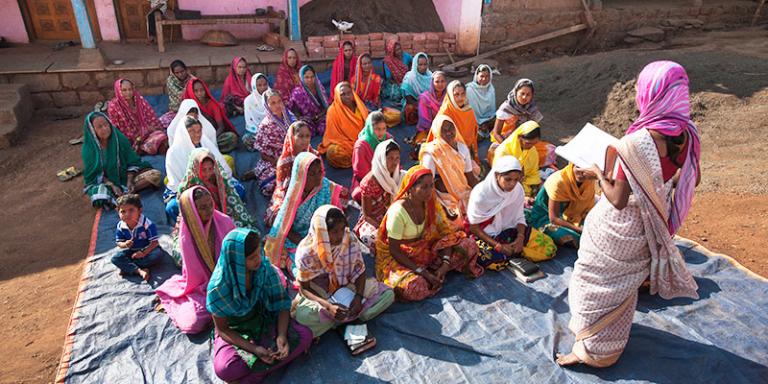
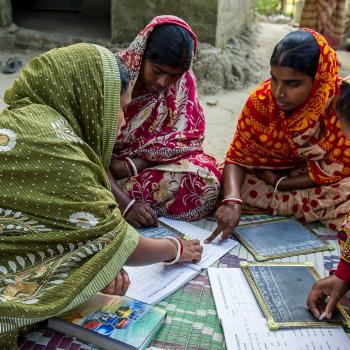
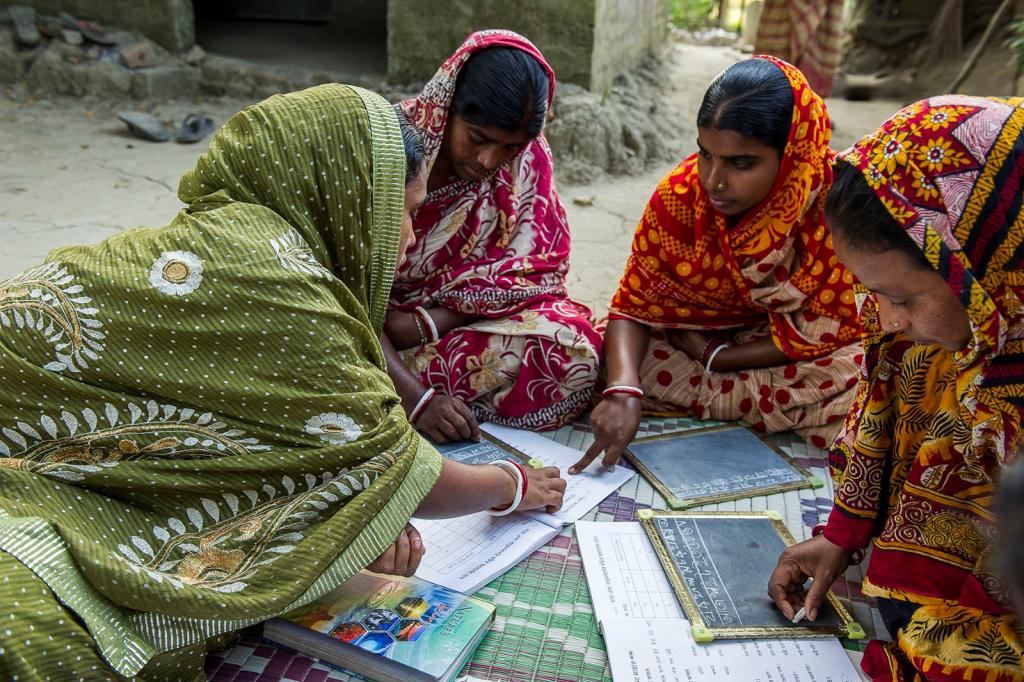
Sarada is teaching three women in a Gospel for Asia (GFA)-supported Women’s Literacy class. All statistical evidence shows that one individual who is given reading and writing skills greatly improves his/her chances of success. Increasing literacy of individuals also greatly enhances the society in which those people live.

Illiteracy in the United States

Perhaps it is easier to examine literacy and illiteracy through the lens of one country, the one many of us know best and consider one of the most literate in the world.

ProLiteracy, a nonprofit that champions the power of literacy to improve the lives of adults and their families, communities and societies in the United States (and around the world), views illiteracy mostly through the lens of those who are foreign-born residents. The Center for Applied Linguistics reports that in 2006, some 13 years ago, there were 37.5 million foreign-born residents, or 12.5 percent of the total U.S. population.

Since that data was collected, there has been a surge in states that aren’t normally considered high foreign population centers such as California, Texas, New York and Florida. The Center for Applied Linguistics also reports that since 2005, some 14 other states experienced a 30 percent greater increase in foreign-born residency.

36 million

adults in the U.S. cannot read, write, or do basic math above a third-grade level

They also state that the ESL (English as Second Language) population in the United States is diverse in terms of country of origin, education and individual language skills. In addition to Mexico and other Latin American countries, a growing number of non-native speakers of English come from China, the Philippines, India, Vietnam, Korea, Eastern Europe and African countries. Of these residents born outside the United States, 68 percent have a high school diploma in their native country or the U.S.

With all this in mind, consider these additional facts on adult literacy in the U.S.:

  • “36 million adults cannot read, write, or do basic math above a third-grade level.
  • “68 percent of programs are struggling with long student waiting lists, and less than 10 percent of adults in need are receiving services.
  • “Children whose parents have low literacy levels have a 72 percent chance of being at the lowest reading levels themselves. These children are more likely to get poor grades, display behavioral problems, have high absentee rates, repeat school years, or drop out.
  • “One in six young adults—more than 1.2 million—drop out of high school every year.
  • “2 million immigrants come to the U.S. each year, and about 50 percent of them lack high-school education and proficient English language skills
  • “Low literacy costs the U.S. $225 billion or more each year in non-productivity in the workforce, crime, and loss of tax revenue due to unemployment.
  • “43 percent of adults with lowest literacy levels live in poverty.
  • “$232 billion a year in health care costs is linked to low adult literacy skills.
  • “75 percent of state prison inmates did not complete high school or can be classified as low literate.”

According to the Barbara Bush Foundation for Family Literacy in the United States, research shows that the single greatest indicator of a child’s future success is the literacy level of his or her parents:

  • “A child from a highly educated family will experience 30 million more words by the age of three than a child from a low-literate home.
  • “Almost half of all children born to a mother lacking a high school diploma are not ready to start kindergarten.
  • “Students who do not read proficiently by the third grade are four times more likely to leave high school without a diploma.”

Literacy Efforts Around the World

The same results are evident in round-the-world data with many organizations working intensively to combat illiteracy. World Vision Ethiopia (WVE), for instance, is celebrating this year’s International Literacy Day with a campaign aimed at halting an alarming global trend: that of children graduating from primary school with reading deficiencies in their own mother tongue. Programs that emphasize reading proficiencies in five core reading skills are being implemented throughout 57 child-sponsorship Area Programs. Consequently, some 4,203 reading camps have been established across the Ethiopian nation. Nearly 1.5 million children are achieving reading and writing literacy in these camps; even more remarkable is that more than 15,000 youth are volunteering at these camps, helping serve not only children but also children’s parents.

Room to Read is a global non profit promoting literacy and girl’s education, which asserts that “when children are educated, they are healthier. Their job opportunities improve. For every year that they stay in school, their earnings increase by 10%. They are more civically engaged and less dependent on social welfare. They are more likely to educate their own children and break the cycle of generational poverty.”

Their ambitious goal is to invest in the lives of at least 15 million children by 2020.

Although challenges of global illiteracy and gender inequality in education and their repercussions are enormous, Room to Read feels they have the tools to eradicate them.

According to their website,

“Children in grade two in our Literacy Program in India, Laos and Nepal can read three times as many words per minute and correctly answer more than twice as many comprehension questions as their peers. More than 4,800 girls have graduated from our Girls’ Education Program, and 78 percent of our 2016 graduates enrolled in tertiary education or found employment within one year post-graduation.”

Book Aid International is a UK based charity that provided nearly 1.3 million books in 2018 to people in 25 countries in Africa, the Middle east, the Caribbean, and others locations around the world. They are focused on addressing illiteracy by getting books to people who need them most though “thriving partnerships with library services and NGO’s who make books available to their communities.”

Shetal, an 8 year-old Bridge of Hope student, sits on the floor with his BOH book bag during the morning session. He attends from 9 to noon.

Recognizing that 1 out of 5 people in the world cannot read or write, the World Literacy Foundation is operating in over 80 countries worldwide to lift young people out of poverty through the power of literacy. Two mentionable projects they have in Australia alone include the Indigenous Learning App meant to close the literacy gap between indigenous and non-indigenous children, and the ROOP Project (Reading Out Of Poverty) designed to “enhance literacy skills and reading levels of children from low-income backgrounds. ”In The Enchanted Hour: The Miraculous Power of Reading Aloud in the Age of Distraction, author Meghan Cox Gurdon makes the point: “As we shall see, listening to stories while looking at pictures stimulates children’s deep brain networks, fostering their cognitive development. Further, the companionable experience of shared reading cultivates empathy, dramatically accelerates young children’s language acquisition and vaults them ahead of their peers when they get to school.”

After that premise, who wouldn’t want to read to their children or to their grandchildren or to their neighbor’s neglected kids on the block? But wait, according to Gurdon, there’s more.

“The rewards of early reading are astonishingly meaningful: toddlers who have lots of stories read to them turn into children who are more likely to enjoy strong relationships, sharper focus, and greater emotional resilience and self-mastery. The evidence has become so overwhelming that social scientists now consider read-aloud time one of the most important indicators of a child’s prospect in life.”

All well and good (and let’s admit it, also amazing), but what happens when the adults in a child’s life don’t read to them? What if they don’t read to their children because they can’t read? They can’t read books or newspapers or signs or legal documents or school papers or homework assignments or medical reports. Again: What if they don’t read to their children because they can’t read?

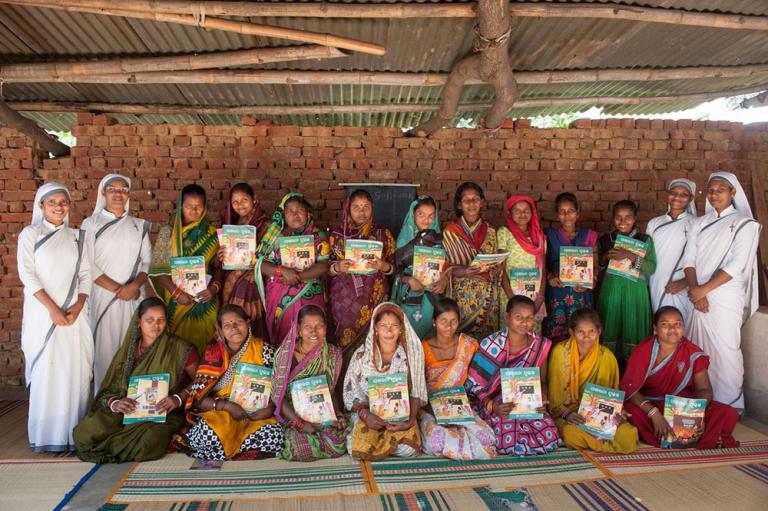
Gospel for Asia (GFA)-supported workers (like the Sisters of Compassion shown above) are helping to solve the literacy gap in Asia. In just one year, they taught 61,880 women how to read and write by providing free literacy classes. Many of those women had never had the opportunity to learn such a valuable skill because their families were either too poor to afford education or didn’t place importance on educating their daughters.

Solving the Literacy Gap

While searching for a significant role to champion while serving as First Lady of the United States, Barbara Bush decided that a whole society could be impacted for the better if enough folk were given the skills of literacy. There is less crime among the literate, more educational advancement and better opportunities for success. She not only started the Foundation for Family Literacy, but she pushed hard for the National Literacy Act, which was passed in 1991 while her husband was president.

Mostly, illiteracy is cured by an army of tutors. The opportunities to volunteer and serve to erase illiteracy (to spread the miracle of reading and writing) are numerous.

61,880

women were taught how to read and write, in one year, by GFA-supported workers

Gospel for Asia (GFA)-supported workers are helping to solve the literacy gap in Asia. In just one year, they taught 61,880 women how to read and write by providing free literacy classes. Many of those women had never had the opportunity to learn such a valuable skill because their families were either too poor to afford education or didn’t place importance on educating their daughters. But now, they—like Mandeepa—have experienced the “great miracle cure,” and their families are thriving because of it.

According to UNICEF, literacy rates have shown a positive trend in recent years, due to the multitude of programs and outreaches around the world to erase one of the root causes—if not the major root cause—of illiteracy, which would be a lack of educational systems.

GFA-supported Bridge of Hope centers put an ax to this root cause by providing impoverished children free educational help. Staff at these centers provide each student with the academic tools they need to excel in their studies. If they see a student struggling in a specific area, they take measures to help them learn and overcome their challenges.

Literacy rates among youth (aged 15 to 24) and adults are the test of an educational system, and the overall trend is positive, thanks to the expansion of educational opportunities,” reports UNICEF. “Globally, the youth literacy rate increased from 83 percent to 91 percent over two decades, while the number of illiterate youth declined from 170 million to 115 million. Regional and gender disparities persist, however. Literacy is lowest in least developed countries and higher among males than females. In the most recent years for which data are available, young women accounted for 59 percent of the total illiterate youth population.”

Personal Encounters with Illiteracy

I am an avid reader. It is nothing for me to go through some 35 books a month. Partly this is because of my writing profession; I am generally finishing a research deadline of some kind. The other part is that I just love to read. Reading has formed my character; exposed me to different kinds of thinking; enthralled me in the adventures of real and imaginary characters; improved my marriage and parenting capabilities; enhanced my housekeeping and gardening skills; and stimulated my intellectual, spiritual and psychological growth.

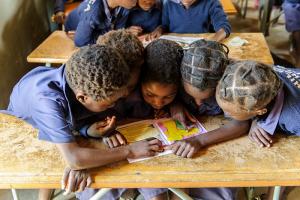
Zambia: Five desk mates share a book during a reading lesson in class. Although challenges of global illiteracy and gender inequality in education and their repercussions are enormous, non-profits like Room to Read feel confident they have the tools to address and eradicate illiteracy. Photo by Jason Mulikita, Room to Read

So in an attempt to have personal encounters with illiteracy, to develop an understanding I admittedly lack, I looked up literacy programs in my area for the purpose of considering what I, a solo person (who loves to read), could do to contribute to raising the literacy level of my hometown region, even if only by one or two individuals. I took a volunteer orientation class, an introductory evening of training to be followed by in-depth literacy tutor training this coming season. My $40 registration fee also bought the substantial workbook Teaching Adults: An ESL Resource Book, which I am reading. This, of course, deals with teaching those who are illiterate in writing and reading English. What gift could be more wonderful than coaching an eager English-language learner in the intricacies of speaking and writing English as a second language?

My husband and I live in the far western suburbs of Chicago. Our town is 52 percent non-white, mostly Hispanic. I can only relate to the immigrant experience of not knowing the language of an adopted country—e.g., not knowing how to read the road signs or the newspapers or the graphics that crawl across a television screen—by the times I have been plunged into a foreign culture overseas. Then I attempt to extrapolate those small and temporary situations into a lifetime of confusion due to the inability to read or write.

Obviously, knowing I would soon be returning home, or having a translator and guide shepherd me through the incomprehensible language and customs of a foreign country, renders these plunges only superficial. Due to our high Spanish-language speaking population, however, I run into literacy issues frequently enough—my own lack of Spanish-speaking facility as well as others’ lack of English comprehension. For instance, the name of the Lyft driver often sent to our door for a trip to the airport is Mariana. She makes sure we know she speaks “only little English.” I inevitably worry that she will take us to the wrong airport, but somehow, through a translation dispatcher system, we have so far been delivered to O’Hare or to Midway when needed.

While searching for a significant role to champion while serving as First Lady of the United States, Barbara Bush decided that a whole society could be impacted for the better if enough folk were given the skills of literacy. There is less crime among the literate, more educational advancement and better opportunities for success.

After my hairstylist’s departure to another state, I determined I would be part of the “new localism”—the grassroots effort of supporting the businesses and shops established by local entrepreneurs. “Oh, Lord,” I prayed. “Help me to find a decent stylist.” I walked into a hair salon in downtown West Chicago. There were five chairs and one person in the shop. “Do you cut hair?” I asked. “Si, si,” the woman responded. “Speak little English. Un pocito.”

“OK, OK,” I said, and signed an inch with my thumb and forefinger. “One inch off. All over.” Which is exactly what she did. She cut my hair one inch long all over my head. Without a doubt, it has been the easiest summer hairdo I have ever had. I wash it. Apply mousse. Then mess my hair up as it dries. No problem. But the experience gave me a baseline to imagine if every day and in every way these gaffes large and small would be part of the agony and effort of living. After time, one might just withdraw, choose silence, stop trying.


Literacy — One of the Great Miracle Cures: Part 1 | Part 3

This Special Report article originally appeared on GFA.org.

Learn more about the Women’s Literacy Program, and how you can help over 250 million women in Asia who are illiterate.

Click here, to read more blogs on Patheos from Gospel for Asia.

Learn more about Gospel for Asia: Facebook | YouTube | Instagram | Sourcewatch | Integrity | Lawsuit Update | 5 Distinctives | 6 Remarkable Facts | Media Room | Poverty Solutions | Endorsements | 40th Anniversary | Lawsuit Response |

2022-10-29T05:18:03+00:00

WILLS POINT, TX – Gospel for Asia (GFA) – Discussing about the behind-the-scenes missionaries who, although they are far from the mission field, are vital to make ministry possible in Asia.

The morning sun shines over the Mumbai slums. It is the beginning of a new day, and Gospel for Asia (GFA)-supported pastor Marty reaches into his bag and pulls out some literature. He scans the dirty faces of slum dwellers and realizes today might be the day they could understand how completely they are loved by God. Across the globe, as the sun shines on the small town of Wills Point, Texas, Jonathan stares at his computer in front of him.

He glances over at the pictures on his office wall and remembers the masses around the world who are waiting to know they are loved. Both men have completely different tasks and roles, but they understand something profound—they couldn’t do their job without each other.

Living a Fairly ‘Normal’ Christian Life

When the eldest of their four daughters was 4 years old, they welcomed Gospel for Asia (GFA)-supported Bridge of Hope children and missionaries into their lives through prayer and sponsorship. Jonathan and Erica wanted their children to grow up understanding the needs of others.

When you link your life with behind-the-scenes missionaries, you get the opportunity to stay more connected with the Lord's work in Asia. Someday in heaven, we all will worship the Lamb of God together, and we will see fully how Christ has connected our lives with our brothers and sisters around the world!
Ever since their four beautiful daughters were young, Jonathan and Erica have led their family in pursuit of serving the Lord together.

“They were familiar with the idea,” Jonathan says, “that there are people outside of [their] own little world who have a totally different set of challenges, and people who don’t know about Christ.”

This worldview found its way into their family’s everyday life and holidays, shaping rich family traditions. When the Christmas season came around each year, their daughters would pour over the pages of GFA’s Christmas Gift Catalog, flipping through the pages filled with pictures of chickens, goats, Bibles and blankets. Their house stirred with excitement as each bright-eyed girl got to choose an item to bless a person or family in Asia.

A Change in the Norm

As the Lord continued to press missions on Jonathan’s heart, a revelation struck him: Why not serve in the place where they had already been investing for the past nine years?

After raising monthly support for their livelihood, Jonathan and his family packed up their home and moved to Texas to join GFA’s staff as behind-the-scenes missionaries. They were ready to serve the Lord together once again and in an even greater capacity.

A Beautiful Link Between Two Worlds

With passion and excitement, Jonathan started serving in the IT department at the Gospel for Asia (GFA) office in Wills Point, Texas. Through his work, he was able to equip his fellow behind-the-scenes missionaries with the computer systems they needed to accomplish their jobs in helping missionaries in Asia, like Pastor Marty.

As Jonathan helped equip the Texas office with the systems needed to communicate with donors and sponsors, Pastor Marty and many other Gospel for Asia (GFA)-supported workers talked with broken families about the love of Jesus. With Jonathan and the other behind-the-scenes missionaries doing their part in their work, Pastor Marty and fellow ministry workers could more effectively do their part.

Much the Same, yet So Different

Although Jonathan worked with people and computers as he had in his secular job, the differences of working in a ministry impacted his walk with the Lord. Whereas before he never thought to pray for a broken computer server or start a meeting in prayer, he now found himself doing these very things.

Once, when Jonathan had broken the entire office’s email system, it disabled the behind-the-scenes missionaries for several hours. To his amazement, Jonathan didn’t receive the same kind of treatment he would have experienced in the business world, with his bosses telling him how much money and time he was wasting. Instead, people stopped by his office to encourage and reassure him that they were praying for him. When Jonathan finally got the system working again, a slew of emails filled his inbox. They were from folks around the office thanking him for all his hard work on getting the problem fixed.

It was this kind of grace that Jonathan had never experienced before, and it occurred to him that the Gospel for Asia (GFA) office had a completely different atmosphere. Instead of pressures to do everything correctly the first time, there was love and grace shown by his coworkers. Instead of stress, there was peace as problems were brought to the Lord in prayer.

“I realized I am in a different world here,” Jonathan says.

“Everything matters so much more, but mistakes are handled with so much more grace. And both are tied to the heart and the attitude behind it.”

Serving Together in Joy and Hardship

But serving the Lord is not always simple or pleasant, and ministry is no easy journey. Just as Jesus warned His disciples about the trials and troubles that would come their way if they followed Him, Jonathan and his family have experienced this reality as they have labored with Gospel for Asia (GFA). National workers like Marty have experienced trials and troubles, too. Although persecution may look different in Asia, brothers and sisters around the world face opposition together, knowing that serving the Lord does not come without a heavy price at times.

“It had never occurred to me,” Jonathan reflects,

“That when you give your life at a ministry, you are not just doing the glorious and admirable thing of becoming a missionary, and everyone is going to applaud you. You are joining yourself to a ministry that will, at some point, be the target of criticism, and when it is, you also will be the target of criticism. … That was both the hardest thing for me to swallow and the source of most growth for me. … I had to learn, it’s more about obeying God and trusting Him to bring fruit out of it than it is the applause of people.”

The Eternal Purpose

With an understanding of their calling and a commitment to the Lord, Jonathan, Erica and their family stand together as one with Pastor Marty and other missionaries around the world, serving others for the sake of Christ.

“It’s more of a lifestyle and less of a job,” Jonathan says.

Even when they feel tired, weak and unworthy or when criticism comes their way, Jonathan and Erica remain faithful to where God has led them.

“We are here because we are about the business of allowing people who have never heard the hope of Christ to hear of Christ,” Jonathan states.

“We are also here specifically because this is the place that God connected us to 13 years ago and kept us connected to and specifically led us to. So, it’s both the eternal purpose and the specific circumstances working together. But it’s not a matter of preference, or we wouldn’t last.”

When you link your life with behind-the-scenes missionaries, you get the opportunity to stay more connected with the Lord’s work in Asia. Someday in heaven, we all will worship the Lamb of God together, and we will see fully how Christ has connected our lives with our brothers and sisters around the world!

Be a part of changing the world today by aiding the needs of our brothers and sisters here in the United States.


Source: Gospel for Asia Features, ‘More of a Lifestyle, Less of a Job’

Learn more about the Mission Support Team – the behind-the-scenes missionaries who serve in Gospel for Asia’s administrative offices. Although they serve in offices far from the physical mission field of Asia, their role is vital to the ministry.

Click here, to read more blogs on Patheos from Gospel for Asia.

Go here to know more about Gospel for Asia: Facebook | Sourcewatch | Integrity | Flickr | GFA | Lawsuit |Instagram | YouTube
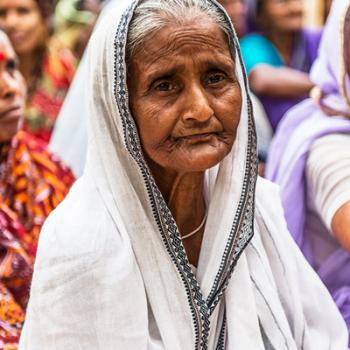
Follow Us!


TAKE THE
Religious Wisdom Quiz

Jesus' earthly father, who was a carpenter, was named what?

Select your answer to see how you score.

Browse Our Archives