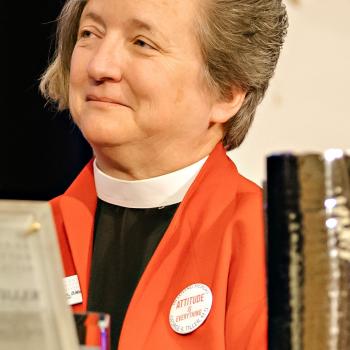
Today the Church of England General Synod will take a historic vote on the question of women bishops. The vote will be very close. Although it is thought that most people are in favor of women bishops, there are enough opposed to make the success of the measure in doubt.
What interests me is that a article in the Daily Telegraph reports that the latest pressure from those in favor is warning of the consequences to the Church of England of a negative vote. The privileged position of the Church of England as the established church will be in doubt–say those waving the warning flags. “Should the Church of England vote against the equality of women they should no longer be the established church!” say those in parliament and civil society who see the whole debate in terms of equal rights. Going further, some members of parliament are suggesting that if the Church of England votes against women bishops then they will put legislation through which removes the religious exemptions from civil laws which prohibit sex discrimination in the workplace.
In other words from the lawmakers: “If you don’t vote for women bishops we’ll make you have women bishops anyway.” The ramifications of such legislation are truly astounding. We would have a direct assault on religious liberty by the UK Parliament, and the legislation which removes the religious exemption from sexual discrimination legislation would invariably apply not only to the Church of England, but to every other religious body as well. They would also be saying to the Catholic Church, “We’re sorry, but this male only priesthood thing? It’s time we wrap it up. You will have women priests. It’s the law of the land.”
The ironic thing about this is that it will have come about precisely because the Church of England is the established church. If the Church of England were not the established church–ultimately ruled by Her Majesty’s government–then the parliament would have far less power over the Church of England. As it stands, the Prime Minister selects the bishops, and all legislation produced by the General Synod has to be rubber stamped by Parliament. The Church of England is an erastian church and has been since her foundation by the wicked king Henry VIII and his odious daughter, the murderous Elizabeth I. It has, since it’s inception, been a servant to the king of England instead of the King of the Universe.
One of the books I’m dipping into at the moment is Dave Armstrong’s excellent anthology of Bl. John Henry Newman’s writings. Called The Quotable Newman, it’s published by Sophia Institute Press. So Newman–ever prescient and prophetic wrote in a private letter in 1884:
I left the Anglican Church because I could not believe it was a portion of that Catholic body which the Apostles founded and to which the promises are made….from first to last I had had the clear conviction…that the Church of England is a Parliamentary Church.
A “Parliamentary Church”. Indeed. And that unholy alliance between secular power and spiritual power has always, at last undone the Church. It has done so for the Catholic Church whenever she has got into bed with worldly princes, and it will do so now for the Anglican Church.
Leaving Newman with the last word:
The Anglican Church is a mere collection of men, a national body, a human society I would be the most asinine, as well as the most ungrateful of men if I left the Gracious Lord who manifests himself in the Catholic Church for those wearisome Protestant shadows out of which his mercy has delivered me.


Pingback: Who Governs the Church of England? | cathlick.com
Pingback: Understanding the Crisis in the Church of England « Fellowship of Confessing Anglicans