2026-05-01T22:42:23-04:00

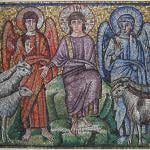
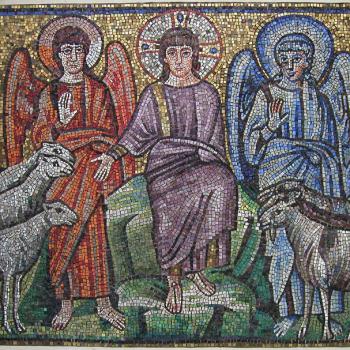
Matthew 25:32-36, 40, 46 (RSV) Before him will be gathered all the nations, and he will separate them one from another as a shepherd separates the sheep from the goats, [33] and he will place the sheep at his right hand, but the goats at the left. [34] Then the King will say to those at his right hand, `Come, O blessed of my Father, inherit the kingdom prepared for you from the foundation of the world; [35]  for I was hungry and you... Read more
2026-05-01T22:38:40-04:00

1 Samuel 26:23 The LORD rewards every man for his righteousness and his faithfulness; . . . 2 Samuel 22:21-25 The LORD rewarded me according to my righteousness; according to the cleanness of my hands he recompensed me. [22] For I have kept the ways of the LORD, and have not wickedly departed from my God. [23] For all his ordinances were before me, and from his statutes I did not turn aside. [24] I was blameless before him, and I kept... Read more

2026-05-01T18:22:06-04:00

  [see the ten best ones, and forty more “unanswerable” ones] Matthew 5:19-20 (RSV) Whoever then relaxes one of the least of these commandments and teaches men so, shall be called least in the kingdom of heaven; but he who does them and teaches them shall be called great in the kingdom of heaven. [20] For I tell you, unless your righteousness exceeds that of the scribes and Pharisees, you will never enter the kingdom of heaven. Matthew 10:22 (cf. Mt... Read more

2026-05-01T15:55:45-04:00

  These are forty more in addition to the ten “best ones” in my article, “Ten Terrifying, Shocking, ‘Un-Protestant’ Bible Passages”. ***** St. John Henry Cardinal Newman, Doctor of the Church, writing when he was still an Anglican in 1838 (Lectures on the Doctrine of Justification: rev. 1874; London: Longmans, Green, and Co., 3rd edition, 1908) — he was received into the Catholic Church in October 1845 — , has several insightful things (as always) to say about this general... Read more

2026-05-01T10:46:11-04:00

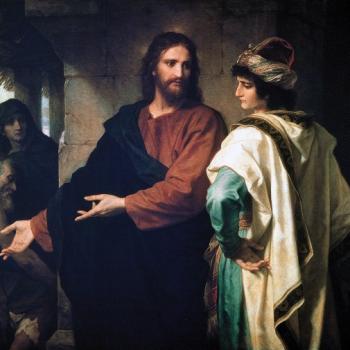
  Matthew 19:16-17, 20-21 (RSV) And behold, one came up to him, saying, “Teacher, what good deed must I do, to have eternal life?” [17] And he said to him, “. . . If you would enter life, keep the commandments.” . . . [20] The young man said to him, “All these I have observed; what do I still lack?” [21] Jesus said to him, “If you would be perfect, go, sell what you possess and give to the... Read more

2026-04-30T12:25:11-04:00

Contra Works-Salvation, or Pelagianism, or Semi-Pelagianism Catholics do not believe that they are saved by works. We believe salvation is brought about by God’s grace, that we cooperate with, after regeneration and initial justification, leading to an authentic faith – not faith alone — that organically includes good works within itself (“faith was completed by works”; “faith apart from works is dead”: James 2:22, 26). That said, we completely agree with Protestants with regard to the biblical data on grace alone: by which... Read more

2026-04-29T11:23:21-04:00

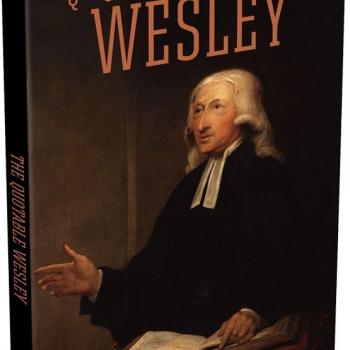
  John Wesley (1703-1791), the evangelistic giant of the 18th century revival in England and figurehead of Methodism (though he himself never formally left the Anglican Church) thought that imputed justification was false and thus spiritually harmful as a result. He is the most well-known and influential Protestant who rejected faith alone as an explanation of the biblical soteriological data. Of this there can be no doubt, because we have an abundance of confirming statements from him. Alister McGrath, in... Read more

2026-04-28T16:13:08-04:00

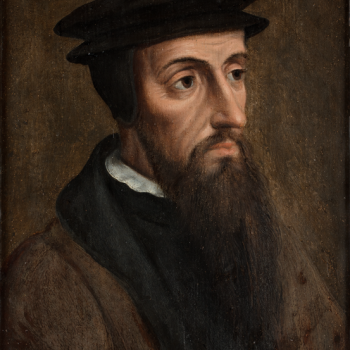
John Calvin (1509-1564) was the second most important early Protestant leader (aka “reformer”), but I would contend that he has had more historical influence on Protestantism than even Martin Luther. He added his own  distinctive features to the development of justification in Protestantism. Anglican Church historian Alister McGrath explains: Calvin’s insistence upon the distinctiveness yet inseparability of justification and sanctification must be taken very seriously, as must the analogies that Calvin uses in exploring this point – such as that... Read more

2026-04-28T12:02:06-04:00

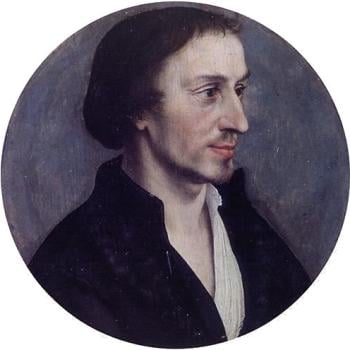
Philip Melanchthon (1497-1560), the mild-mannered scholar who was temperamentally the polar opposite of Martin Luther, yet his best friend and successor, was the father of modern German education, a humanist, author of much of the confessional Lutheran Book of Concord, and of the first systematic theology of Protestantism, Loci Communes (1521; revised in 1535, 1543 and 1559). About the latter, Martin Luther wrote, “No better book has been written after the Holy Scriptures than Philip’s. He expresses himself more concisely... Read more

2026-04-25T20:40:44-04:00

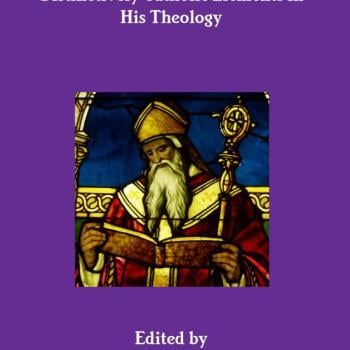
  Our esteemed Protestant brethren (especially Reformed Protestants, or Calvinists) often assert that the views of St. Augustine (354-430) were closer to theirs than to the present-day Catholic Church (including — very much –, this issue of faith alone and soteriology in general). In this they follow the founders of their theological traditions: Martin Luther and John Calvin; though the “allegiance” of these two men to Augustine – closely examined – is selective and a “mixed record” at best. I... Read more

Follow Us!


TAKE THE
Religious Wisdom Quiz

What is the collective name of the stories Jesus told?

Select your answer to see how you score.


Browse Our Archives