2019-11-25T09:37:26+00:00

Wills Point, Texas – GFA (Gospel for Asia) – Discussing the transformative, life-changing impact a Bridge of Hope center can make in the lives of children through the power of God’s love.

One class session was all it took to convince me not to be a teacher. Going in, I had been undecided. But that one class solidified that I have neither the patience nor the motivation to be the guiding light children need. But Aayush, a Bridge of Hope student, has these qualities. Aayush knows that children need love, encouragement, and place to thrive; he himself did not have these growing up at first.

A Broken and Terrified Family

Aayush grew up in a broken home. His father was an alcoholic, often abusing his wife both verbally and physically. Aayush and his brothers could only watch, terrified into silence. His home was an unsafe haven, and there was nowhere else to go. Aayush’s father spent all their money on alcohol, leaving barely enough for the family to survive. Any form of education was simply out of the question for the young Aayush.

A Broken and Terrified Family - KP Yohannan - Gospel for Asiai
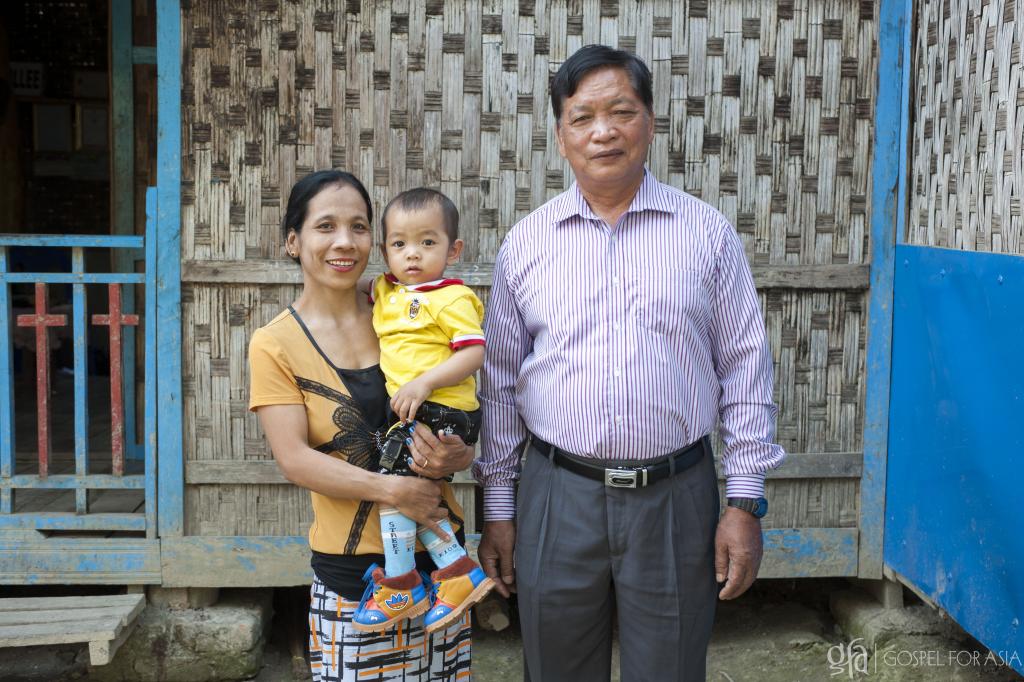
This is Aayush. As a little boy, he was troubled by his family situation, but when he enrolled in Bridge of Hope, his life began to change.

A Bridge of Hope: Transformative Love in the Lives of Children

“Witnessing Aayush’s transformation sparked something inside his father; if his son could change, so could he.”
Fortunately for the distraught family, a Bridge of Hope center had been established near them. A relative was among the students, and he spoke of the many wondrous activities he got to participate in. Much to Aayush’s surprise, he and two of his brothers were given the chance to enroll in the center. It was then a change began to take place.

The teachers heaped love and compassion onto each child, including the timid Aayush. Little by little, the shy boy began to transform into an outgoing, happy child. The center staff visited Aayush’s family, taking the time to encourage them. Seeing the change in his son, Aayush’s father eventually quit drinking. Witnessing Aayush’s transformation sparked something inside his father; if his son could change, so could he. Now Aayush’s future was no longer in jeopardy.

Following in Their Footsteps

“Many children’s lives will be touched by God’s love through these wonderful brothers and sisters.”
As Aayush grew older, a desire began to grow in his heart: He wished to be like his teachers. Now graduated from the center, Aayush is currently pursuing this goal, continuing in his higher education. Aayush wanted to spread the same love he was shown, to be a guiding light for children like himself.
Following in Their Footsteps - KP Yohannan - Gospel for Asia
Now a Bridge of Hope graduate, Aayush desires to become a teacher. The GFA-supported Bridge of Hope center gave him the tools he needed to pursue higher education.

Aayush will one day encourage and lift up the children who need it most. I know for a fact that I do not have the kind of zeal they have; but I do know that Aayush, like his teachers, will make a difference for eternity. None of this would be possible without the powerful love and compassion Bridge of Hope staff possess. Many children’s lives will be touched by God’s love through these wonderful brothers and sisters.


Pray for our Bridge of Hope centers – for the continued life-changing power of God’s love through the staff in the lives of the children.

Ask the Lord how you can help to support this great work.

To learn more about Bridge of Hope, go here.


To read more posts on Patheos on Bridge of Hope, go here.

Click here, to read more blogs on Patheos from Gospel for Asia.

Go here to know more about Gospel for Asia: Flickr | GFA | GFA.org | Facebook | Youtube

2018-03-02T00:23:06+00:00

When I was younger, I promised myself that I would never sit around and bore people about my increasing aches and pains. Now that I am older, I am naturally more empathetic to my age-set’s varying degrees of ills. Not that I make evidence of my own physical decline a subject for conversation, but ailments, aches and pains are part of the way our bodies remind us that there is an eventual life terminus in the offing. Such as this is, I am learning that ailments are a useful gift for the elderly (and for those of any age, actually) as a prod to intercede for the suffering church worldwide. How can this be?

I confess that it is all too easy for me to forget to pray for those who are struggling physically. I confess that I am often negligent in my intercession for those who are ill.

So at the risk of breaking my own vow not to bore others with discussions of personal physical ailments, let me nevertheless share about the wrestling match I had with my digestive system one whole night (and the rest of that week) and the lesson I learned about interceding for the sick from that unpleasant marathon event.

Years ago, on vacation with my husband, I ended up in the Emergency Room of a little town in Tennessee. I thought I was having a heart attack—the pain was so severe—but instead, after an EKG and a CAT-scan (Computerized Axial Tomography), the ER doctor announced there was nothing wrong with my heart, but it appeared that I had a hiatal hernia.

He didn’t flap his hands about it but suggested that the intrusion of part of my stomach through the diaphragm might be a condition that I would need to monitor. It appears that instead of having a heart attack, I was suffering from the late dinner we had enjoyed (rather too much country fried chicken). I learned my lesson, have avoided deep fried foods of any kind in the 20 years since this incident, researched the topic and have basically controlled the impact of the hernia by eating smaller portions, avoiding late-night meals, and finishing eating before my stomach had filled. Though over-the-counter medication for stomach ailments are seemingly endless in their variety (a recent shopping trip to Wal-Mart revealed a whole aisle of beautifully designed boxes dedicated to the cause of relieving stomach pain and intestinal discomfort), our medicine cabinet held a 20-year old bottle of Milk of Magnesia and a comparatively aging box of laxatives. The need for management of stomach issues has, obviously, been few and far between.

Every once in a while, if I experienced some discomfort, a feeling of being too full after eating, I learned if I paced in the house some, waiting for an hour or so for the food to pass through the digestive track, again making mental reminders all the while to 1.) Not eat too much at night, and 2.) To not eat after 5 o’clock or thereabouts at all, my hiatal hernia condition and I would get along just fine.


Every once in a while, a random X-ray would evoke a medical response: “You’ve got quite a large hiatal hernia!” This happened when I tripped over the open dishwasher door in my kitchen, fell headfirst against a cabinet, dislocated my right shoulder and consequently was scheduled for corrective arthroscopic surgery. Perhaps I was more concentrated on the ER doctor’s exclamation, “You mean you hauled yourself off the floor and up the stairs with a dislocated shoulder to get your husband to drive you to the hospital? What a woman!” Consequently, patting myself on the back in agreement with the doctor’s evaluation (he had to call in another doctor to help him reset my shoulder—a little tug-of-war going on there), I didn’t pay too much attention to the “large hiatal hernia” remark.

However, my relationship with my hiatal hernia changed drastically last month when, after a regular checkup, my general physician referred me to a gastroenterologist. This, ostensibly, was for the purpose of scheduling a routine colonoscopy. I personally think when one has survived decades and reached one’s 70s, one should not have to worry any longer about such diagnostic interventions.

I mentioned to the gastroenterologist that I had a hiatal hernia, and that it had never been examined. This led to an endoscopy, which led to an appointment with a referred surgeon, who professionally informed me that my hiatal hernia was actually a rather large paraesophageal hernia. A paraesophageal hernia could torque= and cut off the blood supply to the stomach, which would lead to the loss of that essential organ. Now there was some quiet, but professional, hand-flapping—why hadn’t anyone take notice of this before?

So back to the medical diagnostic unit of our nearby local hospital early one Monday morning, this time for a comprehensive blood draw panel and for a series of CAT-scans (“CT CHEST ABDOMEN PELVIS W CONTRAST Oral & IV,” reads the order I brought home from the surgeon’s office). These would give more accurate photos of the size, position and twist of what appeared to be a serious intrusive condition. A date was set for surgery as well as an appointment for another pre-op exam.

On Friday night of the same week, we invited new friends from the inner-city church we have been attending to our house for dinner. This was an African American couple; she is the administrator of a Meals-on-Wheels program (food delivered to the elderly) and he, an ordained minister, is highly involved in bringing churches together across the city of Chicago in activist movements that hold government officials accountable to social concerns they might not attend to if these grassroots organizations, all faith-based, did not participate in regular peaceful protests. I served broiled salmon and roasted vegetables. The conversation was stimulating. We had a lovely evening.

By 10 o’clock when our new friends left to drive back into the city, I was picking up signals that all was not well on the intestinal front; a war was beginning to wage in my digestive tract. By 4 o’clock, after six hours of moaning and groaning and huffing and puffing, with a stomach in turmoil, pain now shooting down my left arm, my husband and I agreed this was nothing to ignore.

He dropped me off at the ER in order to park the car, and I made sure the admitting desk knew I was concerned about a heart attack happening at the moment, or about a paraesophageal hernia having become fully torqued. Fortunately, with digital records, the ER team could pull up my Monday CAT-scans and compare those photos to the ones now being taken in the wee hours of Saturday morning. Although my stomach was two times as large as it had been earlier in the week, there was no torqueing of the hernia. A shot of morphine calmed my digestive system. Blood draws indicated all was well on the hematology front. EKG monitors assured us that my heart was not at risk.

After three hours, having sent David home to sleep once we knew there was no immediate danger, and after the morning ER shift change, I talked my way out of an imminent hospital room assignment, and using my Lyft APP, was able to schedule a driver to take me home. There was no need to wake David again. My husband gets nervous in hospitals; continued sleep would help him slough off the stress of our ER adventure.

Nevertheless, the whole next week was devoted to the management of pain-filled symptoms. I learned that the operative direction was “soft foods”—a phrase thrown out by my surgeon during the conversation before I had my CAT-scan exams, before the ER episode and before my following week at home learning how to persuade a suddenly dysfunctional digestive system back into some kind of normalcy. I began to search the refrigerator and cupboards for edibles that would not challenge my already threatened upper stomach and lower abdomen. Something soft. Soft food. Soft.

The second sleepless night after returning myself home from the ER, I began to appreciate the fact that abdominal mishaps must involve a huge percentage of the American population: How many of my fellow citizens were lying in bed, attempting to sleep, suffering from the pangs of digestive misfortune? I ceased to wonder at the row of highly designed stomach-aid boxes at Wal-Mart. They all were witness, this long wall of products, to a huge demand for over-the-counter treatments for this sour discomfort.

It was at this point, lying in my bed, not able even to toss and turn, my husband sleeping by my side, that a random thought whispered, What if this becomes a permanent physical condition for me? What if, for the rest of my life, I’m going to have pain and distress after eating even minimal amounts of food? (That day all I had was one banana, one bowl of yogurt, mugs of ginger tea, one piece of toast).

Pain Taught Me A Lesson

I decided that I would use the pain of that night (and the next three) to intercede for the sick in the world, for those who suffer perhaps without medical remedies. My pain was physical, real to me, but working itself out in a system where I had excellent medical care available and nearby, where I had a warm home to return to on a snowy morning, where a loving husband attended to me with concern and care, where we were safe from foragers and violence and evil men and from warmongers and rapists and land-grabbers. Here, in this sanctuary that is my life, which it is so easy to take for granted, I could use my computer to educate myself about hernias, stomach distresses, home remedy treatments and diets. I could even read up on the surgical procedure for giant paraesophageal hernias (aparoscopic Nissen fundoplication, for anyone else who might want to know). The least I could do was use my distress as a reminder of the distresses of others.

I have a prayer exercise I’ve learned to use through the years—particularly during those nighttime hours when I cannot sleep—being a light sleeper, they have been many. This approach is a form of wordless prayer in which I remind myself of all the intercessors worldwide and of that great cloud of witnesses in the heavens that the book of Hebrews speaks of, which sustain and support and undergird our planet. “I urge, then, first of all” writes Paul in 1 Timothy 2:1–2, “that requests, prayers, intercession and thanksgiving be made for everyone.”(NIV)

At night, in the quiet, without the rush of daytime activity, I mentally make myself available to join Christ who intercedes at the right hand of God, (“. . . since he [Christ] always lives to make intercession for them.” —Hebrews 7:25) Without words, but with a heart full of concern and love, eyes closed, body prone, I wait and almost always a prayer mantle of intercession comes over me (given how frail our attempts at words are to explain profound spiritual experience, this is the best that I can describe this practice). I feel as though I am entering that intercessory circle—that place where Christ holds to heart, eternally and without interruption, every little starving child, every woman filled with terror, every man courageously standing before accusers for his faith, every farmer bemoaning a failing harvest, every saint boldly taking the message of the Gospel where it has not before been heard, every parent holding a feverish infant and standing outside a village clinic in a long and snaking line.

And so, during this week of gastric distresses, asking myself what I would do if this were to become a lifetime disability, I decided I would use the nighttime moments of duress to pray, to pray for those who suffer, to pray for my Christian brothers and sisters worldwide who are sick. Prayers of intercession for others, I am learning, offered up when my own physical pain is present, impresses a reality upon me that does not happen when I am praying without pain.

Two nights ago I slept soundly without any stomach suffering. Today I am feeling stronger. Perhaps I’ve had gastritis, an infection of the stomach that has nothing to do with my hiatal hernia. I’m only slightly aware by checking sounds emitting from my abdomen that I’ve eaten a small breakfast of yogurt and honey, topped with bananas and cinnamon, and one slice of toast with a butter substitute spread—the most I’ve put in my stomach at one time over the last seven days.
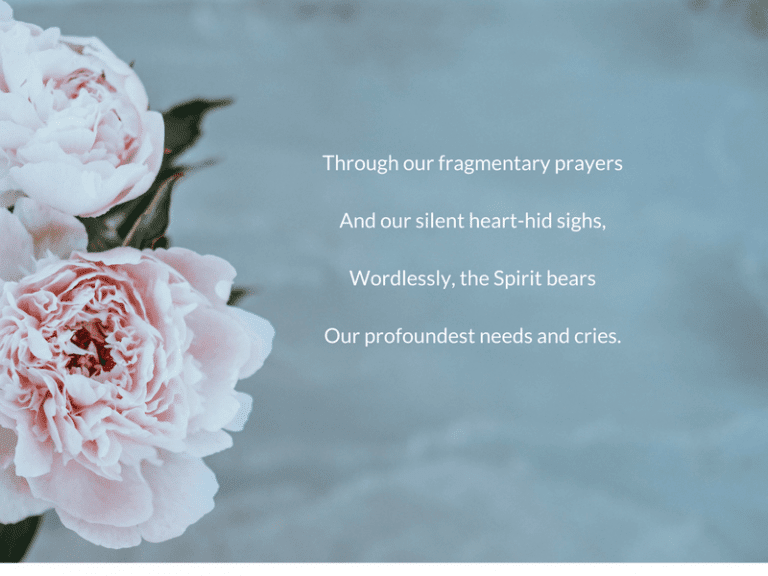
Profoundest needs and cries - KP Yohannan - Gospel for Asia

But pain has taught me a lesson. Instead of praying for my body when it hurts, in the days ahead, I will pray for the Body, for those believers—wherever they may be in the world—who seek to follow Christ and serve God. Pain, along with discomfort, can bring us gifts if we so choose to allow it. Our own ills can sensitize us to the ills of others. The disease of a loved one demands our prayers. Concern and compassion, fearfulness and anxiety can cause us to spend hours on our knees and to hardly forget for a moment that the one we love is ill. Can we learn to remind ourselves that physical disease is also an opportunity to pray for those with similar struggles who have no one to pray for them? Prayers for those whom we know are sick are often used beyond our knowing for those we don’t know.

“And pray in the Spirit on all occasions with all kinds of prayers and requests. With this in mind, be alert and always keep on praying for all the Lord’s people.” —Ephesians 6:18 (NIV)

When we pray for those who are ill, we, like the people in the New Testament, are bringing them to Jesus. He casts out disorders for those who were possessed of demons; He healed all who were sick that were brought to Him (see Matthew 8:16). Let us use our own illnesses to remind us to intercede for those who are also ill—the ones we know and the ones we don’t know.

This morning, while writing this, I found an old note tablet and scanned the notes on the pages to see if there was anything I needed to retain. I had written out this prayer sometime in the past without knowing I would need it for this blog:

Through our fragmentary prayers

And our silent heart-hid sighs,

Wordlessly, the Spirit bears

Our profoundest needs and cries.

=====

Click here, to read more blogs on Patheos from Gospel for Asia.

Go here to know more about Gospel for Asia: Twitter | GFA Reports | My GFA

2019-12-04T02:17:35+00:00

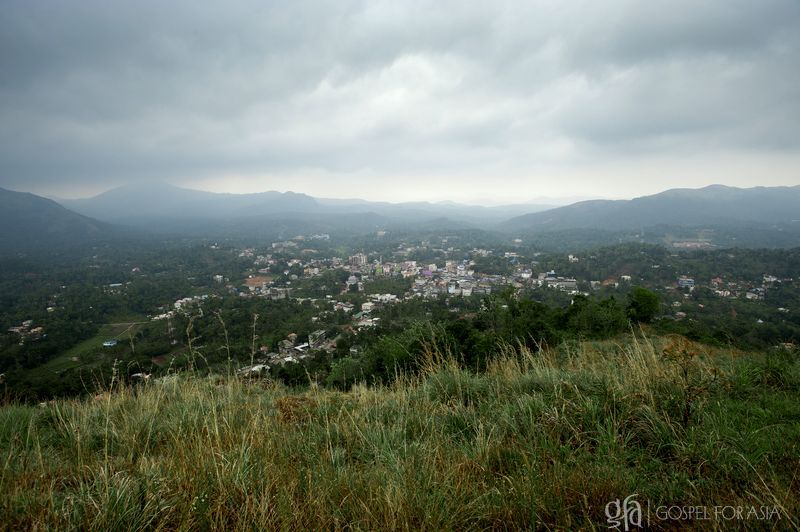
Thousands of communities are tucked away in remote regions of Asia. In such places, chances to hear the story of Christ’s birth, death and resurrection can be very rare.

Beatings. Taunting words. Long days on the road. Late nights of traveling to pray for the sick. False accusations. Even imprisonment. If national missionaries know ministering to their people may cost them all this, how do they go on day after day? Why do they do it?

One reason missionaries continue to pour themselves out in service to God is because of people like Naitik. He was 80 years old before he ever heard the name of Jesus. National missionaries long for him to understand the love of God, whom they themselves love so much. Naitik is not alone—his story was like millions of others’ who live in remote places in Asia, where, so far, there’s been no mention of Jesus Christ, Son of the Living God.

remote regions of Asia - KP Yohannan - Gospel for Asia
Thousands of communities are tucked away in remote regions of Asia. In such places, chances to hear the story of Christ’s birth, death and resurrection can be very rare.

Naitik lived in an area where the people worshiped local deities and believed in witchcraft. Then one day Naitik’s relative introduced him to Gospel for Asia-supported pastor Udyan. During their conversation, Naitik heard for the very first time about Jesus and His sacrifice to save humanity. He became very interested to learn more about this love. Before Pastor Udyan left, he prayed for Naitik’s ailments, which included leg pain and poor eyesight, and encouraged the elderly man to trust Jesus to heal him.

The next morning, Naitik contacted Pastor Udyan and invited him to come to his home again for prayer. When the pastor arrived, the old man welcomed him and said: “I don’t know what is happening to me. I could not sleep properly last night. I felt like someone was talking to me. I want to know more about the Lord Jesus. Also, there is less pain in my leg after you prayed for me.”

As Naitik and his wife spoke with Pastor Udyan, they learned more about the love of God and decided they would go to church for Sunday worship. When they attended the service, they were further encouraged by Pastor Udyan as he taught from God’s Word.

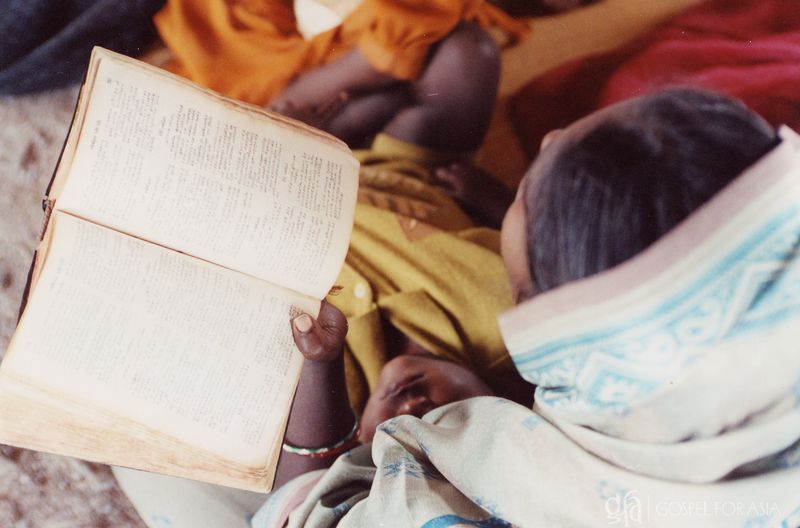
Later, Naitik happily received a Bible from the pastor. In spite of his limited education and his poor eyesight, Naitik faithfully read the Bible, and to his surprise, the Lord restored his vision!

God’s Word has the power to transform lives - KP Yohannan - Gospel for Asia
God’s Word has the power to transform lives, just like it did for Naitik.

Seeing God’s work in his life, Naitik asked Pastor Udyan to conduct prayer meetings at his house. During the first meeting, the couple learned the importance of prayer in a believer’s life when the Lord miraculously healed Naitik’s wife from a breathing problem! Experiencing the Lord’s kindness and grace led this dear old couple to put their trust in the Savior.

Naitik and his wife are very happy to know Jesus. They are even inviting their neighbors and friends to be part of the new fellowship that is gathering at their home. Naitik is reading his Bible faithfully, spending time in prayer and growing in his faith. He said, “Although I had spent my whole life in darkness, now I have found light in Jesus. He is really God. I want to live for Him for the rest of my life.”

How precious these words are of an old man who was able to meet one of God’s servants, hear about Jesus and be given the chance to respond to Christ’s love and sacrifice near the end of his life. Tragically, there are many people of Naitik’s generation who are going into eternity without ever meeting anyone who could point them to the Light of the World.

For many of them, time is running out fast. Gospel for Asia (GFA)-supported workers minister in many countries where the average life expectance is only 66–75 years, according to the World Bank.

personal interaction with pastors and their wives - KP Yohannan - Gospel for Asia
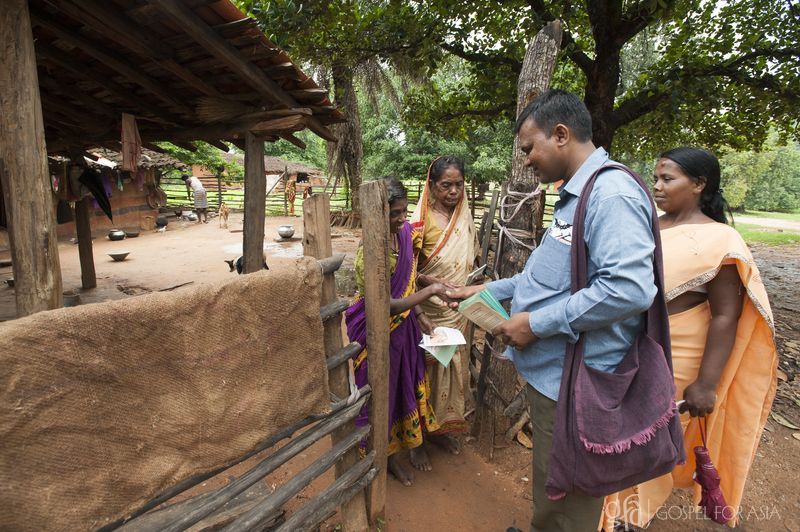
Through personal interaction with pastors and their wives, many people in Asia can hear about God’s mercy and compassion.

But the Lord has raised up Asian men and women who are ready—and eager—to go to their own people and be Christ’s hands and feet. Their limitations for ministry are minor compared to foreign missionaries. They know the intricacies of the culture or can adapt very quickly and well. As their neighbors watch their daily life, many discover for themselves that Jesus isn’t a foreign God, but is their own Creator and knows their every need.

As Christians, it is our privilege and instruction from the Lord to share the life-giving hope of Christ to the nations. National missionaries like Pastor Udyan and millions of other Christ followers know this, and they live with the daily reality of the cost of carrying out that directive. In writing about the persecuted church, Dr. KP Yohannan quotes Jeremy Weber of Christianity Today as saying “For the third year in a row, the modern persecution of Christians worldwide has hit another record high.”

Our brothers and sisters are paying a high price to obey Jesus’ words spoken on the shores of Galilee.

But they also experience the joy of seeing a spark gleam in a new believer’s eye when he understands for the first time that the God of the universe listens to their every prayer. They see the transformation that follows as addictions crumble and love enters families’ home life. They see how generosity and compassion changes a community.

Jesus Himself endured beatings, mockery, abuse and death to carry out God’s plan of redemption for the world. And His example strengthens each one of us who ministers for the sake of His name.

“. . . let us run with endurance the race that is set before us, looking unto Jesus, the author and finisher of our faith, who for the joy that was set before Him endured the cross, despising the shame, and has sat down at the right hand of the throne of God. For consider Him who endured such hostility from sinners against Himself, lest you become weary and discouraged in your souls.” —Hebrews 12:1b–3


See the passion of National Missionaries:


=====

For more content on Patheos by Gospel for Asia (GFA), go here.

Go here to know more about Gospel for Asia: GFA.net | GFA Wiki | GFA Flickr

2019-11-29T02:23:58+00:00

The man, Jesus, sat on a hillside surrounded by people who followed Him. He was talking to them, teaching them how to live. Then the scene shifts, and you can see a man, swathed in rags, hiding out of sight. He glances. He pauses. He gathers his courage and steps out toward Jesus—and people start running away at the sight of him.

You realize, if you didn’t recognize before, that the man in rags has leprosy. No one wants to be near him. No one, that is, except Jesus.

Jesus, the soft-spoken man with the kind face, does the unthinkable—He reaches out and touches the sick man.

And he is healed.

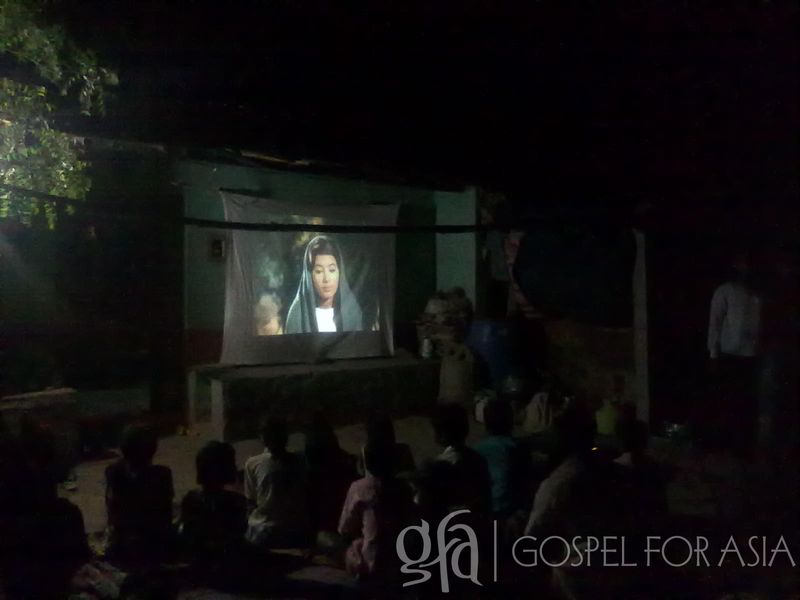
This scene plays out again and again before crowds all over Asia. Night after night, “Dayasagar,” “The Man of Mercy,” plays on the sides of buildings, on sheets stretched between poles, under trees and inside houses. Cool weather, warm weather, crowds of hundreds, groups of 10—Gospel for Asia-supported film teams show movies about the love of Christ. And as they do, Jesus reaches out to touch, heal, transform and restore lives.

He did that for Jayan and her husband.

Dayasagar,” an Indian-made film about the life of Jesus - KP Yohannan - Gospel for Asia
Jayan and many others watching “Dayasagar,” an Indian-made film about the life of Jesus.

Widows, Lepers . . . Me?

Jayan and her husband saw people gathering together one evening and decided to come along as well. They found themselves in front of a screen where miracles were shown. Jayan couldn’t take her eyes away as she watched Jesus—whose name and power she did not know—heal people again and again.

A widow’s son raised to life. A leper cleansed. The miracles didn’t end.

Jesus’ love and compassion touched Jayan’s heart. Maybe He could heal her, too?

Jayan’s brain didn’t function properly, and the money they spent on medicine and sacrifices didn’t bring any healing. She and her husband had spent their lives pursuing their traditional religions, but despite their devotion, they could never find any peace.

After the movie ended, the film team members gave people an opportunity to ask for prayer, and they prayed for the men and women who stepped forward.

Many hearts were touched as they witnessed miracles for the first time - KP Yohannan - Gospel for Asia
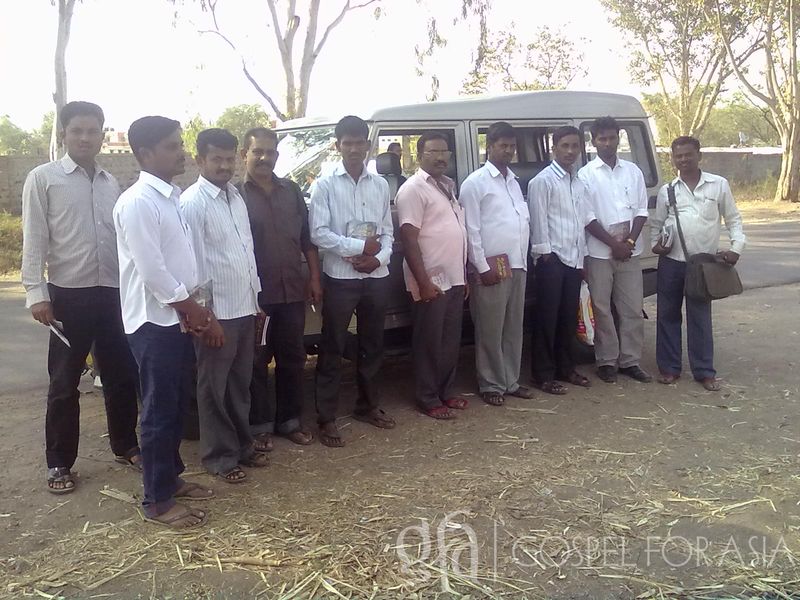
This Gospel for Asia-supported film team, pictured alongside local GFA-supported pastor Harshal, visited Jayan’s village and displayed the love of Jesus. Many hearts were touched as they witnessed miracles for the first time.

The next day, Jayan and her husband connected with the local Gospel for Asia-supported pastor. They shared how they had seen the movie and wanted to know more about Jesus Christ. They asked questions and shared their troubles with Pastor Harshal. As he prayed for her, she wept.

Jayan and her husband became new in Christ, and now they regularly gather together to pray with other believers.

“We are so thankful to Jesus that our lives have been changed,” Jayan said. “Our lives were miserable because I was barren and mentally imbalanced. … Pastor prayed earnestly and comforted us through His Word and always encouraged [us] that the Lord would intervene and redeem us from this desperate situation. We are really happy that we are children of the living God.”

This is just one story out of hundreds maybe even thousands that happen every single day.

Nothing Magical

Thing is, it’s not like these are magical movies. I remember watching “Dayasagar” at a friend’s house several years ago. It was in a language we couldn’t understand, but we recognized the stories. I remember watching the leper step out in faith, seeking Jesus for healing. I remember seeing the lame come to him on carts and the blind stumble along the road. I remember watching Jesus ride into Jerusalem on a young donkey, surrounded by triumphant shouts of praise and joy.

Watching the movie and reflecting on it helped me step into these stories as though I were seeing them for the first time. In the same way, countless others witness these stories every day through the efforts of Gospel for Asia-supported film teams.

The power of this movie, and other movies that film teams show, is in the prayer that goes before them. Film teams pray together before they ever go into a village, and people around the world join in prayer to stand with them. And as people pray, God can use these simple movies to reveal the stories of His Son.

It is through prayer that so many lives are touched - KP Yohannan - Gospel for Asia
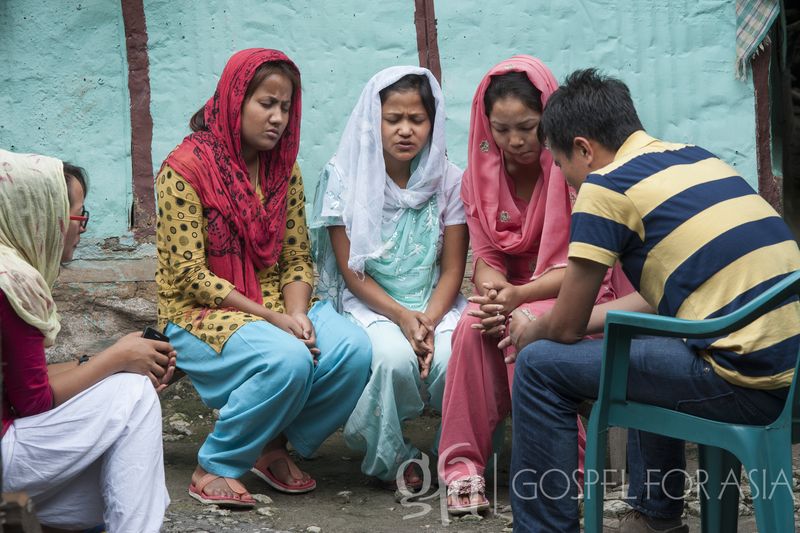
Gospel for Asia-supported film teams pray together often. This team of ladies is praying with a GFA-supported pastor. It is through prayer that so many lives are touched.

To watch Jesus ride into Jerusalem on a donkey, surrounded by shouts of joy and praise—who in the audience knows He’s going to be crucified just a few days later? It’s no wonder we hear stories of people weeping when they see the death of Jesus for the first time. Some even get up and try to stop the soldiers from beating Him and from putting the nails in His hands, but they can’t stop His triumphal march up the hill of Calvary, where He battles with sin, death and shame.

And it seems all is lost . . . until He rises from the grave, triumphant.

Unrivaled Joy

Consider the joy people experience when they witness the resurrection! It echoes the shock the disciples must have felt when they heard Jesus was alive and raced to the tomb to see if it was true.

We want people to know these stories! We want people to know the joy of resurrected life!

No matter how difficult our day may be, no matter how misunderstood or slandered or stressed or rejected—we have joy in Christ that cannot be shaken.

We want people around the world to know that joy that sustains in the midst of trials. We want people to know the name of Jesus.

Jesus. The One who touches the leper. The One who has time for the hurting, the outcast, the helpless. The One who loves. And time and time again, people have the opportunity to witness movies where Jesus heals the lame, speaks tenderly to the hurting and helps those in need.

As our brothers and sisters step out in faith to share movies about the life of Jesus, we know that many people, like Jayan, are experiencing the joy of new life.

And that makes everything we do worth it.

=====
Click here, to read more blogs on Patheos from Gospel for Asia.

Go here to know more about Gospel for Asia: GFA.net | GFA Wiki | GFA Flickr

2019-11-26T12:46:56+00:00

Love. That four-letter word that evokes varying degrees of feelings and meaning for every person. People talk about it, write about it, search for it and desire it. St. John the Apostle he experienced firsthand the purest form of love this world has ever known: Jesus Christ, the Son of God.

In 1 John 4:7b–10, he wrote, “God is love. In this the love of God was manifested toward us, that God has sent His only begotten Son into the world, that we might live through Him. In this is love, not that we loved God, but that He loved us and sent His Son to be the propitiation for our sins.”

This Apostle saw real love lived out. He saw the compassion that motivated Jesus Christ to bring new life to those around Him. It was love that compelled Him, and it’s His love that compels us.

The strongest motivator for Gospel for Asia-supported workers to do what they do is love. Dr. KP Yohannan Metropolitan recently talked about this in one of his blog posts. He mentioned how a national worker was once told by his enemies that he would be torn in half if he ever visited their village again. But the missionary returned because he loved them and had good news to share with them! For him, perfect love casted out fear and drove him to risk his own life for the sake of others—much like his Lord.

This national worker is one of many who are willing to put everything on line for the sake of Christ because they love.

Consumed by an Intense Love, Myo Zaw Visits 100 Communities in 3 Years - KP Yohannan - Gospel for Asia
Gospel for Asia-supported workers are compelled by Christ’s love to serve others well.

The story below is about another national missionary named Myo Zaw who exemplifies the heart of our brothers and sisters in Asia well.

Love on Fire

A fire burned inside Myo Zaw. It was lit the day the Lord redeemed him, and it grew hotter and more intense every single day. He was like the prophet Jeremiah, unable to keep the love of Christ hidden within himself. If he tried, he felt restless, he felt sick.

Weary of holding it in, Myo Zaw shouted from the roadsides and in market places, “Christ [redeemed] me, and He will [redeem] you also!”

People thought he had gone mad. Those in his community already knew him as a hot-blooded drunkard who fought with people and beat his wife and children, and now he proved his insanity.

“But I knew I was not mad,” Myo Zaw says. “The love of God just would not simply keep [quiet] in my heart. I wanted to pour it out and share it.”

 Independently Ministering

Consumed by a fire that could not be put out, Myo Zaw traveled throughout his region, walking from place to place, sharing the Word of God. He told people “how a sinner like me was found by God.” In three years, he visited 100 communities. His wife, Shway, sent him letters while he was away to encourage him.

“If your life can change by Christ, there is no one who cannot be changed by Christ,” she’d say. “So wherever you are going and sharing the Word of God, we are here to pray for you. I believe people will be changed by the love of Christ.”

And people were—350 of them. They heard of His great love and saw it lived out in His child, and it changed them.

Following Like Jesus

Not long after, a man visited Myo Zaw’s village and shared about the different places in their country and how Jesus went to a foreign land, though heaven was His home.

The fire inside Myo Zaw intensified. He knew without any doubt that his life needed to be about sharing the Lord’s love with others. It was a powerful love that transformed him, and he knew others needed it, too.

He told himself, “It is better that I go and give my life for the people in foreign lands.” So he and his wife prayed and prepared themselves to live in an area where people were unfamiliar with the Lamb of God.

Nearly 10 years later, God sent them to the southern region of their country as GFA-supported workers.

Gospel for Asia-supported pastor Myo Zaw with his wife and youngest son.

Forced Out of Community

In their new community, people quickly realized Myo Zaw and his family were Christians and decided they would have nothing to do with the new arrivals.

“We were [forced] out of community,” Pastor Myo Zaw says, “and it is very difficult to live without community.”

But Myo Zaw, Shway and their children trusted Christ throughout the hardships, and with the Spirit’s fiery love pulsating within them, they learned how to love the people in their new community.

They cared for the sick and took people to the hospital when needed. When floodwaters destroyed homes and livelihoods, they and other Gospel for Asia-supported workers helped provide relief. The community watched how they cared for them and their children and wondered why this man and his wife loved them so much.

After 14 years of displaying Christ’s love, people feel and understand Myo Zaw’s love for them and many return it.

What I have found in my life,” Myo Zaw says, “is that love is the most powerful weapon we have from God.”

Love. It’s what changed the hearts of those who had once excommunicated Myo Zaw and his family. It’s what helped Myo Zaw persevere. It’s what will change the world when the source is Christ.

“Let love be genuine. Abhor what is evil; hold fast to what is good.” —Romans 12:9 (ESV)

=====
Click here, to read more blogs on Patheos from Gospel for Asia.

Go here to know more about Gospel for Asia: GFA.net | GFA Wiki | GFA Flickr

2019-11-26T13:59:24+00:00

With our headlines screaming about one disaster after another—fires in the California hills, hurricanes, flooding, drought and warming seas rising—and with the increasing incidents of gun violence here in the States and of terrorism activating itself in the Middle East, the near East and in Europe, it is easy to forget there is good news happening beyond this barrage of warnings, distress signals and red flags flying.

One of the great news notices a majority of people have missed is that the U.S. Agency for International Development (USAID) announced in March 2016 that in the last 30 years, extreme poverty around the world has been reduced by half. This information was based on a United Nations assessment following its goal-setting at the dawn of the new millennium: to eradicate poverty by 2030.

Do FBOs Help Decrease the Levels of Poverty in Our World - KP Yohannan - Gospel for Asia

This initiative was included in what was titled The Millennium Development Goals, which included eight international goals for the year 2015 that had been established following the Millennium Summit of the United Nations 2000. Among the goals were:

  1. To eradicate extreme poverty and hunger
  2. To achieve universal primary education
  3. To promote gender equality and empower women
  4. To reduce child mortality, etc.

Some critics have complained of a lack of thorough scientific analysis behind the millennial sustainable goals and its recently announced outcomes. Questions have risen about the justification for some of the analysis behind chosen objectives. Even deciding what comprises a poverty level baseline is difficult (right now it is those who earn less than the equivalent of $1.90 U.S. per day).

All experts on the topic know that whatever true success has been achieved (the World Bank, according to its studies, feels that the statistical results are even better than those announced by the United Nations), the situation of the marginally poor, those rising out of extreme poverty, is still fragile. War lords can tip one country, such as South Sudan, into starvation. Climate change, for instance, is thought to be able to plunge those with marginal economic achievements back into dire need.

The point of this good news, however, despite these considerations, is that the war on world poverty has succeeded beyond any one of the expert’s dreams. The big question for those of faith is: How do faith-based organizations (FBOs) fit into helping decrease the levels of poverty around the world? The presence of mission organizations and Christian relief and development NGOs literally span the world and can be found on every continent and in the majority of developing countries. Or perhaps, the question should be: Do they even count in this grand scheme of eradicating world poverty?

Do FBOs Help Decrease the Levels of Poverty in Our World - KP Yohannan - Gospel for Asia

While attending the Global Missions Health Conference that convenes yearly in Nashville, Tennessee, I bumped into a gentleman, a medical doctor, who has vast experience in world health efforts. We talked about the Millennial Goals and I asked him my question: How do faith-based organizations contribute to the amazing statistics that are developing out of these worldwide initiatives? Do they? And if they do, what measurements show their contributions?

He smiled, took out a business card and wrote some notes on the back, directing me to a section of the World Health Organization’s website. “When you get time, look at this,” he told me. “Several years back, WHO did a study of faith-based organizations during the HIV/AIDS epidemic in Africa. Their conclusions were amazing.”

On arriving home, I went web-searching and found a 33-page report based on extensive research observation, followed by another three pages of resources (some 113 in all), which gave strong evidence that faith-based organizations in relationship to health endeavors were invaluable and should be included in the overall joint partnership efforts that were outlined in the Millennial Goals. Included are just a few quotable assessments out of the broad study:

  • FBOs are significant health care providers in the developing world.
  • FBO health projects are often independently funded and do not, in general, receive an adequate proportion of public funds distribution.
  • Compassion is the primary value underlying major religious systems.
  • Many religious traditions are characterized by a focus on healing: “A primary focus of religious expectations in the 21st century is the multidimensional longing for healing of body and mind, of soul and spirit, of personal and social relations, of political and ecological dimensions in this broken world.”

The extensive evaluation offers suggestions for improvement—mostly in outcomes reporting, data collection, and the opening of dialogues between the public sector and faith-supported initiatives. One concluding section, however, begins with the statement, “Evidence suggests that FBOs already offer tangible value by:

  • Delivering services that supplement government offerings
  • Bringing external resources from a range of donors
  • Arising within religious and cultural loyalties of the local communities they serve
  • Being numerous and, on the whole, more integrated with the communities they serve
  • Connecting into associated services that are considered valuable within primary health care strategies.”

Do FBOs Help Decrease the Levels of Poverty in Our World - KP Yohannan - Gospel for Asia

The end result of this extensive study was the recommendation by the World Health Organization that religious entities already on the ground and substantively rooted in their communities are ideally placed, perhaps even more so than many in the international aid systems, to bring a holistic (or some would call it an integral) approach to humans who suffer from the effects of dire and marginal poverty. After all, how many aid organizations are truly equipped to serve the whole person—body and mind, soul and spirit? Which of them show a multi-dimensional longing for the healing of personal and social relations, of political and ecological dimensions in this broken world?

This blog is dedicated to the exceptional work being done by one of those faith-based organizations, Gospel for Asia, which specializes in bringing the awareness of God’s love through an emphasis that is community grounded, understands the religious and cultural loyalties of the places and people they serve, and literally employs tens of thousands of financially underwritten or volunteer workers to help eradicate poverty, but in a way that ministers to the whole person, body and mind and soul and spirit.

Here are a couple ways GFA-supported workers are helping eradicate poverty:

Romila’s Story

Romila’s Story - KP Yohannan - Gospel for Asia
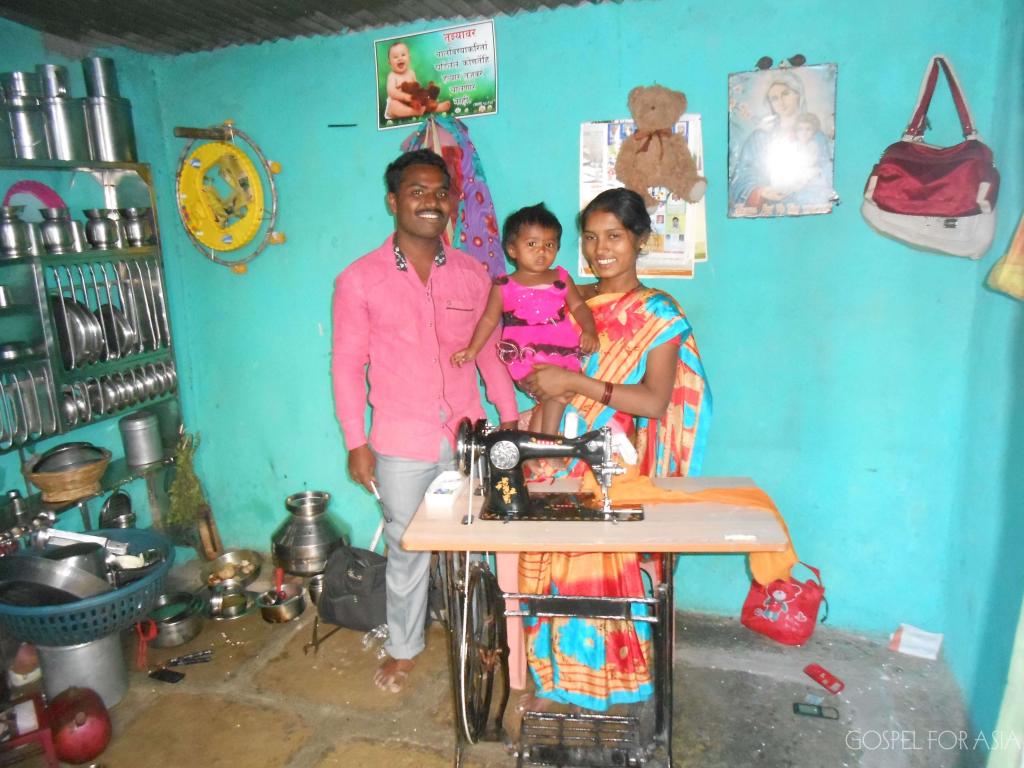
This is Romila with her husband and child.

A plumber by trade, Romila’s husband, Taraswin, worked faithfully to provide for his wife and little baby girl. However, no matter how hard he tried, he struggled to find work. Day by day they were sinking financially. A friend directed Taraswin to a job opportunity in another village. Believing this would help change things, they moved to start afresh.

But work was inconsistent, and this new job soon proved to be of no help to their financial state. As monthly rent drained their income, things did not look bright.

Then, one day, they were chatting with their neighbor, and he introduced Taraswin and Romila to his friend, a Gospel for Asia-supported pastor named Rochan. As Pastor Rochan struck up a conversation with the couple, they began to open up about their struggles. When Pastor Rochan walked away, he felt compelled to do everything he could to help this family.

Three weeks later, he invited Taraswin and Romila to a Christmas gift distribution program. Romila could hardly believe her eyes when she received her sewing machine.

“I was really longing for a machine,” Romila recalls. “I have no words to express my feelings and thanks to the church.”

Now Romila can help provide for her family by sewing clothes from her home. The hopelessness which hung over Romila and Taraswin lifted, as they now can easily pay for their rent with plenty left over for additional expenses.

Dhansukh’s Story

Daily life was a struggle for Dhansukh and his family. Because Dhansukh had difficulty walking, he couldn’t work as a daily wage laborer, which is a common job for many people in Asia. Instead, Dhansukh provided for his family by selling vegetables.

But after some time, Dhansukh’s business began running into the ground. Fewer people made purchases, and the vegetables that remained started to rot. Dhansukh tried all he could to save money and make up for the lack. He took his children out of the private school they were attending and sent them to a public school instead. He asked his brothers and his sister for hand-me-downs for his children.

But even as he cut down on expenses left and right, eventually the vegetable-seller could no longer afford to buy fresh vegetables to feed his family. The meals they would eat in one day became fewer and fewer.

In the middle of the family’s crisis, Gospel for Asia-supported pastor Vismay came to buy vegetables one day. Dhansukh told Pastor Vismay about his business troubles and asked him to pray for him.

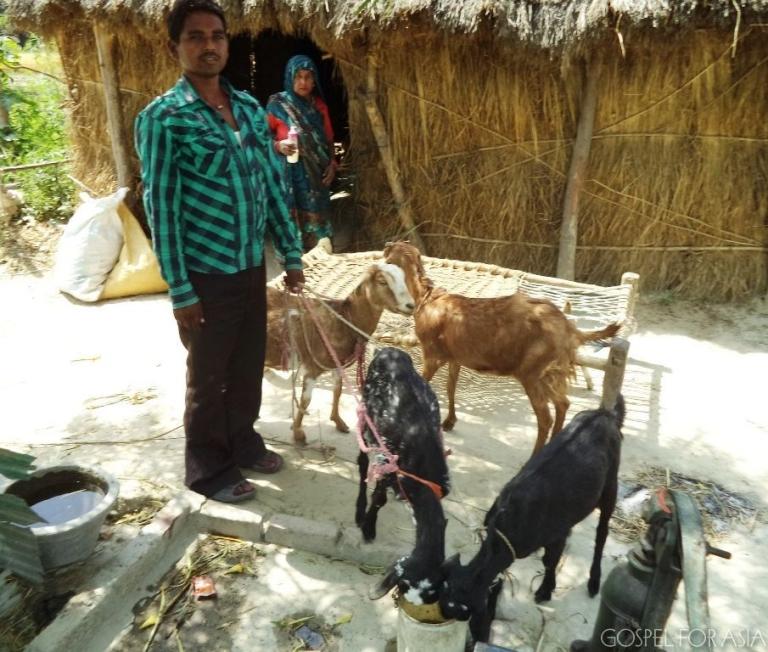
Pastor Vismay kept Dhansukh’s prayer request in mind, and God eventually provided an opportunity for him to help Dhansukh’s family practically by giving him two female goats at a Christmas gift distribution.

These gifts impacted Dhansukh in a special way: As he witnessed firsthand the Lord’s power to answer prayers, he realized God loved him and Jesus’ followers cared about him. And now, with the income these goats will provide, Dhansukh will be able to take care of his family.

Dhansukh’s Story - KP Yohannan - Gospel for Asia
This is Dhansukh with his goat that was given to him by a Gospel for Asia-supported pastor. The goat ended up multiplying!

The help this faith-based organization provided went beyond just material provision, as you can see from Romila’s and Dhansukh’s testimonies. It ministered to their soul and spirit as they understood how much they were loved by God and His people.

Often secular skeptics involved in international development look askance at those who work in faith-based missions around the world. The evidence being gathered, however, by objective outside observers seems to be producing a body of proof that some of the front-line participants in the change that is occurring in the eradication of poverty is being carried out by the unsung, unrecognized, diligent, altruistic people who love God and whose lives are driven by that love manifested as it is in concern and care for the downtrodden and the forgotten, for the abused and the neglected of the earth. Of this, those of us in faith-based communities have nothing to be ashamed.

I personally stand in awe of many of my brothers and sisters worldwide, some close friends, many of whom put their lives on the line every day, who have little thought of personal success or notoriety, who have shunned financial security and through a dogged kind of compassion serve God. One day in time, we will know what all they have done toward this remarkable goal of eradicating extreme poverty worldwide.

=====
Click here, to read more blogs on Patheos from Gospel for Asia.

Go here to know more about Gospel for Asia: GFA.net | GFA Wiki | GFA Flickr

2019-12-03T03:15:28+00:00

God is using Gospel for Asia-supported national workers and the prayers of people all over the world to transform communities through His love.

Pastor Tamang has been serving the Lord since 2003. Throughout those years he’s experienced heartache in losing his wife, the devastation of a natural disaster and opposition from the ones he longs to serve. Yet through all this, he remains steadfast, depending on the power of prayer to help him overcome.

A Widower in the Wake

The earth rumbled. The ground shook. The walls rattled. Pastor Tamang and his houseguests rushed out of his home as the earthquake grew in strength. But before everyone could make it out, the walls crumbled under the intensity, crushing Tamang’s wife, Nirmala, beneath the wreckage of their home.

After the earthquake’s final tremor, Pastor Tamang found his wife lying lifeless in the rubble.

Many others perished in the 6.8-magnitude quake that shook parts of South Asia on September 18, 2011. Houses and churches also fell that night, leaving survivors without shelter to guard from monsoon rains or the coming winter.

Pastor Tamang lost his wife, home and church all in one night.

A Widower in the Wake - KP Yohannan - Gospel for Asia

“I can never forget such a great incident, which changed my life completely,” Pastor Tamang says.

Tamang was left to carry on the ministry alone. The days were difficult—especially when he’d return home, half-expecting to see his wife’s encouraging smile. Nirmala actively worked alongside him, ministering to the women and children in their community.

Deep down, Tamang had a feeling the Lord had a purpose in taking Nirmala, and he knew he couldn’t give in to his loneliness. He knew he had to persevere, for there were still people living their days without knowing the One who sustains. He had been called here, and he would remain.

“It was the grace of the Lord Jesus Christ and the prayer support of my believers that helped me to stand firm after the death of my wife,” he says. “God comforted me so I can continue my ministry.”

In the years that followed, Tamang pressed onward. His congregation, made up of 66 believers, helped him whenever he’d go out for ministry. They’d talk to people and build relationships, hoping to introduce them to the love of the Savior. It wasn’t easy. Most people in the remote, mountainous region where Pastor Tamang serves aren’t open to hearing about Jesus.

“Because of the resistance we face from the people here, ministry here does not grow fast,” he says. “Because of this problem, we feel that by flesh and blood, we cannot conquer this. … I urge you to pray for our ministry here.

Why Pastors and Missionaries Need Prayer

Pastor Tamang’s plea for people to pray for his ministry is a plea many pastors and missionaries in Asia can echo. They’re serving in territories long held captive by the spiritual powers of darkness.

  • They face resistance. As Pastor Tamang experienced, hearts harden at the mention of Jesus’ name. They believe that to embrace Christ would be to lower their social standing. It would also mean turning their backs on their ancestral faith. 
  • They face persecution. Angry neighbors accuse them of disrupting the peace. Some missionaries end up beaten or thrown in prison for years.
  • They also face personal struggles. Many Gospel for Asia-supported workers have been disowned by their families that are staunchly against their decision to love and follow Jesus. There are others who have lost loved ones, like Pastor Tamang. Then there are others going through significant health problems.

Yet these brothers and sisters in the Lord willingly enter into the sufferings of Christ. And through the power of prayer and fasting, GFA-supported national missionaries and pastors are seeing tremendous breakthroughs in their ministries!

We Stand Beside National Missionaries

Gospel for Asia links believers from all over the world through prayer and its support program. For nearly 40 years, people have stood beside GFA-supported workers as they seek to share the love of God through word and deed with their fellow countrymen. 

National Missionary praying in Asia - gfa

These national workers overflow with deep compassion for the people around them. They bring comfort, hope and peace to those who are searching for these very things. They provide income-producing gifts to poor and destitute families. They pray for healings, breakthroughs, deliverance—and they see God answer those prayers!

Like Pastor Tamang, GFA-supported workers know that their ministries are not founded in “flesh and blood.” They are founded in the power of Christ and prayer in His name. As men, women and children across the globe join them in prayer, they see breakthroughs in their ministries.

The Apostle Paul knew the truth of this mystery. He asked the body of believers in Colossae to pray for him: “Continue earnestly in prayer, being vigilant in it with thanksgiving; meanwhile praying also for us, that God would open to us a door for the word, to speak the mystery of Christ, for which I am also in chains…” (Colossian 4:24).

He also asked the believers in Thessalonica to pray for him: “Finally, brethren, pray for us, that the word of the Lord may run swiftly and be glorified, just as it is with you…” (2 Thessalonians 3:1)

Will You Join Us in Fervent Prayer?

We at GFA pray constantly and fervently for our brothers and sisters in Asia, never faltering to drop to our knees so that the word of God may run swiftly and be glorified. Will you join us in praying fervently for our brothers and sisters in Asia?

We would love to know how you are praying for God’s work in Asia and around the world. Share your prayers in the comments below so others can join with you as we partner together to see the Lord’s name glorified.


* “A Widower in the Wake” first published in GFA’s magazine GFA World, March 2016.

=====
Read more blogs on Patheos from Gospel for Asia.

Go here to know more about Gospel for Asia: GFA.net | GFA Wiki | GFA Flickr

Follow Us!


TAKE THE
Religious Wisdom Quiz

What proportion of lepers healed by Jesus returned to thank Him?

Select your answer to see how you score.


Browse Our Archives