

With Emphasis on “What is the Gospel?”
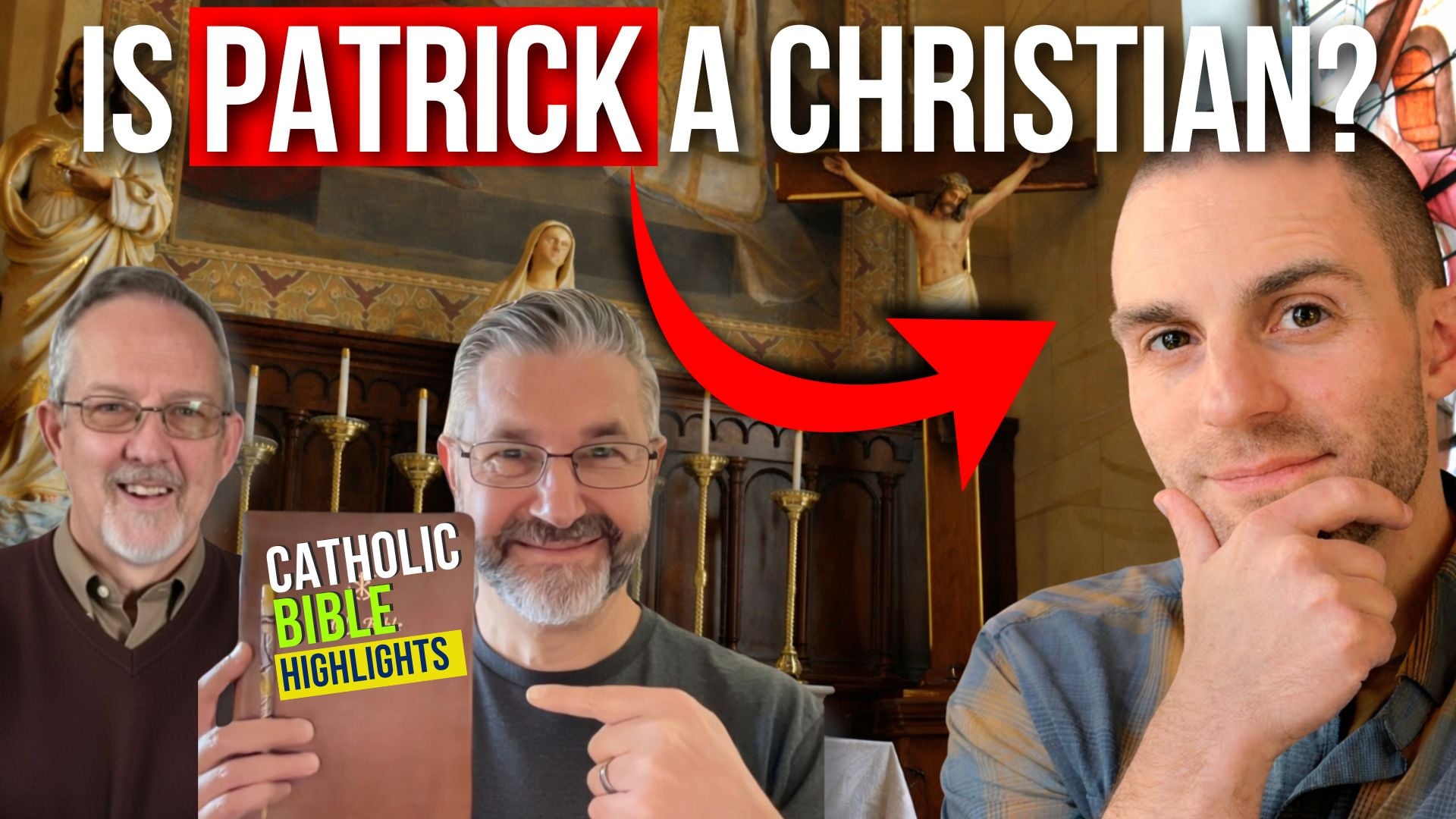
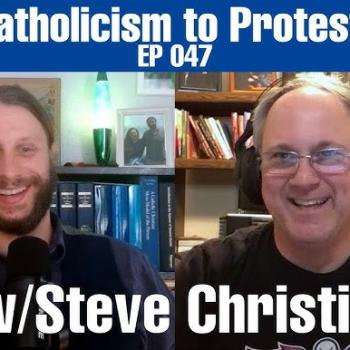
This is substantially a transcript of the video, “Are Catholics Even Christians? Wait…Are Protestants?” (Catholic Bible Highlights, with Kenny Burchard, 2-13-26)
Patrick O’Brien runs the YouTube channel, Philippians 1:9 Ministries. It has 9,640 subscribers. This was originally a video response to his video, “Are Catholics Christians?” (12-2-25), on my Catholic Bible Highlights channel where I partner with Kenny Burchard. But we had technical problems, so it’ll have to be an article only. Patrick’s words from his video will be in blue. Kenny’s words will be in green in indented dialogue sections, and mine in regular black.
*****
Dave Armstrong, were you a Christian before you were a Catholic?
The answer is yes. I was an evangelical Protestant of the Arminian variety, and I was not anti-Catholic, but definitely a Christian.
And question number two. Now that you’re Catholic, are you still a Christian?
Last time I checked! Yeah, that’s what, that’s what we’re gonna argue.
Well, it sounds so funny. It sounds so funny to ask these questions, but this is the argument, isn’t it? That’s out there. In the Bloggersphere Twitter sphere, whatever, Catholics aren’t really Christians. And then in the other direction there are some Catholics that feel that if you’re not Catholic, you’re not really a Christian. So we’ve gotta dig through this today and we’re gonna make sure we have some Catholic Bible highlights as well. But you found a great video that we’re gonna respond to today that’ll help us to work through some of it.
He starts out by revealing that he grew up Catholic, was an altar boy, and even studied Catholic apologetics before he became a Protestant. I wonder if he read one of my books? Then he stated that he doesn’t “hate” Catholics and is not an “anti-Catholic.” I grant that he likely didn’t make the video because he hates people, but rather, because he wrongly but sincerely believes that Catholicism is a non-Christian so-called “cult”.
I’ve used the term “anti-Catholic” for 35 years in the same way that scholars use it. It means the belief that Catholicism is not a Christian belief-system and lacks a saving gospel (exactly as Patrick himself says). It has nothing directly to do with attitudes or bigotry. It’s about doctrines. So let’s dive in. Patrick makes no bones about what he believes:
1:25 Roman Catholic theology is not equal to biblical Christianity. But in this video, we’re looking at it from just a little bit of a different angle. We want to answer the question, are Catholics Christians? Because remember, Christians are really those who are saved and going to heaven.
What Patrick describes here are the elect. The problem is that we can’t know with certainty who is included in the elect. Even John Calvin stated that. In the meantime, Christians are those who profess the Christian faith and are baptized and regenerated. Or, Protestants would say they are saved or born again through believing in the gospel and giving their hearts to Jesus, etc. But many people who did these things and were thought to be “real Christians” and saved, later fell away from the faith. The Apostle Paul routinely addresses entire congregations as fellow believers and Christians. Here’s how he writes to the Corinthian Christians:
1 Corinthians 1:2, 4, 6-7, 9 (RSV) To the church of God which is at Corinth, to those sanctified in Christ Jesus, called to be saints together with all those who in every place call on the name of our Lord Jesus Christ, both their Lord and ours:. . . [4] I give thanks to God always for you because of the grace of God which was given you in Christ Jesus, . . . [6] . . . the testimony to Christ was confirmed among you — [7] so that you are not lacking in any spiritual gift, . . . [9] God is faithful, by whom you were called into the fellowship of his Son, Jesus Christ our Lord.
But in the same letter, Paul roundly rebukes them; for example, he writes, “there is immorality among you, and of a kind that is not found even among pagans; for a man is living with his father’s wife” (1 Cor 5:1).
3:24 the Roman Catholic Church does not see those outside of Roman Catholicism as truly saved. Now, Catholics are going to push back on that.
Yes we will, because it’s untrue. In fact, we believe that baptism regenerates and causes the recipient to enter the kingdom of God. Canon IV on baptism from the Council of Trent held that Protestant baptism was valid:
CANON IV.-If any one saith, that the baptism which is even given by heretics in the name of the Father, and of the Son, and of the Holy Ghost, with the intention of doing what the Church doth, is not true baptism; let him be anathema.
So Protestants are our brethren in Christ on that basis. Vatican II, in its Decree on Ecumenism from 1964, is very clear:
Men who believe in Christ and have been properly baptized are put in some, though imperfect, communion with the Catholic Church. . . . All who have been justified by faith in baptism are incorporated into Christ; they therefore have a right to be called Christians, and with good reason are accepted as brothers by the children of the Catholic Church. . . . [Protestant] liturgical actions most certainly can truly engender a life of grace, and . . . give access to the communion of salvation. (3)
3:38 Catholics will speak out of both sides of their mouth. They’ll say one thing one way to one audience and say it a different way to another audience to try to get a different meaning. But when we really look at it, it’s quite clear.
We’ve cited Catholic official doctrines. That’s how one accurately, seriously analyzes any point of view.
3:57 In paragraph 834 it [The Catechism] says that particular churches are fully Catholic through their communion with one of them the church of Rome.
That’s a different thing from being in the grace of God and a fellow Christian. He then cites the Council of Florence from 1441 saying that those outside the Catholic Church will go to hell. But we don’t believe that Protestants are totally “outside” of the Catholic Church in the first place. Rather, they are in an incomplete, imperfect communion with us, enough to be saved, as our citations above and below prove.
Also, the same council proclaimed in its Decree for the Armenians (Nov. 22, 1439), that by baptism “we are made members of Christ and belong to his body, the Church”. That’s from Denzinger #1314, p. 339 in the 2012 edition. This is the standard compendium of Catholic dogmas and doctrines. In the same work is a related statement from the Fourth Lateran Council in 1215 (“Chapter 1. The Catholic Faith”):
The sacrament of baptism (which is celebrated in water at the invocation of God and of the undivided Trinity, that is, the Father, the Son, and te Holy Spirit) conduces to the salvation of children as well as of adults when duly conferred by anyone according to the Church’s form. (#802, p. 267)
In sum, Patrick is disagreeing with straw men, rather than our authentic doctrines. He goes on to say that Catholics will claim that we started regarding Protestants as “separated brethren” in the 1960s, but as we just demonstrated, the same view was already present in ecumenical councils in 1215 and 1439 and moreover, it goes back at least as far as St. Augustine, who contended that Donatist baptism was valid.
For much more on this, see an excellent article by my friend, Rod Bennett, hosted on my blog: Baptismal Ecumenism: A New Evangelistic Paradigm [8-11-17]; also my very in-depth article, Catholicism & Non-Catholic Salvation (Vs. Gavin Ortlund) + How Early Protestants Widely Damned Other Protestants Who Held Different Theological Views [2-9-24]
9:13 you can’t have salvation unless you’re in the Roman Catholic Church. But you can be saved outside the Roman Catholic Church with exceptions. That’s not how Jesus talked, right? He didn’t speak that way. There’s one way to the father, right?
The idea of the Church – however we define it — being absolutely necessary to salvation is not just a Catholic one. Martin Luther, the founder of Protestantism, expressed it this way:
He who would find Christ must first find the Church. . . . For outside of the Christian church there is no truth, no Christ, no salvation. (Sermon: The Gospel for the Early Christmas Service, 25 December 1521, in Luther’s Works, vol. 52, pp. 39-40)
John Calvin also made many such statements. Here’s just one:
There is no other means of entering into life . . . beyond the pale of the Church no forgiveness of sins, no salvation, can be hoped for,) . . . the abandonment of the Church is always fatal. (Institutes of the Christian Religion, 1559, Book IV, 1:4)
Patrick continues:
10:55 Well, there can be saved individuals within Roman Catholicism, but they are saved not because of the Catholic Church, not because of the sacraments of Roman Catholicism, but in spite of Roman Catholic teaching, in spite of Roman Catholic theology and Roman Catholic sacraments.
This is absolutely classic, playbook anti-Catholicism. Take note! I have a huge web page countering this nonsense, and a book, that we will link to. Then he tells us how we get saved:
11:12 true salvation comes from the gospel and putting our faith and trust in the finished work of Jesus Christ on the cross.
Dave, have you put your faith in Jesus and His finished work on the cross?
That was April, April, 1977, at the age of 18, and it’s still valid according to Catholic position. You give your life to Christ. There’s nothing un-Catholic about that.
Yeah, I, I did the same thing in July of 1987 and I’ve been walking with Jesus ever since. And lo and behold, when I came into Catholic church, they welcomed me as a brother.
So now the question is, what is the gospel? We throw this word around a lot, but what is it? It seems to me that we have to get the definition from the Bible. I’m weird that way. A lot of people say a lot of things. But they often don’t quote the Bible to support them. It seems to me that we have to get the definition from the Bible. I’m weird that way. Peter’s first sermon on the Day of Pentecost (Acts 2:22-40) is certainly the gospel, especially since 3000 people became Christians upon hearing it (2:41). In it he uttered not a word about “faith alone.” He instructed the hearers, rather, to “repent, and be baptized . . . so that your sins may be forgiven” (2:38). Paul defines the gospel in 1 Corinthians 15:1-4 as the death, burial, and resurrection of Jesus. Of course, Catholics believe all of these things, so, according to the Bible and even Patrick himself, we accept the gospel and are therefore “saved.” I’ve written many articles about this:
*
*
13:02 Individual Catholics often don’t know what Roman Catholicism teaches. Even though they mock me and they make the claim that I don’t know what Catholics believe in, even though I have all their books, read all of their commentaries and study Bibles.
13:44 I’m not invincibly ignorant. I’m not Catholic by choice. I know what Catholics teach . . .
I’m saying, as a professional Catholic apologist these last 24 years, that he does not (in these areas we are presently covering). He’s misinformed, as many millions of Protestants are. This is just one video. I could certainly find many more errors in others. But I will say that if one truly does know and understand Catholic teaching, and rejects it, then they may end up in the wrong place for all eternity. God knows their hearts. We don’t. We can only speak to what Catholics believe.
14:36 we would agree with the late Walter Martin who was also wrote The Kingdom of the Cults who would identify them as well as a cult.
This is untrue. He specifically excluded Catholicism from that category. I started out doing apologetics in a cult ministry as an evangelical Protestant in 1981, and Walter Martin was one of my heroes. I read his book (the 1974 edition), met him, and heard him speak once, where he strongly objected to some people in the audience making out that Catholicism was a non-Christian cult. Anyone can look at the table of contents of the revised 2003 edition on Google Books and see for themselves that there is no chapter devoted to Catholicism. The entire 1997 revision is available online at Internet Archive. I searched “Catholic” and it appears 25 times, but never once connected with the word “cult.” And in one instance on page 204 he classifies Catholicism as Christian and contrasts it with the cults:
We see the various cult systems, specifically Jehovah’s Witnesses, Mormonism, Unity, etc. . . . wooing converts from professing Christian fellowships, Protestant as well as Roman Catholic. (p. 204)
*
I listened to Walter Martin too a lot when I was a young man, Dave, and he got me through months of trying to interact with my LDS [Mormon] friends. So we both look to Walter Martin as an early hero, and I had his book, The Kingdom of the Cults too, and I noticed when I was reading his stuff that there was no “Catholicism is a cult” [parts] in his writing.
I used to listen to his cassette tapes that I got at this Christian library. They were great. He was a good teacher. It was probably mainly from him that I was not anti-Catholic, because he had the correct view.
Patrick refers to the Bereans, who were praised in the book of Acts as “noble” because “they received the word with all eagerness, examining the scriptures daily” (Acts 17:11):
17:49 They went to the written word, the scripture, not a list of oral traditions. They didn’t go to their rabbi. They went to the scripture and with a ready mind.
It’s silly to say that they didn’t incorporate the guidance of a rabbi in their learning, since, after all, Paul ran across them in a synagogue, as Acts 17:10 informs us. We simply don’t know enough about them to claim that they were some primitive “Bible only” people. But we do know that synagogues were part of mainstream pharisaical tradition, that fully accepted authoritative oral law alongside written Mosaic Law. And we also know the story of the Ethiopian eunuch and Philip, in Acts 8:30-31:
So Philip ran to him, and heard him reading Isaiah the prophet, and asked, “Do you understand what you are reading?” [31] And he said, “How can I, unless some one guides me?” . . .
And we know about Nehemiah, chapter 8, where Ezra the scribe reads a “book of the law of Moses” (8:1) to the assembled people, and it says in 8:7 and 8:
. . . the Levites, helped the people to understand the law, while the people remained in their places. [8] And they read from the book, from the law of God, clearly; and they gave the sense, so that the people understood the reading.
So in both cases, there were necessary authoritative teachers, and the relevant words used are “understand” and “understood”: brought about by these oral guides (Levites and an apostle).
18:48 But at the very least, go to the Bible and read it for yourself and see what it says and actually read it without putting on lens of Catholicism or any other theology and just let the word of God speak to you.
That’s not what the Bible teaches about Bible-reading, as we proved above. The author of Hebrews also concurs. He writes in 5:12-13:
For though by this time you ought to be teachers, you need some one to teach you again the first principles of God’s word. You need milk, not solid food; [13] for every one who lives on milk is unskilled in the word of righteousness, for he is a child.
These teachers are necessary because of what Peter notes regarding Paul’s letters in his second letter at 3:16:
There are some things in them hard to understand, which the ignorant and unstable twist to their own destruction, as they do the other scriptures.
All of this is why we don’t only read the Bible all alone without any guidance — or what Patrick calls a “lens” — whatsoever. We accept the wisdom of others, now and in the past, regarding biblical doctrine.
19:46 I would encourage anybody that has any questions, leave them down in the comments. If you have specific things, maybe we can address them in future videos.
Great! We have offered several questions, and also several rebuttals and answers for Patrick. So we’ll see if he wants to address this video.
***
Yeah, that would be great, wouldn’t it? You know, just a few things I think about here, Dave. You know, I really appreciate the question that we’re coming into this video with. Should Christians think of non-Catholics as Christians if they’re baptized? Of course, Catholics are Christians, and of course a baptized believer in Jesus, though imperfectly united to the Catholic Church, is no less a brother or sister in Christ by virtue of their baptism. This is just a really tough thing that goes on out there. But it was a question that I had when I was on my journey into the Catholic Church.
I wondered if the Catholic Church thought that I was a Christian, though I hadn’t been Catholic before. And they said, “well, were you baptized in the name of the Father and the Son and the Holy Spirit?” I said, yes, and they asked, “did you believe in and follow Jesus?” Yes. I mean, I answered a bunch of questions and they said, “can you get your baptism certificate so that we can verify that you received a valid baptism?”
And I contacted my pastor from back in 1987. He’s still the same pastor of the same church, and he sent me a certificate of baptism and I took it to the parish church office, and they said, “thanks.” You know, it’s like “we just wanna make sure that you’ve received the sacraments, because we wanna receive you into the full fellowship of the Catholic Church.” So there was never any doubt that I had been a Christian before.
But now, interestingly, I had been a pastor, you know, for twenty years, and I was the senior pastor of our church for twelve years. And there were a lot of people in that congregation that I really loved. And I was with them for the birth of their children, their funerals, their weddings. I preached to them week in and week out. I baptized them, etc., etc. And when I became Catholic, I will tell you it was shocking to me on Facebook to see some of my dear friends who called me Pastor Kenny, say to each other that I had become Catholic, and said, “I guess he was never really a Christian, because he went and became Catholic.”
And one of the guys whom I dearly love said in a post on Facebook, “It’s a cult.” I had to watch this, and I had to get off of social media for a while because of it. And this video that we’re referencing here is part and parcel of this big conversation that goes on out there, where people are saying Catholics aren’t Christians and Christian Catholics are saying Protestants aren’t Christians. And yeah, I really love some of the stuff that you brought out here, Dave. It’s really important. I dunno if that ever happened to you. Did anybody ever tell you you weren’t a Christian since you became a Catholic?
In the circles I moved in, I guess they knew enough about me to not say something that dumb. People that are anti-Catholic — as I defined it –, say that Catholicism isn’t a Christian system. They’ll say, — I’m sure Patrick would say — that there might be some people who are saved in there, but it’s always despite our teaching. It’s like, “they barely scraped by, despite all the nonsense over there.” And so in saying that, I think they almost want to claim that Catholics do the same thing in reverse, to justify themselves, as if they are saying in effect, “you guys say we’re not Christians, so that’s all we’re doing, the other way around. We’re saying you’re not Christians.” But we do not believe that, as we’ve documented. So that falls flat.
Martin Luther and John Calvin didn’t get rebaptized when they left the Catholic church. They never denied that it was Christian. I don’t know if Patrick knows this. Gavin Ortlund confirms that in his book that I just read, called, What it Means to be Protestant. There’s a lot to discuss with all this stuff.
Yeah, there sure is. I’m thinking maybe the way we can wrap this up, would be for us to affirm a couple of things, for the benefit of Patrick. And that is to say, as, as Catholic followers of Jesus, as people following Jesus who are in communion with the Catholic church, we believe the gospel, and here the gospel: in 1 Corinthians, chapter 15 it says that Jesus died, was buried, and rose again on the third day in accordance with the scriptures, which is a longer way of saying a shorter thing, which is, “Jesus is Lord.” Jesus is Lord of heaven and earth. He has been raised from the dead, ascended to heaven, sits at the right hand of God the Father, and is in charge of God’s creation as king, and we can’t get out of church before we confess that and say that in as many ways as you can imagine. Catholics are constantly talking about the Lordship of Jesus and how we believe it.
Every Mass we go to, we say the creed, which begins with, I believe in Jesus Who died, Who was buried, Who was raised, Who ascended, and Who is coming in glory to judge the living and the dead. That is the gospel and the way that you become a Christian. I’ve had people do this, Dave. They’ll say, “okay, preach the gospel to me then as a Catholic.” And of course I’ll say, “well, Jesus Christ is Lord. If you want me to preach the gospel to you, that’s a royal announcement: good news. Jesus is the king; follow the king.” So that’s a short way of doing it.
If I was gonna preach the gospel to somebody, lead them to Jesus, I’d say four things to them. And I’d say this to Patrick: number one, repent of your sins. The same thing Peter said in Acts. Turn away from your sins to Jesus. That’s the first. Two, receive Jesus in the sacraments, which is the other thing that Peter said. He said, “And be baptized every one of you and receive the Holy Spirit.” So that’s baptism and confirmation. Third, remain in the faith your whole life. So it says they “devoted themselves to the apostles doctrine, to the breaking of bread, to fellowship and to the prayers.” They became part of the church. They kept following Jesus.
And the fourth R is if you’re walking with Jesus and you sin and you do something that you shouldn’t do as a Christian, then number four, return to Jesus through the sacrament of reconciliation. That’s the rhythm of the Christian life: how you become a Christian, how you integrate yourself into the communion of the church and how you remain in him, and even how you return to him if you fail. So we have no problem as Catholics leading people to Jesus and helping them walk.
Typically the anti-Catholic will redefine the gospel. That’s why I quoted the Bible. What’s the gospel? We go look up the word in the Bible, to see what it is, but many Protestants will redefine it as “faith alone”, or if they’re Calvinist, as TULIP. I won’t go into the whole Calvinist system, but that’s not the gospel. Rather, it’s a theory of soteriology, which has to do with salvation. Abstract theology isn’t the gospel, which is the good news. So they redefine it as “faith alone” and it’s not even biblical. I have 150 arguments about that from the Bible that has never been answered. No one’s even attempted it. So it’s just not the gospel [according to the Bible]. The premise is wrong.
Right. Yes, it is. Well, Dave, I’m, I’m glad you found this video. We hope if Patrick watches it, he’ll give it a fair watch. We hope he has stayed tuned all the way through to this part, where we preached the gospel to him. And Dave, I’m really grateful for the chance, always, to talk with you about this stuff. You find the most interesting things. And this has been a really good one.
***
Related Books
Debating James White: Shocking Failures of the “Undefeatable” Anti-Catholic Champion (Nov. 2013, 395 pages)
Twin Scourges: Thoughts on Anti-Catholicism & Theological Liberalism (June 2003, 167 pages)
Related Web Page
******
SUPPORT Dave Armstrong’s apologetics work with a tax-deductible gift.
Photo credit: copyright 2026 by Catholic Bible Highlights.
Summary: I refute various bad arguments that Protestant anti-Catholic YouTuber Patrick O’Brien makes with regard to the supposed non-Christian status of the Catholic Church.









 Ad-Free & Subscriber Log-In