2022-09-11T08:34:20+00:00

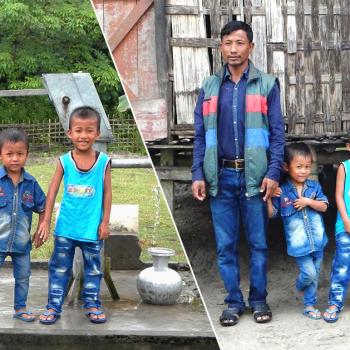
WILLS POINT, TX – Gospel for Asia (GFA World and affiliates like Gospel for Asia Canada) founded by Dr. K.P. YohannanDiscussing Salil’s family and their village, the chronic illnesses and grinding poverty due to contaminated water, and the Gospel for Asia supported Jesus Well that brought healing and transformation.

In one northeastern region of South Asia, just beneath the Himalaya Mountains, a river flows, and heavy monsoon rains often cause flooding.

It’s difficult to imagine that the residents of this lush land would lack clean drinking water. But it’s true.
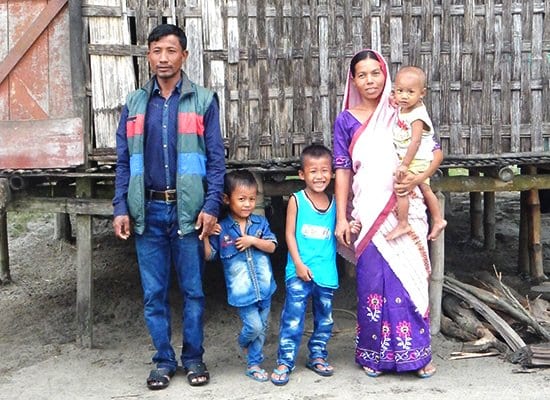
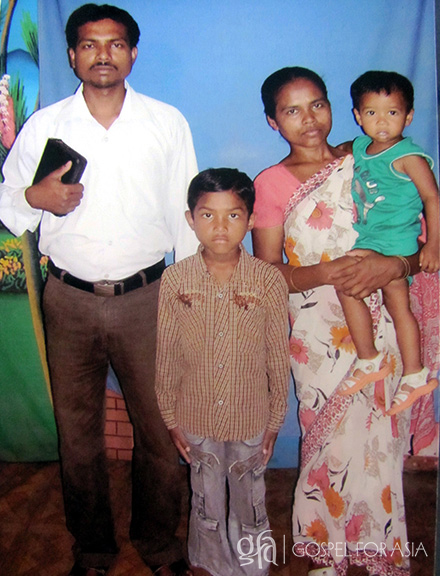
Gospel for Asia founded by Dr. K.P. Yohannan: Salil lives in a northeastern region of South Asia with his wife and three children.
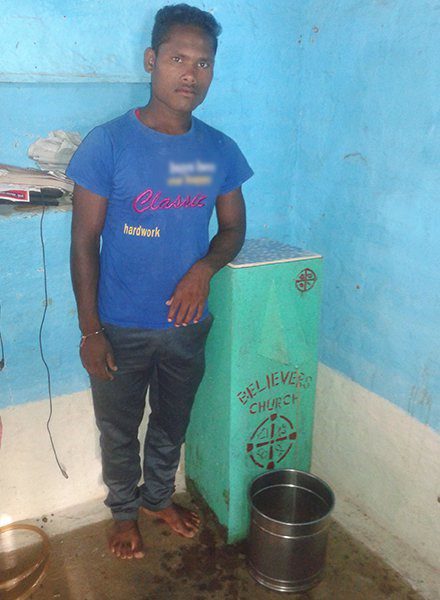
Salil (pictured) lives in a northeastern region of South Asia with his wife and three children.

This is where Salil lives with his wife and three children. Like most of his fellow villagers, Salil makes his living as a laborer. Until recently, all of the villagers drank, bathed in and washed their clothes in water from a local pond. Whenever the river flooded, the pond would fill with sand. When that would happen, they’d have to dig to find the water they needed.

But that pond water was contaminated. The villagers suffered from typhoid, jaundice and a variety of horrible skin diseases. They lived daily with nausea, high fevers, diarrhea and general weakness. Their chronic illnesses made it difficult for them to work. So they languished in grinding poverty.

It seemed the very water they depended on for life was cursed.
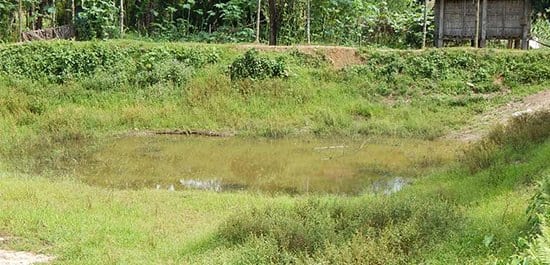
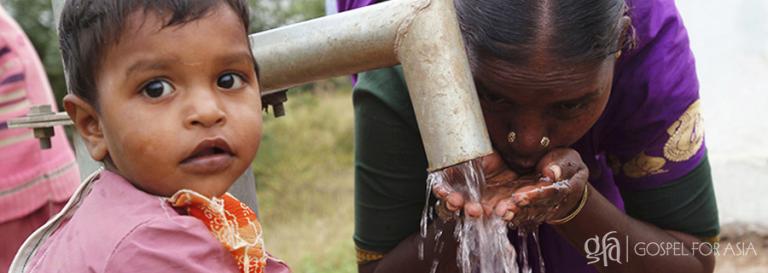
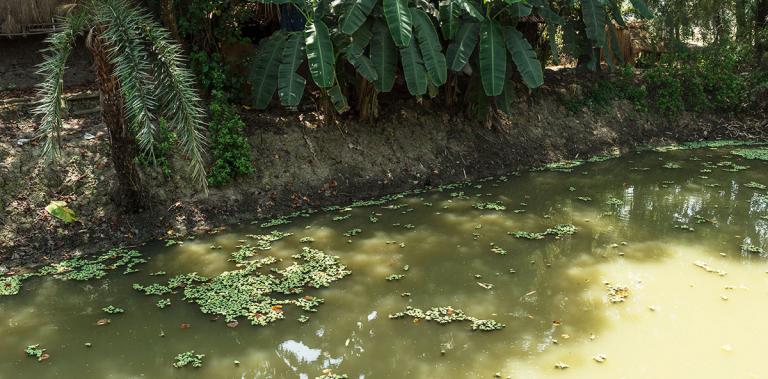
The water in this pond was contaminated and caused many of the villagers to get sick.

One man’s anguish—and a difficult journey

Salil watched his family members get sick. He was soon spending most of his meager income on medicine. There wasn’t enough left over to meet their basic needs. Salil needed to make more money, so he traveled to the river valley to collect and sell one thing there was plenty of—sand.

Lacking the government permits he needed, Salil worried he might be caught and punished. But he knew he had to provide for his ailing family, so he took the risk.

Whenever he could, Salil returned home to take care of his wife and children. But no matter how hard he worked, how much money he made or how often he came home, he couldn’t change the hard facts: Their water was still contaminated, and they were still sick.**

God was already at work . . .

Unbeknownst to Salil, a nearby pastor named Dayakara had also begun making regular visits to his village. As Dayakara befriended the villagers, he became aware of their water crisis. So he and other Gospel for Asia (GFA) workers decided to help. They began drilling a well, right in the center of the village where everyone could access it.

That was the beginning of a transformation for Salil’s family and their entire village.
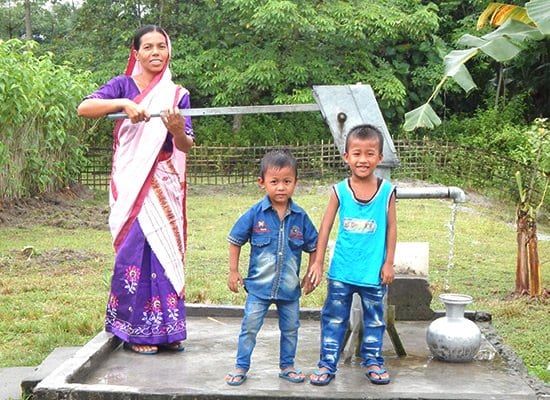
Gospel for Asia founded by Dr. K.P. Yohannan: Salil’s wife and children pumping water from the Jesus Well.
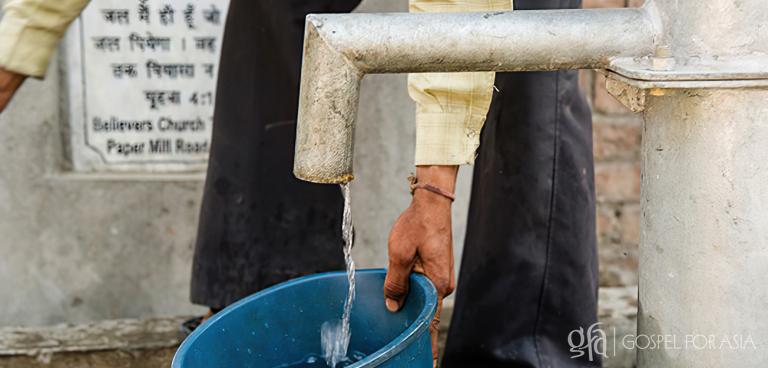
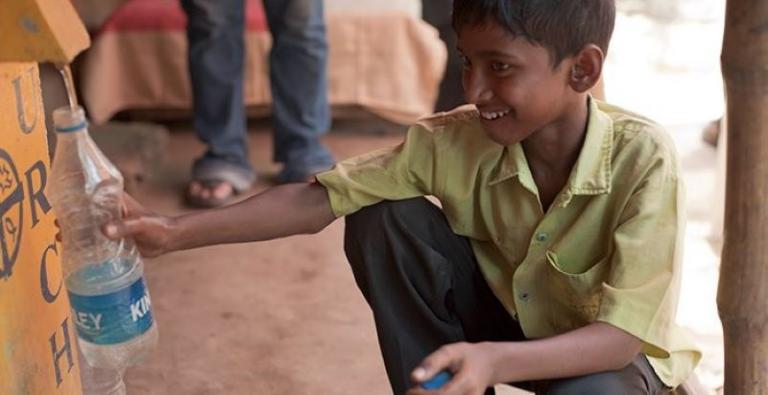
Salil’s wife and children pumping water from the Gospel for Asia (GFA) Jesus Well.

Salil’s shock—and relief

When Salil came home for one of his visits, he was astonished to find his wife and children no longer sick. How had this happened?
He learned there was a new well in the community, and his wife and children were using it for their daily water needs. He was overjoyed, but he had no idea who was responsible for this wonderful innovation.

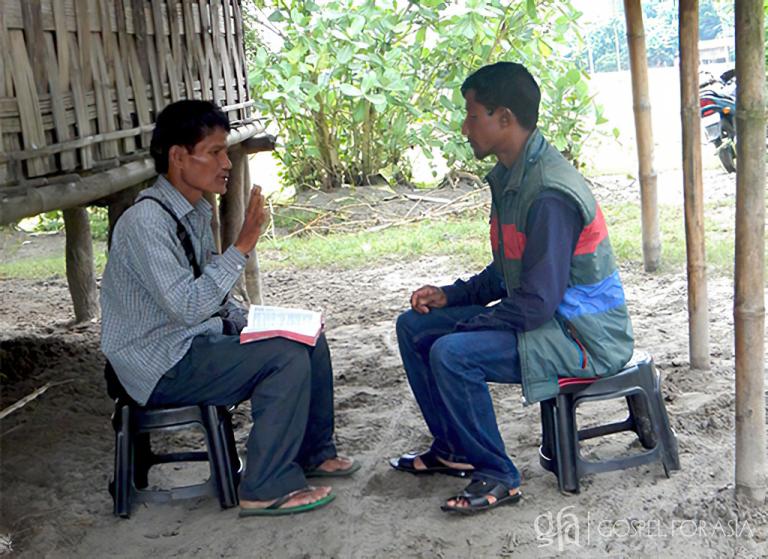
Gospel for Asia founded by Dr. K.P. Yohannan: Pastor Dayakara shares with Salil from the Bible.
Pastor Dayakara shares with Salil from the Bible.

One day Salil met Gospel for Asia (GFA) Pastor Dayakara. As they talked, Salil realized it was this man and his fellow laborers who had brought the well to his people. Salil marveled at their kindness and compassion. He decided he wanted to know this God who could put such love in men’s hearts.

“Our family is blessed both physically and spiritually. We are free from problems and sickness. We also met the Living God in due time. It is because of the people who have spent their money to drill Jesus Well in my place. I have never seen them, but I’m always praying for them. Thank you very much.” —Salil

A Gospel for Asia Jesus Well Opens the Door for God’s Love

Through the generosity of the Christians who provided their new well, Salil and his fellow villagers came to understand the love of Jesus Christ. Others in their village began having similar experiences.

Baldev was one of them. A young man with a family to support, Baldev had also gotten sick from the contaminated pond water. He couldn’t work, and like so many others, he and his family suffered. But when he began using water from the new well, his sickness went away. Salil shared the wonderful news of Jesus’ love with him—the news he had recently come to know—and Baldev and his family embraced the Lord in their lives. Now they host regular prayer meetings in their home, led by Salil.

This is how a village can be transformed—and the people can discover the promise of Revelation 22:17: “And let him who thirsts come. Whoever desires, let him take the water of life freely.”

Pray for Salil and his village

  • Intercede for Salil’s family, that they will stay strong in the Lord and that remaining members will find hope in Jesus.
  • Ask God to continue to bless and guide Baldev and his family in their walk.
  • Ask God to protect and strengthen Pastor Dayakara and continue to bless his ministry.
  • Pray God will enable many more Jesus Wells to be provided for people across Asia.
  • Pray for the villagers to realize Christ’s sacrifice and compassion for them.

Your gift today can bring lasting change to hundreds or even thousands of people.


**No wonder they were sick!

In 2016, UNICEF examined the water in Salil’s region and found arsenic contamination in 18 districts. Fluoride contamination was also found in five districts.*

A person with arsenic poisoning may experience headaches, confusion, stomach pains, vomiting and diarrhea. Long-term exposure to arsenic can cause a variety of skin diseases, cancer and—if not treated—coma and death.

Fluoride is helpful in low concentrations, but larger amounts can cause stomach pains and hinder bone formation.

It’s no wonder the people of Salil’s village suffered so. Now, things are different—thanks to a well provided by Gospel for Asia-supported workers.

A Jesus Well can literally save lives—while showing people the love of God.

* Source: Assam Tribune, May 7, 2016


Learn more about how to provide pure, clean water to families and villages through Jesus Wells and BioSand Water Filters.

*Names of people and places may have been changed for privacy and security reasons. Images are Gospel for Asia stock photos used for representation purposes and are not the actual person/location, unless otherwise noted.


Source: Gospel for Asia Featured Article, A Jesus Well Transforms Salil’s Family

Learn more about the GFA national missionaries who carry a burning desire for people to know the love of God. Through their prayers, dedication and sacrificial love, thousands of men and women have found new life in Christ.

Read the Solving the World Water Crisis for Good special report — Lasting Solutions Can Defeat an Age-old Problem.

Learn more by reading The Global Clean Water Crisis special report — Finding Solutions to Humanity’s Need for Pure, Safe Water.

Click here, to read more blogs on Patheos from Gospel for Asia.

Learn more about Gospel for Asia: Facebook | YouTube | Instagram | LinkedIn | SourceWatch | Integrity | Lawsuit Update | 5 Distinctives | 6 Remarkable Facts | 10 Milestones | Media Room | Scourge of Malaria | Endorsements | 40th Anniversary | Lawsuit Response |

Notable News about Gospel for Asia: FoxNews, ChristianPost, NYPost, MissionsBox
2022-04-26T12:28:56+00:00

WILLS POINT, TX – Gospel for Asia (GFA World and affiliates like Gospel for Asia Canada) founded by Dr. K.P. YohannanDiscussing the acute dangers of not having access to clean and safe water, and the Gospel for Asia Jesus Wells that brought health and the hope of Jesus.

Gospel for Asia founded by Dr. K.P. Yohannan: Discussing the acute dangers of not having access to clean and safe water, and the Gospel for Asia Jesus Well that brought health and the hope of Jesus.

In the midst of Asian farmland, villagers toiled under the sweltering heat of the sun. After a long, tiring day in the fields cultivating potatoes and green chilies, the diligent farmers refreshed themselves with a glass of murky water. Their drinking water often led to sickness, but there was no other choice.

Meeting the Obvious Need

Gospel for Asia founded by Dr. K.P. Yohannan: This is Pastor Turag with his wife and children. God has used Pastor Turag to change people’s lives and rescue them from waterborne illness.
This is Pastor Turag with his wife and children. God has used Pastor Turag to change people’s lives and rescue them from waterborne illness.

Gospel for Asia (GFA) pastor Turag was like the daily laborers in many ways. He too, grew up working alongside his parents in the fields. He lived knowing about Christ but having no relationship with God. It wasn’t until a missionary shared Revelation 3:20 with him years earlier that he began living for Christ. Now, as he stepped foot in the new village the Lord had called him to serve, he had no idea the ways God was going to use his life.

When Pastor Turag considered the struggling state of the villagers and the polluted water they drank and used for cooking and bathing, God’s love and burden grew inside him. Bad water was their consistent trial. Seeing the tremendous need, Turag quickly made a request to his leaders for a Jesus Well to be drilled.

While he waited for the Jesus Well to be approved and installed, Pastor Turag encouraged the people of the village and built relationships and prayed with them.

By the grace of God, a Jesus Well was installed with John 4:13–14 inscribed on the plaque. The doors to Christ’s love opened in a new way. The practical gift helped the villagers lives and they would never be the same. They were so grateful.

663 Million People Without Access to Clean Water

One day, after the Jesus Well was drilled, Pastor Turag met a villager named Darpan. As they were talking, Darpan asked a question he had been mulling around in his mind: Why did Pastor Turag help them get a Jesus Well? Who would do such a generous action for the villagers?

Pastor Turag shared how the Lord had provided the well through supporters across the globe.

“This Jesus Well is very helpful for us,” Darpan said, “because we used to draw impure water, which was very harmful. Because of that impure water, often villagers would get sick.”

Gospel for Asia founded by Dr. K.P. Yohannan: Pastor Turag was able to tell the villagers that, although the Jesus Well will help prevent illness, Jesus is the One who can heal every sickness and in Him is Living Water!
Pastor Turag was able to tell the villagers that, although the Jesus Well will help prevent illness, Jesus is the One who can heal every sickness and in Him is Living Water!

Darpan and his fellow villagers made up just a few of the 663 million people worldwide who don’t have access to safe water. Contaminated water can cause headaches, confusion, stomach pains, vomiting and diarrhea. Long-term exposure to impurities, like arsenic, can lead to skin diseases, cancer or—if not treated—coma and death. But the Jesus Well helped save many from that fate.

By seeing the fruit of God’s love through the simple but desperately needed gift of clean water, Darpan wondered who Jesus really was. Who was this God Pastor Turag knew? Darpan was a Christian by name, but he didn’t fully understand the love of God and His grace and mercy revealed on the cross. He asked Pastor Turag to share more about Jesus.

“Jesus answered and said to her: ‘Whoever drinks of this water will thirst again, but whoever drinks of the water that I shall give him will never thirst. But the water that I shall give him will become in him a fountain of water springing up into everlasting life.”
—John 14:13-14

Pastor Turag explained that the Jesus Well could help people be free from waterborne illnesses, but Jesus Christ can heal every sickness if you believe in Him. As he shared from God’s Word, the Spirit touched Darpan’s heart forever.

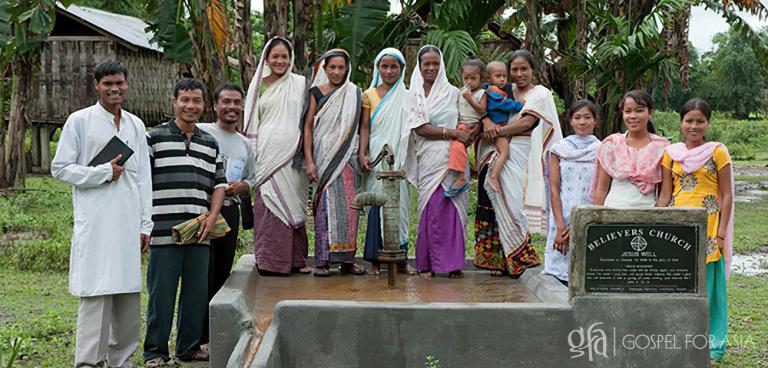
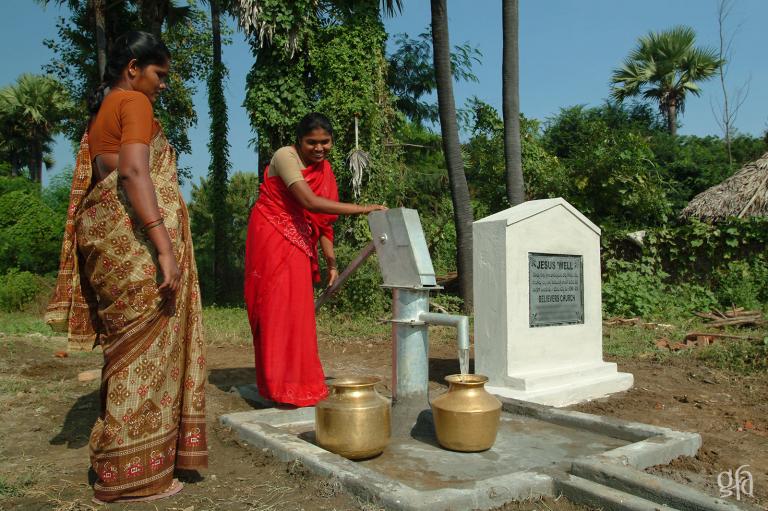
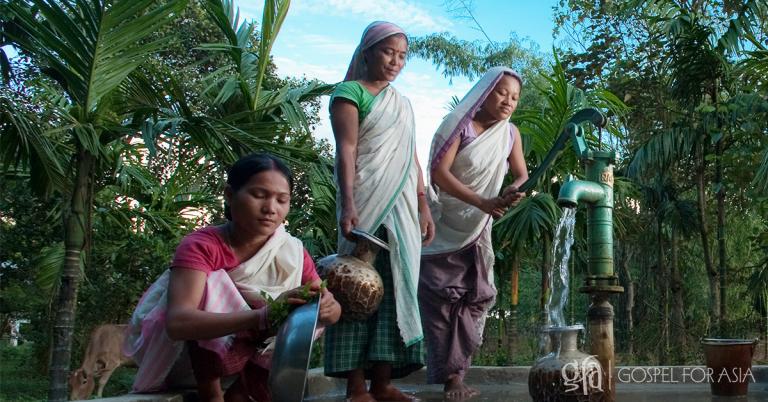
Gospel for Asia founded by Dr. K.P. Yohannan: Jesus Wells impact many villages and individuals, just like this well changed the lives of the people pictured.
Gospel for Asia (GFA) Jesus Wells impact many villages and individuals, just like this well changed the lives of the people pictured.

Jesus Well Impacts Entire Village

Soon a friendship developed between Pastor Turag and Darpan. Darpan found hope in his heart, and he wanted Jesus to change his life. Darpan and his family were the first fruits of Pastor Turag’s faithful prayers and service to the Lord. This was the beginning of Pastor Turag’s fellowship.

Darpan’s new faith and trust in the Lord opened the doorway for others to experience Christ’s love, and eventually other villagers began to respond to Jesus’s love, too. Soon the congregation grew to be more than 30 faithful believers!

It was a very small beginning when Pastor Turag came to this village, but God used His faithful servant and the simplicity of clean water to help people see they can be washed clean by the love of Christ!

“I never thought that God will work in this way,” Pastor Turag said.

Today, Pastor Turag is continuing to serve the Lord with passion and a burden for the people around him. The Lord answered his prayers for the Jesus Well and has established the work of his hands.

Gospel for Asia founded by Dr. K.P. Yohannan: Jesus Well

Give Them Water and an Opportunity to Live

The Lord used the Jesus Well in Darpan’s village to transform his life—and that of many others. Jesus Wells help rescue families from illness and serve the community in a practical way!


Learn more about how to provide pure, clean water to families and villages through Gospel for Asia Jesus Wells and BioSand Water Filters.

*Names of people and places may have been changed for privacy and security reasons. Images are Gospel for Asia stock photos used for representation purposes and are not the actual person/location, unless otherwise noted.


Source: Gospel for Asia Featured Article, Reviving Health and Blooming Faith

Learn more about the GFA-supported national workers who carry a burning desire for people to know the love of God. Through their prayers, dedication and sacrificial love, thousands of men and women have found new life in Christ.

Read the Solving the World Water Crisis for Good special report — Lasting Solutions Can Defeat an Age-old Problem.

Learn more by reading The Global Clean Water Crisis special report — Finding Solutions to Humanity’s Need for Pure, Safe Water.

Click here, to read more blogs on Patheos from Gospel for Asia.

Learn more about Gospel for Asia: Facebook | YouTube | Instagram | LinkedIn | SourceWatch | Integrity | Lawsuit Update | 5 Distinctives | 6 Remarkable Facts | 10 Milestones | Media Room | Scourge of Malaria | Endorsements | 40th Anniversary | Lawsuit Response |

Notable News about Gospel for Asia: FoxNews, ChristianPost, NYPost, MissionsBox
2022-09-17T06:09:51+00:00

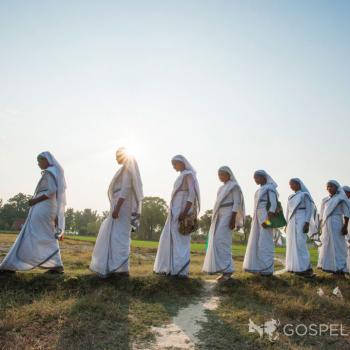
WILLS POINT, TX – Gospel for Asia (GFA)Discussing the Sisters of Compassion, women missionaries who choose to identify with the marginalized, and reflect God’s love to bring the hope of Jesus to their lives.

Prisha stepped out of the rickshaw only to be greeted by a crowd of dirty, half-naked children running around. One woman stood nearby barely clothed—much to Prisha’s embarrassment. Animal carcasses and burning waste littered the village, creating a stench so bad passersby would speed recklessly through the village to escape it.

Discussing the Gospel for Asia Sisters of Compassion, women missionaries who choose to identify with the marginalized, and reflect God's love to bring the hope of Jesus to their lives.

Prisha had heard about this village before. Punya Basti’s residents lived in squalor with no electricity, running water or toilets. Most of the villagers left for months at a time to find low-paying work and beg in other areas, but they still couldn’t afford to feed their children three meals a day—much less provide for them to go to school. Alcohol and drug abuse ran rampant, even among children, and fights commonly broke out. On top of all this, outsiders despised the villagers for their low caste and lack of hygiene and education.

Going Where Others Wouldn’t

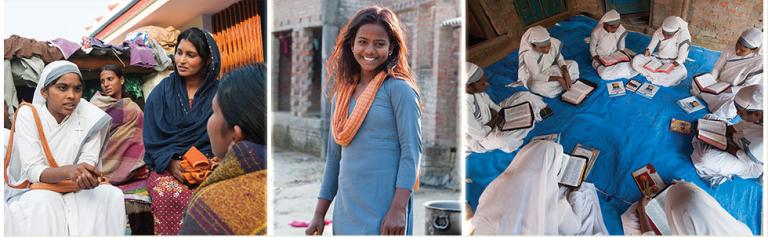
Prisha had come to Punya Basti to serve as a Sister of Compassion, a woman missionary committed to sharing Christ’s love in practical ways, specifically among poor and marginalized people groups.

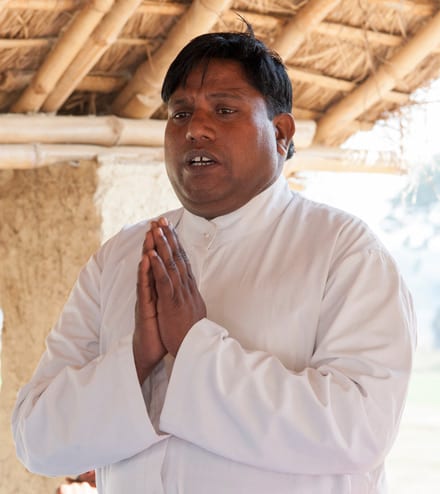
Pastor Hoob
Pastor Hoob’s (pictured) ministry was strengthened even more when the Sisters of Compassion came to Punya Basti and start to serve the women in the community.

Gospel for Asia (GFA) pastor Hoob Kumar, who served in the village, was having difficulty ministering to the women.

“The ladies didn’t know how to wear clothes properly,” Pastor Hoob recalls, “and the mothers weren’t bothered that the vessels they cooked with and ate food from were not clean.”

Moreover, the women couldn’t open up to Pastor Hoob because he was a man. He knew they needed someone to come alongside them, educate them and listen to their struggles, so he asked his leaders to send Sisters of Compassion to Punya Basti.

Knowing she was called to go where others wouldn’t, Prisha agreed to go. Out of consideration for her safety, her leader said she could commute there each day from a nearby village that would have safer, more comfortable accommodations, but Prisha wanted to live with the villagers.

“I don’t want to stay in a different place,” she told him. “I want to stay in the midst of them, in the village, so I can understand their feelings . . . and they can understand the love that we want to show them.”

Immediate Challenges Require Unswerving Faith

But living among the villagers wasn’t easy. They rarely bathed or washed their clothes. Drunken fights broke out frequently, with men and women shouting vulgar words.

When the landlord of the house Prisha stayed in offered her and her fellow Sister of Compassion water, Prisha looked at the glass in shock.

“The glass that she gave [us] really smelled very bad. We were not able to drink from that,” Prisha remembers. “Seeing this glass, we were really broken, and we didn’t have anything in our hand to give them. All we could do for them was just pray to God Almighty.”

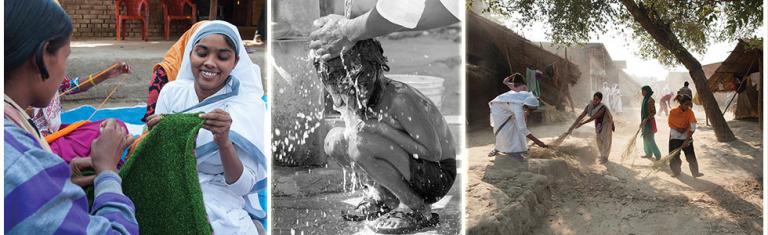
Prisha and her co-worker knew adjusting to this culture would require more than one prayer, though. They dedicated their first week to fasting and praying; then they began finding ways to help the villagers. They started by sweeping out the village’s filthy drains.

An Uncomfortable Yet Fruitful Lifestyle

At first, Punya Basti’s dirtiness made Prisha wonder if she would ever feel comfortable eating in the villagers’ homes. But she, and the seven Sisters of Compassion who eventually joined her, made a decision to embrace the villagers and share in their lives.

“Slowly we understood that if we don’t get to know them closely, we won’t be able to have relationships with them,” Prisha explains.

The Sisters of Compassion helped the local women with their chores, took care of their babies and ate the food they cooked—food most outsiders would have refused because it consisted of game like tortoise and mongoose.

The Sister of Compassion taught the villagers proper hygiene practices.

By identifying with the villagers, the Sisters of Compassion eventually earned their trust, and the villagers began listening to their advice. People stopped drinking and fighting. Women started dressing modestly and cooking in a healthier, cleaner way. Children started going to school, and the Sisters of Compassion taught them how to bathe, brush their teeth, comb their hair and dress neatly. The villagers even began seeing the missionaries as their own family.

“These eight sisters are like our daughters,” explains one villager. “We love them because they love us. They brought lots of changes in our family, in our home, in our society and in our children.”

Once Scorned, Village Shines

As the Sisters of Compassion reflected God’s love, many people decided to follow Him. Now Christ is transforming Punya Basti from the inside out.

Even when half of the village is away traveling for work, many people gather to worship Jesus each week, ready to learn more about the God who cared enough to send His daughters to live among them.

You can help another community in Asia experience Christ’s love by sponsoring women missionaries like Prisha!

Sponsor a Woman Missionary


Watch the video to learn more about Sisters of Compassion’s training, dress code and ministry.

Sisters of Compassion choose to wear a uniform that has a special and easily recognized meaning in South Asia: servanthood. It’s a humble sari worn by the poorest women and the street sweepers of Asia.

Learn more about Sisters of Compassion.


*Names of people and places may have been changed for privacy and security reasons. Images are Gospel for Asia stock photos used for representation purposes and are not the actual person/location, unless otherwise noted.

2022-11-05T16:23:29+00:00

Death and sickness where two things Abhijun was familiar with. Including him and his family, many in his village and the surrounding area contracted serious illnesses such as typhoid from their drinking water. “We suffered from many sicknesses,” Abhijun said. “When our relatives come to visit us from the city, looking at the color of the water, they did not want to drink. Sometimes they managed to drink it, but they suffered from cold, cough and headache.” Gospel for Asia (GFA) is working toward the improvement of situations like Abhijun’s with its two major clean-water initiatives: Jesus Wells and BioSand water filters. In places where the water sources are almost completely contaminated, such as Lhepar, BioSand water filters are the best option.

An Answer for the Thirsty: BioSand Water Filters

Gospel for Asia (GFA) is working toward the improvement of situations like Abhijun’s with its two major clean-water initiatives: Jesus Wells and BioSand water filters. In places where the water sources are almost completely contaminated, such as Lhepar, BioSand water filters are the best option.
Abhijun, pictured here with his BioSand water filter, now has pure water to drink.

For Abhijun and his family, a BioSand water filter, which purifies water up to 98 percent, was the perfect solution to their water crisis. Fortunately for them, Gospel for Asia (GFA)-supported worker Balash, who leads the local BioSand water filter program, happened to be in their area.

During his visit, Balash saw the water quality. Horrified, Balash asked the local Gospel for Asia (GFA)-supported pastor, Rajsari, if this was the condition of the water in the surrounding area.

Pastor Rajasri confirmed this, adding that the water in surrounding villages was significantly worse.

Motivated to help these families, Balash said,

“We will make some water filters and provide [them] to the villagers so they will be able to drink good and clean water.”

The Gospel for Asia (GFA)-supported worker immediately went to work, building the filters and distributing them to the thirsty villagers.

When water is accessible but dangerous to drink, BioSand water filters enable a family to purify dirty water, making it drinkable and safe to use. These filers make water 98% pure and last up to 20 years.

When Balash finished, 150 families in total, including Abhijun’s, were blessed with BioSand water filters!

“It is nice and tasty,” Abhijun remarks of the filtered water. “These days we also do not face any problems like sickness.”

Not only does Abhijun enjoy clean water, but his neighbors do as well. They come over to collect water for themselves and for their relatives. Abhijun’s relatives also no longer worry about the water.

“Now, we can drink pure water and be able to provide pure and clean water to others who come to our home. I am grateful to the church for providing a BioSand water filter to me. I appreciate the work of the church.”

There are millions more with stories like Abhijun’s. You can help provide a BioSand water filter to a thirsty family in Asia. Not only will you give them clean water for many years, but you’ll also provide them with the opportunity to hear of the Living Water.


Source: Gospel for Asia Features, Villages in Danger

Read the “Dying of Thirst”: The Global Water Crisis Special Report — The Crucial Quest for Access to Clean Water.

Learn more about how to provide clean water to families and villages through Jesus Wells.

Click here, to read more blogs on Patheos from Gospel for Asia.

Go here to know more about Gospel for Asia: Facebook | Sourcewatch | Integrity | Flickr | GFA | Lawsuit | Instagram

For more information about this, click here.

2023-01-04T06:51:19+00:00

If someone were to ask what a Gospel for Asia Jesus Well is worth, the most popular response from faithful followers of our work might be “$1,400.” That’s because we consistently remind our family of believers that a gift of $1,400 can fund the building of a brand-new Jesus Well.

However, $1,400 is what it costs Gospel for Asia to install a well in drought-ridden villages across South Asia. The value of a Jesus Well is something entirely different.[1]

Gospel for Asia Responds to the Question: What is a Jesus Well Worth? - KP Yohannan - Gospel for Asia

Defining the Value of a Jesus Well

Whether we realize it or not, we make nearly all of our purchases based on the value proposition of a business transaction. For example, if someone is buying a new tire for their car, their buying decision will take into account the expected length of time they intend to own the car. If they plan on trading the car in the near future, most people will choose to purchase a less expensive tire than they would if they were planning to keep the car for a long time. Price is an issue, but the amount the customer is willing to spend is primarily based on the value they expect to receive. Our point here is to try to establish the value of a Jesus Well.

Villages do not pay for installation or maintenance of Jesus Wells, so the value proposition is not based on cost at all. It is entirely about the benefit received. Christian businessman, Bill Westwood, explains biblical value proposition this way:

Christ’s work of salvation includes the potential for us to fulfill that mission of adding true value by collaborating with him in the process of bringing order out of chaos.

[The value proposition is] the combination of resulting experiences . . . which an organization delivers to a group . . . in some time frame.

Delivering value . . . , meeting their needs and, wherever possible, exceeding their expectations, is to fulfill the golden rule to “love your neighbor as yourself” (Matt 22:39). In serving and loving others, we are serving God inasmuch as humanity bears the imago Dei.[2]

So, defining the worth or value of a Jesus Well has to be ‘calculated’ in the eyes of the recipients.

The Need for Jesus Wells

Disease

“More than 1.8 million children under the age of five die each year from illness associated with contaminated drinking water. Primary diseases contracted from unclean drinking water include cholera, diarrhea, typhoid, roundworm, hepatitis, and dysentery.”[3]

“It is estimated that over 80% of India’s population does not have access to clean drinking water. Indians regularly drink water from lakes, ponds, and rivers. This is the same water used for bathing, laundry and watering cattle.”[4]

One child dies every 90 seconds due to waterborne disease.[5]

Poverty

Lack of readily available clean water is inextricably related to poverty.

“I don’t think people in the West can even begin to understand that there are people, like the Untouchables in India or Nepal, who have to walk eight, nine, or ten miles with a water pot to draw water from some pond. And often it’s a dirty pond because they are not allowed to draw water from the public well where the upper castes are also drawing water.”[6]

How can a person be productive and provide for their families if one or more of the people in the household has to spend several hours per day carrying pots to fetch water?

Education

When children are sick because of waterborne disease, they cannot attend school.

When children are needed to help carry water long distances, they cannot attend school.

What is a Jesus Well Worth?

Because Jesus Wells are gifts, every benefit derived from the provision of clean drinking water contributes to the value of the well. It is not easy to calculate each well’s precise value. However, we can make some reasonable assumptions based on an average village population of 300[7] where there are 260 adults and 40 children.

  • 300 people will begin to become healthier because they are no longer drinking contaminated water. Jesus Wells are built to last 20 years or more. Imagine how improved health can change the lives of young children over a 20-year period.[8]

“Literature suggests that access to sanitation or drinking water may improve student participation or cognitive functions and therefore lead to better educational outcomes.”[9]

According to Gold Standard,

“Households [using clean water wells] are 9 times less likely to contract waterborne illnesses.”[10]

  • Clean water will improve the potential for school-aged children to escape poverty. A child’s education is affected by an increase in absenteeism, decrease in cognitive potential, and increased attention deficits, according to A Layman’s Guide to Clean Water.[11]
  • There could be a reduction in deaths of children age four and younger.
  • People over the age of 60 could live longer.
  • Immediate, local access to free, clean water could release women from the burden from an average of 20-30 hours a week spent fetching and carrying contaminated water.[12] These people are not lazy – which is readily evidenced by their willingness to do whatever it takes to provide water for their families. They are industrious. The time saved goes to finding new jobs and often a more stable lifestyle.
  • Wells are drilled during the dry season to ensure that they are deep enough to provide clean water year-round without villagers having to regress to daily treks to obtain water.
  • Jesus Wells are maintained by the local church at no cost to the community.
  • The love of Jesus is evidenced daily by the continued access to Jesus Wells for everyone in the village. “Whosoever will” may drink from the water of Jesus Wells.

Did You Know?

Did you know that the Jesus Well project is one of the largest clean water initiatives in the world?[13]

Did you know that Gospel for Asia has drilled over 11,000 Jesus Wells between 2016 and 2017?

Did you know that every Jesus Well features a plaque with the message John 4:13-14?[14]

Whosoever drinketh of this water shall thirst again: But whosoever drinketh of the water that I shall give him shall never thirst, but the water that I shall give him shall be in him a well of water springing up into everlasting life.

Did you know that when our Gospel for Asia (GFA)-supported pastors and churches gift a well that you have funded, the people in the village want to understand why someone would do that for them? Most of them have been considered outcasts and have never experienced the unconditional kindness of the love and grace of Jesus Christ.[15]

Did you know that the greatest value proposition of a Jesus Well is that it is a visible and tangible demonstration of His love and grace? A Jesus Well is often their introduction to the one, true God who gives them life on earth and offers the proposition of everlasting life where they will lack nothing. There is no other value proposition that can compare.

In Jesus’ name, I come to you
To share His love as He told me to.
He said freely, freely,
You have received
Freely, freely, give.
Go in My name
And, because you believe,
Others will know that I live.[16]


Read more about the Global Clean Water Crisis: Finding Solutions to Humanity’s Need for Pure, Safe Water.

To read more on Patheos on the global clean water crisis, go here.

Click here, to read more blogs on Patheos from Gospel for Asia.

Go here to know more about Gospel for Asia: GFA | GFA.org | Facebook | Youtube | Twitter | Lawsuit

For more information about this, click here.


[1] Give clean water to a needy village in South Asia and share Christ’s love with them, GFA, Accessed December 2018.

[2] Westwood, Bill, The Marketing Value Proposition: The ‘Golden Rule’ in Action, Business as Mission, June 29, 2016

[3] Waters of Love, Oasis World Ministries, Accessed December 2018

[4] Ibid.

[5] Every 90 Seconds a Child Dies from a Water-Related Illness, Samaritan’s Purse Australia and New Zealand, Accessed December 2018.

[6] Wooding, Dan, Jesus Wells bring living water to thousands in India and South Asia, Identity Network, Accessed December 2018.

[7] Provide Clean Water for an Entire Village, GFA, Accessed December 2018.

[8] Give clean water to a needy village in South Asia and share Christ’s love with them, GFA, Accessed December 2018.

[9] Wadhwa, Divyanshi, Does access to sanitation and drinking water facilities relate to students’ learning outcomes? Evidence from Andhra Pradesh, India, Georgetown University, April 2016

[10] Clean Water Access in India, Gold Standard, Accessed December 2018

[11] The Benefits of Clean Water Influence the Daily Lives of Children and Adults, and Impact the Quality of Life in a Community for Generations to Come, A Layman’s Guide to Clean Water, Accessed December 2018.

[12] Water is Life: Bore-wells in India, HELP International, Accessed December 2018.

[13] On the Front Lines of Women’s Empowerment and Providing Clean Water, Gospel for Asia Celebrates Its 39th Anniversary by Releasing 2017 Highlights, Missions Box Press Releases, July 22, 2018.
[14] Jesus Wells, A Little Perspective, January 3, 2006.

[15] Clean Water through Jesus Wells – Hearts Embrace Christ, GFA, Accessed December 2018.

[16] Owens, Jimmy and Carol, Freely, Freely, Maranatha Music, 1972.

2021-04-30T08:37:21+00:00

Wills Point, Texas – Gospel for Asia Special Report (GFA) – Discussing the troubling problem of the lack of toilets – basic sanitation, and open defecation for millions throughout the world.

What If You Didn’t Have a Toilet?

So I remind myself of toilet scenarios I do know about, then extrapolate some personal situations out to extreme what-ifs. Our home, in which we have lived for 38 years, has its own septic system. During that time, when we had extreme storms, the power would go out. This meant that no water could be pumped from our underground well, and this electric outage disabled our showers, our faucets and our toilets.

I used to store plastic bottles of water so when things went black we could brush our teeth, get dressed by candlelight (since there are no windows in any of our bathrooms), and—get this—flush our toilets. If the power did not come back on for a couple days, the frozen food thawed and an excess of detritus threatened to overflow the toilet basin.

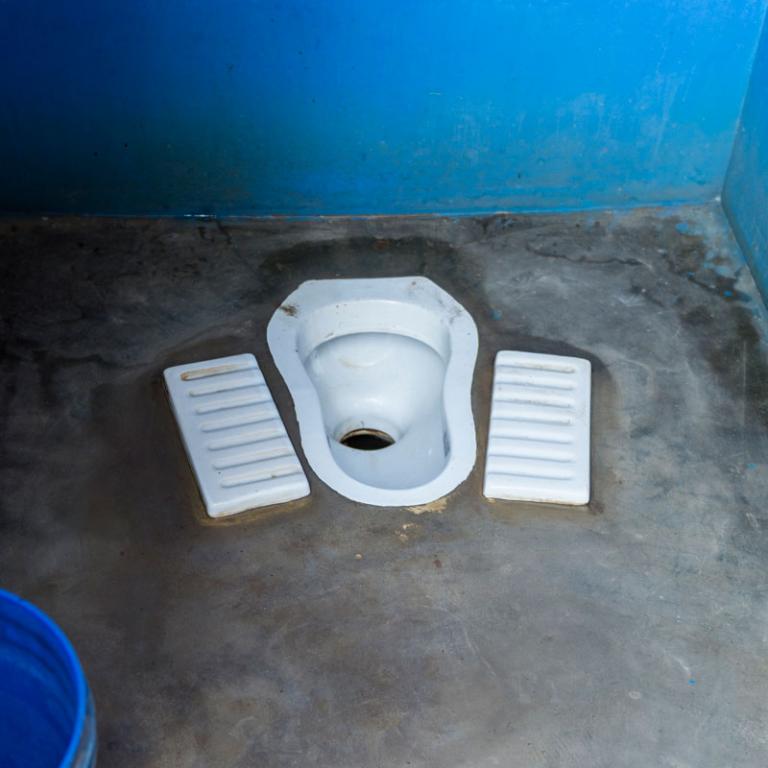
A Squat Outdoor Toilet in Asia - KP Yohannan - Gospel for Asia
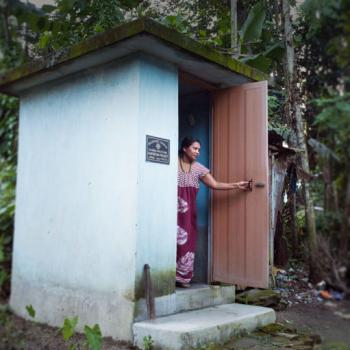
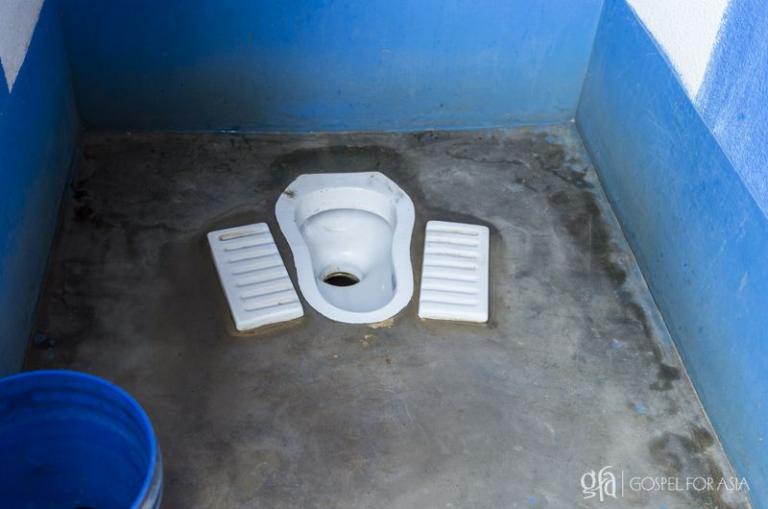
A well-cleaned squat toilet in Asia.

So I extrapolate—what if this happened all the time? What if sewer lines broke, became clogged and backed up regularly? What if I lived in poverty and there were no plumbers and no money and no electric company to call to fix our difficulties? What if I had to stand in line to use a communal latrine where flies buzzed, the floor was filthy, someone had evacuated due to acute diarrhea, and no one wanted to clean the mess? Now we’re getting closer.
In the refugee camps of the world, my travel companions and I held ridiculous discussions as to who had invented squat toilets—men or women? Someone shot a photo of me holding a rickety latrine toilet door upright while a woman co-worker trusted me to guard her privacy while she did her business inside. I am laughing, howling with laughter really, at a ridiculous situation, but this is, for most of the world, not a laughing matter.

Extrapolate. What if there was no female friend to hold the door? What if the floor around the squat toilet inside was filthy and you had to pull up your sari and rest the top half of the door against your forehead to keep it from falling? What if you believed that the little structures, dark and dank and scary inside, were really inhabited by demons?

Smelling an overflowing latrine from 20 feet away might persuade even a Westerner to think similarly, even if only metaphorically. In truth, I don’t like the few outhouses I’ve been forced to use in the States, nor many of the spooky national park public facilities, and I certainly avoid, if I can help it, those portable potties hauled in on trucks for public events or construction work sites.

When Your Septic Tank Problems Bring Embarrassment

My last attempt at toilet empathy. About 10 years after we had moved into our home in West Chicago, Illinois, our neighbor across the back yard knocked on the door and apologized for needing to complain about the standing, stinking water that was seeping into his property.

“I think you may be having trouble with your septic system,” he reported, embarrassed to have to point this out.

I called two septic companies. One told me I needed to have the whole septic field replaced; it would cost us $10,000. The other service man diagnosed another problem, but his estimate was about the same as the first. Then I went to the DuPage County Health Department and asked what septic firms they would recommend. I called Black Gold, whose reps complained about the septic map drawn by the original company that laid our field that was now leaking.

“Would the health department let us get away with a layout like this?” he asked his partner. They both obviously thought the field plan had been rendered by some septic idiot. Sure enough, after spending about 45 minutes prodding our three-quarters-of-an-acre lot with long poles, I was informed: “Lady, you don’t need no new septic field. The lines of what’s there ain’t connected to the tank.” His fee was $3,000. I made a garden out of the areas that were torn up by their repairs.

Many people in Asia draw water from smelly, vile ponds - KP Yohannan - Gospel for Asia
Vile, brown liquid that some in Asia count on as their water source.

So what if I lived somewhere that permanently seeped smelly, vile, germ-ridden, brown liquid? What if the river at the back of the land was a running sewer, and my grandchildren couldn’t romp and splash in it? (As one writer vividly describes: “In stagnant reaches, methane bubbles up through the grey-green water, and the stench of rotten eggs—hydrogen sulfide—wafts into homes.”) What if the fields were filled not only with animal feces but the excreta of some 300 neighbors?

You come up with your own empathy-building stories.

Communities Band Together to Improve Sanitation

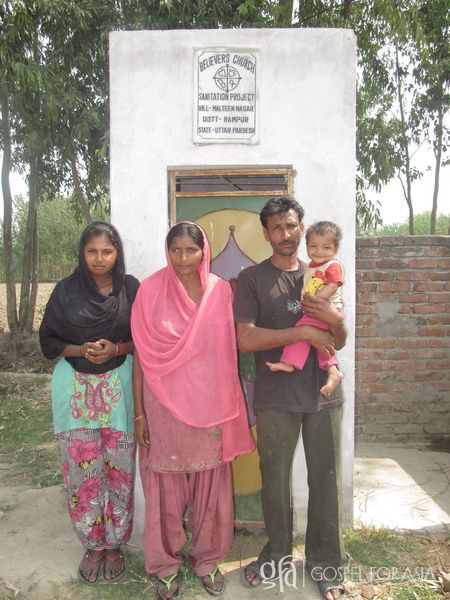
A family in front of a GFA-provided outdoor toilet and sanitation facility - KP Yohannan - Gospel for Asia
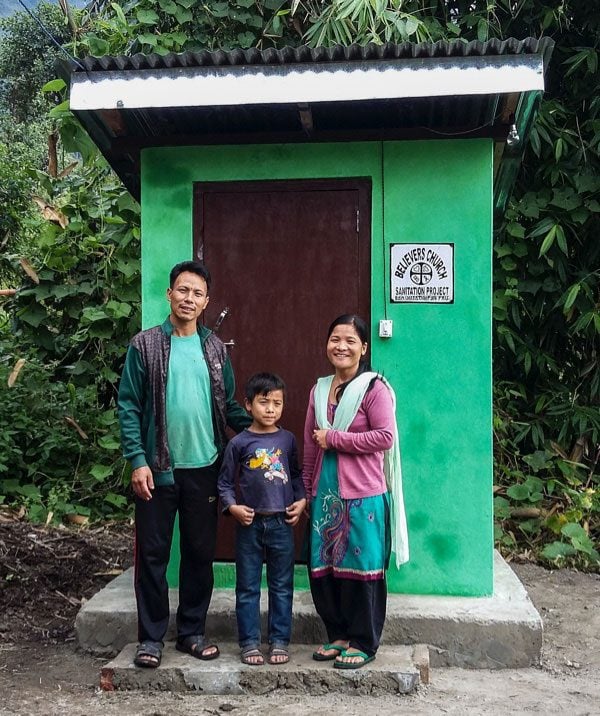
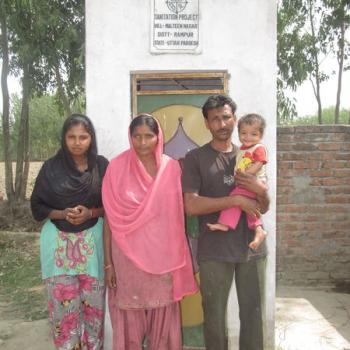
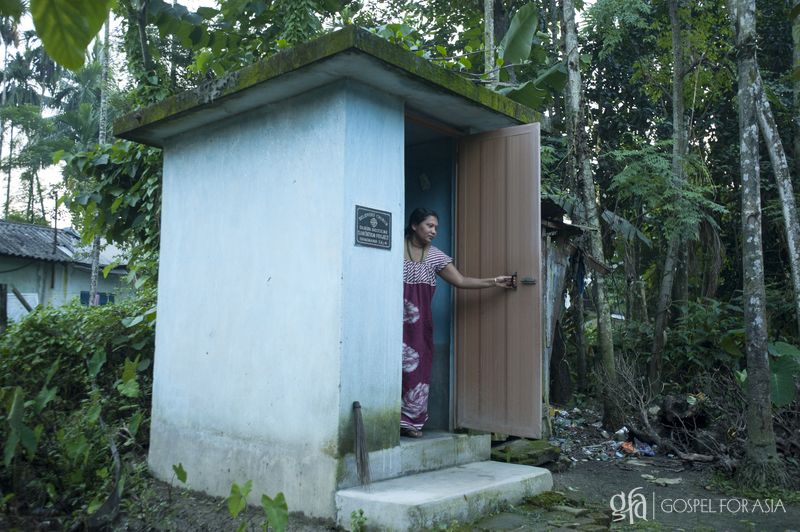
A family in front of a GFA-provided local sanitation facility.

Prime Minister Modi and his teams are sold on community-led initiatives, and so should they be. Change works best when a whole population is committed to seeing it happen.

Elizabeth Royte wrote: “The Indian government is rewarding certified ODF villages by moving them to the front of the line for road or drinking-water improvements. It has launched an advertising campaign that exalts Swachh Bharat mascots, like the 106-year-old woman in Chhattisgarh state who sold seven goats to build two toilets. It has enlisted cricket and Bollywood stars to exhort people to use the new latrines.”

Community development often works best when it is exactly that: an idea that grows out of the mind of some visionary who lives within the locality that has a need, a visionary who is not only capable of strategic thinking but also feels empathy and who is moved by compassion by the people nearby—his or her neighbors. And when a whole community becomes involved in “cleaning up its act,” there are few powers on earth that can withstand such initiative.

Now what’s interesting about Gospel for Asia‘s stories surrounding sanitation is that it is the local pastor in the village, who out of concern and knowing that open defecation is a deadly disease-breeding potential, exercises his compassion to love his neighbors by being concerned about the availability of latrines.

This is an excerpt from one of Gospel for Asia (GFA)‘s stories called “Welcome to Their Toilet” that talks about how one community was forced to use the open fields to defecate because they had no other proper place.

The local GFA pastor, Vidur, understood the villagers’ struggle. He himself had been ministering in the area for more than 10 years. Knowing people’s lives were at risk whenever they used the fields as their toilet, he wished there were a way to help them.

Then he found out Gospel for Asia had started a program to promote sanitation in underprivileged areas. Excited about the opportunity to help his community, he asked his leaders to build four toilets in the village.

That’s when Janya and her husband, Lalan, gladly offered some of their land for one toilet.

In January 2013, when the villagers saw a concrete outhouse rise out of the dusty ground, they poured out their gratitude to Pastor Vidur and the church.

“[This] saved the lives of people from illness,” shared one villager.

Even the village leader expressed thanks. “[The church] is always concerned about the need of people and works hard for a brilliant life for the community,” he said.

What an extraordinary example of love in practical action.

“Love the Lord your God with all your heart and mind and strength. And love your neighbor as yourself.” —Luke 10:27

On the Brink of Innovations, Change in Sanitation

Toilet technology is on the edge of remarkable, cost-effective, ecologically friendly frontiers. They’re becoming self-cleaning and solar-powered. A solar-powered toilet that converts waste into charcoal that could then be used as fertilizer.

An indoor toilet that works like a garden composter, spinning the contents and reducing odor and the number of dangerous pathogens. Portable rickshaw toilets. A community bio-digester toilet designed to convert human waste into gases and manure. Once ideas begin flourishing, there is no limit to what can happen.

I’m banking on Prime Minister Modi’s ODF Campaign to be successful. The hardest pull of any new effort is most always at the beginning, but once new ideas start rolling, they gather momentum. Some of the new toilet technologies may become catalysts as well.

In addition, there are hundreds of international organizations working on sanitation solution. They understand that one size does not fit all the variables that make up the particulars in this vast discussion, but added all together, it is a prohibitive association with evidence of remarkable dedication.

“And when a whole community becomes involved in ‘cleaning up its act,’ there are few powers on earth that can withstand such initiative.”

A Canadian doctor, one of those “creative renegades” unhappy with the condition of the world and one whom I have come to admire and love, was appointed as a Provincial Health Officer in the highlands of Papua, New Guinea.

While making an aerial survey, he and his team discovered one village that was distinctly cleaner and healthier. Far below them was the evidence of what turned out to be a pastor with some basic health training who had taught his people those lessons, and the difference could be seen from the air. That one flight changed their lives. They began to search for a more integral way of ministering and soon began using and teaching a community health evangelism methodology, which had been developed in Africa.

Sometimes we get lost in the details on the ground. We need to stand back, take deep breaths and find some way to gather broader assessments—some kind of aerial view. Progress is being made; it’s just a little harder in some places than in others. I’m proud that Gospel for Asia is one of the players. Last year, GFA helped provide 10,512 toilets for needy communities throughout Asia.

Shout Out to Toilets!

Christianity has everything to do with sanitation. We serve a God who is expecting us to help restore the world He created to its original design. That is a world, among many other things, without rampaging diseases. One day, Scripture promises, it will be a world without death and suffering. So in this interim, let’s hear a shout out for all the toilets in the world!


Saving Lives at Risk from Open Defecation: Part 1 | Part 2

This article originally appeared on gfa.org

To read more on Patheos on the problem of open defecation, go here.

Go here to know more about Gospel for Asia: Youtube | Twitter | GFA Reports | My GFA | Instagram

For more information about this, click here.

2021-04-30T08:16:11+00:00

Wills Point, Texas – GFA Special Report (Gospel for Asia) – Discussing the troubling problem of open defecation and the lack of basic sanitation for millions throughout the world.

Talking Openly About Open Defecation

Another key dilemma in this discussion—open defecation, hardly a dinner-table topic or a mission committee agenda item—is the fact that accessibility to toilets does not always indicate usage. Changing habits is mostly a matter of changing mindsets in the face of the stranglehold of deeply entrenched beliefs.

Elizabeth Royte, in a comprehensive August 2017 National Geographic Magazine article, reports visiting Parameswaran Iyer, India’s secretary of drinking water and sanitation, in 2016. A hand-numbered sign on his wall tracks progress.

“You see that?” he asks. “One hundred thousand is the number of villages that are ODF today.” (ODF is the acronym for open defecation free).

Royte reports working the internal math: “Just 540,000 to go, I note; three years before Modi’s deadline.”

Other players, including the World Bank, the Bill and Melinda Gates Foundation (with $40 million dollars in prize money allocated toward innovative approaches to new toilet technologies), hundreds of concerned social entrepreneurs, engineers with altruistic motivations, East Asian water initiatives, and countless faith-based organizations are tackling the seemingly intractable worldwide dilemma of toilets, sanitation systems and sullied water.

What drives all this magnitude of interest, field research, consortiums and consultations on sanitation/water projects, awarding of grants and money prizes? Disease—plain and simple. Both waterborne and airborne.

“Some 1.5 million people die globally each year from polluted water diseases alone.”

Facing the Facts about Toilets, Open Defecation

Elizabeth Royte, who is a sanitation expert traveling widely and reporting extensively, summarizes that “Modi aims to build more than 100 million new toilets in rural areas alone by 2019.” But she notes that “deep-seated attitudes may present an even bigger barrier to improving sanitation than a lack of pipes and pits.”

That being said, let’s first look at the data regarding the state of toilets and open defecation in Asia. Then let’s examine what development organizations, sanitation technologies and mission groups, namely Gospel for Asia, are attempting in order to help Asia become ODF.

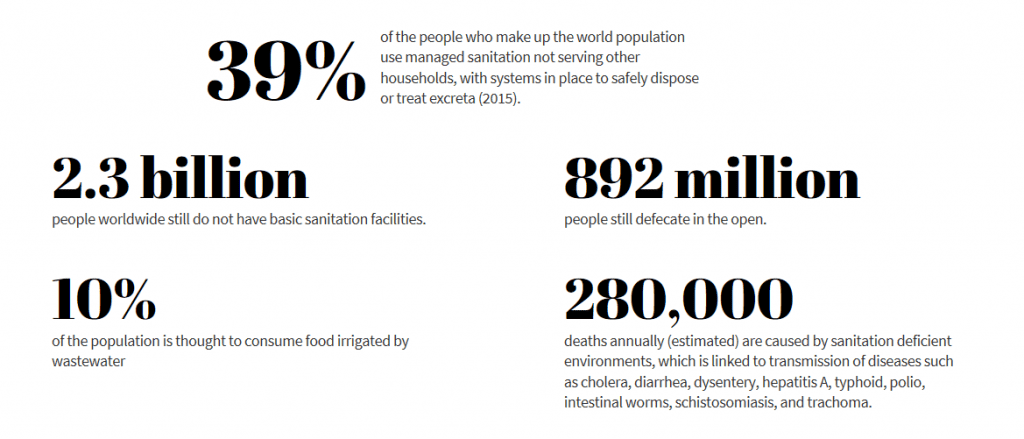
Starting with a global overview, key facts regarding sanitation highlighted by the World Health Organization are:

39%

of the people who make up the world population use managed sanitation not serving other households, with systems in place to safely dispose or treat excreta (2015).

2.3 billion

people worldwide still do not have basic sanitation facilities.

10%

of the population is thought to consume food irrigated by wastewater

892 million

people still defecate in the open.

280,000

deaths annually (estimated) are caused by sanitation deficient environments, which is linked to transmission of diseases such as cholera, diarrhea, dysentery, hepatitis A, typhoid, polio, intestinal worms, schistosomiasis, and trachoma.

Now, while Modi has emphasized improved sanitation, it’s worthwhile to note that India has been struggling with these issues even before winning independence from Great Britain in 1947. In fact, Gandhi insisted, “Sanitation is more important than temples.”

Now, however, due to population growth, a conundrum exists: While the percentage that practice open defecation has dropped substantively, birth rates are creating an environment where more people live in geographic locations where fecal exposure is increasing, not decreasing.

  • Today, some 157 million urban dwellers—that would be 37 percent of the urban population—lack a safe and private toilet.
    • Even sewers are no guarantors of healthiness:
      • In the capitol city of Delhi, pipes are corroded; they ooze waste;
      • nearly a third of the booming city isn’t connected to underground lines.
    • Many latrines flush into open drains, and 4 percent—some 700,000—of this urban population still defecate outdoors.
    • Only 56 percent of the sewers are safely managed.
  • Flies carry disease from roadsides and open fields. Just one gram of feces can contain 100 million viruses, 1 million bacteria and 1,000 parasitic cysts. These can be absorbed through cuts in the flesh, the porous nature of skin itself, or by drinking unsafe water and eating contaminated foods.
  • Health figures are consequently staggering.
    • Some 315,000 children under the age of 5 die each year from diarrhea.
    • The chronically distressed digestive system doesn’t absorb nutrients or medicines well.
    • Underweight mothers give birth to underweight babies.
    • Worldwide, stunting affects an estimated 165 million children under the age of 5.
  • And all of the above and much, much more could be cured and eliminated by the installation and use of proper sanitation systems in slums, hamlets, rural villages and large cities across India.
Dirty water in Asia and India that needs sanitation - KP Yohannan - Gospel for Asia
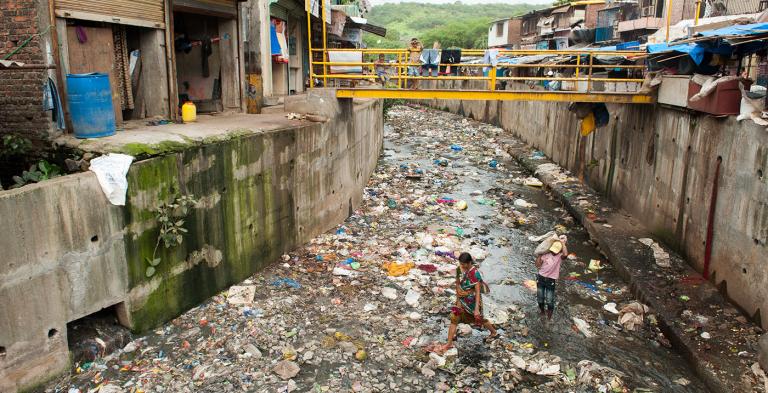
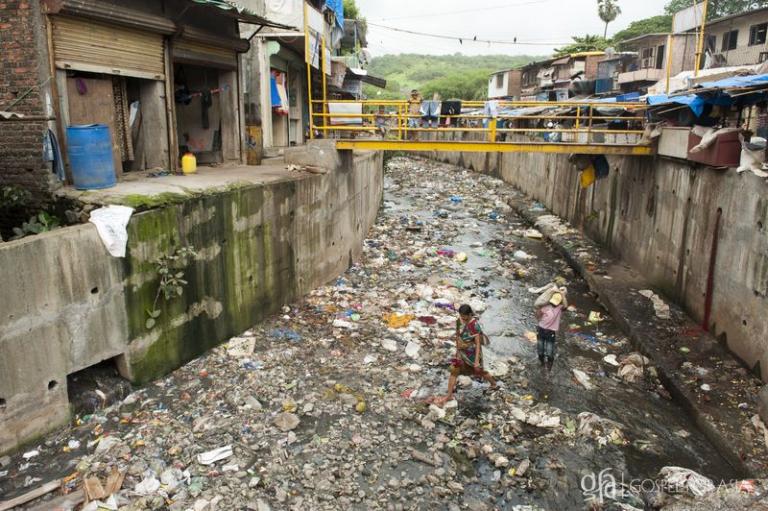
In this part of the slums in Mumbai, India, many people live in close proximity in unhygienic surroundings—lacking facilities like toilets and proper drainage.

What Do the Sanitation Problems of the World Have to Do with Us?

For those of us with indoor flush toilets—and clean ones at that—with sewer lines that carry waste to treatment facilities, for those of us who live in places where waterborne and airborne bacteria are not a hazard, our response to the crisis of sanitation in the world is probably, So what? We don’t say this out loud, but like so many other dire extremes jockeying for our attention, it doesn’t really touch our lives.

However, in a majority of places, America, as has been noted, is starting to suffer from failing infrastructure. Most of us think of that in terms of roads and bridges needing repair or major overhauling, a transportation issue. Recently, reporters from the Chicago Tribune conducted an exposé of the high bills being charged for water in underserved neighborhoods around the city. Maywood residents in a western suburb pay one of the region’s highest water rates. This is simply because older pipes allow major seepage.

Of the 946 millions of gallons that Maywood bought from neighboring Melrose Park in 2016, some 367 million gallons, or 38.7 percent, never made it to taps, costing residents in an already cash-strapped population nearly $1.7 million more than residents would pay in other towns of similar size. And the poor are tapped for a disproportionate share of the bill as compared to what wealthier users in tonier neighborhoods pay. The tax rates of the poor do not allow for major infrastructure overhauls.

“What if I had to stand in line to use a communal latrine where flies buzzed, the floor was filthy, someone had evacuated due to acute diarrhea, and no one wanted to clean the mess? Now we’re getting closer.”

Water problems may be closer than we think. Cheryl Colopy in her article titled “How No-Flush Toilets Can Help Make a Healthier World” makes the point:

“In the United States, sewage treatment has not been a problem for the past half-century, but it could become one again as infrastructure ages and fails—especially if there is a lack of government money to replace it. In addition, certain regions of the U.S. are expected to experience water shortages as temperatures rise. New, water-saving, decentralized toilet technologies may need to be adopted not only in places like South Asia, but also in parts of the industrialized world.”

Indeed, we may be thinking about sanitation issues more in the near future than we ever thought plausible. Indeed, the burgeoning technologies used to solve defecation problems and to discover clean water solutions in the developing world may be solutions we also will seek not far down the road.

Women are prone to assault, disease runs rampant, and lives are at risk: all a result of using the bathroom outdoors.

Saving Lives at Risk from Open Defecation: Part 1 | Part 3

This article originally appeared on gfa.org

To read more on Patheos on the problem of open defecation, go here.

Go here to know more about Gospel for Asia: GFA.org | Facebook | Youtube | Twitter | GFA Reports

For more information about this, click here.

2021-04-02T19:59:13+00:00

“So what does Christianity have to do with the defecation problems of the world?”

That’s a question posed in Gospel for Asia (GFA) special report “Saving Lives at Risk from Open Defecation: Using Outdoor Toilets to Improve Sanitation.”

The report, written by bestselling author and speaker Karen Burton Mains, takes an in-depth—and, at times, personal—view concerning open defecation problems around the world and those specific to Asia.

slums in Asia, lacking facilities like toilets and proper drainage - KP Yohannan - Gospel for Asia
In this part of the slums in Asia, many people live in close proximity to unhygienic surroundings—lacking facilities like toilets and proper drainage.

Here’s an excerpt:

Talking Openly About Open Defecation

Another key dilemma in this discussion—open defecation, hardly a dinner-table topic or a mission committee agenda item—is the fact that accessibility to toilets does not always indicate usage. Changing habits is mostly a matter of changing mindsets in the face of the stranglehold of deeply entrenched beliefs.

Elizabeth Royte, in a comprehensive August 2017 National Geographic Magazine article, reports visiting Parameswaran Iyer, India’s secretary of drinking water and sanitation, in 2016. A hand-numbered sign on his wall tracks progress.

“You see that?” he asks. “One hundred thousand is the number of villages that are ODF today.” (ODF is the acronym for open defecation free).

Royte reports working the internal math: “Just 540,000 to go, I note; three years before Modi’s deadline.”

Other players, including the World Bank, the Bill and Melinda Gates Foundation (with $40 million dollars in prize money allocated toward innovative approaches to new toilet technologies), hundreds of concerned social entrepreneurs, engineers with altruistic motivations, East Asian water initiatives, and countless faith-based organizations are tackling the seemingly intractable worldwide dilemma of toilets, sanitation systems and sullied water.

What drives all this magnitude of interest, field research, consortiums and consultations on sanitation/water projects, awarding of grants and money prizes? Disease—plain and simple. Both waterborne and airborne. Some 1.5 million people die globally each year from polluted water diseases alone.

Facing the Facts about Toilets

Elizabeth Royte, who is a sanitation expert traveling widely and reporting extensively, summarizes that “Indian PM Modi aims to build more than 100 million new toilets in rural areas alone by 2019.” But she notes that “deep-seated attitudes may present an even bigger barrier to improving sanitation than a lack of pipes and pits.”

That being said, let’s first look at the data regarding the state of toilets and open defecation in Asia. Then let’s examine what development organizations, sanitation technologies and mission groups, namely Gospel for Asia (GFA), are attempting in order to help Asia become ODF.

Starting with a global overview, key facts regarding sanitation highlighted by the World Health Organization are:

Facts

Mains, who has traveled extensively, visiting at least 55 countries, also gives some personal and quite humorous examples of experiencing some of the world’s sanitation problems.

In the refugee camps of the world, my travel companions and I held ridiculous discussions as to who had invented squat toilets—men or women? Someone shot a photo of me holding a rickety latrine toilet door upright while a woman co-worker trusted me to guard her privacy while she did her business inside. I am laughing, howling with laughter really, at a ridiculous situation, but this is, for most of the world, not a laughing matter.

Extrapolate. What if there was no female friend to hold your door? What if the floor around your squat toilet inside was filthy and you had to pull up your sari and rest the top half of the door against your forehead to keep it from falling? What if you believed that the little structures, dark and dank and scary inside, were really inhabited by demons?

Smelling an overflowing latrine from 20 feet away might persuade even a Westerner to think similarly, even if only metaphorically. In truth, I don’t like the few outhouses I’ve been forced to use in the States, nor many of the spooky national park public facilities, and I certainly avoid, if I can help it, those portable potties hauled in on trucks for public events or construction work sites.

A well-cleaned squat toilet - KP Yohannan - Gospel for Asia
A well-cleaned squat toilet in Asia.

Now, while Modi has emphasized improved sanitation, it’s worthwhile to note that India has been struggling with these issues even before winning independence from Great Britain in 1947. In fact, Gandhi insisted, “Sanitation is more important than temples.” Now, however, due to population growth, a conundrum exists: While the percentage that practice open defecation has dropped substantively, birth rates are creating an environment where more people live in geographic locations where fecal exposure is increasing, not decreasing.

  • Today, some 157 million urban dwellers—that would be 37 percent of the urban population—lack a safe and private toilet.
  • Some 315,000 children under the age of 5 die each year from diarrhea. Underweight impoverished mothers give birth to underweight babies. Worldwide, stunting affects an estimated 165 million children under the age of 5.
  • And all of the above and much, much more could be cured and eliminated by the installation and use of proper sanitation systems in slums, hamlets, rural villages and large cities across India and Asia.

Eventually, I brought the accumulated exposure of my world travels—some 55 countries in all—and the learning I had gathered through journalism research and the actualities of dragging through camps and slums to the board table of Medical Ambassadors International (MAI), a global faith-based health organization.

The former international field director of MAI, now working to create a coalition of some 250 mission groups and development organizations implementing the MAI teaching methodology, made a statement I thought about for years.

“I never realized,” he said, “that I would eventually measure the impact of the Gospel by how many toilets had been built in a village.”

Want to read more of what Mains discovered about saving lives at risk of open defecation? Gospel for Asia (GFAwebsite has the complete article. After reading it, let us know what you think or if you’ve ever been in a situation where you had to…defecate in the open.

=====

For more blogs on Patheos from Gospel for Asia, go here.

Go here to know more about Gospel for Asia: GFA.net | Wiki | Flickr

 For more information about this, click here.

2019-12-03T03:45:38+00:00

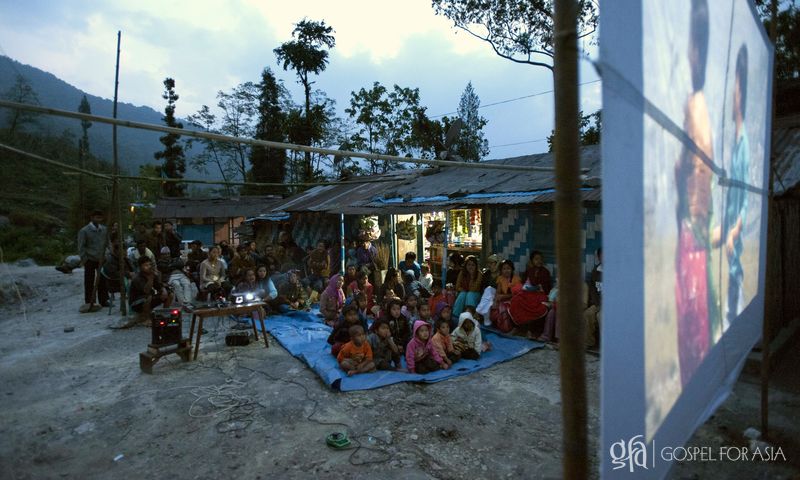
How many movies do you suppose you’ve watched in your lifetime? Even in the last year? Some clever punchlines or visuals of intense scenes probably stuck in your mind, but there’s a good chance you haven’t thought back to many of the movies.

It’s quite a different story for many people in Asia who attend a film show hosted by Gospel for Asia supported workers. For many, that simple movie night ends up changing the course of their lives.

film ministry - KP Yohannan - Gospel for Asia
Through Gospel for Asia-supported film ministry, the heart of Christ is displayed in a culturally relevant way. Many have found new life in Christ as a result!

But even if you loved a certain movie, would you risk your own safety to organize a movie night?

Rajak did.

Rajak, a Gospel for Asia (GFA)-supported worker serving on a film team, and his team members drove to a village they had not visited before. They approached the village leaders to get permission to show a film on the life of Christ, but the men denied their request and sternly warned them not to ask again. That day, Rajak and his teammates had to leave the village without being able to do any ministry.

Three months later, the film team happened to drive through the same village. On their way out, they stopped at a house and asked for some drinking water. Irshaad, the owner of the house, had a long conversation with the brothers and heard about the love of God and the film the brothers were showing in other places.

Wanting to see the film, he told the brothers, “No matter if the village leaders did not permit you to screen [the film] in the village, you can screen it at my house. If something happens, I will handle the problem.”

That evening, the film team prepared for an outdoor film show on Irshaad’s property. To their surprise, 110 people showed up and watched the movie with great interest. Irshaad and others were deeply moved by the story of Jesus, His love for people and how He healed the sick, how He suffered and died on the cross, and then how He rose again.

During the movie, the brothers explained why Jesus was arrested, beaten and crucified. They made sure the villagers understood that it was not because of His own mistakes, but that He suffered for all of us and sacrificed His life for our salvation.

Leaving the village that night, Rajak and his team thanked God for giving them this open door and for His protection throughout the film show when ministry in this village seemed impossible.

Three days later they received an invitation from Irshaad to come back to pray for him and his family. The team gladly visited Irshaad, encouraged him from God’s Word and prayed for him and his family.

Understanding the love of God, Irshaad and two other families decided on their own to trust Jesus as their Savior. With the help of the film team, they started a small prayer fellowship in their village.

Film ministry is incredibly effective, but it comes at a price. Film team members endure the hardships of the road and constant travel. Far from home, they camp out at believers’ homes, church building floors or the sides of roads. They spend hours inviting people to film shows, answering questions and praying for serious needs late into the night. They bear persecution and opposition from communities that may not want to hear of God’s love.

These women serve - KP Yohannan - Gospel for Asia
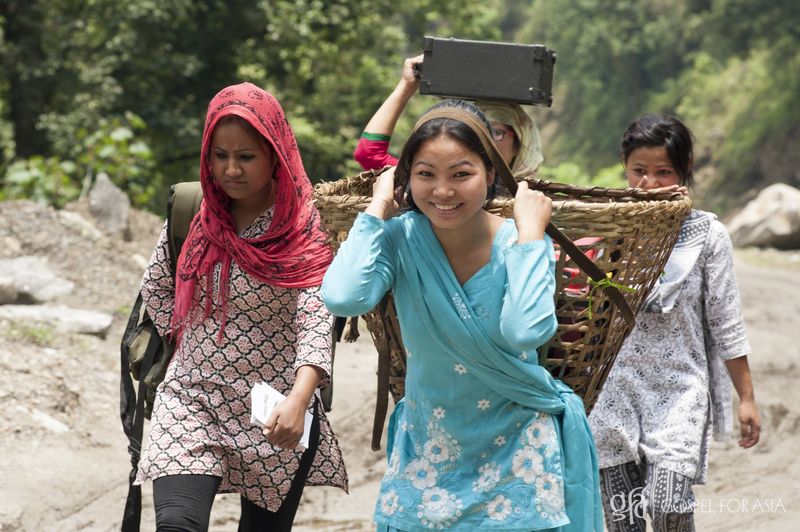
These women serve on a Gospel for Asia-supported film team, and it is not easy. Read their story.

Why do men and women like Rajak lay aside their safety and comfort to show movies through film ministry?

As Dr. K.P. Yohannan writes,Choosing inconveniences, choosing difficulties, choosing the rough road because we love Him—this is the way of Christ.”

You see, these men and women love Jesus so much. And they see how movies on the life of Christ, like the one Irshaad saw, are one of the most effective ways to help people—especially those who know nothing about the Bible or are illiterate—discover God’s love for them. They also have opportunities to help meet practical needs by showing additional films that highlight essential and often unknown principles of hygiene or the dangers of alcohol and drug addictions. In short, these films change lives, and that’s why we at Gospel for Asia support men and women who choose inconveniences and difficulties to show these films.

Because film teams long for permanent transformation, Rajak’s team introduced Irshaad and the other new believers to a pastor who could take care of them. They are now equipped with the knowledge of God and can grow in their personal relationships with Him, even though Rajak and his team moved on to show their films in another community.

Irshaad’s story of transformation is powerful and specific to his life, yet it is being repeated in mountainous villages and in valleys, in dry desert communities and in tea gardens. Each story is unique, but they are many.

The next time you sit down to watch a movie, rejoice over the many people who are discovering the depths of Christ’s love for them at life-changing movie nights in Asia!

=====

Click here, to read more blogs on Patheos from Gospel for Asia.

Go here to know more about Gospel for Asia: GFA.net | GFA Wiki | GFA Flickr

2019-11-04T00:02:52+00:00

Gospel for Asia (GFA) News, Wills Point, Texas

World Toilet Day, established for November 19th by the UN in 2013, coincides with the 2001 creation of the World Toilet Organization, an organization aimed at raising awareness about and addressing the need for toilets all around the world.

Since Gospel for Asia’s field partners started constructing toilets in 2012, we have helped provide more than 28,000 of these facilities across many Asian nations, including Nepal and India—10,512 of which were constructed in 2016 alone. It’s an exciting thing to be able to come alongside impoverished families and give them a little dignity.

On Oct. 2, 2014, Prime Minister Narendra Modi launched Swachh Bharat (Clean India), an initiative to clean India in multiple ways, including the goal of eliminating open defecation in the nation by Oct. 2, 2019—the 150th anniversary of Mahatma Gandhi’s birthday.

We are proud to be a small part of impacting families, transforming communities and enabling education (more on that later) through toilets.

Gospel for Asia’s field partners regularly inaugurate new toilets, like they did for Mae and her family. Here’s her story.

The Testimony of a Toilet

Like many others in their village, Reuel, Mae and their family had no toilet facility and had to use the open field early in the morning. They especially struggled during the rain. Mae often felt unsafe and uneasy having to go out in the open, visible to any prying eye, but she had no other choice. Although Reuel and Mae made plans to construct a toilet of their own, they couldn’t come up with the funds to start the project.

Mae and her family, overjoyed - KP Yohannan - Gospel for Asia
Mae and her family [pictured] were overjoyed when their church constructed a toilet for them. Now they have a private and safe place to use the restroom.
 But they weren’t alone. Gospel for Asia (GFA)-supported pastor Vikranta was Mae’s pastor. He had the joy of nurturing and watching the family grow in the Lord and learn to love Him more. As he cared for their spiritual needs, Pastor Vikranta also saw this family struggle in poverty. Pastor Vikranta aimed to change this, and he requested a toilet to be built for them outside their home. During construction, excitement unfolded among the villagers, and many asked Pastor Vikranta to build them a toilet, too. As the walls of the toilet went up, their desire increased to hear more about Jesus and His love. Encouraging those who lived nearby to use the helpful gift whenever it was needed, Mae told her neighbors, “Our church has built the sanitation [toilet] for us.”After the long-awaited toilet was completed, Reuel and his family were overjoyed and deeply grateful. God fulfilled their hope and need of safe sanitation through the prayer and resources of the Gospel for Asia (GFA) community and its partners worldwide. Not only does this family have a safe place to use the restroom, but the toilet stands as a testimony of God’s faithfulness to those in their sphere of influence. It is setting a pathway for many to find the true hope of Jesus and His cleansing love.

2.4 billion Still Have No Toilet

Did you know that to this day, some 2.4 billion people worldwide—about one-third of the planet—still don’t have access to adequate sanitation facilities? Bringing that number to zero by 2030 is one of the UN’s 17 Sustainable Development Goals.

But seriously—2.4 billion people?

When I was a kid, I enjoyed our rustic camping trips. There were places we went where we had to use a trowel because there were no toilets for miles. That was an interesting novelty, part of the experience.

the only sanitation facility in this village - KP Yohannan - Gospel for Asia
This is the only sanitation facility (or restroom) in this village.

But I never had to worry about men coming and attacking me. I wasn’t concerned about finding someone else’s mess. My biggest concern was usually avoiding bug bites in awkward places and making sure I kept my clothes clean in the process.

I could handle it for a few days, but I was always thankful to have a porcelain seat once we got back home. I can’t imagine having to go outside every single day. Rain or shine, snow or wind, mosquito swarms and prickly grass.

And that’s to say nothing of the mess.

Bacteria, parasites and viruses breed rampant in areas which have been used as toilet fields for years. According to the World Health Organization, more than 1.5 billion people around the world are affected by soil-transmitted parasites due to inadequate sanitation.We’re talking worms, here.

People squat directly into rivers that others bathe in, wash in, and get their drinking water from. It’s no wonder nearly 1,000 children die from sanitation and polluted-water-related deaths every day.

A toilet is a lot more than dignity. It means safety from diseases, from attacks, from bugs and harsh weather. But toilets also impact education in ways not many people may realize.

Toilets and Education

Did you know that toilets directly impact education, especially for girls?

Think about it.

People all over the world have picked up a practice that may be detrimental for their health: holding it.

Without convenient access to a bathroom, countless women deliberately drink insufficient water just so they won’t have to urinate later in some public place. There is this powerful video produced by WaterAid about a woman living in a slum who, among other things, has trained her body to only go once per day so she won’t have to do it more often.

lack of proper sanitation facilities - KP Yohannan - Gospel for Asia
Gospel for Asia-supported workers are providing toilets for many communities all across Asia.

Our bodies are meant to go several times a day! When we don’t drink enough water, we become dehydrated, which means headaches, difficulty concentrating, and decreased performance in school.

Dehydrated children cannot focus as well. They struggle. They fall behind. They should be drinking, but many don’t want to because of inadequate toilets.

And then girls hit puberty.

Every month comes a few days when young women need easy access to a safe place. But if they don’t get it, many stay home until the way of women has passed. That means teenage girls might start missing out on a quarter of their schooling. It’s no wonder so many in toilet-deprived areas fall behind and eventually drop out.

Now, amazingly, global drop-out rates between boys and girls are leveling out on the whole, but they still remain skewed in regions without proper sanitation. This is tragic when you consider the tremendous global push for education and empowering women. Awareness of the need for toilets in this equation has been increasing through the years, and we praise God for that. In fact, it seems that will be one of the topics at this year’s World Toilet Summit.

There are clear trends in data showing that how every year a child stays in school means higher income for that young man or woman as they grow up, which generally means a higher standard of living and greater benefit to their nations.

Here at GFA, we care about children’s education, and those kids care where they go to the bathroom. Check out this story about young sisters Prema and Neha who labored together to provide a home with a toilet for their parents.

Grateful for Toilets

Toilets provide dignity, safety, health, enable education and empower communities.

I remember the excited buzz around the office when GFA’s Christmas Gift Catalog first featured toilets, and we have been proud to feature them every year since. We’re grateful to be part of bringing sanitary joy to tens of thousands of people in Asia.

=====

Click here, to read more blogs on Patheos from Gospel for Asia.

Go here to know more about Gospel for Asia: GFA.net | GFA Wiki | GFA Flickr

For more information about this, click here.

Follow Us!


TAKE THE
Religious Wisdom Quiz

Which Psalm opens with "Blessed is the man"?

Select your answer to see how you score.


Browse Our Archives