2023-02-01T04:33:57+00:00

Gospel for Asia (GFA), Wills Point, Texas, Special Report 4/4 on a Christ-like response to the global clean water crisis.

What Scripture Has to Say About Water

It is intriguing, in light of the fact that 71 percent of our Earth is covered by water, that Scripture has a great deal to say on the topic. One commentator suggests that water is mentioned 722 times in the Bible. This total is less than the mentions of God, Jesus, heaven or love, but more than faith, hope, prayer or worship. In Genesis it says: “A river watering the garden flowed from Eden; from there it was separated into four headwaters The name of the first is Pishon … The name of the second river is the Gihon … The name of the third river is the Tigris … And the fourth river is the Euphrates.”

For those of us with a Sunday School background, the stories dealing with water are memorable: Moses parting the Red Sea as the children of Israel fled the pursuing chariots of the Egyptians. Moses striking the rock at Horeb so that water flowed in the wilderness to satisfy the thirst of the people and of their flocks.
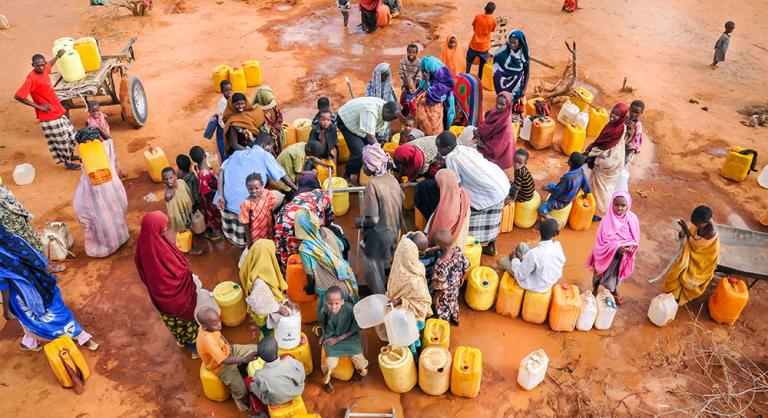
Refugees wait for water in a camp in Dadaab, Somalia - KP Yohannan - Gospel for Asia
Refugees waiting to get water and satisfy their thirst in a camp in Dadaab, Somalia.

Wells are central stages for story-telling dramas: Abraham’s servant finds a bride for Isaac after praying near a well, “Oh, Lord God of my master, Abraham, give me success today and show kindness to my master.” Jesus declares His spiritual authority to a Samaritan woman by a well. “Will you give me a drink?” He asks, to begin a dialogue with her, and then eventually He declares, “But whoever drinks the water I give him will never thirst. Indeed, the water I give him will become in him a spring of water welling up to eternal life” (John 4:14, NIV).

Rivers are forded, oases with pools satisfy weary nomads and their families, and always, over and over, water is used as an example of God’s blessing. “And the LORD will continually guide you, and satisfy your desire in scorched places, and give strength to your bones. And you will be like a watered garden, and like a spring of water whose waters do not fail” (Isaiah 58:11, NASB).

Water is used as an example of the sacramental, where the holy mixes mysteriously with the physical. People flock to John the Baptist in the wilderness to be baptized for the forgiveness of their sins: “I baptize you with water for repentance. But after me comes one who is more powerful than I, whose sandals I am not worthy to carry. He will baptize you with the Holy Spirit and fire” (Matthew 3:11, NIV).

The heavens open after Jesus is baptized, the Spirit descends in the bodily form of a dove, and a voice is heard declaring, “You are My beloved Son; in you I am well-pleased” (Luke 3:22, NKJV).

Water is a symbol of cleansing, not only in a physical sense but in a spiritual sense. Jesus walks on the water. He teaches by the shores of the seas. Some of His disciples are fishermen who gained their livelihood from waters’ depths. In the last chapters of Revelation, which many theologians feel is a prophetic picture of Eden being restored again, these words bring the water theme to a close. Revelation 22, the last chapter of the Bible, the first verse: “And he showed me a pure river of water of life, clear as crystal, proceeding from the throne of God and of the Lamb.”

A Christ-like Response to the Global Clean Water Crisis

It is a comfort, to know the fragility of our water sources around the globe is taken into account. Because of community involvement and the compassion of pastors from Believers Eastern Church and other affiliate organizations, Dr. K.P. Yohannan spearheaded the “Jesus Well” project among some of the neediest regions in India, even small villages across Asia, spanning multiple Asian nations. In 2016 alone, Gospel for Asia was able to help provide 6,822 wells. That is 6,822 sources of clean, fresh drinking water. Gospel for Asia (GFA) supporters around the world have allowed the rate of installation of Jesus Wells to continue and to remain consistent, with tens of thousands of wells drilled and constructed in the past several years. Now, the Jesus Well project is one of the largest clean water initiatives in the world.
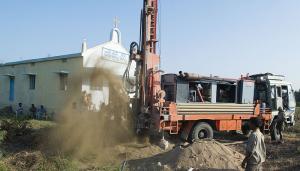
A Jesus Well is being dug in India - KP Yohannan - Gospel for Asia
A Jesus Well is being drilled next to a church building. This is the first well dug in the village.

Here, there are no broken wells laying waste and abandoned because well-meaning but neglectful charities dug wells that villagers could not maintain or repair. Jesus Wells are maintained in good repair by Gospel for Asia (GFA)-supported local pastors. In fact, wherever possible, the wells are dug near local churches, not simply so that they will be maintained, but so that the beneficiaries will recognize that our love for them is genuine, because everyone is able to drink freely—no matter their income or social background.

Digging a Jesus Well supports the local economy, because local labor and materials are used to drill the wells. This keeps costs low, often even seven times lower than wells installed by other organizations.

Jesus Wells are drilled up to 650 feet deep to ensure a continuous supply of clean water. They can last for 20 years and provide clean water for an average of 300 people every day. Some wells serve even more at a cost of $1400 apiece, and provide practical solutions to our global clean water crisis.

Watch a time-lapse video of an Asian village using a Jesus Well »
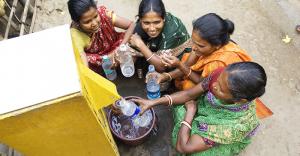
BioSand water filters provide 98% pure drinking water - KP Yohannan - Gospel for Asia
Though simple in construction, BioSand water filters are easy to use and provide water that is 98 percent pure.

In regions where water might be available, but it’s just not safe to drink, Gospel for Asia (GFA)-supported workers provide BioSand water filters. These simple structures—locally built from concrete, sand and rocks—filter the water to remove impurities, providing water for drinking and cooking that is 98 percent pure. In 2016, Gospel for Asia (GFA) provided 14,886 BioSand water filters for families and individuals.

Gospel for Asia published a story in 2016 that shared the paradox faced by four villages in one region of South Asia. These communities faced severe water shortage during the hot, summer months, but in the rainy monsoon season their water sources were contaminated by chemicals. Their situation was an echo back to Samuel Taylor Coleridge’s poem: “Not a drop to drink.” Local congregations in the region were concerned about the people and their need for clean water, and in 2014, Gospel for Asia (GFA) helped drill four Jesus Wells to provide safe, pure water for these villages. By God’s grace, there are now more than 5,000 people who benefit from these wells!
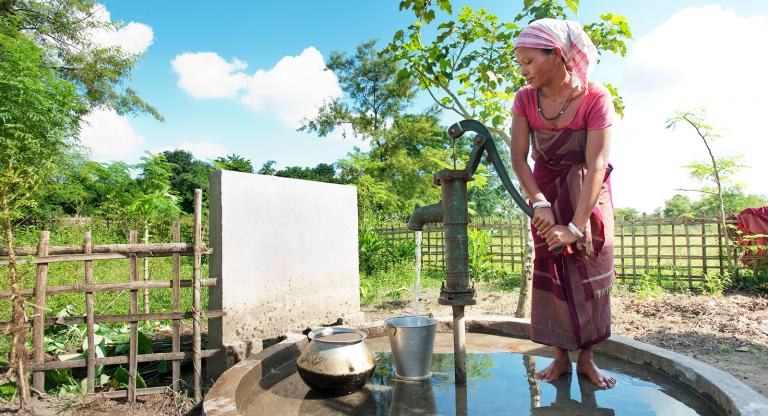
Christ-like Response to the Global Clean Water Crisis - KP Yohannan - Gospel for Asia
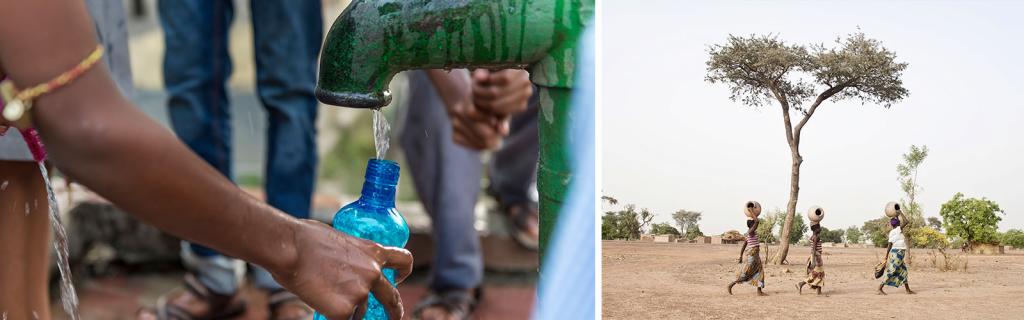
A woman pumps water from a Jesus Well.

A Jesus Well Transformed Salil’s Family
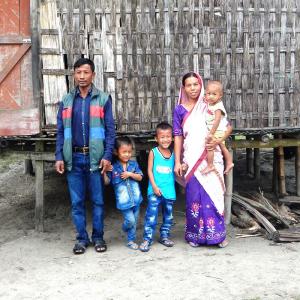
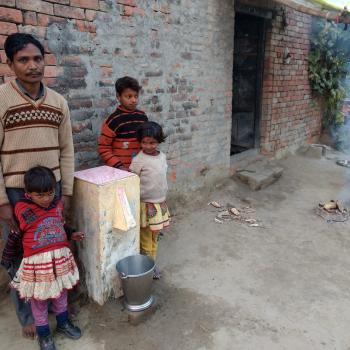
Salil and his family in north east Asia - KP Yohannan - Gospel for Asia
Salil (pictured) lives in a northeastern region of Asia with his wife and three children.

The staggering weight of the global clean water crisis is beyond the ability of most of us to wrap our minds around. Still, more than 150 million people in South Asia alone have either no immediate access to clean water or drink from polluted sources.

But the clean water problem can be devastating for a single family. We see this illustrated in the story of a gentleman named Salil, his wife and his children. Until a Jesus Well was installed in their village, all the water for the community came from a nearby contaminated pond. Salil’s family and the other villagers were sick with a plethora of illnesses and diseases. They suffered because of the very water they depended on for life.

The situation drove them even deeper into poverty as their illnesses kept them from work, and their meager income was not adequate to provide for the medicines they needed—let alone their other essential needs. Salil did everything he could think of to provide for his family, but nothing he did was adequate.

When a local pastor requested and received a Jesus Well for the community, everything changed. A thankful Salil said, “Our family is blessed both physically and spiritually. We are free from problems and sickness.”

How appropriate: “And if anyone gives even a cup of cold water to one of these little ones who is my disciple, truly I tell you, that person will certainly not lose their reward” (Matthew 10:42, NIV). Those who receive are blessed, and those who give are blessed. The accompanying video will give you a feel for just what that means.

So, our Blue Planet spins in space, obedient to its determined orbit. Its surface is covered by 71 percent water. So far, there has been no confirmed verification of liquid water existing on any other planet in our solar system. As yet, not a single drop of water has been detected anywhere in interstellar space, and scientists have determined that only a planet of the right mass, the right chemical composition and the right location can support liquid water. Let us remember that it is good. It is very good.

=====

Give Towards Clean Water Projects

You can provide life-saving water to people in Asia suffering from the global clean water crisis through Jesus Wells and BioSand water filters, and help support ongoing maintenance of these clean water projects.

This material appeared in Gospel for Asia’s special report “The Global Clean Water Crisis: Finding Solutions to Humanity’s Need for Pure, Safe Water.”

=====

Read Special Report 1/4 – Introduction to the Global Clean Water Crisis

Read Special Report 2/4 – The Global Clean Water Crisis Exists in America, Too

Read Special Report 3/4 –

=====

Click here, to read more blogs on Patheos from Gospel for Asia.

Go here to know more about Gospel for Asia: GFA.org | Facebook | Youtube | Twitter

For more information about this, click here.
2023-02-01T04:37:49+00:00

Gospel for Asia (GFA), Wills Point, Texas, Special Report 3/4

So let us take a deep breath. Let us think a moment about that peaceful and stunning NASA photo: AS17-148-22727.
The blue marble photo of Earth

Let us remind ourselves that of all the spinning planets in our solar system, it alone has been created uniquely to sustain water, and that not one other drop has been discovered anywhere else in interstellar space. Let us remember that 75 percent of our planet is covered with water, some 96.5 percent of that in its oceans. Then let us say a prayer for its water resource preservation and purification, and let us remember that some religious systems view water to be holy. Only then, let us absorb the fact that an investigative report by Reuters released December 19, 2016, found nearly 3,000 areas in the United States with lead poisoning rates at least double those in Flint.

This headline tagged a report released by the Associated General Contractors (AGC): “Both Public and Private Studies Find Astounding Gaps Between Current Spending and Projected Needs.” The analysis determined: “Modernizing and replacing aging water infrastructure may be the single largest public works endeavor in our nation’s history. The U.S. Environmental Protection Agency’s Clean Water and Drinking Water Infrastructure Gap analysis found a $540 billion gap between current spending and projected needs for water and wastewater infrastructure (combined) over 20 years. Other public studies conducted by the Government Accountability Office (GAO) and the Congressional Budget Office (CBO), and a private study produced by AGC partner, the Water Infrastructure Network, have similarly estimated the nation’s water infrastructure needs to range between $400 and $600 billion over a 20-year period.

The 2014–2017 Flint, Michigan lead-poisoned water crisis highlights possible impacts on communities if warnings are ignored and if appropriate budget planning is not prioritized. (“What is happening to us in Cape Town may not be an outlier. It could happen to you too.”) We need to understand that water degradation and evaporation and infrastructure decline is happening to us now.

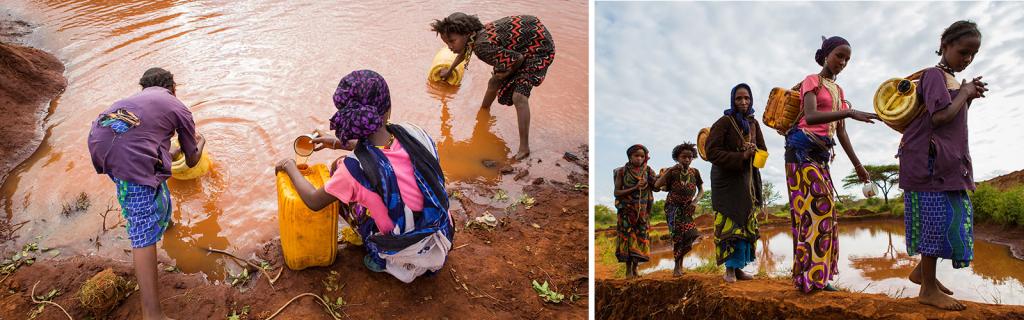
Women in Gayo, Ethiopia collect water from a rain water pool - KP Yohannan - Gospel for Asia
In Gayo Village, Ethiopia, a group of women and young girls collect water from a rain water pool. They use tablets to purify the water before they drink it. Around the world, mostly women and children bear the burden of collecting water for their families.

So what is the status of clean water worldwide? According to the World Health Organization, some of the global facts regarding safe water usage are these:

71%

of the global population in 2015 (5.2 billion people) used a safely managed drinking-water service—that is, one located on premises, available when needed, and free from contamination.

89%

of the global population in 2015 (6.5 billion people) used at least a basic service. A basic service is an improved drinking-water source within a round trip of 30 minutes to collect water.

840 million

people lack even a basic drinking-water service, including 159 million people who are dependent on surface water (water from rivers and ponds).

2 billion

people globally use a drinking water source contaminated with feces.

502,000

deaths every year are caused by diseases transmitted by contaminated water such as diarrhea, cholera, dysentery, typhoid and polio.

38%

of health care facilities lack an improved water source in low- and middle-income countries. 19 percent do not have improved sanitation, and 35 percent lack water and soap for hand-washing.

In addition to these above statistics, WHO also notes that “Yet diarrhea is largely preventable, and the deaths of 361,000 children aged under five years could be avoided each year if these risk factors were addressed. Where water is not readily available, people may decide handwashing is not a priority, thereby adding to the likelihood of diarrhea and other diseases.”

Is Anyone Doing Anything?

Certainly, organizations somehow, somewhere, are doing something about this? Right? This is the natural response of those of us who unthinkingly use clean water to flush our toilets and allow grey water to be piped into the sewer systems of our communities.

Actually, that thought many of us have when we read about water-distressed systems worldwide is right. Well-meaning help of all kinds, from missionary groups to hundreds if not thousands of non-government organizations to the World Bank and the United Nations to the World Health Organization to inter-agency coordinated efforts to private foundations with substantial granting means to individual governments to the largess of western countries—all of them are players in attempting to solve the water problems of the world.

a well in disrepair in africa - KP Yohannan - Gospel for Asia
Many wells drilled by well-meaning organizations now lie broken or in disrepair.

However, even the best laid plans of sophisticated systems often go awry. Evidence of this is the estimated 50,000 wells in Africa dug by well-meaning organizations that now lie broken, abandoned and non-functional; a dismal testament to good intentions gone bad. Really bad. Jamie Skinner of the London-based International Institute for Environment and Development reported at the 2009 World Water Forum, a triennial summit, on the state of wells in Africa. He is a water development specialist with particular emphasis on West Africa. His report on “water points” included some of these disturbing facts:

Some naysayers have deemed this come-do-your-thing-and-go approach as “non-government organizational malfeasance.” Skinner gives the example of a badly constructed and poorly maintained shallow well, dug by a charity in Katine sub county in north-east Uganda, that was full of soil and animal feces and was making the local population sick. The African Medical and Research Foundation’s strategy to solve this well deficiency was to set up a local committee responsible to operate and maintain a new borehole with trained hand-pump repairmen available in case of breakdown. “There is no point in an external agency coming in, putting in a drill-hole and then passing it over to the local community if they can’t afford to maintain it over the next 10 or 20 years,” concludes Skinner.

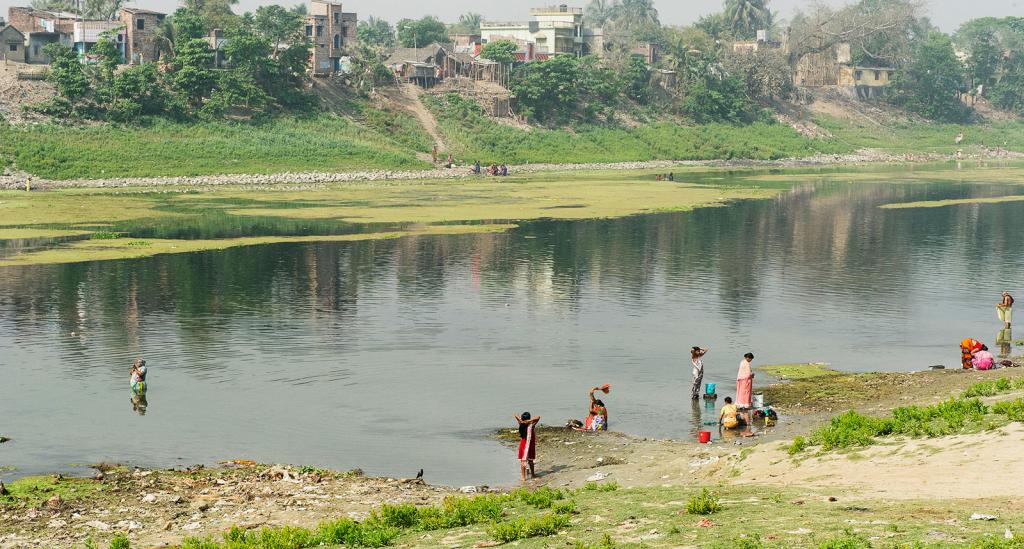
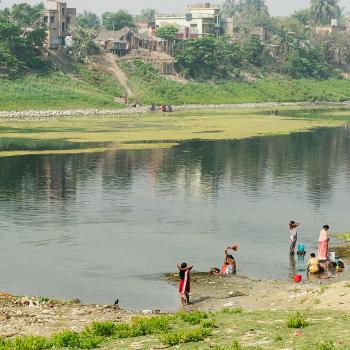
A river in India is often used for bathing, washing and drinking - KP Yohannan - Gospel for Asia
A river in India is often used for bathing, washing and drinking.

The Need for Clean Water in Asia

In her book Dirty, Sacred Rivers: Confronting South Asia’s Water Crisis, Cheryl Colopy takes us on nearly every footstep of her arduous investigation starting in the headwaters high in the Himalayas.

“This book chronicles my travels in Nepal, India, and Bangladesh, countries that are knit together by the Ganga and her various tributaries. I explain what I learned about glaciers melting in the mountains, sewage gluts and water shortages in the vast cities, and plans for engineering rivers that will have unknown consequences and perhaps limited benefits,” she writes in her introduction.

Interviewing hundreds of Asian water conservation experts who are concerned about their countries’ water shortages and misuse, we have a chance to listen over her shoulder to their love for their land and their attempts to solve water distress issues. Clean water, indeed, is the goal, but working through past mistakes, the consequences of climate change and its unknown future, population explosions, and unintended engineering mishaps gives the reader an extraordinary feeling of being party to all the discussions. As the flap copy explains, “Many are reviving ingenious methods of water management that thrived for centuries in South Asia and may point the way to water sustainability and healthy rivers.”

Simple is often best. Ancient civilizations solved their water needs in ways that speak to us today.

Here too, as with Jamie Skinner’s reporting on Africa’s abandoned wells, a theme emerges, one the author confesses she discovered during her essentially seven-year journey. “There is no way that I—a former medieval scholar turned environment reporter rather later in life—can claim to have answers to South Asia’s water crisis, if there are right answers. So I give you many highly intelligent, trained, sane, and committed water experts from that region. These authorities more often argue for the lighter hand, the softer path; not no engineering at all, but less invasive engineering, and techniques that are localized, decentralized, and draw on traditional methods along with the almost-lost wisdom of local people.”

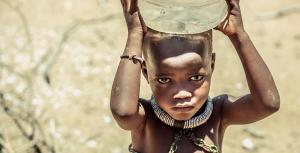
a child carries water in kunene namibia - KP Yohannan - Gospel for Asia
A child of the Himba tribe carries a bucket of water in Kamanjab, Kunene, Namibia.

The themes of the book are: Simple is often best. Ancient civilizations solved their water needs in ways that speak to us today. The people who are most affected by water stresses are most often the ones who can solve the problem.

Indeed, the problems are real.

Sewage in the rivers: “Estimates of the amount of untreated raw sewage that enters the Ganga every day are hard to grasp: apparently something in the neighborhood of a billion liters. Much of it comes from homes that do have toilets, where relatively clean water is being flushed away and turned into sewage, which then turns rivers into sewers, a further loss of clean water.”

Climate change: “This lack of snowfall is the chief problem Dobhal (a glacier specialist) has seen in the high mountains in recent years. As a consequence, the glaciers are depleting, not developing. With good winter snowfall, they stay in balance, and the melting rate is not cause for alarm. Melting glacier ice accounts for 30 percent of the water in the rivers. The rest is from snow and from the monsoon. Now that there is less snow, the spring flow in the rivers comes directly from the older ice. When glaciers lose their volume, the rate of melting increases. It’s the difference between a melting block of ice and a melting ice cube. Big glaciers create their own climate. They make cold weather. Big glaciers can be more powerful than the sunlight that reaches them. But as glaciers shrink, the power of the sun to melt them grows.” Unpredictable behavior is ahead from flooding due to increased glacier melt to drought to drying rivers. One expert sums up the uncertainty, saying, “Climate change will manifest itself through water. It will affect every sector of life through precipitation, snow, rain, whatever. Livestock, forestry, soil, sanitation, disease, everything. But we have no idea how it’s going to happen.”

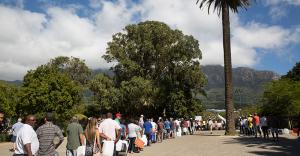
lines of people for water in cape town, south africa - KP Yohannan - Gospel for Asia
An uncanny sight in a first-world country: Lines of people waiting to collect natural spring water during the drought in Cape Town, South Africa.

Agricultural water scarcity: The global water scarcity problem is not limited to providing potable drinking water for humans, although without it we would not exist. Water is necessary for agriculture, for both crops and animal husbandry.

In water-starved South Africa, the first restrictions on water usage were levied upon the agricultural sector. Now, farmers are renegotiating their leases because they cannot produce enough income. Current economic forecasts anticipate that within the next five years as many as 98 percent of farms will have a negative Net Farm Income.

China’s Ministry of Water Resources recently declared a need “to fight for every drop of water or die.” Twelve northern Chinese provinces suffer from water scarcity. In eight, the scarcity is considered acute. This is particularly significant because those provinces provide 38 percent of the country’s agriculture. The rapid economic expansion in China has placed so much demand on water supplies that 28,000 rivers have disappeared over the past 25 years. The flow of the Yellow River has dwindled to a tenth of what it was prior to 1950. Pollution is so rampant in China that almost 10 percent of the groundwater is not even fit for agricultural use.

These countries and others are in a catch-22. Water for agriculture is limited, but it is needed to grow the crops and animals required to feed the demands of growing populations.

The rapid economic expansion in China has placed so much demand on water supplies that 28,000 rivers have disappeared over the past 25 years.

Recognizing the importance of water conservation, the Kerala Water Authority (KWA) in India is making a concerted effort to bring dramatic reform in their own jurisdiction. Infrastructure can cause as much as 45 percent water loss, far above the national average of 15 percent systemic water loss. As the KWA brings improvements to its clean water delivery system, the potential for positive impact is significant.

On the national level, Indian Prime Minister Shri Narendra Modi began promoting the implementation of a decades-old clean water initiative in 2014. One part of that project alone, linking the Ken and Betwa rivers, would make drinking water available for 1.35 million people plus provide enough to irrigate 600,000 hectares of farmable land. The project is pending approval from the environmental ministry, but nonetheless, we’re hopeful of the efforts making strides to resolve India’s water crisis.

In 2016, 330 million Indians were affected by drought, and the government is taking action to respond. “We are working on a big scheme to bring water to farmlands. We need to have a permanent solution to the drought,” the Prime Minister said.

There is a plan underway for 25,000 villages to get clean water wells, and 5,000 wells have been started, as of April 2017.

Dr. KP Yohannan, founder of Gospel for Asia and Metropolitan of Believers Eastern Church, met with high officials in the government in March 2016 to discuss ways in which India’s Christian community could collaborate with the government for the good of the nation. Believers Eastern Church has since been able to work together with the Indian government to work on cleaning up some of the nation’s rivers.

One of those voices Colopy interviewed—a highly intelligent, trained and committed expert—Sudhil Chaudhary, a professor of biology at Bhagalpur University has a plan. His is for forestry restoration, which also involves water reclamation. Sudhil would like local communities to be part of each and every decision about the plan. This is a theme that seems to be emerging all over the world. I find it stated more and more as I research world development needs and particularly, the Millennium Development Goals and its companion the Sustainable Development Goals. Things work when there is community buy-in, and often fail when there is none.

This material appeared in Gospel for Asia’s special report “The Global Clean Water Crisis: Finding Solutions to Humanity’s Need for Pure, Safe Water.”

=====

Click here, to read more blogs on Patheos from Gospel for Asia.

Go here to know more about Gospel for Asia: GFA | GFA.org | Facebook | Youtube

For more information about this, click here.

2023-02-01T04:40:37+00:00

Gospel for Asia (GFA), Wills Point, Texas, Special Report 2/4

The Global Clean Water Crisis Exists in America, Too

In her master work titled Dirty, Sacred Rivers: Confronting South Asia’s Water Crisis, Cheryl Colopy, a prize-winning environmental reporter specializing in water systems and clean water restoration, makes a wry observation about the Western form of household waste management:

“But the system I have known and used, quite unconsciously ever since I was potty trained, is nuts. In a world where the supply of clean drinking water is becoming an almost universal worry, why would anyone put clean water into a toilet? For South Asia, flushed toilets and the treatment systems they require have become untenable long before they have become universal. For the Western world, the system as it is currently practiced will surely become untenable before too many more years have passed.”

Orange County, California

Any discussion of clean water inevitably introduces the twin dilemma on the matter of how the world handles human waste. Author Colopy’s point is even now an issue with the state of California, which has concluded that intermittent periods of drought may be the predicted future for its residents. Recycled and purified toilet water (and other grey water from washing machines, dishwashers, showers and sinks, gutters and sidewalks) is the basis for the Orange County Water District pioneering wastewater treatment facility that basically recycles sewage and returns it directly to the drinking supply. Soon, some 100 million gallons per day will meet the water needs of some 850,000 people. When mixed with the groundwater supply, this treatment reaches more than 70 percent of Orange County residents.

Admittedly, the concept of “from toilet to tap,” as the phrase goes, has met with determined resistance, but due to a three-year water shortage crisis and to determined public education, negative reaction seems to be lessening. A public campaign has carefully explained the three steps of the water reclamation project.

“The first is a micro-filtration of the treated waste water to remove solids, oils and bacteria, before the resulting liquid goes through reverse osmosis.” Phase Two means everything is pushed “through a fine plastic membrane that filters out viruses and pharmaceuticals.” Phase Three: “The water is then treated with UV light to remove any remaining organic compounds, before joining the main groundwater supply, which must pass strict quality controls to meet legal standards and distribution to households.” Mike Marcus, the general manager of the Orange County Water District (OCWD) explains that once wastewater goes through this three-step process, “we basically have distilled water.”

Water Reclamation Process

Phase 1

Micro-filtration removes solids, oils and bacteria, all before the water goes through reverse osmosis.

Phase 2

Everything is pushed through a fine plastic membrane that filters our viruses and pharmaceuticals.

Phase 3

The water is treated with UV light to remove any other organic compounds.

The OCWD assures the end-user that the re-treated water exceeds all state and federal drinking standards. As the technology is adapted to other places in the world, water-insecure Singapore, for instance, in addition to new state-side additions launched in Los Angeles, San Francisco and San Diego, the president of the World Water Council, Benedito Braga, reports, “The quality [of effluent water from a sewage treatment plant] is very good, as good or better than the tap water in any city in the developed world.” Thomas Quinn, the head of the Association of California Water Agencies insists this process is a central strategy to drought-proofing modern urban economies.

For those who shudder at the possibility of drinking recycled toilet water, sometimes it is all a matter of what’s in a name. An interview over National Public Radio acknowledged the “yuck” factor many in the public might naturally feel at the thought of recycling water from the toilet to the tap, and that resistance might be helped by a newer nomenclature such as the “the potable reuse project.” The Orange County Water District is being far more upfront in their public campaign by using the hashtag #GetOverIt. NPR Reporter, Nathan Rott, insists that recycled water is and will remain California’s single largest source of new water supplies as the state moves forward into the 21st century.

“The quality [of effluent water from a sewage treatment plant] is very good, as good or better than the tap water in any city in the developed world.”

Then before we turn to the water dilemmas of the two-thirds world and point a finger and tsk-tsk over spoiled rivers and sewage-polluted streams, perhaps we should look hard at the infrastructure inadequacies of our own nation. The news cycles in the States and the headline-oriented emphasis of major networks and cable outreaches leaves little time for in-depth reporting. We have heard, for many years, much discussion regarding the national need for infrastructure renovation—Roads are in disrepair, bridges are crumbling, airports all need upgrading. Rarely—rarely—do we hear that our water infrastructure systems are also in red flag conditions.

Flint, Michigan

The sad result of what is essentially a violation of public trust can be encapsulated by the Flint, Michigan, water saga that happened in April 2014. The drinking source for this city was diverted from the treated Detroit Water and Sewerage Department to the Flint River. This change was influenced by the fact that an estimated $5,000,000 in savings was projected over the next two years. In August and September of 2014, city officials detected levels of coliform bacteria, and a bulletin was issued for Flint citizens to boil their water. In October 2014, General Motors complained about the corrosivity of the water, explaining that car parts were actually corroding. The request was made that GM be able to switch back to the Detroit water source. (It turns out, that corrosive capability of the Flint River water would be determined to also corrode upon lead pipes, leaching lead levels into the water supply of individual homes. An early investigation by one “whistle-blowing” worker determined that, despite standard practice, officials failed to apply corrosion inhibitors to the Flint River water.) In January 2015, in a public meeting, citizens complained about bad water—murky tap water; there was a bad smell and taste as well as the questionable appearance. These complaints appeared to have gone on over an 18-month period before a local physician, taking it upon himself, found highly elevated blood lead levels in the children of Flint.

The Global Clean Water Crisis Exists in America - KP Yohannan - Gospel for Asia

Eventually, with city officials dodging complaints, issuing false reports to state regulators indicating that “tests at Flint’s water treatment plant had detected no lead and testing in homes had registered lead at acceptable levels,” and with Michigan’s Department of Environmental Quality eventually being pegged as the major player in denying the problem and refusing to take action, major players, too numerous to mention, finally stepped in. Scientists and physicians and medical schools and environmental organizations, both private and governmental, determined that the proportion of infants and children with elevated levels of lead in their blood had nearly doubled since the switch to the Flint River.

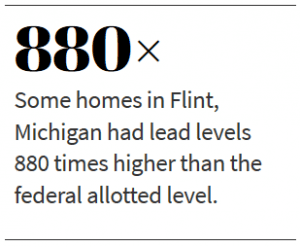
In September 2015, Dr. Marc Edwards, notified by a Flint resident whose alarms had been ignored by city officials, began testing Flint water with a team from Virginia Tech to perform lead level testing. Working with a grant from the National Science Foundation, he and his student team reported that at least a quarter of Flint households had levels of lead above the federal allotted level of 15 parts per billion (ppb) and that in some homes, lead levels were at 13,200 ppb. Edwards summarized the Flint Water Crisis by stating: “It was the injustice of it all and that the very agencies that are paid to protect these residents from lead in water, knew or should have known after June at the very latest of this year, that federal law was not being followed in Flint, and that these children and residents were not being protected. And the extent to which they went to cover this up exposes a new level of arrogance and uncaring that I have never encountered.”

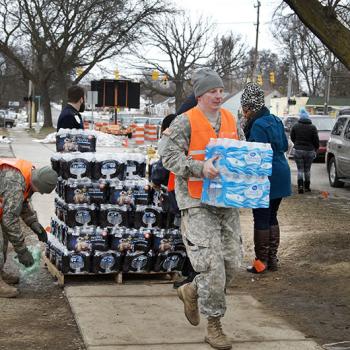
national guard delivers water in Flint Michigan - KP Yohannan - Gospel for Asia
The National Guard delivers bottled water to residents of Flint, MI.

This all, of course, has resulted in countless hearings, investigations, and continued studies on the local, statewide and national levels. Emergency centers for distributing water and home filters, then replacement cartridges, have been established. Testing water and lead levels in the blood of children continue. The water supply was diverted back to the Detroit Water and Sewerage Department. Numerous Class action suits have been filed against Michigan Governor Rick Snyder and 13 other state officials, including former Flint mayor Dayne Walling. The complaints allege that the officials acted recklessly and negligently, leading to serious injuries from lead poisoning.

Needless to say, major funding has been found and pledged for comprehensive water infrastructure improvement, all to be carried out over the next few years. But what is immeasurable is the damage done to the brains of small children, most of which cannot now be determined but which bodes ill for the future of these kids. Senators Debbie Stabenow and Gary Peters along with Representative Dan Kildee called upon the state of Michigan to “make a sustained financial commitment by establishing a Future Fund to meet the cognitive, behavioral and health challenges of children affected by lead poisoning.” All fear that those challenges will be real and life-lasting.

This material originally appeared in Gospel for Asia’s special report “The Global Clean Water Crisis: Finding Solutions to Humanity’s Need for Pure, Safe Water.”

=====

Click here, to read more blogs on Patheos from Gospel for Asia.

Go here to know more about Gospel for Asia: Youtube | Twitter | GFA Reports | My GFA

For more information about this, click here.

2023-09-13T10:46:38+00:00

Is Safe Water a Human Right or a Human Necessity - KP Yohannan - Gospel for AsiaDeveloping a broader awareness of various global safe water crises during 2018 has been prompted, in part, by the UN’s annual World Water Day on March 22. We at Gospel for Asia (GFA) have contributed several articles intended to bring attention to the drought in South Africa, the meeting of the World Water Forum in Brasilia, and a post about 12 major global cities facing water crises of one kind or another. Most notably, we published a special report documenting “The Global Clean Water Crisis – Finding Solutions to Humanity’s Need for Pure, Safe Water.”

Recently, a major religious organization declared that water is a human right. While it is not my desire to debate that issue, I do believe access to pure, clean drinking water is existential. It is a matter of survival for every man, woman and child on the planet.

Throughout the entire order of creation, God, in His infinite wisdom as our Creator, provided everything necessary for the survival and benefit of the pinnacle of His creation: man made in God’s own image. He didn’t create man first and follow that by adding the things we would need for healthy existence. Only when He had a place fully prepared, did He create man.

Today, billions of people in the 10/40 window across Africa, the Middle East and South Asia have limited access to clean, safe water. A significant part of GFA’s humanitarian efforts is providing clean water and access to pure water sources to families and communities that are in desperate, existential situations.

  • 2 billion people around the world use a drinking water source contaminated with feces.
  • 840 million people lack what is considered a basic drinking water service.
  • 502,000 deaths occur every year as a result of diseases contracted by the use of contaminated water.

The water crisis is not one of human rights. It is one of human existence.

That is why Gospel for Asia (GFA) presses on, freely giving BioSand water filters to families and installing Jesus Wells for entire communities. Each filter and each well installed not only provides a clean, safe water source, it provides life and health and hope to individuals, families and communities.

We are diligent in our calling, not because water is a human right, but because it is a human necessity.


Click here to learn how you can help Gospel for Asia supply Jesus Wells.

Click here to learn how you can help Gospel for Asia supply BioSand water filters.

=====

Click here, to read more blogs on Patheos from Gospel for Asia.

Go here to know more about Gospel for Asia: GFA.org | Facebook | Youtube | Twitter

For more information about this, click here.
2023-02-01T04:43:55+00:00

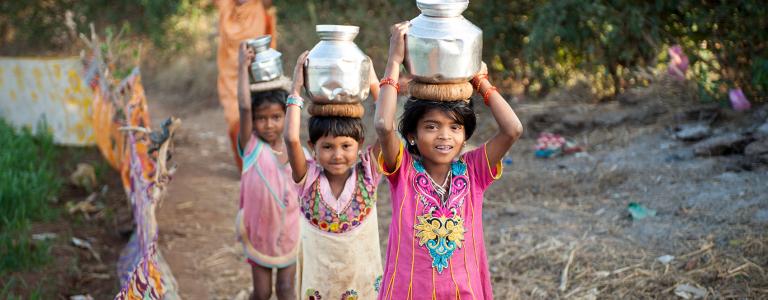
Asian girls carrying water for miles in a global clean water crisis - KP Yohannan - Gospel for Asia
Asian girls carry clean drinking water for miles because of the global clean water crisis.
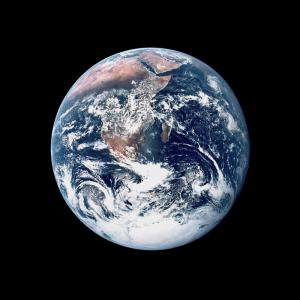
The blue marble photo of Earth
The “Blue Marble” photo of Earth, taken on the Apollo 17 mission in 1972. (Public domain)

Gospel for Asia (GFA), Wills Point, Texas, Special Report 1/4 on the global clean water crisis.

The “Blue Marble” photo of Earth shot from Apollo 17, the last of NASA’s Apollo missions as the rocket ship was hurtling toward the moon, wasn’t the first satellite image of our planet, but it was the first full image—stunning in color—taken from some 18,000 miles in space, with the sun fully illuminating Earth. The south polar ice cap, despite heavy cloud cover, was clearly captured, and the photo showed almost the entire coastline of Africa, extending from Antarctica to the Mediterranean Sea. Most of us who saw it at that time were stunned with how much water covered our planet.

This one single dramatic image eventually gave the name “Blue Planet” to our Earth, due obviously to the abundant water sources we could see on its surface. The photo was taken on December 17, 1972 and for all of us at that time, caught up in the exploits of the space discovery, it forever altered the comprehension of our planet. Now, when I think of Earth, and when hundreds of millions of others think of Earth, this is the iconic image that comes to mind.

This is an article about the global clean water crisis, about clean water, about water from a tap or from a glass, hopefully free of pathogens that bring disease. This is an article about clay pots and large plantain leaves and cupped dried gourds that hold rainfall hopefully untainted by acid effluvium. This is an article about pole wells drilled beneath polluted soil, and the unintended arsenic poisoning of villagers. This is an article about drying water reservoirs, about waste and sewage and chemicals polluting streams and rivers and major waterways. It is about encroaching urban development laying acres of implacable concrete and miles of roadways over land where rains can now no longer replenish water tables. It is an article about taking responsibility for that Blue Planet spinning alone, and as far as science now knows, unparalleled in our universe. No liquid water has been confirmed as existing on any other planet in our solar system. As yet, not a single drop of water has been detected anywhere in interstellar space. Scientists have determined that only a planet of the right mass, the right chemical composition and the right location can support liquid water; in other words, a planet like ours, the Blue Planet, this Earth.

663 million people have no access to safe drinking water - KP Yohannan - Gospel for Asia
663 million people around the world do not have access to safe drinking water as of 2015. This is the first time the number has fallen below 700 million.

That information alone should evoke awe when we look again at the ubiquitous reproductions of the Apollo 17 photo (identified by NASA as AS17-148-22727.) This image is perhaps best described in the spare language of Genesis 1. “In the beginning God created the heavens and the earth. The earth was without form and void, and darkness was upon the face of the deep; and the Spirit of God was moving over the waters … And God said, ‘Let there be a firmament in the midst of the waters, and let it separate the waters from the waters.’ And God made the firmament and separated the waters which were under the firmament from the waters which were above the firmament. And it was so.” The Creation account then proceeds with the regular, rhythmical and dynamic pronouncement of the Creator, “And it is good. And it is very good.”

Just imagine: God looking at the actuality of what that splendid photo AS17-148-22727 replicates. Who can refuse to admit to experiencing a similar and deep soul sigh, it is good. It is very good . . .? According to United States Geological Survey (USGS), “The Earth is a watery place. But just how much water exists on, in, and above our planet? About 71 percent of the Earth’s surface is water-covered, and the oceans hold about 96.5 percent of all Earth’s water. Water also exists in the air as water vapor, in rivers and lakes, in icecaps and glaciers, in the ground as soil moisture and in aquifers, and even in you and your dog.”

I’m not sure about water content in the animal species, but data informs me that adult males are about 60 percent water and adult females are about 55 percent water.

Samuel Taylor Coleridge’s poem “The Rime of the Ancient Mariner” captures the analysis of contemporary oceanographers, “Water, water everywhere.” And unfortunately, due to the stresses of climate change, rising seas, urban sprawl, lack of urban planning, spoiled springs and creeks and raging rivers overwhelming their banks and flooding, the rest of that poetic lament is becoming all too real, “And not a drop to drink.”

A Quarter of Earth’s Major Cities Face Water Stress

At the time of this writing, the world is watching the water distress in Cape Town, South Africa, where the taps are scheduled to run dry due to extended drought that has emptied the water reservoirs. In fact, experts tell us that this coastal paradise city is not alone in its water depletion extremity. Literally millions of people around the world live without sufficient access to water; over 1 billion people lack water supplies, and another 2.7 billion find it scarce for at least one month of the year. A 2014 survey of the world’s 500 largest cities estimates that one in four are in “water stress.” In fact, right now, there are 11 major cities on the Blue Planet that are most likely to run out of drinking water—exactly like Cape Town. Those cities are:

  1. São Paulo, Brazil’s financial capital.
  2. Bangalore, India, where rapid growth as a technological hub outstrips advancements to the city’s plumbing, resulting in half its drinking water lost to waste.
  3. Beijing, China; the country is home to some 20 percent of the world’s population but whose continent has only 7 percent of the world’s fresh water.
  4. Cairo, Egypt, where the major water source, the River Nile, is the increasing destination of untreated agricultural pollutants and residential waste.
  5. Jakarta, Indonesia, where rising sea levels with saline water have resulted in 40 percent of Jakarta to be below sea level.
  6. Moscow, Russia, where 70 percent of the water supply is dependent upon surface water, but pollution, a leftover from the USSR industrial legacy, has contributed to the fact that 35 percent to 60 percent of total drinking water reserves do not meet sanitary standards.
  7. Istanbul, Turkey, which is now technically in water stress. Experts have warned that, if not checked, the situation could worsen to water scarcity by 2030. The city’s reservoir levels declined to less than 30 percent of capacity in 2014.
  8. Mexico City, Mexico, where 1 in 5 residents have tap water only a few hours a week, and another 20 percent have running water just part of the day.
  9. London, England, where the city draws 80 percent of its water from the Thames and the Lea rivers, has a waste rate of 25 percent, and consequently is predicted to have serious shortages by 2040.
  10. Tokyo, Japan, which is now initiating plans to collect rainwater due to its high precipitation—some 750 private and public buildings in the city have water collection and utilization systems.
  11. Miami, Florida, is suffering from an earlier project to drain its swamps, causing the unforeseen problem of the Atlantic Ocean rising as water warms and now contaminating the Biscayne Aquifer—the city’s main source of fresh water—and causing closure of nearby outlying wells due to saline infusion.

Studying this list makes one point crystal clear: Even if I (or you) may not be personally affected by water emergencies in the areas where we individually live, modern urbanized cities across the entire Blue Planet are now under water duress. They serve as the early warning systems that demand global attention! Attention! Attention! In addition, problems that were ignored 20 years ago are in need of urgent correction now, as are other situations that now need corrections in order to prevent water disasters in the near future.

The World Health Organization has made clean water a priority. According to the WHO Drinking Water Fact Sheet, “In 2010, The UN General Assembly explicitly recognized the human right to water and sanitation. Everyone has the right to sufficient, continuous, safe, acceptable, physically accessible, and affordable water for personal and domestic use.”

The American Society of Civil Engineers (ASCE) releases a yearly grade for infrastructure for the United States as well as a grade for each state. They gave the United States a grade of D+ for the year 2017. According to their report, this assessment for roads, bridges, airports, water systems, etc. is determined by measures like capacity, funding, operation and maintenance, and public safety.

These are the analytics that need to be explained in any discussions of America’s infrastructure hazards, and they are the modes for diagnosing our failing and crumbling public systems, upon which we are all dependent. Consequently, because of its looming water emergency, the thriving city of Cape Town has become the poster city for what, if the necessary correctives are not applied, will be water-scarcity crises duplicated in other large cities worldwide. Even now, that crisis is a reality for millions living in a world where the alarming estimate is that by 2025 half the world’s populations will be living in water-stressed areas.

“We are now limited to using 13 gallons of water per person per day. That’s enough for a 90-second shower, a half-gallon of drinking water, a sink full to hand-wash dishes or laundry, one cooked meal, two hand washings, two teeth brushings and one toilet flush.”

TIME Magazine’s reportage as to the causes of Cape Town’s severe water depletion point to several realities, which are also relevant to other urban centers. Climatologists at the University of Cape Town recognize that man-made climate change is a contributing factor in continuing drought patterns and warn that a drier future with increasingly unpredictable rain supplies is likely. It is generally agreed that the current water crisis is a result of what writers Mikhael Subotzky and Johnny Miller report is “a combination of poor planning, three years of drought and spectacularly bad crisis management. The city’s outdated infrastructure has long struggled to keep up with the burgeoning population. As dam levels began to decline amid the first two years of drought, the default response by city leadership was a series of vague exhortations to be ‘water aware.’”

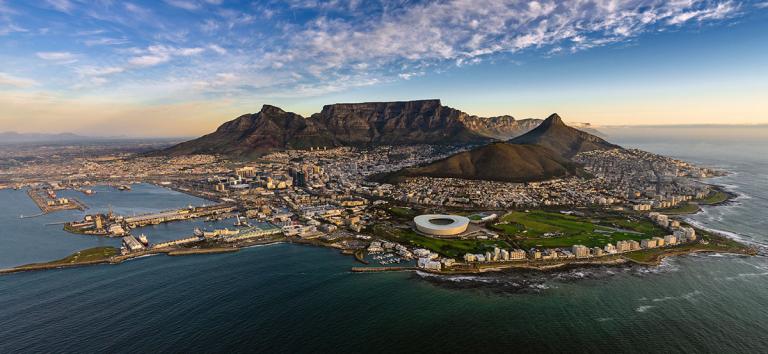
Cape Town, South Africa faces a global clean water crisis - KP Yohannan - Gospel for Asia
Cape Town, South Africa (population 433,688), where the taps are scheduled to run dry due to extended drought that has emptied the water reservoirs.

In February 2018, Cape Town’s mayor’s office announced more stringent water restrictions: “We are now limited to using 13 gallons of water per person per day. That’s enough for a 90-second shower, a half-gallon of drinking water, a sink full to hand-wash dishes or laundry, one cooked meal, two hand washings, two teeth brushing and one toilet flush.” The warning in the TIME article is this: “What is happening to us in Cape Town might not be an outlier. It could happen to you too.”

This material originally appeared in Gospel for Asia’s special report “The Global Clean Water Crisis: Finding Solutions to Humanity’s Need for Pure, Safe Water.”

=====

Click here, to read more blogs on Patheos from Gospel for Asia.

Go here to know more about Gospel for Asia: GFA.net | Wiki | Flickr | GFA

For more information about this, click here.
2019-12-06T12:46:33+00:00

BioSand water filter - KP Yohannan - Gospel for Asia
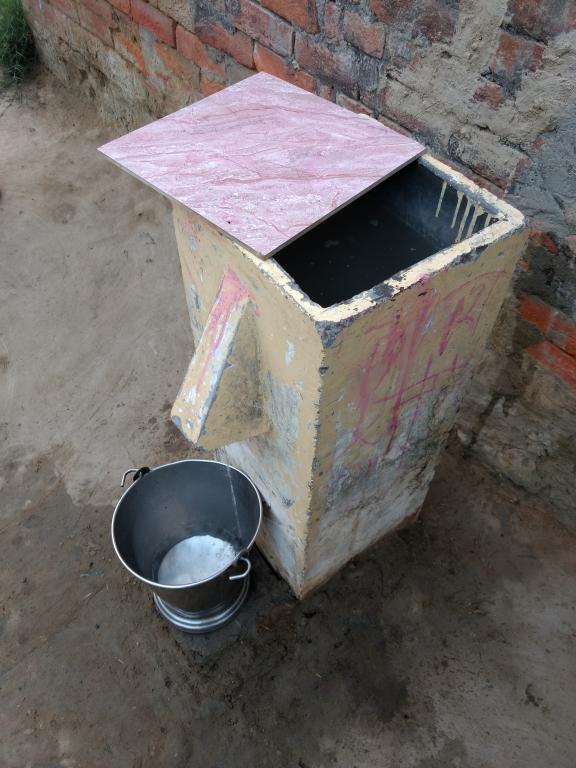
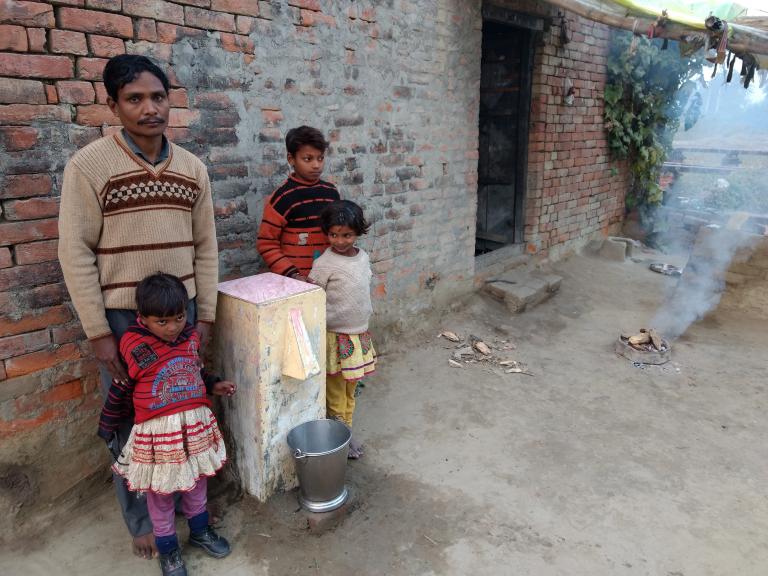
A BioSand water filter provides a single family in Asia with clean, healthy drinking water. They simply pour dirty water into the top, and the water is cleansed inside through the sand, gravel and biofilter layers. Dirty water comes out 98% pure and free of contaminants.

“Water is life, and clean water is health. “— Audrey Hepburn

Clean, pure water. It really is the stuff of life. And it’s such a non-issue in the Western world. When we need a drink, we turn on the tap. But for millions of men, women and children living in places across Asia and Africa, access to clean water is more than just a challenge; for many, it doesn’t exist.

Imagine for a moment preparing a simple meal for yourself or your children. You’ve probably made breakfast thousands of times. Now imagine that the only available water is contaminated with bacteria, heavy metals and even feces. Imagine what it’s like to feel thirsty or hungry and have no other option. Can you?

That’s not the setting for a dramatic movie script; it’s real life. And it’s why Gospel for Asia (GFA) strives every day to help families in Asia gain access to clean, healthy water, through solutions like BioSand water filters. They are simple, effective and can change a family’s life.

The Need for Clean Water Can’t be Overstated

Throughout many parts of Asia, clean water is either unavailable or it’s challenging to access. The numbers are staggering. Some estimates place surface-water contamination levels at 80 percent or higher in Asia. According to a 2016 Water Aid report, over 75 million people in one Asian nation have no access to clean water. That’s the highest concentration in the world. As surface-water contamination increases, groundwater reserves decline. More and more families either use polluted water or are forced to buy clean water elsewhere, a trend that’s only predicted to grow. Prices for clean water can be as high as 20 percent of a poor family’s income.

Sadly, contaminated water leads to illness and even death. Hundreds of thousands of Asian children die each year from diseases contracted by drinking and using contaminated water. That’s hundreds of precious children’s lives lost to preventable diseases every single day. Adults are not immune to waterborne disease either.

BioSand Water Filters Bring About Miraculous Changes

And whoever gives one of these little ones only a cup of cold water in the name of a disciple, assuredly, I say to you, he shall by no means lose his reward.” — Matthew 10:42

Sometimes, a simple kindness and a straightforward solution are life-altering in the best of ways. That’s the case with BioSand water filters. They need no electricity, no complex construction and no special tools or maintenance. Once set up and in operation, a family can turn life-threatening, contaminated water into clean drinking water for years.

These filters are often made from concrete with defined layers of washed gravel and sand inside, although some filters have a plastic or non-toxic housing. Once a biofilm layer develops and matures inside the filter, which takes up to four weeks, they continually eliminate an incredible amount of dangerous pathogens and solids. They also remove odors and colors, making water look and taste fresh, along with truly being safe to drink.

In January, GFA-supported workers visited one poor family who had received a BioSand water filter for their household. The funds to provide it were given by a generous donor, and the construction provided by the local Believers’ Eastern Church. This family below now experiences God’s love and tender compassion each day through the gift of healthy water.

clean drinking water - KP Yohannan - Gospel for Asia
A simple BioSand water filter, which costs just $30 to provide, gave this poor family in Asia access to pure, clean drinking water for many years to come. This keeps them from getting sick or ill from contaminated water sources.

Sadly, the wife and mother of this family had already fallen ill. She is not pictured above, as she was away from home being treated for her illness at the time of the visit.

“I know that the Lord will maintain the cause of the afflicted, and justice for the poor. Surely the righteous shall give thanks to Your name; the upright shall dwell in Your presence.” — Psalm 140:12-13

God’s love is boundless. He dries the tears of the weary and lifts up the brokenhearted. He cares about His children, even (perhaps especially) those who suffer most. Through the works of Gospel for Asia (GFA)-supported workers who share God’s love by providing cups of clean water, fewer families are losing their children to preventable diseases. Fewer families suffer the heartbreak of debilitating or incurable illness. The most basic human need—clean water—is becoming attainable, even to the poorest of the poor, whom God loves just as much as us in the West.

Will you help us provide BioSand Water Filters to families in Asia without access to clean, drinking water?

=====

Click here, to read more blogs on Patheos from Gospel for Asia.

Go here to know more about Gospel for Asia: Twitter | GFA Reports | My GFA

2022-11-26T19:05:43+00:00

WILLS POINT, TX – GFA World (Gospel for Asia) founded by K.P. Yohannan, which inspired numerous charities like GFA World Canada, to assist the poor and deprived worldwide, issued this 2nd part of a Special Report on the world’s greatest ‘badge of shame’: Children in Crisis.

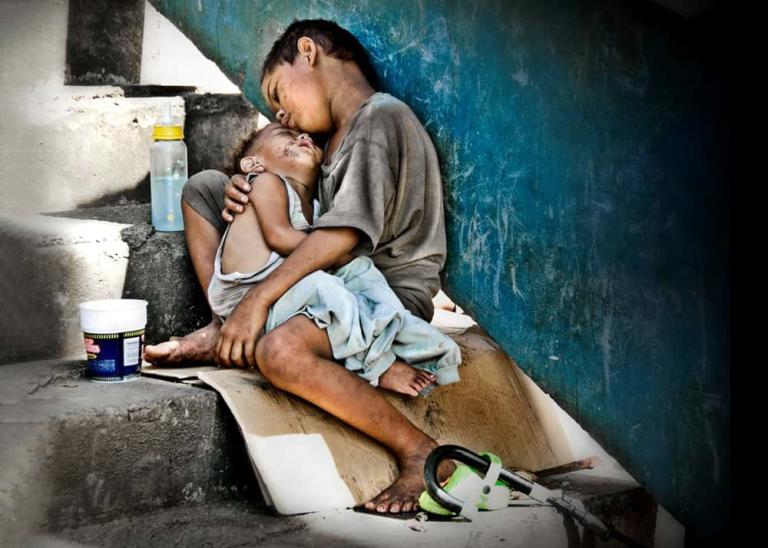
Street children resting outdoors exposed to danger and hunger
Without much to call their own, these two boys hold tightly to each other. The streets are a dangerous place for anyone to live, but even more so for vulnerable, and often exploited children.

Child Sacrifice: Boy’s Head ‘Sold by Father For $2,000’

Moses' grave site.
15-year-old Moses went out to buy potatoes and never returned home. His heartsick parents found his body the following week. He is laid to rest here, the cruel victim of child sacrifice and leaves behind not only parents, but his three-year-old sister. This community in Uganda now has a unique alert system that has already rescued two children from a similarly awful fate. ©2014 World Vision/photo by Jon Warren

Other street boys, Kandwanaho told me, fall victim to Uganda’s sinister underworld of child sacrifice. With its roots in witchcraft, child sacrifice is still practiced among both the poor and the rich. Wealthy businessmen abduct a young street boy with few physical blemishes, have him beheaded and then bury the boy’s head under the foundation of a new building “to bring them luck” with their new money-making venture, Kandwanaho said.

A report by ABC Newstells the story of a young mother who found the headless body of her 17-month-old son in a shallow grave in a banana plantation in her rural village near the Congo border. “I pulled my son’s body out of the soil,” she said. “I realized he had no head.” The child’s killer turned out to be his own father, who was given $2,000 by a rich businessman in return for the boy’s head.[16]

Atrocities against street children are not confined to any single country. In Brazil, news reports tell of organized “death squads” that deliberately seek out and murder street children viewed as nothing more than garbage littering the streets.[17]

Kandwanaho showed me where his friends sometimes sleep inside giant, used tractor tires, piled up in a yard. One night, they were swept up in a police “clean-up” operation and transported to a children’s detention center outside Kampala. Every year, hundreds of street kids end up in “remand” centers, juvenile prisons, where they can be detained for months or even years without a court hearing. Their crime? Often, it’s just living or begging on the streets and being in the wrong place at the wrong time.

Sixty Feet, a nonprofit organization, helps bring smiles back to marginalized and forgotten children.
Sixty Feet serves in the midst of pain and hurt to help bring smiles back to the children most of their society has written off or forgotten. Photo by Sixty Feet

Nonprofit organizations such as Sixty Feet seek to help children in the prison facilities. Their vision is to “provide a Gospel-centered continuum of care for critically vulnerable children that includes minimizing contact with the law, providing for critical needs, and supporting long-term restoration.”[18]

In Uganda, many street kids are from the northern Karamojong tribe.[19] They’ve fled the underdeveloped, famine-prone region to come to the capital, where they live in crowded slums, such as the Katwe slum featured in the Disney movie Queen of Katwe, and beg at the intersections. These beautiful children, especially the girls, are extremely vulnerable to sexual predators.

Every month, scores of Karamojong children and families arrive in Kampala, putting more pressure on the slums and increasing the number of kids competing for handouts.

Kids as young as 3 wander along the streets, their hands outstretched, narrowly avoiding the perilous open drainage ditches. If they collect a few thousand Ugandan shillings, maybe 50 cents or a dollar, it goes straight to their parent or someone posing as a parent. Mostly, though, they’re ignored by passers-by and motorists, many of whom believe they’re simply feeding the problem and incentivizing begging if they give a handout.

This exodus of children from poorer, rural areas to the cities in search of food and work is not unique to Uganda. It’s a global phenomenon in poor, underdeveloped countries across Africa, Latin America and Asia.
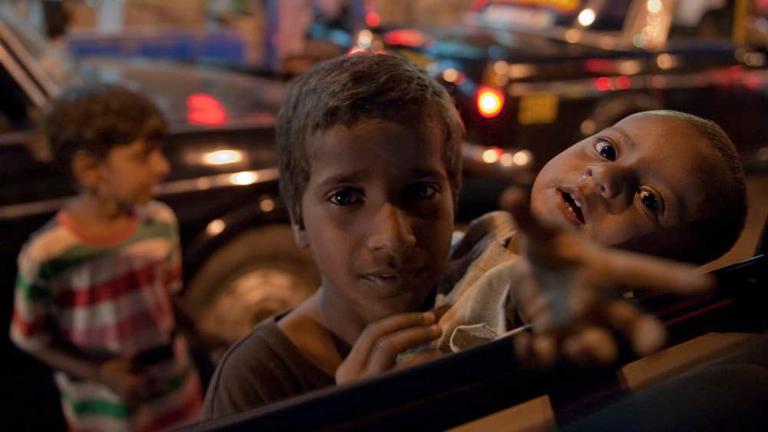
Street children begging on the streets of South Asia
Small fingers reach through the jeep’s open window. These children shift through the busy traffic in Maharashtra risking life and limb in hopes a few rupees will be slipped their way.

Children at Risk of Starvation

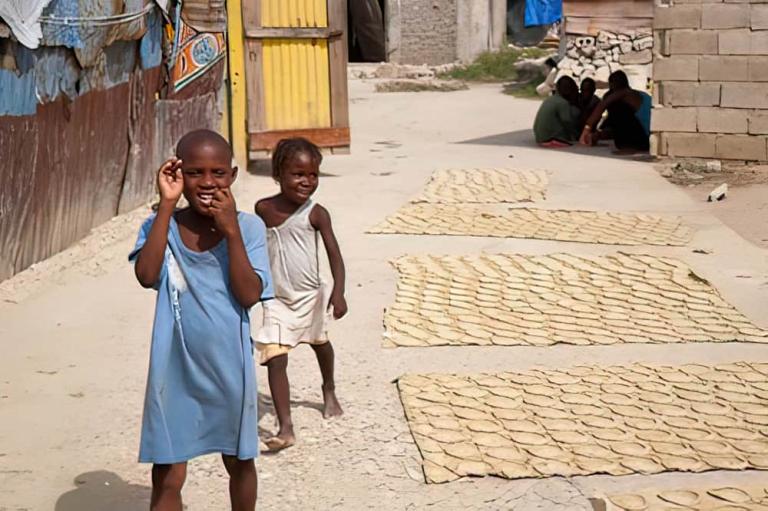
Children in poverty from Haiti walks by mud cakes drying in the sun
Haitian children walk by ‘mud cakes’ drying in the sun. The cakes, made of dirt, salt and oil, make a cheap food to stave off hunger. At 2 cents each, they’re the only affordable food option for thousands of Cite Soleil kids at risk and other impoverished residents. Photo by Crossroads Foundation, Flickr

When crops fail due to drought or other calamity, or work opportunities dry up, children and their parents often face a stark choice: move… or starve.

Driven by the COVID-19 pandemic, the number of young children around the world suffering acute malnutrition, a polite term for starvation, was expected to skyrocket by 20 percent in 2020, according to a report by the U.N.[20] That’s an additional 10 million starving children worldwide. “Children living on the streets are particularly at risk,” the report says.

In Haiti, the poorest nation in the Western Hemisphere, I’ve watched children eat “mud cakes,” sun-dried cakes made from dirt mixed with salt, water and a little margarine.[21] Mud cakes are a symbol of the despair children face in this Caribbean island nation—a sense of hopelessness that continues into adulthood.

“Ask a Haitian, ‘what do you think you’ll be doing in five years?’ and he will laugh,” a Haitian doctor told me. “Our people do not think about tomorrow; we do not plan for the future. We live from day to day. We are a people in survival mode.”

Around the world, humanitarian agencies such as GFA World (Gospel for Asia) have increased efforts to feed the most vulnerable children and their families during the pandemic as millions of day laborers have been laid off from jobs or unable to work because of lockdowns.

The Texas-based agency has distributed food to tens of thousands of families on the edge of starvation in Asia and Africa, filling a critical gap for parents facing the near-impossible task of feeding their children amid total loss of income and with no safety net to fall back on. “The situation in our village is terrible,” one parent told Gospel for Asia (GFA World). “We don’t have any work and we’re unable to provide food.”

Child hunger is also growing in rich nations, such as the U.S., where more than 11 million children live in “food insecure” homes and don’t have enough to eat, according to the U.S. Government.[22] A staggering 18 million children in the U.S. could go hungry in 2021 because of the pandemic’s economic impact, according to the No Kid Hungry campaign.[23] In the U.K., 1.8 million school-age children—one in every five kids—is at risk of hunger.[24]

These children and their family struggle with hunger due to poverty
Uttar Pradesh: Most of the families in this neighborhood live in small houses in the surrounding fields, and typically struggle to make ends meet financially. Parents often earn 50-60 rupees per day as manual laborers, meaning that the family goes hungry, including their children, like these young ones shown here.

Thirsty? How About a Cup of Feces-contaminated Water?

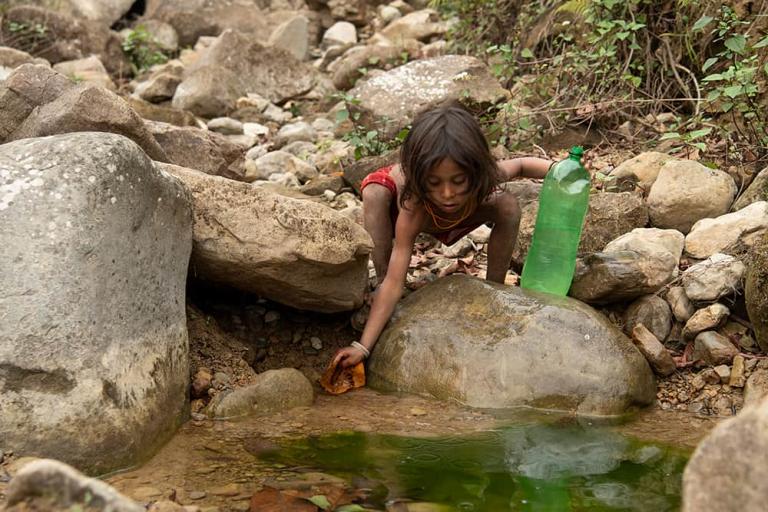
Small boy collecting unclean water from an open water source
Sinduhli, Nepal, March 2021: As the water levels underground start shrinking, people collect water from small puddles in the forest for drinking. This small boy was asked by his parents, who were working in the fields, to fetch water for drinking from a puddle in the hills. But the water collected from these open puddles can be full of germs and bacteria, as other animals and birds use them too, often causing fatal illnesses.

Hunger is dreadful, but for millions of children, the most immediate threat to their health and survival is the lack of safe drinking water. A staggering 2 billion people, mostly in Africa and Asia, get their drinking water from feces-contaminated ponds and watering holes, leading to often-fatal diseases such as cholera and dysentery. Children under the age of 5 are the most at-risk.[25] The World Health Organization (WHO) says nearly one in every three people in the world doesn’t have access to safe drinking water,[26] and the U.N. predicts that by the year 2050 up to 5.7 billion people worldwide could be affected by water shortages.[27] Drinking contaminated water can lead to many deadly diseases, such as typhoid, hepatitis A, and diarrhea. Globally, diarrhea kills almost 2,200 children every day, according to the Centers for Disease Control (CDC).[28]

Organizations like World Vision and Gospel for Asia (GFA World) have made clean drinking water a top priority.

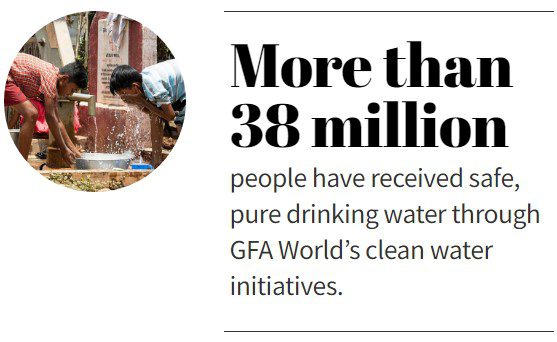
More than 38 million people have received safe, pure drinking water through GFA World’s clean water initiatives.GFA World drills about 4,000 new community wells called “Jesus Wells” every year, providing safe drinking water for entire villages. Over the past two decades, the organization has drilled more than 30,000 wells and distributed more than 58,000 BioSand water filters that remove 98 percent of water impurities.[29]

The organization’s Jesus Wells supply safe drinking water to approximately 37.5 million people across Asia—roughly equivalent to the entire population of California.

Dr. K.P. Yohannan, GFA Founder

“We offer clean, life-giving water to all people,” says Gospel for Asia (GFA World) founder, K.P. Yohannan (Metropolitan Yohan). “The Lord has used our efforts to bring clean water to the suffering. They receive healthy, life-sustaining support. This gift of free water is one more way we are able to demonstrate the love of Jesus for those in need.”

Jesus Wells are deep wells, drilled in remote villages in Asia where girls often have to trek miles on foot every day to the nearest watering hole or pond to fetch water, putting themselves at risk of sexual assault and even tiger attacks.

“Our family members were suffering from diarrhea and other [waterborne] diseases,” says Arnab, father of three girls and a boy, describing the difference a Jesus Well has made in his village. “Our children who were sick are healthy now.”


Give to Help Support Children at Risk & Kids in Crisis »

If this special report has touched your heart and you would like to make a real difference in the lives of children in crisis around the world, and bring hope to kids at risk of violence, impoverishment, or child labor, then make a generous one time or monthly gift to help kids in need in Asia or Africa.


About GFA World

Gospel for Asia (GFA World) is a leading faith-based global mission agency, helping national workers bring vital assistance and spiritual hope to millions across the world, especially in Asia and Africa, and sharing the love of God. In GFA World’s latest yearly report, this included thousands of community development projects that benefit downtrodden families and their children, free medical camps conducted in more than 1,200 villages and remote communities, over 4,800 clean water wells drilled, over 12,000 water filters installed, income-generating Christmas gifts for more than 260,000 needy families, and teaching providing hope and encouragement available in 110 languages in 14 nations through radio ministry. GFA World has launched programs in Africa, starting with compassion projects in Rwanda. For all the latest news, visit our Press Room at https://gfanews.org/news.


Read the rest of Gospel for Asia’s Special Report: Children in Crisis — World’s Greatest ‘Badge of Shame’  Part 1, Part 3

Read more blogs on Human Trafficking, Child LaborAbandoned Children and GFA World on Patheos from Gospel for Asia.

Learn more about the GFA World Bridge of Hope program and how you can make an incredible difference in the lives of children, bringing hope to their lives and their families, transforming communities.

Learn how to provide a chance for children without sponsors. When you give to help unsponsored children, you help supplement the lack of resources when children in Asia don’t have the sponsors they need to stay in a Bridge of Hope center.

Learn more about Gospel for Asia: Facebook | YouTube | Instagram | LinkedIn | SourceWatch | Integrity | Lawsuit Update | 5 Distinctives | 6 Remarkable Facts | 10 Milestones | Media Room | Poverty Solution – Farm Animals | Endorsements | 40th Anniversary | Lawsuit Response | International Offices | Missionary and Child Sponsorship | Transforming Communities through God’s Love

Notable News about Gospel for Asia: FoxNews, ChristianPost, NYPost, MissionsBox


Read what 25 Christian Leaders are affirming about Gospel for Asia.

This Special Report originally appeared on gfa.org.

2021-12-04T06:34:30+00:00

WILLS POINT, TX – GFA World (Gospel for Asia) founded by K.P. Yohannan, whose heart to love and help the poor has inspired numerous charities like GFA World Canada, to serve the deprived and downcast worldwide, issued this second part of a Special Report update on Taking the Toilet Challenge, where resolving Open Defecation continues to confound the world.

GFA World (Gospel for Asia, founded by KP Yohannan) Report Part 2 - Taking the Toilet Challenge, resolving Open Defecation continues to confound the world.
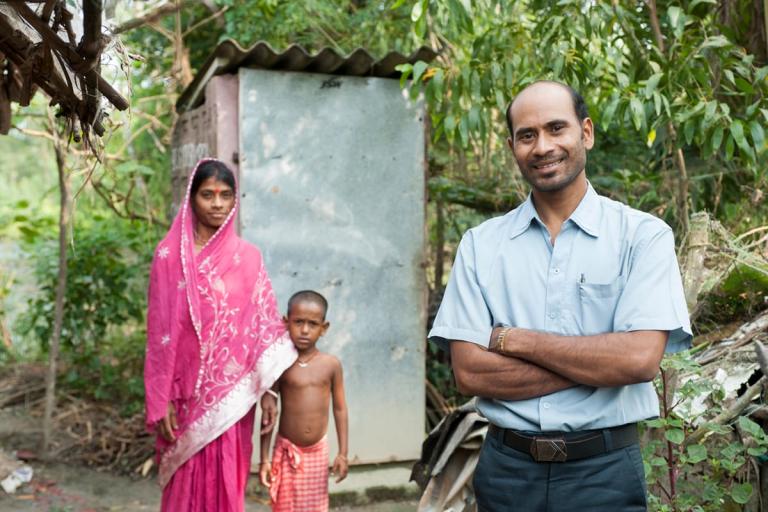
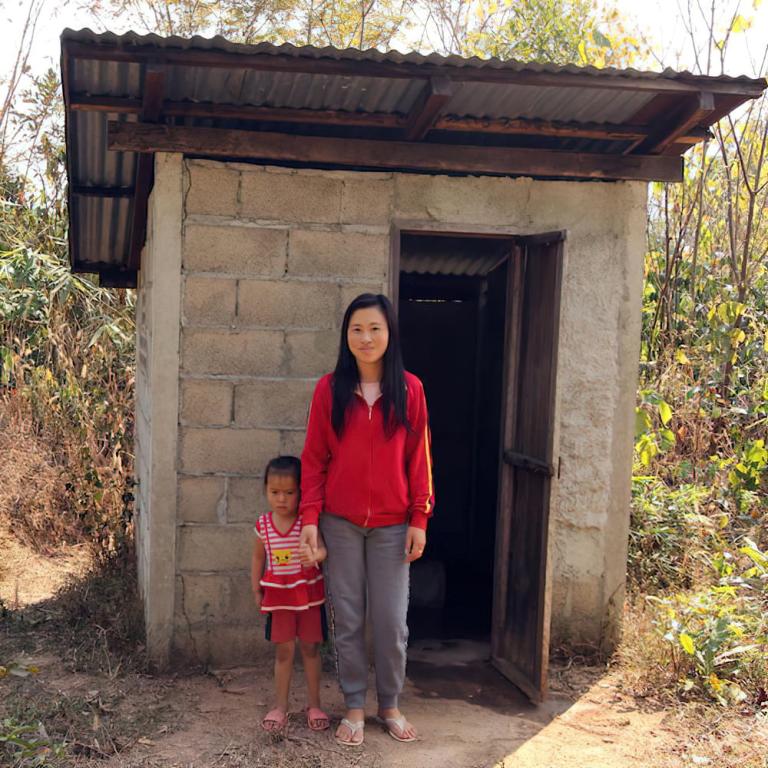
In West Bengal, a local Gospel for Asia (GFA World) pastor who identified needs of people in his community, including this woman and her child, was able to facilitate the construction of low-cost outdoor toilet to provide a safe, sanitary facility for her family. Gospel for Asia (GFA World) has helped to construct over 32,000 toilets to date in remote, impoverished communities throughout South Asia.

Open Defecation Still Persists Worldwide, Even in America

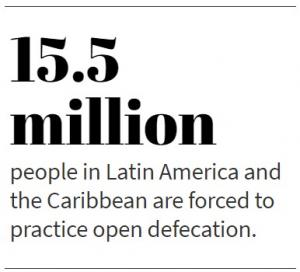
While places like South Asia, Nigeria and Indonesia are noted for problems with open defecation, this poor health habit exists worldwide. In late 2019, the Pan American Health Organization (PAHO) said 15.5 million people in Latin America and the Caribbean are forced to practice open defecation. Calling it an “unhealthy practice,” PAHO official Marco Espinal said, “Improving access to water and sanitation through multisectoral policies and actions is critical to prevent disease and save lives.”8

After attending the toilet expo in China, NPR reporter Katrina Yu noted that toilet innovations may be a hard sell in other countries.

Katrina Yu
Katrina Yu, NPR reporter
Photo by Katrina Yu, Facebook

“Sanitation just isn’t sexy,” Yu wrote. “In fact, it stinks. According to the World Health Organization, governments, including many of those in Sub-Saharan Africa and Latin America, often neglect to consider safe sanitation when drawing up budgets and policies. ‘To have any hope of solving sanitation problems,’ said [Jim Yong] Kim of the World Bank, ‘we have to break taboos and get over our discomfort in talking about poop.’”9

The public declarations against open defecation stretch back for two decades. The Singapore-based World Toilet Association established its special day in 2001, with the United Nations General Assembly officially declaring November 19 as World Toilet Day in 2013. The observance aims to inform, engage and inspire people to achieve the goal of ensuring the availability of clean water and sanitation for all by 2030.

15.5 million people in Latin America and the Caribbean are forced to practice open defecation.Yet as the UN and numerous governments, non-profits and non-governmental organizations (NGOs) work to eliminate the problem, it even exists on the streets of prosperous America. An October 2019 report by Environmental Justice said without sanitation when and where it is needed, the human right to sanitation for the homeless population has not been realized, leaving valid concerns about the risks of infectious disease transmission.
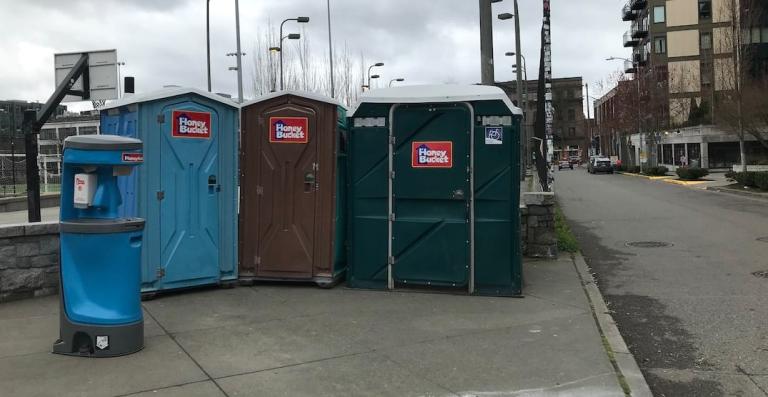
“The experience of Street Medicine physicians has yielded significant insight into how and why people experiencing homelessness resort to open defecation: the lack of public resources, perceptions about public toilets and the feelings of being unwelcome at them, concerns about safety, and physical and mental illness—including addiction—are all factors that contribute to OD,” the report said.10

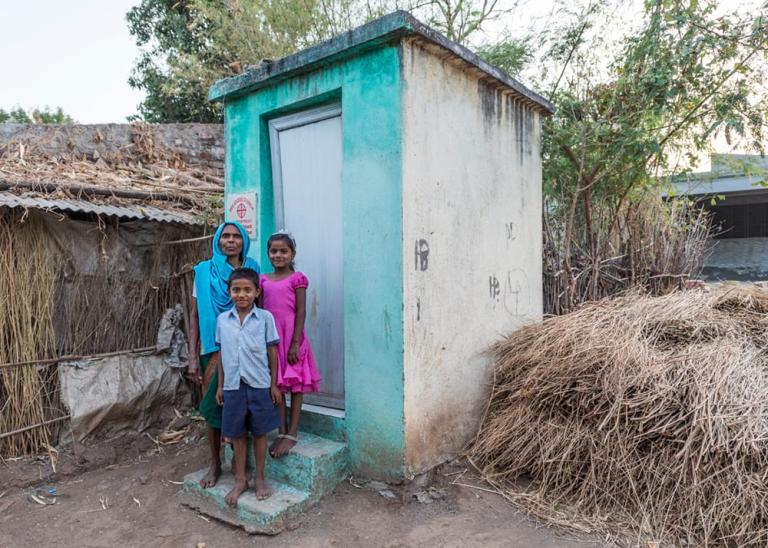
Mother and children outside outdoor toilet
A family in Maharashtra received this low-cost outdoor toilet as recipients of GFA World’s Christmas Catalog campaign to supply safe, private sanitation facilities to impoverished communities through South Asia.

The concerns raised by lack of access to sustainable sanitation and proper handwashing facilities have taken on new importance during the COVID-19 outbreak that engulfed the world in 2020. A report late last year from the World Bank placed the global costs of inadequate sanitation at an estimated $260 billion.

“Even before the COVID outbreak, our research conducted in 18 countries around the world showed that it’s poor children who suffer the most from inadequate sanitation,” said a summary issued on last November’s World Toilet Day. “Intestinal diseases related to poor sanitation, along with malnutrition and infections, contribute to stunting—one of the most serious and irreversible developmental problems facing children and impacting their future livelihoods as productive adults. In many countries, poor sanitation catalyzes a vicious cycle of poverty.”11

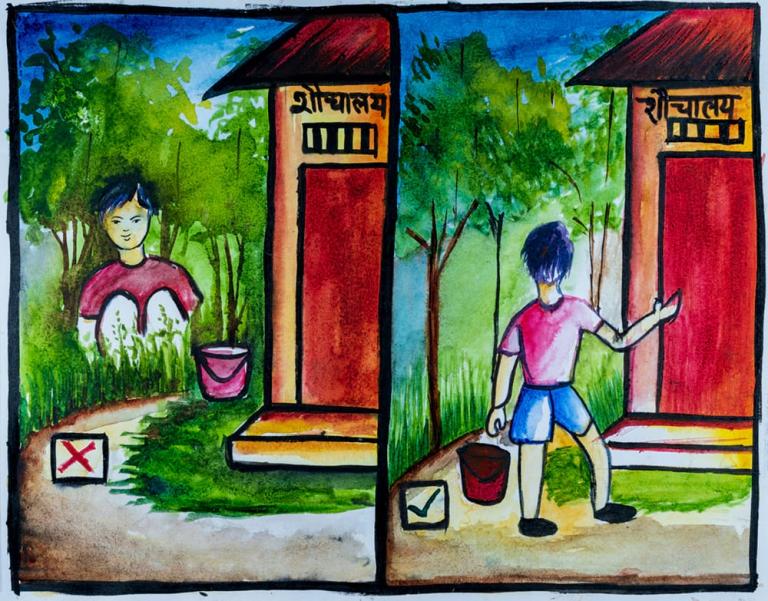
Cartoon drawing of do's and don't - Don't open defecate; Do use toilet
Children in India supported by Gospel for Asia (GFA World) sponsors also participated in India’s five-year-long Swachh Barat Abhiyan (“Clean India”) campaign by drawing images like these to emphasize the basic message.

Long-term Progress is Producing Slow but Steady Results

Seattle Parks comfort stations
In addition to 128 comfort stations, Seattle Public Utilities has deployed 14 toilets and handwashing stations around Seattle to help the most vulnerable in their community stay healthy through these shelter and hygiene centers. Photo by SEA Mayor’s Office, Twitter

Yet, in spite of such gloomy realities, there has been long-term progress in the battle. Between 2000 and 2017, the number of people practicing OD was reduced from 1.3 billion to around 670 million, or 9 percent of the world’s population.12 The UNICEF South Asia Progress Report for 2018–2021 said the proportion of people practicing OD fell from 65 percent to 34 percent in the region as a whole, with India, Bangladesh, Nepal and Pakistan all achieving more than 30 percent reductions since 1990.13 There is a financial advantage to toilet installation: the World Health Organization estimates a return of $5.50 for every dollar spent on sanitation.14

Improvements have been steadily moving in the right direction, says one report: “The global population using safely managed sanitation services increased from 28 percent in 2000 to 45 percent in 2017, with the greatest increases occurring in Latin America and the Caribbean, sub-Saharan Africa, and East and South-East Asia. In the period from 2000-2017, 2.1 billion people across the globe gained access to at least basic services and the population lacking basic services decreased from 2.7 billion to 2 billion.”15

More Direct Aid Needed to Sustain Progress

Woman and her child in Laos in front of an outdoor toilet
Ms Hing, 31, and her 4-year-old daughter, Than, stand outside their new latrine installed by UNICEF and partners in Namdeau village, Bolikhamxay province, Laos, where 38 percent of households have no sanitation facilities at all. Photo by UNICEF USA, Saving Lives, One Toilet at a Time

Amid these encouraging developments, though, a reality remains: As of 2020 only one in five countries with greater than 1 percent OD reported being on track to achieve near elimination of it among the poorest fifth of rural populations by 2030.16 That and the still-high numbers of OD mean direct aid is still vital in many regions of the world.

Last year, UNICEF helped nearly 19 million people gain access to safe drinking water and 10.8 million with basic sanitation. Among them were residents of Cote d’Ivoire on the western coast of Africa, where less than 10 percent of people living in rural areas have access to clean, functional toilets. One woman who—along with her neighbors—used to defecate outdoors said that it was not only dangerous but not hygienic. While sharing her toilet with those nearby, she adds, “When they’re done, they have to clean it. I want to keep my toilet nice and clean.”17

Another woman in a village in Laos – Ms Hing – said, “I have a new toilet, and I don’t need to go to the bush anymore.”18

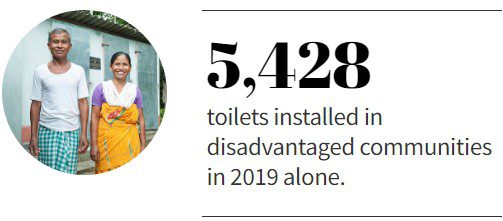
5,428 toilets installed in disadvantaged communities in 2019 alone.GFA World is another NGO working to eliminate open defecation. In 2019, GFA installed more than 5,200 toilets in needy communities. That boosted its cumulative total to more than 32,000 toilets installed, built in some of the world’s most underdeveloped areas.

While going to the bathroom is a privilege those in affluent societies often take for granted, for those living in out-of-the-way places, a toilet is one of the best gifts they can receive.

One example is a man named Laal and his wife, who live with four of their five children and their daughter-in-law. They are one of only three families still living in their village; many have moved away because of isolation and the lack of basic facilities, including a sanitary outhouse. The construction of a sanitation facility, facilitated by two Gospel for Asia (GFA) workers from a nearby community, literally changed their lives. Not only did they benefit from the health advantages of their new toilet, but they also established a new circle of friendships in the neighboring community.19

Family standing outside of Outdoor Toilets
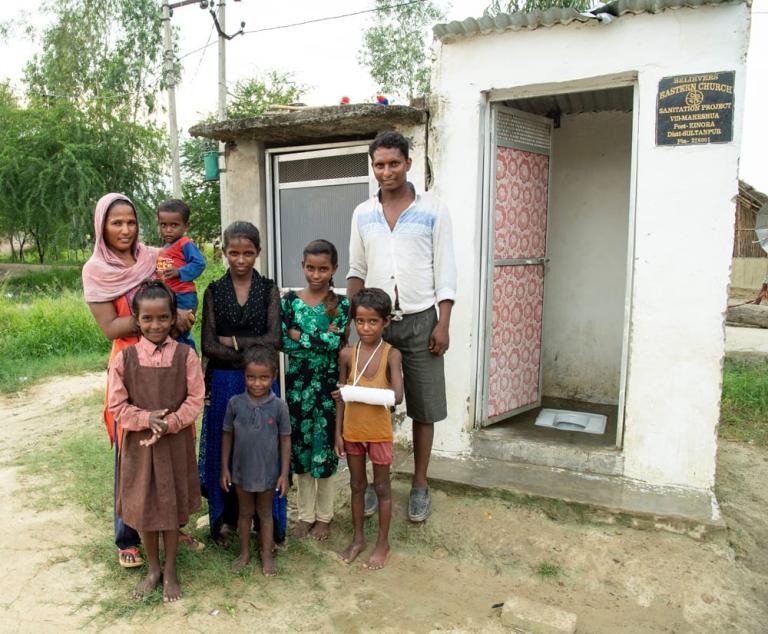
The installation of an outdoor sanitation facility, like this toilet from GFA World, proved to be, in numerous ways, a life-changing blessing for Laal’s family in South Asia.

In another, more densely, populated area with 1,600 families spread over eight villages, the majority of families still live in poverty. With most of their money going for survival, it leaves little for anything else, including hygiene or basic sanitation facilities. Gospel for Asia (GFA) workers came to their aid, collecting supplies and manpower needed to install facilities. More than 250 of the families received not only a toilet but instruction in their proper use and cleaning to keep people safe from disease.

“All the beneficiaries were ecstatic at the gift,” reported a Gospel for Asia (GFA) worker. “The women were especially happy; they no longer needed to put themselves in danger every time they needed to use the toilet. They finally had a safe place to privately relieve themselves. No more would they need to venture out into the fields to do so.”20

Hopefully, many more such reports will surface in the months and years to come.

If you’d like to assist in providing outdoor toilets for underserved communities around the world, connect with GFA World to make a donation. Your contribution can be a life-changing one for many families that live in a community without proper sanitation, by providing them with safety from disease and dignity through privacy. And you will feel good to have made a contribution that helps families in developing nations without access to things we can take for granted.


Donate to Sanitation Projects »

Safe, sanitary outdoor toilets typically cost around $540, to build in Asia, and benefit multiple families in remote, impoverished communities. You can help provide one for a needy village, by donating a portion of the construction costs through GFA World.


Read the rest of this Gospel for Asia – Transforming Communities (GFA World) Special Report: Taking The Toilet Challenge  Part 1


About GFA World

Gospel for Asia (GFA World) is a leading faith-based global mission agency, helping national workers bring vital assistance and spiritual hope to millions across the world, especially in Asia and Africa, and sharing the love of God. In GFA World’s latest yearly report, this included thousands of community development projects that benefit downtrodden families and their children, free medical camps conducted in more than 1,200 villages and remote communities, over 4,800 clean water wells drilled, over 12,000 water filters installed, income-generating Christmas gifts for more than 260,000 needy families, and teaching providing hope and encouragement available in 110 languages in 14 nations through radio ministry. GFA World expects to launch programs in numerous African nations, starting with compassion projects in Rwanda. For all the latest news, visit our Press Room at https://press.gfa.org/news.


Read more blogs on GFA World, Toilet CrisisPoverty and Open Defecation on Patheos from Gospel for Asia.

Learn more by reading this Special Report from Gospel for Asia: Fight Against Open Defecation Continues — Using Outdoor Toilets to Improve Sanitation


Learn more about Gospel for Asia: Facebook | YouTube | Instagram | LinkedIn | SourceWatch | Integrity | Lawsuit Update | 5 Distinctives | 6 Remarkable Facts | 10 Milestones | Media Room | Malaria Amid COVID 19 | Endorsements | 40th Anniversary | Lawsuit Response | International Offices | Missionary and Child Sponsorship | Transforming Communities through God’s Love

Notable News about Gospel for Asia: FoxNews, ChristianPost, NYPost, MissionsBox

Read what 25 Christian Leaders are affirming about GFA World.

This Special Report originally appeared on gfa.org.

2022-09-11T08:24:30+00:00

WILLS POINT, TX – Gospel for Asia (GFA World) founded by K.P. Yohannan, whose heart to love and help the poor has inspired numerous charities like Gospel for Asia Canada, to serve the deprived and downcast worldwide – Discussing the sickness brought by the lack of clean water, and the Gospel for Asia Jesus Well provides relief for both body and spirit.

The people needed water desperately. The old water pump provided by the village officials years ago was wearing out, resulting in an inadequate water supply in the hottest months and unsanitary water in the rainy seasons. Many villagers were contracting illnesses because of drinking the unclean water, while still more were struggling to get any water at all.

But these villagers needed more than just clean water—they needed living water. Severe sickness and daily disagreements among residents caused unrest to dominate the village as its inhabitants bickered with each other over various matters.

Between the lack of water and the lack of peace, the village people needed help and wholeness more than ever.

Discussing the sickness brought by the lack of clean water, and the Gospel for Asia Pastor and Jesus Well that provided relief for both body and spirit.
The prayers of Abay, Kahua and Pastor Mabon (not pictured) were answered through the installation of a Jesus Well in their village.

A Family Finds Freedom

Gospel for Asia (GFA) pastor Mabon lived in a small village nearby, where he led a thriving congregation. One day, Kahua, a member of Pastor Mabon’s church, listened to his neighbor Abay share about his many struggles. Frustrated, Abay explained that he did not agree with some of the activities other villagers were partaking in, and he was doing his best to separate his family from these villagers.

Seeing Abay’s discouragement, Kahua shared Jesus’s love with him and prayed for him to experience the peace and joy of Christ. Kahua and Pastor Mabon continued visiting Abay, providing encouragement and care to him and his family.

Abay became more and more interested in learning about Jesus and began attending Pastor Mabon’s church with his family. Over time, the Lord worked in Abay’s heart, transforming his discouragement into hope, and he experienced the love, joy and peace of Jesus for himself. As he grew in his relationship with Jesus, Abay prayed more and more for not only the needs of himself and his family, but also the needs of his village: the need for clean water.

Jesus Wells Provides Quenching of Village’s Thirst

The Lord heard the prayers of Abay and other believers and prompted regional church leaders to install a Jesus Well in the village. The villagers, who had been plagued by sickness and lack of water, now had an abundance of fresh, clean water for drinking, bathing and washing kitchen utensils. Some of the villagers had been causing hardship for Abay, but now they were grateful for the Jesus Well and their improved health. Increasingly, villagers approached Pastor Mabon for prayer, eager to hear about Jesus.

This village, once inundated by disease in both body and spirit, now thrived from the clean water provided by the Jesus Well and the love shown by those who helped install it. Touched by the compassion and care they received, the villagers began showing each other that same compassion and care.


Read how a Jesus Well helped restore Sabar’s health.

*Names of people and places may have been changed for privacy and security reasons. Images are Gospel for Asia World stock photos used for representation purposes and are not the actual person/location, unless otherwise noted.


Source: Gospel for Asia Field Reports & Updates, Fighting the Water Crisis: Jesus Well Provides Villagers Relief

Learn more about how to provide pure, clean water to families and villages through Gospel for Asia Jesus Wells and BioSand Water Filters.

Learn more about the GFA national missionaries who carry a burning desire for people to know the love of God. Through their prayers, dedication and sacrificial love, thousands of men and women have found new life in Christ.

Learn more by reading these Special Reports:

Read more on Clean Water Crisis and National Missions on Patheos from Gospel for Asia.

2022-06-29T11:28:24+00:00

WILLS POINT, TX – Gospel for Asia (GFA World) founded by Dr. K.P. Yohannan issues an extensive Special Report on Malaria and other deadly diseases brought by the mosquito and the storied impact of faith-based organizations on world health, fighting for the Kingdom to “come on earth as it is in heaven.”

Gospel for Asia: It only takes one mosquito to get malaria.

This is Part One of a Three-Part Series on FBO Initiatives to Combat Malaria and Other World Health Concerns. Coming Soon are Parts 2 and Parts 3.

=====

It takes only one mosquito, buzzing around with ill intent, dive-bombing in the middle of the night, hovering ominously around a would-be sleeper’s ear, to cause alert wakefulness and ruin the REM-phase of deep slumber. Five or six mosquitoes, all in disharmonic buzzing in one room, demand that the sleepy occupants get up and destroy the pesky insects, no matter how many bug guts get left on the walls.

Interestingly, research about the ubiquitous presence of the mosquito led me to a startling discovery about the Gospel’s mostly unknown and stunning impact on the development of the World Health Organization’s (WHO) eight Millennium Development Goals. This is an article about that impact. Let me start at the beginning.

Malaria parasite (plasmodium)

My son Jeremy, post-college and conveniently fluent in Spanish, was helping me with a writing project in Mexico thanks to some excess flight mileage points. Jeremy, at that time, was a counselor for World Relief, an international organization that assists churches to sponsor refugees. He had become proficient in dealing with immigration issues and consequently was open to being bribed by his mother to spend five work-and-play days on the Mexican Riviera.

One night, we returned to our room unaware the maid had neglected to close the screenless windows after cleaning. Finally resigned to the reality that hiding under the sheets was a futile deterrent against bloodthirsty pests, we turned on the lights and did battle royal, swinging towels and rolled-up manuscripts, until we were certain that not a single mosquito had survived the slaughter.

And yes, there were bug guts all over the walls.

I remember falling to sleep that night, deeply satisfied with our search-and-destroy mission, and suddenly catching myself thinking: What if this were a malaria-ridden country? It would only take one mosquito, the female anopheles, to transmit one of the parasites on the spectrum belonging to the genus Plasmodium. It only takes one mosquito bite in a person lacking immunity to bloom into rampant malaria some 10–15 days later.

Gospel for Asia: A mosquito net can be the difference between life and death for kids in Asia.
A mosquito net can be the difference between life and death in some areas, protecting families from the bite of malaria-spreading mosquitoes while they sleep.

Mosquito Nets Versus Malaria

It may seem strange in countries or communities that maintain sophisticated mosquito abatement programs to learn that mosquito nets across the world are one of the most important means of saving lives.

Gospel for Asia: Stagnant water is a perfect breeding ground for mosquitoes, endangering people living nearby.
Stagnant water is a perfect breeding ground for mosquitoes, endangering those living nearby.

Gospel for Asia (GFA) tells the story of Pastor Ojayit walking through villages and inquiring of residents as to whether they had been afflicted by malaria and if they needed mosquito nets. (These, for those who are unaware, are hung over beds, sleeping cots or hammocks at night.) The pastor was deeply moved by the numerous folk who had suffered with the mosquito-borne illness. One man named Madin, along with his family, had been ill with malaria and brain malaria on several occasions. Extreme poverty kept the family from affording medication or prevention treatments to combat the disease or the airborne insects that carried the disease.

Pastor Ojayit added Madin’s name to the list of recipients for the next Gospel for Asia (GFA)-supported Christmas gift distribution so he could receive a mosquito net. That simple gift meant, for the first time, Madin and his family began to thrive. The children could attend school; they all could gain back health. The gift of a mosquito net also demonstrated the practical application of God’s love and concern for the people of the world.

A mosquito net can be the difference between life and death—but the fight with malaria is far from over.

Gospel for Asia Reports on malaria around the world
By Peteri/Shutterstock.com

The 2018 World Malaria Report indicated that in 2017, after an unprecedented period of early success stimulated by the World Health Organization’s campaign to bring malaria under global control, progress in fighting the disease has stalled. There were an estimated 219 million cases and 435,000 related deaths in 2017. This was up from 217 million cases in 2016. Evaluations as to the possible cause of this slide include a decrease of billions of donor dollars due to other disastrous disease episodes worldwide.

The report also added that 11 countries bear 70 percent of the burden of this particular global disease: Burkina Faso, Cameroon, Democratic Republic of Congo, Ghana, Mali, Mozambique, Niger, Nigeria, Uganda, Tanzania and India, most of them in tropical or subtropical areas of the world, most often where there are impoverished populations.

Millennium Development Goals & Millennium Sustainable Development Goals

Despite this setback in malaria eradication, health indicators from around the world show that a handful of the eight Millennium Development Goals (MDGs), introduced by the World Health Organization and announced in September 2000, are meeting or exceeding fulfillment expectations. The eight Millennium Development Goals are:

Gospel for Asia Reports on 8 Millenium Development Goals by WHO
The eight Millenium Development Goals. Photo by Kjerish on Wikipedia / CC BY-SA 4.0

The WHO Declaration notes that the “MDGs are inter-dependent; all the MDGs influence health, and health influences all the MDGs. For example, better health enables children to learn and adults to learn. Gender equality is essential to the achievement of better health. Reducing poverty, hunger and environmental degradation positively influences, but also depends on, better health.”

So how is the world doing?

Despite the United Nations declaring this international effort “the most successful anti-poverty movement in history,” success is also a much more daunting task than the optimistic planners imagined. Since 2015, the MDGs morphed into the United Nations Sustainable Development Goals with 17 points and a more realistic target accomplishment date of 2030.

And why is that? Well, it’s just plain difficult to create a peaceable, equitable, egalitarian world system that dignifies the life of every human on the planet. Huge progress has been made in four out of the eight MDGs; extreme poverty levels, for instance, have been almost halved globally. Gender disparity goals in education were nearly met, new HIV infection levels were reduced by 40 percent and the world did reach the goal on access to safe drinking water. However, unprecedented weather crises, rising conflict causing unanticipated migration patterns, the lack of high-level technology in many places for data gathering and more defeated the optimistic intents of the planner.

Photo by Grimpeurgf on Wikipedia / CC BY-SA 4.0

With all this as a background, now let’s focus on Millennium Development Goal #8, “to develop a global partnership for development.”

How have faith-based organizations impacted health initiatives in the modern era? The backstory to these simple seven words in goal #8 contains an excellent, if not elegant, example of the interaction of faith-based theology and compassionate intent on the policy-making behind the World Health Organization’s vital Declaration, which many world-watchers consider a watershed in the history of international development. This is a story that needs to be told and understood because it provides a map to effectuate more positive results to a world in crisis.


It Takes Only One Mosquito — to lead to remarkable truths about faith-based organizations and world health: Part 2 | Part 3

Follow Us!


TAKE THE
Religious Wisdom Quiz

Who betrayed Jesus for 30 pieces of silver?

Select your answer to see how you score.


Browse Our Archives