

Fifteen Biblical Examples
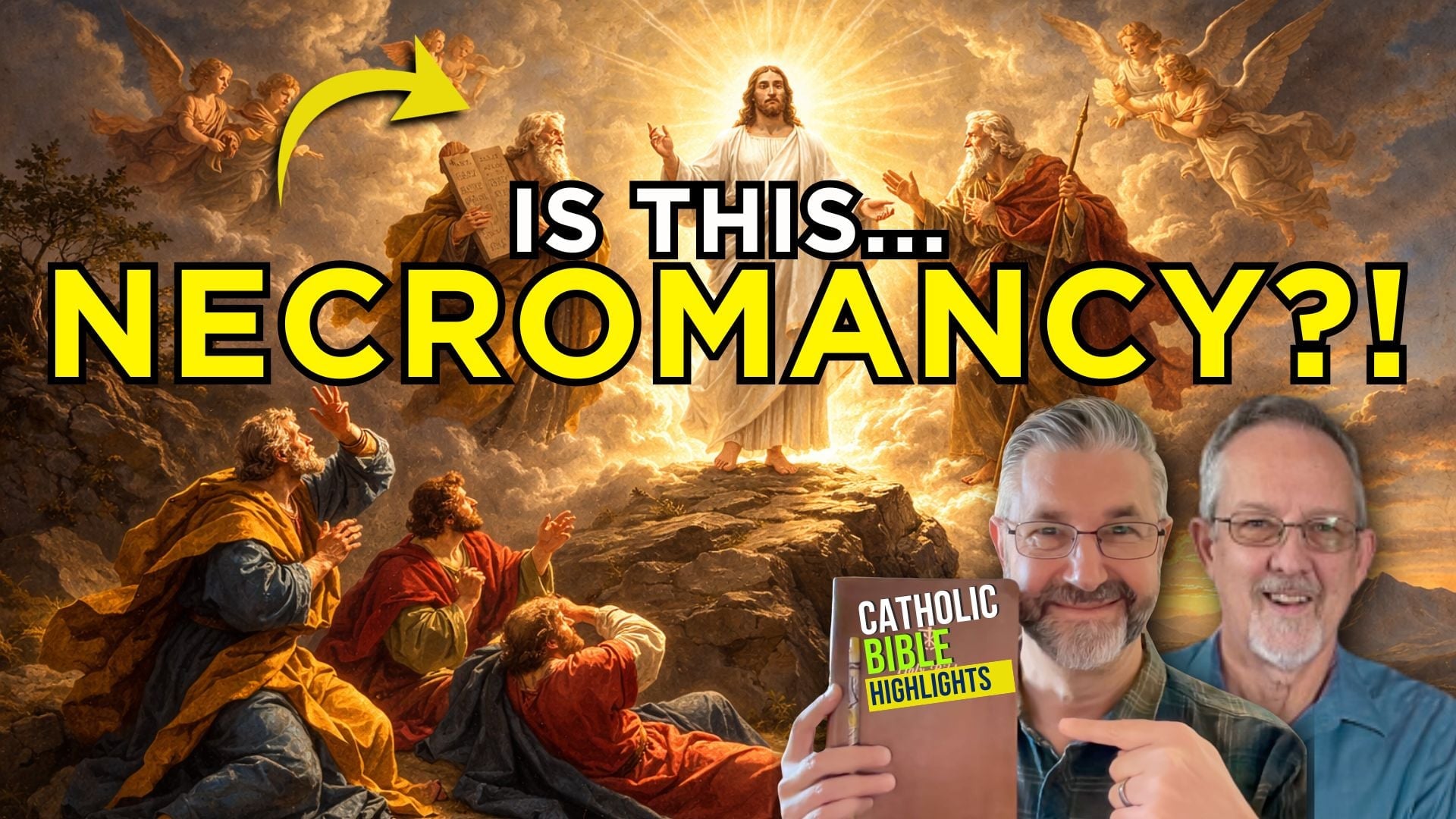
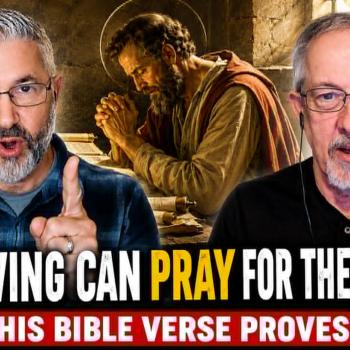
This is a transcript of the main presentation (minus our spontaneous discussion at the end) for the video, “Does The Bible Forbid ALL Contact Between The Living And The Dead?” (Catholic Bible Highlights with Kenny Burchard, 2-27-26).
*****
During my lengthy recent debates about Luke 16 (the rich man and Abraham), a Protestant stated on my Facebook page: “Scripture forbids the living from speaking to the dead, but it does not forbid the dead from speaking to other dead people.”
This reasoning is, of course, utilized by many Protestants as a key premise in order to undercut any practice of invocation of saints or asking saints to intercede, because after all, this sort of communication between the living and the departed is absolutely forbidden by God in Holy Scripture: so we are told. It’s a clever retort, but unfortunately for the argument, it’s unbiblical and contrary to the Bible. Technically, our present argument isn’t a positive defense of the invocation of saints. Rather, it’s a “defeater of an attempted defeater.” The argument above, if true, would make invocation of saints impossible, by means a sweeping category proclamation (“one can never communicate with the dead at all”). Thus, if it’s defeated, it can’t be used as an argument against invocation and intercession of saints. Other arguments must be used.
Also, we need to briefly examine what it means to be “dead” and “alive” according to the Bible and Christian theology (“anthropology” as a category of theology, to be precise). The definition of death is the separation of the soul and body. No one is ever not alive in the sense of “no longer existing” / “annihilated” because all souls are eternal. Nor do souls “sleep” (become unconscious): a heresy. The saints in the afterlife — those who are saved, or in the elect — are “dead” in the sense that they are no longer inhabiting the earth (this is the sense in which I use it); their sojourn here has ended. They’re alive in terms of still being consciously in existence in heaven (or in Hades, before Christ), and they are so initially as spirits, but eventually will receive glorified resurrection bodies.
Enoch and Elijah never died. They didn’t undergo the physical process of death, but they were transported away from the earth into the afterlife, so in that specific and limited sense, they “died” (no longer being on the earth), and so I include them in my argumentation. They were extraordinary exceptions to the rule (as Mary may have also been, if she didn’t die). So we could also say that many Protestants don’t want contact between those of us on the earth and those in the afterlife. This would include Enoch and Elijah, if someone wants to say they are exceptions and that the mention of them is invalid.
***
1) Why do Moses and Elijah appear at the transfiguration (Matthew 17:1-4), if “Scripture forbids the living from speaking to the dead”? Why would God allow that? Peter and the disciples quite possibly talked to them. Jesus never told them, “get away from Moses and Elijah! That’s necromancy!” If Peter or John had asked Moses or Elijah at the transfiguration, “hey, what’s it like in Hades?” that would be a sin according to many Protestants, because it was human-originated and seeking information. They don’t like the idea, so they will say that they wouldn’t have conversed. I think that’s why so many Protestants take the hard line, because they’re afraid if they give an inch, it’ll be the slippery slope into dreaded “Romanism.”
The text itself doesn’t say, either way, but it’s perfectly possible and plausible. The text doesn’t rule out a possible “disciples talking to Moses and Elijah” scenario. Peter saying, “I will make three booths here, one for you and one for Moses and one for Elijah” (17:4) almost sounds to me like — mere speculation — he wanted to talk theology around the campfire with Moses and Elijah until the wee hours of the morning. Who wouldn’t?
2) In Matthew 27:52-53, it says, “many bodies of the saints who had fallen asleep were raised, and coming out of the tombs after his resurrection they went into the holy city and appeared to many.” It’s quite reasonable to assume that they talked to people.
3) Jesus spoke to the dead when He raised Lazarus:
John 11:43-44 (RSV) When he had said this, he cried with a loud voice, “Lazarus, come out.” [44] The DEAD man came out, . . .
4) St. Peter did the same thing when he raised the young girl:
Acts 9:36-37, 40-41 Now there was at Joppa a disciple named Tabitha, which means Dorcas. She was full of good works and acts of charity. [37] In those days she fell sick and died; . . . [40] But Peter put them all outside and knelt down and prayed; then turning to THE BODY he said, “Tabitha, rise.” And she opened her eyes, and when she saw Peter she sat up. [41] And he gave her his hand and lifted her up. Then calling the saints and widows he presented her alive.
5) So did other disciples, since Jesus commanded them to “Heal the sick, raise the dead, cleanse lepers, cast out demons” (Matthew 10:8).
6) Saul spoke to the prophet Samuel after he died (1 Samuel 28:3-25). It occurred in conjunction with a forbidden seance, but nevertheless, the real Samuel appeared and gave a true prophecy: that Saul would die the next day. If God absolutely forbade any such contact, then Samuel simply wouldn’t have appeared. Samuel’s appearance itself is obviously not forbidden because if God didn’t will that, it wouldn’t have happened. How Saul and the medium attempted to “bring him up” was what was grave sin. That’s all a given. But it doesn’t overcome the force of the argument, because it works in the same way that the rich man and Abraham works (for the purpose of this argument). A dead person is petitioned / prayed to. This violates the Protestant tenet that we are to pray to / invoke no one but God. Abraham never said that the rich man shouldn’t petition him. He refused the petition (a different thing) because it violated God’s will.
Samuel acts in exactly the same way (and this time it’s a person alive on earth petitioning a dead person). He doesn’t say, “why are you making requests of me?” He also refuses the request because it’s not in God’s will. God had already turned against Saul because of his rebellion and sin, as it states three times earlier in the chapter:
15:10-11 The word of the LORD came to Samuel: [11] “I repent that I have made Saul king; for he has turned back from following me, and has not performed my commandments.”*16:14 Now the Spirit of the LORD departed from Saul, . . .
18:12 Saul was afraid of David, because the LORD was with him but had departed from Saul.
Therefore, both incidents constitute biblical support for the invocation of saints. But because many Protestants don’t like the idea of any contact at all between living and dead / those in the afterlife (i.e., departed from this life but still alive in terms of conscious and eternal existence), they make out that “Samuel” in the story was merely an impersonating demon. That’s cute: so now a demon utters a true prophecy about Saul’s death?:
1 Samuel 28:18-19 Because you did not obey the voice of the LORD, and did not carry out his fierce wrath against Am’alek, therefore the LORD has done this thing to you this day. [19] Moreover the LORD will give Israel also with you into the hand of the Philistines; and tomorrow you and your sons shall be with me; the LORD will give the army of Israel also into the hand of the Philistines. (cf. Sirach 46:20: “Even after he had fallen asleep he prophesied and revealed to the king his death, and lifted up his voice out of the earth in prophecy, to blot out the wickedness of the people”).
7) Though it’s more speculative, there are also the “two witnesses” of Revelation:
Revelation 11:3, 7-12 And I will grant my two witnesses power to prophesy for one thousand two hundred and sixty days, clothed in sackcloth. . . . [7] And when they have finished their testimony, the beast that ascends from the bottomless pit will make war upon them and conquer them and kill them, [8] and their dead bodies will lie in the street of the great city which is allegorically called Sodom and Egypt, where their Lord was crucified. [9] For three days and a half men from the peoples and tribes and tongues and nations gaze at their dead bodies and refuse to let them be placed in a tomb, [10] and those who dwell on the earth will rejoice over them and make merry and exchange presents, because these two prophets had been a torment to those who dwell on the earth. [11] But after the three and a half days a breath of life from God entered them, and they stood up on their feet, and great fear fell on those who saw them. [12] Then they heard a loud voice from heaven saying to them, “Come up hither!” And in the sight of their foes they went up to heaven in a cloud.
How is that relevant? Well, it’s because several prominent Protestant commentators and some early Church fathers hold that these two men were either Elijah and Enoch (both men who didn’t die) or Moses and Elijah (the two who appeared at the transfiguration), who appear on the earth again for 3 1/2 years, prophesying and talking to hundreds, if not thousands of people. Lots of “contact” there!
Jamieson-Fausset-Brown Bible Commentary: De Burgh thinks Elijah and Moses will again appear, as Mal 4:5, 6 seems to imply (compare Mt 17:11; Ac 3:21). Moses and Elijah appeared with Christ at the Transfiguration, which foreshadowed His coming millennial kingdom. As to Moses, compare De[ut] 34:5, 6; Jude 9. Elias’ genius and mode of procedure bears the same relation to the “second” coming of Christ, that John the Baptist’s did to the first coming [Bengel]. Many of the early Church thought the two witnesses to be Enoch and Elijah.
Cambridge Bible for Schools and Colleges: The traditional view of these, dating from the second century, is that they are Enoch and Elijah—the two prophets who, having (for a time) finished their work on earth, have left it without death: but who, since “it is appointed for all men once to die,” will, as is here revealed, come on earth again, to prophesy and suffer death in the days of Antichrist. As to Elijah, there seems to be little doubt that this view is true. The prophecy of Malachi 4:5 has indeed received a fulfilment in the mission of the Baptist (St Luke 1:17). But St Matthew 17:11-12 perhaps implies that this fulfilment is not the final one—especially when compared with St John 1:21. Really the plain sense of these passages seems to be, that Elijah will actually be sent before the second Coming of Christ, as one in his spirit and power was before His first. . . . the internal evidence of Scripture itself points rather to Moses and Elijah being the two witnesses. Their names are coupled in the prophecy of Malachi 4:4-5, as well as in the history of the Transfiguration: and Revelation 11:6 ascribes to these prophets the plague actually inflicted by Moses, as well as that by Elijah.
That’s seven counter-examples (three involving Jesus Himself). So this assertion is false and wrong. Clearly, not ALL communication (and/or contact) between the living and the dead is forbidden in the Bible; only the practices of divination, sorcery, necromancy, and the occult, which are essentially different in many ways, compared to the Catholic communion of saints.
***
Another argument can be made as well, from St. John and the book of Revelation. Most Bible commentators appear to believe that John was on the earth and had a mystical, spiritual vision of heaven, recounted in the book of Revelation. He reports: “I John, . . . was on the island called Patmos on account of the word of God and the testimony of Jesus. I was in the Spirit on the Lord’s day, and I heard behind me a loud voice like a trumpet” (1:9-10).
He uses the word “vision” once in 9:17, but repeatedly writes that he “saw” (51 times) and “heard” things (36 times). He writes, “I John am he who heard and saw these things” (22:8). The senses of touch and smell seem to not be involved, since the words “touch”, “feel”, “felt”, “odor”, “fragrance”, or “smell” don’t appear.
The phrase “in the Spirit” occurs also in 4:2 (“I was in the Spirit, and lo, a throne stood in heaven”); 17:3; and 21:10 and this suggests that it was a vision. If that was the case, he was still on the earth when all of this happened. The phrase “in heaven” occurs 17 times, but is consistent with a vision. It would be like one reporting a dream, saying, “I was in my old school again” etc. The phrase “from heaven” appears 14 times, suggesting a distance and not being there. He never writes that he was “taken to heaven” or “went to heaven.”
I would say that it’s a very real thing; otherwise, why would God want it recorded in Holy Scripture for all posterity? I’d ask someone who denies this whether they think the words of Jesus at the beginning and end of the book are real? They’re all part of John’s vision.
Paul, in contrast, describes a similar extraordinary experience of his as being “caught up to the third heaven” and “caught up into Paradise” (2 Cor 12:2-3) and states that it may have even been “in the body”. But then he also describes as an example of “visions and revelations of the Lord” (12:1), so who knows? But it seems more likely to have been an actual visit to heaven than John’s account. If not, then it’s more contact of heaven and earth with regard to a human being who is on the earth. In the following, I don’t include his encounters with single angels and with Jesus.
Converses with an “Elder” (considered to be dead human beings)
Revelation 7:13-14 Then one of the elders addressed me, saying, “Who are these, clothed in white robes, and whence have they come?” [14] I said to him, “Sir, you know.” And he said to me, “These are they who have come out of the great tribulation; they have washed their robes and made them white in the blood of the Lamb. (continues in 7:15-17)
Elder Talks to Him
Revelation 5:5 Then one of the elders said to me, “Weep not; lo, the Lion of the tribe of Judah, the Root of David, has conquered, so that he can open the scroll and its seven seals.”
Heard the Twenty-Four Elders Worshiping God
Revelation 4:10-11 the twenty-four elders fall down before him who is seated on the throne and worship him who lives for ever and ever; they cast their crowns before the throne, singing, [11] “Worthy art thou, our Lord and God, to receive glory and honor and power, for thou didst create all things, and by thy will they existed and were created.”
Revelation 5:8-10 And when he had taken the scroll, the four living creatures and the twenty-four elders fell down before the Lamb, each holding a harp, and with golden bowls full of incense, which are the prayers of the saints; [9] and they sang a new song, saying, “Worthy art thou to take the scroll and to open its seals, for thou wast slain and by thy blood didst ransom men for God from every tribe and tongue and people and nation, [10] and hast made them a kingdom and priests to our God, and they shall reign on earth.”
Revelation 11:16 And the twenty-four elders who sit on their thrones before God fell on their faces and worshiped God, (words of praise in 11:17-18)
Heard Angels and Elders Worshiping God
Revelation 5:11-12 Then I looked, and I heard around the throne and the living creatures and the elders the voice of many angels, numbering myriads of myriads and thousands of thousands, [12] saying with a loud voice, “Worthy is the Lamb who was slain, to receive
Revelation 7:11-12 And all the angels stood round the throne and round the elders and the four living creatures, and they fell on their faces before the throne and worshiped God, [12] saying, “Amen! Blessing and glory and wisdom and thanksgiving and honor and power and might be to our God for ever and ever! Amen.”
Heard “Every Creature in Heaven and On Earth and Under the Earth [Hades]” Worshiping God
Revelation 5:13 And I heard every creature in heaven and on earth and under the earth and in the sea, and all therein, saying, “To him who sits upon the throne and to the Lamb be blessing and honor and glory and might for ever and ever!”
Heard “A Great Multitude Which No Man Could Number, From Every Nation . . .” Worshiping God
Revelation 7:9-10 After this I looked, and behold, a great multitude which no man could number, from every nation, from all tribes and peoples and tongues, standing before the throne and before the Lamb, clothed in white robes, with palm branches in their hands, [10] and crying out with a loud voice, “Salvation belongs to our God who sits upon the throne, and to the Lamb!”
Heard a “Great Multitude” Worshiping God
Revelation 19:1-2 After this I heard what seemed to be the loud voice of a great multitude in heaven, crying, “Hallelujah! Salvation and glory and power belong to our God, [2] for his judgments are true and just; he has judged the great harlot who corrupted the earth with her fornication, and he has avenged on her the blood of his servants.” (continues in 19:3-8, mentioning the “elders”)
Heard the 144,000 Worshiping God
Revelation 14:1-4 Then I looked, and lo, on Mount Zion stood the Lamb, and with him a hundred and forty-four thousand who had his name and his Father’s name written on their foreheads. [2] And I heard a voice from heaven like the sound of many waters and like the sound of loud thunder; the voice I heard was like the sound of harpers playing on their harps, [3] and they sing a new song before the throne and before the four living creatures and before the elders. No one could learn that song except the hundred and forty-four thousand who had been redeemed from the earth. [4] It is these who have not defiled themselves with women, for they are chaste; it is these who follow the Lamb wherever he goes; these have been redeemed from mankind as first fruits for God and the Lamb,
RESOURCES
BOOK
Biblical Evidence for the Communion of Saints (Feb. 2012, 152 pages)
VIDEO / TRANSCRIPT
“Is All Prayer Worship? Jordan Cooper says “Yes.” The Bible Says…No!” (12-20-25) + Transcript.
WEB PAGE
Saints, Purgatory, & Penance [section II: Invocation & Intercession of Saints & Angels]
RELATED ARTICLES
Intercession of the Saints and Necromancy (Jimmy Akin)
Is Invocation of the Saints Equivalent to Necromancy? [mine]
Praying to Saints and Bible’s Prohibition of Necromancy (Karlo Broussard)
Is Intercession of Saints Necromancy? (Karlo Broussard)
Necromancy (Catholic Encyclopedia, 1911)
***
Photo credit: copyright 2026 by Catholic Bible Highlights.
Summary: I provide seven primary and eight more likely instances of permissible contact between those on the earth and departed dead people; contra Protestant objections.









 Ad-Free & Subscriber Log-In