

15 Biblical Passages on Forgiveness & Willingness to Forgive / Also, Biblical Teaching on Civil Justice

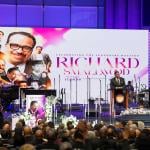
My wife and I recently watched on TV the memorial for Charlie Kirk, attended by over 90,000 people. There was a very moving moment when his widow, Erika, talked about how Charlie didn’t hate anyone, and wanted to share the gospel with them, so that their lives could be transformed and have the greatest purpose and meaning. He desired the best for everyone, and that is the basic meaning of love for others, and applying the golden rule. That’s what it’s all about. Erika noted how conservatives and Christians haven’t been rioting in the aftermath of the heinous murder, and that revival was taking place instead: reacting to great evil with a positive attitude, as much as possible.
Then she referred to Jesus’s words on the cross, “Father forgive them, for they know not what they do” (Luke 23:34, RSV). And she tearfully forgave her husband’s murderer. How could a widow do that, just eleven days after it happened?! The very thought makes us very uneasy, and we rebel against it. It doesn’t seem right. But it’s all by God’s grace. We feel that way, yet our Lord forgave His murderers, and we can do no less. He demanded that we personally forgive others. The Bible also recognizes the role of justice and punishment for criminals. Both things are good and necessary, and fit together harmoniously in the Bible.
A lot of people think that the Old Testament was only about justice and vengeance: both from God and men, and they have this idea that God was sort of “mean” and vindictive and that this sums Him up. There is indeed a lot of judgment (rightly understood). But God – being God and a perfect Being –, remained the same in both testaments, and forgiveness is also in the Old Testament, just as we find both themes also in the New Testament. To offer a famous example from the first book of the Bible, the patriarch Joseph had been sold into slavery by his brothers and wound up being a high-level government figure in Egypt. When they all met again years later, this is what happened:
Genesis 50:15-21 When Joseph’s brothers saw that their father was dead, they said, “It may be that Joseph will hate us and pay us back for all the evil which we did to him.” [16] So they sent a message to Joseph, saying, “Your father gave this command before he died, [17] ‘`Say to Joseph, Forgive, I pray you, the transgression of your brothers and their sin, because they did evil to you.’ And now, we pray you, forgive the transgression of the servants of the God of your father.” Joseph wept when they spoke to him. [18] His brothers also came and fell down before him, and said, “Behold, we are your servants.” [19] But Joseph said to them, “Fear not, . . . [20] As for you, you meant evil against me; but God meant it for good, to bring it about that many people should be kept alive, as they are today. [21] So do not fear; I will provide for you and your little ones.” Thus he reassured them and comforted them.
God reveals over and over in the Old Testament that He is ready to forgive His people if only they will repent:
2 Chronicles 7:14 if my people who are called by my name humble themselves, and pray and seek my face, and turn from their wicked ways, then I will hear from heaven, and will forgive their sin and heal their land.
Nehemiah 9:17 . . . thou art a God ready to forgive, gracious and merciful, slow to anger and abounding in steadfast love, and didst not forsake them.
And there are hints of what would be made a lot more clear in the New Testament; for example, “He who forgives an offense seeks love, but he who repeats a matter alienates a friend” (Proverbs 17:9). But then this immediately raises a seeming difficulty: “what if someone doesn’t repent? How can we forgive them? Do we have to? That brings us to the deeper New Testament command from Jesus of our being willing to forgive if the offender asks us, and to do so even if they don’t ask. If you’re like me, chances are you’ve had many people in your life who have treated you badly (including even close friends or family members) but never asked forgiveness; never said that they were sorry. And if we’re honest, all of us have done the same thing to others. We’re not only the victims in this because we’re all fallen and we sin.
I learned a long time ago that I couldn’t live with a constant bitterness or anger or resentment, but that I had to be willing to forgive those who hurt me or treated me badly: to love them and hope for their best. To be bitter is to ruin your own life. It doesn’t affect the other person involved. We all know people who refuse to let go, and live their lives in anger and bitterness – often ending up as alcoholics or drug users, or having serious health problems as a result, and in the worst cases, alienating everyone around them. Erika Kirk — a devout Catholic — chose to forgive and to love and to not become hateful and bitter and wreck her entire life.
I think that this element of forgiveness is explained in much deeper and powerful way in the New Testament:
Matthew 5:38-39, 43-47 You have heard that it was said, ‘An eye for an eye and a tooth for a tooth.’ [39] But I say to you, Do not resist one who is evil. But if anyone strikes you on the right cheek, turn to him the other also; . . . [43] “You have heard that it was said, ‘You shall love your neighbor and hate your enemy.’ [44] But I say to you, Love your enemies and pray for those who persecute you, [45] so that you may be sons of your Father who is in heaven; for he makes his sun rise on the evil and on the good, and sends rain on the just and on the unjust. [46] For if you love those who love you, what reward have you? Do not even the tax collectors do the same? [47] And if you salute only your brethren, what more are you doing than others? Do not even the Gentiles do the same?”
Matthew 6:12, 14-15 And forgive us our debts, as we also have forgiven our debtors; . . . [14] For if you forgive men their trespasses, your heavenly Father also will forgive you; [15] but if you do not forgive men their trespasses, neither will your Father forgive your trespasses.
Matthew 18:21-35 . . . Peter came up and said to him, “Lord, how often shall my brother sin against me, and I forgive him? As many as seven times?” [22] Jesus said to him, “I do not say to you seven times, but seventy times seven. [23] “Therefore the kingdom of heaven may be compared to a king who wished to settle accounts with his servants. [24] When he began the reckoning, one was brought to him who owed him ten thousand talents; [25] and as he could not pay, his lord ordered him to be sold, with his wife and children and all that he had, and payment to be made. [26] So the servant fell on his knees, imploring him, `Lord, have patience with me, and I will pay you everything.’ [27] And out of pity for him the lord of that servant released him and forgave him the debt. [28] But that same servant, as he went out, came upon one of his fellow servants who owed him a hundred denarii; and seizing him by the throat he said, `Pay what you owe.’ [29] So his fellow servant fell down and besought him, `Have patience with me, and I will pay you.’ [30] He refused and went and put him in prison till he should pay the debt. [31] When his fellow servants saw what had taken place, they were greatly distressed, and they went and reported to their lord all that had taken place. [32] Then his lord summoned him and said to him, `You wicked servant! I forgave you all that debt because you besought me; [33] and should not you have had mercy on your fellow servant, as I had mercy on you?’ [34] And in anger his lord delivered him to the jailers, till he should pay all his debt. [35] So also my heavenly Father will do to every one of you, if you do not forgive your brother from your heart.”
Mark 11:25 And whenever you stand praying, forgive, if you have anything against any one; so that your Father also who is in heaven may forgive you your trespasses.”
Luke 6:27 . . . Love your enemies, do good to those who hate you,
Luke 6:37 . . . forgive, and you will be forgiven;
Luke 17:3-4 Take heed to yourselves; if your brother sins, rebuke him, and if he repents, forgive him; [4] and if he sins against you seven times in the day, and turns to you seven times, and says, `I repent,’ you must forgive him.”
Romans 12:17-21 Repay no one evil for evil, but take thought for what is noble in the sight of all. [18] If possible, so far as it depends upon you, live peaceably with all. [19] Beloved, never avenge yourselves, but leave it to the wrath of God; for it is written, “Vengeance is mine, I will repay, says the Lord.” [20] No, “if your enemy is hungry, feed him; if he is thirsty, give him drink; for by so doing you will heap burning coals upon his head.” [21] Do not be overcome by evil, but overcome evil with good. (cf. Deut 32:35)
Colossians 3:13 forbearing one another and, if one has a complaint against another, forgiving each other; as the Lord has forgiven you, so you also must forgive.
There is also a fascinating relevant example from the Apostle Paul on this topic. He writes to the Corinthians:
1 Corinthians 5:1-2 It is actually reported that there is immorality among you, and of a kind that is not found even among pagans; for a man is living with his father’s wife. [2] . . . Let him who has done this be removed from among you.
Accordingly, Paul applies a penance or “judgment” (v. 3) to him, in order that “his spirit may be saved in the day of the Lord Jesus: (v. 5). But later he asks everyone in the community to forgive him and welcome him back, and he himself forgives him. This is more like when a priest formally and sacramentally absolves sin, even though it was not directed to himself:
2 Corinthians 2:5, 7-8, 10 But if any one has caused pain, he has caused it not to me, but in some measure . . . to you all. . . . [7] . . . forgive and comfort him, or he may be overwhelmed by excessive sorrow. [8] So I beg you to reaffirm your love for him. . . .[10] Any one whom you forgive, I also forgive.. . .
Catholic apologist and my friend Jimmy Akin wrote in a Catholic Answers article entitled, “The Limits of Forgiveness” (9-23-25):
We aren’t obligated to forgive people who do not want us to. This is one of the biggest stumbling blocks that people have regarding the topic. People have seen “unconditional” forgiveness and love hammered so often that they feel obligated to forgive someone even before that person has repented. Sometimes they even tell the unrepentant that they have pre-emptively forgiven him (much to the impenitent’s annoyance).*This is not what is required of us.
Consider Luke 17:3-4, where Jesus tells us, “If your brother sins, rebuke him, and if he repents, forgive him; and if he sins against you seven times in the day, and turns to you seven times, and says, ‘I repent,’ you must forgive him.”*Notice that Jesus says to forgive him if he repents, not regardless of whether he does so. Jesus also envisions the person coming back to you and admitting his wrong.*The upshot? If someone isn’t repentant, you don’t have to forgive him.
If you do forgive him anyway, that can be meritorious, provided it doesn’t otherwise have bad effects (e.g., encouraging future bad behavior). But it isn’t required of us that we forgive the person.
*
Also, not all the passages regarding forgiveness mention repentance in context. So it doesn’t appear to be a necessary component in granting the forgiveness. In other words, I submit that the “transactional” forgiveness of Luke 17:3-4 isn’t universally applicable, or the only, exclusive way that it takes place.
Romans 13:1-4 Let every person be subject to the governing authorities. For there is no authority except from God, and those that exist have been instituted by God. [2] Therefore he who resists the authorities resists what God has appointed, and those who resist will incur judgment. [3] For rulers are not a terror to good conduct, but to bad. Would you have no fear of him who is in authority? Then do what is good, and you will receive his approval, [4] for he is God’s servant for your good. But if you do wrong, be afraid, for he does not bear the sword in vain; he is the servant of God to execute his wrath on the wrongdoer.
1 Peter 2:13-14, 17 Be subject for the Lord’s sake to every human institution, whether it be to the emperor as supreme, [14] or to governors as sent by him to punish those who do wrong and to praise those who do right. . . . [17] . . . Honor the emperor.
The Christian is to obey the present governmental authorities, but not to the extent of transgressing God’s moral law. Hence, the first believers, including Peter, disobeyed certain laws, when necessary (Acts 4:18-20; 5:27-29).
Jesus said, in a proverbial way, “all who take the sword will perish by the sword” (Matthew 26:52). But He also said (words cited a lot less): “let him who has no sword sell his mantle and buy one” (Lk 22:36).
When our Lord encountered a Roman centurion (Mt 8:5-13), who asked Him to heal his servant, He did so, and didn’t rebuke him for being a Roman soldier, or require him to stop being one. He even said, “not even in Israel have I found such faith” (8:10). Jesus accepted the notion of obedience to civil government in general – even a pagan government — when He said: “Render therefore to Caesar the things that are Caesar’s” (Mt 22:21), in this particular instance, taxes.
John the Baptist acted similarly when Roman soldiers approached him. He told them, “Rob no one by violence or by false accusation, and be content with your wages” (Lk 3:14).
St. Paul acknowledged the Roman governmental apparatus during his trial. He appealed to his Roman citizenship in protest of his beating and imprisonment (Acts 16:37-38), and to avoid being whipped (Acts 22:25-29). And he accepted the help of Roman military escorts and guards, in order to protect his life (Acts 23:12-33; 28:16), and ultimately appealed to Caesar himself (Acts 25:11).
The New Testament isn’t pacifist at all. In Jesus’ short parable about counting the cost of discipleship, the example of a king going to battle was used (Lk 14:31-33). That couldn’t be, if warfare were intrinsically evil. Some of the early Christians were soldiers (Acts 10:1-4, 22,30-31). Cornelius, one of them, is called “an upright and God-fearing man” (10:22). The New Testament uses military metaphors: “weapons of our warfare” (2 Cor 10:4), “Put on the whole armor of God“ (Eph 6:11), “put on the breastplate of righteousness” (Eph 6:14), “the shield of faith” (Eph 6:16), “the helmet of salvation, and the sword of the Spirit” (6:17), “wage the good warfare” (1 Tim. 1:18; or “fight the good fight”), and “Share in suffering as a good soldier of Christ Jesus” (2 Tim. 2:3). And it praises military heroes:
Hebrews 11:32-34 . . . time would fail me to tell of Gideon, Barak, Samson, Jephthah, of David and Samuel and the prophets — [33] who through faith conquered kingdoms, enforced justice, . . . [34] . . . escaped the edge of the sword, . . . became mighty in war, put foreign armies to flight.
Therefore, murderers like Tyler Robinson will be convicted and punished, and this is perfectly proper. But the person he made a widow because of his evil act, has decided to personally forgive him and hope that he is saved, in love. This is what the followers of Jesus ought to do. We ought not hope that anyone go to hell, because God doesn’t:
1 Timothy 2:3-4 . . . God our Savior, [4] . . . desires all men to be saved and to come to the knowledge of the truth.
2 Peter 3:9 The Lord is . . . not wishing that any should perish, but that all should reach repentance.
There is no conflict at all between the two things: personal forgiveness when someone apologizes and willingness to forgive when they don’t, and on the other hand, the civil justice system that punishes wrongdoers. Both are taught in the Bible.
Photo Credit: Erika Kirk and Charlie Kirk speaking with attendees at the 2025 Young Women’s Leadership Summit at the Gaylord Texan Resort & Convention Center in Grapevine, Texas (6-13-25, by Gage Skidmore; originally on Flickr) [Wikimedia Commons / Creative Commons Attribution-Share Alike 4.0 International license]
Summary: Exposition on the biblical theology of forgiveness, starting with reflections on the profound example of Erika Kirk publicly forgiving the murderer of her husband Charlie.













 Ad-Free & Subscriber Log-In