

[From Facebook exchanges with a Protestant]
We are commanded to pray to God only.
*
Where? You have to find something that includes words such as [examples] “only” or “pray to God alone”, for this to be true. I’m not sure you can find an “exclusive” verse like that (I highly suspect, not). If I’m wrong about that, all any Protestant who disagrees needs to do is find such an “exclusive” verse. Otherwise, passages about prayer to God don’t necessarily, logically exclude the possibility of other passages describing prayer to saints or angels (like Jesus’ story in Luke 16 with the rich man and Abraham, and Lot and the angel he prayed to, receiving his request).
*
Show me one clear verse that says we can pray to saints, without inferring into it something that the verse doesn’t say. Or stringing unrelated verses.
*
I provided two passages (not two verses). The original Bible didn’t have verse numbers.
*
Show me one clear verse — to turn the tables and argue like you do — that says that Scripture is the only infallible source for theology and doctrine, and that tradition and the Church are not [i.e., sola Scriptura: the Protestant rule of faith], without inferring into it something that the verse doesn’t say. Or stringing unrelated verses.
*
*
Show me one verse where it lists the books of the Bible.
*
And where do you get this notion that in order to believe something, it has to be found whole and entire in one verse in Scripture? The Bible never teaches that! It’s a false man-made tradition.
*
And where do you get this notion that in order to believe something, it has to be found whole and entire in one verse in Scripture? The Bible never teaches that! It’s a false man-made tradition.
*
The word used for prayer by Jesus in Matthew 6 is proseuchomai, which literally means “to pray to God, worship”. This is the primary verb used in the NT for prayer. The rich man was not worshiping God or Abraham.
*
Of course he was not worshiping Abraham, just as most instances of prayer are not worshiping God, either, as I recently demonstrated at length.
*
He was not praying. He was begging or pleading or beseeching.
*
Typical Protestant playing with words and making distinctions without a difference: when encountering Catholic passages of the Bible. I did a whole book about this in 2004, called The Catholic Verses. The same is done with the passage where Paul prays for the dead man, Onesiphorus. Some of the classic commentaries on that are downright comical. They say Paul was “wishing” or “hoping” but not praying!
*
The other word for pray is parakaleo which means “to call near, invite beseech” and is never used in reference to praying to saints. The rich man in Luke 16 is pleading with Abraham. The word pray in Luke 16:27 is erotao which means to “beg, beseech”. This word can mean prayer but only when it is used Godward.
*
Here of course you simply assume what you are trying to prove (circular reasoning). Having shown that the word can mean prayer and that it’s present in Luke 16, you proceed to contend that it can’t in Luke 16 because, well, it can only be directed towards God. How, then, could anyone ever prove that a word meant a particular thing, if it’s ruled out beforehand, because it “can’t” mean it? That’d be like saying that Kurios (Lord) can only be used of the Father, so that when it’s also used in the Bible for Jesus it can’t mean the same thing because it’s only used of the Father. Using this method [choke], one can “disprove” anything they want to disprove.
So Luke 16:27 could be translated “I beg you”, which many translations do translate erotao. In fact erotao is used 58x and 14x it is translated pray in the KJV. Many of those 14x it is used in the sense of beg. Like Luke 14:19 “I pray thee have me excused”. Jesus uses it in John 14:16 when he says he will pray to the Father. And he uses it again in John 16:26. He also uses it in his priestly prayer in John 17.
John uses it in 1 John 5:16 where John is talking about prayer to God. Its also used a few times in Acts but in the sense of pleading and not prayer. Erotao is mainly used for beg or plead and when used for prayer it is always used of God and never man. So clearly Luke 16 is not endorsing prayer to Abraham, but the rich man is pleading with him. No biblical or patristic sources use erotao for prayers addressed to saints.
*
Repeating a fallacy and circular argument over and over doesn’t turn it from falsehood into truth. But thanks for the classic demonstration of eisegesis. I have recently debated the meaning of Luke 16 at extreme length, and none of this weakens my argument in the slightest.
*
He was not praying to him. He was pleading. They could actually talk to each other. Luke 16 is not proof of being able to plead with saints in heaven. You cant hear them audibly. You cant talk to them. That requires two way communication which is what Abraham and the rich man have. You don’t have that with departed believers.
He was not praying to him. He was pleading. They could actually talk to each other. Luke 16 is not proof of being able to plead with saints in heaven. You cant hear them audibly. You cant talk to them. That requires two way communication which is what Abraham and the rich man have. You don’t have that with departed believers.
*
The last three paragraphs of my post were completely ignored. Saying falsehoods over and over with no adequate reason for doing so isn’t even rational argumentation.
*
*
This doesn’t follow. Say, for example, one was able to communicate with someone by radio, but that person couldn’t send a message back, except through letter, saying that they heard the radio transmission. The fact that they couldn’t send one back doesn’t prove that they didn’t hear a radio message. We know from the Bible that saints in heaven are intensely interested in earthly affairs and that they are capable of hearing prayers. So we know that they can hear our petitions and requests for intercession whether or not we hear back from them. In the same way, many if not most prayers to God are not accompanied by a message back from Him to us. (either in the Spirit or audibly). So your “argument” proves too much.
*
Not only that but you are alive on Earth and the believers are in Heaven. Abraham and the rich man were both departed into the spiritual realm. Luke 16 is not proof text for praying to the saints. Originally you required exact wording for the belief that we can only pray to God. Words like “only” or “alone” when referencing prayer to God. Well, the burden of proof lies with you.
*
It lies on the one making the claim (that in the Bible only God can be prayed to). If that is in one verse, then it would have to include exclusive language like “only” or “alone.” I don’t believe there is such a passage, but it’s not my burden. The one making the claim has to demonstrate it. I showed that prayer to a saint is present in Luke 16 and that Lot prayed to an angel and was granted his request.
*
If you are going to put that restriction on us, then we can ask the same of you. You need to show use where it clearly says “The saints hear our prayers.” Or ” Pray to the saints”.
It lies on the one making the claim (that in the Bible only God can be prayed to). If that is in one verse, then it would have to include exclusive language like “only” or “alone.” I don’t believe there is such a passage, but it’s not my burden. The one making the claim has to demonstrate it. I showed that prayer to a saint is present in Luke 16 and that Lot prayed to an angel and was granted his request.
*
If you are going to put that restriction on us, then we can ask the same of you. You need to show use where it clearly says “The saints hear our prayers.” Or ” Pray to the saints”.
*
In a sense I just did in the previous comment (Luke 16 and Lot and the angel). Also, there is Revelation 5:8 and 8:3-4 where both departed saints (“elders”) and angels are in possession of “the prayers of the saints” (one passage even says “all” of the prayers). The most plausible reason for them having them is that they were asked to intercede, or that God delegated authority to them to “process” prayers as His helpers or intermediaries (just as in the case of Lot and Abraham).
*
In fact you have to prove the entire canonization process from scripture.
In fact you have to prove the entire canonization process from scripture.
*
I don’t have to, and I can’t (no one can). It’s not in Scripture. Catholics are content to believe the canon on the basis of the sublime authority of apostolic tradition. When Protestants accept it, they must make a glaring exception to their rule of faith (sola Scriptura), that only the Bible is infallible.
*
There’s no special class of saints. You need to prove that too.
There’s no special class of saints. You need to prove that too.
*
That’s easy:
*
*
Not a fallacy like your exact word fallacy. Nor is it eisegesis. Eisegesis is a good description of attempting to use Luke 16 to prove praying to the saints. And because you chose to attack me when I clearly point out to you the Greek usage of the various words and their context this debate is over. I am done. My silence from here on is not an admission of defeat but just the refusal to respond to attacks or repeat myself.
*
What “attacks”? I refuted your arguments. Your arguments are not you. If you’re gonna play the usual victim game and flee from the argument because it’s not going well, then I’ll return the favor and block you, since you can’t stand the “heat” in the “kitchen” of the necessary process of rational and biblical argumentation. About all you’ve been doing is repeating yourself. That’s why your case was so lousy.
*
Wishing you all God’s blessings.
*
*
***
*
Practical Matters: I run the most comprehensive “one-stop” Catholic apologetics site: rated #1 for Christian sites by leading AI tool, ChatGPT — endorsed by popular Protestant blogger Adrian Warnock. Perhaps some of my 5,000+ free online articles or fifty-six books have helped you (by God’s grace) to decide to become a Catholic or to return to the Catholic Church, or better understand some doctrines and why Catholics believe them. If you believe my full-time apostolate is worth supporting, please seriously consider a much-needed monthly or one-time financial contribution. “The laborer is worthy of his wages” (1 Tim 5:18, NKJV).
*
PayPal donations are the easiest: just send to my email address: [email protected]. Here’s also a second page to get to PayPal. You’ll see the term “Catholic Used Book Service”, which is my old side-business. To learn about the different methods of contributing (including Zelle and 100% tax-deductible donations if desired), see my page: About Catholic Apologist Dave Armstrong / Donation Information.
*
You can support my work a great deal in non-financial ways, if you prefer; by subscribing to, commenting on, liking, and sharing videos from my two YouTube channels, Catholic Bible Highlights and Lux Veritatis, in partnership with Kenny Burchard (see my own videos), and/or by signing up to receive notice for new articles on this blog. Just type your email address on the sidebar to the right (scroll down quite a bit), where you see, “Sign Me Up!” Thanks a million!
*
***
*
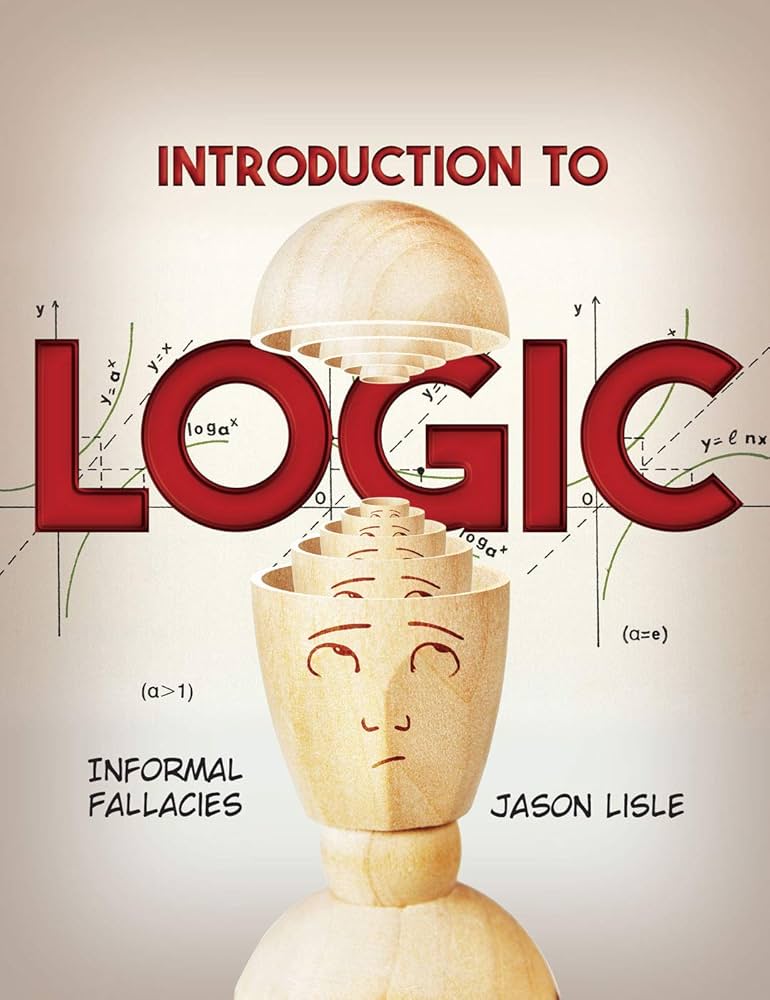
Photo credit: cover of the [Christian] book,
*
Summary: A Protestant reacting to my biblical arguments from Luke 16 (praying to a man, Abraham) engages in literally classic and “playbook” equivocating and circular argumentation.













 Ad-Free & Subscriber Log-In