2017-10-26T18:29:36-04:00

This is one of my many critiques of the book entitled, Roman but Not Catholic: What Remains at Stake 500 Years after the Reformation, by evangelical Protestant theologian Kenneth J. Collins and Anglican philosopher Jerry L. Walls (Grand Rapids, Michigan: Baker Academic, 2017). ***** Jerry Walls wrote on his Facebook page on 10-24-17: “apologetics gets its bad name from those who engage in simplistic, spurious arguments and defend their dogma at any cost.” And that is exactly the sort of pseudo-“argument”... Read more
2017-10-26T09:39:27-04:00

(12-20-07 and 2-22-10) *** Just when you think you’ve discovered all the weirdest things about Luther that could possibly be found, ol’ Martin springs another goofy, wacko idea on ya!: . . . God commanded in the law [Deut. 22:22-24] that adulterers be stoned . . . The temporal sword and government should therefore still put adulterers to death . . . Where the government is negligent and lax, however, and fails to inflict the death penalty, the adulterer may... Read more

2017-10-25T16:29:21-04:00

(1-18-08) *** John Calvin figured out that only a council would unite Protestants doctrinally at war with each other. And he was only talking about agreement on the Eucharist. It never happened. But it’s fascinating that Calvin thought this council (I assume he would regard it as sub-infallible, in accordance with sola Scriptura; which wouldn’t work, anyway) was practically or functionally necessary, and that Scripture alone was not going to achieve a much-desired unity. *** Thomas Cranmer to John Calvin: 20 March... Read more

2017-10-25T16:30:17-04:00

(1-18-08) *** It’s inaccurate to contend that Luther despises councils altogether. Rather, he denies their infallibility and makes them formally subordinate to Scripture, which alone is infallible. This perhaps explains (at least in part) how Luther can rail against councils in one breath and espouse a quasi-Catholic principle of authority and tradition in the next. He has been known to speak in two different senses. When he criticizes (even excoriates) councils, it is in the sense that they do not override the authoritative rule... Read more

2017-10-25T14:33:23-04:00

This took place on my Facebook page, with a Catholic woman, under a post called, “My Respect for Lutherans.” Her words will be in blue. *** Mark Wilson: Now people may lump you together with the Pope who said something nice about John Wesley. Yeah, they might. Some people never learn that truth is truth, wherever it is found. Jesus said nice stuff about the pagan centurion. * One need not go to Lutheranism to find any of the truths found in... Read more

2017-10-24T12:53:38-04:00

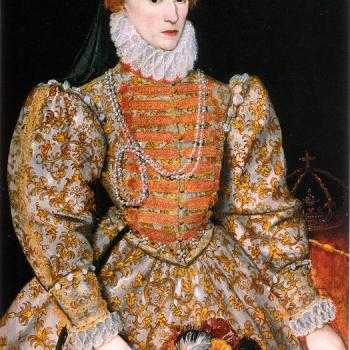
Queen Elizabeth (r. 1558-1603) (2-8-08) *** [biographical information was obtained in most cases from Wikipedia or the Catholic Encyclopedia. The martyrs are listed chronologically by date of execution. All are English except where noted] *** [See the Wikipedia article for a gruesome description of the English punishment of being hanged, drawn, and quartered] *** Queen Elizabeth is often regarded as a tolerant queen, but she was arguably even more intolerant and bloodthirsty (towards Catholics) than her father, the Butcher-Tyrant Henry VIII. During her reign (17 November... Read more

2017-10-24T13:17:45-04:00

Walls and Collins Hurt Their Pro-Protestant Cause and Ecumenical Effort by Enlisting John Bugay as a Comrade-in-Arms I have written twelve critiques of the book entitled, Roman but Not Catholic: What Remains at Stake 500 Years after the Reformation, by evangelical Protestant (Wesleyan) theologian and historian Kenneth J. Collins and Anglican philosopher Jerry L. Walls (Grand Rapids, Michigan: Baker Academic, 2017). The complete list can be found on my Calvinism and General Protestantism web page (scroll about halfway down). They repeatedly claim... Read more

2017-10-24T13:18:07-04:00

I wrote twelve critiques of the book entitled, Roman but Not Catholic: What Remains at Stake 500 Years after the Reformation, by evangelical Protestant (Wesleyan) theologian and historian Kenneth J. Collins and Anglican philosopher Jerry L. Walls (Grand Rapids, Michigan: Baker Academic, 2017). The complete list can be found on my Calvinism and General Protestantism web page (scroll about halfway down). Then I wrote a review of the book on its Amazon page. Geoffrey S. Robinson wrote a fairly lengthy critique of my... Read more

2017-10-23T14:21:03-04:00

(11-20-07; abridged somewhat on 10-23-17) *** Pastor Larry A. Nichols is the author of several books, including Dictionary of Cults, Sects, Religions, and the Occult (Zondervan Publishing House, 1993, with George A. Mather & Alvin J. Schmidt), Masonic Lodge (Zondervan, 1995; with George A. Mather & Alan W. Gomes), Discovering the Plain Truth: How the Worldwide Church of God Encountered the Gospel of Grace (Intervarsity Press, 1997; co-author George A. Mather), and Encyclopedic Dictionary of World Religions (2006; with George A. Mather & Alvin J. Schmidt). He has also written many journal... Read more

2017-10-22T11:11:21-04:00

This is one of my many critiques of the book entitled, Roman but Not Catholic: What Remains at Stake 500 Years after the Reformation, by evangelical Protestant theologian Kenneth J. Collins and Anglican philosopher Jerry L. Walls (Grand Rapids, Michigan: Baker Academic, 2017). ***** Kenneth Collins, in his chapter 17: “Justification Roman Style” writes: What’s so remarkable about the treatments in both Vatican II documents and the Catechism is that the exact phrase “free grace” . . . is not mentioned at... Read more

Follow Us!


TAKE THE
Religious Wisdom Quiz

According to 1 Timothy, what is a trustworthy saying deserving of full acceptance?

Select your answer to see how you score.


Browse Our Archives