2023-10-12T10:04:39+00:00

WILLS POINT, TX – GFA World (Gospel for Asia) founded by K.P. Yohannan, whose heart to love and help the poor has inspired numerous charities like GFA World Canada, to serve the deprived and downcast worldwide, issued this first part of a Special Report on the world’s greatest ‘badge of shame’: Children in Crisis.
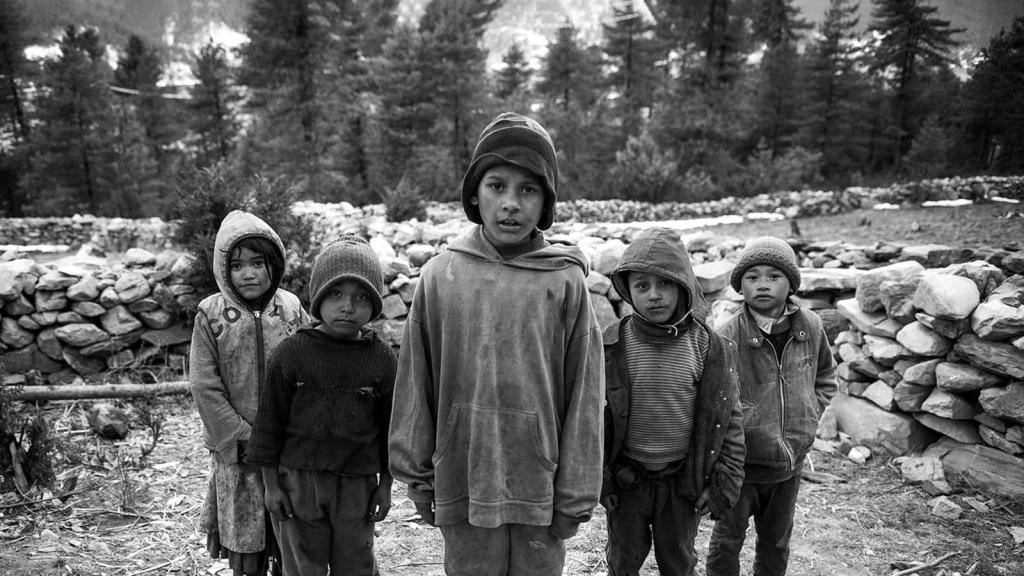
Children are in crisis right on our doorstep, in our own neighborhoods, wherever we live in the world. And the problem is growing worse.

A shocking U.S. Border Patrol video showed human smugglers dropping two unaccompanied children—sisters ages 3 and 5 from Ecuador—over a 14-foot section of the border fence in the New Mexico desert.[1] The smugglers ran off, leaving the young girls alone and stranded.
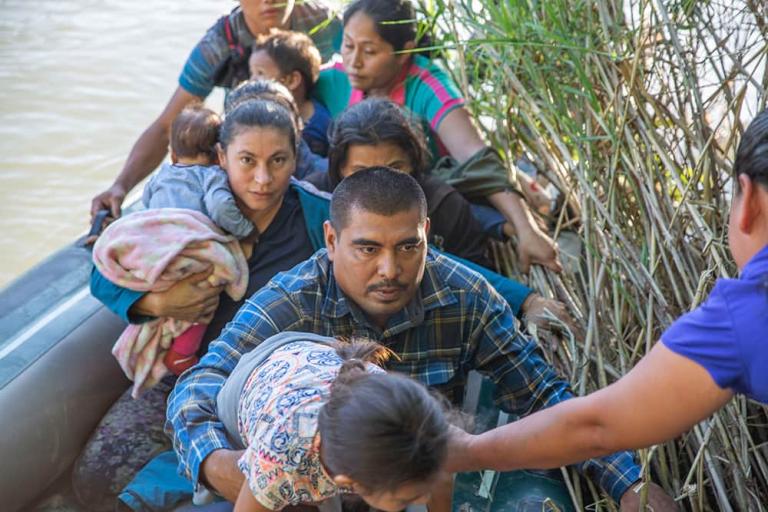
Migrant children and their desperate parents enter the U.S. illegally
Migrant children and their desperate parents enter the U.S. illegally on June 15, 2019 by crossing the Rio Grande in rubber boats near Los Ebanos, Texas. Photo by U.S. Customs and Border Protection, Flickr

Another young mother from Central America thought she was on the cusp of giving her 9-year-old daughter a better life in the United States. They’d traveled a long, perilous journey and had just one more hurdle to cross: the Rio Grande River separating Mexico from Texas. Tragically, it was a step too far. The little girl apparently drowned before reaching the other side, NBC News reported.[2]

Desperate to escape extreme poverty and surging gang violence in their native countries, thousands of migrant children from Latin America continue to flock to the U.S. southern border, with or without their parents. The journey is fraught with dangers that include becoming prey for human traffickers and ruthless drug cartels en route.[3] Every day in Spring 2021, U.S. border officials were detaining more than 600 unaccompanied migrant children trying to cross the U.S.-Mexico border, with many children risking their lives to do so.[4] According to a CNN report in April 2021, there were more than 20,000 unaccompanied migrant children in the custody of U.S. officials at that time.[5]

The plight and peril of migrant children seeking refuge in the U.S. is a stark reminder that “children in crisis” are not restricted to far-away countries.

Children are in crisis right on our doorstep, in our own neighborhoods, wherever we live in the world. And the problem is growing worse. Until we take steps to protect and prioritize children, their neglect will be a shameful legacy for the nations of our world.
SANTA TERESA, N.M. – U.S. Border Patrol Agents responded to a potentially life-threatening situation involving two female tender-aged toddlers mistreated and abandoned by human smugglers just west of Mt. Cristo Rey. Camera technology observed a smuggler dropping two young kids from the top of the 14-foot-high border barrier, and then immediately fleeing the area after abandoning the helpless little girls on the north side of the international boundary line around March 30, 2021. Video by U.S. Customs and Border Protection Office of Public Affairs – Visual Communications Division, dvidshub.net

The sight is too much to bear for many Western visitors: A frantic teenage mother, with a newborn strapped to her back, looking for a handout to feed herself and keep her tiny baby alive.
1.2 billion children worldwide are considered “at risk,” vulnerable to a host of calamities, abuse, hunger and diseases.But this real-life scene often isn’t what it appears to be. The baby is not hers. She has actually rented the newborn from its mother or guardian so that her pleas for help solicit greater sympathy from passersby.

Renting out “babies-to-beg” is a common practice in Kampala, Uganda’s capital, where hundreds of children and teenagers from outlying areas—some with parents, many without—descend on the city in the hopes of scraping together money for food. Every day the ritual is the same: hustle, beg, scavenge or steal to survive.

If she’s fortunate, this desperate teenage girl, who is extremely vulnerable to sexual exploitation and prostitution, will solicit enough sympathy to purchase a Rolex. Not the luxury wristwatch Rolex you and I might think of, but an egg-filled chapatti, similar to a burrito, that’s served on nearly every street corner.

Her plight and the fate of the baby she carries on her back are intertwined. Both face a life—likely a very brief life—of perpetual struggle. Both face the threat of abandonment and exploitationBoth girls are continually at risk.

That so many of the world’s children in crisis live without compassionate considerations or safeguards from harm is tantamount to being one the world’s greatest “badges of shame.”

They’re among the estimated 1.2 billion children worldwide who are considered “at risk,” vulnerable to a host of calamities, abuse, hunger and diseases—a toxic combination driven largely by poverty and supercharged by the COVID-19 pandemic.[6]
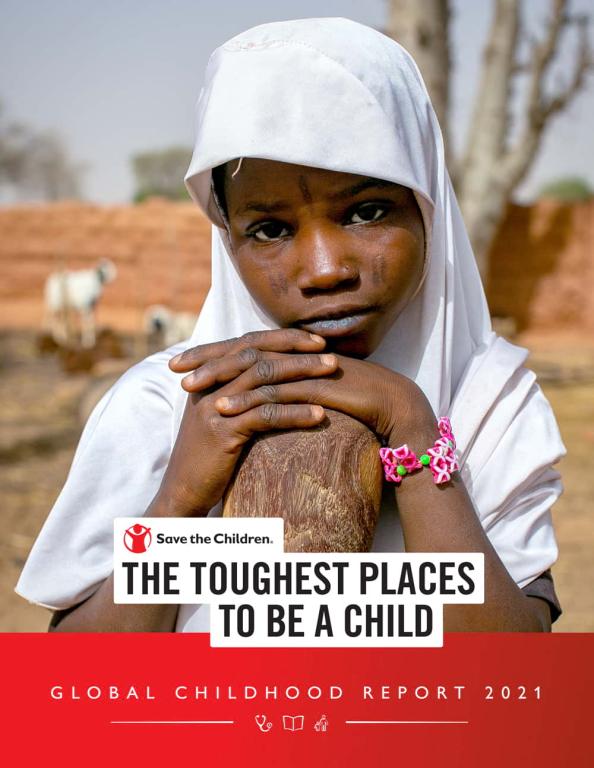
2021 Global Childhood Report
The 2021 Save the Children Global Childhood Report highlights the toughest places on Earth to be a child, and examines the many factors that rob children of their childhoods and reveals where greater investments are needed to save children from poverty, discrimination and neglect. Photo by Save the Children

According to Save the Children, more than half the world’s children are at risk of poverty, conflict and discrimination against girls.[7] A report by the international charity states that one billion children live in poverty, 240 million live in areas impacted by conflict, and 575 million girls live in countries where discrimination against women and girls is common.

According to Save the Children, Singapore and Slovenia are the best places to be a child, where childhood is most protected.[8] In contrast, Save the Children’s latest Global Childhood Report for 2021, “The Toughest Places To Be A Child,” lists 10 sub-Saharan African nations as the worst places to be a child, “where childhood is most threatened.”[9]

Perhaps surprisingly to some of our readers, the United States is ranked 43rd on the list, behind Russia, Lebanon and Belarus. According to Save the Children’s report, “The United States badly trails many other advanced countries in helping children reach their full potential.” Nonetheless, it ranks among the top 47 countries in the world where relatively few children miss out on their childhoods. The report states, “Countries with similar scores include Bahrain, China, Montenegro, Qatar, Russia, and Slovakia.”[10]

Save the Children says millions of children are being “robbed of the childhoods they deserve.” The agency states that every child has a right to childhood free from fear, safe from violence, protected from abuse and exploitation.

The concept of childhood is defined in the (U.N.) Convention on the Rights of the Child. It represents a shared vision of childhood: healthy children in school and at play, growing strong and confident with the love and encouragement of their family and an extended community of caring adults, gradually taking on the responsibilities of adulthood.[11]

But, the report acknowledges, “This ideal contrasts starkly with the childhood many experience.”[12]
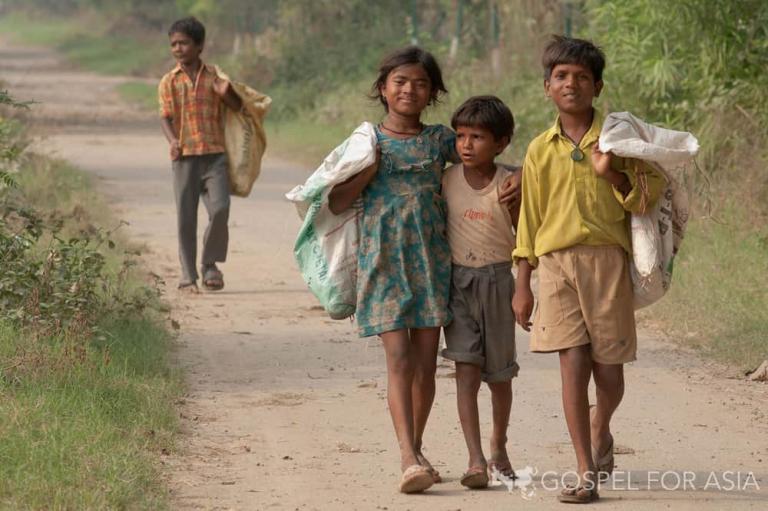
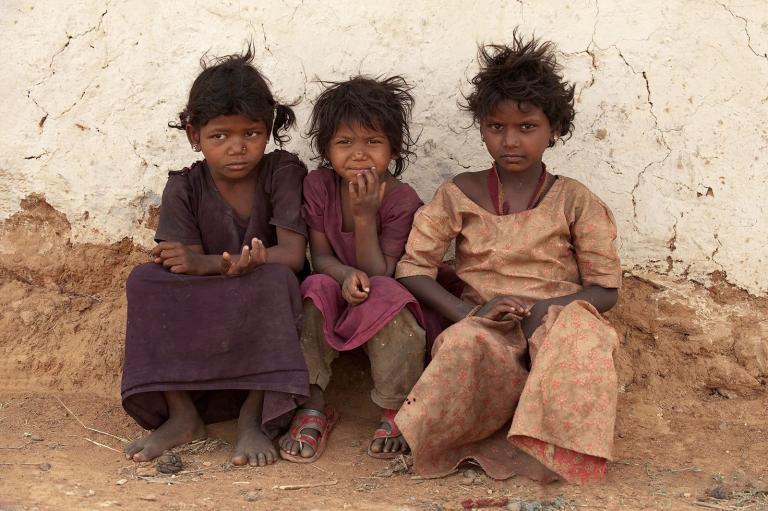
Poor children in Asia walking along the street
These children, just like almost every child in their Haryana slum, set out early each morning in search of garbage in their area. They go around looking for empty plastic bottles, cans, metal, and the like which they then can sell to make a little money to help their families.

Fatherless Kids in Crisis: The ‘Epidemic’ of the Street Children

Around the world, one of the most critical issues affecting children is the surge in the number of kids living on the streets, with no one to protect them or care for them.

Child abandonment is a worldwide crisis. Globally, the “epidemic” of absent fathers, especially, is a major cause of child neglect, often leaving children without a male role model, protector and provider.[13]

Combined with the tribal practice of having multiple wives or concubines, it’s not unusual in some African countries for one man to produce upwards of 30 children.[14] Many of these children grow up never having any relationship with their father, or even knowing who their father is.
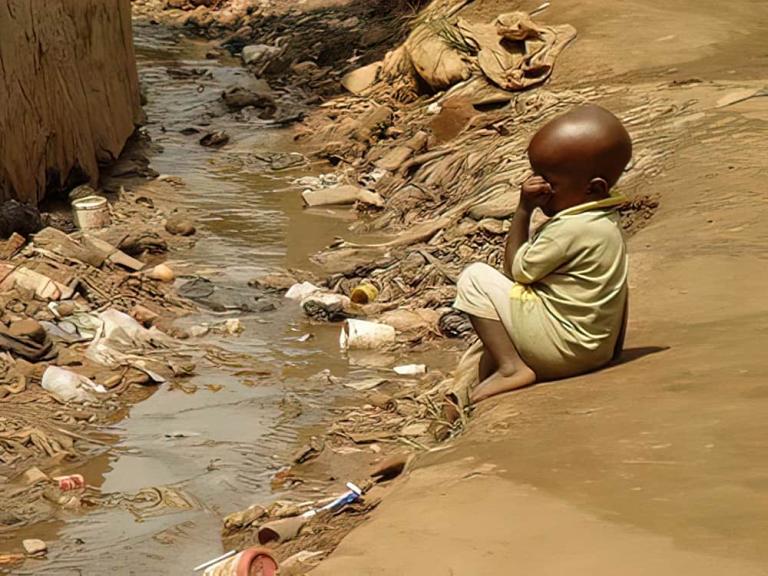
An abandoned child in the slums of Kamapala, Uganda
An abandoned child sits alone and neglected next to open sewage in the slums of Kamapala, Uganda in July 2007. Photo by SuSanA Secretariat, Flickr

A report published in 2020 by the African Network for the Prevention and Protection Against Child Abuse and Neglect revealed that child neglect and sexual violence were the biggest issues facing kids growing up in Uganda, one of the lowest-ranking countries.[15] In 2015, a study of street children in the capital city of Kampala revealed that most kids, the large majority being boys, began their life on the streets between the ages of 5 and 10. Seven out of every 10 street kids had come to Kampala by public taxi or bus. They came for a myriad of reasons. Some came to find work and advance their prospects; others were orphans or victims of abuse or neglect who’d fled horrible home environments; and then there were the rebels and runaways. Almost two-thirds of the kids had lived on the streets for at least a year, and many of them had been on the streets for four years or more. More than half of the children reported they’d been physically abused on the streets, and one in every four said they’d suffered sexual abuse.

Many street boys have nothing more than torn rags or sackcloth to wear as clothes and no shoes on their feet, leaving them vulnerable to puncture wounds that quickly become infected, causing their feet to swell grotesquely. Many of them carry a constant companion tucked inside their ragged clothing—a plastic bottle containing fuel, dipped in a filthy piece of cloth. Every few minutes, they inhale the fumes from the bottle, their eyes floating upwards as the cheap “drug” takes effect. It’s the only way they know to dull their senses and take away the pain and suffering in their lives.
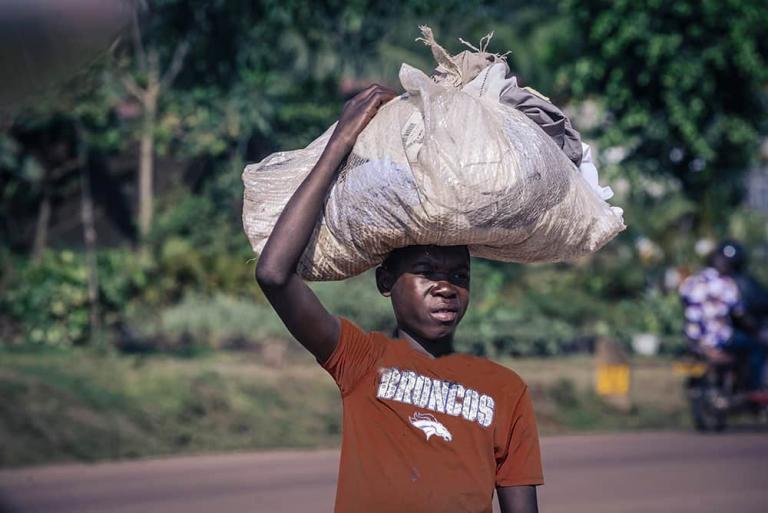
Young boy from Africa collecting garbage to help earn some money for his family
Young Kandwanaho (not pictured) fights for survival by working excruciatingly long hours searching for cardboard to sell. Sometimes he has nothing to show for it at the end of the day and, if so, goes hungry. But even on the days when he makes enough to eat, Kandwanaho still has to join the thousands of other children searching the streets of Kampala for somewhere safe to wait out the night.

I once met a boy named Kandwanaho who told me how he searches the alleys of Kampala from daybreak until dusk, collecting discarded cardboard boxes. He visits the alleyways behind the local market stalls and shops, picking up boxes that once held soap, sodas or other goods. Sometimes, he’ll “strike gold” and find a giant TV box. When he’s gathered several boxes, he takes them to the sprawling downtown marketplace, known as Owino Market, and sells the cardboard to the shoe salesmen. They cut the cardboard into sole-size pieces and slide the card into the footwear to help the shoes keep their shape. If Kandwanaho works a 12-hour shift, he makes just over one dollar.

There are times he roams the streets alone all day—dodging taxis, stubbing his bare toes on the cracked roads, inhaling exhaust fumes, hoarse from thirst—and does not find a single box to recycle. On those days, he has nothing to eat unless he dives into the garbage piles to search for a scrap of anything edible among the competing stray dogs and cockroaches.

For Kandwanaho, and many like him, the most troubling time is nightfall as the city’s hectic rhythm subsides. It’s as if everyone is returning home, except for the kids who live on the streets. They have nobody, and nowhere to call home. The dimming light is their cue to find a place in a drainage ditch or empty shack for the night. It’s their hour to poke around the trash piles for any bits of food ditched at the end of the day. As the light fades, their reality mirrors the approaching darkness.

In Uganda, because street boys are viewed by many business owners as thieves and troublemakers, they’re chased off, beaten up and, in extreme cases, even murdered. The reality that human life is cheap and expendable on Kampala’s volatile streets is clearly evident.

As the lowest of the low, street kids are most often the “whipping boys” when anything goes wrong. Kandwanaho told me that a group of his friends were once caught stealing copper pipes they intended to sell. They were kicked in the head, beaten unconscious, soaked in gasoline and set alight, Kandwanaho recalled tearfully. At their burial in a paupers’ graveyard, he and other street boys were the only mourners present.


Give to Help Support Children at Risk & Kids in Crisis »

If this special report has touched your heart and you would like to make a real difference in the lives of children in crisis around the world, and bring hope to kids at risk of violence, impoverishment, or child labor, then make a generous one time or monthly gift to help kids in need in Asia or Africa.


About GFA World

GFA World (www.gfa.org) is a leading faith-based global mission agency, helping national workers bring vital assistance and spiritual hope to millions across the world, especially in Asia and Africa, and sharing the love of God. In GFA World’s latest yearly report, this included thousands of community development projects that benefit downtrodden families and their children, free medical camps conducted in more than 1,200 villages and remote communities, over 4,800 clean water wells drilled, over 12,000 water filters installed, income-generating Christmas gifts for more than 260,000 needy families, and teaching providing hope and encouragement available in 110 languages in 14 nations through radio ministry. GFA World has launched programs in Africa, starting with compassion projects in Rwanda. For all the latest news, visit our Press Room at https://gfanews.org/news.


Read the rest of Gospel for Asia’s Special Report: Children in Crisis — World’s Greatest ‘Badge of Shame’  Part 2, Part 3

Read more blogs on Human Trafficking, Child Labor, Abandoned Children and GFA World on Patheos from Gospel for Asia.

Learn more about the GFA World Bridge of Hope program and how you can make an incredible difference in the lives of children, bringing hope to their lives and their families, transforming communities.

Learn how to provide a chance for children without sponsors. When you give to help unsponsored children, you help supplement the lack of resources when children in Asia don’t have the sponsors they need to stay in a Bridge of Hope center.

Learn more about Gospel for Asia: Facebook | YouTube | Instagram | LinkedIn | SourceWatch | Integrity | Lawsuit Update | 5 Distinctives | 6 Remarkable Facts | 10 Milestones | Media Room | Poverty Solution – Farm Animals | Endorsements | 40th Anniversary | Lawsuit Response | International Offices | Missionary and Child Sponsorship | Transforming Communities through God’s Love

Notable News about Gospel for Asia: FoxNews, ChristianPost, NYPost, MissionsBox


Read what 25 Christian Leaders are affirming about Gospel for Asia.

This Special Report originally appeared on gfa.org.
2022-04-27T17:36:53+00:00

WILLS POINT, TX – Gospel for Asia (GFA World and affiliates like Gospel for Asia Canada) founded by KP Yohannan, issued this final part of the GFA Special Report update on the desperate plight of widows in both affluent and developing nations.

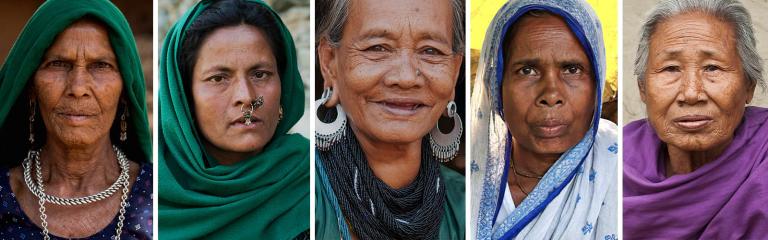
Photo collage of desperate widows
Widows like these from across South Asia need assistance to alleviate their difficult circumstances.

Persistent Superstitions

Many might think such marginalization only happened in centuries past, but these recent stories illustrate that ancient cultural customs, superstitions and prejudices persist. According to the Global Fund for Widows, not only do many nations prevent widows from inheriting her rightful assets when her husband dies, some allow women to become part of his estate.

A widow with her son and his family
This widow is living with her son, and his family in West Bengal India. Her husband was killed by a tiger while working. Some widows even witness those attacks and experience post-traumatic stress disorder while grieving.

Such realities emphasize the need for International Widows Day, 15 years after the Loomba Foundation established the first observance to draw attention to widows’ experiences and galvanize more public support.

They are “stigmatized, shunned and shamed” the UN says. “And many of these abuses go unnoticed, even normalized. International Widows Day is an opportunity for action towards achieving full rights and recognition for widows.”

Then there are the problems caused by war and other conflicts. To examine this, the UNHCR—the UN Refugee Agency—dispatched a reporter to Mosul, Iraq, near the end of the government’s three-year-long, on-and-off battle to overcome militant extremists.

The agency examined the impact of fighting, which continued long after the battle ended. Among the victims were Asmaa Mahmood, captured along with her husband and their two young daughters. Two weeks after their capture and separation, Asmaa learned her husband had been killed. As would be expected, she suffered from shock, psychological trauma and grief.

Policy reforms that can help address disadvantages to widows, the World Bank says, are regarding property ownership, inheritance rights, registration of customary marriages and widows’ pensions.

More than 900,000 fled after the final military operation began to retake the city in late 2016. At one camp operated by the UNHCR and its partners, female-headed households made up more than a quarter of the total: 1,250 out of 4,463 families.

Widows like 25-year-old Asmaa faced desperate straits. She hadn’t even told her children of their father’s death after arriving at the refugee camp, evading the truth by telling her girls he had been working and would soon return.

“I am so exhausted worrying about the future of my children,” she said. “Now I have no one to rely on. All I want is to provide a good living for my two daughters. I don’t worry about myself. I just don’t want my daughters to feel any different from other girls who have a father.”

GFA Sisters of compassion serve these desperate widows in slum
These widows living in the slums of Mumbai gather together for support, prayer and practical assistance from the local pastors and Sisters of Compassion serving with Gospel for Asia (GFA World).

Given such earth-shaking situations, the 2019 release of a widow-linked television series may seem like a trifling thing. Yet, despite the six-hour series being primarily an adventure tale, the airing of The Widow on Amazon Prime shows a symbolic consciousness of the situation.

Co-produced by Amazon and Britain’s ITV, the eight episodes drew a critical review in the influential The Atlantic magazine. Yet reviewer Sophie Gilbert noted star Kate Beckinsale gave the main character a “confidence in her action scenes that’s intermittently thrilling.” In real life, widows’ courage is indeed something to behold. While a TV mini-series highlights their plight before viewers, widows require real substantive action by governments, NGOs and individuals like you and me to help them survive financially and emotionally, even as they suffer through their grief.

Quiet Help

While International Widows Day places a spotlight on the problems facing widows, much of the work being done to alleviate their suffering and deprivation occurs in quiet ways.

GFA had 32 teams working across South Asia where 22 percent of widows worldwide live

In 2018, Gospel for Asia (GFA) had 32 teams working across South Asia, where 22 percent of the global population of widows lives, to address widows’ specific needs.

In Asian cultures, many widows are seen as a curse and may be shunned by society, including close relatives.

The following facts show a sampling of what desperate widows face in this part of the world:

Widows are often forcibly evicted from their homes and extended families by the husband’s family after his death.

Widows are often erroneously accused of having caused the deaths of their husbands.

Since widows’ education level is typically much lower, 19 million of them live in extreme poverty, earning less than $2 a day.

Remarriage by widows in this part of the world is low, so street begging or prostitution often becomes a way of life for younger widows.

Many widows are left to care for their children with little help from relatives.

And sometimes children are forcibly removed from their moms.

When not removed, children from low-income families often have to enter the labor force to support their widowed mothers and other siblings.

Consider these practical examples of the impact of widowhood on real people in countries like Afghanistan, Pakistan, Nepal, India, Sri Lanka and other parts of South Asia—home to 57.8 million widows. There’s Riya, who at 57 became shrouded by the shame of widowhood when her husband died from an unknown illness. Overwhelmed by sorrow and guilt, for three years she struggled to leave her bed.

Then there is Prema, the mother of two young children who suddenly found herself widowed and without a source of income.

And Amey, who struggled to overcome nearly insurmountable odds when riots touched her small village and those responsible tried to extort a fortune from her husband, a dry-fish vendor. When he refused, they killed him in his home. That left Amey with four children to raise by herself, forcing her to sell their belongings in a desperate struggle for survival. When she ran out of money and revived her husband’s business, her success sparked jealousy from other merchants, who harassed her and even tried to kill her.

Amey and family
I had to go through lots of problems after my husband passed away,” Amey (above) recalled. “To protect my children, I had to sell my belongings … Our economic situation went from bad to worse … I was mentally drained …”

In each case, help from Gospel for Asia (GFA) workers brought light and hope and shared how much God loved and cared for them. Thanks to a Gospel for Asia (GFA) initiative teaching women to develop skills and become self-supporting, Prema learned how to sew and received a sewing machine to help her generate income. After a neighbor invited Amey to attend church, she and her daughters found the inspiration and support to start a new spice business.

I have no words to thank my Lord Jesus for the miracles that He has done in my life,” Amey says. “I am so thankful He has saved me and also protected me in order to be the strength for my daughters. Now we are living with God’s grace, and our lives have been blessed immensely.”

Besides income-generating gifts, Gospel for Asia (GFA) supplies widows with clothing and other essentials, comfort, encouragement and the vital link of prayer support. Gospel for Asia (GFA) also maintains a website, www.mygfa.org, that equips those who want to conduct grassroots fundraising campaigns. Those funds help the poor, including widows, and equip missionaries in the most difficult areas of Asia—where millions have yet to experience His love.

Dr. K.P. Yohannan comforting widow

“The Bible says that true religion is to care for orphans and widows in their distress,” Dr. Yohannan says. “The challenge facing the Church around the world today is to not just read the Bible, but follow its teachings.”

These teachings apply the same today as they did thousands of years ago.

If you would like to do something now to help widows around the world, please consider one, or more, of the following ideas:

Social

Raise awareness of the plight of widows by sharing this article with your friends and family via social media, email or a link on your blog.

Interview

Interview a GFA World representative on this topic for your podcast or radio show. To facilitate that idea, email [email protected].

Donate to GFA to help widows in Asia

Make a donation to help widows in Asia through a gift to GFA World.

Widow

Identify a widow that you know personally and invite her to lunch or dinner, with the goal to understand her and her needs better. Act on what you learn to make a difference for that one person.


Give to Help Widows

If this special report has touched your heart and you would like to do something today about the plight of widows around the world, please share this article with your friends and consider making a generous gift to GFA World to help widows in South Asia and other locations.


About Gospel for Asia

Gospel for Asia (GFA World) is a leading faith-based mission agency, helping national workers bring vital assistance and spiritual hope to millions across Asia, especially to those who have yet to hear about the love of God. In GFA’s latest yearly report, this included more than 70,000 sponsored children, free medical camps conducted in more than 1,200 villages and remote communities, over 4,800 clean water wells drilled, over 12,000 water filters installed, income-generating Christmas gifts for more than 260,000 needy families, and spiritual teaching available in 110 languages in 14 nations through radio ministry. For all the latest news, visit our Press Room at https://press.gfa.org/news.


Learn more by reading these Special Reports from Gospel for Asia:


This Special Report originally appeared on gfa.org.
Click here, to read more blogs on Patheos from Gospel for Asia.

Learn more about Gospel for Asia: Facebook | YouTube | Instagram | LinkedIn | SourceWatch | Integrity | Lawsuit Update | 5 Distinctives | 6 Remarkable Facts | 10 Milestones | Media Room | Mosquito & Vector-borne Diseases | Endorsements | 40th Anniversary | Lawsuit Response |

Notable News about Gospel for Asia: FoxNews, ChristianPost, NYPost, MissionsBox

2025-08-02T20:20:11+00:00

WILLS POINT, TX – GFA World (Gospel for Asia) founded by K.P. Yohannan, has been the model for numerous charities like GFA World Canada, to assist the poor and deprived worldwide, issued this first part of a Special Report on the unstoppable compassion force of national missionary workers.

Compassion Sweeps ‘Forgotten Islands’

In what are known as the “forgotten islands” of South Asia, remote outposts dotted along the shoreline of the Indian Ocean, villagers still use oxen as a mode of transportation and wash themselves, their dirty clothes and their dishes in the same stagnant ponds they drink from.

Ritesh and national workers travel between islands through boats to show the love of Jesus
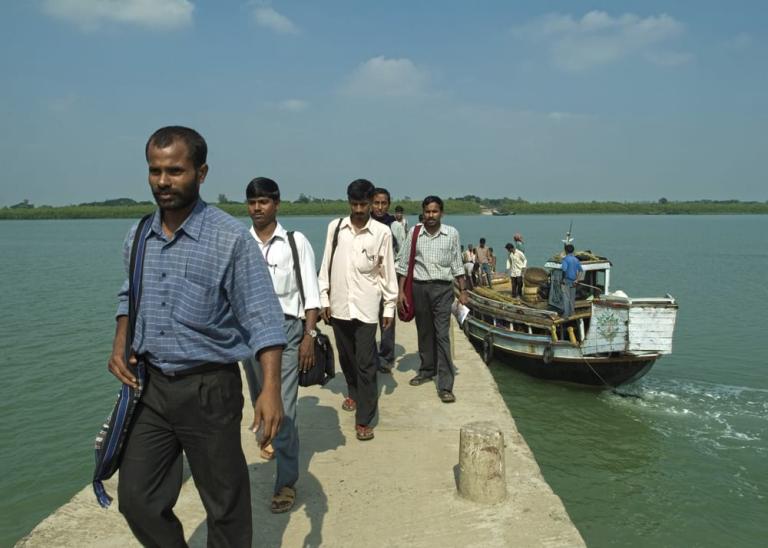
Ritesh and his national missionaries are constantly on the move to show the love of Jesus to the “forgotten islands” in South Asia, to which they sail on boats, walking several miles a day, then riding on bicycles.

No clean water. No schools. No medical clinics. Life seems hopeless—and improvement seems impossible—for many of the “forgotten” people of these islands. But a team of young GFA World national workers was changing all that. Traveling on rickety boats from island to island, these committed young workers brought hope and good news to islanders on the brink of giving up.

“It is not we who have been doing ministry, but it is God who has been doing ministry through us,” said group leader Taj, whose team earned the trust of hundreds of villagers as they prayed for the sick and showed these “hidden” people the love of God.

Their hands-on compassion and care has built strong bonds.

“You are my son,” one elderly widow told a member of the team. “You are my mother,” the young missionary replied.

When Gospel for Asia (GFA World) launched its child sponsorship program on several of the islands, the impact on children who’d never before had the chance to go to school before was staggering, resulting in a new birth of hope and purpose.

But Taj and his team weren’t done yet. “I began to pray that we may have enough resources of water,” Taj said.

Women and children enjoying clean water from Jesus Wells.
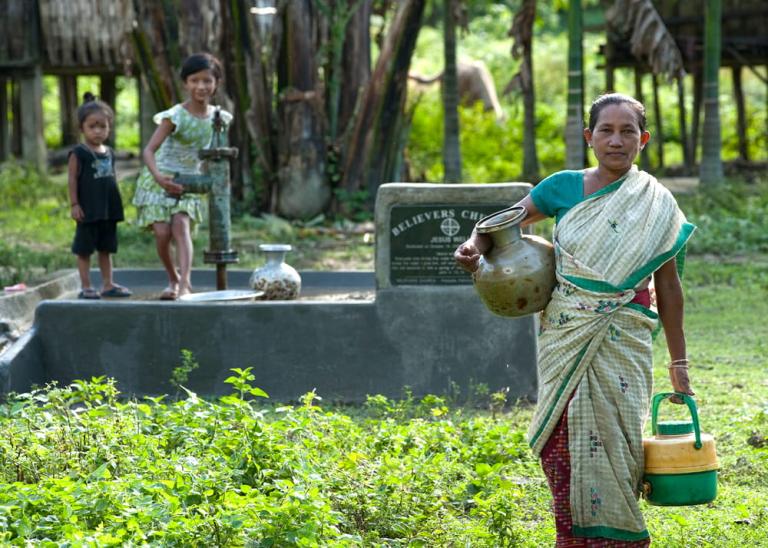
Jesus Wells meet practical needs in communities for safe, clean drinking water, and in doing so, convey the love Jesus has for the people in these villages.

The answer to his prayers came: Teams drilled new Jesus Wells, bringing clean water for the first time to thousands of islanders who had only tasted water from filthy ponds, which were contaminated and often caused children to fall sick and even die.

In just two years, the commitment and perseverance of Taj and his team brought new hope and good news to dozens of islands, showering the love of God on everyone they met—including the boat drivers who ferried them from place to place.

Such perseverance is a hallmark of faith-filled national workers who have a deep interest in the well-being and health of their fellow countrymen, propelling them to great lengths to share the wholeness and inner peace they’ve discovered themselves.

GFA Pastor Marty shares the love of Jesus in the slums
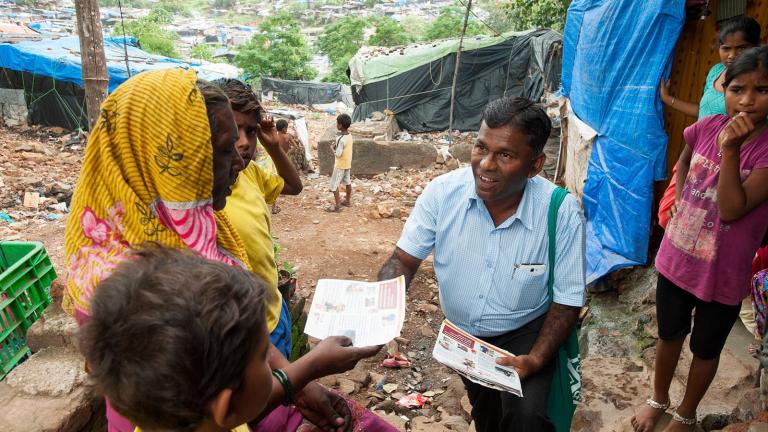
As a child, Pastor Marty often dug through garbage to fill his empty stomach. Now he is living in the same slum he grew up in, showing the love of Jesus by meeting practical needs of people who are going through the same struggles he went through.

A Native of the Slums Brings Hope

Marty, an indigenous pastor, has dedicated many years to transforming life for the children in the sprawling South Asia slum he was born in. He recalls digging through the garbage as a boy, desperate to find scraps to relieve his hunger. When his alcoholic father died, Marty, who was still only a boy, became his family’s provider.

GFA Pastor Marty prays for the people living in the slums
Every morning Pastor Marty goes on a neighborhood prayer walk, interacting with residents, praying over the community (shown above) and asking for help in showing the love of Jesus in practical ways. It is only through the power of prayer and tangible help that these communities in South Asia can be transformed.

Having experienced the pain, struggles and addictions that plague children every day in the slums, Marty’s eyes tear up as he describes his heartache for children wallowing in extreme poverty, sifting through the trash without hope—like he once did. That’s why he and his wife, Prina, are so passionate about serving the slum dwellers.

“Most of these children’s parents are my friends. We went to school together,” Marty said. “But most of them dropped out. … They started indulging [in] wrong things. … Some of them are even dead. So I started thinking about their children. Why [don’t] we do something for their children?”

Every morning, Marty goes on a neighborhood “prayer walk.” He prays for each individual by name, and the people in the slum—who embrace him as one of their own—recognize there’s something different about him, something almost heavenly.

“[He] is a great example for us,” says one of his neighbors. “He does what Jesus would have done. Helping the poor and needy and also loving people … He is always willing to help people. … He knows the situation… He understands better than anyone else.”

After serving his neighbors in the slum for 15 years, Marty’s perseverance has turned gray skies into blue. He’s launched two child sponsorship initiatives, turning others’ despair into hope and his own tears into joy.

“Ever since my childhood, the pain and difficult situations and poverty—all those things,” Marty says, “when I look back, [they] were … to make me strong and to trust and [have] faith in [God].”

Pastor Marty … grew up in [this slum] and now is back serving with his family.” says GFA World’s Yohannan. “Serving here is not easy. … Pastor Marty and many other [national workers] are faithfully serving in the slums.”

Across Asia, thousands upon thousands of national missionaries toil and labor every day, trekking miles on foot—often barefoot in extreme heat or cold—to bring hope and good news to their own people who struggle to see any purpose in their lives or reason to go on living.
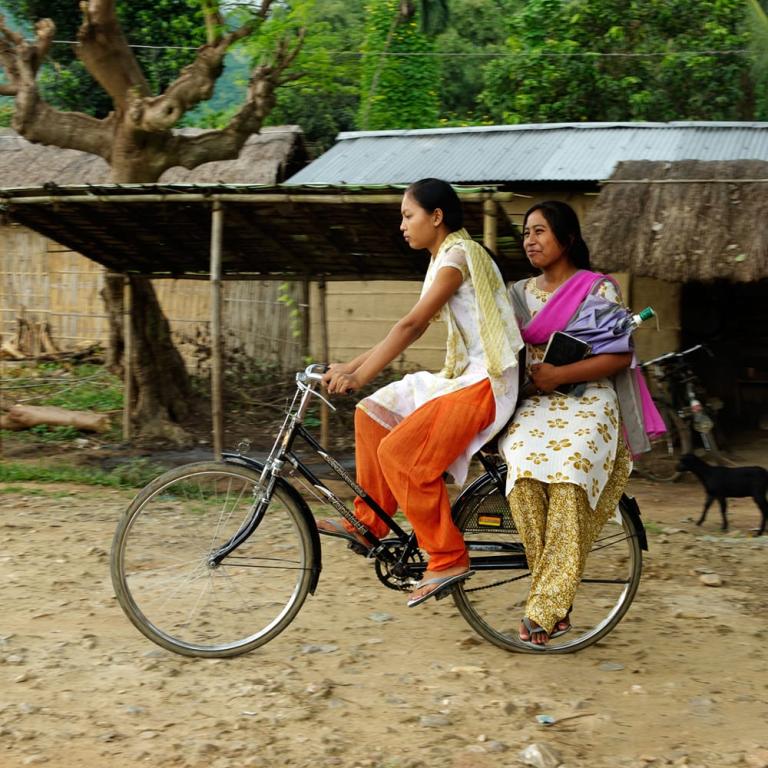
Women national missionary workers travel from one village to another with the use of a bicycle
With a heavy-duty bicycle like this one, two women missionaries can visit many more ladies than they could on foot, travelling from one village to another, meeting practical needs for personal help, hope and encouragement.

Inspired by Jesus’ love for the poor, these workers press on. Even in the face of hunger, disease, dangerous journeys and other hardships, they refuse to give up.

To reach the remotest villages that are too far to reach by walking, national workers turn to pedal power.

In 2020, amidst the pandemic, hundreds of trained workers on bicycles—a compassion crew on wheels—ventured to remote villages across Asia. Working in conjunction with local authorities within pandemic restrictions, with the heart of Christ they provided help for people in desperate need.

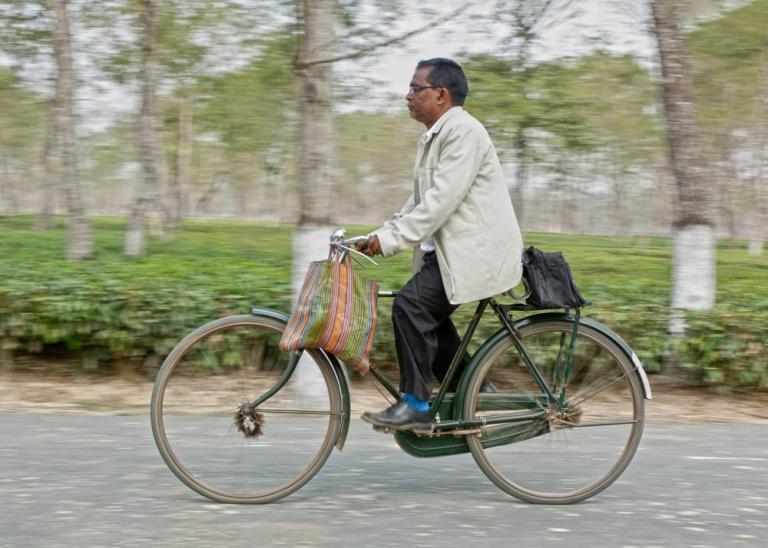
Before the pandemic took hold, bicycles were already helping workers to make the most of their time. Rainer saw how he could help even more people, and he prayed for two years for a bicycle so he could encourage and help a cluster of villages nine miles from his home. Months passed with no sign of a bicycle, but Rainer refused to give up hope. Eventually, he got news that he would receive a bicycle, which was provided through generous donations of people in the West. Rainer cried tears of joy. Today, he rides to 10 villages too far away to visit on foot. His bicycle has even become the local “ambulance,” transporting sick villagers to the nearest clinic. In short, Rainer and his bicycle have been a blessing beyond all expectations.

Rainer, GFA national missionary worker, and his bicycle
Because of a bicycle Gospel for Asia (GFA) national worker Rainer has been able to travel to various communities and their churches to show the love of Christ by encouraging the believers, meeting practical needs within the villages for food, clean drinking water and health care, and to support other national workers present in those neighborhoods.

National & Non-National: A Beautiful Partnership

Rainer’s story is a wonderful example of how missions-minded people all around the world can link their lives with the lives of national workers on the frontlines, bringing hope into places they could never go. By supporting and sponsoring a national missionary—perhaps by purchasing a bicycle for them, providing monthly financial support, or committing to pray for them—a beautiful partnership is formed, blessing everyone involved.

The unstoppable, never-give-up attitude of national workers like Rainer is a soul-searching challenge to all who desire to bring hope and love to their neighbors in their own communities, wherever they live—a challenge presented in Yohannan’s new book, aptly titled Never Give Up.

Dr. K.P. Yohannan, GFA Founder

“A day will come when all your family, friends, responsibilities, possessions, degrees, popularity, all of it will be gone,” Yohannan writes. “It’s just going to be you and Christ and nothing else. Let the decisions you make today be ones that will reflect well in the light of that moment.”

“Let me ask you, when was the last time you actively went out of your way to show the love of Christ to someone, and then to talk to them about His love for them?”

“Do you sense a growing ache for those who do not know the love of Christ?”

“Do you feel a deeper burden to care for the suffering and needy… widows and orphans as He did?”

“The choice not to give up is mine. It is also yours.”

As we ponder how to personally convey God’s love in word and deed to those within our spheres of influence, we can also partner with a national missionary who is dedicated to being an unstoppable force for compassion in areas of the world we could never reach on our own. Our prayers and financial support of their commitment to bring practical help and hope to people desperately in need is one way we can never give up in the effort to share good news to a world in need of Christ’s love.


Give to Support National Missionaries »

If this special report has touched your heart and you would like to help national workers show Jesus’ love by meeting practical needs, then make a generous one time or monthly gift to support a national missionary in Asia or Africa.


Read the rest of this Gospel for Asia – Transforming Communities (GFA World) Special Report: National Workers: Unstoppable Compassion Force Part 1, Part 2


About GFA World

GFA World (Gospel for Asia) is a leading faith-based global mission agency, helping national workers bring vital assistance and spiritual hope to millions across the world, especially in Asia and Africa, and sharing the love of God. In GFA World’s latest yearly report, this included thousands of community development projects that benefit downtrodden families and their children, free medical camps conducted in more than 1,200 villages and remote communities, over 4,800 clean water wells drilled, over 12,000 water filters installed, income-generating Christmas gifts for more than 260,000 needy families, and teaching providing hope and encouragement available in 110 languages in 14 nations through radio ministry. GFA World has launched programs in Africa, starting with compassion projects in Rwanda. For all the latest news, visit our Press Room at https://press.gfa.org/news.


Read more blogs on GFA World, National Missionary Workers, and World Missions on Patheos from Gospel for Asia.

GFA’s Statement About Coronavirus

Learn more by reading this Special Report from Gospel for Asia on the Lord’s work in 2020 through GFA and the partnerships worldwide while following Him in His work in 16 nations, including Sri Lanka, Bangladesh and Nepal.


Learn more about Gospel for Asia: Facebook | YouTube | Instagram | LinkedIn | SourceWatch | Integrity | Lawsuit Update | 5 Distinctives | 6 Remarkable Facts | 10 Milestones | Media Room | Widows & Coronavirus | Endorsements | 40th Anniversary | Lawsuit Response | International Offices | Missionary and Child Sponsorship | Transforming Communities through God’s Love

Notable News about Gospel for Asia: FoxNews, ChristianPost, NYPost, MissionsBox

Read what 25 Christian Leaders are affirming about GFA World.

This Special Report originally appeared on gfa.org.
2025-08-12T08:35:36+00:00

WILLS POINT, TX – GFA World (Gospel for Asia) founded by K.P. Yohannan, has been the model for numerous charities like GFA World Canada, to assist the poor and deprived worldwide, issued this first part of a Special Report on the unstoppable compassion force of national missionary workers.

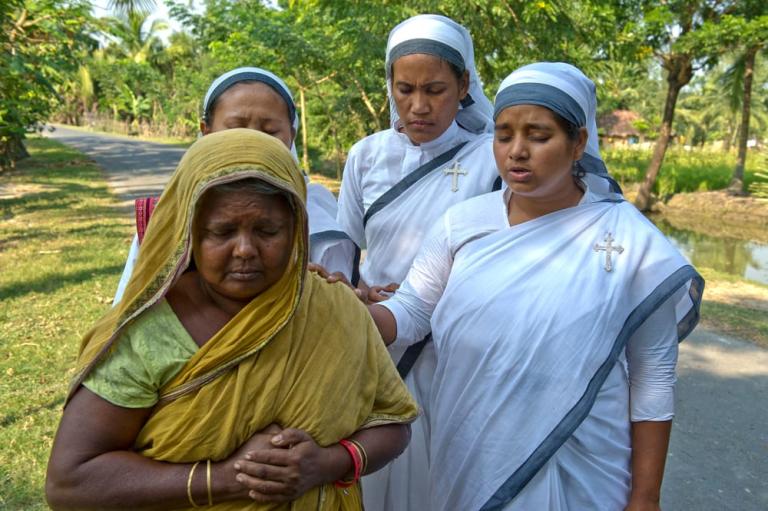
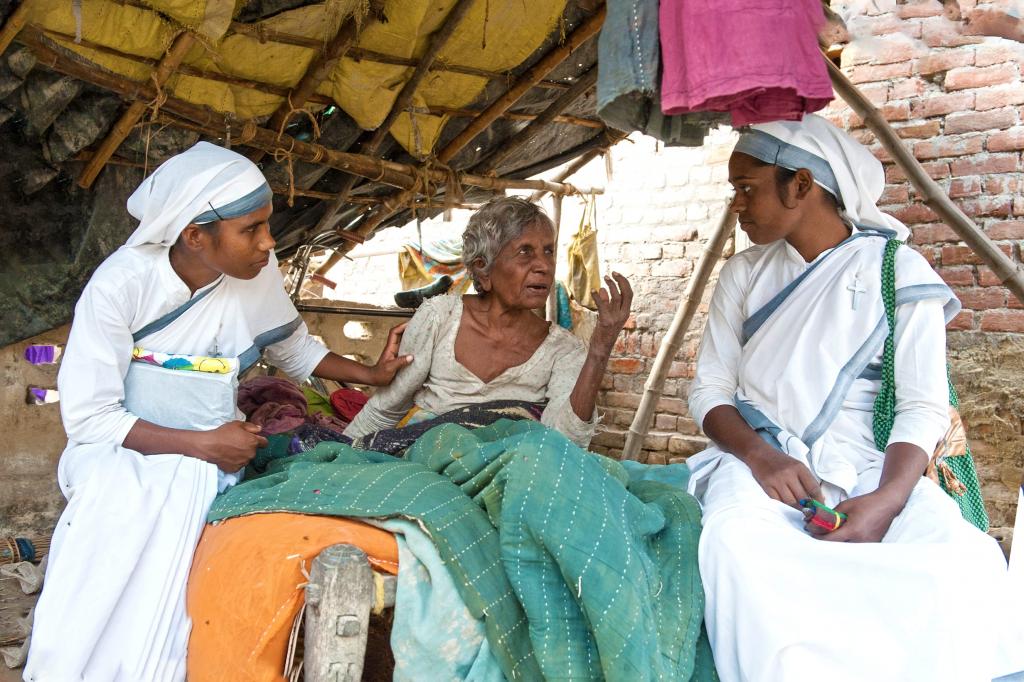
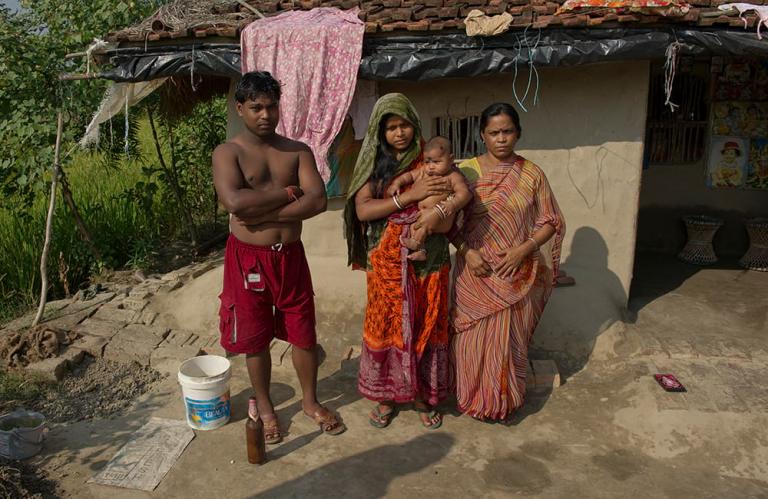
Sisters of Compassion, women national missionary workers, praying for a poor widow
These Sisters of Compassion are praying for this poor widow who lost her husband to a tiger attack. They often find practical ways to assist people who are desperate for help, hope and encouragement, showing the love of Christ throughout the process.

Looking ‘Inside’ for Lasting Solutions

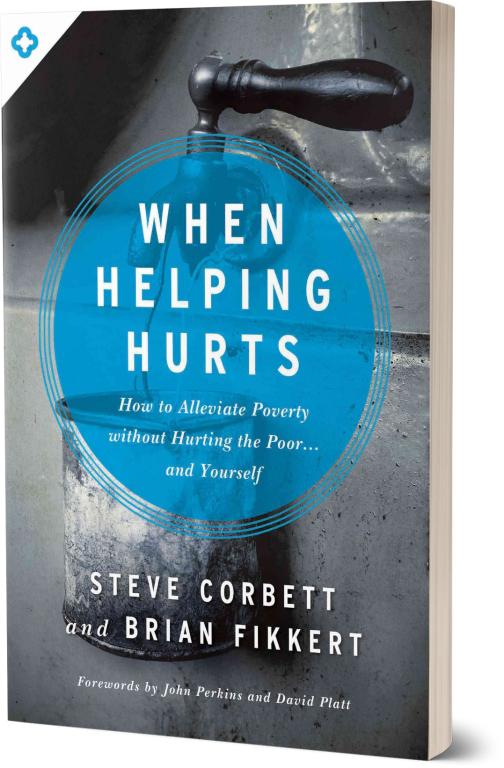
When Helping Hurts book cover
With more than 450,000 copies in print, When Helping Hurts is a paradigm-forming contemporary classic on the subject of poverty alleviation. Photo by Moody Publishers

Instead of looking to the West, many humanitarian and missions groups are looking “inside,” turning their attention to the vast pool of dedicated and talented workers within the nations in which they serve. They’re convinced that national workers are the key to lasting transformation.

It’s an opinion shared by development specialist Steve Corbett and economics professor Brian Fikkert, co-authors of When Helping Hurts: How to Alleviate Poverty Without Hurting the Poor and Yourself.

“God has blessed many of these indigenous workers with amazing talents and strong passions,” they write. “They often minister long term in environments that would be a deep challenge for even the most impassioned outsider. Furthermore, these indigenous workers’ understanding of local cultures and languages makes them far more effective than the outsiders could typically be, either in the short or long term.”

“Moreover, these indigenous workers usually do this work at salaries that are far below mainstream North American standards,” they said. Corbett and Fikkert continue to discuss how one highly respected organization equips and manages national workers across Africa at a total annual cost of $1,540—a total that, according to the authors, includes the worker’s salary, bicycle, backpack, shirt and bedroll.

These are facts that the Church in the West needs to accept, they say: “The North American Church needs to more deeply appreciate the fact that Christians at home and abroad are ministering within their own nations, people groups, and communities at a large and growing rate, particularly in the [developing world]”.

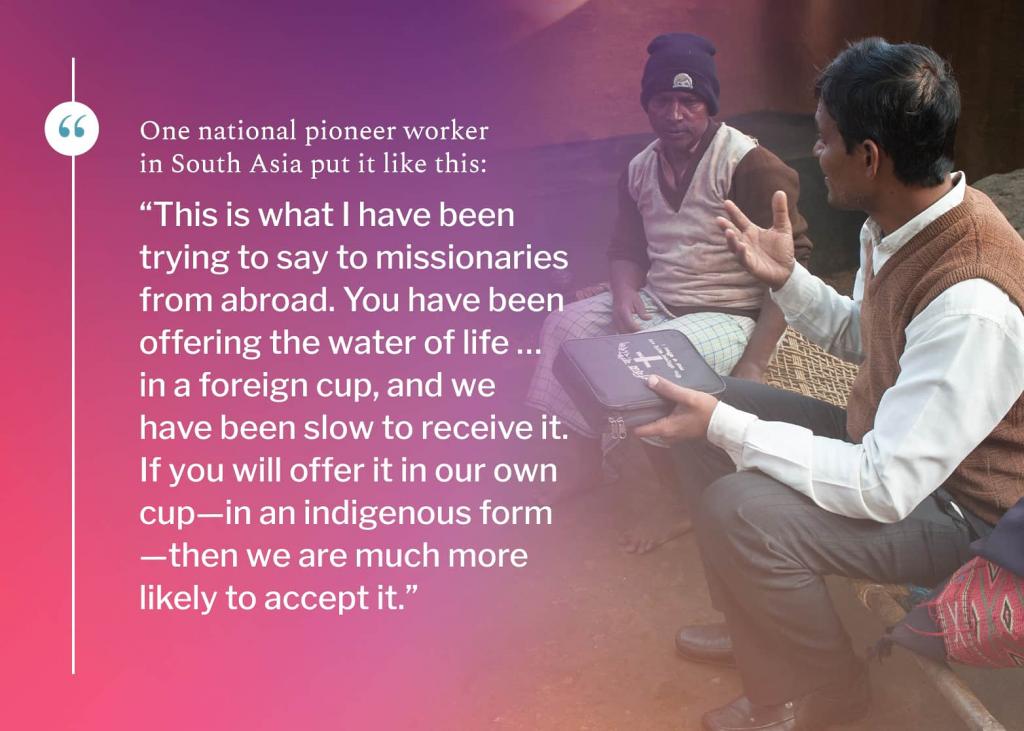
One national pioneer worker in South Asia put it like this: “This is what I have been trying to say to missionaries from abroad. You have been offering the water of life … in a foreign cup, and we have been slow to receive it. If you will offer it in our own cup—in an indigenous form—then we are much more likely to accept it.”

The ‘T’ Word: ‘Transforming’ Communities

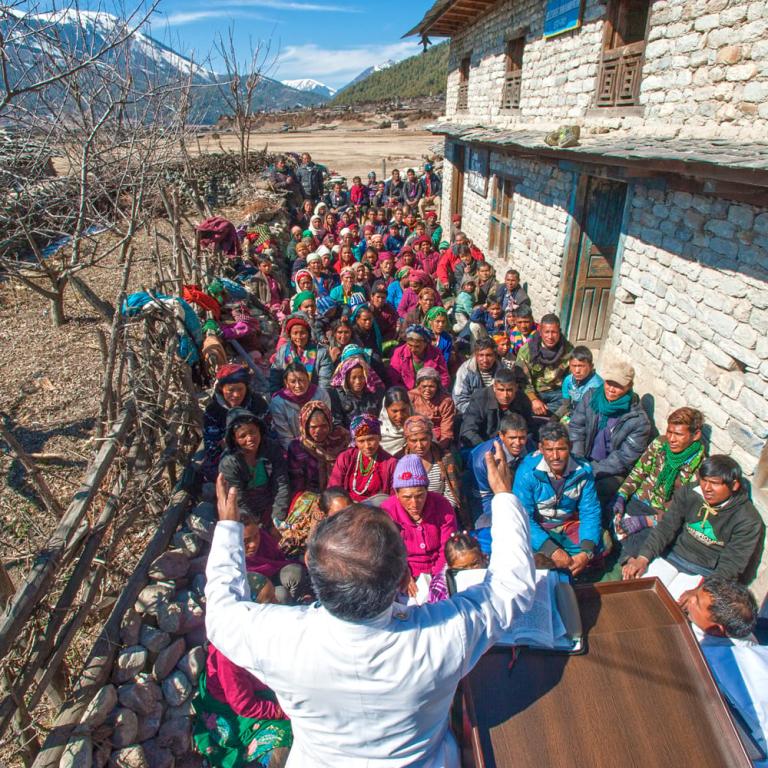
A church in Nepal
Often the area church leaders visit their churches in Nepal to encourage and teach the believers and assist them with practical ways to show the love of Jesus to their communities, like providing health care, clean water, food or medical assistance.

“Transformation” is a buzzword widely used in humanitarian, community development and missions circles, and it means different things to different people. Generally, it refers to a rebirth of a community, a revival of health, wellness, vitality, prosperity and hope. For faith-based organizations, everything is wrapped in God’s love. It’s the goal of all workers who follow Jesus—foreign and native—to bring transformation.

But what does transformation really look like?

Global CHE Network builds what it calls “transformational” movements within thousands of villages and communities across more than 130 countries by equipping and training national workers to spread health, good news and the love of God.

The organization tells the following story. In a small town in the Philippines, the jail sits empty, and the local attorney had to relocate because he didn’t have any clients to defend. The streets are spotless with barely a scrap of litter in sight, and the town sign reads: “Welcome to Bingawan, a Christian Community.”

It wasn’t always like this in Bingawan. The town used to have its share of trouble, crime and vice. But when the local people—impacted by Christ’s love and a revival of hope—decided to make changes in their own lives, the entire town underwent a profound transformation. Gambling joints closed, crime plummeted and the guards at the local jail found themselves staring at empty cells, according to Global CHE workers.

Asian missionary worker shares the love of Christ to his community
This Asian missionary’s goal is to show the love of Christ with every family in his community, by meeting practical needs each person has for help, hope and encouragement.

Other humanitarian agencies also tap into the strengths and connectivity of national workers, putting already-established local networks into action in the pursuit of lasting transformation.

Care Groups in a village
Care Groups are formed with 10-15 community members who build trust, share information, support one another, and then pass on what they’ve learned to others in their village with the end goal of helping their entire community. This approach has reached over 1.4 billion homes in 28 countries bringing awareness, health, and open doors for the hope of Christ.
Photo by World Relief

One inspired approach, known as the Care Group Model, has revolutionized the health and lives of hundreds of thousands of impoverished villagers in Asia and Africa.

Launched by World Relief, the Care Group Model tackles community problems at the grassroots level and operates in the heart of the community by training groups of local volunteers to confront the most serious health threats.

These volunteers, which are nearly all women, each share their newfound knowledge with 10–15 of their neighbors, spreading lifesaving know-how in the most effective way: mother to mother.

In one area, surveys revealed Care Groups:

  • Reduced the number of malnourished children by 45 percent.
  • Improved access to trained birth attendants, saving lives.
  • Increased the number of household latrines.
  • Significantly expanded the use of bed nets to prevent malaria.

The proven impact of the Care Group model, which is sustained and fully operated by national workers, is phenomenal. Across regions containing hundreds of villages, the local volunteers achieve “saturation coverage,” meaning every household is reached.

Thoeun, a local health educator in Cambodia, says if a child fell sick, villagers often suspected supernatural causes and looked to supernatural remedies. Growing up in the culture, Thoeun understands the way the villagers think. But the Care Group introduced her to a new way of thinking about health—and showed her the love of God. The combination of education, care and good news changed her life, she says, and since then she’s encouraged hundreds of others.

GFA World national workers have transformed lives in more than 12,000 parishes across South Asia.“The local people wonder why we’re so positive and friendly. … They ask us why,” Thoeun says, explaining it opens the door to tell them about God’s love.

While different faith-based and humanitarian groups have made a big impact on communities by recognizing the strengths, commitment and drive of local workers, perhaps no agency has done more than Gospel for Asia (GFA World). Its national missionaries have transformed lives in more than 12,000 parishes across Asia, in nations such as Myanmar, Sri Lanka and Bangladesh.

‘Native Shockwave’

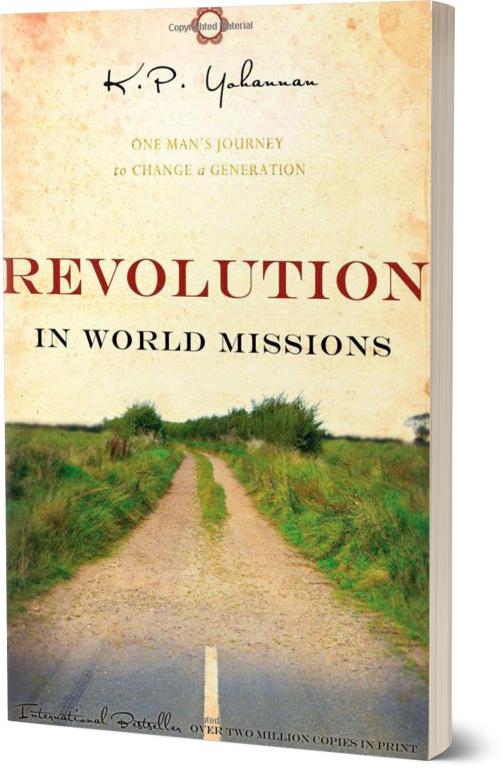
When GFA World’s K.P. Yohannan launched his best-selling book Revolution in World Missions in the mid-1980s, its groundbreaking message sent shockwaves through churches, missions agencies and humanitarian organizations that were used to operating according to the traditional norms of Western missions endeavors.

Lorem ipsum dolor sit amet
From the villages of India to the shores of North America missionary statesman KP Yohannan’s passion is contagious!

Yohannan’s vision helped turn the traditional Western “missions sending model” upside down, instead advocating for people in the West to support and train national workers already in place. Yohannan claimed local workers were better suited to do the work of transforming communities across Asia. They already lived at the same level as the local people: working alongside them, living among them in the villages and slums, dressing the same, speaking the same language, eating the same food, drinking from the same well.

Jager is one such worker. Trained and supported by Gospel for Asia (GFA World), Jager ventured to villages in a difficult area of South Asia, determined to show people the love of God. Jager and his wife lived in a one-room mud house, like the local people, and cooked their food on an open fire.

National workers, Yohannan reasoned, understood the local culture and customs, were more easily accepted and could go where outsiders were not able or permitted to travel.

In effect, Yohannan’s dream is to see thousands of community-transforming national workers across Africa and Asia, equipped with the training and resources to break extreme poverty and offer hope to those in despair, all in the name of Christ.

National missionary workers home fellowship
Many national workers live in one room homes like this one which can double up as a location for fellowship and thanksgiving where a local pastor can encourage the villagers in the Lord.

“Filled to overflowing with the love of God, these national workers are passionate to share that love with everyone they meet,” Yohannan said. “Ultimately, the only true lasting transformation can happen through Christ who brings hope for this life and the life to come.” Yohannan continues, “While we must care for the hungry and suffering, we must not forget to share the authentic message of redemption through Christ. The holy Scriptures tell us in Mark 8:36 ‘What shall it profit a man if gains the whole world and loses his soul.’”.

A criticism sometimes leveled at national workers in developing nations is that they lack quality, formal training. The inference is they’re not up to “Western standards” of education and knowledge. But groups like Gospel for Asia (GFA World) don’t expect national workers to operate on passion and enthusiasm alone. Each worker undergoes extensive, in-depth training and preparation for their role of service.

Following a three-year period of intense training, these courageous national missionaries set off into “uncharted territory” where often no missions or humanitarian agency has gone before, bringing clean drinking water through “Jesus Wells” to the remotest villages, launching child sponsorship programs for children who never dreamed they’d be able to go to school, and fighting poverty with vocational training, sewing machines and fishing nets.

Missionary Pastor Ravid shares his compelling story of how he continued to show God’s love and meet practical needs within his community throughout the COVID-19 pandemic and subsequent lockdowns.


Give to Support National Missionaries »

If this special report has touched your heart and you would like to help national workers show Jesus’ love by meeting practical needs, then make a generous one time or monthly gift to support a national missionary in Asia or Africa.


Read the rest of this Gospel for Asia – Transforming Communities (GFA World) Special Report: National Workers: Unstoppable Compassion Force Part 1, Part 3


About GFA World

GFA World (Gospel for Asia) is a leading faith-based global mission agency, helping national workers bring vital assistance and spiritual hope to millions across the world, especially in Asia and Africa, and sharing the love of God. In GFA World’s latest yearly report, this included thousands of community development projects that benefit downtrodden families and their children, free medical camps conducted in more than 1,200 villages and remote communities, over 4,800 clean water wells drilled, over 12,000 water filters installed, income-generating Christmas gifts for more than 260,000 needy families, and teaching providing hope and encouragement available in 110 languages in 14 nations through radio ministry. GFA World has launched programs in Africa, starting with compassion projects in Rwanda. For all the latest news, visit our Press Room at https://press.gfa.org/news.


Read more blogs on GFA World, National Missionary Workers, and World Missions on Patheos from Gospel for Asia.

GFA’s Statement About Coronavirus

Learn more by reading this Special Report from Gospel for Asia on the Lord’s work in 2020 through GFA and the partnerships worldwide while following Him in His work in 16 nations, including Sri Lanka, Bangladesh and Nepal.


Learn more about Gospel for Asia: Facebook | YouTube | Instagram | LinkedIn | SourceWatch | Integrity | Lawsuit Update | 5 Distinctives | 6 Remarkable Facts | 10 Milestones | Media Room | Widows & Coronavirus | Endorsements | 40th Anniversary | Lawsuit Response | International Offices | Missionary and Child Sponsorship | Transforming Communities through God’s Love

Notable News about Gospel for Asia: FoxNews, ChristianPost, NYPost, MissionsBox

Read what 25 Christian Leaders are affirming about GFA World.

This Special Report originally appeared on gfa.org.
2022-04-05T10:42:27+00:00

WILLS POINT, TX – GFA World (Gospel for Asia) founded by K.P. Yohannan, has been the model for numerous charities like GFA World Canada, to assist the poor and deprived worldwide, issued this first part of a Special Report on the unstoppable compassion force of national missionary workers.

GFA World (Gospel for Asia) issued this Special Report on the unstoppable compassion force of national missionary workers.
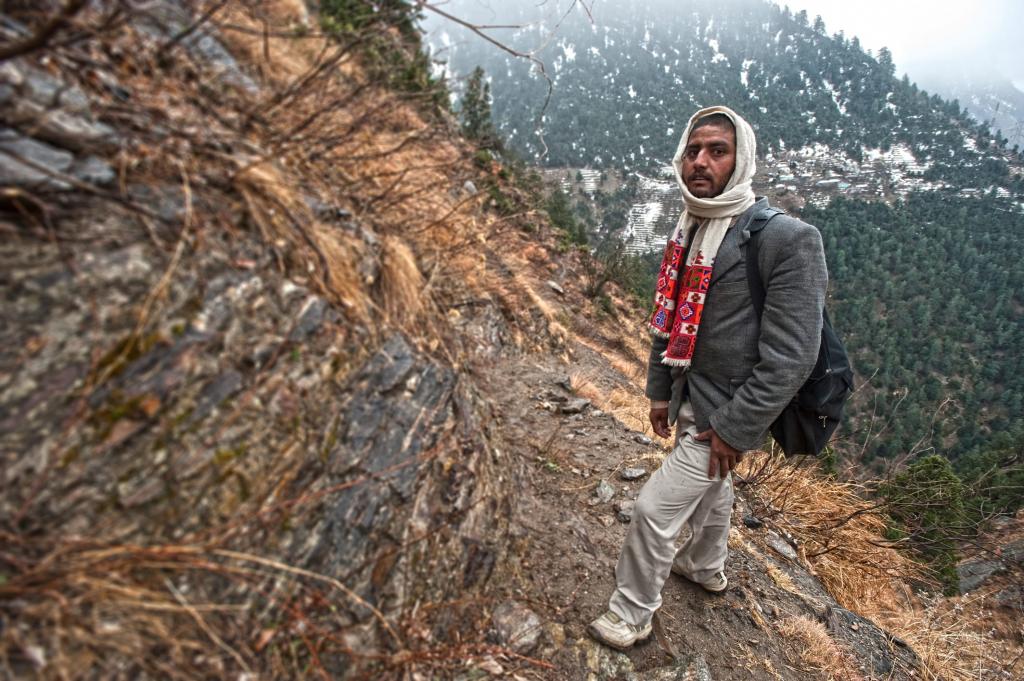
To help a village on top of a Himalayan mountain, this Gospel for Asia (GFA) national worker rode a bus for hours, then hiked uphill for three hours more, to show the love of Jesus by meeting their practical needs.

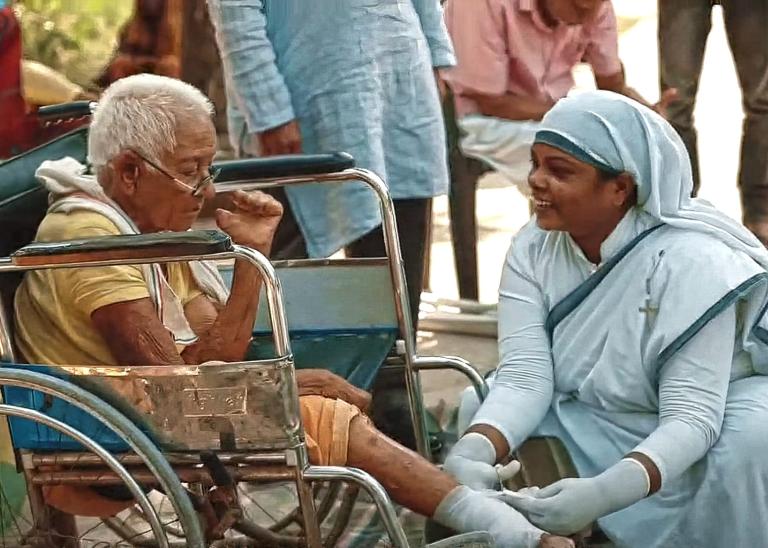
A young Asian woman wearing a white robe and head covering cradles an elderly woman’s feet that are horribly deformed by leprosy and gently washes them in a bowl of water.

The old woman can scarcely believe someone is touching her, caring for her, loving her. Most people would recoil from this woman and avoid the leprosy colony where she lives. The colony is a place of disease, disfigurement and disability. Its residents are used to being treated as outcasts by others and viewed as cursed. They are used to their deformed bodies being seen as objects of ugliness.

Geeta, Sisters of Compassion, cleans and bandages the wounds of a leprosy patient
Geeta (pictured), a Sister of Compassion, works in a leprosy colony where 30 families live. Many of the residents are unable to work, so the Sisters visit regularly to encourage them, clean their wounds, cut their hair and trim their nails, give them baths, wash their clothes, clean their houses and cook for those who are unable to do so themselves.

But to the young woman dressed in white, these feet are beautiful.

She and her companions, known as Sisters of Compassion, come here regularly to clean wounds, cut hair and trim nails. They see beauty amid the truncated limbs and deeply scarred bodies that few are willing to look upon, let alone touch.

As locals and neighbors, the Sisters fully understand the culture and customs into which they pour their compassion. They appreciate and respect the historical and religious traditions, speak the local language and know the nuances of the dialect. And they’re specially trained in leprosy wound care and family counseling.

To all this, they add the unspoken language of Christ’s love.

“We do all this because of the love of God,” says Geeta, one of the Sisters trained to care for people with leprosy.

No one else could have the impact these women are having on their own people, often their own neighbors. Their roots of love go deep, and their branches of compassion reach into places where no one else goes.

While their long white robes, known as saris, might appear like unusual attire to Western eyes, the significance in South Asia is huge. The Sisters’ simple handspun uniform mirrors the traditional sari once worn by the lowliest of servants in Asia. It says to the old woman whose body has been disfigured with leprosy: “I am here to serve you. I see your worth.”

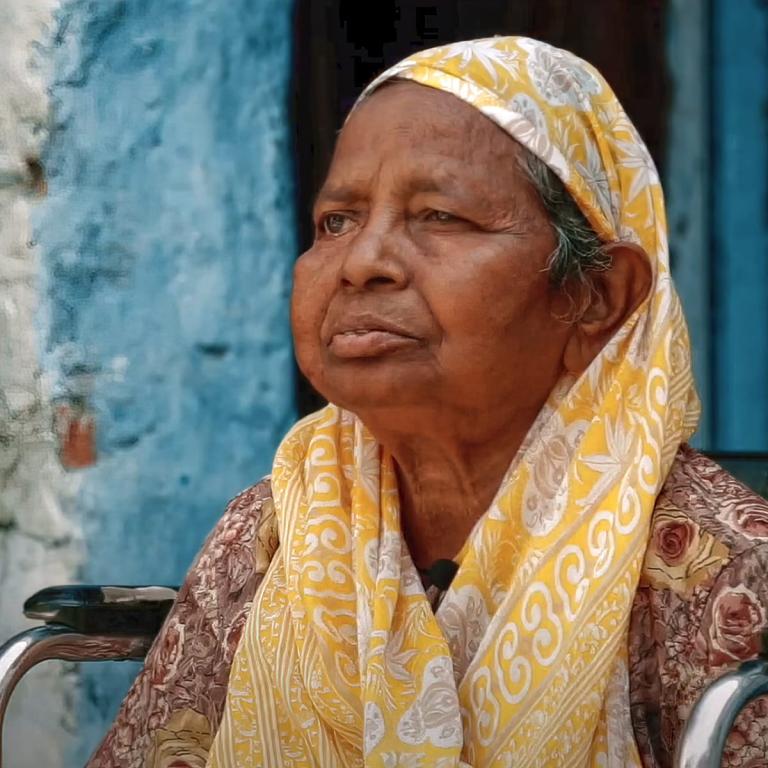
Mungeli Das, a leprosy patient
People like Mungeli Das (above) receive help from the Sisters of Compassion. Says Geeta: “If we didn’t help them, no one would have served them or taken care of them … they would die without any hope. Whether it’s a literacy class or cleaning their wounds, we do all of this because of the love of God.”

Mungeli Das, who contracted leprosy as a little girl more than 50 years ago, was treated for five years, then cured. Because of the deformity left by the disease, the leprosy colony has been her home for decades. She clings to the help and hope that the Sisters of Compassion bring her. The Sisters follow the example of Jesus who, according to the gospels, touched and healed those, like Mungeli, with leprosy.

“Before the Sisters came, there was no one to help trim our hair, cut our nails or help us clean our houses and encourage us,” Mungeli says. “The Sisters help us by cleaning our wounds, and they make us happy and encouraged [us] all the time.”

In places where outsiders, foreigners and foreign mission workers are prohibited or restricted, national workers and national missionaries have much more opportunity to serve. These women and men are welcomed and considered trustworthy counselors and friends of the community.

Outsiders may come and go. But national missionaries, such as GFA World’s Sisters of Compassion, stand the test of time.

“Each woman who serves as a Sister of Compassion is full of sacrificial love, just like Jesus,” explains Gospel for Asia (GFA World). “They do the most unglamorous things, such as bathing someone … or feeding people who’ve been affected by leprosy [and] no longer have any fingers [to] feed themselves.”

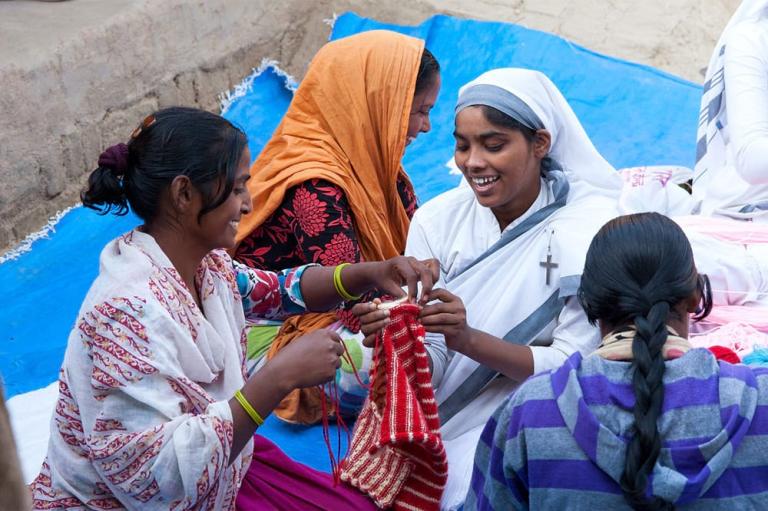
Sisters of Compassion teaching practical skills to struggling women
Teaching practical skills to help struggling women make a living is just one of the many things Sisters of Compassion do as they serve their communities. In all they do, these national missionaries demonstrate the love of Jesus for the poor and impoverished.

Unsung Heroes of the Frontline

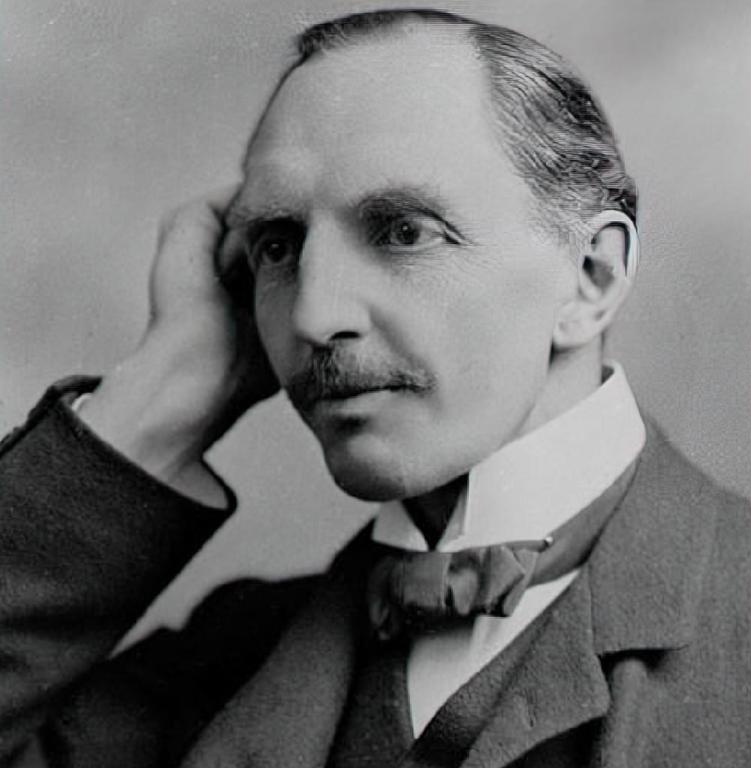
CT Studd
CT Studd was a foreign missionary to China, India, Sudan and the Congo who said: “Nothing in this world would last, but it was worthwhile living for the world to come.”

While Western workers often venture to far-flung places and do amazing things, it’s the unsung heroes of the frontline—the local, indigenous people—who consistently make the greatest impact and bring true transformation to their own communities.

In the past, missions trailblazers like William Carey from England in the 1700s, and C.T. Studd in the late 1850s and early 1900s, paved the way for swarms of foreign missionaries and humanitarian workers, mostly from Western countries.

But the tide has changed.

National workers are the “new pioneers” of the 21st century, and they’re proving to be an unstoppable compassion force.

“[National] workers toil to bring healing and hope,” GFA World says. “They touch thousands of lives with the tangible love of God through slum, leprosy, medical and disaster relief ministries. Thanks to them, men, women and children who otherwise might have gone without help … have been blessed with much-needed aid.”

Beauty of Local Mission Workers

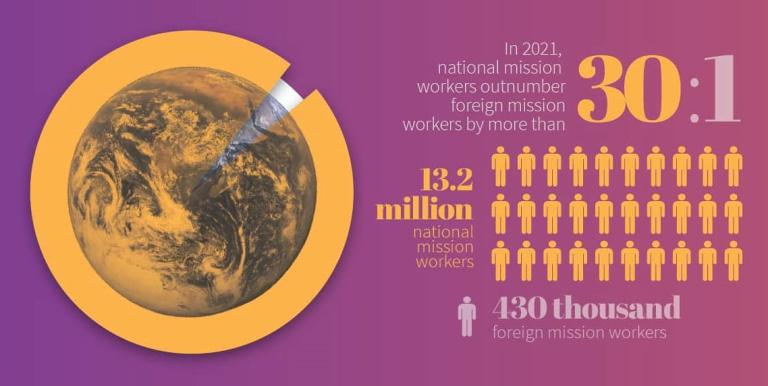
On a worldwide scale, according to the Center for the Study of Global Christianity (CSGC), there were 430,000 foreign mission workers overseas in 2021, compared with 13.2 million national workers (local citizens).

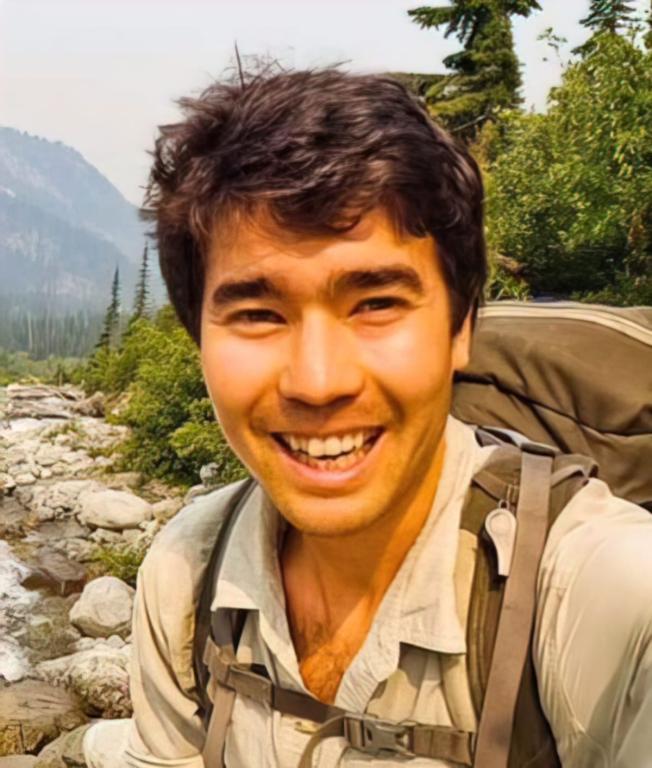
John Allen Chau, American Missionary
John Allen Chau was an American missionary killed by the Sentinelese, a self-isolated people, after illegally travelling to North Sentinel Island in an effort to preach to them.

That means national mission workers—those serving within their own culture and nation—now outnumber foreign workers by more than 30 to 1.

The CSGC predicts the number of national mission workers globally will explode to 17 million by 2050, while the number of foreign workers will increase to 600,000.

To be sure, Western Christians are still drawn to overseas missions in large numbers. But the exporting of expatriates to distant foreign fields can come at a high cost, potentially hindering progress.

In extreme cases, the quest of well-meaning foreigners with a zeal to exercise their faith and do good can end in tragedy, as in the headline-making case of a U.S. mission worker in 2018.

While attempting to make contact with the “unreached” indigenous people of North Sentinel Island, an isolated island in the Bay of Bengal, it’s believed David Allen Chau was speared to death. As of the date this article was published, his body had not been recovered.

Chau’s death was tragic and highlights the very real dangers facing non-nationals in remote areas. But it’s not only the safety of foreigners that’s an issue. It’s also the cost in dollars of sending Western workers and keeping them in their overseas assignment.

Pie chart representation of national mission workers vastly outnumbering foreign mission workers by more than 30:1
Statistics from Center for the Study of Global Christianity, “Status of Global Christianity, 2021, in the Context of 1900–2050.”

Counting the Cost of Foreign Workers vs National Workers

Missions Fest International, an annual global missions conference, spotlighted the financial cost of “sending” a Western mission worker compared with the cost of supporting a national worker in a provocative article on its website titled “Should We Stop Sending Missionaries?”

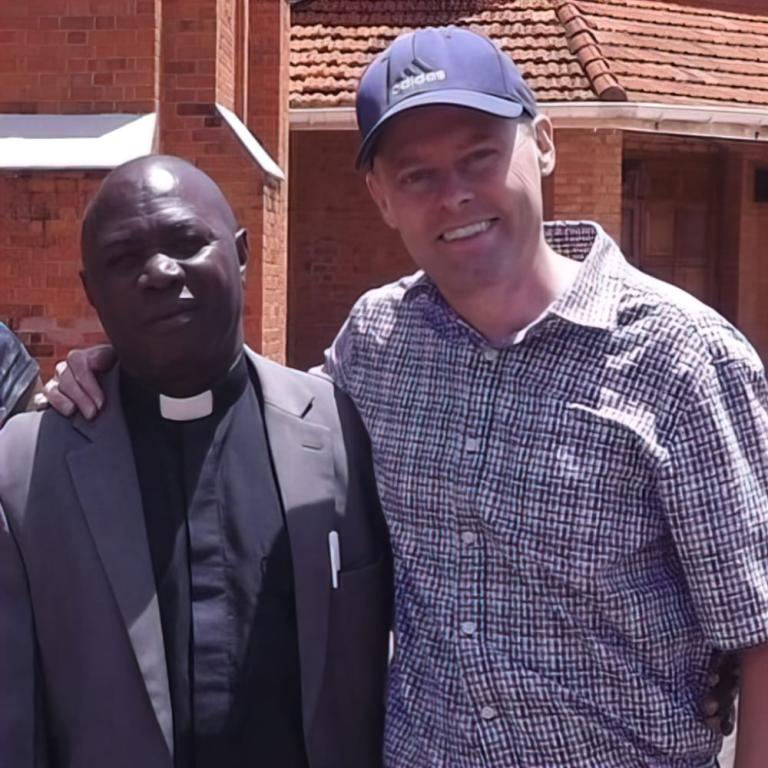
Julian Lukins with Stephen Kaziro of the Church of Uganda
Author Julian Lukins, pictured in Kampala, Uganda, with archdeacon Stephen Kaziro of the Church of Uganda who oversees dozens of village churches, including several that also act as local health clinics in the rural Namutumba district.

While stating there’s still a great need and important role for foreign workers in many parts of the world, the article points out it typically costs more than $50,000 a year to support a Western family in a developing nation such as Africa and Asia—an annual sum that could help support more than 50 national workers, the article says. For example, based on my personal experience in Uganda, an American family of four living in Africa might pay $1,000 a month for expat health insurance coverage that includes emergency medical evacuation. Because of security issues, they might have to live in a secure compound at high rent and pay hundreds of dollars every month for guards 24/7. Legal paperwork and visas can cost hundreds, even thousands, of dollars every year.

Run the numbers and it’s perhaps no surprise, then, that national workers—willing and able to live far simpler and free of immigration restrictions—are increasingly seen as a wise investment.

More than 140 organizations “are now built on the premise of gathering and sending money [to support national workers], not people,” the article says.
A national missionary worker teaches a group of children how to read
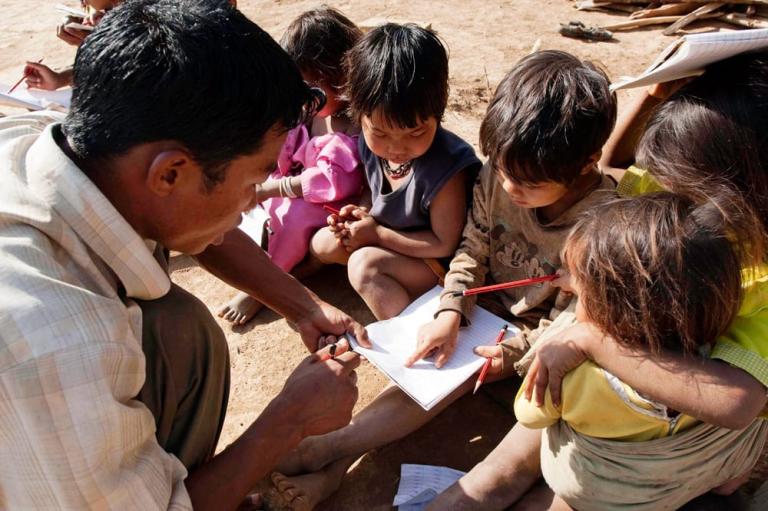
In a village where not one person could read or write, this missionary is showing the love of God by teaching children how to read.

While short-term overseas missions trips still play a huge role in the West, the merit and value of supporting local, native workers over the long haul has become widely embraced as the most effective approach in the quest for the “holy grail” of missions: to bring long-term, total transformation to impoverished communities.

Certainly, over the past couple of decades, it’s become a trend in Western nations for people, especially young people in their 20s, to travel to places in Africa, Asia or South America to volunteer in orphanages, children’s homes and the like.

Photos of young Westerners cuddling babies and surrounded by excited children in Africa and Asia have flooded social media and reinforced the so-called “white savior” label, often unfairly attached to compassionate individuals from the U.S., Canada, U.K. and other wealthy countries who simply want to make a difference in the world.

But now, it seems, this missions phenomenon—undoubtedly impacted further by COVID-19 travel restrictions—could be in decline.

An article in The Atlantic put it like this: “Among the new generation of Western Christian missionaries, the so-called ‘white savior complex’—a term for the mentality of relatively rich Westerners who set off to ‘save’ people of color in poorer countries but sometimes do more harm than good—is slowly fading.”


Give to Support National Missionaries »

If this special report has touched your heart and you would like to help national workers show Jesus’ love by meeting practical needs, then make a generous one time or monthly gift to support a national missionary in Asia or Africa.


Read the rest of this Gospel for Asia – Transforming Communities (GFA World) Special Report: National Workers: Unstoppable Compassion Force Part 2, Part 3


About GFA World

GFA World (Gospel for Asia) is a leading faith-based global mission agency, helping national workers bring vital assistance and spiritual hope to millions across the world, especially in Asia and Africa, and sharing the love of God. In GFA World’s latest yearly report, this included thousands of community development projects that benefit downtrodden families and their children, free medical camps conducted in more than 1,200 villages and remote communities, over 4,800 clean water wells drilled, over 12,000 water filters installed, income-generating Christmas gifts for more than 260,000 needy families, and teaching providing hope and encouragement available in 110 languages in 14 nations through radio ministry. GFA World has launched programs in Africa, starting with compassion projects in Rwanda. For all the latest news, visit our Press Room at https://press.gfa.org/news.


Read more blogs on GFA World, National Missionary Workers, and World Missions on Patheos from Gospel for Asia.

GFA’s Statement About Coronavirus

Learn more by reading this Special Report from Gospel for Asia on the Lord’s work in 2020 through GFA and the partnerships worldwide while following Him in His work in 16 nations, including Sri Lanka, Bangladesh and Nepal.


Learn more about Gospel for Asia: Facebook | YouTube | Instagram | LinkedIn | SourceWatch | Integrity | Lawsuit Update | 5 Distinctives | 6 Remarkable Facts | 10 Milestones | Media Room | Widows & Coronavirus | Endorsements | 40th Anniversary | Lawsuit Response | International Offices | Missionary and Child Sponsorship | Transforming Communities through God’s Love

Notable News about Gospel for Asia: FoxNews, ChristianPost, NYPost, MissionsBox

Read what 25 Christian Leaders are affirming about GFA World.

This Special Report originally appeared on gfa.org.
2021-11-10T18:30:56+00:00

WILLS POINT, TX – GFA World (Gospel for Asia) founded by K.P. Yohannan, which inspired numerous charities like GFA World Canada, to assist the poor and deprived worldwide, issued this 1st part of a Special Report update on the extraordinary pressures and hardships of widows intensified by the Coronavirus Pandemic.

Widows due to the Coronavirus Pandemic endure extraordinary hardships
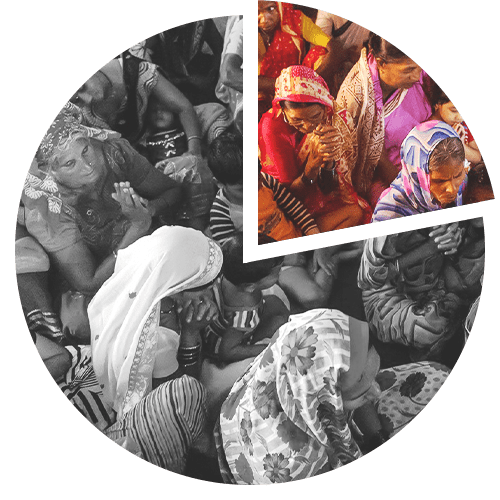
Gospel for Asia (GFA) Sisters of Compassion visit Asian widows regularly to talk, help and provide hope and prayer.
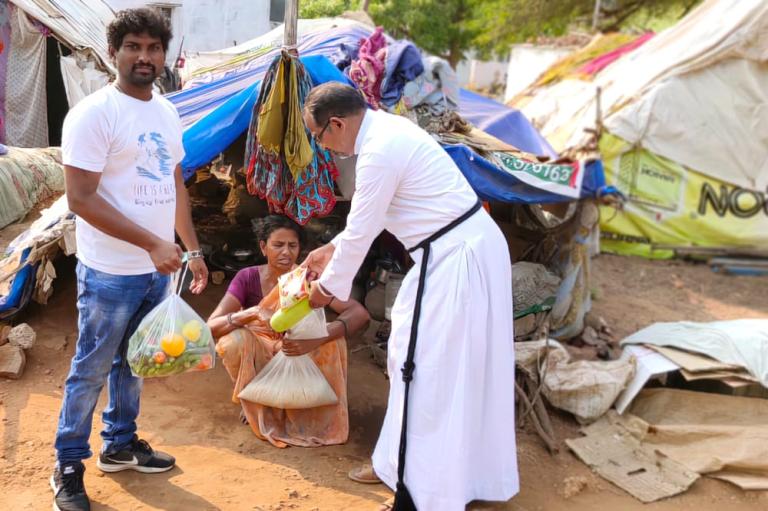
Widow receiving relief package amid Coronavirus Pandemic
While visiting a famished, poor widow living among huts in this slum area in Telangana, Gospel for Asia (GFA) provided a food packet consisting of mixed vegetables, rice and oil to sustain her, and ten others, during the pandemic. She said: “From the bottom of our hearts, we thank you for providing these food supplies.”

As I conveyed in a previous Special Report, the plight of widows, whether in affluent or developing nations, can be a desperate struggle. In this update, I share how the coronavirus has compounded their hardships even further.

For women worldwide who have lost husbands during the COVID-19 pandemic, grief and pain are an overwhelming experience. But for many of these women, their sorrow has been multiplied to an unbearable level due to isolation, expulsion from family, loss of property rights, and other extraordinary pressures that are often overlooked.

In America, while pandemic fears started to ease as vaccine distribution ramped up in the spring of 2021, for widows who lost spouses during the past two years, the pain is only beginning. Many young widows forged support bonds through Facebook, Zoom or other electronic means even as lockdowns and social distancing practices prevented them from gathering in person. A recent NBC News investigation discovered the following:

Among the newly grieving spouses is Pamela Addison of Waldwick, New Jersey. She became a widow in April 2020 at age 36 after her husband was exposed to the virus while conducting swallow evaluations on speech pathology patients.

“All my friends had their husbands, they were healthy,” Addison told a reporter from NBC News. “I knew only me. I thought, ‘Oh, my gosh, nobody else is going to understand what I’m going through—and that was a whole other part of my grief.”1

Graphic representation of different kinds of women widows.
The Modern Widows Club provides various services for widows, including one that helps locate support groups in person or online for ongoing empathy. Photo by Modern Widows Club

After receiving inspiration from a sympathy card, Addison launched the Facebook support group Young Widows and Widowers of Covid-19. In its first two months, it surpassed 80 members from the U.S. and the United Kingdom.

Another member, Kristina Scorpo, 33, of Paterson, New Jersey, commented: “We didn’t plan to be widowed at 36 or 33. We didn’t plan to raise our kids without our partners that we saw our lives with and we saw a future with. It was like [people in the group] knew exactly what the other was going to say, because we had been through all the same things, and it’s a really great thing that life brought us together.”2

Some who have lost spouses find common identity in their ethnic background, like those who are part of Black Women Widows Empowered. It was launched by Sabra Robinson of Charlotte, North Carolina, in 2015 after she lost her husband to cancer in 2012. Last year, the more than 700 members included at least 20 who had lost spouses to COVID-19.

“I feel for all these ladies, black or white,” Robinson said. “There’s so many COVID widows now, and they don’t have to be COVID widows.”3

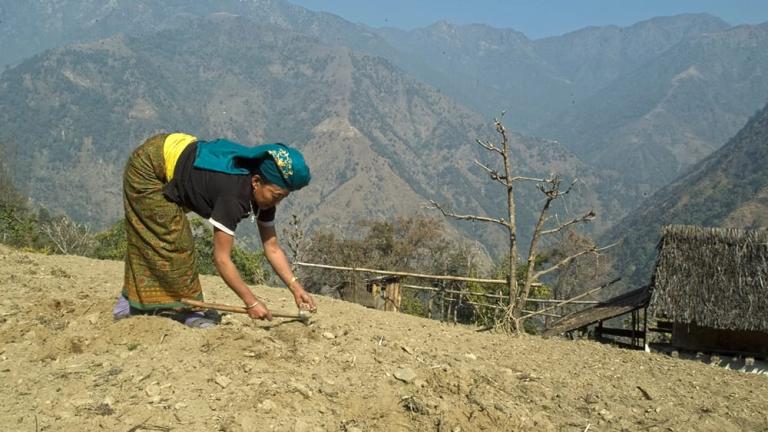
Widow from Nepal toiling in labor
Nepal: Having lost her husband, Esther’s life is difficult, although she’s grateful to still have her land. She sows corn manually by hand to grow a life-sustaining crop for her family during the rainfed conditions from April to August.

Yet there is strength in their affinity, says member Erika Taylor-Ruffin of Apple Valley, California, who credits the group with “saving her life.”

“When you’re an African American widow, it’s like you still have to be strong,” Taylor-Ruffin said. “We can’t show weakness. This group allows us to be vulnerable and to show our pain without being judged. [There] is something about being around women who understand your pain.”4

While the grief and sorrow of COVID-19 widows is profound in developed countries like the United States, in developing countries of the world, the painful losses widows experience are amplified to an entirely different level.

“COVID-19 is a widow-maker,” Karol Boudreaux, chief program officer at the land rights charity Landesa, said in a webinar organized by the Land Portal online platform. “[The virus] exacerbates an already unequal situation for men and women.”

Boudreaux referred to a Tanzanian widow who was unable to stop the illegal sale of her property in another city due to limited land rights and COVID-19 travel restrictions as an example of this inequity.

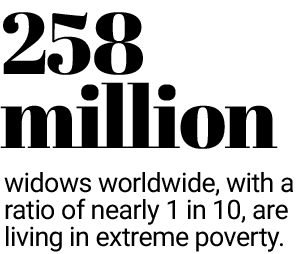
It’s been a decade since the United Nations organized International Widows Day, which is observed annually on June 23. The UN says there are 258 million widows worldwide, with a ratio of nearly 1 in 10 living in extreme poverty.

258 million widows worldwide, with a ratio of nearly 1 in 10, are living in extreme poverty.On last year’s International Widows Day, UN Secretary-General Antonio Guterres said when countries build back from COVID-19, they must also work to dismantle laws that discriminate against women. He said the isolation and economic hardships brought on by the pandemic can further compromise widows’ ability to support themselves and their families and cut them off from social connections during their greatest time of grief.

“The death of a partner at any time can leave many women without rights to inheritance of property,” Guterres said. “In times of a pandemic, these losses are often multiplied for widows and accompanied by stigma and discrimination.”5

The UN also says that the actual number of widows is likely to grow much higher and expand further as the coronavirus and its related impact on health continues: “The pandemic has just worsened the situation during the past several months with a devastating human loss, and one that is likely leaving tens of thousands of women newly widowed at just the time they are cut off from their usual socio-economic and family supports.”6

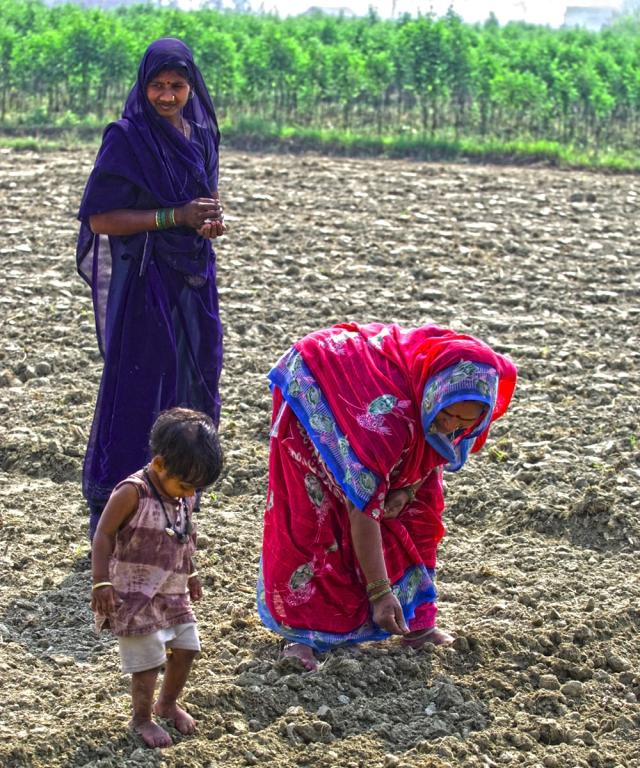
This family of a widow is planting an entire field completely by hand.
Uttar Pradesh, India: When a husband is lost to COVID-19, for example, the remaining widow will often need to mobilize her remaining family to survive. This family, fortunate to have land, is planting an entire field completely by hand.

Widows Rights Routinely Violated During Pandemic


An article reported from Johannesburg, South Africa, on the same Tanzanian story referenced by Karol Boudreaux—written by Kim Harrisberg for the Thomson Reuters Foundation—said that women often only earn legal or socially recognized rights to land and property through a husband or father. These rights are regularly violated during times of disaster, whether that be a war, the HIV/AIDS crisis or the coronavirus.

She quoted Patricia Chaves, head of the women’s rights charity Espaco Feminista, as saying that in Brazil when a man dies, women are approached at the funeral about selling their land.

Widows supported by Widow's Might program of Kenya Hope
Kenya: Because polygamy is practiced widely, when a husband dies from COVID-19, he often leaves behind several wives with multiple children. These vulnerable women are frequently preyed upon. The Widow’s Might program of Kenya Hope supports these women by providing them with food assistance each month, giving them five goats in the first year to start their own self sustaining herd, and by training them with marketable skills, all in God’s love. Photo by Kenya Hope, Widow’s Might Program

Chaves said that poor women have been particularly vulnerable during the pandemic because they are forced to put themselves at risk to feed their families while isolating in poor housing conditions.

In Kenya, there are reports that widows were forced out of their homes by their in-laws during quarantine because they were seen as an extra burden and not really part of the family, said Victoria Stanley, a World Bank land specialist.

“Widows depend on their (deceased) husbands for their property rights. There may be pressure from families to return properties or they may be forced into marriages with other family members. This could be devastating if we aren’t paying attention,” said Stanley, who called for a moratorium on evictions to protect women’s rights during the pandemic.7

Of course, when it comes to suffering, widows have experienced this long before last year’s lockdowns.

A widow begs on a busy road
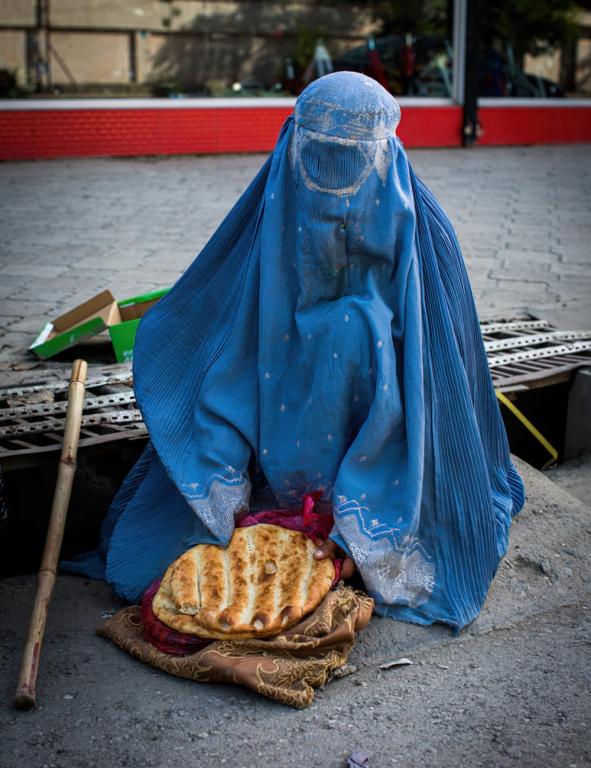
Afghanistan: A widow begs for food on a busy road in Kabul; the two loaves of bread she has are the entire dinner for her family of eight. According to Sharia teachings, widows only get an eighth of the inheritance from their spouse’s death if the husband has children (if not, then one quarter). The rest is distributed amongst other family members. Photo by Lacuna Magazine, Widowhood in Afghanistan

One example is in Afghanistan, home to “the hill of widows.” The term refers to women who eke out independence in a society that shuns them and condemns them as immoral. The first residents settled on a stony slope outside Kabul in the 1990s, hoping to escape the stigma attached to women who have lost their spouse.

The war-torn nation was home to approximately 2.5 million widows in 2017. Often uneducated and shuttered away at home, the women have few options when their husband dies. According to a report by a French news agency, “At best, they receive $150 a year from the government if their husband was killed in fighting. They survive by doing household chores, a little sewing, or by sending their children to beg in the bazaar.

“Women are perceived as being owned by their father before becoming their husband’s property. Widows are often rejected as immoral or regarded as burdens: they suffer violence, expulsion, ostracism and sometimes forced remarriage, often with a brother-in-law, as reported by the UN Mission in Afghanistan (UNAMA) in a rare study published in 2014.”8
Widow from Nigeria
Nigeria: Deborah’s husband was shot and killed in raids by Muslim extremists. After her husband’s death, her in-laws wanted her to leave her home so they could profit from it. They consistently abused her and pressured her to leave. Soon, she gave in, left her home and rented a house. She was hopeless, alone, and filled with grief. And ready to give up on life, until she received help to survive from an Open Doors trauma center. Photo by Open Doors USA

Similar difficulties face widows in Nigeria. In one state in the geopolitical region of South East Nigeria, legislators enacted laws in 2001 prohibiting widows from being compelled to do such things as shave their heads, be locked in the room with their husband’s corpse, or be compelled to remarry a relative of her late husband’s. Yet nearly two decades later, some of these practices were being kept alive through sociocultural norms, said an early 2020 report by a group of health researchers.

“There are often frictions between cultural practices and state policies/laws, as well as human rights, which obstruct policy implementation,” they wrote. “The lack of resources in low-resource regions adds to the difficulty in enforcing laws and policies, especially in rural areas, giving room for abhorrent cultural practices to thrive. These conditions prolong and intensify the traumatic experiences of widows.”9


Give to Help Widows »

If this special report has touched your heart and you would like to do something today about the plight of widows around the world, please share this article with your friends and consider making a generous gift to GFA World to help widows in South Asia and other locations.


Read the rest of this Gospel for Asia – Transforming Communities (GFA World) Special Report: Coronavirus Intensifies Hardships for Widows  Part 2


About GFA World

GFA World (Gospel for Asia) is a leading faith-based global mission agency, helping national workers bring vital assistance and spiritual hope to millions across the world, especially in Asia and Africa, and sharing the love of God. In GFA World’s latest yearly report, this included thousands of community development projects that benefit downtrodden families and their children, free medical camps conducted in more than 1,200 villages and remote communities, over 4,800 clean water wells drilled, over 12,000 water filters installed, income-generating Christmas gifts for more than 260,000 needy families, and teaching providing hope and encouragement available in 110 languages in 14 nations through radio ministry. GFA World has launched programs in Africa, starting with compassion projects in Rwanda. For all the latest news, visit our Press Room at https://press.gfa.org/news.


Read more blogs on GFA World, WidowsWorld Missions and the Coronavirus Pandemic on Patheos from Gospel for Asia.

GFA’s Statement About Coronavirus

Learn more by reading this Special Report from Gospel for Asia: Widows Face Uphill Battle After Losing Spouses — The plight of widows, whether in affluent or developing nations, can be a desperate struggle


Learn more about Gospel for Asia: Facebook | YouTube | Instagram | LinkedIn | SourceWatch | Integrity | Lawsuit Update | 5 Distinctives | 6 Remarkable Facts | 10 Milestones | Media Room | Widows & Coronavirus | Endorsements | 40th Anniversary | Lawsuit Response | International Offices | Missionary and Child Sponsorship | Transforming Communities through God’s Love

Notable News about Gospel for Asia: FoxNews, ChristianPost, NYPost, MissionsBox

Read what 25 Christian Leaders are affirming about GFA World.

This Special Report originally appeared on gfa.org.
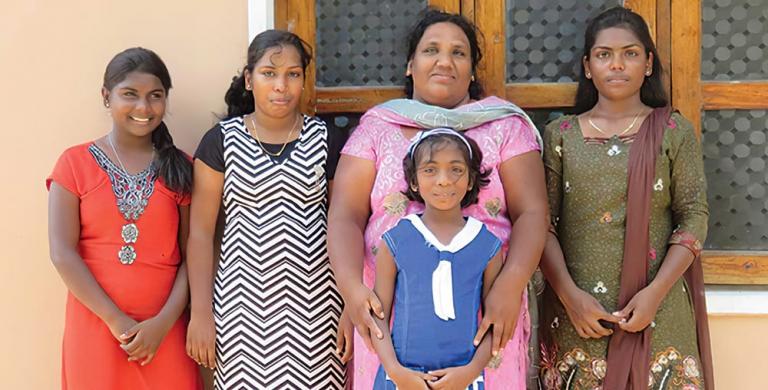
2022-12-08T14:30:08+00:00

WILLS POINT, TX – Gospel for Asia (GFA World and affiliates like Gospel for Asia Canada) founded by KP Yohannan, issued this Special Report on the horrific realities girls face, child marriage, human trafficking, abuse & exploitation, and the restoration & redemption that God brings to their lives.

GFA World, founded by KP Yohannan, reports on the horrific realities girls face, child marriage, trafficking, & the redemption that God brings

Nearly 173 years ago, on October 16, 1847, a book authored by “Currer Bell” rolled off the presses and quickly provoked a combination of praise, revulsion and gossip.

“It is a very remarkable book,” wrote a reviewer named Elizabeth Rigby. “We have no other remembrance of one combining such genuine power with such horrid taste.”

Jane Eyre book graphic
Photo by Marissa’s Books & Gifts

Many literary critics today still consider Bell’s novel, Jane Eyre, remarkable, but perhaps not for the same reasons Rigby did. For one thing, Jane Eyre opens with a girl at the center of its action. And this girl is a dynamic and well-rounded protagonist with a depth, voice and independent spirit that were groundbreaking for the time.

As grown-up Jane narrates her story, readers journey with young Jane through girlhood. They feel what she feels as she experiences the sting of abuse, the devastation of loss, the joy of friendship and the empowerment of education. They watch how these experiences shape Jane into a young woman who faces messy adult situations with resolve and integrity.

Jane Eyre stands as one of the earliest and most prominent examples of a coming-of-age story with a female protagonist, and it is still considered by some to be one of the greatest novels ever written. Much of the strength of this story derives from the strength of its female title character, a character created by an author who had experienced girlhood herself. (“Currer Bell” was in fact a woman named Charlotte Brontё.) This novel preceded countless other popular woman-authored novels and series describing a girl’s journey to womanhood: Little Women; Anne of Green Gables; Little House on the Prairie; To Kill a Mockingbird and Roll of Thunder, Hear My Cry, to name a few. These stories have captivated audiences spanning generations and nationalities.

In many developing parts of the world, girls struggle to survive. They face abuse, neglect, discrimination, trafficking and child marriage, even in the most economically stable and educated nations.

Perhaps these stories still speak to audiences today in part because they remind readers of what it means to be a girl. A girl can be imaginative and creative. A girl can overcome loss, abuse, neglect or public humiliation. A girl can learn to forgive. A girl can develop skills and abilities. A girl can think and analyze. A girl has the potential to grow into a strong woman.

A girl is a human being created in the image of God, and He is writing a nonfiction story in each girl’s life. Too often, however, girls’ dignity is robbed by other humans who do not recognize their value as human beings and God’s image-bearers. Too often, girls are treated as burdens, as sexual objects or as machines purposed solely for physical labor and child-bearing. Yet as girls learn of their value in the eyes of their Creator—and as they gain access to education, justice and financial stability—they are once again able to live as the protagonists in their own stories.

In developed areas, most girls enjoy relative stability. They go to school, eat nutritious food, enjoy hobbies, play sports and hang out with friends. But in many developing parts of the world, girls struggle to survive. Though girls in different regions may face different challenges, girls throughout the world face abuse, neglect, discrimination, trafficking and child marriage, even in the most economically stable and educated nations.

A group of three poor girls
From womb to tomb, girls in South Asia face enormous challenges in life, including abandonment, parental neglect, abuse, discrimination, under-education, child trafficking and child marriage.

A Fight for Existence

Ruth
Society’s abasement of girls yields tragic consequences. For Ruth, it led to a entire childhood marked by abuse just because she was born female. For thousands of other girls, it robs them of experiencing any life at all.

The story of Ruth, a Gospel for Asia (GFA) missionary, illustrates the first and biggest threat to girls’ lives. Throughout her childhood, Ruth was treated cruelly by her parents. They made her work long hours in their fields, they didn’t feed her enough and they rarely provided her with new clothes. One day Ruth finally got the courage to ask her parents why they mistreated her.

“You should have been a boy!” shouted her father.

Ruth had three older sisters, and her parents desperately wanted a son. They even sold a field to give an offering to a priest of their traditional religion so he would intercede for them to have a son. When Ruth, a fourth girl, was born instead, her father was furious—and he unleashed that resentment on Ruth throughout her growing-up years.

Society’s abasement of girls yields tragic consequences. For Ruth, it led to a childhood marked by abuse. For thousands of other girls, it robs them of experiencing life at all: Girls face their first threat in the womb.

Some societies view girls as a liability and a financial burden, so many families decide they don’t want a daughter. This has made sex-selective abortion a devastating problem around the world.

In India, an effort to prevent sex-selective abortions has led to a ban on using ultrasound to learn a baby’s gender, but some people find illegal ways to get an ultrasound: The number of sex-selective abortions in India appeared to be growing around the start of the 21st century. There may be numerous reasons why parents illegally abort their daughters, especially because many of the abortions happened among educated families. Perhaps some people still fear having too many girls because they expect daughters will earn less for the family and will require a dowry payment upon marriage. Perhaps others simply value boys more.

Girls face their first threat in the womb.
Since some societies view girls as a liability and a financial burden, many families decide they don’t want a daughter. This has made sex-selective abortion a devastating problem around the world.

China, the largest nation on earth in terms of population, is still recovering from decades of its “one-child policy.” High abortion rates of girls caused a skewed sex ratio, leaving too many men and too few women.

“Over 30 years, China was robbed of millions of girls as families used gender-based abortions and other methods to ensure their only child was a boy,” explains Hannah Beech in an article for The New York Times. “These boys are now men, called bare branches because a shortage of wives could mean death to their family trees. At the height of the gender imbalance in 2004, 121 boys were born in China for every 100 girls, according to Chinese population figures.”

Not only has this skewed sex ratio robbed millions of girls of life itself, but it has also threatened the girls who aren’t aborted in the womb, putting them at grave risk for abuse such as forced marriage and human trafficking.

Photo of woman helped by GFA Woman Missionary
After giving birth to two baby girls, Sukhwinder’s in-laws pressured her constantly to abort her third child, fearing it would be yet another daughter. It was only when she met a Gospel for Asia (GFA) woman missionary that she discovered the value of her life—and her daughters’ lives, in the eyes of God, and chose to preserve her pregnancy rather than end it.

Deprived of Opportunity

When a girl survives childhood, she faces another great hurdle: gaining an education. An education greatly changes what choices she may have in the future. Without one, a girl may never learn to read or write. She may never be able to understand street signs, shop signs or business contracts. She may never get to choose her own career or spouse. She may never be able to help her children get an education themselves.

According to a 2018 report from Malala Fund and the World Bank, the repercussions of not educating girls are serious. When girls miss out on a quality education, they miss the opportunity to pursue careers that could financially benefit them and their families in the future. They also risk ending up in unstable marriages where they are abused or disrespected, and they risk raising daughters who remain in the same vicious cycle.

When a girl survives to childhood,
she faces another great hurdle: gaining an education.
Without one, a girl may never learn to read or write.

“Depriving girls of education, especially secondary school education, has dramatic costs for girls themselves, their families, communities and societies,” says the report. “These include greater rates of poverty, higher rates of child marriage, increased fertility rates, and reduced engagement in personal, familial and community decision making.”

The report found that girls who receive only a primary education face similar challenges to women who receive no education at all. They are just as likely to marry and have children before age 18, and upon entering the work force, they earn only 15 percent more.

When girls miss out on an education, especially due to child marriage, human trafficking or forced labor, they miss opportunities for independence and financial stability, and they risk passing on the same neglect and exploitation to subsequent generations of girls.

Girl Students participating in Bridge of Hope Center class
When girls miss out on an education, especially due to child marriage, human trafficking or forced labor, they miss opportunities for independence and financial stability, and risk perpetuating the same cycle of exploitation to subsequent generations of girls. Because of international sponsors though, these Bridge of Hope students in South Asia receive daily meals, school supplies, medical care, and an ongoing education that gives them the opportunity for a much brighter future.

Childhood Cut Short: Child Marriage

650 million child brides worldwide, including girls under age 18 who are already married, and adult women who married in childhood.Robbing girls of education has contributed to another global problem for girls: child marriage. In 2018, UNICEF reported there were 650 million child brides worldwide, including girls under age 18 who were already married and adult women who married in childhood.

In some communities, child marriage remains prevalent due to poverty and deep-rooted attitudes toward girls and women. When people fail to educate their girls, they fail to see their daughters’ potential to earn income, to build careers or to dream of accomplishments beyond serving a husband and bearing children. This narrow view often causes families to perceive their daughters as financial liabilities who must be married off so a husband can provide for them.

Child marriage subjects girls to undue physical and mental stress. It gravely endangers their health, as it often pushes girls to bear children while in their teenage years. Many child brides already suffer from malnourishment, and the added strain of childbirth threatens their lives—and the lives of the babies they bear. Malnourished or unhealthy mothers often rear malnourished or unhealthy babies. Even worse, their babies may not even survive to term.

Ridhima
Ridhima was married off at the age of 12 and became pregnant only a few months later.

Ridhima learned this by experience.

Ridhima was married off at the age of 12 and became pregnant only a few months later. Ridhima’s in-laws told her a pregnant lady should work to be healthy and forced her to perform difficult chores around the house, including heavy lifting. Whenever Ridhima rested because she didn’t feel well, they accused her of being dramatic to get out of work.

On top of the verbal abuse from her mother-in-law, Ridhima faced physical abuse from her alcoholic husband.

During Ridhima’s seventh month of pregnancy, her doctor said she needed to rest because of a complication. But Ridhima’s mother-in-law dismissed the doctor’s advice, and the continued strain on Ridhima’s health had tragic consequences: When the birth approached, the doctor had to perform a C-section to deliver the baby, but tragically, the child was dead.

Instead of comforting her, Ridhima’s in-laws blamed the young teenager for the baby’s death.

Child marriage not only robs girls of their childhood and endangers their health but also potentially limits and destabilizes their future. These girls typically don’t get to finish their education, so they lose opportunities to contribute to society and educate their own children. Then, if their husbands mistreat them, abandon them or pass away, these women may have very few ways to provide for themselves and their children, which may leave them susceptible to exploitation.

Photo of a 2019 “child marriage” in Iran
Photo of a 2019 “child marriage” in Iran that was posted on social media. The 11 year-old girl was married to her 22 year-old cousin. According to official stats, in 5.5% of Iranian marriages, the brides are under the age of 15. Photo by France24, The Observers

Corinne Redfern, a writer for The Telegraph, describes a disturbing trend in Bangladesh.

“Out of 375 sex workers surveyed on behalf of Girls Not Brides across four … brothels in Bangladesh last year, 47 percent were former child brides, trafficked into prostitution against their will,” she wrote.

Redfern interviewed several teenaged girls who had been forced into marriage when they were as young as 11 or 12. When these girls tried to escape physical and sexual abuse, they were deceived and sold to brothels. These teenagers now face more sexual and physical abuse, and see no alternative life for themselves.

“One time, when I was new, the police came by and asked me how old I was—they said they’d had a report that I was too young to be working, and that they could help me leave,” a 14-year-old girl told Redfern. “But I don’t have anywhere to go. So I said I was 18. Now when times are bad, I think to myself, ‘This is all your own fault.’”

The demand for child brides increases where gender-biased abortion leaves communities with a low ratio of men to women. Girls become a commodity to be secured. This problem is most severe in China, where bride trafficking has ensnared women and teenage girls from neighboring countries, such as Pakistan, Myanmar and North Korea. Traffickers lure women and girls with the promise of jobs, but victims find themselves forced to cohabit with Chinese men who don’t speak their language. Often these girls and women are kept locked in rooms and raped, as their new husband and his family expect them to bear children.


Give to Help Girls at Risk »

If you want to help girls at risk in South Asia, consider a one-time donation to stand in the gap for children who have been rescued from desperate situations into Bridge of Hope but still lack permanent sponsors to cover their monthly needs to remain in school.


About Gospel for Asia

Gospel for Asia (GFA World) is a leading faith-based mission agency, helping national workers bring vital assistance and spiritual hope to millions across Asia, especially to those who have yet to hear about the love of God. In GFA’s latest yearly report, this included more than 70,000 sponsored children, free medical camps conducted in more than 1,200 villages and remote communities, over 4,800 clean water wells drilled, over 12,000 water filters installed, income-generating Christmas gifts for more than 260,000 needy families, and spiritual teaching available in 110 languages in 14 nations through radio ministry. For all the latest news, visit our Press Room at https://press.gfa.org/news.


Read the rest of Gospel for Asia’s Special Report: Rewriting the Tragedies of Girlhood — Opening Doors for Girls Deprived of Opportunities  Part 2, Part 3

Learn more by reading these Special Reports from Gospel for Asia:


This Special Report originally appeared on gfa.org.
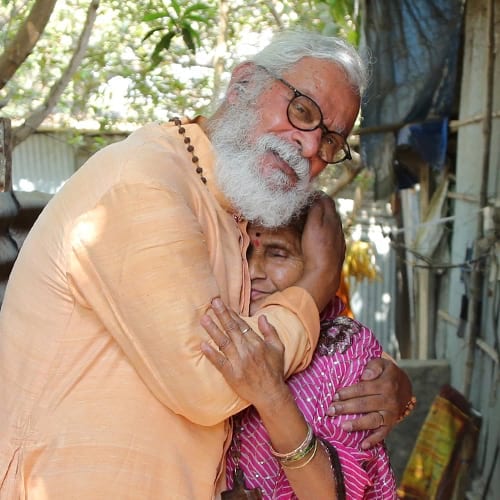
Read what Christian Leaders have to say about Gospel for Asia.

Click here, to read more blogs on Patheos from Gospel for Asia.

Learn more about Gospel for Asia: Facebook | YouTube | Instagram | LinkedIn | SourceWatch | Integrity | Lawsuit Update | 5 Distinctives | 6 Remarkable Facts | 10 Milestones | Media Room | Tragedies of Girlhood | Endorsements | 40th Anniversary | Lawsuit Response |

Notable News about Gospel for Asia: FoxNews, ChristianPost, NYPost, MissionsBox

2023-05-29T02:33:04+00:00

WILLS POINT, TX – Gospel for Asia (GFA World) founded by KP Yohannan, which inspired numerous charities like Gospel for Asia Canada, to assist the poor and deprived worldwide, issued this Special Report on the ongoing fight against open defecation, using outdoor toilets to improve sanitation.


Gospel for Asia (GFA World) reports on the ongoing fight against open defecation, using outdoor toilets to improve sanitation.
In this part of the slums in Mumbai, India, many people live in close proximity in unhygienic surroundings—lacking facilities like toilets and proper drainage.

What Do the World’s Sanitation Problems Have to Do with Us?

For those of us with indoor flush toilets—and clean ones at that—with sewer lines that carry waste to treatment facilities, and who live in places where waterborne and airborne bacteria are not a hazard, our response to this crisis is probably, So what? We don’t say this out loud, but like so many other dire extremes jockeying for our attention, it doesn’t really touch our lives.

However, in a majority of places, America is starting to suffer from failing infrastructure. Most of us think of that in terms of roads and bridges needing repair or major overhauling, a transportation issue. Yet infrastructure means water service, too.

Just two years ago, reporters from the Chicago Tribune conducted an exposé of the high bills being charged for water in underserved metro area neighborhoods. Maywood residents in a western suburb paid one of the region’s highest water rates, because older pipes allow major seepage. Of the 946 millions of gallons that Maywood bought from neighboring Melrose Park in 2016, some 367 million gallons, or 38.7 percent, never made it to taps. That cost residents in an already cash-strapped population nearly $1.7 million more than residents paid in other towns of similar size. And the poor are tapped for a disproportionate share of the bill.

What if I had to stand in line to use a communal latrine where flies buzzed, the floor was filthy, someone had evacuated due to acute diarrhea, and no one wanted to clean the mess? Now we’re getting closer.

Water problems may be closer than we think. In a 2012 article for a Yale University publication, reporter Cheryl Colopy—author of Dirty, Sacred Rivers: Confronting South Asia’s Water Crisis—warned: “In the United States, sewage treatment has not been a problem for the past half-century, but it could become one again as infrastructure ages and fails—especially if there is a lack of government money to replace it. In addition, certain regions of the U.S. are expected to experience water shortages as temperatures rise. New, water-saving, decentralized toilet technologies may need to be adopted not only in places like South Asia, but also in parts of the industrialized world.”

Indeed, we may be thinking more about sanitation issues in the near future. And, the burgeoning technologies used to solve defecation problems and to discover clean water solutions in the developing world may be solutions we will also seek not far down the road.

Women are prone to assault, disease runs rampant, and lives are at risk: all a result of using the bathroom outdoors.

What If You Didn’t Have a Toilet?

So I remind myself of toilet scenarios I do know about, then extrapolate some personal situations. Our home, in which we have lived for 40 years, has a septic system. During that time, we have suffered power outages amid extreme storms, meaning no water could be pumped from our underground well; this disabled our showers, faucets and toilets. I used to store plastic bottles of water so when things went black we could still brush our teeth, dress by candlelight and—get this—flush our toilets. If the power did not come back on for a couple days, frozen food thawed and excess detritus threatened to overflow the toilet basin.

So I extrapolate: What if this happened all the time? What if sewer lines broke, got clogged and backed up regularly? What if I lived in poverty, with no plumbers, no money and no electric company to call to fix this? What if I had to stand in line to use a communal latrine where flies buzzed, the floor was filthy, someone had evacuated due to acute diarrhea, and no one wanted to clean the mess? Now we’re getting closer.

A Squat Outdoor India Toilet
A well-cleaned squat toilet in Asia.

In refugee camps overseas, my travel companions and I held ridiculous discussions about who had invented squat toilets: men or women? Someone shot a photo of me holding a rickety latrine toilet door upright while a woman coworker trusted me to guard her privacy while she did her business. We may laugh, but for most of the world this situation is not a laughing matter. Smelling an overflowing latrine from 20 feet away might persuade even a Westerner to think similarly, even if only metaphorically. In truth, I don’t like the few outhouses I’ve been forced to use in the States, nor many of the spooky national park public facilities. If I can help it, I certainly avoid portable potties at public events.

When Your Septic Tank Problems Bring Embarrassment

My last attempt at toilet empathy. About 10 years after we moved to West Chicago, Illinois, our neighbor knocked on the door and apologized for complaining about the standing stinking water seeping into his property.

“I think you may be having trouble with your septic system,” he reported, a bit embarrassed.

I called two septic companies. One said I needed to have the whole septic field replaced; cost: $10,000. The other service man diagnosed another problem but with a similar estimate. Then I went to the DuPage County Health Department and asked what septic firms they would recommend. I called Black Gold, whose reps complained about the septic map drawn by the company that laid our field—that was now leaking.

“Would the health department let us get away with a layout like this?” he asked his partner. They both obviously thought the field plan had been rendered by some septic idiot. Sure enough, after spending about 45 minutes prodding our three-quarters-of-an-acre lot with long poles, they said: “Lady, you don’t need no new septic field. The lines of what’s there ain’t connected to the tank.” Their fee: $3,000. I made a garden from areas torn up by their repairs.

Many people in Asia draw water from smelly, vile ponds
Vile, brown liquid that some in Asia count on as their water source.

So what if I lived somewhere that permanently seeped smelly, vile, germ-ridden, brown liquid? What if the river at the back of the land was a running sewer, and my grandchildren couldn’t romp and splash in it? What if the fields were filled not only with animal feces but the excreta of some 300 neighbors?

You can come up with your own empathy-building stories.

Communities Band Together to Improve Sanitation

A family in front of a GFA-provided outdoor toilet facility
A family in front of a Gospel for Asia (GFA)-provided local facility.

Prime Minister Modi and his teams are sold on community-led initiatives, and so should they be. Change works best when a whole population is committed to seeing it happen.

Community development often works best when it is exactly that: an idea that grows out of the mind of a local visionary, capable of strategic thinking but with compassion for those nearby—his or her neighbors. And when a whole community becomes involved in “cleaning up its act,” few powers on earth can withstand such initiative.

Now what’s interesting about Gospel for Asia’s stories surrounding sanitation is that it is the local pastor in the village, who out of concern and knowing that open defecation has deadly disease-breeding potential, exercises compassion to love his neighbors through his concern about the availability of latrines.

This is an excerpt from a Gospel for Asia (GFA) story that appeared on last year’s World Toilet Day. It concerns a family in one community forced to use the open fields to defecate because they had no other proper place.

Malak, before being touched by Christ’s love, had been an alcoholic. After reading the entire Bible from start to finish, Malak was transformed and abandoned the bottle. Some years later, he met Jaki, and they were married.Eventually, the couple were blessed with two children. It seemed as if all was right for Malak and his family. However, a singular problem arose: The family had no toilet. The nearest place to relieve themselves was a little less than a mile away. During extreme weather, the family was forced to stay indoors, rendering those facilities useless. Going outside in the open was degrading and unhygienic, and at nighttime it was dangerous—who knew what kind of wild animals lurked about?

However, Malak and his family prayed, and their requests did not go unanswered. During a GFA Christmas gift distribution, they received a complete sanitation facility. They no longer had to trek half a mile just to use the bathroom or use the outdoors in fear.

What an extraordinary example of love in practical action.

“Love the Lord your God with all your heart and mind and strength. And love your neighbor as yourself.” —Luke 10:27

For women like this tea estate laborer, having no outdoor toilet facility could mean risking assault as they go out into an open field in the dark.
“It’s not safe to send our people, our children, our wives or our daughters to the tea garden at night to use the toilet,” Iniyavan said.
Iniyavan made only 2,400 rupees a month, which was equivalent to about $37 (USD) a month. He wasn’t able to save enough money to construct a toilet.
Open defecation means there’s the risk of disease as families continually return to communal waste grounds
GFA-supported Compassion Services teams construct outdoor toilets, also known as sanitation facilities, for people who, like Iniyavan, do not have the means to do so on their own.
“Now, since I have this toilet built in my house, I don’t have to worry. My family and I don’t have to go to the tea garden for toilet, and it is very safe here,” Iniyavan said.

On the Brink of Innovations, Change in Sanitation

Toilet technology is on the edge of remarkable, cost-effective, ecologically friendly frontiers. They’re becoming self-cleaning and solar-powered. A solar-powered toilet that converts waste into charcoal can then be used as fertilizer. An indoor toilet that works like a garden composter, spinning the contents and reducing odor and the number of dangerous pathogens. Portable rickshaw toilets. A community bio-digester toilet designed to convert human waste into gases and manure. Once ideas begin flourishing, there is no limit to what can happen.

Granted, Prime Minister Modi’s ODF csampaign may take a little longer to succeed. But the hardest pull of any new effort is at the beginning. Once new ideas start rolling, they gather steam. Some new toilet technologies may become catalysts as well. In addition, there are hundreds of international organizations working on sanitation solutions. They understand that one size does not fit all the variables that make up the particulars in this vast discussion, but added all together, it is a prohibitive association with evidence of remarkable dedication.

And when a whole community becomes involved in “cleaning up its act,” there are few powers on earth that can withstand such initiative.

A Canadian doctor, one of those “creative renegades” unhappy with the condition of the world who I have come to admire and love, was appointed as a provincial health officer in the highlands of Papua, New Guinea. During an aerial survey, he and his team discovered one distinctly cleaner and healthier village. Far below lay the evidence of what turned out to be a pastor with basic health training who had taught his people those lessons; the difference could be seen from the air. Inspired, they searched for a more integral way of ministering and soon began using a community health evangelism methodology, which had been developed in Africa.

Sometimes we get lost in the details on the ground. We need to stand back, take deep breaths and find some way to gather broader assessments—an aerial view. Progress is being made; it’s just a little harder in some places than in others. I’m proud that Gospel for Asia is one of the players.

Shout Out to Toilets!

Christianity has everything to do with sanitation. We serve a God who is expecting us to help restore the world He created to its original design. That is a world, among many other things, without rampaging diseases. One day, Scripture promises, it will be a world without death and suffering. So in this interim, let’s hear a shout out for all the toilets in the world!


Donate to Sanitation Projects

For only $540, you will help reduce the risk of common diseases by providing a family with an outdoor toilet.


About Gospel for Asia

Gospel for Asia (GFA World) is a leading faith-based mission agency, helping national workers bring vital assistance and spiritual hope to millions across Asia, especially to those who have yet to hear about the love of God. In GFA’s latest yearly report, this included more than 70,000 sponsored children, free medical camps conducted in more than 1,200 villages and remote communities, over 4,800 clean water wells drilled, over 12,000 water filters installed, income-generating Christmas gifts for more than 260,000 needy families, and spiritual teaching available in 110 languages in 14 nations through radio ministry. For all the latest news, visit our Press Room at https://press.gfa.org/news.


Read the rest of Gospel for Asia’s Special Report: Fight Against Open Defecation Continues – Using Outdoor Toilets to Improve Sanitation Part 1

Learn more by reading these Special Reports from Gospel for Asia:


This Special Report originally appeared on gfa.org.

Read what Christian Leaders have to say about Gospel for Asia.

Click here, to read more blogs on Patheos from Gospel for Asia.

Learn more about Gospel for Asia: Facebook | YouTube | Instagram | LinkedIn | SourceWatch | Integrity | Lawsuit Update | 5 Distinctives | 6 Remarkable Facts | 10 Milestones | Media Room | Fighting Global Poverty | Endorsements | 40th Anniversary | Lawsuit Response |

Notable News about Gospel for Asia: FoxNews, ChristianPost, NYPost, MissionsBox

2021-05-21T20:13:17+00:00

WILLS POINT, TX – Gospel for Asia (GFA World) founded by KP Yohannan, which inspired numerous charities like Gospel for Asia Canada, to assist the poor and deprived worldwide, issued this Special Report on the ongoing fight against open defecation, and how using outdoor toilets helps to improve sanitation.

Gospel for Asia (GFA World) reports on the ongoing fight against open defecation, using outdoor toilets to improve sanitation.

Karen Burton Mains
Karen Burton Mains, author

Since I first wrote about open defecation a few years ago, efforts to combat the problem have gathered momentum. A report compiled by the United Nations Children’s Fund (UNICEF) and the World Health Organization (WHO) in June shows the percentage of people practicing open defecation declined from 21 percent (1.3 billion) in 2000 to 9 percent (673 million) by 2017.

While this is encouraging news, there is much more to be done. The United Nations (UN) says “some 2.2 billion people around the world do not have safely-managed drinking water, while 4.2 billion go without safe sanitation services and three billion lack basic handwashing facilities.”

“Mere access is not enough,” said Kelly Ann Naylor, UNICEF’s associate director of water, sanitation and hygiene. “If the water isn’t clean, isn’t safe to drink or is far away, and if toilet access is unsafe or limited, then we’re not delivering for the world’s children.”

In addition to the UN, this multi-faceted effort includes governments, non-governmental organizations and various Christian and non-Christian charities. All have launched initiatives that include long-term goals for ending this threat to the world’s health. The UN’s global sustainable development goals include ensuring that everyone has a safe toilet and that open defecation ends by 2030.

Children investigate new toilet
Children in Cote d’Ivoire investigate their community’s newly improved toilets, one of the UNOCI’s “quick impact projects” (QIPS) which supported the rehabilitation of schools and toilets in Abidjan. UN Photo/Patricia Esteve

People using the bathroom outdoors with no toilet nearby nor sanitary treatment of their discharge has fueled disease, created serious health problems and endangered female safety by exposing them to possible rape or other abuse. Then there is the particularly stomach-turning incident from July 2018, when a 3-year-old South African boy drowned in a pit latrine—a type of crude toilet that collects feces in a hole in the ground. Four years earlier in the same province, a 5-year-old boy drowned in a school toilet.

Such horror stories help explain the need for “World Toilet Day,” which falls every year on November 19. Inaugurated in 2013, the UN-sponsored observance urges member states to encourage behavioral changes and implement policies to increase access to sanitation among the poor. Despite progress in recent years, the situation is serious, as shown by the June UN report.

Among key sanitation facts from WHO:

  • In 2017, only 45 percent of the global population used a safely managed sanitation service.
  • Two billion people do not have basic sanitation facilities, such as a toilet or latrine.
  • At least 10 percent of the world’s population is thought to consume food irrigated by wastewater.
  • Poor sanitation is linked to transmission of diseases such as cholera, diarrhea, dysentery, hepatitis A, typhoid and polio.

In short, open defecation is a worldwide health crisis, one that demands a caring response from the world—especially those who profess to follow Christ.

GFA World supporters visit outdoor toilet installed by Believers Eastern Church in South Asia
GFA World supporters get the opportunity to visit an outdoor toilet installed by Believers Eastern Church for the benefit of multiple families in this neighborhood around Lucknow, Uttar Pradesh. During 2019, 5,428 toilets like these were installed by GFA across South Asia to help improve the sanitation challenges in many developing communities.

Hanging Out with “Renegades”

For much of my adult life, I have hung out with the “renegades” of Christian missions. Namely, the relief-and-development crowd that rushes to help during natural disasters, struggles to alleviate the suffering and abasement of refugee displacement, and pays concerted attention to the struggles of people in developing nations. My first trip around the world came at the invitation of Food for the Hungry; I traveled with Larry Ward, the executive director at the time, and his wife, Lorraine.

The purpose of the trip was an international field survey with an emphasis on the world’s refugee crisis, which in the l980s was the largest since World War II. We started in Hong Kong and ended seven weeks later in Kenya, Africa. My assignment was to observe with fresh eyes and write about what I had seen. I wrote my book, The Fragile Curtain, with the help of daily briefings from the U.S. State Department and the excellent international reporting of The Christian Science Monitor (and some generous coaching from a Pulitzer Prize-winning newspaper reporter). It won a Christopher Award, a national prize for works that represent “the highest values of the human spirit.”

“I never realized,” he said, “that I would eventually measure the impact of the Gospel by how many toilets had been built in a village.”

Eventually, I brought the accumulated exposure of my world travels—some 55 countries in all—and the learning I had gathered through research and dragging through camps and slums to the board of Medical Ambassadors International (MAI), a global faith-based health organization.

Villagers from the village that received outdoor toilets
Women and girls are often at risk when open defecation is the only option for relieving themselves. Thankfully, these precious faces can smile because a toilet facility was recently built in their village.

GFA’s Story, Helping to Improve Sanitation in Asia

As I mentioned earlier, Christianity has a vital role in ending these problems. One of the organizations involved is Gospel for Asia (GFA), long close to my heart and that of my husband, David Mains. We met K.P. Yohannan, GFA’s founder, when the ministry was a mere vision in the heart of a young Indian man. It was a divine nudge that would not let up. Since then, David has traveled to Asia at the invitation of Gospel for Asia (GFA) eight times; I have visited once. We’ve watched as K.P.’s vision grew from a dream to reality, with numbers beyond anything we could have considered possible.

GFA’s website tells its vast story: In 2018 the ministry fed, clothed and schooled some 70,000 impoverished children, operated 1,128 free medical camps and constructed 6,431 toilets with dual-tank sanitation systems.

A family stands in front of a India toilet - a GFA-installed latrine or squatty potty.
This family stands in front of a latrine or “squatty potty” that was installed by GFA-supported national workers.

Gospel for Asia (GFA) started building latrines in 2012, setting a goal of constructing some 15,000 concrete outhouses by 2016. It long ago surpassed that mark. Figures for 2016 alone: 10,512 toilets installed, with another 6,364 following in 2017, and another 6,431 in 2018. Potable water, of course, travels hand in hand with sanitation. In 2018, the ministry’s field partners constructed 4,712 Jesus Wells and distributed 11,451 BioSand water filters to purify drinking water. Touching vignettes on GFA’s website make the statistics personal.

“Our family is blessed both physically and spiritually,” said one villager in Asia. “We are free from problems and sickness.…It is because of the people who have spent their money to drill a Jesus Well in my place.”

“This saved the lives of people from illness,” said another—and indeed, toilets, when and if they are used, do just that.

There, indeed, is a thread that runs through Gospel for Asia’s stories of toilets: The pastor of the church in this village or that hamlet seems to be the catalyst for health improvements.

Organizations Tackling the Sanitation Crisis

Matt Damon, founder of Water.org
Matt Damon, the founder of Water.org (photo credit Water.org)

Much of the world is in a war against the perils caused by inadequate or non-existent sanitation. People as diverse as Matt Damon, a Hollywood celebrity, award-winning actor and producer/screenwriter, and India’s Prime Minister Narendra Modi are battling uphill against open defecation (in the sewers, in running streams, by the roadsides, in the fields and the forests, on garbage dumps, etc.).

Damon, driven by a desire to make a difference in solving extreme poverty, discovered that water and sanitation were the two basic foundations beneath much of what ails the world. Through his charity, Water.org, he and his business partner, Gary White, use microfinance loans to help underserved people connect to a service utility or build a home latrine. By 2020, more than 30 million people in 17 countries have been affected by this approach.

Prime Minister Modi campaigned to end open defecation and build latrines for India
Prime Minister Modi campaigned to end open defecation and build latrines for India.
Photo by narendramodiofficial on Flickr / CC BY-SA 2.0

During his campaign for office in 2014, Modi spoke of “Toilets Before Temples.” His party’s Swachh Bharat Abhiyan (Clean India Mission) campaign has undoubtedly made progress, thanks in part to the $28 billion (U.S.) originally allocated, plus World Bank loans totaling another $1.5 billion.

After a Reuters News Service story last May portrayed the government as using overly optimistic results about the initiative, India’s Ministry of Drinking Water and Sanitation issued a release, saying its program had “succeeded in lifting more than 550 million people out of open defecation in a short period of less than 5 years.” His re-election last year may be partly due to the progress of the initiative he organized to curtail the practice.

Talking Openly About Open Defecation

Another key dilemma in this discussion—open defecation, hardly a dinner-table topic or a missions committee agenda item—is that accessibility to toilets does not always indicate usage. Changing habits is mostly a matter of changing mindsets in the face of deeply entrenched beliefs.

Some 1.5 million people die globally each year from polluted water diseases alone.

Elizabeth Royte, in a comprehensive August 2017 National Geographic magazine article, reported visiting Parameswaran Iyer, India’s secretary of drinking water and sanitation, in 2016. A hand-numbered sign on his wall tracked progress.

“You see that?” he asked. “One hundred thousand is the number of villages that are ODF today.” (ODF is the acronym for open defecation free.)

Royte, a sanitation expert traveling widely and reporting extensively, noted that Modi aimed to build more than 100 million new toilets in rural areas alone by 2019. But she added that “deep-seated attitudes may present an even bigger barrier to improving sanitation than a lack of pipes and pits.”

Echoing that observation, on World Toilet Day in 2018, The Washington Post reported: “Although increasing the number of toilets and improving their quality is important, the larger challenge is how to ensure that they actually will be used. … In our survey of 810 households in Delhi’s slums, where private toilet ownership is rare, we found that many people do not regularly use nearby public toilets, known as community toilet complexes, built specifically for slum dwellers.”

Facing the Facts about India Toilets

That being said, let’s look at data regarding the state of toilets and open defecation in Asia. Then let’s examine what development organizations, sanitation technologies and mission groups, namely Gospel for Asia, are attempting to help Asia become ODF.

Although Modi has emphasized improved sanitation, it’s worthwhile to note that India struggled with these issues even before winning independence from Great Britain in 1947. In fact, Gandhi insisted, “Sanitation is more important than temples.” Now, due to population growth, a conundrum exists: While the percentage practicing open defecation has dropped substantively, birth rates are creating an environment where more people live in geographic locations where fecal exposure is increasing, not decreasing.

37%

of the urban population—some 157 million urban dwellers—lacked a safe and private toilet, according to UK-based charity WaterAid in November 2016.

Even sewers are no guarantors of healthiness: In the capital city of Delhi, pipes are corroded; they ooze waste; and nearly a third of the booming city isn’t connected to underground lines. Many latrines flush into open drains.

700,000

—4 percent—of this urban population still defecated outdoors.

56%

only of the sewers are safely managed.

Just 1 gram of feces can contain:

100 million viruses

1 million bacteria

1 thousand parasitic cysts

These can be absorbed through cuts in the flesh, the porous nature of skin itself, or by drinking unsafe water and eating contaminated foods. Flies carry disease from roadsides and open fields.

Health figures are consequently staggering.

2,195 children

worldwide die from diarrhea each day, with the disease the second-leading cause of death for children under 5, according to the Centers for Disease Control. The chronically distressed digestive system doesn’t absorb nutrients or medicines well. Underweight mothers give birth to underweight babies.

149 million

children worldwide under the age of 5 are affected by stunting, according to the World Health Organization in 2018. And all of the above and much, much more could be cured and eliminated by the installation and use of proper sanitation systems in slums, hamlets, rural villages and large cities across India.

Photo by Kristian Bertel


Donate to Sanitation Projects

For only $540, you will help reduce the risk of common diseases by providing a family with an outdoor toilet.


About Gospel for Asia

Gospel for Asia (GFA World) is a leading faith-based mission agency, helping national workers bring vital assistance and spiritual hope to millions across Asia, especially to those who have yet to hear about the love of God. In GFA’s latest yearly report, this included more than 70,000 sponsored children, free medical camps conducted in more than 1,200 villages and remote communities, over 4,800 clean water wells drilled, over 12,000 water filters installed, income-generating Christmas gifts for more than 260,000 needy families, and spiritual teaching available in 110 languages in 14 nations through radio ministry. For all the latest news, visit our Press Room at https://press.gfa.org/news.


Read the rest of Gospel for Asia’s Special Report: Fight Against Open Defecation Continues – Using Outdoor Toilets to Improve Sanitation Part 2

Learn more by reading these Special Reports from Gospel for Asia:


This Special Report originally appeared on gfa.org.

Read what Christian Leaders have to say about Gospel for Asia.

Click here, to read more blogs on Patheos from Gospel for Asia.

Learn more about Gospel for Asia: Facebook | YouTube | Instagram | LinkedIn | SourceWatch | Integrity | Lawsuit Update | 5 Distinctives | 6 Remarkable Facts | 10 Milestones | Media Room | Fighting Global Poverty | Endorsements | 40th Anniversary | Lawsuit Response |

Notable News about Gospel for Asia: FoxNews, ChristianPost, NYPost, MissionsBox

2025-11-11T20:34:44+00:00

WILLS POINT, TX – GFA World founded by K.P. Yohannan, whose heart to love and help the poor has inspired numerous charities like GFA World Canada, to serve the deprived and downcast worldwide, one of the largest mission agencies in the world, is launching compassion projects in Africa (http://www.gfa.org/press/intoAfrica) for the first time — a huge boost for humanitarian efforts in the world’s poorest continent.

GFA World, formerly known as Gospel for Asia, expects to begin work in multiple African nations this year.

GFA World is launching compassion projects in Africa for the 1st time, a huge boost for humanitarian efforts in the world's poorest continent
GOSPEL FOR ASIA LAUNCHES IN AFRICA: GFA World, formerly known as Gospel for Asia, is launching compassion projects in Africa (http://www.gfa.org/press/intoAfrica) for the first time — a huge boost for humanitarian efforts in the world’s poorest continent. (Jeremy Bishop/Unsplash)

“Africa is where the tears never dry,” said Gospel for Asia (GFA World) founder K.P. Yohannan, announcing the launch of compassion projects in Rwanda, a mountainous nation in east-central Africa still recovering from the war and genocide that left 800,000 dead and ripped the country apart in the 1990s.

“Everything we do focuses on bringing real hope and the love of God to those who’ve lost all hope,” said Yohannan, author of the best-selling book Revolution in World Missions, with more than four million copies in print.

To begin with, GFA World’s efforts — supported by the Rwandan Government, church leaders and their congregations — will help children living in slum neighborhoods in the nation’s capital, Kigali, where most people survive on less than two dollars a day.

“We appreciate the open door we’ve been given to start saving lives and serving the poor in Rwanda,” said Yohannan.

Africa ‘Compassion Surge’

The organization plans a surge of compassion and healthcare projects across Africa, including deploying Sisters of Compassion workers — trained women missionaries who serve widows, orphans and those living in leprosy colonies.

“We’re looking at the whole continent, and one of our goals is to help tens of thousands of children (in Africa),” said Yohannan, whose organization already provides educational opportunities for thousands of children through its child sponsorship programs across Asia.

“About half of Africa’s population is under the age of 15, and the average life expectancy is 50,” he said. “This fact makes the desperate urgency to preach the gospel to millions while we have time still to do it. They are waiting — they are dying.”

As Gospel for Asia (GFA World) expands in Africa, the mission agency also plans to introduce its trademark “Jesus Wells” — bringing clean water to villages and undeveloped communities where children and families drink contaminated water straight from filthy ponds.

Caring For Millions In Need

Started by missions pioneer Yohannan in 1979, Gospel for Asia (GFA World) quickly grew into one of the biggest faith-based humanitarian organizations in the world, helping millions of the world’s extreme poor by equipping local churches to care for those in desperate need.

In Africa, Gospel for Asia (GFA World) plans to train indigenous workers in Rwanda and other countries to serve their own people, following its highly effective Asia model.

With their grasp of the local culture and languages, the organization’s national workers have helped transform life for those in more than 12,000 parishes and communities across Asia in nations, such as Nepal, Sri Lanka, Bangladesh and India.

While slums are often associated with Asia’s megacities — featured in movies such as Slumdog Millionaire — it’s African countries that have the highest percentage of slum dwellers. More than nine out of every 10 people in South Sudan, Central African Republic and Sudan live in slums.

“We aim to be servants to everyone, showing them Christ through our lifestyle,” said Yohannan. “Jesus told his disciples to change the world — and as we expand into Africa, that’s our calling too. We want to bring hope and healing as His hands and feet to the whole world.”

“After all is said and done, the only real answer to the chaos in this world is Jesus Christ. Our focus remains even sharper today — to preach the gospel by all means and establish the church, which is the agent of change for time and eternity.”


About GFA World

GFA World (formerly known as Gospel for Asia) is a leading faith-based global mission agency, helping national workers bring vital assistance and spiritual hope to millions across the world, especially in Asia and Africa, and sharing the love of God. In GFA World’s latest yearly report, this included thousands of community development projects that benefit downtrodden families and their children, free medical camps conducted in more than 1,200 villages and remote communities, over 4,800 clean water wells drilled, over 12,000 water filters installed, income-generating Christmas gifts for more than 260,000 needy families, and teaching providing hope and encouragement available in 110 languages in 14 nations through radio ministry. In the years ahead, GFA World expects to launch programs in numerous African nations, starting with compassion projects in Rwanda. For all the latest news, visit our Press Room at https://press.gfa.org/news.

Media interested in interviews with GFA World should contact Gregg Wooding at InChrist Communications @ 972-567-7660 or [email protected]


Follow Us!


TAKE THE
Religious Wisdom Quiz

Who replaced Haman as the king's chief adviser?

Select your answer to see how you score.


Browse Our Archives