

We’ve all heard it at one time or another. I probably made this argument a time or two as a Protestant. It runs as follows (I’m loosely but substantially paraphrasing an actual hypothetical scenario that I heard recently from a Reformed Protestant):
A man who was baptized, thus regenerated, and justified initially — as Catholics say — lived to age 80, and on the last day of his life he skipped going to Mass, because he wanted to attend his first Major League baseball game ever, on a Sunday. He had lived a perfect life, according to Catholic moral teaching and rules, up till the time of his death, except for this one thing. He even intended to go to confession after the game, but he died of a heart attack in the ninth inning. According to Catholic teaching on mortal sin he would immediately go to hell. This is contrary to possessing any peace, hope, confidence, or assurance of salvation, and seems to be against the biblical gospel.
This typical picture of the Catholic supposedly going to hell because he committed a mortal sin three hours before he died is grossly caricatured. It’s much more complex than that. Subjectively committed mortal sin has three components in Catholic thinking:
1) A grave, serious matter is involved.
2) The person has sufficiently or adequately reflected upon and has proper knowledge about the sin they are committing.
3) They must have given a full and deliberate consent of their will.
So in this example, the person wasn’t totally lost in sin because they had the resolve to do penance (confession, in order to be absolved by a priest). Therefore, by definition, it was not subjectively mortal sin and they wouldn’t be sent to hell. That’s where the usual misunderstanding lies, and it’s basic. God is just and merciful and no one will go to hell for inadequate reasons, and informed Catholics understand that. Granted there are tens of millions of ignorant ones, just as there are ignorant Protestants. I meet them every week online, telling lies about my supposed beliefs. I fight caricatures on all sides because they help no one.
But God judges a person’s entire life. This well-known objection is roughly equivalent to a Catholic saying about Protestant “faith alone” belief, that it means that any Protestant can go sin as much as they want and it’s fine and dandy; they’ll be saved because they did the sinner’s prayer. In other words, it’s collapsed into antinomianism (we’re saved and subject to no rules and laws after that; no sins will endanger our salvation). It doesn’t mean that.
Protestants, including Luther and Calvin, firmly teach that the Christian must do good works and not sin, even though they do formally separate good works from justification salvation altogether and categorize them as non-salvific acts classified under a separate category of “sanctification.” “Cheap grace” is a sinful gross distortion of true Protestant teaching on salvation. In the same manner, these “what if” scenarios involving mortal sin are distortions of Catholic teaching.
When we speak of “objective mortal sin” we refer to the sin in and of itself. Murder, lust, theft, disrespect of parents, lying, and a number of other sins and failings are serious by their very nature, and mortal (meaning, possibly leading to spiritual death or loss of good graces with God). But “subjective mortal sin” is a deeper analysis that incorporates the three elements above and takes into consideration culpability and the extent of a persons’ awareness and knowledge of what they are doing. It’s similar to the different legal degrees of murder: premeditated vs. crimes of passion, manslaughter, etc. Penalties are less for the person who commits a lesser legal degree of homicide.
When I replied to the person who came up with the scenario I paraphrased, they modified it, so that the man wasn’t even thinking of doing penance and confessing. He knew that he had been the perfect Catholic his whole life, and that God knew that. So my second reply was and is as follows:
Committing a subjectively mortal sin, which places one in possible danger of possible hellfire, not absolutely damned (and God determines all that, not us, nor the Catholic Church), is dependent upon a person giving the full and deliberate consent of their will and sufficiently, adequately reflecting on what they are doing. Otherwise, it’s not mortal sin from their subjective viewpoint, even if the objective thing is a mortal sin (missing Mass for insufficient reason). The person in this scenario was over-excited about the baseball game so that the Mass never even crossed his mind, nor was he consciously sorry or guilty at all. Therefore, this proves that he did not give the full consent of his will and did not sufficiently reflect upon what he was doing.
It follows that he would not be guilty of subjective mortal sin and wouldn’t go to hell (and that’s assuming it’s “automatic” which is also far too simplistic) if he died in the ninth inning. The Catholic Church would say that he can confess this venial sin directly to God if he wants to do that (confession to a priest is only absolutely necessary in cases of subjective mortal sin), and he’s good to go. It takes five minutes, provided he is truly sorry for it when he does get past the relatively mindless excitement of the moment and reflect upon it.
And it’s still true that God is merciful and just and takes into account a person’s entire life and their heart, not merely one sin (itself not even fully conscious). So this hypothetical and absolutely classic Protestant criticism fails as a proof of Catholic “weirdness” and implausibility and allegedly unbiblical nature, and it does because it didn’t fully take into account our complete doctrine of mortal and venial sin, which is thoroughly biblical. In other words, it stemmed from a very inadequate knowledge of the thing that it criticizes, and so ends up attacking a straw man; not actual Catholic doctrine.
But alas, this is how millions of Protestants view the Catholic thoroughly biblical teaching on mortal and venial sins, and this is the sort of pseudo-argument against caricatures that Catholic apologists like myself have to constantly interact with, on a wide variety of topics (please pray for my patience. Thanks!). The Bible teaches a lot about sins in ignorance (Paul referred to his own in his own past life), without fully knowing what one is doing, and God providing considerable leeway for them.
Further Reading (and Viewing)
Bible On Mortal & Venial Sin (vs. Anglican Stearns #5) [31 passages; my most in-depth article on this topic] [3-20-25]
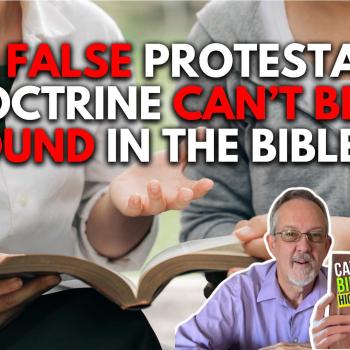
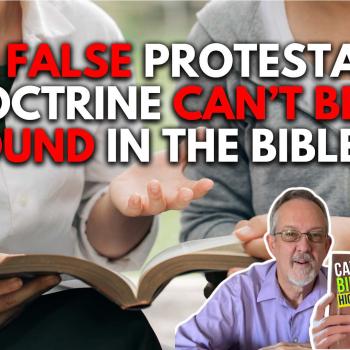
VIDEO: Can some sins cause you to LOSE your salvation? (Mortal & Venial Sin) [with Kenny Burchard at Catholic Bible Highlights, 4-5-25]
*
Martin Luther and Lutherans on Mortal & Venial Sins [10-30-17]
What the Bible Says on Degrees of Sin and Mortal Sin [National Catholic Register, 7-6-18]
Mortal & Venial Sin: Proof from “Unwitting” Passages [10-26-21]
Examination of Conscience: Biblical (Pauline) Evidence [7-14-08]
The Bible on Confession & Absolution [2013]
Bible: Men & Angels Forgive Sins as Representatives of God [7-18-14]
Confession and Absolution Are Biblical [National Catholic Register, 7-31-17]
Absolution, Sanctification, & Forgiveness: Reply to Calvin #7 [12-19-18]
John 20:22-23 & Formal Absolution (vs. Steve Hays) [5-12-20]
No Confession to Men in the Bible? Seriously? Read On . . . [11-19-21]
Mortal Sins: The Basics (Joe Heschmeyer, Catholic Answers Magazine, 7-10-24)
How Hard Is It to Commit a Mortal Sin? (Joe Heschmeyer, Catholic Answers Magazine, 11-28-25)
Are Some Sins Worse than Others? (Joe Heschmeyer, 6-15-23)
Assessing Mortal Sin (Jimmy Akin, 12-13-06)
Examination of Conscience (Catholic Answers Guide)
Sin: The Debate Between Catholics and Protestants (Douglas M. Beaumont, Catholic Answers Magazine, 1-3-21)













 Ad-Free & Subscriber Log-In